
Technology and Equipment, Page 3
List of articles
How to Choose Ventilation Ducting for a Grow Tent or Grow Room
How do you choose the right ventilation ducting for your indoor grow room or grow box? We have prepared an overview of three basic types of ventilation ducting and practical tips for their use.
Choosing the right ventilation ducting is essential for the efficient operation of the ventilation system in your indoor grow room or grow box. Ventilation ensures air circulation, removal of excess moisture, temperature regulation and odour removal, all of which are key factors for the healthy growth of your plants. In this article, we will introduce three basic types of ventilation ducting, their advantages and disadvantages, and provide practical tips for their correct use.
ALU aluminium ducting (ALUFLEX)
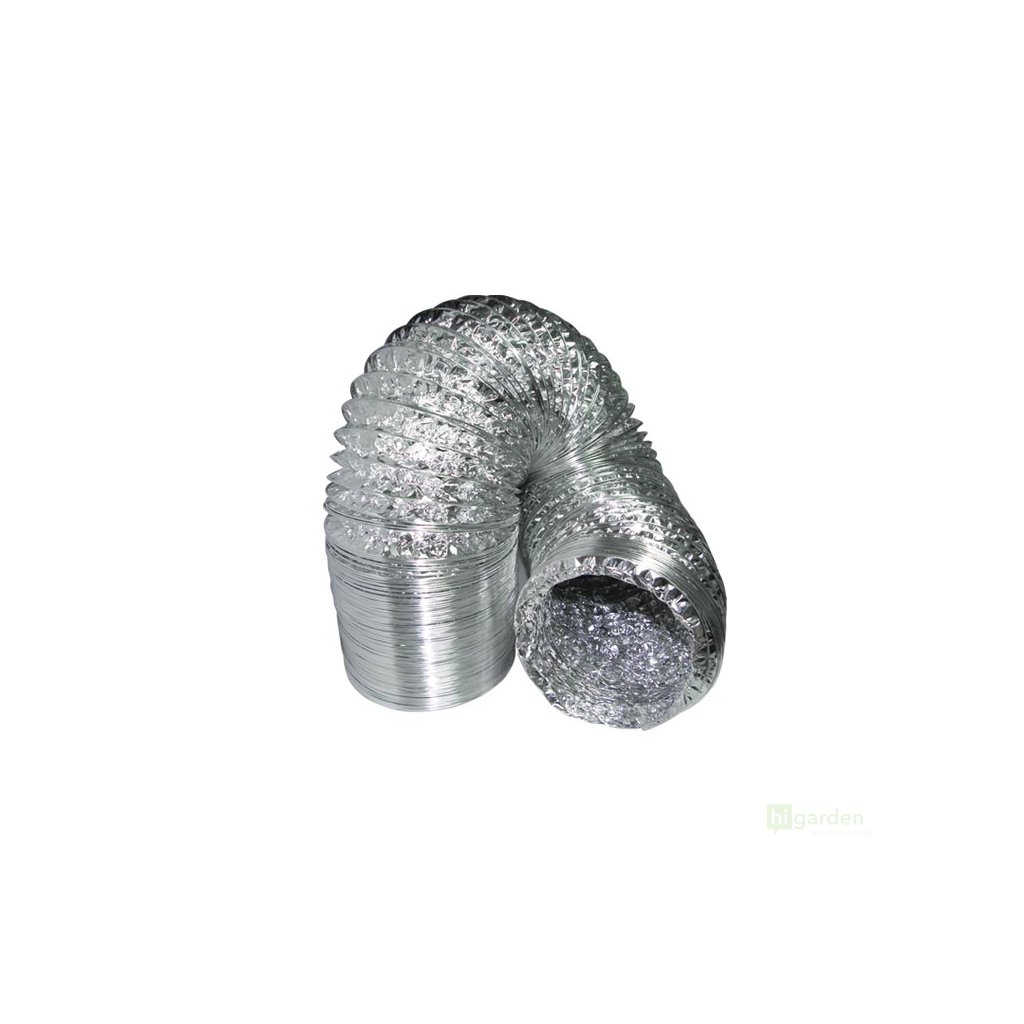
Flexible ALU ducting is made from a combination of aluminium and laminate. The ducting structure consists of steel wire wound between several layers of material, which gives it the necessary flexibility. ALU ducting is easy to shape, which allows simple attachment even in hard-to-reach places or where obstacles need to be avoided. The ducting material withstands temperatures from -30 °C to 140 °C and a maximum pressure of 2,500 Pa at an air speed of up to 20 m/s. ALU ducting is particularly suitable for connecting fans and carbon filters.
Rubber-coated COMBI ducting (COMBIFLEX)
Flexible COMBI ducting is designed to be resistant to mechanical damage. The inner part is made of aluminium, while the outer layer consists of a durable protective plastic. COMBI ducting is durable and flexible at the same time, so it can be used for complicated and heavily loaded connections. The COMBIFLEX material can handle temperatures from -30 °C to 140 °C and a maximum pressure of 3,000 Pa at an air speed of up to 30 m/s. COMBI ducting is suitable for air distribution as well as connections between fans and odour filters.
Acoustic SONO ducting (SONOFLEX)
Flexible SONO ducting minimises noise caused by flowing air. The ducting consists of a hardened aluminium inner section wrapped in an insulating layer of mineral wool. SONO ducting significantly reduces the noise level of the ventilation system and is particularly suitable for air distribution. Like the other types of ducting, SONOFLEX withstands temperatures from -30 °C to 140 °C and a maximum pressure of 2,000 Pa.

Tips for installing ventilation ducting
When installing ventilation ducting, bear in mind that every obstacle the air hits reduces the efficiency of the fans and increases noise. The fewer bends and the shorter the duct runs, the quieter and smoother the operation of the ventilation system will be. Use metal cable ties to attach the ducting to fans, odour filters and connectors, and check the joints from time to time to make sure they are sufficiently sealed. Between individual growing cycles, dismantle the ventilation system, clean it and, if necessary, replace worn parts.
You may also be interested in: Where and how to position fans in a tent or grow room
Are you starting with indoor growing and looking for beginner tips and advice? Visit our Higarden blog, where you will learn everything you need to know about indoor growing under artificial lighting, hydroponics and urban growing.
How to Use EC Metres in Hydroponics and Growing in Soilless Substrates
In hydroponic and soilless growing systems, mineral nutrients are the only source of nutrients for plants, and their precise dosing is crucial for proper metabolism and root development. Electrical conductivity (EC) is a quick and reliable method of determining the concentration of dissolved salts in the nutrient solution and substrate. In this article, we will look at the principle of measurement, common grower mistakes, and the correct use of EC metres in practice.
Indoor growing is not free, so most growers try to ensure that their plants make the most of the energy from grow lighting. In an ideal case, the conditions in the grow room are set so that plants in full growth receive light all day long that corresponds to the midday sun on a summer day. For plants to convert this energy into growth and the production of metabolites, their nutrition must match it as well. The only way to dose highly effective mineral fertilisers used in indoor growing accurately is to measure the concentration of dissolved salts in the irrigation water and growing medium precisely.
What EC means and why it is important for growers
EC (electrical conductivity) is a quantity that expresses the electrical conductivity of a solution. Growers measure the EC of the nutrient solution to find out how many nutrients it contains in the form of mineral salts. The unit of EC is µS/cm2 (microsiemens per square centimetre), and the higher the EC value, the more concentrated the solution is. Tap water contains small amounts of dissolved calcium, magnesium, sodium and potassium, which increase its EC. It is extremely important to know the EC of the water you use to prepare the irrigation solution. The more dissolved salts tap water contains, the less fertiliser you can add to it. Too high a concentration of mineral salts can burn plants. Tap water usually has a value of around EC 0.3 µS/cm2, but in some regions it may be higher. Water with an EC above 0.5 µS/cm2 is not suitable for watering, and it is better to remove the minerals first using reverse osmosis.
Approximate EC values for different growth stages
- Seedlings and the beginning of the vegetative phase – EC 1.0– 1.5
- Peak vegetative phase – EC 1.5 – 2.0
- Peak flowering – EC 2.0 – 2.5
- Ripening – EC 1.5 -2.0
How to measure EC
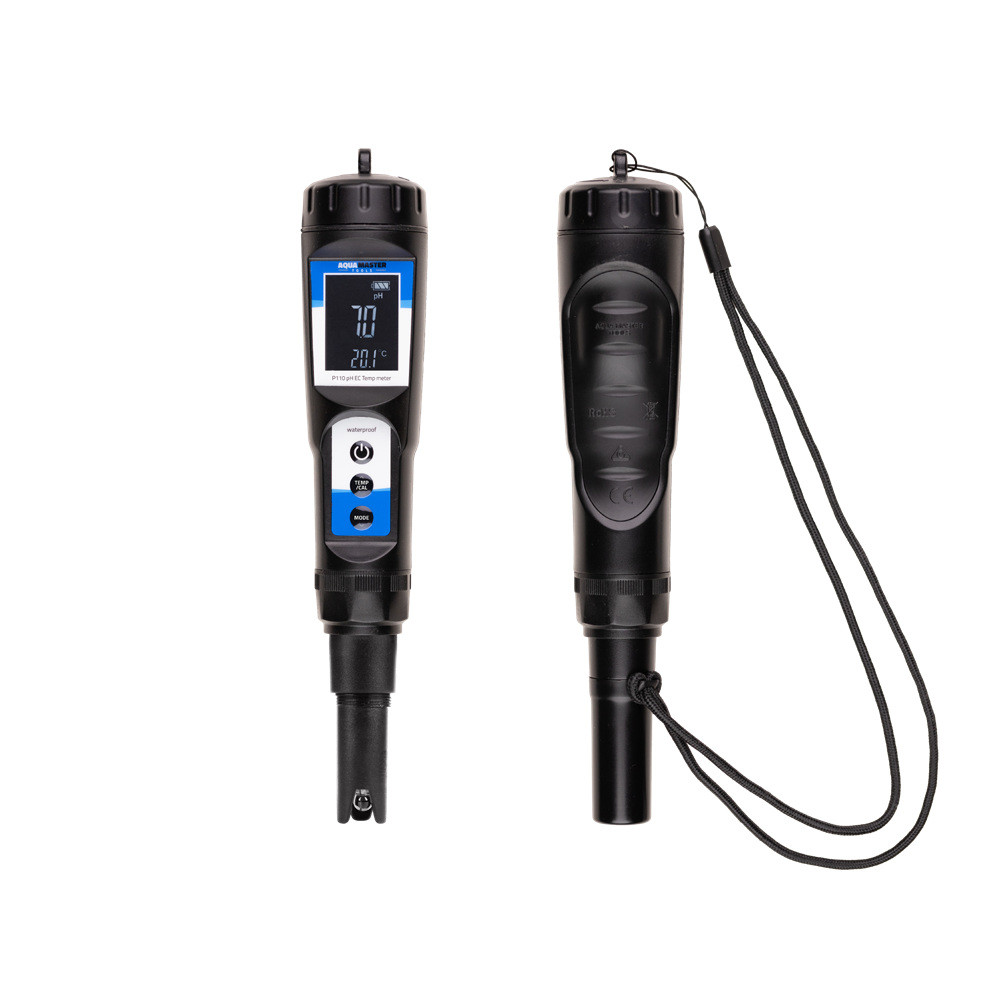 Electronic EC metres are used to measure EC, and they usually take the form of a digital pen with a measuring probe at the tip. Reading the values takes only a few seconds, and some devices also measure the temperature or pH of the solution. The method and frequency of measurement will vary depending on whether you are growing hydroponically or in soilless substrates.
Measuring EC in hydroponic systems
When growing hydroponically, measure the EC of the nutrient solution at least once every two days. First top up the tank with clean water, measure the EC, and then add fertilisers to raise the EC to the required value. A common problem for beginner growers is fluctuations in the EC of the nutrient solution flowing through the hydroponic system. This is usually caused by the nutrient solution tank being relatively small compared with the amount of water the plants use. If this is also your case and you have to top up the tank too often, look for a larger one.
Measuring EC in soilless substrates
When growing in coco, rockwool and other soilless substrates, EC does not fluctuate as quickly as in hydroponics, and measurements only need to be taken roughly once a week.
- Before measuring, water the plants in the usual way. A few drops of water should drain from the bottom of the pot after watering.
- Leave the pots to stand for one hour.
- Place a tray under each pot and water with 150–350 ml of distilled water, depending on the volume of the growing container.
- Wait a few minutes for the leachate to drip into the tray, then measure it with the EC metre.
Remember that the EC of the substrate will be slightly higher than the EC of the irrigation water, due to salt build-up in the root zone. However, if you measure a significantly higher EC in the substrate than in the nutrient solution, the plants are at risk of overfertilisation. If you want to reduce the EC of the substrate, flush the pots with clean water with adjusted pH until approximately 30% of the volume runs out of them.
OUR TIP: Would you like to make measuring the EC of the substrate around the root zone easier? Try the Aqua Master Tools EC metre with a sodium probe for substrate!
You may also be interested in: Tips for measuring EC
Care for EC metres
EC metres are essentially laboratory equipment and, as such, require proper handling and care. Without regular calibration and careful hygiene, even the best EC metre will not measure correct values. After each measurement, the probe must be rinsed with clean water so that salt residues from the nutrient solution do not dry on and affect the next measurement. For this purpose, we recommend using distilled water, which contains not even trace amounts of minerals.
EC metre probes need regular calibration. Ideally, the device should be calibrated before each use, although once a week is sufficient. When calibrating, follow the manual, which will also tell you which type of calibration solution to use. Use a fresh calibration solution each time you adjust it, pouring some into a cup so that the rest in the bottle does not become contaminated.
It is true that even the most expensive EC metre will not last forever and will need replacing. The disadvantage of cheaper devices is that only the probe cannot be replaced. So if you are serious about growing, it is worth looking for an EC metre with a replaceable probe, which will last much longer with good care.
For more advice and tips for beginner and experienced growers, and industry news, follow our Higarden blog for growers.
Are you switching off your grow box for the summer? We will advise you how to do it so that you do not have to!
Although Central Europe is no Sahara, many indoor growers are forced to switch off their grow room during the hot summer months. Plants grown indoors thrive best at room temperatures, and although they can withstand more extreme heat for a short time, this has a significant impact on their health and yield. In the end, it may not even be worth switching on the equipment. But how should you set up your grow room so that you can cultivate all year round?
Replace outdated discharge lamps with LED lighting
If you are still using discharge lamps (HPS, MH), summer is the ideal time to switch to LED grow lights. Discharge lamps emit a lot of heat and convert up to 70% of the energy they consume into infrared radiation, which directly heats the growing space and does nothing to support plant growth. LED luminaires have lower power consumption and produce minimal heat, which will significantly reduce the temperature in the growing space. In addition, you will save on electricity bills, because compared with discharge lamps, LED diodes convert much more of the supplied energy into photosynthetically effective radiation in the PAR spectrum.
Pro tip: If you light during the day and are struggling with high temperatures inside the growing space, try lighting your plants at night, when it is cooler.
Improve ventilation and air circulation in the growing space
It is obvious that the better and faster you manage to remove heated air from the growing space, the cooler it will be inside. Before you start buying new equipment, however, first check what you already have. A common cause of ventilation problems is clogged carbon filters and fans, or leaking ducting and joints. If that does not help, try the following:
- Increase extract performance: Check whether your fan can handle the increased load. It may be time for a more powerful model.
- Maintain negative pressure in the grow box: Ideally, the extract performance should create slight negative pressure in the grow tent. You can tell this by the “sucked in” walls of the grow box.
- Add circulation fans: Circulation fans not only help plants develop strong stems, but also prevent hot air from building up in one place.
You may also be interested in: Where and how to position fans correctly in the grow room
Air conditioning and cooling
If you have tried all of the above advice and still need to reduce the temperature in the grow box a little, it is time to use air conditioning. Air conditioning units are relatively expensive to run, so use them efficiently. Always vent the warm air from the air conditioning unit outside or into another room. Use timers and thermostats so that the air conditioning runs only when it is absolutely necessary.
CO₂ supplementation
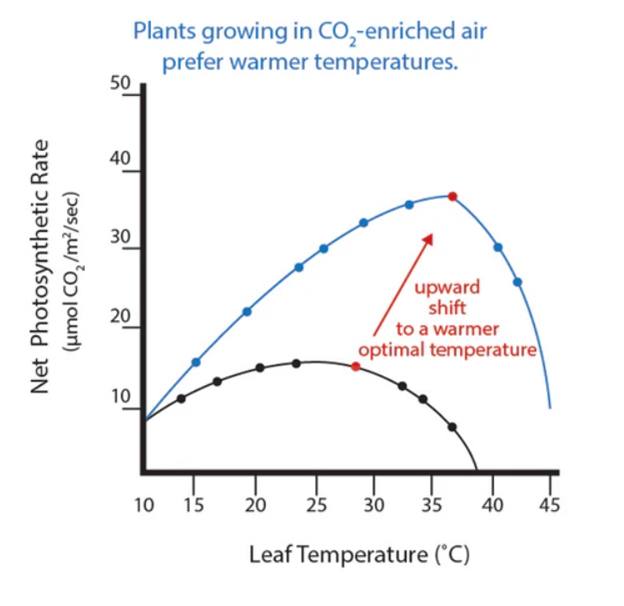
Although for most growers the best approach is to keep the temperatures in the grow box at optimal levels, under certain circumstances they can be an advantage. Specifically, this refers to supplementing the atmosphere in the growing space with carbon dioxide. Plants use CO₂ during photosynthesis, during which they absorb light and convert it into energy in the form of glucose. Higher concentrations of carbon dioxide allow plants to carry out photosynthesis at higher temperatures. Under normal conditions, the air contains around 400 ppm of CO₂, which allows plants to carry out photosynthesis efficiently at temperatures between 25 and 30 °C. It has been found that if the CO₂ content is increased to 1935, this temperature can rise to as much as 36 °C.
Interested in the latest news from the growing industry and practical advice for growers? Visit our Higarden blog.
What are the ideal conditions for indoor growing?
Ensuring plants have the perfect environment should be the goal of every indoor grower. Only then will you use the electrical energy and other resources you have invested in cultivation effectively and achieve high yields. In the following lines, you will learn how to create the perfect climate in a grow room.
The basic climatic factors affecting plant growth are temperature, humidity, VPD, light and air circulation. Your goal should be to keep all these variables within the optimal range throughout the entire growing cycle. Remember that these factors are interconnected and influence one another, affecting the way plants take up water and nutrients. Therefore, if you change any of the climatic factors, you should also adjust watering and fertilising of the plants.
Vapour pressure deficit (VPD)
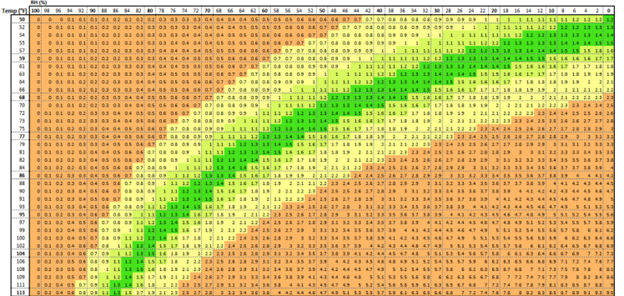 Water constantly flows through plants: roots absorb it and leaves release it back into the surroundings in the form of water vapour during a process called transpiration. This enables them to absorb nutrients, cool themselves and drive metabolic processes and photosynthesis. The rate at which water evaporates from plants through the leaves depends on the temperature and humidity of the surrounding air. The difference between how much moisture the air is able to hold and how much water it is holding at a given moment is called VPD (Vapour Pressure Deficit). At low VPD, the air is saturated with moisture, transpiration slows down and the risk of mould increases, whereas at high VPD transpiration speeds up, leading to greater water and nutrient uptake, but also to the risk of overfertilisation. Optimal VPD helps maintain a balance between water and nutrient uptake and healthy plant growth.
- The simplest way to achieve optimal VPD is to keep a stable temperature in the growing space and adjust the air humidity according to the age of the plants.
- How to handle VPD and advanced climate control.
Temperature
 Temperature affects the rate at which plants absorb and process nutrients. Most plants thrive best at temperatures in the range of 20 to 30 °C. The lower the temperature drops, the more slowly plants will transpire, their metabolism will slow down, and their growth will stop completely at around 16 °C. As temperatures rise, plants can carry out photosynthesis more efficiently. This allows them to use more energy from light and grow faster, with the fastest growth achieved at 30 °C and 1,500 PPFD (Chandra et al. 2009). If temperatures rise above 30 °C, plants will not be able to cool down quickly enough and their growth will stop completely at 32-35 °C.
- Measure the temperature in the growing space with a digital thermometer with an external probe, which you should hang near the new shoots, as they are the most delicate.
- Prepare your grow box for winter.
- High temperatures in indoor growing and how to avoid them.
Humidity
The ideal humidity for indoor growing depends on the age of the plants, the temperature and VPD. Maintaining low relative humidity in the growing space is especially important during flowering and ripening, when plants are more susceptible to mould and botrytis. In general, during germination and rooting the humidity in the growing space should be around 70%, during the vegetative phase 55-65% and during flowering around 50%. Do not forget that air humidity that is too low speeds up transpiration, which results in high water consumption, slow growth and lower yields.
- To increase humidity in the growing space, use humidifiers; to reduce it, use dehumidifiers.
- For indoor growing, you cannot do without a digital humidity metre with thermometer.
Light
 During photosynthesis, plants convert energy from light into sugars, which they then use to power their metabolism. For this process to be efficient, the incoming light must have the appropriate spectrum, intensity, and the length of lighting is also important. Most plants need approximately 18 hours of light per day for growth and 12 hours for flowering. A suitable grow light should have a spectrum corresponding to sunlight. This is usually provided by LED diodes or HPS discharge lamps. Light that is too weak limits growth, while light that is too intense burns and stresses plants.
- How light spectrum affects plant growth.
- The most important criteria for choosing grow lighting.
- How to control photoperiod to increase plant yield.
Air
A sufficient air circulation in the growing space is essential for maintaining the correct temperature, humidity and a supply of fresh CO₂ for plants. Ideal airflow in a grow box or grow room is ensured by a combination of a extract fan and internal circulation fans. The extract fan removes excess humidity and brings in fresh air, while circulation fans ensure even airflow around the plants.
- How to choose ventilation ducting for a grow box or grow room.
- Where and how to correctly place fans in a tent or grow room.
- Buy a fan with control or without?
Would you like to learn the basics of indoor growing or are you looking for information about the latest developments in growing and the newest gardening gadgets? You will find all of that on our Higarden blog!
What is the best light for growing chilli peppers?
Are you unsure which grow lighting to choose for your home chilli garden? We bring you practical tips on grow lights for growing chilli during the growth, flowering and germination stages.
The basis of indoor growing is to provide plants with an environment that best simulates the ideal conditions for their rapid growth. This includes grow lighting, which must have sufficient intensity and the correct spectrum. Let us look at which factors to consider when choosing a grow light for growing chilli and how to light plants in different growth stages.
You may also be interested in: The most important criteria for choosing grow lighting
Which light to choose for different growth stages
During their life, chilli peppers go through several developmental stages – from germination, through vegetative growth, to flowering and fruit ripening. In each growth stage, plants need slightly different light. It is therefore a good idea to choose grow lighting for indoor chilli cultivation that covers all the plants’ needs from seed to harvest. Most indoor growers today light their plants with modern LED grow lights, which have a balanced spectrum and are more energy efficient than outdated high-pressure discharge lamps.
You may also be interested in: Light spectrum and its effect on plant growth
Germination and raising seedlings: Chilli seeds do not need darkness to germinate, so you can light them from the very first day. During germination and in the first weeks of life, however, less intense lighting with a predominance of the blue part of the growth-supporting spectrum is sufficient. For these purposes, many growers use energy-efficient TLED panels, which consume less electricity than large high-output grow lights.
You may also be interested in: Chilli peppers: How to germinate and raise chilli seedlings
Vegetative growth: Once chilli seedlings have grown a little and you transplant them into a larger pot, they enter the vegetative growth stage. During the growth period, chilli needs sufficiently intense lighting with enough of the blue part of the spectrum, which stimulates the plants to grow quickly and supports the formation of leaves, roots and stems. In terms of lighting intensity, plants in the vegetative stage need slightly less light than those in the flowering stage. If you have a grow light with dimming function, set the output so that it corresponds approximately to a PPF value of 400-600 μmol/m²/s.
Flowering and fruit ripening: Chilli flowers for quite a long time, and with some exotic varieties you may wait several months for the fruit. During flowering and ripening, the light intensity should reach 600–1000 µmol/m²/s with a sufficient proportion of the red part of the spectrum, which stimulates the plants to form flowers and fruit. If you grow with sodium discharge lamps, at the start of flowering you will need to replace the lamp from the “grow” type to “bloom”. LED grow lights have a balanced spectrum similar to sunlight and contain enough red light.
You may also be interested in: How to grow chilli peppers under artificial lighting
Would you like to start growing chilli, but are not sure which equipment to buy at the beginning? We have prepared advantageous chilli growing sets for you, so you can get started as soon as tomorrow! For tips on growing chilli and other useful growing advice, follow our Higarden blog.
Top 5 Must-Have Gadgets for Indoor Growing You Shouldn’t Be Without
Indoor cultivation is an art that can take many years to master. While you can learn the basics from books, some tricks you have to discover for yourself or pick up from more experienced colleagues. We asked seasoned growers what must not be missing from their equipment, and we have also selected five of the best tips for you that will take your cultivation to a higher level.
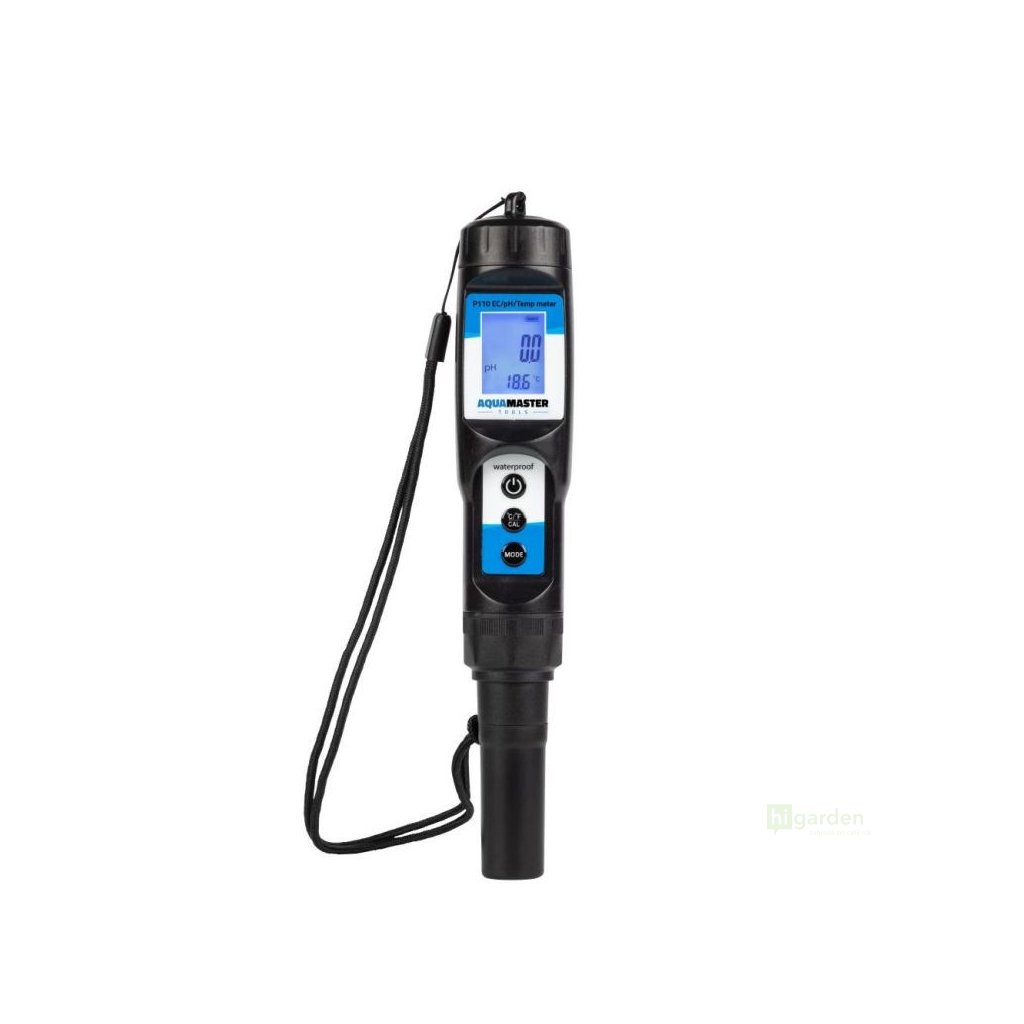
pH and EC metre – When cultivating indoors, it is very important to pay attention to the quality of the water you use to water your plants. pH metres are used to check the acidity of the nutrient solution, which affects the plants’ uptake of nutrients. An environment that is too acidic or too alkaline prevents plants from taking in important nutrients. An EC metre (conductivity metre) is indispensable for correct fertiliser dosing. With this device, you can find out how many dissolved salts (nutrients) the water contains. Investing in a pH and EC metre will save you a lot of trouble and money. Incorrect pH or overfeeding with mineral fertilisers can easily deprive you of the entire harvest.
You may also be interested in: What you need to know about the water you use for watering

Heating – A stable and controlled temperature is the key to high yields when cultivating indoors. A large difference between night and day temperatures, or a temperature that is a few degrees lower, affects plant metabolism and, above all, how quickly they absorb nutrients. Tube heaters are especially useful in the winter months, but you will also use them to balance temperature differences when the lights are off and when they are on.

Dehumidifier – Excessive humidity in the growing space is a common source of problems indoors. Mould and many pests thrive in a humid environment, and plants cannot transpire sufficiently. Dehumidifiers are especially useful in the second half of the growing cycle, when plants consume large amounts of water and at the same time need a drier environment for ripening.
You may also be interested in: Advanced climate control – VPD and transpiration

Support nets – Less experienced growers often misjudge how much their plants will grow after switching to flowering. By the time the tops are almost brushing the grow lights, it is often too late to bend or trim the plants. In the best case, overgrown plants can mean losing the best part of the harvest; in the worst case, there is a risk of fire. That is why our sales staff often advise customers to buy a support net with their new grow box, which gives the grower greater control over plant growth. Support nets also serve as support for ripening tops weighed down by flowers.

Sprayer – Many growers regularly mist plants with water or treat them with preventive sprays. If you are just starting with indoor cultivation, then the idea of regularly treating your little garden with a small hand sprayer may not seem like much hard work. Experienced growers, however, know that investing a few hundred crowns in a quality pressure sprayer pays off many times over in saved time and effort.
Are you only just starting to grow and looking for tips on basic equipment? Take a look at Buying a grow box from A to Z and at other articles on the Higarden blog, where you will find everything about indoor cultivation under artificial lighting.
Sanlight Grow Lighting – Uncompromising Austrian Quality for Your Grow Room
The Austrian brand Sanlight ranks among the leaders in LED lighting for indoor growing, thanks to its modular systems that combine innovation, sustainability and precise workmanship. In this article, we will introduce the EVO and FLEX series, which are ideal for both professional growers and hobby enthusiasts. In addition to presenting the technologies, we will also offer practical tips on how to use these systems effectively for maximum plant growth and optimisation of the growing space.
Sanlight is an innovative Austrian company based in Vorarlberg, specialising in the development and production of highly efficient LED lighting for commercial and hobby plant cultivation. If there is one thing that makes this Austrian manufacturer stand out significantly from the competition, it is its emphasis on in-house research and regional as well as technological sustainability. All equipment is developed, manufactured and assembled in Austria. Sanlight also works with prestigious universities and research institutions, including the most advanced growing facilities in the Czech Republic.
Sanlight EVO
The EVO series is the flagship of the Sanlight brand, and models from this range always contain the latest LED technology. From a design perspective, the EVO range differs at first glance from LED modules of other brands. The radiator-like chassis made of heavy metal gives Sanlight lights a distinctive appearance, but it has practical reasons. The thin metal fins increase the surface area through which excess heat emitted by the LED diodes can escape. This simple and effective passive cooling system makes it possible to omit the often failure-prone fans seen with other brands.
Another unmistakable feature of the EVO range is the fact that individual modules can be easily connected in series and used to illuminate plants from several sources at once. This allows you to flexibly adapt the number of lights to the size of the growing space. As can be seen in the image, the suspension is also adapted for series connection, allowing you to hang the lights at a slight angle so that the light falls on the plants from the side. The result is more even illumination, more space for plants and, ultimately, higher yields. Dimming options are also available, either with a magnetic or Bluetooth dimmer.
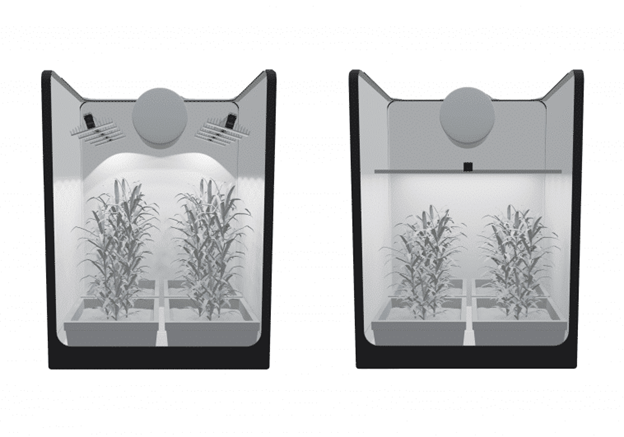
The emphasis on high quality is also reflected in the technical parameters of the EVO series. All models are equipped with secondary optics, which increase the intensity of the emitted light (PPFD). The silicone lens also protects the LED diodes from contamination and significantly extends the service life of the lights. Naturally, the high efficiency exceeding 3 µmol/J places EVO lights among the most powerful LEDs on the market. Last but not least, we must not forget the adjusted light spectrum, which offers a higher ratio of far-red and red light, positively affecting plant development and the production of secondary metabolites in some plants.
Would you like to learn more about the light spectrum and its effect on plant development? Read the article Light spectrum and its effect on plant growth on our blog.
Sanlight FLEX
 The FLEX range is Sanlight’s response to the ever-increasing demand for LED lights designed for rooting seedlings and cuttings, producing leafy greens or growing ornamental plants or microgreens. These energy-efficient modules emit a light spectrum that supports root formation and vegetative growth. An advantage of the growth spectrum is that, thanks to its pleasant colour, the light does not feel intrusive, so lights from the FLEX range can also be used in living spaces. Like the EVO modules, the FLEX series is equipped with passive cooling. Another advantage of the FLEX range is the IP68 waterproof rating, which allows you to hang the lights directly between the lower layers of plants, where the light would otherwise not reach. In this way, you can increase the quantity and quality of the harvest cheaply and easily.
Sanlight FLEX lights are suitable for multi-layer growing, where it is necessary to maintain a short distance between the plants and the light source. These growing systems are used, for example, in the cultivation of leafy greens, herbs or microgreens. Naturally, they feature robust construction, easy installation and the option of series connection. Connected modules can also be controlled together using a common LED controller.
New: SANlight Stixx 50W
is ideal for efficient lighting of approximately 3 small plants in a small area of around 40x40 cm to 60x60 cm. Thanks to the integrated dimming function, the light intensity can be set in steps of 10%, 20%, 40%, 60%, 80% and 100%, allowing you to optimise the light intensity according to the needs of your plants. It combines all the advantages of the Q1W DIM model, but offers significantly higher efficiency and IP68 certification, making it an excellent choice for small growing projects. Thanks to its flexibility and performance, it is an ideal solution for targeted plant growing in limited space. Cable length from the light to the controller: approximately 2 metres.
Useful links: Sanlight company website
Aqua Master Tools - digital measuring instruments from the Netherlands
One of the basic prerequisites for an excellent harvest when indoor growing of plants is precise measurement, for which growers mainly use digital measuring instruments. The brand Aqua Master Tools, which has been active on the market for the fourth year, has been receiving excellent feedback from users thanks to the quality and reliability of its products, practically since the beginning of its market presence. In this article, we will therefore focus both on the most important features that characterise the individual Aqua Master Tools combined metres, and on their practical use in specific devices.
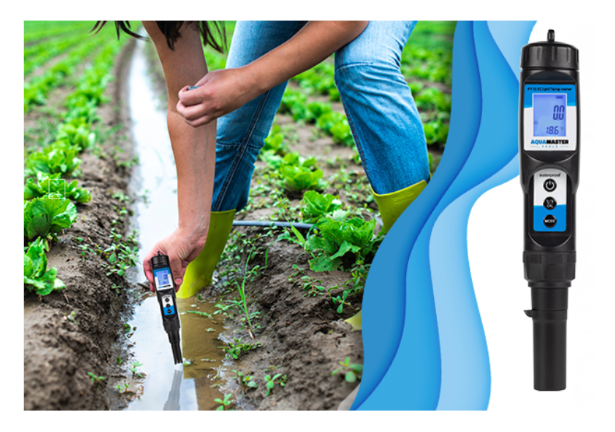
So what makes these pH metres, EC metres and thermometers in the form of compact devices for measuring acidity, electrical conductivity or temperature truly exceptional? And why are they selling more and more as measuring instruments for growers? Growers of varying experience who are involved in hydroponics, as well as other cultivation techniques, appreciate not only the high level of accuracy, but also the overall build quality and the long service life associated with it, as well as the comfortable use in everyday growing routines.
In all these respects, the relatively young, progressive Dutch company Aqua Master Tools, which has been producing complete products since 2018, has brought growers focused on results new and affordable options, thanks to which you can keep cultivation processes under control without having to unnecessarily purchase a range of additional devices and batteries. This saves you time and energy, and also ensures that by the end of the growing cycle you will be harvesting with a smile exactly the crop you have dreamed of!
In addition to enriching our range with the specific new products from this Dutch manufacturer listed below, we also prepared the following separate articles some time ago so that your pH and EC metres, whether from Aqua Master Tools or another manufacturer of measuring technology for growers, would serve reliably for as long as possible and always display the correct values. We recommend reading:
- How to use calibration solutions and pH metres?
- What is the storage solution (KCL) for?
- How to measure conductivity correctly (EC)?

Why choose pH and EC metres from Aqua Master Tools?
- A wide selection of affordable products depending on what you will measure and how often.
- User-friendly and pre-calibrated devices with modern software and batteries, enabling fast and accurate measurement.
- Versatile use from liquid plant nutrition through aquariums and ponds to swimming pools or hot tubs. Suitable for growers involved in hydroponics as well as growing in coco or traditional growing in soil.
- Clear instructions for the use and calibration of each model (see below).
- Above-standard warranty. The manufacturer (AMT) provides a warranty that is twice as long as usual. Why most manufacturers provide only a six-month warranty can be read in the article on calibration solutions (see above).
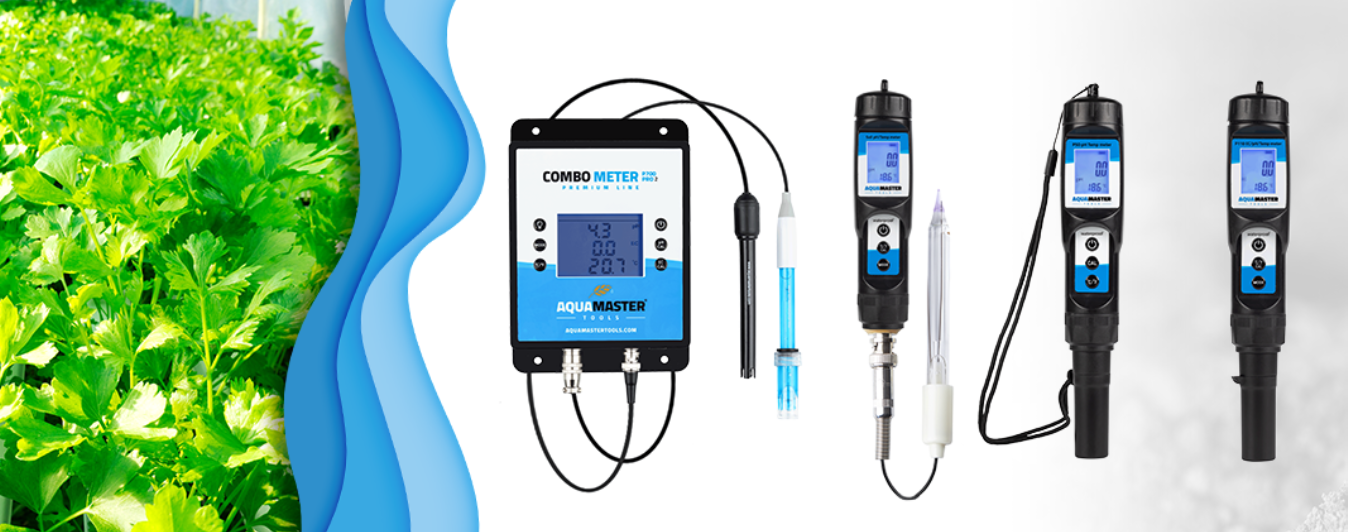
We will now introduce the individual variants, from the basic ones to the unique “COMBO” model. For each device, you can simply click through via its name (for example AMT E50 Pro) to the detailed product description, where you will also find instructional videos from the manufacturer in addition to detailed information.
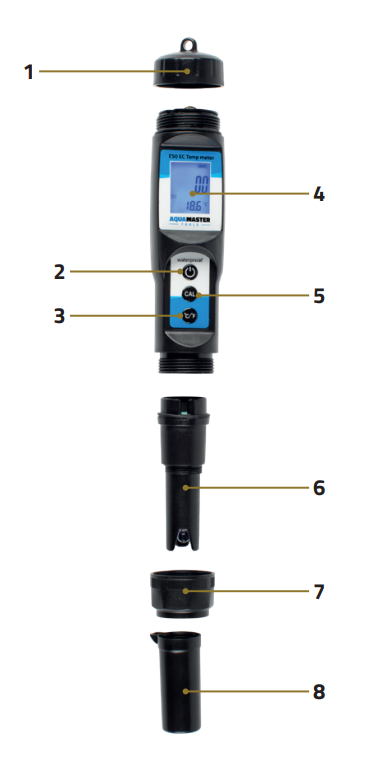
- Aqua Master Tools E50 Pro - digital EC metre and thermometer is the ideal helper for measuring the EC of the nutrient solution and the water temperature in the tank (see Why and how to maintain a stable temperature of the nutrient solution?). As you can see in the picture, the device consists of a top cap (1), an on/off button for switching on and off (2), a C/F button for switching temperature units (3), a clear display (4), a CAL calibration button (5), a replaceable electrode / probe (6) and a lower screw cap (7), followed by a protective cover (8).
- Aqua Master Tools P50 Pro is, at first glance, indistinguishable from the model above, as it is made from the same parts and the price tag is similar in both cases. The obvious difference between the two models, however, is that the P50 Pro probe is designed for measuring pH instead of measuring the electrical conductivity of the solution. It is therefore a digital pH metre and thermometer in one.
After the basic but exceptionally reliable devices for separate measurement of EC, or pH with liquid temperature, it is time to combine everything together! The following variants give not only growers this very option:
- Aqua Master Tools Combo Pen P110 Pro already represents a comprehensive solution for measuring the most important values, namely EC, pH and temperature, with improved software that means even faster readings. The robust casing again consists of the parts listed above. The combined digital measuring pen is supplied fully pre-calibrated, just like the basic variants, and includes a set of three button batteries.
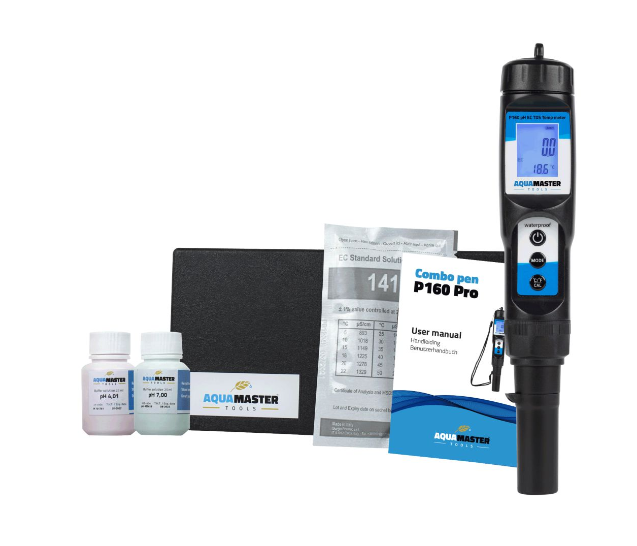
- Aqua Master Tools P160 Pro costs only a little more than the previous model, yet it is a combined digital metre that is ideal not only for pH, EC and temperature, but also for measuring TDS and PPM values. As you can see in the picture, this fully pre-calibrated device is supplied including the necessary buffered solutions for later calibration and other accessories (see the detailed product description). A major advantage of this model is then analogue EC calibration, thanks to which it is not necessary for the calibration solution to have an exactly specified temperature (25 °C).
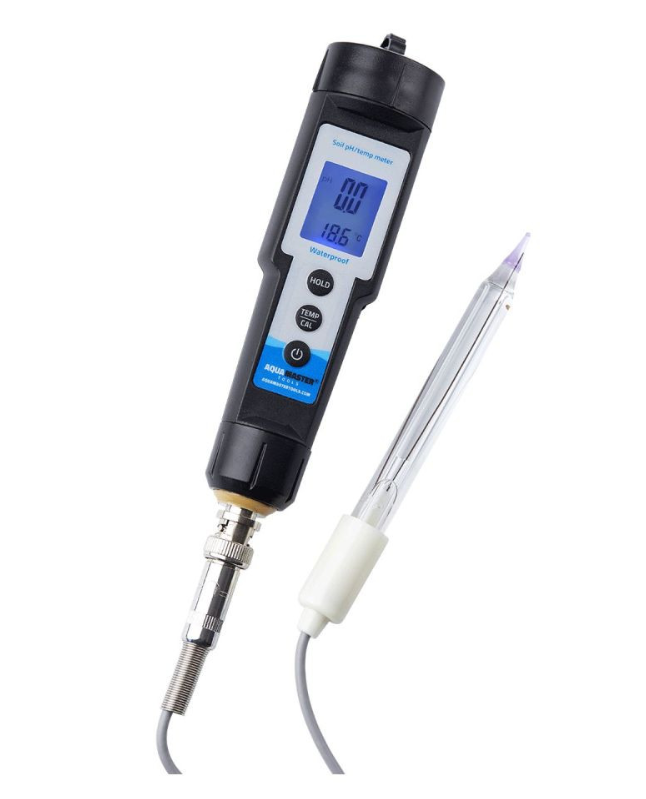
- Aqua Master Tools S300 Pro - while up to now we have shown modern devices for measuring important values in liquids (nutrient solution, water, etc.), this waterproof model stands out especially in growers’ eyes for its ability to measure, in addition to liquids, pH and the temperature of soil or coco substrate. The replaceable probe (electrode) of unprecedented quality features a BNC connector.
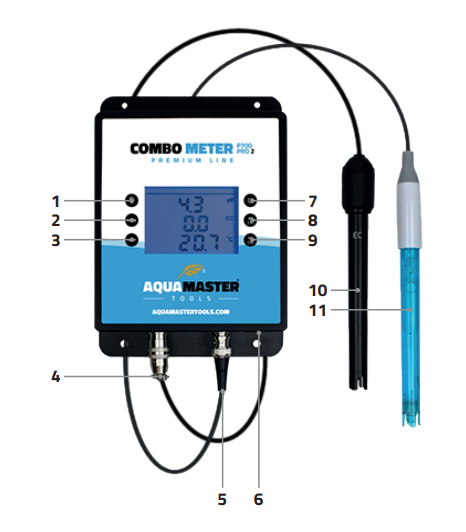
- The most technically advanced high-tech new product from Aqua Master Tools is the model designated P700 Pro 2. It is a combined digital metre for pH, EC, CF, PPM and nutrient solution temperature, which has two probes. It is perfectly suited for long-term use with low maintenance requirements and is equipped with an integrated rechargeable battery. The robust design is dominated by a large display on which all necessary values can be easily read. What this device consists of can be seen in the picture: 1. Light on/off button, 2. Mode button, 3. Celsius/Fahrenheit button, 4. EC electrode port, 5. pH electrode port, 6. USB port, 7. On/off button, 8. pH CAL button, 9. EC CAL button, 10. EC electrode, 11. pH electrode.
We have already referred you above to articles in which you will learn, among other things, how to extend the service life of the probe to the maximum. However, once the probe reaches the end of its service life, you will also find replacement probes (electrodes) for Aqua Master Tools pH and EC metres with us. We also recommend the original Aqua Master Tools calibration solution EC 3.0 directly from the manufacturer.
If you would like to ask us anything, please do not hesitate to write to us at the well-known e-mail address info@higarden.eu so that we can make your choice as easy as possible. We look forward to your questions!
We also recommend these products:
- Growth Technology KCL storage solution, 300 ml
- Growth Technology pH 7 calibration solution
- pH 4 calibration solution
What to read next:
- Electrical conductivity of solution - EC
- Why and how to maintain a stable temperature of the nutrient solution?
- Torus Hydro perfectpH: a revolutionary pH stabiliser
Prima Klima - fans for maximum performance and minimum noise
Growing ventilation equipment Prima Klima - these include odour filters, which we focused on last time, but the traditional German manufacturer may be even better known in the world of indoor gardening, as well as in many other fields of human activity, for producing reliable fans with above-standard durability and other attractive features, which we will look at in this article.
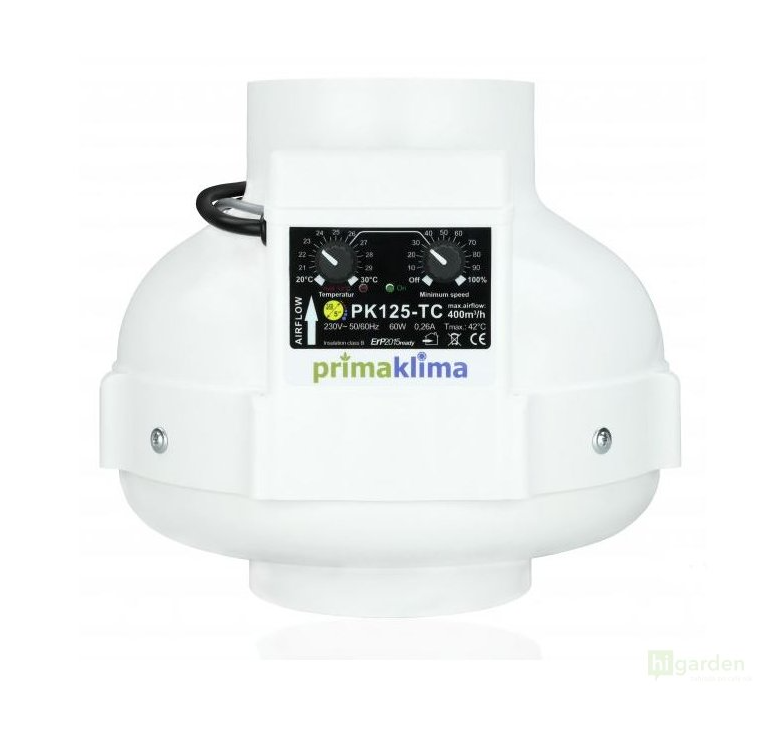
For growers using Prima Klima fans, there are no limits in terms of their real-world use. Quality workmanship, functional design, long service life, discreet operation and impressive performance - these are, in short, the main characteristics of the 36 variants available from us and the reasons why Prima Klima fans are so popular. The best-selling fan with thermal control is shown in the introductory photograph. It now only depends on the scale at which you devote yourself to growbox indoor cultivation and, of course, on your budget. The following lines will help you find your way more easily through the wide range of Prima Klima fans.
To begin with, however, we would recommend three separate articles that you should definitely not miss, especially if you have never chosen a fan before.
- How powerful a fan do you need?
- Should you buy a fan with control or without?
- The best fans for a growbox: EC or AC?
And now we can focus purely on Prima Klima fans:
AC Prima Klima fans
An AC fan, such as the single-speed model PK100-L, is more suitable for occasional ventilation of a grow tent. In the case of Prima Klima, however, these are duct fans (inline fans) with backward-curved blades and an aerodynamically optimised housing, which, given their low price, pleasantly surprise with fast air transport without unnecessary pressure losses.
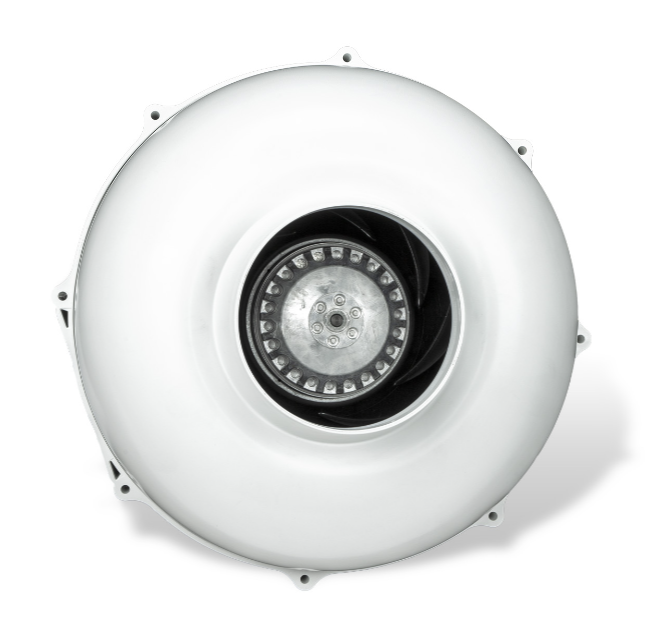
Although fans with an EC motor generally represent the better investment, even in the AC fan category the German manufacturer clearly demonstrates that quality workmanship in every respect deserves every class of fan. And although the aforementioned model PK100-L is essentially a very simple radial fan with a single speed setting, there are several aspects here that clearly point to the uncompromising quality typical of the Prima Klima brand. In short, a lot of performance for little money. So what characterises this small and inexpensive extract fan (in the picture), intended for smaller grow tents?
- By a plastic housing we mean a lightweight housing made from impact-resistant and heat-resistant polyamide.
- Nor was the motor skimped on. The MES AC motor has ball bearings and contributes to the fan’s discreet operation and low electricity consumption.
- Another advantage is integrated overheating protection.
- If you do not want a quality but truly the most “basic” duct fan, it may be a disadvantage that this fan has no more than one speed setting. Among the cheaper variants, for example, the two-speed AC fan PK125-2 comes into play.
Of course, it depends on individual needs, and Prima Klima, as you will soon be sufficiently convinced, truly suits everyone. “Basic” variants with an AC motor, such as PK-100L or, for example, PK-150A, are fans without control.
If you are interested in AC fans with control, then for example the model PK100-TC, also fitted with a high-quality EBM-Papst AC motor with maintenance-free ball bearings for smooth operation and long service life, already stands out for its ability to regulate speed based on the current and optimal temperature. The temperature sensor on a four-metre cable (see picture) continuously monitors the temperature in the growing space, and as soon as it exceeds the preset value, the fan speed immediately increases so that the warm air in the space is vented out. Once this happens, the speed automatically drops to the minimum set value.
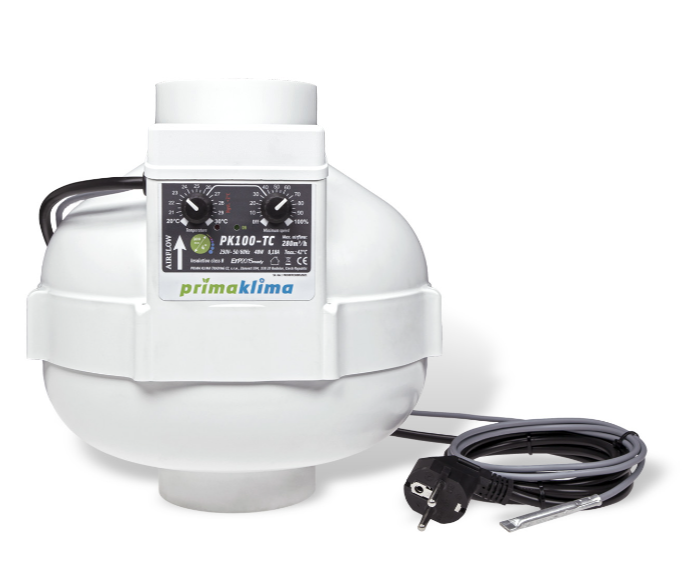
Among the long-term most popular AC fans with thermal control are also the variants marked PK125-TC (the absolute bestseller among Prima Klima fans), PK150-TC, PK160-TC. Prima Klima also manufactures AC fans for effective ventilation of large growing spaces. Here, for example, simple duct fans without control such as PK200-A, PK250-L1 or, for example, PK250-A1 come into consideration.
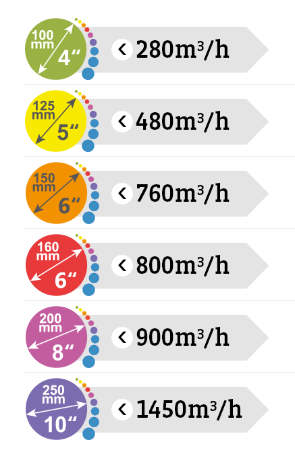
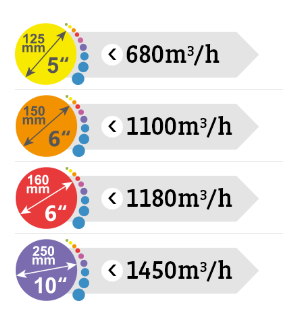
In addition to flange size, you will choose fans according to air flow capacity. Prima Klima AC fans have this range:
Low consumption - high performance! Prima Klima fans with a direct current EC motor cost a little more, but from a construction point of view they surpass brushed AC fans in many respects, which brings the following benefits to users of all categories, not only in the case of the Prima Klima brand:
- Much, much longer service life.
- On average 3x lower electricity consumption.
- Low noise even at low speeds, because electronically commutated motors start smoothly and without unnecessary noise.
- Smaller size for the same performance.
- High efficiency and easier power regulation are ensured by the electronically controlled stator.
- Simple and precise power regulation without reducing service life using digital controllers.
- EC Prima Klima fans are among those that work flawlessly at a lower operating temperature and do not overheat.
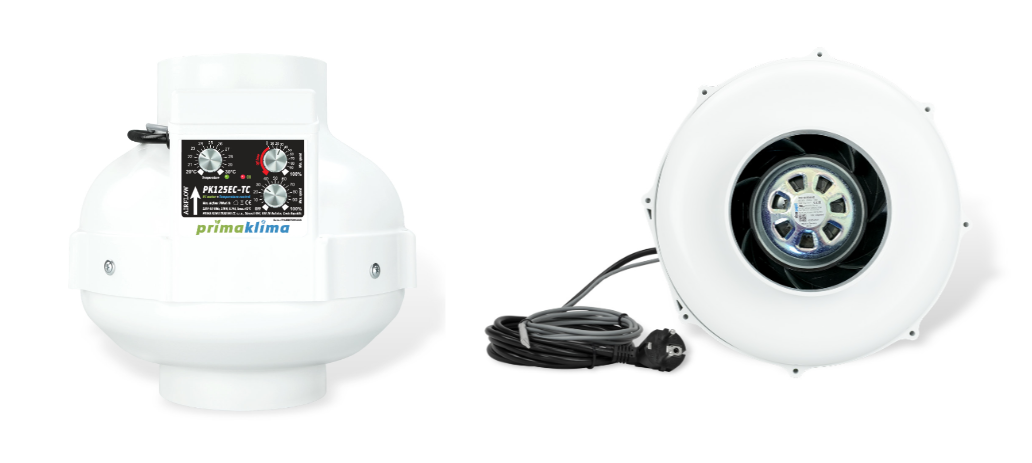
Let us introduce straight away the most popular model in this category, which is the quiet and efficient duct fan with thermal control, fitted with a top-class Swiss Ziehl-Abegg motor. This bestseller is designated PK125EC-TC. As the picture shows, there are three control knobs on the polyamide housing. The one for temperature setting is on the left. The upper right knob sets the minimum speed, and the lower right one sets the maximum fan speed. Three knobs mean convenient setting of the fan’s optimal operation.
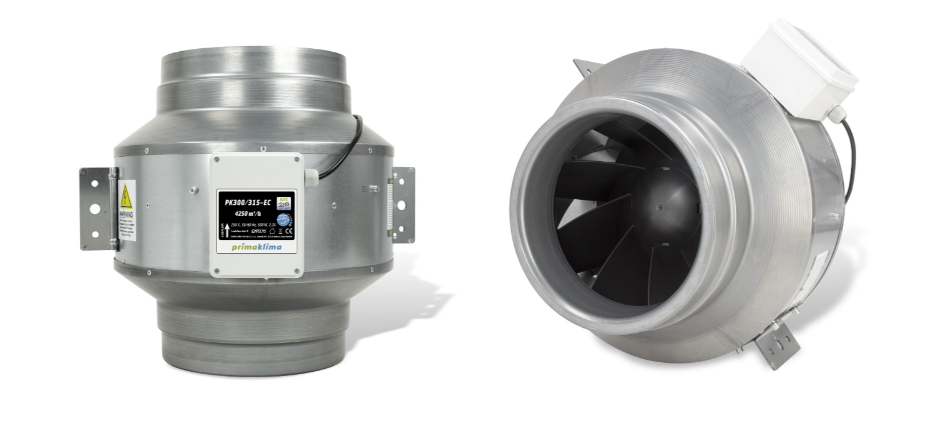
Do you have a large grow tent (growbox)? More than double the air flow can easily be handled, for example, by another popular EC fan with speed control and thermostat, designated PK250EC-TC.
The royal range of duct fans with an EC motor and a top-class Swiss motor was designed for continuous operation and intensive air flow.
A frequent choice for medium-sized and larger growing spaces are the PK160-ECblue and PK250-ECblue variants.
And then there is a trio of robust fans, predestined to handle an incredible air flow continuously and with ease, moreover with low noise emissions. These are the following professional fans:
- PK300/315-EC (4400 m3/h)
- PK355/400-EC (4800 m3/h)
- PK400/450-EC (8000 m3/h)
At full performance, expect more than 80,000 hours of continuous operation at full performance! Despite the fact that these are already large fans, used not only in large growing spaces but also in other (industrial) operations, their vertical or horizontal installation is very easy. Pre-installed robust mounting brackets allow perfect placement in any room.
Sound-insulated Prima Klima fans
5 models with patented technology stand out among Prima Klima fans under the designation WHISPERBLOWER. The best is usually saved for last, so it will certainly not surprise you that these sound-insulated, “whispering” fans stand out not only in name. You can learn everything essential about them in a separate article: WHISPERBLOWER: professional fans with unrivalled efficiency. Recommended!
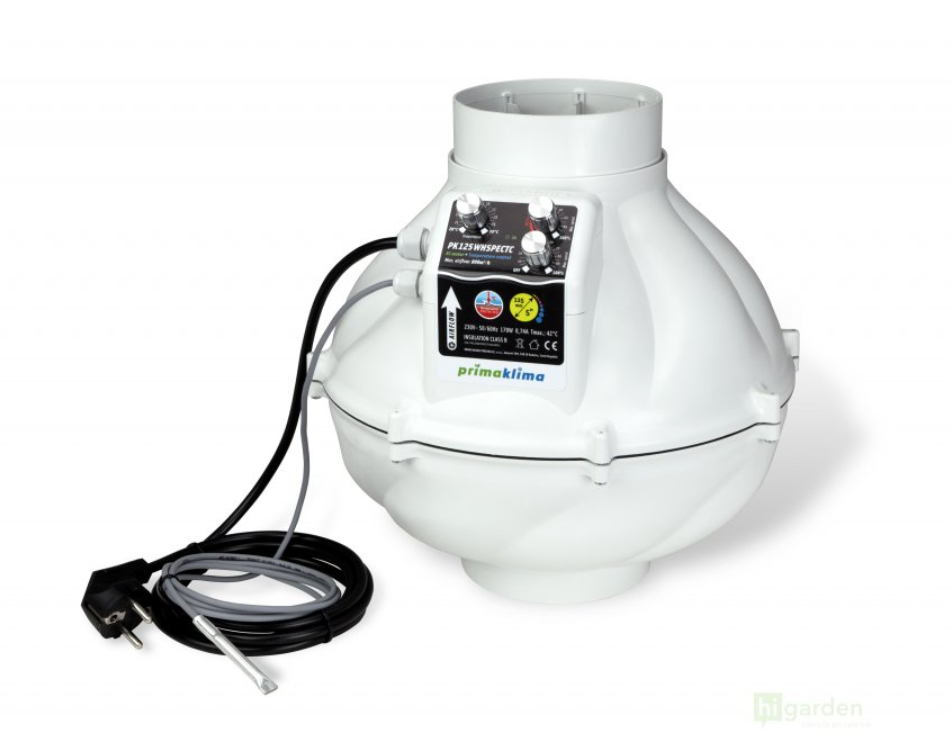
As you can see, Prima Klima has produced a fan for every grower without exception. You now know their common denominators and the specific features that distinguish them from one another. In combination with carbon filters from the same manufacturer (see the article link below), you will secure excellent ventilation equipment at a reasonable price. We will be happy to make your purchase easier. Please direct your questions to the well-known e-mail address info@higarden.eu.
We also recommend these products:
- Prima Klima wall bracket for fans
- Red Scorpion METAL fan 100 mm, 320 m3/h
- CO2 Generator MOTHER NATURE
What to read next:
- Plant cultivation and carbon dioxide. How and why to use it?
- Choosing your first tent with everything included
- Prima Klima - odour filters with activated carbon that you can rely on
Growing under artificial lighting: HPS vs. LED
In today’s article, we will look at the main differences between the most commonly used lighting fixtures, namely sodium discharge lamps (HPS) and the increasingly popular LED lighting. If you are serious about cultivation, it pays to keep up with the times!

A grow tent or any enclosed growing area requires a quality light source. Which is more suitable for you? Here are a few facts which should make it easier for you to decide how to light your plants in your grow box. And perhaps it is time for a change!
- LED diodes emit significantly less heat than classic HPS discharge lamps. As a result, even a smaller grow tent does not overheat inside.
- Another advantage of the lower heat output of LED diodes is that you can place these lights closer to the tops of the plants without concern, so you can grow, for example, taller plants than when using discharge lamps.
- Less heat can also be undesirable in the winter months, so the plants need a little extra heating. In practice, however, it is usually enough simply to reduce the intensity of air exchange, so you need a smaller fan and odour, or carbon filter. Lower air exchange also increases the efficiency of CO2 supplementation, if needed.
- LED diodes also stand out for their lower energy use, so if you are not trying to grow a one-off crop, but would like to harvest several times a year, over the longer term your investment in this technology will easily pay for itself.
- A wider and more even spread of light is another benefit of LED lighting. For example, the renowned “LEDs” in the ZEUS and ATTIS series from Lumatek are a typical example. This still unbeaten pioneer in the field of LED lighting for indoor growers shines on plants from several angles at once. Not only is the light radiation used more efficiently, but the “LEDs” naturally prevent the formation of so-called “hot spots”, or areas with undesirable intensity of light reflected by the reflector. A reflector, an indispensable accessory for discharge lamps, is practically unnecessary with LED lighting. In reality, the need for a reflector is zero thanks to the excellent light spread directly from the source.
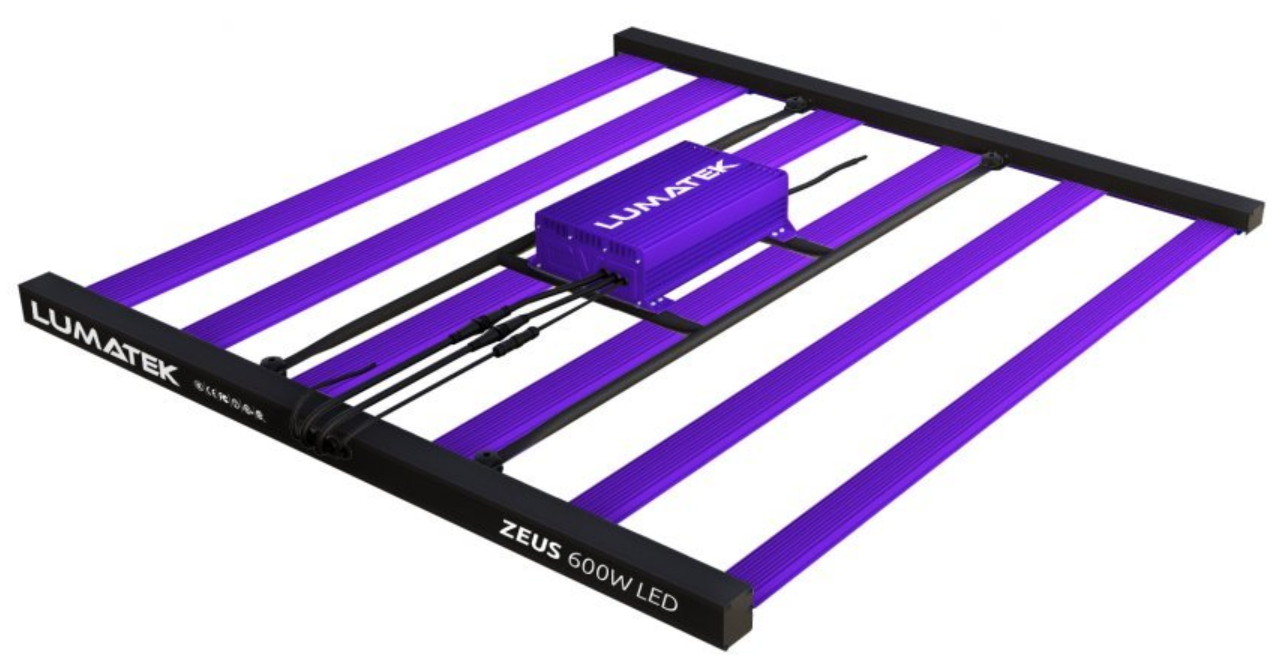
The unbeatable ZEUS 600W LED from Lumatek
- When using discharge lamps, if you try to regulate their output, cultivation practice leads to reduced lighting efficiency and also undesirable changes in the light spectrum. In addition, you need a ballast and a reflector. This does not happen with LED technology. As for the spectrum, “growing LEDs” perfectly imitate natural sunlight for all plants, which is of course soon visible in the harvest, whether you grow herbs, vegetables or fruit.
- For example, using a control unit, you can simulate morning and evening for the plants. This allows you to extend the time devoted to the formation of abundant flowers or juicy fruits. Especially if you are one of those playful types who like to experiment, LED lighting is the clear favourite for you, so that, as the saying goes, there are no tears from toys... With modern technology that is gentle on plants, you simply cannot go wrong, and you gain far greater scope for the individual needs that each plant has.
- LED lights are also a better choice for anyone who is just starting with indoor growing. You simply connect them and switch them on. LED diodes can therefore be used effectively even without experience. As your experience grows, new possibilities will gradually open up for making maximum use of all their additional features to increase yields without needing to change equipment!
- The difficulty in choosing LED lighting, unlike discharge lamps, is that manufacturers commonly measure the stated values in a highly incomparable way. The values are often very misleading. With discharge lamps, you simply choose according to wattage, which is fixed and that is that. With LED lights, you can no longer rely 100% on the “paper” values. We therefore recommend basing your decision mainly on experience with the given light. You can find this out from other growers, on the internet, or you can always ask us directly (info@higarden.eu).
- LED lights have always represented the best option for the vegetative stage of plants. However, in recent times modern full-spectrum lights have also surpassed HPS discharge lamps during the flowering stage.
We recommend these products:
- Lumatek ZEUS - unbeatable LED lighting for demanding users.
- Lumatek ATTIS - top-quality LED lighting offers excellent options at a favourable price, appreciated even by experienced growers.
- Viparspectra PRO Series P600 - quality LED basics, perfect for beginners!
- TLED VF - fluorescent tubes for supplementary lighting of plants in their immediate vicinity, suitable for example for the corners of a tent, where they light areas that the top light cannot reach.
- Discounted complete LED sets, from which everyone looking for a comprehensive solution for growing in a grow box using modern technology will choose.
What to read next: