
Plagron Alga (organic)
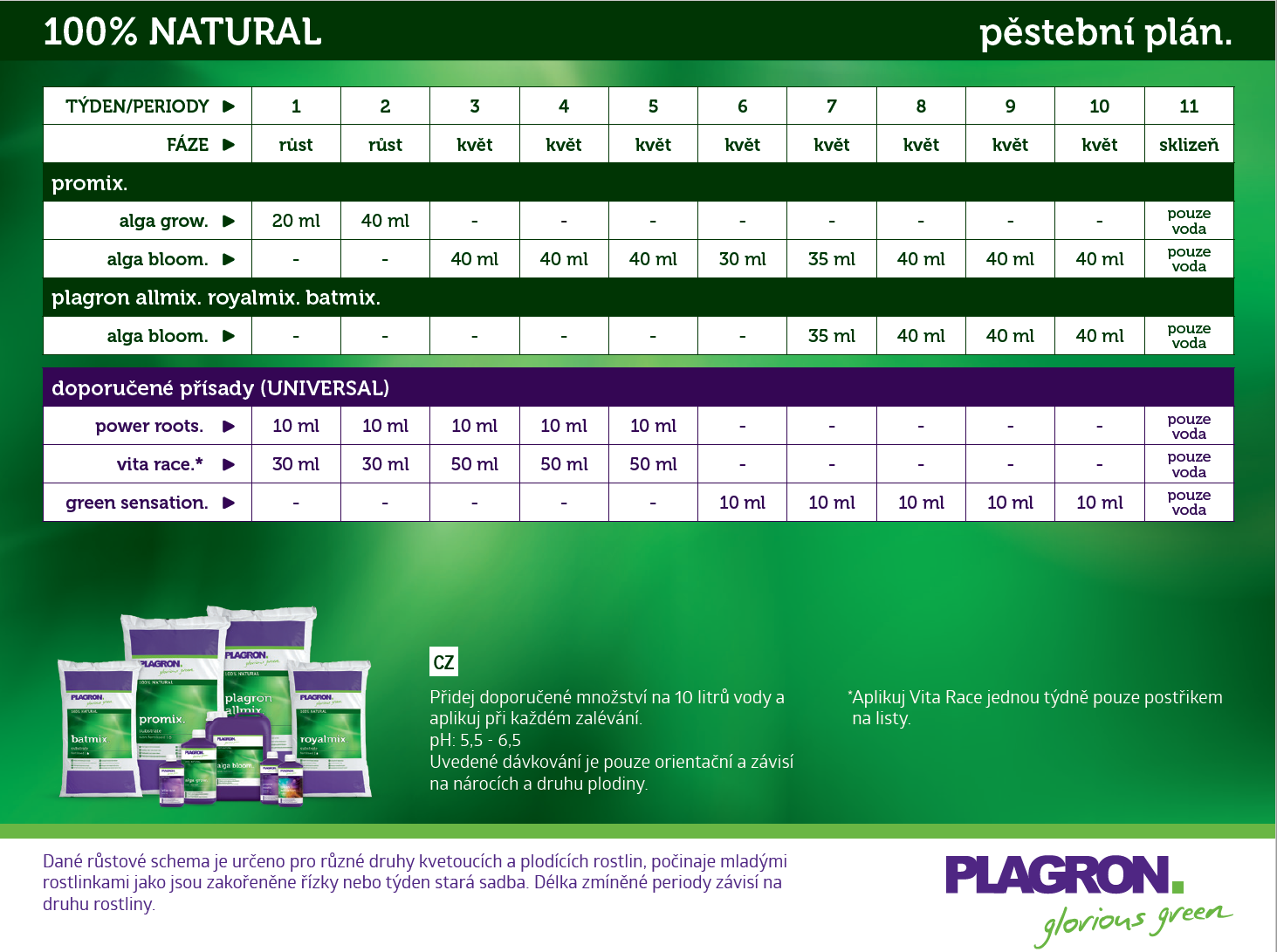
Basic fertilisers Plagron Alga for the growth and bloom phase are characterised by a 100% organic composition and are suitable for organic farming. You will achieve the best results in combination with a pre-fertilised soil substrate of the same brand. At the bottom of this page you will find fertiliser dosage tables.
We will be happy to answer your questions about fertilisers and additives. We are here for you at info@higarden.eu.


Product sorting
7 items total
List of products


Listing controls
7 items total
- Plagron - growing should be fun for beginners and professionals
- Beneficial microbes are irreplaceable helpers
Plagron Alga is a basic nutrient of organic origin ideal for growing in soil substrates (we recommend Plagron substrates, such as Lightmix, Growmix or Batmix).
100% natural certified organic fertilisers provide plants of all kinds with a rich source of nutrients, both in the growth phase and in the bloom phase. Thanks to the certificate, you can be sure that the fertiliser is not harmful to the environment.
Plagron Alga fertilisers improve soil structure and quality with added amino acids. Amino acids simplify the process of making nutrients available to the plant, which results in increased nutrient absorption and faster growth. They serve plants as building material for important proteins, which further stimulate growth, support fruit formation and improve their quality.
Seaweed has been used as a fertiliser for plants for several millennia. It contains not only nutrients, but also trace elements and compounds that stimulate growth and improve the plant's defence and resistance to abiotic stress (for example overwatering, drought or temperature fluctuations).
If you combine Plagron Alga fertilisers with the original substrates of the same brand, there is no need to adjust the pH and EC of the nutrient solution. Since all nutrients added by organic fertilisers are first converted by soil microorganisms into a form suitable for plants, there is no need to adjust the acidity of the solution. The EC metre does not detect organic fertilisers because they do not create ions in the solution and do not conduct electricity.
- Alga Grow - Used during the plant's growth phase and provides a solid foundation for maximum nutrient use during flowering.
- Alga Bloom - Used during the bloom phase. It helps the plant produce beautiful flowers and large, juicy fruits.
You can choose the pack size according to your actual needs, from 100 ml to 10 l.
Our TIP: The blend of selected types of peat with perlite directly from the Plagron brand fits perfectly with the Alga range of fertilisers. Also try Green Sensation - a unique 4-in-1 additive for a fantastic harvest!
Frequently asked questions about Plagron Alga fertilisers
What is the difference between Alga Grow and Alga Bloom?
You use Alga Grow in the growth phase, when the plant builds a solid foundation for later flowering. You apply Alga Bloom in the bloom phase, when it supports the formation of flowers and large, juicy fruits.
Do I need to monitor the pH and EC of the solution with Plagron Alga?
If you combine the Alga range with original Plagron substrates, there is no need to adjust the pH or EC of the nutrient solution. Nutrients from organic fertilisers are first processed by soil microorganisms into a form the plant can absorb. In addition, the EC metre does not detect organic fertilisers because they do not form ions in the solution.
Is Plagron Alga suitable for organic growing?
Yes. These are 100% natural certified organic fertilisers suitable for organic farming. Thanks to the certificate, you can be sure that the nutrition is not harmful to the environment.
Why are seaweed used as a fertiliser?
In addition to nutrients, seaweed provides trace elements and substances that stimulate growth and improve the plant's defence. They help it cope better with stress from overwatering, drought or temperature fluctuations.