
Lighting
List of articles
Choosing Lighting for Growing Microgreens
Microgreens are an excellent source of vitamins, minerals and antioxidants, and growing them is not difficult at all. However, the quality of microgreens depends to a large extent on the type of lighting you use when growing them. In today’s article, we will advise you on how to choose an LED grow light for microgreens and recommend several proven products from our range.
The basic prerequisite for healthy growth and development of plants is sufficient light. This drives photosynthesis, during which plants convert light into energy. While outdoors we can rely on sunlight, when growing indoors it is often necessary to provide supplementary lighting. This applies both to larger fruiting species, such as tomatoes or chilli peppers, and to microgreens, which have slightly different lighting requirements from other plants.
Microgreens go through several growth stages during the cultivation cycle, and their light requirements change accordingly. It all begins with the germination stage, when seeds absorb water and begin to grow. During germination, seeds do not require light, only a moist and warm environment. Once the seeds have germinated, microgreens move into the growth stage, during which they require bright light. The demands for the amount and intensity of light vary, but in general we can say that microgreens need light in the PAR (photosynthetically active) spectrum with wavelengths of 400–700 nanometres. After several days to weeks, microgreens are ready for harvesting and no longer require additional light; they can be stored in the dark, where their growth stops.
You may be interested in: Light spectrum and its effect on plant growth: Outdoor vs. greenhouse vs. indoor
Choosing suitable lighting for microgreens
Unsuitable or insufficient lighting can easily ruin your plans for juicy and healthy sprouts. Insufficient light intensity will cause the plants to have elongated thin stems and stunted leaves. An unsuitable light spectrum will result in distorted growth, yellowing leaves or even poor flavour of the microgreens.
Light spectrum
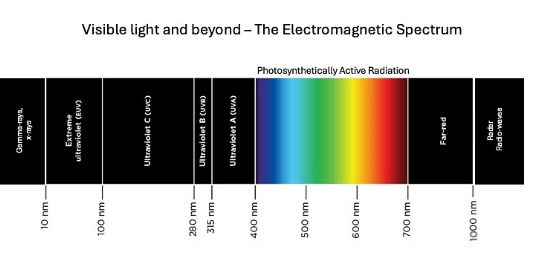 The light spectrum is the range of electromagnetic radiation visible to the human eye, and it consists of light of different wavelengths. The visible spectrum is made up of the colours that can be observed in a rainbow: red, orange, yellow, green, blue, indigo and violet. Light with different wavelengths has different energy, with red light having a longer wavelength and lower energy, while violet light has a shorter wavelength and higher energy. In addition to visible light, there is also an invisible part of the spectrum, such as infrared radiation (with longer wavelengths) and ultraviolet radiation (with shorter wavelengths).
The light spectrum emitted by modern grow lights generally corresponds approximately to PAR wavelengths, but the representation of individual colours in the spectrum will vary according to the colour temperature, which is measured in kelvins (K). According to the “temperature” of the light emitted by the grow light, we distinguish which type of plants and growth stage it is suitable for.
- 9000–11000 K (cool white) for germination and rooting cuttings.
- 5600–6500 K (blue) for growth and the vegetative stage.
- 2000-3000 K (red) for flowering, fruit formation and ripening
The ideal spectrum for microgreens is light with a predominance of blue corresponding to 5600-6500 K, which supports rapid growth and at the same time contains enough red light, which is also important for young plants.
Light intensity
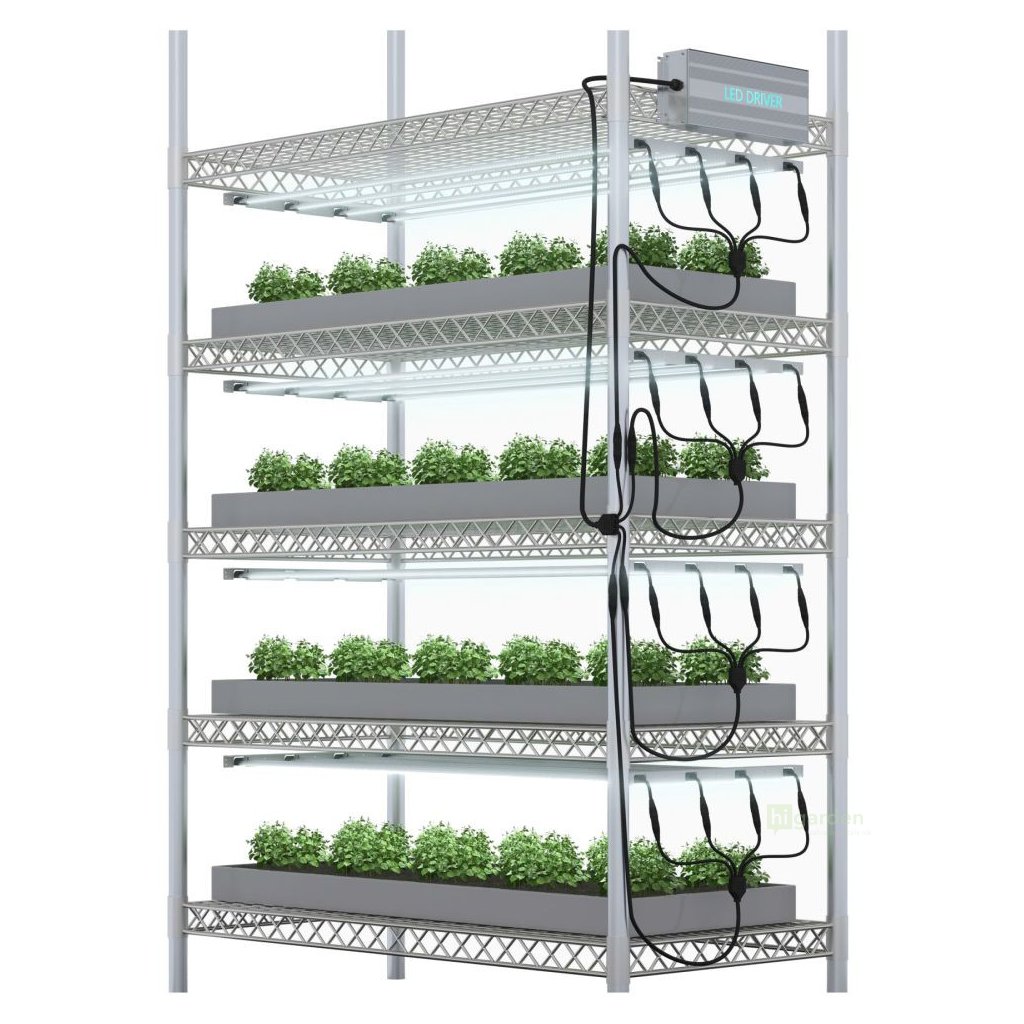 Another metric that will affect your choice of lighting for growing microgreens is light intensity. The PPFD (photosynthetic flux density) value indicates how many photosynthetically active photons (in the PAR spectrum) from the light reach the plants. Together with the length of lighting, intensity is a variable that allows us to estimate how much energy the plants receive from light. The optimal light intensity for growing microgreens ranges between 200 and 400 µmol/m²/s, with the recommended lighting period for microgreens being 12-16 hours per day.
In a study conducted by researchers from the University of Florida, microgreens grown under low light intensity (around 50 µmol/m²/s) had lower yield and lower antioxidant activity compared with microgreens grown under high light intensity (200 µmol/m²/s). At the same time, microgreens grown under blue light had higher antioxidant activity than those grown under light with a predominance of red.
Higarden tips for lights for growing microgreens
GENT G-LED grow lights are energy-efficient LED lights specially designed for indoor growing of microgreens. They offer a spectrum optimised for plant growth, especially in the vegetative stage. GENT G-LED lights emit a white-blue spectrum with a colour temperature of 6500 K, which is ideal for growing microgreens or other plants in the early stages of growth.
|
Light/model name |
Power |
Colour temperature |
PPF |
Dimensions (LxWxH) |
Description |
|
42 W |
6500 K |
135-210 µmol/s |
95x4x3 cm |
A light suitable for beginners or for growing a small amount of microgreens. |
|
|
42 W |
6500 K |
135-210 µmol/s |
95x4x3 cm |
A light for microgreens including a cable for connection to the mains. Multiple lights of this type can be connected into one circuit. |
|
|
100 W |
6500 K |
210 µmol/s |
120x60 cm |
A complete set with dimmer and cabling with 4 GENT LED segments and accessories for easy connection and installation. Ideal lighting for growing microgreens on one level. |
|
|
GENT G-LED Microgreens Dimmer Rack Komplet 400W na 4 patra
|
400 W |
6500 K |
210 µmol/s |
4x(120x60) |
The 400W LED complete set is especially suitable for home growing of microgreens on four levels. |
Would you like to learn more about indoor growing of microgreens and other modern gardening practices? Visit our Higarden blog!
How to Control Photoperiod to Increase Crop Yields
 Controlling photoperiod is a basic prerequisite for high yields when growing indoors and in greenhouses. We will show you how changes in the length of day and night affect plants and how to use this in indoor, outdoor or greenhouse cultivation. In addition, we will reveal several advanced techniques used by professional and commercial growers.
The alternation of day and night is an important factor for life on Earth. Plants and animals respond to changes in the length of daylight and darkness (photoperiod) with physiological or behavioural reactions. In animals, day length affects, for example, coat and feather colouration, migration, or the onset of mating season or hibernation. For many plant species, changes in photoperiod are a controlling factor that governs flowering.
Photoperiod
We use the term photoperiod to describe the number of hours of daylight and darkness during one day. The natural photoperiod changes throughout the year depending on geographical location. At the equator, photoperiod changes during the year are minimal and the day is divided year-round into approximately 12 hours of light and 12 hours of darkness. In the Northern Hemisphere, the longest day of the year (the summer solstice) occurs approximately on 21 June. After this date, the days become shorter (i.e. the nights longer) until 21 December (the winter solstice). In the Southern Hemisphere, this situation is reversed (i.e. the longest day is 21 December and the shortest day is 21 June).
How do plants know that the sun is setting?
Many flowering species (angiosperms) are equipped with photoreceptor proteins, such as phytochrome, thanks to which plants can perceive seasonal changes in photoperiod length. Phytochrome occurs in plants in two forms, the active Pfr form and the inactive Pr form. Red light emitted by the sun during the day converts inactive Pr into active Pfr. As sunset approaches, far-red light begins to increase, converting Pfr back to Pr. At the same time, Pfr can be converted to Pr in a process known as “dark reversion”, which occurs during a long period of darkness. The phytochrome conversion system allows plants to recognise whether it is night.
By manipulating the ratio of red and far-red light, it is possible to influence plant flowering. It has been found that plants flower later if they are exposed to more red light. Experiments have also shown that flowering can be inhibited by illuminating plants with red light in the middle of the night. In the case of short-day plants, this means that they will not flower if they are exposed to light for a few minutes during the night. Long-day plants, on the other hand, can flower even when illuminated with red light during the night.
Short-day and long-day plant species
Manipulating photoperiod is one of the basic tools growers use to control plant growth and maximise crop yields, especially in indoor growing (in tents or enclosed rooms), but also in greenhouses and outdoors. By using blackout or supplementary lighting, growers can speed up or delay flowering, extend the vegetative growth period, or keep plants in vegetative growth for a long time for cloning purposes.
We distinguish between short-day plants, which flower when days shorten and nights lengthen, and long-day plants, in which the onset of flowering is accelerated by longer days and shorter nights. The third category consists of neutral plants, whose flowering is not affected by photoperiod. Long-day and short-day plants are further divided into facultative and obligate types, according to their response to photoperiod.
- Obligate short-day plants flower only when nights are long (more than 12 hours) and days are short. These include hyacinth bean, hemp, poinsettia and chrysanthemum.
- Facultative short-day plants flower earlier if the photoperiod is short, but they will flower regardless of day length. These include mimulus or plantain.
- Obligate long-day plants flower only when days are long and nights are short (less than 12 hours). These include fuchsia, China aster and strawflower.
- Facultative long-day plants flower earlier during long days, but they will flower regardless of day length. These include sage or marigold.
Methods for controlling photoperiod
Blackout
The aim of blackout is to shorten the photoperiod to the required length, which is especially useful for short-day species grown outdoors or in a greenhouse. Blackout makes it possible for short-day plants to flower earlier than natural light would allow. It is also possible to cover entire plants (with some difficulty), but the most suitable method is to blackout plants in specially adapted greenhouses.
Supplementary lighting
The use of grow lights to supplement natural light is most commonly used by growers in greenhouses or outdoors. Artificial lighting can be used to extend the length of the day (the lighting period), which is useful both for short-day plants (delaying flowering) and for long-day plants (accelerating flowering). Supplementary lighting can also be used to interrupt the night, which causes plants not to flower.
Artificial lighting
When growing plants entirely under artificial lighting in a grow box or grow room, the photoperiod is entirely in the grower's hands. Most growers keep the lights on for 16-18 hours during the vegetative phase and for 12 hours during flowering. This, however, assumes that they are growing short-day or photoperiod-neutral plants. In the past, it was necessary when switching to flowering to replace the discharge lamp with blue light intended for growth with another wavelength for flowering; however, modern LED luminaires simulate daylight much better than outdated sodium technology.
Would you like to learn more about grow lighting and other tips for indoor growing? Do not hesitate to visit our blog.
VIPARSPECTRA and Growing Under LED – Definitely a Good Idea!
After a week, there is once again an opportunity to take a closer look at our shop’s range. Today we will focus on the popular LED lighting from the American brand Viparspectra. Technically advanced, lightweight and at the same time affordably priced LED luminaires have risen to the top of bestseller lists at many retailers around the world in recent years. Among other things, the manufacturer works closely with brands such as SAMSUNG and MEAN WELL. It invests heavily in its own research with the aim of using technological progress to improve the growing experience for herbs, fruit or vegetables in the comfort of home for as many customers as possible. Read on to find out how it has managed to win over more than 20 million growers from around the world at various levels over the past ten years!
Viparspectra is also a hit here. Proof of this is the best-selling LED luminaire in the form of the ViparSpectra PRO Series P600 model, which we will come back to later. First, however, let us briefly summarise what specifically connects the individual models and product ranges of Viparspectra LED lighting:
- The defect rate for LED lighting by ViparSpectra does not even reach one tenth of one per cent, which is truly an impressive result given the genuinely massive production capacity. Incidentally, we can also mention that Viparspectra’s fully automated production plants, which have recently undergone costly modernisation, cover an area of approximately three football pitches.
- Viparspectra has its own research and development team, and it must be said that it is made up entirely of top experts. Thanks to a team of 180 experts, the American manufacturer has full control over the development of each high-tech grow lamp. This is driven by considerable ambition to gradually outpace all competition. The products therefore undergo extensive testing, which is also reflected in the significant certifications (EC, UL). We can therefore also add the long service life of these LED luminaires to their exceptional reliability. Compared with discharge lamps, it is around 5 times longer!
- A waterproof board and a perfectly designed
- The third point relates to the general advantages of LED lighting, which include:
- Full light spectrum, thanks to which you can make do with a single source of artificial lighting throughout the entire growing cycle, when plants receive light usable in the relevant life stage for rapid growth and comprehensive development. This means a light spectrum from infrared (730 nm) to almost ultraviolet (all wavelengths).
- Low thermal emission. Because modern LED lighting, which certainly includes Viparspectra grow lamps, emits only a minimal amount of heat into its surroundings, even smaller grow boxes do not experience excessively high temperatures that could slow the healthy development of your plants.
- The light source emitted by powerful LED diodes can also be placed closer to plants and make maximum use of the growing space available to you.
- LED lamps by ViparSpectra do not only save space inside the grow tent or grow room, but are also defined by low electricity consumption and high efficiency. These features are further proof that the purchase cost of quality LED lighting will soon pay for itself. For every watt of input power, an LED lamp produces approximately 10 times more light than a light bulb, about 3 times more than a discharge lamp, and even roughly half again as much as a fluorescent tube.
- It is worth bearing in mind that when growing under a discharge lamp, you also absolutely need a ballast and a shade (reflector). By purchasing a compact full-spectrum LED lamp, these costs fall away, regardless of the price at which we offer reliable and efficient ViparSpectra LED luminaires. That is why they are also a common choice for beginner growers, who would otherwise initially look for the cheapest, sufficient solution for a start and only later seek a more sophisticated light source. With ViparSpectra, even a beginner does not have to make compromises and can immediately give their plants full-spectrum lighting with even light distribution and stable PAR values, simulating natural sunlight for plants (Sun-like technology).
Our TIP: Thanks to their unquestionable quality, innovative LED lamps with a favourable price tag have also become part of our discounted 200W and 100W LED growing sets.
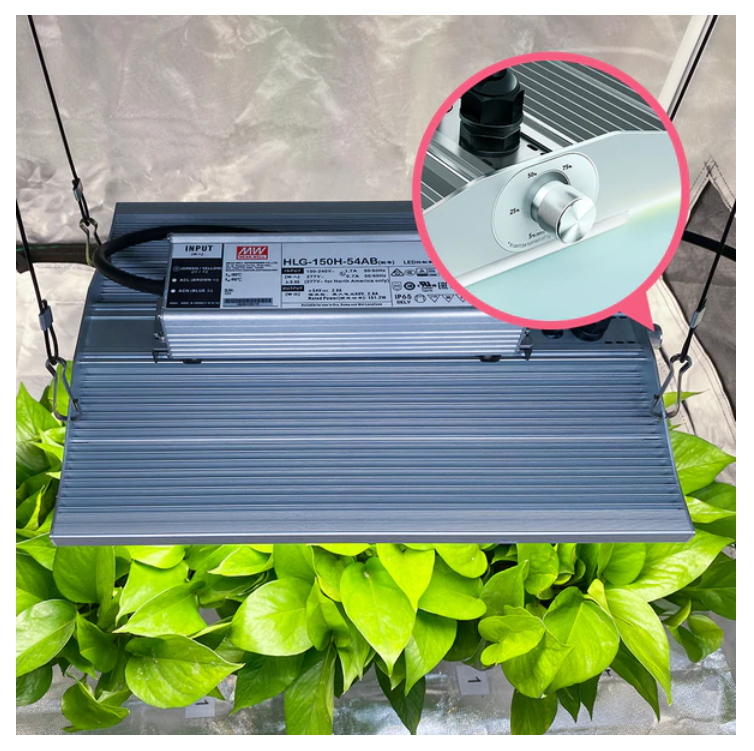
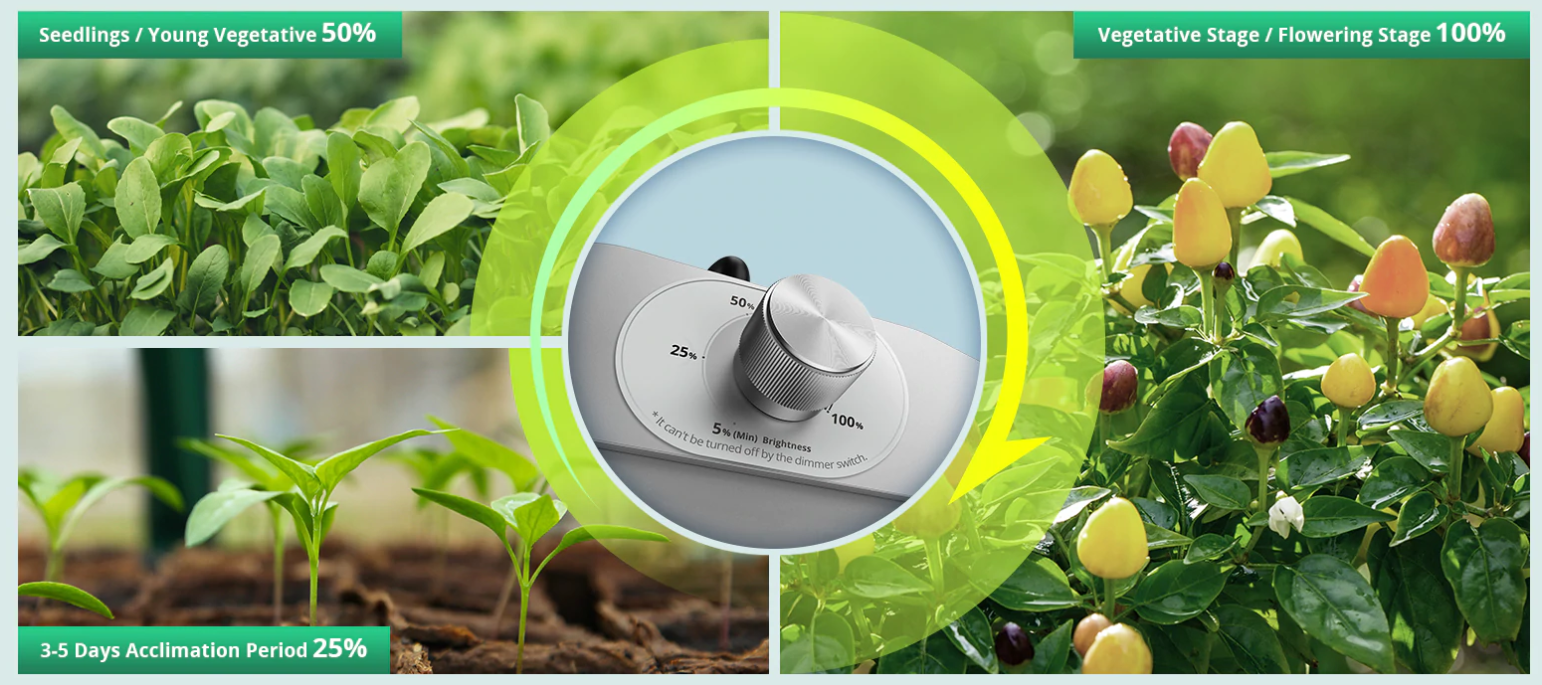
- ViparSpectra plant lighting also offers the option of adjusting the lighting period (see photoperiod) according to the cultivated plant species. In practice, this allows growers to increase yields by up to half! The image shows a detail of the flexible dimming knob for controlling diode dimming on a luminaire from the XS range (see below). But do you know what is best about it? The built-in dimmer with light intensity regulation in the range of 15% - 100% is available not only on the more expensive and more powerful models, but also on the best-selling one - ViparSpectra PRO Series P600. And now look at its price tag. Especially at the beginning, compared with conventional luminaires, there is nothing to think about, is there?
VIPARSPECTRA grow lights
We can now move on to a detailed overview of the options that ViparSpectra offers growers within indoor plant cultivation. Both product ranges clearly demonstrate that, despite the long list of benefits, the initial investment in ViparSpectra LED lighting is by no means high.
PRO range (Pro Series)
- Viparspectra PRO Series P600
- Viparspectra PRO Series P1000
- Viparspectra PRO Series P2000
- Viparspectra PRO Series P4000
The grow lights listed above are the most affordable in the VIPARSPECTRA range. That makes what you get for your money all the more impressive:
- More power per watt, as already mentioned, means saving more than just a few pounds. The best-selling LED light P600, as well as the even more powerful variants, generates more light at lower energy use, which the plant can actually use for its development during the individual life stages from germination through growth and flowering to the ripening of juicy fruits. A high standard of efficiency is ensured by 4 types of top-quality Samsung LED diodes.

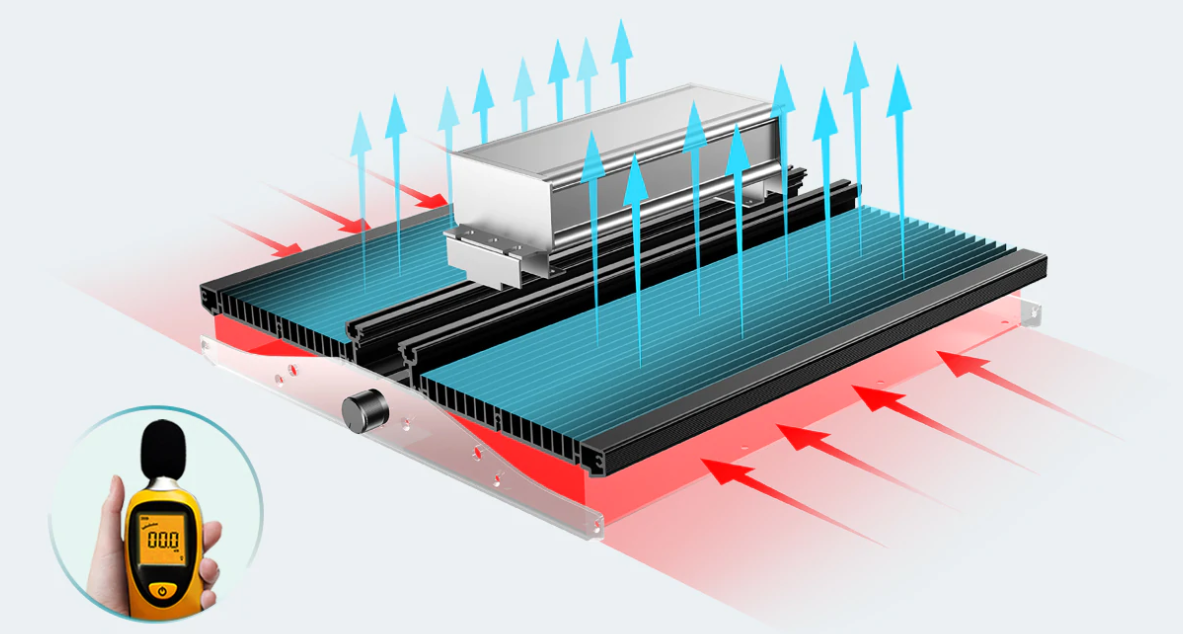
- The entire PRO product range also features a powerful Sosen driver and a well-designed cooling system.
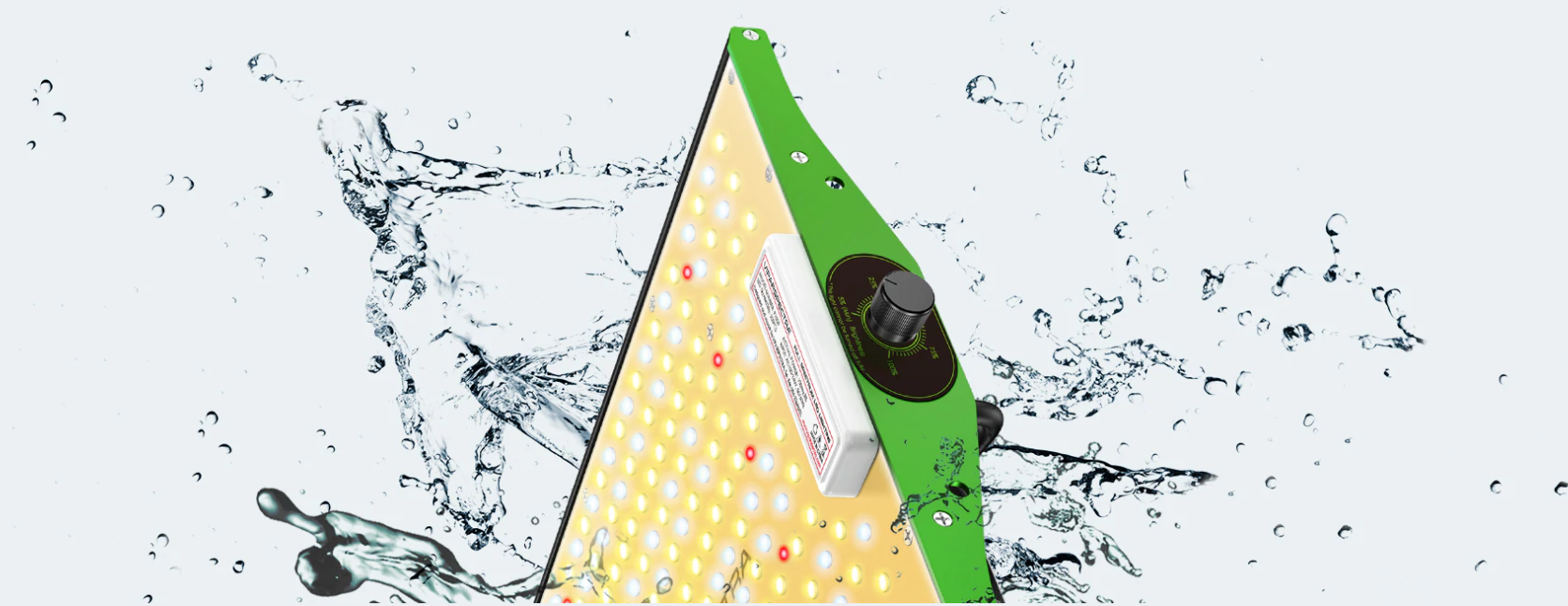
- The LED luminaires in the Pro range can boast a waterproof board, which easily copes with increased humidity inside the growing space, and therefore these luminaires are fully compatible with any indoor growing environment. The waterproof design naturally increases the overall service life of the luminaire again.
XS range (XS Series)
The higher XS range is a step ahead of the previous PRO range. It has 5% higher output and at the same time brings 5% savings on electricity. However, many great features remain, from perfectly quiet operation through perfectly designed passive cooling to the waterproof board. So what does XS offer in addition to the PRO range?
- Even better and newer diodes. The Pro range uses LM281B+ diodes, but the XS range uses even more advanced LM301B grow LEDs with high energy efficiency and the potential to increase your yields by up to 50%!
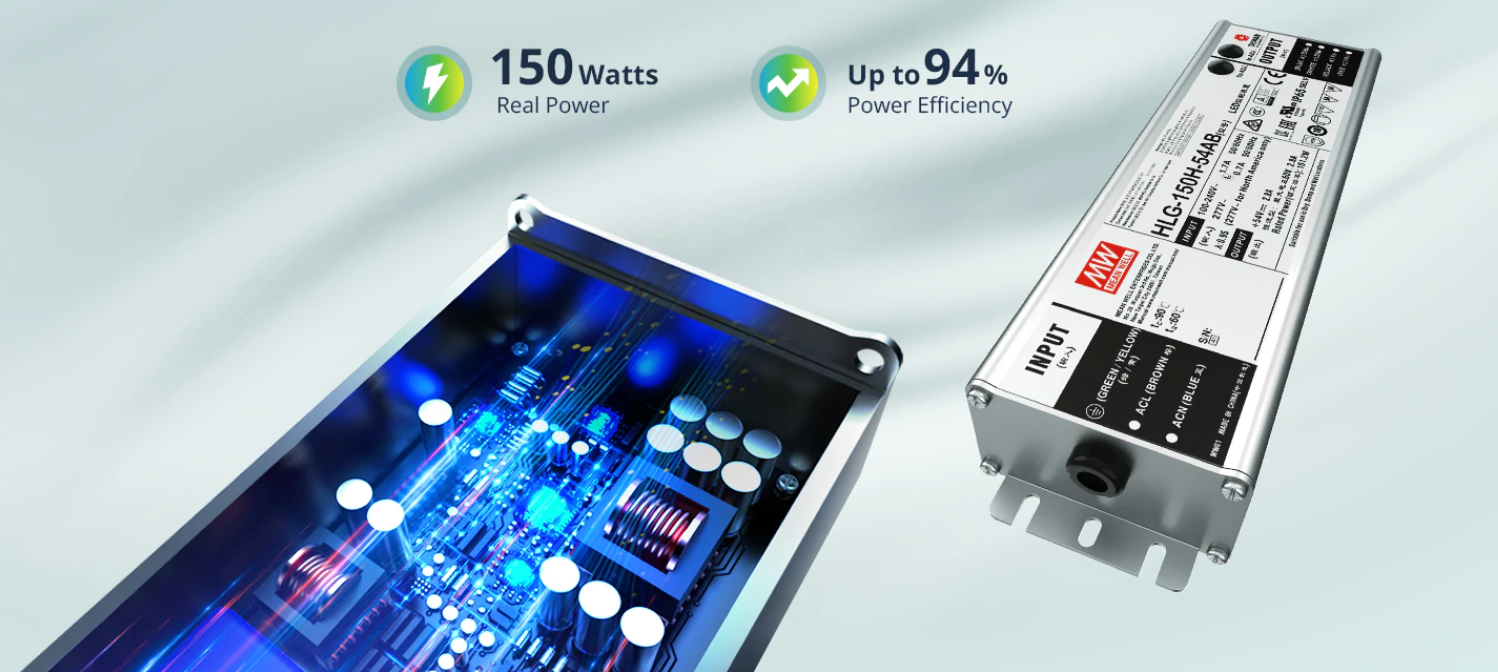
- Another difference is the presence of a high-tech MEAN WELL driver, which gives more demanding growers yet another step up in lighting energy efficiency and lower electricity use. With long-term use of the luminaire and continuous, intensive operation, it becomes a guarantee of stable performance. It also contributes to the long service life, which for luminaires in the XS range exceeds 100,000 hours of lighting.
We can warmly recommend all ViparSpectra LED luminaires. The detailed description of each luminaire then allows you to read the detailed technical specifications and the small nuances between the individual variants.
The package always contains everything needed for easy and quick Plug & Play installation. If the LED lamps from this popular American brand have caught your interest and you are thinking of joining the more than 20 million satisfied growers, we will be happy to help you choose. We look forward to your questions at the well-known email address info@higarden.eu.
We also recommend these products:
- ExHale XL CO2 Bag, natural CO2 generator
- Aqua Master Tools P700 PRO2, pH and EC/CF/PPM metre and thermometer
- Guanokalong Veg Pearls
What to read next:
- Discover modern Garden Highpro grow boxes
- How to choose a propagator and what to equip it with?
- Substrates and fertilisers CANNA: 30 years of research for successful plant cultivation indoor and outdoor
Growing Indoors: How to Switch to Flowering
 When growing indoors, the transition from the vegetative phase to flowering is one of the most important moments in the entire cultivation cycle. A number of factors determine when the right time has come, and correct timing of the switch will greatly affect the quantity and quality of the harvest. We will guide you through the most important aspects of the transition to the flowering phase and advise on some advanced cultivation techniques that will help you achieve a better harvest.
What is the difference between the vegetative phase and flowering?
To begin with, let us clarify what we actually mean when we speak about switching or transitioning from the vegetative to the flowering phase. Plants go through four phases during their life: first they germinate, then they become seedlings, followed by the vegetative (growth) phase and finally flowering. While in the early stages of life plants focus on producing new leaves and roots so they can capture more sunlight and nutrients, during flowering they begin to form buds that mature into flowers, fruits and seeds.
But how do plants know when they should start flowering? Just as with the energy for photosynthesis, they rely on sunlight in this case too, which signals the change of seasons. In the case of short-day plants, the earlier the sun sets, the faster they move into flowering. In the case of long-day plants, it is the opposite. This phenomenon is called photoperiodism, and we discuss this topic in more detail in one of our previous articles on our blog.
Outdoors, plants do not need much help, but in indoor growing the alternation of day and night is in the gardener’s hands. The grower decides whether the light schedule keeps the plants in the vegetative stage or whether it is time for flowering. The critical length of day and night can vary between species, but for most short-day plants (which include most popular indoor crops, including medicinal and aromatic herbs) the trigger for the transition to flowering is shortening the day to 12 hours (12/12 schedule). During the vegetative phase, most growers maintain a light schedule of 16-18 hours of light and 6-8 hours of darkness.
What to watch out for when switching to flowering
Although indoor growers have a number of factors under control, the timing of the light switch often also depends on factors that we cannot fully influence. Plant height and shape, the condition of the root system and, where relevant, various horticultural techniques to which they have been exposed all play a role.
Plant height and shape
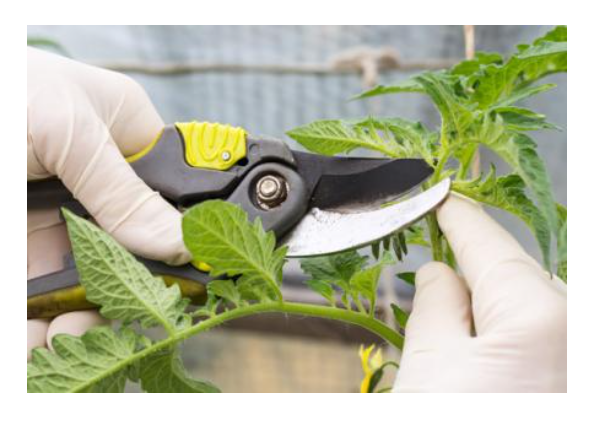
Many beginner growers underestimate how much plants will grow after switching to flowering. Some species and varieties can stretch to as much as three times their length during the first weeks of flowering. Always keep in mind how much space the plants have above them. During the vegetative phase, try to shape plants using pruning and other techniques so that after the switch they fill the entire growing area and as many tops or flowers as possible are exposed to light.
Root system
In addition to growing taller and producing new leaves, plants spend a large part of the vegetative phase developing their root system. The amount of space for roots will vary depending on the growing method, but whether you grow in hydroponics or in pots, you must not rush root growth. Once a plant starts flowering, it focuses most of its energy on bud formation and needs all the nutrients it can take up through its roots. If you switch to flowering too early, you will lose part of the harvest at the end of the cultivation cycle. There is no exact science to timing, but most plants need at least three weeks from transplanting to their final position before they can start flowering.
 Advanced cultivation techniques
To maximise yields, many growers use various innovative techniques that influence plant growth and development. It should be added that not all of them are suitable for all species and varieties of plants, and we leave their use to the reader’s consideration.
Sea of Green (SOG)
The Sea of Green (SOG) method involves growing many small and short plants packed closely together. The aim is for the plants to start flowering as early as possible and not have time to form side branches. Growers using this technique usually switch to flowering when the plants are 15-30 cm tall. The result should be many plants with one main top.
Screen of Green (ScrOG)
Although it shares a similar abbreviation with the previous method, the Screen of Green technique is its exact opposite. ScrOG consists of placing a support net roughly 30-60 centimetres above the base of the plants and then weaving the tops through it so that the resulting canopy is spread out as much as possible. With this method, with a certain amount of patience and experience, it is possible to fill the entire growing space with a single plant or just a few plants.
Lollipopping
The very popular pruning method known as “lollipopping” consists of removing all branches from plants except those that are largest and promise the greatest yield. Supporters of the method point out that flowers in the lower and shaded parts often do not mature and it makes no sense for plants to waste energy and nutrients on them. Before you start pruning, make sure the plants are healthy and sufficiently developed so that you do not slow their growth.
Would you like to learn how to grow indoors like professionals? Read the latest articles on our blog!
How High Should Grow Lights Be Hung?
If you are just starting out with growing, it can be difficult to estimate the correct hanging height for grow lights. How high you should hang the fixtures will depend not only on their output, but also on the age of the plants and other factors. In this article, we explain how to determine the hanging height of different types of lights according to the growth stage of the plants.
In indoor growing, light is one of the main factors affecting plant development. While the length of the light period determines whether plants will flower or invest energy in vegetative growth, light intensity is crucial for the amount of energy they obtain through photosynthesis. If plants receive just the right amount of light, they will grow quickly and develop according to their genetic potential. Too intense light will burn the leaves, and if there is too little light, they will have elongated stems and grow slowly.
You may also be interested in: The most important criteria for choosing grow lighting
The best way to measure the intensity of grow lights is by using photosynthetic photon flux density (PPFD), which expresses the amount of active photons falling on a given surface per second (μmol/m²/s). The older the plants are, the more light they are able to use effectively for photosynthesis.
- PPFD for seedlings: 200 to 400 μmol/m²/s
- PPFD for plants in the vegetative growth stage: 400 to 600 μmol/m²/s
- PPFD for the flowering stage: 600 to 1000 μmol/m²/s
- With CO₂ supplementation: up to 1,000 µmol/s/m² during the growth period and up to 1,500 μmol/m²/s during the flowering period.
Grow LED lights are designed so that at a certain distance from the plants they cover the largest area at the ideal PPFD for growth and flowering. You will usually find this value in the manual. It is not recommended to illuminate a larger area than corresponds to the light’s output. You will end up with weak plants and slow growth. If you buy a light with a dimmer, you can easily change the intensity by turning the dial. If you have a fixture without dimming, hang the light high above the plants during the first days and weeks of the plants’ life and gradually move it closer.
Approximate hanging height of LED modules for different growth stages according to power input (W)
|
Light output |
Seedlings |
Vegetative growth |
Flowering |
|
200 W |
50 cm and above |
30 to 50 cm |
20 to 40 cm |
|
400 W |
70 cm and above |
50 to 70 cm |
35 to 55 cm |
|
600 W |
100 cm and above |
75 to 100 cm |
45 to 75 cm |
|
110 cm and above |
80 to 110 cm |
50 to 85 cm |
|
|
120 cm and above |
90 to 120 cm |
55 to 90 cm |
HPS and HID discharge lamps
If you are lighting plants with high-pressure sodium discharge lamps, follow these parameters:
- 250 W HPS will effectively illuminate 0.3 m2 of growing area and you will achieve the optimal PPFD for growth and flowering at a distance of 30 cm from the tops of the plants
- 400 W HPS will effectively illuminate 0.5 - 1 m2 of growing area and you will achieve the optimal PPFD for growth and flowering at a distance of 30-40 cm from the tops of the plants
- 600 W HPS will effectively illuminate 1 – 1.4 m2 of growing area and you will achieve the optimal PPFD for growth and flowering at a distance of 40-50 cm from the tops of the plants
- 1000 W HPS will effectively illuminate 1 – 1.5 m2 of growing area and you will achieve the optimal PPFD for growth and flowering at a distance of 70 cm from the tops of the plants
Although it may sound complicated, after a few growing cycles you will easily recognise whether the plants are receiving just the right amount of light, too little or too much. The first signs of light burn are burnt tips or yellow faded spots on the leaves, usually around the tops closest to the fixture. If you notice such damage on the plants, reduce the light intensity. If you notice that the plants are weak, stretching towards the light or developing leaves without chlorophyll, give them more light. If you want to measure light intensity really accurately, equip yourself with a PAR metre.
You can find more useful tips and guides for indoor and outdoor growers on the Higarden blog.
The most important criteria for choosing grow lighting
Grow lights are the centrepiece of every grow box or indoor growing room, and it is worth paying them plenty of attention when choosing them. This is by no means only about electricity consumption – more important are parameters such as the light spectrum, efficiency and even coverage of the growing area. Modern LED technology offers higher efficiency than older HPS discharge lamps, as well as the option to adjust light conditions. In this article, you will learn how to choose the right LED grow light from a wide range of options for your exact needs.
Consumption is not everything
In the past, growers focused primarily on input power expressed in watts (W) when choosing lighting. From this figure, you can easily calculate consumption and at the same time obtain a rough estimate of how much light energy plants will have available for photosynthesis. Contrary to general belief, however, the input power of a light is not the best measure for assessing how much light from grow lighting reaches the plants. The true measure of a light’s performance lies in the amount of light energy it delivers to plants in exchange for the electricity consumed.
PAR (photosynthetically active radiation) is an abbreviation for photosynthetically active radiation, that is, light of such wavelengths that plants use during photosynthesis. The photosynthetically active light spectrum roughly corresponds to that visible to the human eye (400-700 nanometres). The most efficient grow lights are those that most effectively convert the supplied electrical energy in watts (W) into the greatest number of photons in the PAR spectrum, measured in micromoles (µmol). While the most efficient HPS grow lights emit approximately 1.4 to 1.8 µmol/W, the best LED lamps achieve almost double the efficiency, up to 2.8 µmol/W. To produce the same amount of photons in PAR, the most modern LED diodes require almost half as much electricity as HPS discharge lamps.
Each wavelength in the PAR spectrum (light colour) has a different effect on plants. Light in the red and blue parts of the spectrum has the most pronounced effect on plant growth. Blue light stimulates plants to grow quickly and form new leaves and stems, which is important for them during the vegetative growth phase. Red light supports flowering and ripening and encourages them to grow taller. However, plants use all colours of the light spectrum, including those outside PAR. For example, exposure to infrared and ultraviolet light leads to increased production of resin and secondary metabolites. In general, most LED lights emit light in the PAR spectrum, but you can also find specific models with UV and infrared wavelengths.
Consider the quality of the LED diodes
Manufacturers of LED grow lighting like to talk about the quality of the LED diodes they install in their lights. LED diodes are small semiconductor chips that convert electrical energy into light and at the same time determine its wavelength. High-quality LED lights use diodes with an output of at least 3 W. The lower the diode output, the lower the intensity of the emitted light will be. The standard for measuring light efficiency is micromoles per joule (μmol/J).
PPF (photosynthetic photon flux) is an abbreviation for photosynthetic photon flux, that is, the amount of photosynthetically active photons that a light source emits per joule of consumed electrical energy. Some manufacturers also express PPF in micromoles per second (μmol/s). PPF in cheap LED grow lamps ranges from 0.8 to 1.5 μmol/J, while quality lights achieve up to twice the efficiency.
In addition to (PPF), the efficiency of a grow light can also be expressed by photon flux density (PPFD). This metric tracks the amount of photosynthetically active photons falling on a given surface per second (μmol/m²/s). The older the plants are, the more light they are able to tolerate and use effectively during photosynthesis.
- PPFD for seedlings: 200 to 400 μmol/m²/s
- PPFD for plants in the vegetative growth phase: 400 to 600 μmol/m²/s
- PPFD for the flowering phase: 600 to 1000 μmol/m²/s
- If you use CO₂: up to 1,000 μmol/m²/s during the growth period and up to 1,500 μmol/m²/s during the flowering period.
What else not to forget when choosing LED grow lighting
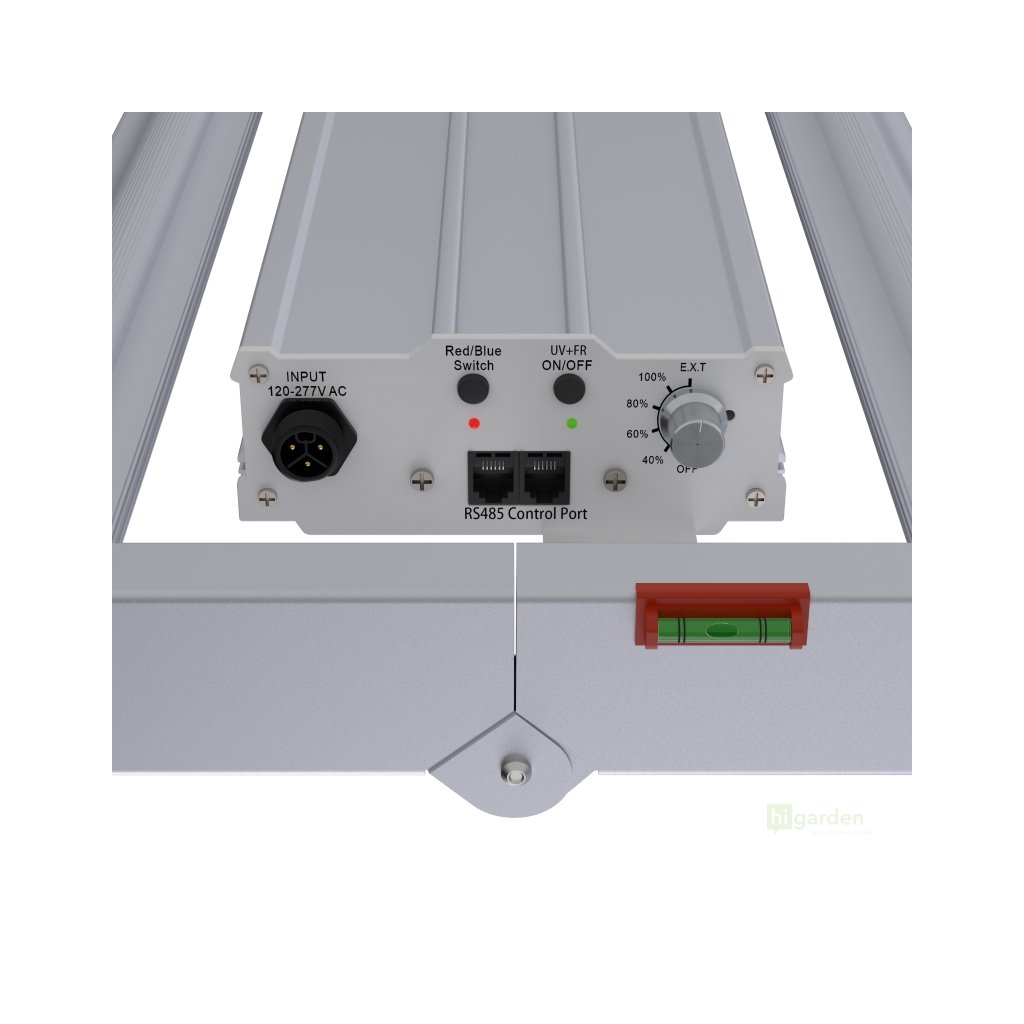 In addition to technical parameters, other factors also play a role when choosing the right lighting for your grow room. Ideally, the light intensity should be the same across the entire growing area available to you. For example, Maxibright Daylight PRO Full Spectrum LED with an input power of 300 W covers a growing area measuring 1x1 metre. The SANlight EVO 3-60 grow light with an input power of 200 W covers only an area of 0.6x0.6 metre, and for medium-sized tents it is better to use two models of this type at once.
Another aspect is the angle at which light from the LED diodes falls on the plants. The wider the angle, the larger the area the LED diode illuminates, but at the same time the light intensity and penetration decrease. The standard for most grow lights is LED diodes with a beam angle of 120°. Additional functions such as dimming, external control or the option to adjust the spectrum are not essential, but they can make life easier for the grower.
Our final point is that before buying grow lights, you should always take the price-to-quality ratio into account. Although the cheapest equipment may seem like a major saving, it often offers a shorter lifespan and outdated technology, and in the long term it does not pay off.
Are you unsure when choosing equipment for indoor growing? At Higarden, we have you covered! Visit our growing blog or contact our expert sales staff.
Light Spectrum and Its Effect on Plant Growth: Outdoor vs. Greenhouse vs. Indoor
Plant cultivation can take many forms, from traditional outdoor growing, through greenhouses, to indoor cultivation under artificial lighting. Each of these methods offers unique advantages, but also has some disadvantages. In today’s article, we will look at the differences in the light spectrum when growing outdoors, in a greenhouse, and indoors under LED grow lights.
Plants perceive light through photosensors called photoreceptors. Most of them are responsible for capturing light photons and converting them into energy during the process of photosynthesis. However, plants are also equipped with specialised photoreceptors that function differently from the others, do not always take part in photosynthesis, and some of them even detect light outside the visible light spectrum. These photoreceptors are important for plants because they affect circadian processes, developmental signals, gene regulation, and much more.
Different colours of light
To understand the light spectrum, it is important to realise that light is electromagnetic radiation, which can be characterised both as a particle (photon) and as a wave. Individual types of electromagnetic radiation are divided according to wavelength and the corresponding frequency. The term “spectrum” originally referred to the colour spectrum visible to the human eye (the colours of the rainbow), but over time other types of radiation were also discovered that people cannot perceive visually.
Visible light: The visible part of the light spectrum with wavelengths of 400-800 nanometres. The individual colours in the light spectrum are called spectral colours (red, orange, yellow, green, cyan, blue, violet).
Photosynthetically active radiation: PAR (photosynthetic active radiation) overlaps with visible light and refers to the range of light wavelengths (400 to 700 nanometres) that plants use for photosynthesis. Most LED grow lights include only photosynthetically active wavelengths.
UV: Ultraviolet radiation (400-10 nanometres) is dangerous for both people and plants, damages DNA, and can cause cancerous growth. Most UV radiation is captured by the Earth’s atmosphere, but a small amount reaches the surface.
Infrared radiation: Infrared radiation has a wavelength between 760 nanometres - 1 nanometres and is further divided into near-IR, mid-IR, and far-IR.
X-rays: X-ray radiation with wavelengths of 10 – 0.1 nanometres is used in practice thanks to its ability to penetrate a range of materials (radiography, CT). It has no significance for plant cultivation.
Gamma radiation: Radioactive radiation that arises during nuclear processes. It has no significance for plant cultivation.
Outdoor growing: All colours of light
It will probably surprise no one if we say that natural sunlight is the most complex and covers the widest possible spectrum. Plants grown outdoors are exposed not only to the visible part of the light spectrum, including photosynthetically active radiation, but also to infrared, UV, and other types of radiation. While the effects of extremely short or extremely long light wavelengths are not very well documented in relation to plants, some of the invisible wavelengths, such as UV and far-red radiation, can be crucial for plants, even though they do not affect photosynthesis.
Greenhouses: The absence of UV radiation
 Greenhouses can be made from various types of glass or even plastics, which may have different effects on the light passing through the material. In general, however, glass transmits most of the light spectrum, but naturally blocks a significant part of UV and lower-wavelength radiation. In this sense, greenhouses can be considered semi-permeable, and the absence of UV light can affect plants, for example in the production of terpenes or active compounds.
It is known that in some plants UV radiation stimulates the production of secondary metabolites. There are theories that such plants produce more of these substances because they act as natural protection against the destructive impact of UV rays on DNA. In addition, the unusual photoreceptor UVR8 has been discovered, which is directly activated by UV-B radiation and detects light with a wavelength of (280-320 nanometres). This photoreceptor consists of two UVR8 molecules, which separate after exposure to UV-B and become monomers, changing its function and leading to changes including increased stress resistance, gene function, and the development of the plant.
The absence of UV radiation does not threaten plants’ survival, but it can significantly affect how they cope with stress and pass through individual stages of life. For these reasons, some growers in greenhouses and indoors use special grow lights that enrich the light spectrum with UV-A and UV-B radiation.
Indoor: PAR tailored to plants
Most modern LED grow lights emit a standardised light spectrum corresponding to the wavelengths of PAR radiation (400–700 nanometres). Such a spectrum is more than sufficient for plants to thrive under artificial lighting, and under certain circumstances they may grow faster than they would outdoors or in a greenhouse. On the other hand, the spectrum of LED grow lights lacks not only UV, but also infrared light.
The amount of infrared light reaching plants grown outdoors or in a greenhouse changes throughout the day and year depending on the sun’s movement across the sky, because the angle at which light passes through the atmosphere changes. Plants use this fact to control their circadian rhythms and, thanks to specialised photoreceptors called phytochromes, they can recognise, for example, when it is time to start flowering. Therefore, when growing indoors under artificial lighting, plants may begin flowering a little more slowly (when switching to 12/12) than they would outdoors. As with UV radiation, you can also supplement the infrared spectrum in a grow room or greenhouse using supplementary lighting with an infrared spectrum.
Also read: Indoor growing: How to switch to flowering
Maxibright Daylight: A New Player on the Market with Highly Efficient LED Grow Lights
More and more people are taking up indoor growing under artificial lighting. Beginner growers usually do not want to start with large projects straight away and look for compact LED lights that are suitable for smaller grow boxes. In its range, the manufacturer Maxibright LED focuses precisely on energy-efficient and highly powerful LED grow lights. Can its range compete with established brands such as Lumatek or SANlight? We answer this in the following lines.
Daylight from Maxibright is a range of full-spectrum LED grow lights with dimmable LUMLED LED chips. These lightweight lights are available in 300 W versions (suitable for a growing area of 1 m²) and 200 W (area of 0.8 m²) and are ideal as a universal light source for plants in the vegetative growth stage, flowering, as well as for cuttings and germination indoors.
Main advantages of Maxibright Daylight LED lights
Unique construction: The optimal arrangement of LED diodes along the entire structure creates an even spread of light at a short distance from the tops of the plants, which allows sufficient penetration through the canopy without creating hot spots.
Passive cooling: The innovative passive heatsink naturally dissipates heat without the need for a fan. As a result, the unit is quieter and also significantly extends the life of the light, because it has no moving parts.
Full spectrum: The Daylight range uses a combination of white, red and far-red diodes to create a highly efficient light source that is very similar to natural sunlight. Older generations of LED grow lights used a combination of blue and red diodes, which was effective, but omitted parts of the spectrum 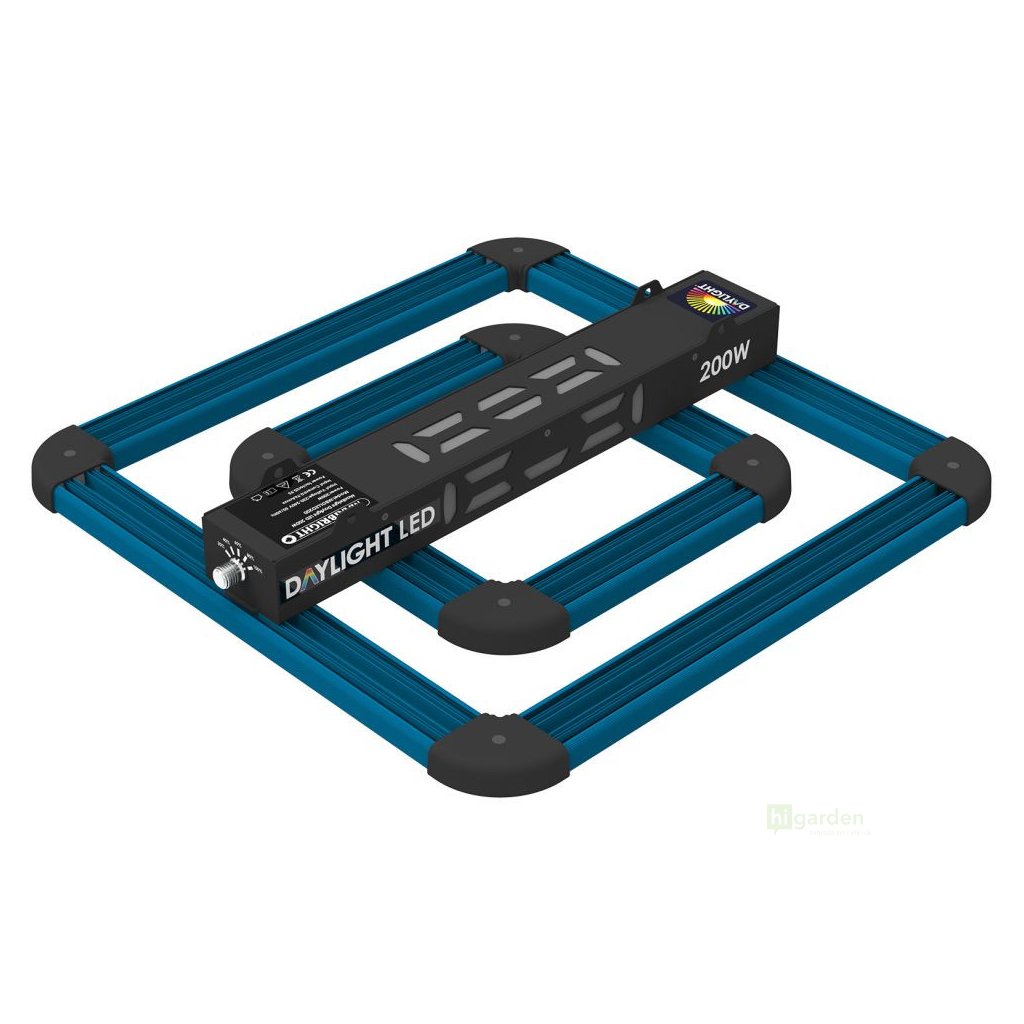 important for healthy plant growth, did not penetrate the canopy sufficiently and provided poor visibility in growing spaces.
Maxibright Daylight range
The basic Maxibright Daylight range includes two lights with input power of 200 W and 300 W, both with high efficiency of 2.3 µmol/J. Both units offer high PPF values (200 W – 460 μmol/s, 300 W 690 μmol/s) comparable to the most powerful LED lights available on the market. These lights also compare well with the competition in other parameters, such as service life (up to 50,000 hours of operation) or dimming capability.
Beginner growers and those looking for compact LED lights for smaller grow boxes at a reasonable price will especially appreciate the simplicity and efficiency of the Maxibright Daylight range. The 200 W model is ideal for a growing area of up to 0.8 m², while the more powerful 300 W version is suitable for an area of up to 1 m².
Maxibright Daylight PRO Full Spectrum range
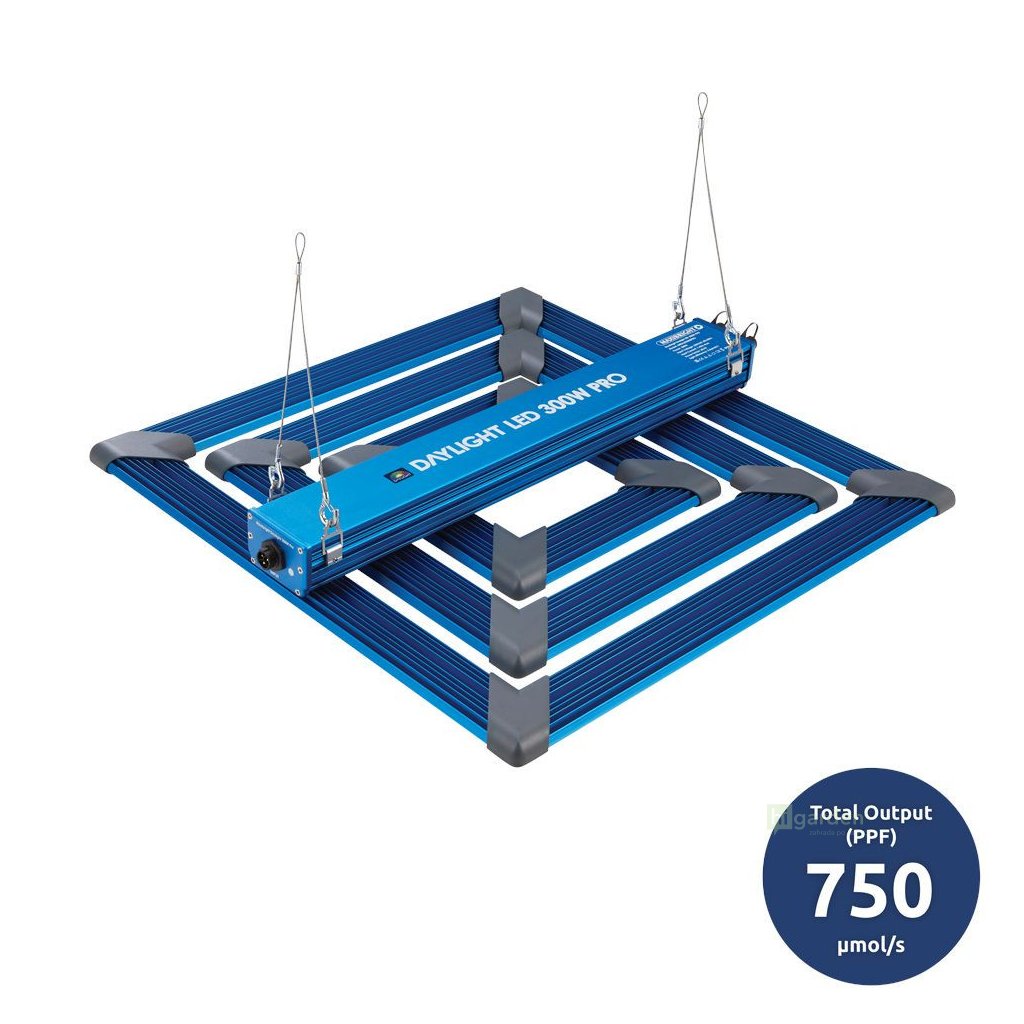 The more modern Daylight PRO Full Spectrum range is made using the latest generation of LUMLED diodes, which increase efficiency to 2.5 µmol/J, matching even the currently most powerful lights in the same category LUMATEK ATS PRO. The units also impress with high PPF values (200 W - 500 460 μmol/s, 300 W – 750 460 μmol/s) and even coverage.
Other improvements in the new range include IP65 protection, which means the lights have the highest level of protection against dust and are able to withstand splashing water. Of course, dimming is also possible, as is the installation of an external remote controller.
- Maxibright Daylight PRO Full Spectrum 200 W 2.5 µmol/J
- Maxibright Daylight PRO Full Spectrum 300 W 2.5 µmol/J
Although there are slight differences between the Daylight and Daylight PRO Full Spectrum ranges, we can recommend these LED grow lights with a clear conscience. Those of you who are just starting with indoor growing will appreciate the simplicity, efficiency and lower price of the lights from the Maxibright Daylight range. Maxibright Daylight PRO is the right choice for those aiming for professional results and those looking for lighting that is highly resistant to external influences.
What is the best light for growing chilli peppers?
Are you unsure which grow lighting to choose for your home chilli garden? We bring you practical tips on grow lights for growing chilli during the growth, flowering and germination stages.
The basis of indoor growing is to provide plants with an environment that best simulates the ideal conditions for their rapid growth. This includes grow lighting, which must have sufficient intensity and the correct spectrum. Let us look at which factors to consider when choosing a grow light for growing chilli and how to light plants in different growth stages.
You may also be interested in: The most important criteria for choosing grow lighting
Which light to choose for different growth stages
During their life, chilli peppers go through several developmental stages – from germination, through vegetative growth, to flowering and fruit ripening. In each growth stage, plants need slightly different light. It is therefore a good idea to choose grow lighting for indoor chilli cultivation that covers all the plants’ needs from seed to harvest. Most indoor growers today light their plants with modern LED grow lights, which have a balanced spectrum and are more energy efficient than outdated high-pressure discharge lamps.
You may also be interested in: Light spectrum and its effect on plant growth
Germination and raising seedlings: Chilli seeds do not need darkness to germinate, so you can light them from the very first day. During germination and in the first weeks of life, however, less intense lighting with a predominance of the blue part of the growth-supporting spectrum is sufficient. For these purposes, many growers use energy-efficient TLED panels, which consume less electricity than large high-output grow lights.
You may also be interested in: Chilli peppers: How to germinate and raise chilli seedlings
Vegetative growth: Once chilli seedlings have grown a little and you transplant them into a larger pot, they enter the vegetative growth stage. During the growth period, chilli needs sufficiently intense lighting with enough of the blue part of the spectrum, which stimulates the plants to grow quickly and supports the formation of leaves, roots and stems. In terms of lighting intensity, plants in the vegetative stage need slightly less light than those in the flowering stage. If you have a grow light with dimming function, set the output so that it corresponds approximately to a PPF value of 400-600 μmol/m²/s.
Flowering and fruit ripening: Chilli flowers for quite a long time, and with some exotic varieties you may wait several months for the fruit. During flowering and ripening, the light intensity should reach 600–1000 µmol/m²/s with a sufficient proportion of the red part of the spectrum, which stimulates the plants to form flowers and fruit. If you grow with sodium discharge lamps, at the start of flowering you will need to replace the lamp from the “grow” type to “bloom”. LED grow lights have a balanced spectrum similar to sunlight and contain enough red light.
You may also be interested in: How to grow chilli peppers under artificial lighting
Would you like to start growing chilli, but are not sure which equipment to buy at the beginning? We have prepared advantageous chilli growing sets for you, so you can get started as soon as tomorrow! For tips on growing chilli and other useful growing advice, follow our Higarden blog.
Sanlight Grow Lighting – Uncompromising Austrian Quality for Your Grow Room
The Austrian brand Sanlight ranks among the leaders in LED lighting for indoor growing, thanks to its modular systems that combine innovation, sustainability and precise workmanship. In this article, we will introduce the EVO and FLEX series, which are ideal for both professional growers and hobby enthusiasts. In addition to presenting the technologies, we will also offer practical tips on how to use these systems effectively for maximum plant growth and optimisation of the growing space.
Sanlight is an innovative Austrian company based in Vorarlberg, specialising in the development and production of highly efficient LED lighting for commercial and hobby plant cultivation. If there is one thing that makes this Austrian manufacturer stand out significantly from the competition, it is its emphasis on in-house research and regional as well as technological sustainability. All equipment is developed, manufactured and assembled in Austria. Sanlight also works with prestigious universities and research institutions, including the most advanced growing facilities in the Czech Republic.
Sanlight EVO
The EVO series is the flagship of the Sanlight brand, and models from this range always contain the latest LED technology. From a design perspective, the EVO range differs at first glance from LED modules of other brands. The radiator-like chassis made of heavy metal gives Sanlight lights a distinctive appearance, but it has practical reasons. The thin metal fins increase the surface area through which excess heat emitted by the LED diodes can escape. This simple and effective passive cooling system makes it possible to omit the often failure-prone fans seen with other brands.
Another unmistakable feature of the EVO range is the fact that individual modules can be easily connected in series and used to illuminate plants from several sources at once. This allows you to flexibly adapt the number of lights to the size of the growing space. As can be seen in the image, the suspension is also adapted for series connection, allowing you to hang the lights at a slight angle so that the light falls on the plants from the side. The result is more even illumination, more space for plants and, ultimately, higher yields. Dimming options are also available, either with a magnetic or Bluetooth dimmer.
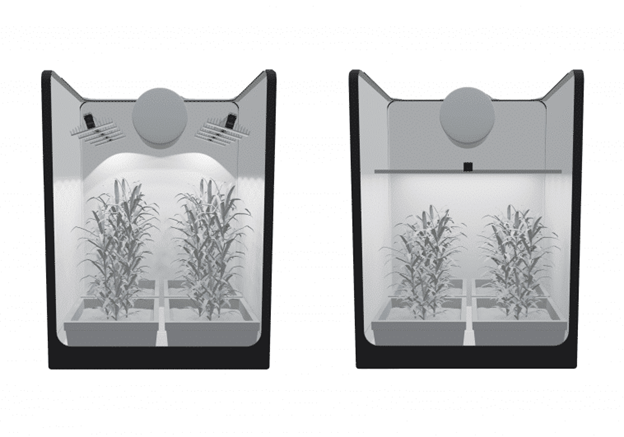
The emphasis on high quality is also reflected in the technical parameters of the EVO series. All models are equipped with secondary optics, which increase the intensity of the emitted light (PPFD). The silicone lens also protects the LED diodes from contamination and significantly extends the service life of the lights. Naturally, the high efficiency exceeding 3 µmol/J places EVO lights among the most powerful LEDs on the market. Last but not least, we must not forget the adjusted light spectrum, which offers a higher ratio of far-red and red light, positively affecting plant development and the production of secondary metabolites in some plants.
Would you like to learn more about the light spectrum and its effect on plant development? Read the article Light spectrum and its effect on plant growth on our blog.
Sanlight FLEX
 The FLEX range is Sanlight’s response to the ever-increasing demand for LED lights designed for rooting seedlings and cuttings, producing leafy greens or growing ornamental plants or microgreens. These energy-efficient modules emit a light spectrum that supports root formation and vegetative growth. An advantage of the growth spectrum is that, thanks to its pleasant colour, the light does not feel intrusive, so lights from the FLEX range can also be used in living spaces. Like the EVO modules, the FLEX series is equipped with passive cooling. Another advantage of the FLEX range is the IP68 waterproof rating, which allows you to hang the lights directly between the lower layers of plants, where the light would otherwise not reach. In this way, you can increase the quantity and quality of the harvest cheaply and easily.
Sanlight FLEX lights are suitable for multi-layer growing, where it is necessary to maintain a short distance between the plants and the light source. These growing systems are used, for example, in the cultivation of leafy greens, herbs or microgreens. Naturally, they feature robust construction, easy installation and the option of series connection. Connected modules can also be controlled together using a common LED controller.
New: SANlight Stixx 50W
is ideal for efficient lighting of approximately 3 small plants in a small area of around 40x40 cm to 60x60 cm. Thanks to the integrated dimming function, the light intensity can be set in steps of 10%, 20%, 40%, 60%, 80% and 100%, allowing you to optimise the light intensity according to the needs of your plants. It combines all the advantages of the Q1W DIM model, but offers significantly higher efficiency and IP68 certification, making it an excellent choice for small growing projects. Thanks to its flexibility and performance, it is an ideal solution for targeted plant growing in limited space. Cable length from the light to the controller: approximately 2 metres.
Useful links: Sanlight company website