
Nutrition, Growing Media and Water, Page 2
List of articles
Guide to Coconut Substrates
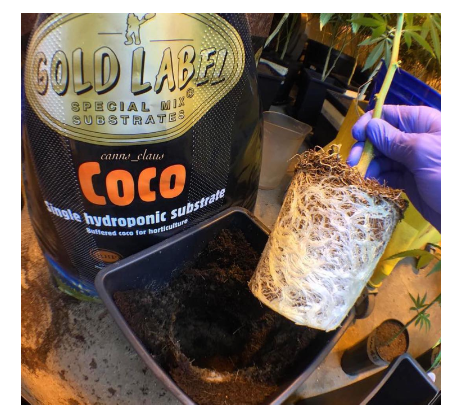 Coconut substrate is a modern growing medium made from fibres and husks of coconut shells, available in many forms and suitable for a wide range of horticultural techniques, from traditional pot growing to hydroponics or large irrigation systems. In this guide, we will help you choose the right type of coconut substrate for your grow room, garden or greenhouse.
Coconut substrates are among the most versatile and easiest growing media you can choose for cultivation. Compared with soil, where it is difficult to keep an exact overview of pH and nutrients in the substrate, in coco it is easy to monitor these two values with EC and pH metres and adjust them using a nutrient solution. At the same time, coconut substrates have sufficient buffering capacity and retain water and nutrients well, so they are not as sensitive to mistakes as fully hydroponic systems. You thus get the best of both worlds: the security of a classic growing medium and the speed and efficiency of hydroponic cultivation.
MAIN ADVANTAGES OF GROWING IN COCO
- pH and nutrient neutral: Coconut fibres contain very few nutrients on their own, which makes precise plant feeding easier. You can easily supply plants with exactly the nutrients they need at any given moment. In addition, it is easy to adjust the pH in the root zone without increasing EC.
- Optimal drainage: Coconut fibres can retain up to ten times their weight in water and, unlike, for example, expanded clay or perlite, which drain water away quickly, they keep the plant root system hydrated for longer, so there is no need to water plants too often. Compared with soil, water drains away faster, so you can water and feed plants much more frequently.
- Healthy root development: Growing in coconut substrate is very beneficial for plant roots, which grow faster and are healthier. This is due to the fibres' ability to retain large amounts of nutrients, water and air. Roots without access to air (for example in overly compact soil or poorly aerated hydroponic solution) tend to be poorly developed and are at risk of fungal attack.
- Fewer pests: Many soil insect pests and pathogens do not thrive in coco. In addition, coconut fibres often contain strains of trichoderma, which protect plant roots from other parasitic microorganisms.
- Eco-friendly and reusable material: Coconut substrates are made from waste materials and can also be reused. This represents a significant reduction in the carbon and environmental footprint of cultivation.
Buffered or unbuffered coco
When choosing a coconut substrate, it is very important to distinguish between buffered and unbuffered coco. Buffering is the process of preparing coconut fibres before use for plant cultivation. Coconut fibres in their raw form contain a high amount of salts and are also poor in calcium and magnesium. During buffering, which consists of soaking and rinsing in water with adjusted pH, potassium and sodium ions bound to the coco are replaced with calcium and magnesium, which plants need.
Most manufacturers of coconut substrates supply already buffered mixes that do not need any adjustment before use; it is enough to soak them in water or nutrient solution. If you want to use coco as an additive to soil that is rich in nutrients and organic matter, it is not necessary to buffer the material in advance, because the substrate will still contain enough calcium and magnesium.
Types of coconut substrates and their use
 Pure coconut substrates
Coconut substrates without additives contain only coconut fibres and chips and are suitable as a basic substrate for indoor and outdoor growing, in the traditional way in pots or hydroponically and with the use of automatic irrigation systems. Coconut substrates contain a minimal amount of nutrients, and these must be supplied to plants in the form of fertilisers for growing in coco. Coconut fibres are also an excellent additive to horticultural substrates, where they improve water and air circulation.
Coconut substrates with perlite/expanded clay
Coconut substrates enriched with perlite or expanded clay have better drainage properties and help prevent overwatering, which is especially useful for growers in pots. The usual ratio of coconut fibre to mineral component in such cases is generally 70% to 30%. Thanks to the faster drying of the growing medium, it will be possible to water plants more often.
Compressed coconut substrates
Compressed coco pressed into solid briquettes or bricks has the advantage of reducing costs as well as storage and transport. This is beneficial not only for retailers, but also for large-scale growers who need large quantities of growing medium. Before use, compressed coconut substrate must be soaked in water or a buffering solution so that the fibres expand. You can then use it on its own or mix it with other additives such as peat, soil or perlite/expanded clay.
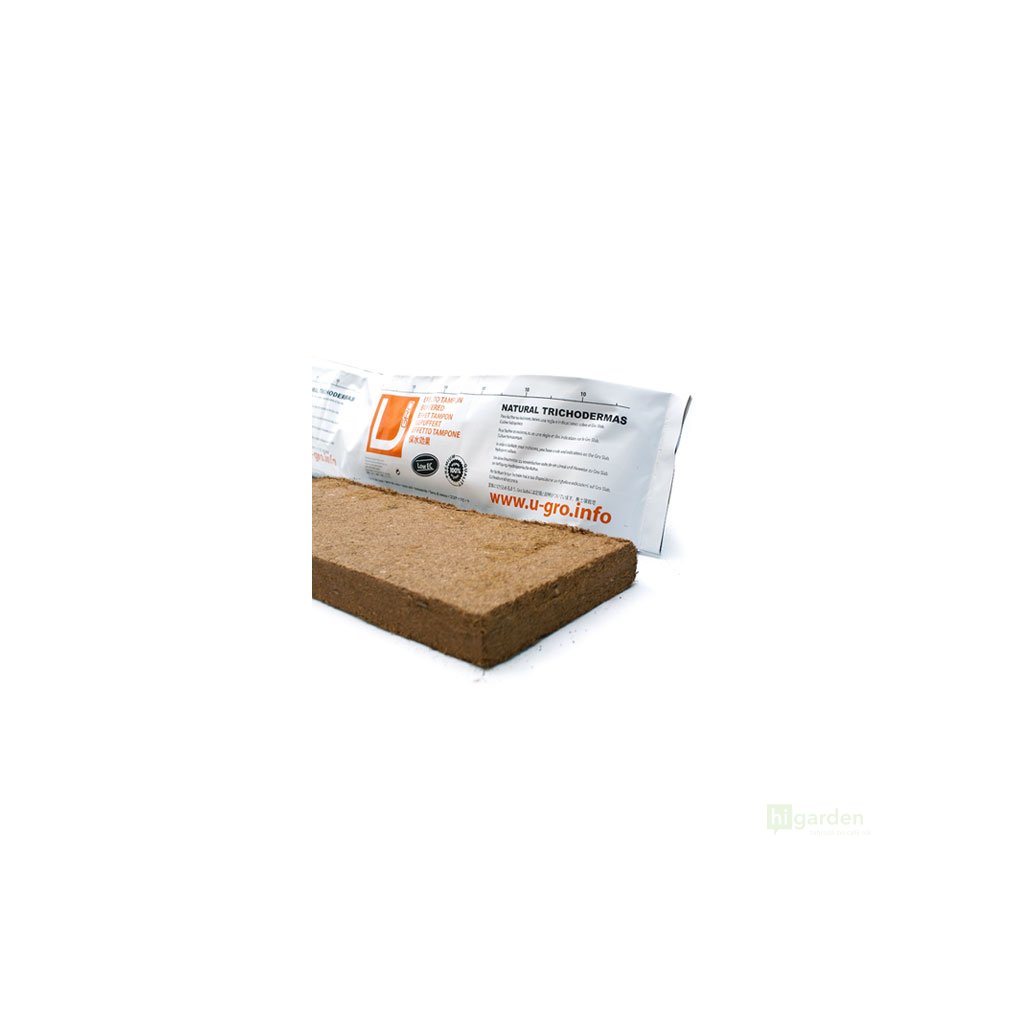 Mats made from coconut substrate
Growing mats with coconut substrate are particularly practical for growers using automatic irrigation systems, where they help save water and fertilisers used, thanks to precise and even watering. Despite their ability to retain large amounts of water, growing mats provide sufficient drainage and access to air, which supports rapid root growth without the risk of pathogens or mould. Growing mats can be reused.
Coconut substrates with trichoderma
Many coconut substrates contain trichoderma, a naturally occurring beneficial fungus that can adapt to almost any environment. Trichoderma produces metabolites that inhibit the growth of other microorganisms, thereby protecting plants from parasitic fungi and other pathogens. Some trichoderma species (T. reesei) produce large amounts of cellulase, others (T. virens) are perfect mycoparasites and can parasitise other fungi, and others (T. harzanium) are demonstrably effective in the fight against nematodes.
Growing bags with coconut substrate
Practical pots with coconut substrate ready to use straight away will be appreciated especially by growers in greenhouses and outdoors. The advantage is easy use without the need to soak or buffer the coconut fibres. The coconut substrate is not compressed in the bags, so it allows good drainage and absorbs water very well. Growing bags can be reused.
As with any growing medium, coco has its pitfalls and requires certain knowledge and practice. Now that you know which type of coconut substrate to choose and how to use it, you are ready to start growing.
Do not be afraid to reuse coconut substrate
A few tips at the start
How do you recycle coconut substrate?
Coconut substrates can be used without major complications for two or even three growing cycles. Let us look at how to do it, step by step.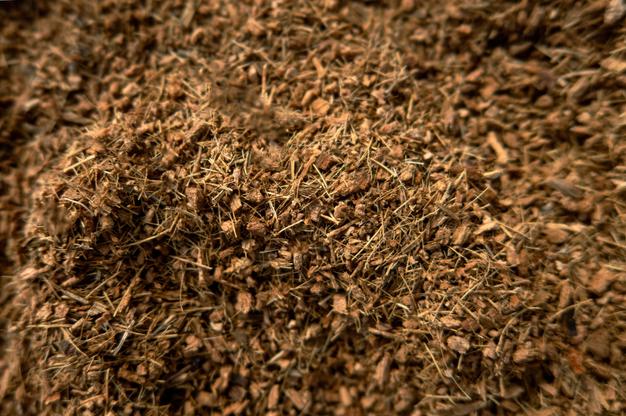
Coconut substrate is very popular among indoor growers because of its specific properties. First and foremost, it retains much more water than soil without losing its airiness. It is also popular because of its sterility - it does not favour pathogens and contains no nutrients, so you know exactly what the plants have available.
By reusing the substrate, you save money and the natural environment. You can plant the plants directly into the used substrate, or you can first mix it with brand-new growing medium. You can use coconut substrate until its fibres begin to break down; then it will lose most of its ability to retain water and will no longer be as capable of supporting plant roots.
A few tips at the start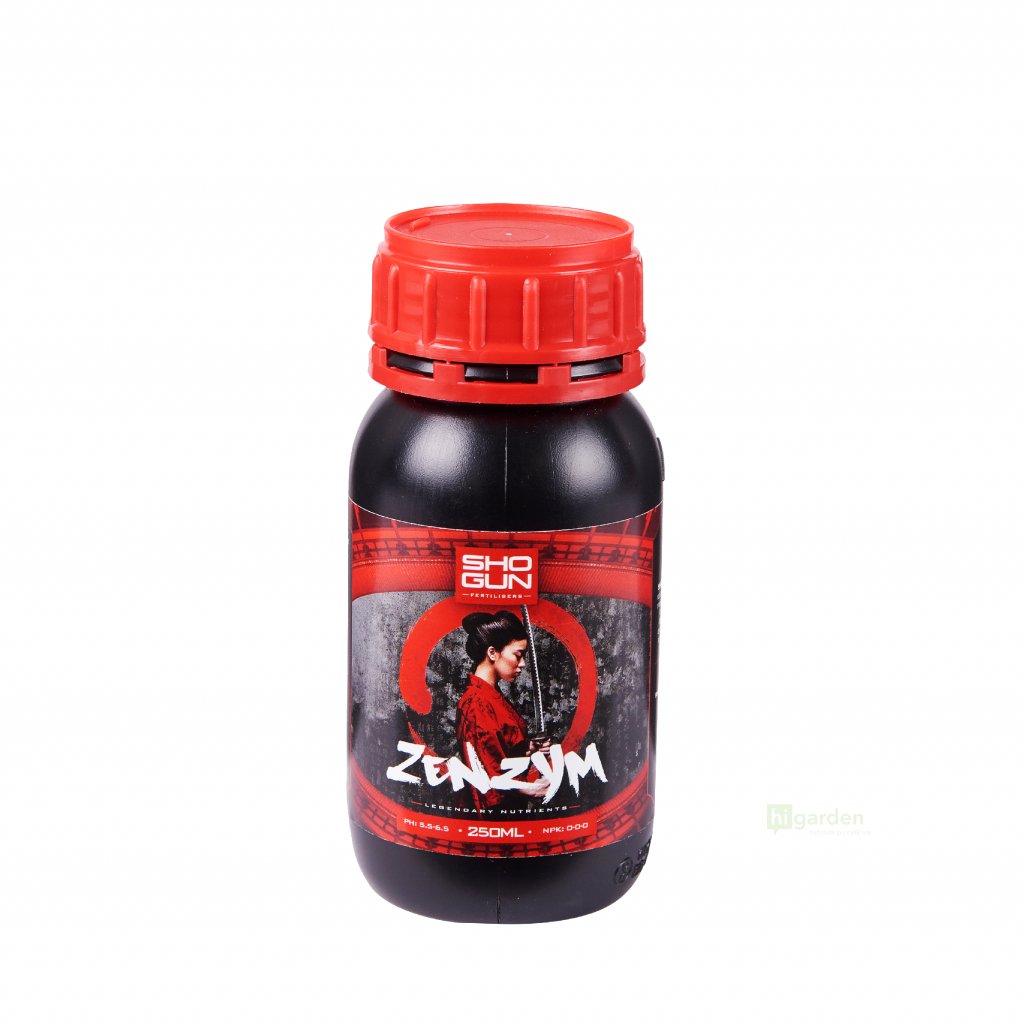
First of all, it is necessary to remove everything left in the coconut from the previous growing cycle. Start by removing plant residues, meaning all leaves, stems and roots. If you want to be absolutely sure that nothing remains in the substrate, we recommend using an enzymatic product that helps break down dead biomass.
After a very successful harvest, there should be no fertilisers left in the substrate. To prevent the plants from being exposed to salt build-up, rinse it thoroughly with water without minerals (other water could only make the problem worse), ideally water from reverse osmosis or distilled water. For good measure, also check the substrate EC and pH.
Even in a closed grow tent, there is a risk of diseases or pests. As a precaution, it is a good idea to disinfect the substrate before the next cycle. We have tested a solution of hydrogen peroxide (2 ml / 1 l of water), into which you simply soak the substrate. Afterwards, the growing medium needs to be rinsed again. Pathogens and pest larvae are also reliably destroyed by high temperatures. In practice, the main methods used are a bath of boiling water and, if you have a forgiving wife, an oven heated to at least 100 °C.
You can use revitalised substrate without any problem for mature, healthy plants. For cuttings and seedlings, place a layer of new coconut around the young roots, but you can safely put the old substrate around the edges of the container. A proven method is to mix the old coconut with the new one before transplanting.
If the coconut is already falling apart in your hands, the fibres are short and it clearly no longer retains as much water, you do not have to throw it away straight away. Even at this stage of decomposition, it still has uses: prepare it according to our instructions and you can use it to improve the properties of soil in an outdoor bed.
How do you recycle coconut substrate?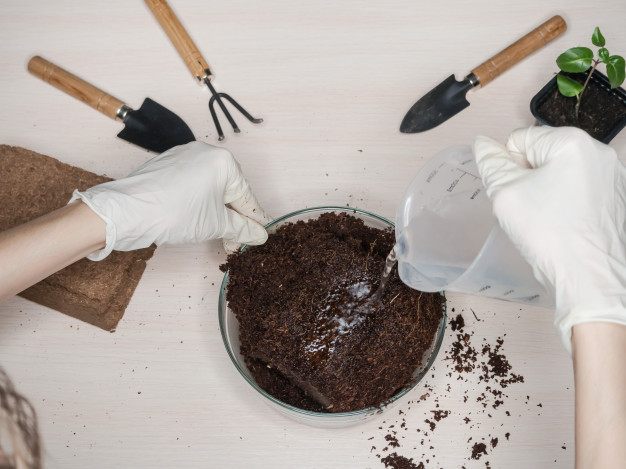
- Remove all plant residues; all old roots must be removed
- Rinse the substrate with water at least three times (preferably RO or distilled); we recommend using 2-3 litres of water per 10 litres of substrate
- Sterilise the substrate with hydrogen peroxide (35% solution, 2 ml / 1 l of water) or boiling water
- If you used peroxide, rinse the substrate once more
What should you watch out for?
- If you had problems with pests or diseases during the last growing cycle, do not reuse the substrate.
- We recommend working in a clean environment. Wash your hands or use clean gloves.
- Sterilisation removes absolutely everything from the substrate - including beneficial microorganisms. Do not skip this step because of that; instead, add trichoderma and other friendly fungi to the substrate afterwards add.
- Peroxide is a corrosive substance; handle it carefully and only in well-ventilated rooms.
- Heat sterilisation may create an unpleasant odour.
- Sterilising the substrate in the oven without agreement with your wife may cause a divorce.
- If you want to mix old substrate with new substrate, we recommend doing so before it dries out completely.
If you have any questions while reading the article, do not hesitate to contact us at info@higarden.eu.
We recommend:
- BioNova Cocomix Plus - premium coconut substrate
- Plangron Purezym - a great source of enzymes
- Plant Success Orca - adds beneficial fungi and bacteria to the substrate
Other articles:
Athena®: Fertilisers for True Professionals
 To use a classic phrase, growing still does not have an established tradition here. However, in the Czech Republic there are also more and more growers looking for truly professional equipment and fertilisers. Often, they have no choice but to look overseas for inspiration, where commercial indoor cultivation is moving forward by leaps and bounds. We were interested in which brand the best growers in the United States prefer, and so we asked some of the most highly regarded indoor growers in the world – Jungle Boys from sunny California!
Those of you who do not regularly follow the latest trends from the world of growing may not have heard of Jungle Boys yet. It is an ever-expanding group of professional indoor growers led by a legend in the field, Iván Vanorvwick. All members of the group are regarded as masters of their craft, and Jungle Boys therefore belong to the modern wave of indoor growers who were the first generation to get the chance to break through on the American legal market. Compared with their underground predecessors from the 1990s, today’s modern American growers can use the best equipment and draw on the knowledge of leading scientists in the field of indoor plant cultivation, which is evident in their work.
A somewhat different jungle…
At the beginning of their career, Jungle Boys became famous for their top-quality extracts made from cultivars selected by hand and from plants grown so that their terpene profile stood out. The high quality and unique “handcrafted” approach of Jungle Boys soon brought them to the attention of experts and the general public alike, and growing demand posed these enthusiastic growers with a pressing question. How can one grow on a large scale without compromising even slightly on the high quality standards their customers had become used to? According to Roach, one of the leading members of Jungle Boys, the answer was clear – to join forces with a fertiliser manufacturer and develop the perfect nutrition programme for indoor plant cultivation that Jungle Boys could use in all their growing facilities.
“Working with Athena® was an amazing experience for me. We went into detail about how to adapt nutrition programmes in such a way that they would suit all growers without distinction. The result of our work is the Athena® fertilisers and products that we use in all our facilities,” says Roach from Jungle Boys.
What does Athena® offer? First and foremost, there are top-quality mineral fertilisers Pro Line designed specifically for professional growers and fertilisers Blended Line for home growers. Under the Athena® brand you will also find the unique broad-spectrum insecticide and fungicide IPW with a natural composition, flowering stimulators, flushing agents, PK boosters, as well as a portable tissue culture laboratory and a set of foam cleaners for indoor growing facilities.
Would you like to learn more and find out how to use Athena® fertilisers in a unique nutrition programme, including a schedule for correct watering? Go to – Athena® Grower’s Guide in Czech version.
 Athena® Pro Line fertilisers
Pro Line from Athena® is a two-part range of fertilisers suitable for plant cultivation in coco, hydroponics or soilless growing media, which you can use to prepare a nutrient solution or use as a concentrate in automatic dosing systems. Pro Line works best with reverse osmosis water, contains enough magnesium and calcium (there is no need to add CalMag) and the fertilisers can be used in aeroponic cloning machines. Pro Line fertilisers are not suitable for manual watering and DWC hydroponic systems.
- Pro Core – A basic fertiliser in granular form, providing plants with enough nutrients in all growth stages. Pro Core is used as a two-part fertiliser together with Bloom or Grow throughout the entire cultivation cycle.
- Pro Grow – A soluble fertiliser for vegetative growth with a balanced NPK content that does not contain nitrogen in ammoniacal form. Pro Grow is used as a two-part fertiliser together with Pro Core.
- Pro Bloom – A soluble fertiliser with a high PK content (no additional PK boosters are needed) and zero nitrogen content, which unlike the competition contains potassium sulphate instead of potassium nitrate. Pro Bloom is used as a two-part fertiliser together with Pro Core or Fade.
- Fade – A ripening booster that removes nitrogen from plants during the final weeks of flowering, speeds up maturation and improves the terpene profile. Fade replaces Pro Core in the final weeks of flowering.
Athena® Pro Line dosing charts
 Athena® Blended Line fertilisers
Blended Line from Athena® is a complete fertiliser set ideal for home and craft growers using simple irrigation systems or manual watering. For maximum simplicity, these are complete and pre-prepared liquid concentrates.
- Grow A&B – A complete two-part base fertiliser for the vegetative growth phase with a high nitrogen content.
- Bloom A&B – A complete two-part base fertiliser for flowering with chelated micronutrients that stimulates flower formation.
- CaMg – A supplement containing calcium, magnesium and iron designed as an addition to the Grow and Bloom components. It is used throughout the vegetative period in all growth stages.
- PK – A flowering stimulator in spray form with a high content of potassium, phosphorus, magnesium and sulphur, with no nitrogen content. It is used during the flowering phase together with Bloom A&B.
Athena® Blended Line dosing charts
 Athena® supplements and additives
- Balance – A pH-increasing agent in both powder and liquid form made from fully soluble potassium silicate. It is used to stabilise the pH of the nutrient solution.
- Cleanse – A non-toxic cleaner for irrigation systems containing hypochlorous acid, which effectively removes mineral deposits and organic contamination.
- IPW – A broad-spectrum insecticide and fungicide without harmful chemicals, based on citric acid and plant oils. Safe to use throughout the entire cultivation cycle and effective against a wide range of pests and diseases, including powdery mildew. Can be combined with Stack in a single spray.
- Stack – A flowering stimulator in spray form containing amino acids and seaweed hormones that support lateral growth. The product speeds up the transition to the flowering phase.
Useful links
Manufacturer’s website: https://www.athenaag.com/
Crazy Hills - Purely natural, vegan and sustainable

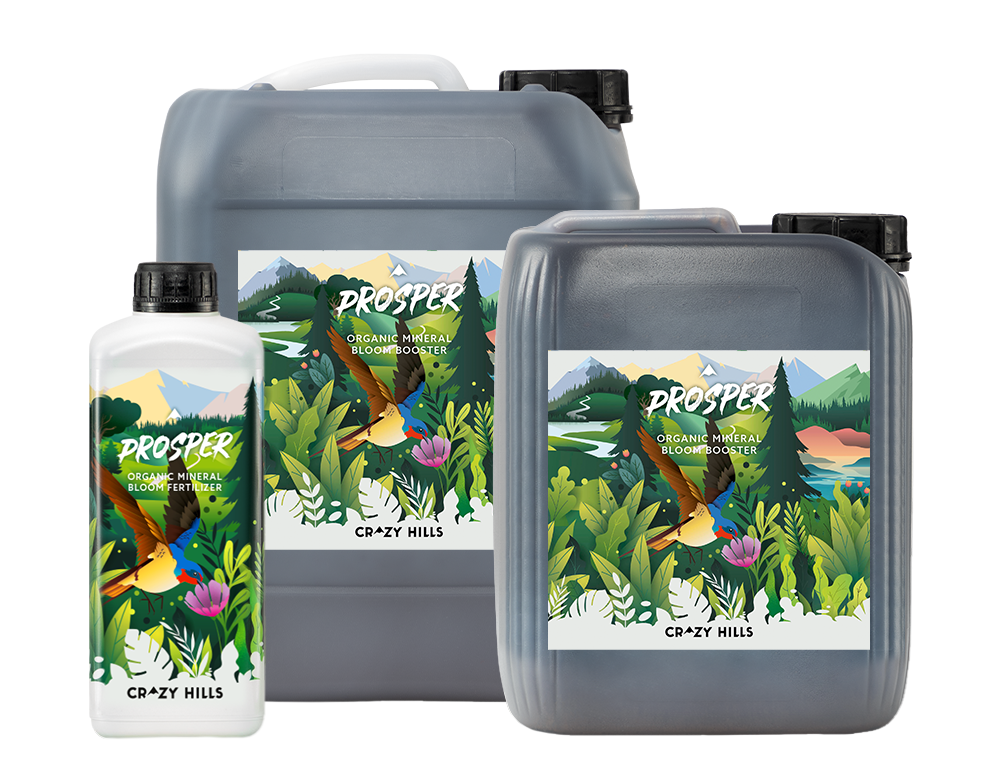
Directly from the green heart of Austria, not far from Graz, we bring you an exceptional range of fertilisers and supplements from the CRAZY HILLS brand. And why exceptional? Because this range of exclusive products is completely natural, intended both for professional growers and for those who are just starting out and are looking for sustainable alternatives without chemicals that would give their plants a major natural boost. Suitable for all types of plants, flowers, fruit, herbs, ornamental plants or vegetables.

More than 15 years of experience in horticulture, completed by research and the production of top-quality natural ingredients and fertilisers. The environmental impact has been reduced to a minimum. The use of environmentally friendly recycled materials for CRAZY HILLS packaging ensures that they do not just talk about sustainability, but also act on it.
The ingredients and beneficial microbes in CRAZY HILLS help stimulate the plant life cycle from germination to maturity. They improve microbial life, metabolic efficiency, root development and nutrient supply, resulting in better-quality flowers, fruit and buds.
They help increase yields and the overall health of plants and are excellent for garden soils, potting soils, no-till media and hydroponic and aeroponic systems.

ÉLAN
ÉLAN is an amazing all-round booster, a blend of humic and fulvic acids, amino acids and cold-pressed Arctic seaweed. It provides your plant with everything it needs throughout the entire vegetative cycle.
Amino acids play a key role in protein synthesis, which, as you surely know, is very important for the growth of your plants. Amino acids are the building blocks of proteins and the basis of plant life! If you really want to push your plants to the maximum in terms of flower growth and resin/terpene production, try ÉLAN! By supplying your plants with amino acids, they can use important energy for growth and flowering instead of focusing on amino acid synthesis.
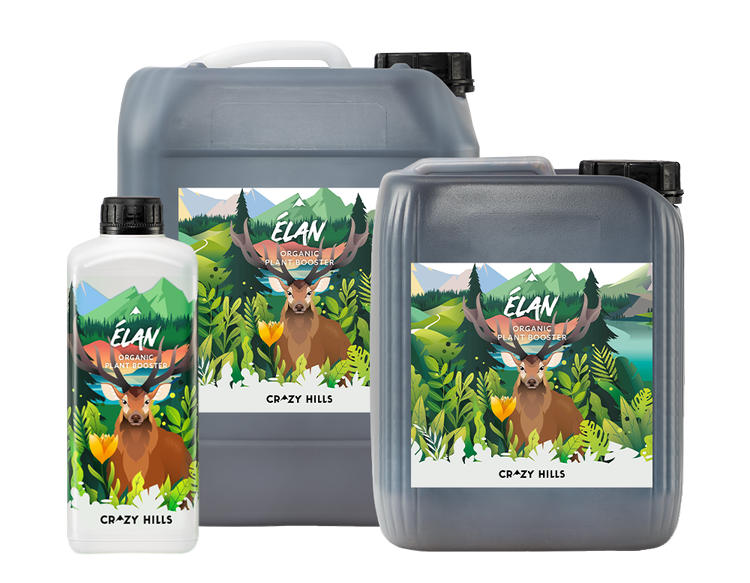
On the other hand, thanks to humic and fulvic acids, which are excellent natural growth stimulators that help your plants in many ways, ÉLAN increases nutrient uptake, helps grow healthier roots and ensures overall healthier plant development at all stages of growth.
Cold-pressed seaweed is full of trace elements and rich in various bioactive compounds such as enzymes, proteins, carbohydrates, phytohormones, minerals, antimicrobial compounds and beneficial vitamins such as A, C, B12, K and E, which are very important for the growth of your plants!
ÉLAN is also rich in iron, which helps the plant transport oxygen through the roots, leaves and other parts of the plant and gives it the green colour by which you can tell that your plant is healthy.
ÉLAN is an organic terpene booster, root stimulator, growth and flowering accelerator, vitality enhancer and soil conditioner in a single bottle! In addition, it can be used in any type of cultivation, whether you grow in soil or hydroponically, and it is also compatible with any existing nutrient line, making it a fantastic addition to your feeding schedule. A crazy thing!
SPARK
SPARK - an organic flowering stimulator derived from Ascophyllum nodosum (Arctic seaweed in liquid form), rich in trace elements, proteins and vitamins. Its special formula is packed with potassium and full of growth hormones and micronutrients designed to give your plants a boost in budding, flowering and fruit formation - a crazy impulse! Its amazing blend increases the number of buds and flowers on your plants, leading to higher yields, and its use during the flowering phase will also support your plant's metabolism. In other words, it will help SPARK flowering in your indoor or outdoor garden before you can say "Ascophyllum nodosum"!
in your indoor or outdoor garden before you can say "Ascophyllum nodosum"! - Significantly increases bud formation and size.
- Increases the durability and storage freshness of buds.
- Contains phytohormones, resulting in heavier and denser buds
- Supports plant resistance to stress factors such as frost, pests, diseases and drought.
- Stimulates the plant immune system throughout the entire growth period
KICKOFF
KICKOFF is made from an extract of humic and Arctic seaweed and is full of beneficial soil organisms (strains of Trichoderma and Bacillus) that colonise plant roots and spread into the surrounding soil, significantly increasing the absorption area of root systems, protecting roots from pathogens and breaking down complex organic compounds for easier uptake. Together with humic acids and Ascophyllum nodosum, it acts symbiotically and supports increased activity in the rhizosphere, better soil structure and extensive root growth in your indoor or outdoor gardens. KICKOFF is ideal for inoculating all types of plants and creating biodiversity in garden soils, potting mixes, no-till growing media and hydroponics.
- Stimulates intensive root growth and regenerates damaged roots
- Breaks down complex organic molecules
- Increases plant uptake of phosphates, nitrogen and micronutrients and improves soil structure
- Strengthens resistance to pests and pathogens
- Stimulates microbial life and healthy soil
- Increases seed germination and improves radicle development
UPTHRIVE AND PROSPER
UPTHRIVE and PROSPER, both of these fertilisers have a unique balance of NPK (nitrogen, phosphorus, potassium) that works in a unique way, better in two different parts of the plant's growth phase. Our fertilisers are most effective as a soil drench and for manual top dressing, and are designed to work in harmony with beneficial microorganisms, fungi and organic matter in the soil, which naturally stimulate plant growth, ensure healthy growth and a crazy good yield.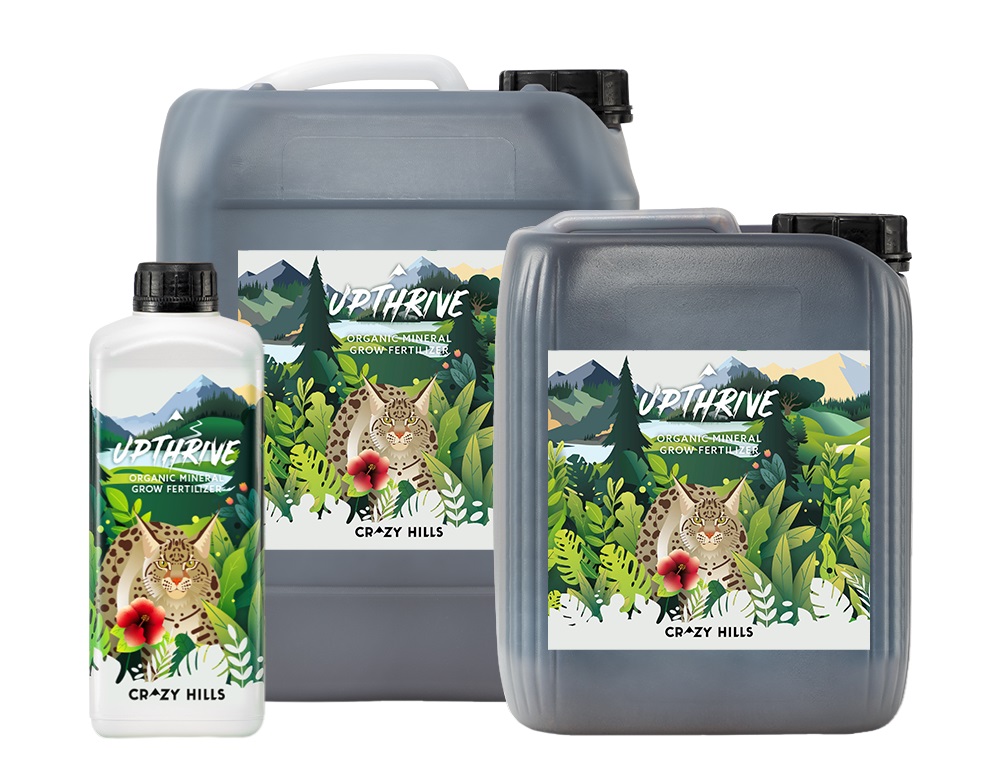
The UPTHRIVE fertiliser - grow provides your plant with exactly what it needs to boost shoot growth while also laying the foundation for amazing flowering, budding, fruit formation, seed production and a healthy yield!
UPTHRIVE is nutrient-rich and contains high amounts of organic nitrogen and potassium, as well as calcium, magnesium, iron, sulphur, micronutrients, trace elements, vitamins, betaines and sugars, which are ideal for growing strong and healthy plants.
PROSPER - fertiliser for flowering plants that provides essential nutrients, especially potassium and phosphorus, which are important for maximum production of buds, flowers, fruit and seeds. The source of organic phosphorus in Prosper fertiliser is soft rock phosphate, which also helps create food pockets in the soil food web and aids the uptake of calcium and magnesium. Unlike UPTHRIVE, PROSPER also contains Ascophyllum nodosum, or Arctic seaweed, which is rich in potassium and can meet most of the plant's nutritional needs.
The range of fertilisers is truly extensive. We will be happy to help you find your way through it and choose the fertiliser that suits you perfectly. Just get in touch at info@higarden.eu.
We recommend these products:
Further articles:
Flowering Stimulator – Why and When Should You Use It?
Do you want the richest possible harvest and massive flowers? In this article, we explain why it is important to use a quality flowering booster or flowering activator. Which products will truly allow you to unlock your plants’ genetic potential in terms of aroma, volume, or colour? Read on to find out how to increase your plants’ potential by up to 70% and maximise your next harvest at home in a grow box and outdoors in the garden.

- Why and when should you reach for a flowering stimulator?
An effective flowering stimulator has an irreplaceable and firm place in plant nutrition! The goal of every grower in indoor and outdoor conditions is beautiful, lush and fragrant flowering, or juicy fruits packed with distinctive flavour. The aroma or taste of home-grown fruit, vegetables or herbs can, with the use of BIO nutritional supplements, be not only intense, but also truly natural thanks to their purely natural composition.
And when you mix suitable additivesadditives into the watering during the flowering phase, whether on a purely organic basis or in a combined organomineral form, the result will be pure joy from gardening and a splendid feast for all your senses!
- What is the difference between a stimulator and a flowering activator?
A classic flowering stimulator is added to the watering purely during the flowering phase, except for the last week before harvest, which is already devoted to flushing (see the separate article: How to flush?). Some flowering activators are applied already towards the end of the vegetative phase, precisely so that they have enough time to initiate flower formation at the right moment. Dose charts will always give you certainty.
- How do individual flowering stimulators work?
Flowering stimulators, or flowering boosters, can be distinguished mainly by their composition, which also has a fundamental effect on their specific effects.
In short, flowering stimulators stimulate plant metabolism, while primarily ensuring a higher sugar content in plants (for example BLOOMBASTIC, etc.) and increasing the efficiency of nutrient uptake by the plant, which is related to the fact that they can activate the activity of beneficial microorganisms in the substrate (for example T.A. Pro Bloom, etc.).
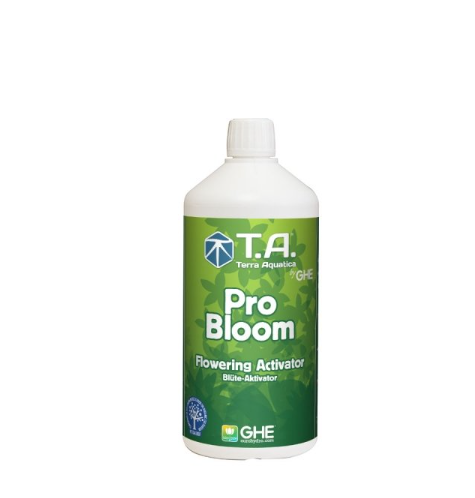
- Organomineral flowering boosters are usually made on the basis of basic nutrients (N-P-K), and this base is most often enriched with various beneficial substances (trace elements, amino acids, vitamins, phytohormones, etc.) or microorganisms (rhizobacteria, mycorrhizal fungi, etc.). A high proportion of basic nutrients is contained, for example, in the flowering stimulator Grotek Monster Bloom.
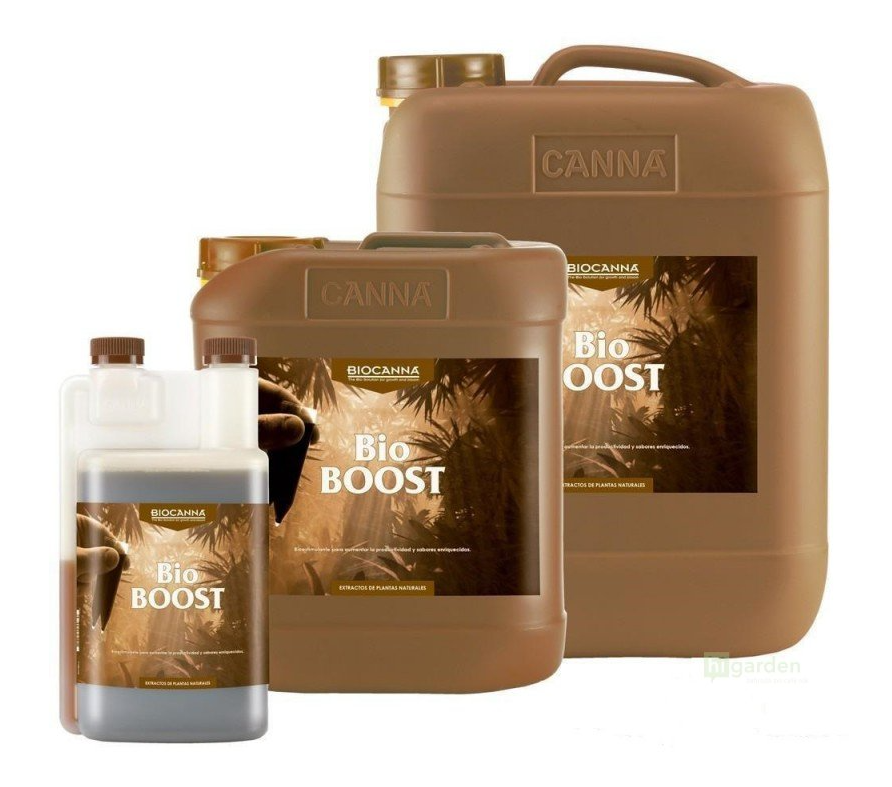
- If you want to grow herbs, fruit or vegetables in organic quality, you will need a flowering booster whose composition is 100% natural. An organic flowering booster is, for example, BIOCANNA BIOBOOST, produced in laboratories through multiple controlled fermentation of plant raw materials. It enhances photosynthesis and increases the production of simple sugars. In addition to faster metabolism, you will also achieve increased natural resistance in your plants. This flowering bio booster can be safely combined with any fertilisers and growing systems.
- As a mineral supplement for classic, full-nutrition flower fertilisers, GET Power to Bloom is used. It is used especially in hydroponic systems.
 Which flowering stimulator is the best?
Although there is no unequivocal answer to this question, as it naturally depends on the individual preferences and experience of each grower, we can provide you with an overview of proven products that our customers swear by.
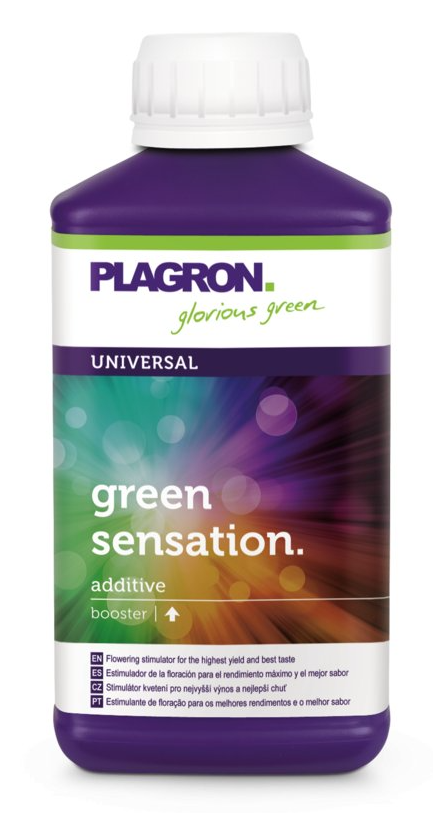
- The first of these is the universal flowering booster Green Sensation from the popular brand Plagron. You can find out everything essential about it in a separate article: PLAGRON - cultivation should be fun for beginners and professionals. In addition to substances supporting flower formation, it also contains substances that help the plant absorb nutrients better, namely hydrolysed milk protein, sodium EDTA salt and lactic acid. The result is a strengthened cellular structure of the plants, which will positively affect your harvest even if your plants have been exposed to abiotic stress.
- A proven classic is also Advanced Nutrients Big Bud Liquid. For growing plants in coco, Big Bud Coco Liquid is specifically intended. And if you want to increase your plants’ potential by 50-70%, definitely try the popular Bud Ignitor! (A separate article discusses these products from the American manufacturer in detail: Advanced Nutrients – hydroponic fertilisers with pH regulation.)

- Advanced Hydroponics produces a stimulator for both growth and flowering (Growth/Bloom Excellarator), which also supports the natural resistance of plants.
- Organic plant growing in hydroponic or aeroponic systems goes perfectly with the liquid fertiliser BioBizz Topmax.
- Heavy, massive flowers are also very well supported in combination with basic nutrition by Grotek Heavy Bud Pro.
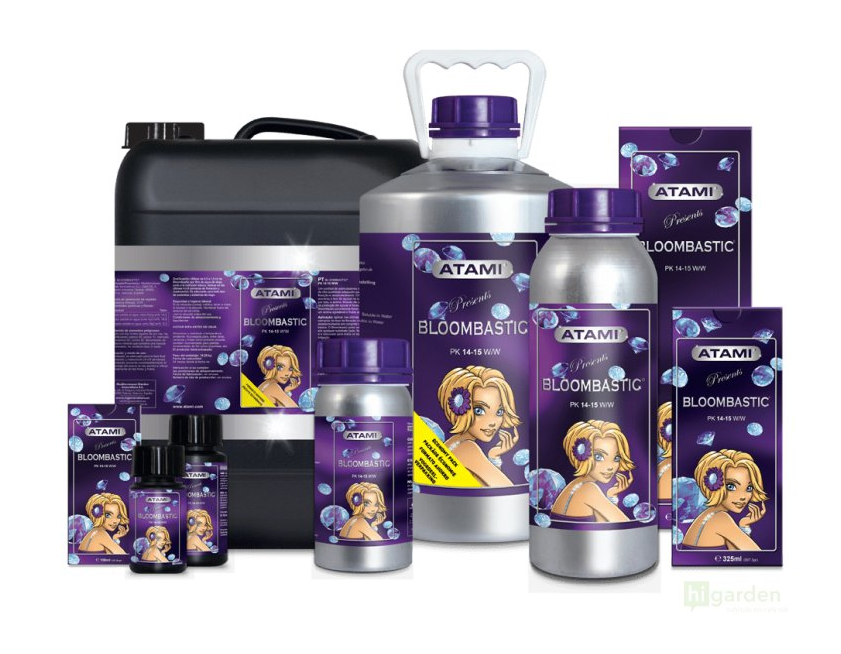
- Among the best-selling flowering stimulators over the long term are also Atami ATA Bloombastic (organomineral) and Atami B’cuzz Bloom Stimulator (100% natural).
- If you do not necessarily seek a purely plant-based composition for your booster, we must not forget the alternative to the above-mentioned product Biocanna Bioboost, namely the well-known and time-tested flowering booster Canna Cannaboost.
- Are you interested in innovative products and new arrivals on the market? The flowering stimulator Shogun Sumo Active Boost has only been available on the domestic market for a few weeks and has been designed to remain stable in your nutrient solution tank for up to 14 days! It is therefore a perfect flowering booster for active hydroponic systems. It contains triacontanol and plant auxins, cytokinins, brassinosteroids, vitamins and amino acids. We have covered the complete range of Shogun Fertilisers for you in a separate article entitled SHOGUN: the best British fertilisers with an emphasis on research.

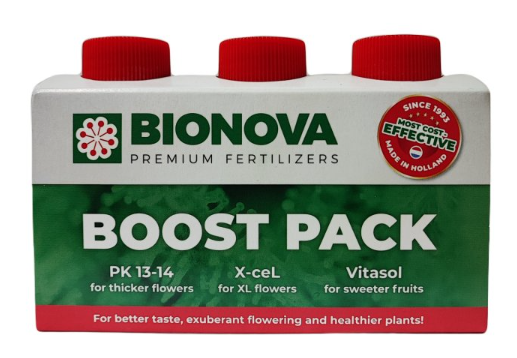
Final tip: What would you say to a universal booster that actively participates in the growth process and subsequent flower formation from the very first day of planting? Sounds good? This product is also in no way incompatible even with BIO-quality harvests. Its name is: X-cel Booster and it belongs among the first-class products from the popular Dutch brand BioNova with an emphasis on an ecological approach to production processes. Not only does it promise up to 20% richer flowers, but you can also confidently apply it regardless of which growing substrate you prefer. X-cel Booster is also part of the advantageous BIONOVA BOOST PACK, which we even wrote a short article about: BioNova Boost Pack for luxurious flowers and fruits!
Now you know the principle on which a flowering booster works, what its use will bring you in practice, and we have added a few tips from our range that will help you achieve higher yields. If you would like to ask us anything else or need advice on choosing a specific flowering stimulator, we are here for you at the well-known e-mail address info@higarden.eu.
We also recommend these products:
What to read next:
Complete Guide to Fertilisers for Indoor Growing
Choosing the right fertiliser for indoor growing is a stumbling block for many growers. It is easy to get lost in the huge range of fertiliser types and brands intended for different substrate types and growth stages. In this complete guide to fertilisers for indoor growing, we will show you how to choose the ideal nutrition for soil, coco and hydroponics, and how to find your way through the range of growth and flowering fertilisers.
If you have visited the shop or the Higarden website for the first time, our range of fertilisers may seem excessive. Do you really need so many different types and brands? The truth is that a wide selection of fertilisers is not just for show. Indoor growing can take many forms, and each substrate, species or growth stage requires a specific type of plant nutrition. In the following lines, we will guide you through buying fertiliser for indoor plants step by step.
Types of fertilisers for indoor growing
 When it comes to plant nutrition, indoor growing offers two main approaches. You can either rely on nature and use organic fertilisers to create an environment for your plants similar to a fertile bed. Or you can choose immediately acting mineral fertilisers, which supply plants with nutrients in the form of mineral salts.
You may also be interested in: Organic or mineral fertilisers: which should you choose?
What is the difference between organic and mineral fertilisers? The main difference is that for organic fertilisers to work, plants must grow in a substrate inhabited by soil microorganisms, which first “pre-digest” the organic nutrients for the plants. That is why they are usually used only when growing in soil substrates.
On the other hand, nutrients in the form of mineral salts can be absorbed by plants immediately, without first being broken down by microorganisms. Mineral fertilisers can therefore be used not only in soil, but also in hydroponics and when growing in coco and inert substrates such as rockwool, expanded clay or perlite.
You may also be interested in: How to choose a growing medium for indoor growing
It is not possible to say simply whether mineral or organic fertilisers are better. Mineral salts act very quickly and are effective. On the other hand, if handled carelessly, it is easy to overfeed plants. Organic fertilisers act more slowly and their effectiveness depends more on environmental factors. However, under the right conditions they require much less work and plants are practically not at risk of nutrient deficiencies.
Both approaches can be combined under certain circumstances, but it is always necessary to balance the amount of mineral salts in the soil so that microorganisms can survive in it. Combined organo-mineral fertilisers are used for this purpose.
How does growing with organic or mineral fertilisers differ?
Both types are available in different forms. Most indoor growers use liquid fertilisers for convenience, but there are also powder forms or fertilisers in tablet or granule form.
You may also be interested in: Are liquid, powder or solid tablet fertilisers better?
Mineral fertilisers are first mixed with water, and plants are watered with the resulting nutrient solution, or they grow immersed directly in it in the case of hydroponics. With a nutrient solution, it is always necessary to measure the amount of nutrients and acidity using an EC metre and pH metre.
You may also be interested in: How to measure EC in hydroponics and growing in soilless substrates
Organic fertilisers are applied directly to the water or mixed into the substrate in the case of tablets or granules. With organic fertilisers, it is usually not necessary to measure EC because they do not contain mineral salts; however, it is advisable to slightly lower the pH of the irrigation water when watering.
When to choose mineral fertilisers
If you grow hydroponically or in inert substrates (rockwool, perlite, expanded clay): In purely soilless systems, nutrient solutions made from mineral fertilisers are significantly more effective than any organic alternatives.
You are aiming for maximum yield and rapid growth: When growing indoors under intense light, mineral nutrients usually deliver higher and more stable results than purely organic nutrition.
You are growing species with a short vegetative cycle or seedlings: When growing plants with a short vegetative cycle (pepper seedlings, leafy vegetables), organic fertilisers may release nitrogen too slowly. When growing with mineral fertilisers, seedlings are usually larger and grow faster.
When to choose organic fertilisers
 You grow in soil or a substrate rich in organic matter: When growing in soil, it is often easier to take advantage of beneficial microorganisms and grow organically. This is especially advantageous for beginner growers, who are relieved of most of the worries associated with measuring irrigation and plant nutrition.
You care about the quality and terpene profile of flowers and fruits: In tomatoes and medicinal plants, studies have repeatedly shown that organically grown crops have better taste and aroma.
You want to use one substrate for a long time: Living soil and other ecological growing methods depend on the long-term sustainability of substrate quality, which can only be achieved with organic fertilisers.
Fertilisers for indoor growing by growing medium
When choosing a fertiliser, one of the most important factors is the type of substrate. Each growing medium has its specifics. A fertiliser for hydroponics will not work in soil or coco.
Fertilisers according to the plant growth stage
At different stages of its life, a plant has different requirements for nutrient composition, especially the main NPK nutrients, which it consumes in the largest quantities. During the growth stage, plants need increased amounts of nitrogen for leaf and root development. Flower fertilisers contain a higher proportion of phosphorus and potassium, which support flower formation.
- Fertilisers for seedlings and cuttings
- Fertilisers for the growth stage
- Fertilisers for the flowering stage
You may also be interested in: How to use growth fertilisers
Choosing the right fertiliser does not have to be complicated if you know what to base your decision on. The key is to take into account the growing medium, the chosen growing style and the current growth stage of the plant. Once you align these three factors, most fertilising mistakes will disappear on their own and the plants will reward you with healthy growth and a quality harvest.
If you want to learn more about indoor growing, you will find practical tips, guides and detailed articles on the Higarden blog, where we cover everything from choosing a substrate to optimising light and the environment in the growing space.
Sources:
Massuela, D., Munz, S., Hartung, J., Nkebiwe, P., & Graeff‐Hönninger, S. (2023). Cannabis Hunger Games: nutrient stress induction in flowering stage – impact of organic and mineral fertiliser levels on biomass, cannabidiol (CBD) yield and nutrient use efficiency. Frontiers in Plant Science, 14. doi.org/10.3389/fpls.2023.1233232.
Liu, J., Masabni, J., & Niu, G. (2025). Organic Fertiliser Optimization for Enhanced Growth and Nutrient Uptake in Bell Pepper Transplants (Capsicum annuum L.). Horticulturae. doi.org/10.3390/horticulturae11091066.
Yang, J., Mattoo, A., Liu, Y., Zvomuya, F., & He, H. (2023). Trade-offs of organic and organic-inorganic fertiliser combinations in tomato quality and yield: A global meta-analysis (1992–2021). European Journal of Agronomy. doi.org/10.1016/j.eja.2023.126985.
Beneficial Microorganisms (Microbes) Are Indispensable Helpers
Microorganisms, or microbes, are single-celled organisms whose activity can only be observed under a microscope. They are often perceived negatively in the sense of pathogenic microbes. But on the other hand, we also have beneficial microorganisms. These are the ones that do not harm people, animals or plants and, in gardening, are instead widely used to achieve significantly greater efficiency in plant fertilisation, while also protecting plants, for example against the action of harmful pathogens. Microbes mean natural and versatile support for the development of your plants!
Without the activity of microbes, there would be no life on Earth. Such is their importance! It is not the first time we have mentioned that healthy “micro-life” is the best foundation for healthy and strong plants, capable of producing abundant flowers or large fruits with a high content of valuable substances. It is therefore no surprise that more and more growers are enriching the basic nutrition of plants with quality products with microorganisms (see below).
Bacteria, algae, fungi and protozoa, of which there are countless in soil, multiply rapidly and therefore often live in colonies or even form symbiotic relationships. A large group of microbes develops in the area of soil closest to the roots of higher plants and is technically called the rhizosphere. Because we regularly emphasise a healthy root system, you can probably already guess how positive the impact of microbes on your harvest will be. Let us now introduce at least the most important cases.
Rhizobacteria
Rhizobacteria are by far the most numerous group of microbes in the rhizosphere. The first example is bacteria that develop either directly in the root system of plants or in its immediate vicinity. The beneficial effects of rhizobacteria on colonised plants were already observed by ancient growers. Today we simply have much more sophisticated means of initiating and stimulating these processes in soil or substrate. Tips on selected products can be found at the end of this article. Are you interested in how rhizobacteria help plants, or rather growers, achieve the dream natural harvest?
- Better nutrient availability: Some rhizobacteria are able to provide plants with phosphorus and iron from soil, where these elements are present in inorganic form. Bacteria of the genera Bacillus, Pseudomonas, Rhizobium or Erwinia convert them into a form that is easily absorbed by plants, which is of course not only effective but also ecological.
- The ability to bind atmospheric nitrogen: The “superpower” of some rhizobacteria to enrich soil with nitrogen (N) is of enormous importance to every grower or farmer. The best-known example is bacteria of the genus Rhizobium, which form small nodules on the roots of leguminous plants. As German scientists discovered as early as the end of the 19th century, the nodules themselves are the place where these bacteria cluster. However, observation of their activity in a way goes back to antiquity, when farmers noticed how well plants developed when growing in a field with soil enriched with nitrogen because they had grown beans or peas there the year before.
- Natural antibiotics: Antibiotic substances produced by rhizobacteria often have antiviral or fungicidal effects. As we outlined right at the beginning, beneficial microbes and, in this case specifically rhizobacteria, are therefore indispensable helpers not only in plant nutrition but also in plant protection. Thanks to their ability to produce antibiotic substances, they help prevent root rot or the occurrence of insidious types of moulds (e.g. Botritis).
- Source of natural stimulants: Many rhizobacteria also produce phytohormones, especially auxins, the best known of which is probably indole-3-acetic acid, as well as cytokinins or gibberellins, which are synthesised in places of active growth (buds, young leaves, seeds). These plant hormones improve seed germination and cutting root formation, and therefore they are often part of the composition of many root boosters or fertilisers for cuttings and planting.
Mycorrhiza
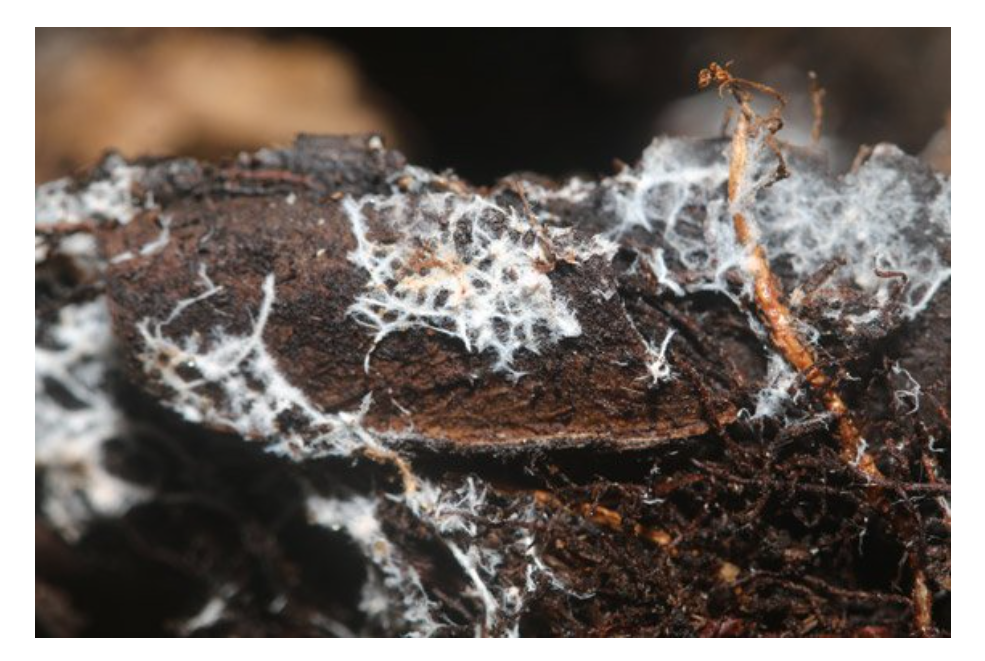
Mycorrhiza (in the picture) is when fungal mycelium (mycelium) and plant roots together create a perfectly functioning system for both sides. We deal with the symbiotic coexistence of mycorrhizal fungi with the root system of plants in more detail in a separate article: Mycorrhiza or High Yields Without Chemicals. In the field of organic agriculture, the mycorrhizal fungi of the genera Glomus, Gigaspora, Acaulospora and Sclerocystis are of greatest importance to growers.
Trichoderma
If you are interested in ways to support rich “micro-life” in soil when growing plants, be sure to read the separate article as well: Trichoderma or the Natural Way to a Bountiful and Healthy Harvest. It discusses the exceptionally beneficial fungi of the genus Trichoderma, whose effect on the root system of plants is already very well known among growers around the world. If you have not yet had the opportunity to become familiar with its effects, you will be delighted!
Quality products with beneficial microorganisms
The action of the microorganisms mentioned above is most relevant when growing plants in soil and soil-based substrates. You will therefore make the most use of it for growing herbs or tasty crops in organic quality and in combination with organic plant nutrition. From our range, we have selected several tips on popular products with microbes for the purpose of this article:
The extra concentrated product from the opening photograph of this article is a real unique item on the market in terms of composition. It contains a complete consortium of microorganisms, enzymes and beneficial fungi with a significant effect on the plant rhizosphere, where it increases the useful root surface area. The result?
- Better flow and uptake of basic nutrients (see separate article: N-P-K – what is it?) and final yield.
- Higher and better absorption of nitrogen (N), phosphorus (F), potassium (K) and micronutrients during all stages of plant development.
- Effective support for germination and early seedling growth.
- Support for flowering.
- Selected microbes produce phytohormones (see above, e.g. indole-3-acetic acid or gibberellins).
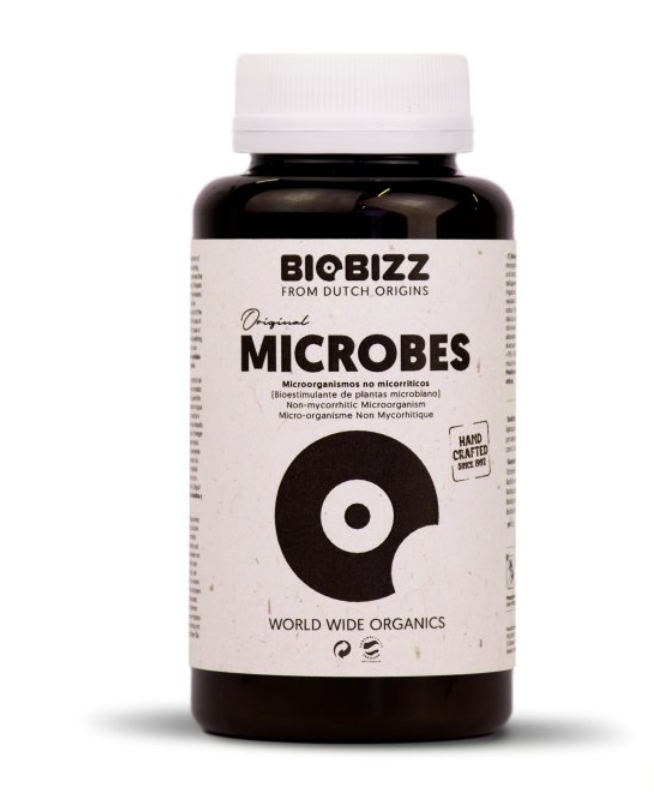
So that we do not remain only with the general term “consortium”, let us take a closer look at which microorganisms Biobizz Microbes contains:
- Bacteria: The 4 most beneficial bacterial species for substrate restoration improve the plant nutrition process, hormone production, root tissue growth and the solubility of key nutrients such as phosphorus (P). This is reflected in increased productivity and yield quality. From the guaranteed analysis we can identify the presence of the following rhizobacteria in the composition of this product (see above):
- Bacillus valezensis > 500,000,000 CFU/g
- Bacillus megaterium >200,000,000 CFU/g
- Bacillus pumilus > 250,000,000 CFU/g
- Bacillus licheniformis > 500,000,000 CFU/g
- Enzymes: The perfect supplement to beneficial substrate microorganisms, proving that although this product is not among the cheapest, its purchase and use pay off for growers, among other things, because it also serves the function of an enzymatic preparation. (We also focus on this topic in a separate article: Enzymes.) And why are enzymes the perfect supplement to beneficial substrate microorganisms? Enzymes in Biobizz Microbes increase the speed of colonisation by substrate microorganisms, as well as the rapid conversion of nutrients for their quick absorption. Among other things, they create free amino acids in the growing medium and thus increase both the activity and the actual results of the action of active microorganisms.
- Trichoderma: see above. Guaranteed analysis: Trichoderma harzianum > 10,000,000 CFU/g.
Biobizz microbes are recommended by the manufacturer to be applied once a week at a dose of between 0.2 and 0.4 g/l throughout the entire growing cycle. It does not matter whether you grow your plants in a grow tent or outdoors. This product is suitable not only for classic growing in soil, but even for hydroponics. Biobizz microbes work especially well when you combine them with other Biobizz products.
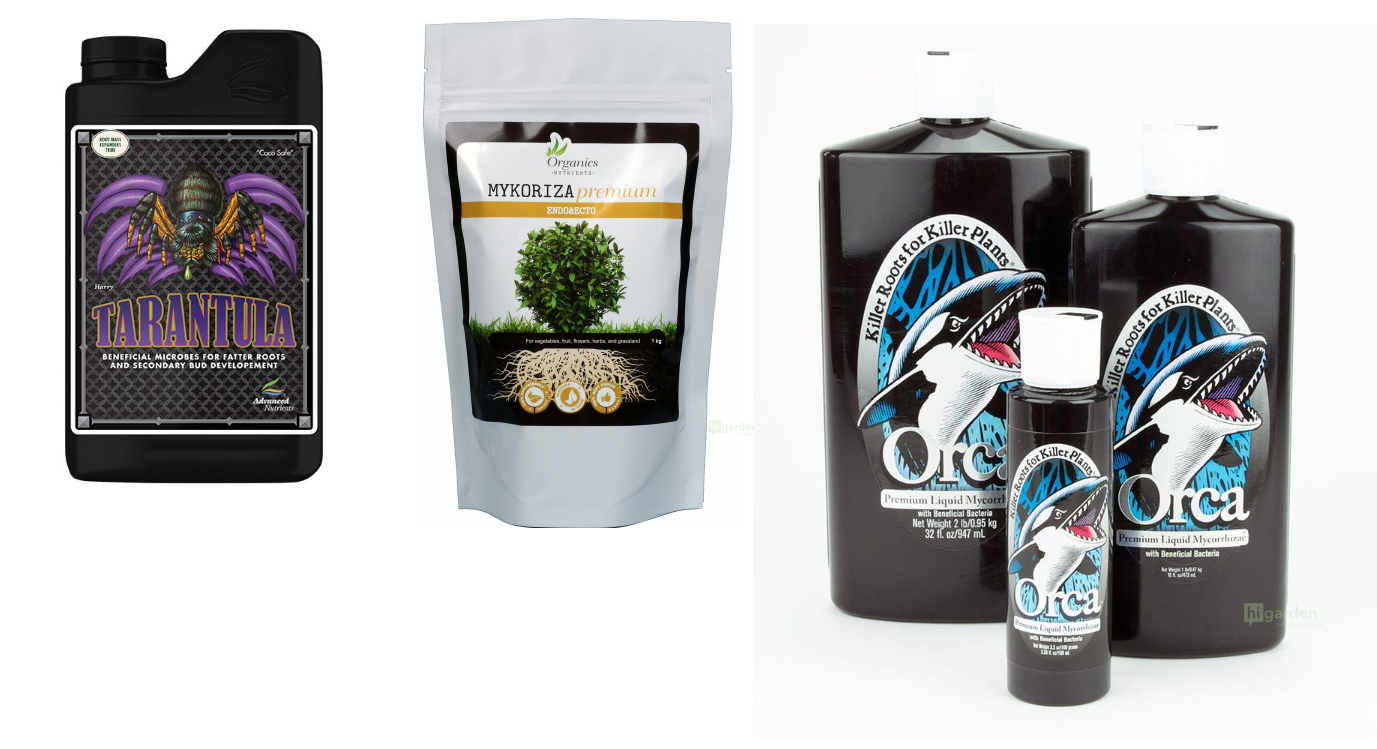
- MYKORIZA premium and other plant nutrition from the Organics Nutrients brand
A great choice for anyone who chooses the 100% organic route in gardening is Organics Nutrients fertilisers. For example, the purely organic powder MYKORIZA premium contains mycorrhizal fungi, rhizobacteria, Trichoderma and other beneficial microorganisms. After being added to our range, it immediately became a hit. We also summarise all the new products from this manufacturer in a separate article: Organics Nutrients: the natural way to large yields.
Protect your crop with a bacterial shield created thanks to specially bred microbes guarding the root system of plants against the invasion of moulds, pathogenic bacteria or pests. The liquid supplementary fertiliser Tarantula also increases phosphorus availability. It is not used when growing plants in coco.
Inoculate the roots of your plants for a perfect harvest! This unique all-in-one blend is very easy to apply. It contains 11 strains of highly beneficial bacteria and 4 strains of endomycorrhizal fungi! You can be sure that this consortium of microbes is also working tirelessly in the root zone to create a dominant microbial ecosystem capable of successfully repelling pathogenic bacteria or fungi and thus preventing nasty problems such as pythium - a mould that can destroy entire crops in a short time.
If you would like advice, for example on which microbe product will be most worthwhile for you with regard to your individual plans and needs, do not hesitate to ask us anything via the well-known e-mail address info@higarden.eu. We look forward to your questions!
We also recommend these products:
What to read next:
The Most Common Nutrient Deficiencies in Plants: How to Recognise, Address and Prevent Them
Are your plants turning yellow, curling and slowing their growth? They may be lacking essential nutrients. Learn to recognise the signals your plants give you and find out how to help them quickly.
In total, plants need 17 nutrient elements to live. They obtain oxygen, carbon and hydrogen from the air. The remaining nutrients are taken from the soil or nutrient solution. Nutrient elements are divided into macronutrients, which plants need in the greatest amounts, and micronutrients, also known as trace elements or minerals.
- Macronutrients: nitrogen (N), phosphorus (P), potassium (K), calcium (Ca), sulphur (S), magnesium (Mg), carbon (C), oxygen (O), hydrogen (H)
- Micronutrients (trace elements): iron (Fe), boron (B), chlorine (Cl), manganese (Mn), zinc (Zn), copper (Cu), molybdenum (Mo), nickel (Ni)
Macronutrients are absolutely essential for plants, and their deficiency is clearly reflected in the plants. Plants need the primary macronutrients most of all – nitrogen (N), phosphorus (P) and potassium (K). In indoor growing, we may also encounter a deficiency of secondary macronutrients - calcium (Ca), magnesium (Mg) and, exceptionally, sulphur (S).
You may also be interested in: Everything about the primary nutrients NPK
Nitrogen
 Nitrogen is most often lacking in plants during the vegetative phase, when they produce a large number of leaves. It is important in the formation of chlorophyll and is an essential component of proteins and nucleic acids.
Symptoms of nitrogen deficiency in plants
How can you tell if a plant is lacking nitrogen? The most obvious sign is yellowing leaves, which first affects the old leaves in the lower parts of the plant. This is because nitrogen is a mobile element that plants can freely move to where they need it most, namely to new shoots and leaves. In some varieties, nitrogen deficiency is shown by purple colouring of stems and leaf petioles.
- yellowing leaves and pale green colour
- lower leaves gradually fade and wilt
- slowed growth
- new shoots are lighter in colour
- earlier onset of flowering
- purple colouring of stems in some varieties
Why plants lack nitrogen and what to do
The most common reason for nitrogen deficiency is incorrect fertilisation. When growing outdoors, the cause may be soil poor in organic matter. Therefore, if you grow in the same place every year, it is important to regularly add compost or another source of organic matter to the soil, for example humus. If it is too late for that and you need to act quickly, we recommend using fast-acting liquid organic fertilisers for growth.
You may also be interested in: What NPK fertilisers are and what they are used for
In indoor growing, the reason may be too little fertiliser. This can be corrected simply by increasing the concentration of fertilisers in the nutrient solution. If you feel that you are fertilising sufficiently and yet the plants still look undernourished, the opposite may be true: excessive use of mineral fertilisers. This leads to salt build-up and the “locking” of nutrients in the substrate. In such a case, the solution is to flush the substrate with clean water with adjusted pH and then water it with a solution at the correct pH and EC.
You may also be interested in: What effect pH has on nutrient uptake
A common cause of problems not only with nitrogen but with plant nutrition in general is unsuitable substrate pH. When growing outdoors, this problem is less common and is dealt with by liming the soil or adding organic matter. Indoors, it is usual to lower the pH of the water with every watering, because water with fertilisers has a pH that is too high.
Phosphorus
 Phosphorus is essential for plants in root and leaf formation, photosynthesis and the uptake of other nutrients, as well as during the reproductive phase and flowering. Plants need phosphorus from early growth until harvest, with demand increasing when flowers are initiated – the transition to flowering.
Symptoms of phosphorus deficiency in plants
Plants with a phosphorus deficiency in their nutrition are stunted and have small leaves. The deficiency first appears on older leaves, which turn dark green, wilt and take on a blue-purple colour. If the phosphorus deficiency persists for several weeks, dark brown necrotic spots appear on the leaves and the leaf blades curl downwards. Plants with a phosphorus deficiency in their nutrition will still flower, but the flowers will be weak and few in number.
- dark green leaves with necrotic spots
- leaves darken from the edges and have a purplish colour
- deformed or curled leaf blades
- slow growth and flowering, small flowers
- purple colouring of stems in some species
Why plants lack phosphorus and what to do
When growing in soil, phosphorus deficiency is rare, and in such cases the cause is almost always incorrect pH of the growing medium. Outside the pH range of 6 to 7, the solubility of phosphates drops sharply. Soil pH can be adjusted by liming or by adding sulphur. If you need to act quickly, you can use phosphorus fertilisers in a sensible dose. Better more often and in smaller amounts, so that soil microorganisms are not destroyed and fertilisers are not leached into groundwater.
You may also be interested in: How to choose a fertiliser for indoor and outdoor growing
Indoors, phosphorus deficiency can also be caused by unsuitable pH of the substrate or nutrient solution. In such a case, it is enough to adjust the pH of the nutrient solution or substrate at the next watering. Less often, nutrition problems are caused by an unsuitable N:P:K ratio. However, if you use professional fertilisers for indoor growing and follow the feeding tables, your plants should not lack phosphorus.
You may also be interested in: Organic or mineral fertilisers – which are better?
Potassium
 Potassium is an important element for water transport, as plants use it to control stomata. These small pores on the leaf surface regulate how much water evaporates from the plants and thus effectively control transpiration. Plants need potassium throughout the entire growing cycle.
Symptoms of potassium deficiency in plants
Potassium deficiency is initially difficult to recognise in plants. Plants that lack only a small amount of potassium still look healthy. They may even be slightly taller, but they are identified by slightly burnt leaf edges with yellowing tips. If the potassium deficit is more serious, the leaf veins remain green, but the petioles and stems turn red and dark necrotic spots begin to appear on the leaves.
- burnt leaf edges and tips
- leaves discolour from the edge towards the centre
- veins remain green
- slow growth and smaller flowers
- deformed and drying leaves
Why plants lack potassium and what to do
A large proportion of organic fertilisers used in outdoor growing (guano, fish emulsion, alfalfa, bone meal, animal manure) contain relatively little potassium due to their phosphorus and nitrogen content. Gardeners growing in fertile soils therefore also encounter a deficiency of this element. Potassium uptake is also slowed by cold, a high content of sodium, calcium or ammonia (NH₄ ⁺) in the substrate. An ecological way to supplement potassium in the soil is wood ash. For a quick potassium top-up in the soil, you can use potassium fertilisers.
When growing indoors, the most common reason for potassium deficiency in the soil is poor fertilisation or unsuitable pH. Problems with potassium uptake may also be caused by too high a content of calcium and magnesium in the nutrient solution or substrate. As always, the solution is first to measure the EC and pH of the substrate and, in the case of incorrect values, flush and water with a nutrient solution containing the appropriate amount of fertilisers.
Calcium
 Although calcium is classified as a secondary nutrient, it is by no means insignificant for plants. It is part of plant tissues and essential for root growth. One of calcium’s most important roles is regulating the permeability of stomata, through which plants control transpiration. This element also affects growth hormones and the transport and uptake of other nutrients, especially potassium.
Symptoms of calcium deficiency in plants
The main sign of calcium deficiency is clearly defined necrotic brown-yellow spots on new leaves. If plants do not receive calcium, the damage will also appear on older leaves, especially on the edges of the blades, which then look as if burnt by fertiliser. Another symptom of calcium deficiency in plants is brittle, breaking stems.
- necrotic spots on leaves
- yellow or brown patches on leaf edges
- stunted plants
- dark green leaves
- rotting roots
- twisted and dying shoots
- sparse inflorescences
Why plants lack calcium and what to do
When growing in soil, calcium deficiency is encountered only exceptionally, only when growing in very acidic soils. This can be corrected by liming the soil, for example with dolomitic limestone.
Unlike soil, hydroponic substrates (rockwool, coco, perlite, expanded clay) do not contain calcium on their own and it must be supplied together with the other nutrients in the form of fertilisers. If you use soft, distilled or reverse osmosis filtered water for watering, it is necessary to add CalMag to the nutrient solution and increase the EC to 0.2–0.4 mS/cm.
Magnesium
 Plants use magnesium in the formation of chlorophyll – the green pigment essential for photosynthesis. It also activates hundreds of enzymes and supports the transport of sugars from the leaves to the roots and fruits, which directly affects yield. In addition, magnesium helps regulate the plant’s energy metabolism and increases its resistance to drought, heat and light.
Symptoms of magnesium deficiency in plants
Magnesium deficiency in plants first appears on older lower leaves, which fade while the veins remain green. Next, the leaves in the middle part of the plant are affected, and rusty spots appear on them. The symptoms gradually spread throughout the whole plant. Magnesium deficiency in nutrition may not show up on plants immediately; it is especially noticeable during the flowering phase, when the newly forming flowers are affected.
- yellowing leaves in the lower and middle parts of the plant
- necrotic spots
- young leaves are green
- dry leaf edges
Why plants lack magnesium and what to do
When growing in soil, magnesium deficiency is rare. It is usually encountered in clay soils or when there is a high content of potassium, ammonium or calcium. When growing in pots, magnesium deficiency may occur when watering plants with rainwater or filtered water. The easiest way to prevent magnesium deficiency when growing in beds is regular liming with dolomitic limestone.
Unlike soil, hydroponic substrates (rockwool, coco, perlite, expanded clay) do not contain magnesium on their own and it must be supplied together with the other nutrients in the form of fertilisers. If you use soft, distilled or reverse osmosis filtered water for watering, it is necessary to add CalMag to the nutrient solution and increase the EC to 0.2–0.4 mS/cm.
If you want to learn to grow like professionals or are looking for news from the world of indoor and outdoor growing, you will find all this and much more on the Higarden blog.
Leaf photo: canna-cz.com
Debunking Myths About Growing: Watering Plants
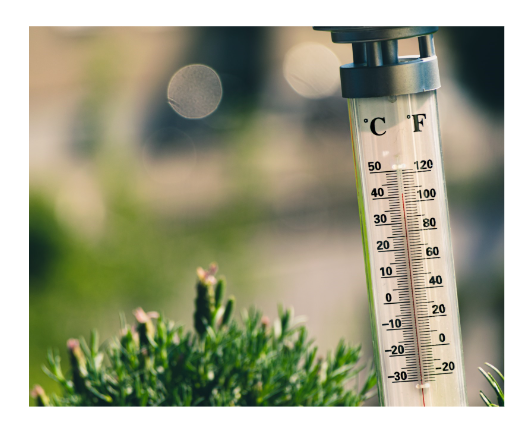 Caring for plants grown indoors under artificial lighting is equally a science and an art. The key to success lies not only in mastering the basic principles that affect plant metabolism, but also in the experience gained through careful observation. From the questions our customers ask us, we have selected the most common ones that we encounter when they water their plants. Let us present the three most common myths about watering plants and explain how things really are.
Watering plants may seem like a simple task, but it is surrounded by many myths that can confuse both beginners and more experienced growers. The following three misconceptions are among the most widespread, and we encounter them most often among our customers. We know that no one is born learned, and in the following lines we will examine each of these common misconceptions about watering in detail.
Myth 1 – Plants need the same amount of water all the time
Many growers believe that once they manage to establish the “right” watering regime, they can leave the rest of the work to an automatic irrigation system or a less experienced friend. However, they do not realise that plants’ water consumption changes according to the species, growth stage, environmental conditions, and the type of soil or growing medium.
- Plant species and growth stage: Different species of plants grown indoors can have diametrically different water requirements, based on their natural environment. Succulents and cacti require low air humidity and less frequent watering than, for example, tropical plants that are adapted to a permanently moist environment. The growth stage of the plant also plays a crucial role in watering. Young and actively growing plants usually require more water than flowering, slowly growing or overwintered ones.
- Environmental conditions: External environmental factors such as temperature, air humidity or light intensity significantly affect plants’ water consumption. Higher temperatures and stronger lighting cause faster evaporation and transpiration, and plants require more frequent watering. Conversely, lower temperatures and lower light intensity reduce water consumption. Air humidity also plays a major role. In a dry environment, plants lose water more quickly through evaporation from the leaves (transpiration) and need more frequent watering. In a humid environment, the transpiration process is slower.
- Type of growing medium and retention properties of the substrate: The type of growing substrate and its retention properties fundamentally affect the watering regime. Soil-based horticultural substrates and coco can retain large amounts of water and require less frequent watering. Rockwool, perlite, expanded clay or other hydroponic media need frequent watering and are usually part of automatic irrigation and hydroponic growing systems.
Would you like to learn more about the different types of growing substrates and their properties? Read Guide to Growing Substrates.
Myth 2 – It is best to water plants as often as possible, and the substrate should always be fully saturated with water
The belief that the more plants are watered, the better, leads many growers to overwater their plants constantly. However, waterlogging has a similarly devastating effect on plants as a lack of water. A constantly saturated substrate suffocates the roots, which leads to root rot and the spread of moulds attacking the plants. Adjust the frequency and amount of watering to the type of growing medium and the chosen fertigation method.
- Horticultural growing substrates: Soil mixes retain a relatively high amount of water, and plants do not mind if you let the substrate dry out a little between waterings. The soil should not be bone dry, but only dried out to a depth of about three centimetres. If you grow in smaller pots, you can check the amount of water in the substrate by lifting them. Plants grown in soil usually do not need to be watered daily.
- Coco substrates: Growing substrates made from coconut fibres have, in many respects, better retention properties than soil. They retain not only a large amount of water, but also air, so they protect plants from waterlogging better. When growing in coco, it is important to water plants regularly so that the substrate never dries out completely, because the fibres then lose their ability to retain water.
- Rockwool: Rockwool is a hydroponic substrate made from mineral wool compressed into the form of growing cubes or mats. The main advantage of this medium is its stable retention properties. Rockwool is therefore suitable for hydroponics, growing in flood trays or in drip systems.
Are you unsure when choosing a suitable growing substrate? Read the article Soil or Coco Growing Substrate? Choose the Right One for Your Garden on our blog.
Myth 3 – When watering, it is important not to wet the leaves of the plants
Many growers fear that if they wet the leaves of plants while watering, they may burn them or contribute to the development of moulds and diseases. It is true that persistently wet leaves and constantly high air humidity increase the risk of powdery mildew or botrytis spreading. However, occasional wetting of the leaves is generally not harmful and can even be beneficial. Just as in nature during rain, you can wash dust and pests off the plants with water. If you want to spray the plants with water, follow the rules below.
- Ensure sufficient air circulation in the growing area: When wetting plants with water, it is important to ensure that the leaves dry as quickly as possible. Turn the circulation fans to full power and maintain an even temperature and air humidity in the growing area appropriate to the plants’ growth stage.
- Use clean water or a suitable plant protection product: Most water-soluble fertilisers are not suitable for foliar feeding and should not come into contact with the leaves. Exceptions include some special fertilisers containing nitrogen, which plants can absorb through the leaf surface as well. The water you use to rinse the plants should be clean and lukewarm. You can also use one of the protective products intended for regular and preventive treatment, such as CannaCure, Athena IPW and others.
- Wash the plants in the morning before the lights are switched on: LED grow lights emit very intense light, and water droplets acting like magnifying lenses can burn the leaves. If you need to rinse the plants during the light cycle, first reduce the intensity of the LED panel to the minimum level.
Are you looking for a natural product that will protect your plants while also providing them with nutrients? Try compost teas, which can be used both as a spray and as a watering solution. You can learn more about compost teas in the article on our blog Compost Teas: Microbial Elixirs That Revitalise the Soil in Your Garden.
Advanced Hydroponics - the choice of professionals
The Dutch manufacturer Advanced Hydroponics has been helping the most demanding growers achieve their cultivation goals for more than a quarter of a century. Throughout that time, even within advanced hydroponics, it has managed with a significantly narrower range than other world-famous brands with a long tradition. The simple use that distinguishes these liquid fertilisers and nutritional supplements for plant cultivation is appreciated by growers of all categories. It is not for nothing that they say a winning line-up does not change. And organo-mineral fertilisers Advanced Hydroponics simply have a timeless composition. You can find out more details in this article!
The brand’s story and philosophy
In 1993, founder Jay Jackson committed himself to finding an alternative to the commercial fertilisers available on the market at the time, which he and many other growers used. He wanted to find a formula, or rather a combination of these qualities:
- EASY TO USE
- HIGH EFFICIENCY
- COMPETITIVE PRICE
Today it is clear that he found the solution, even if it did not happen immediately. But those who search, find. First, he sought out plant nutrition experts at a research centre in the Dutch town of Aalsmeer. Then the now world-famous “Dutch Formula” was created, which you can read about a few lines further on. Jay and his colleagues first tested the resulting products on his own crop, and given where the brand stands today, it is also clear that the results were astonishing. Then things moved quickly. In 1996, he presented the “Dutch formula” to the world at a trade fair in Germany, and the unique composition of his products triggered a boom among professional growers from across Europe. Soon after, Jay Jackson also introduced the “Natural Power” range of nutritional supplements. Today, Advanced Hydroponics products are widely sold in 22 countries around the world, not only in Europe but also, for example, in Japan.
Hydroponics and growing in soil
Liquid fertilisers from Advanced Hydroponics are suitable for all types of growing media. This immediately allows us to refute a fairly common assumption, which the brand name itself somewhat encourages, that this organo-mineral plant nutrition can be used only as hydroponic fertilisers. The opposite is true, and for use when growing plants in soil there is nothing easier than preparing a nutrient solution using only half the dose of fertilisers. For safe and effective application, a detailed Advanced Hydroponics dosing chart is available to you: Advanced Hydroponics dosing chart.
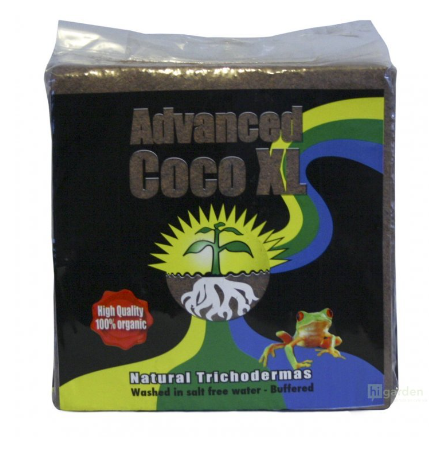
Advanced Hydroponics even produces dehydrated substrate for growing in coco, which is extremely popular among growers who prefer coco as their growing medium. This is the AH Coco Advanced XL 70 L product - coconut bricks containing Trichoderma, measuring 30 x 31 x 11 cm and weighing just under 5 kg, which expand to the declared volume of 70 litres after adding 30 litres of water, making the Advanced Hydroponics coco substrate ready for immediate use. It allows easy oxygen flow, retains water better than ordinary soil, and supports better root growth. It contains no salts, odour sources, stones, roots or other impurities.
Dutch Formula
Yes, this is exactly the formula Jay Jackson was searching for a quarter of a century ago and found! Do you still remember the first of the three points? To make use as simple as possible, it was necessary to present the components in a way that allows easy mixing, so that every grower could easily adjust the amounts of the most essential nutrients according to their needs. This is how the special three-component plant nutrition was created, whose original composition carries the well-known “Dutch Formula” designation and provides plants in different stages of the growing cycle with exactly what they need most at that moment. This applies to all types of plants, from herb cultivation to agricultural crops.
Basic nutrition
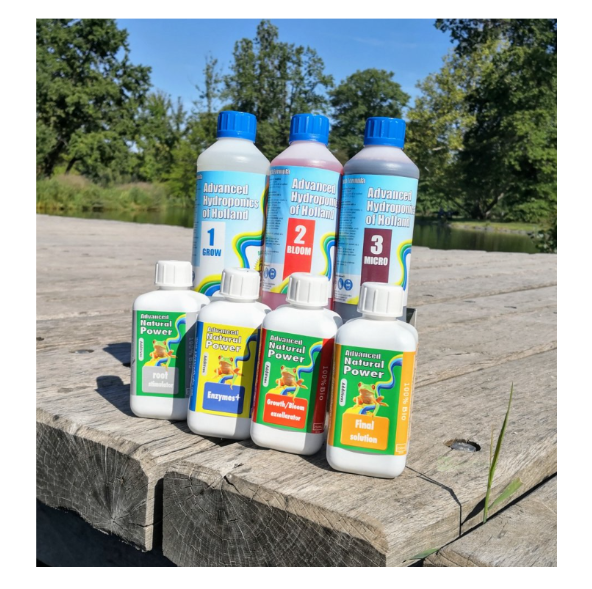
The basic liquid fertiliser consists of 3 components: Grow, Bloom and Micro, which are mixed in the following ratio depending on the plant’s current developmental stage:
- 2:1:1 during the growth period
- 1:2:1 in the pre-flowering period
- 0:3:1 during full flowering
- The first of the three components ensures rapid growth and perfect plant condition during the vegetative phase.
- In newly planted plants, we may notice a healthy root zone and deep green leaves.
- An important effect is the creation of optimal conditions for later bud production during the upcoming flowering phase.
- The second component follows on beautifully from the first, while stimulating the production of large, heavy buds in the flowering stage.
- The third component is the key to success because it contains all the essential microelements for healthy plant development.
- The contained microelements are in chelated form for maximum bioavailability.
- The Micro component ensures during both the growth phase and the flowering phase that plants always absorb enough important micronutrients.
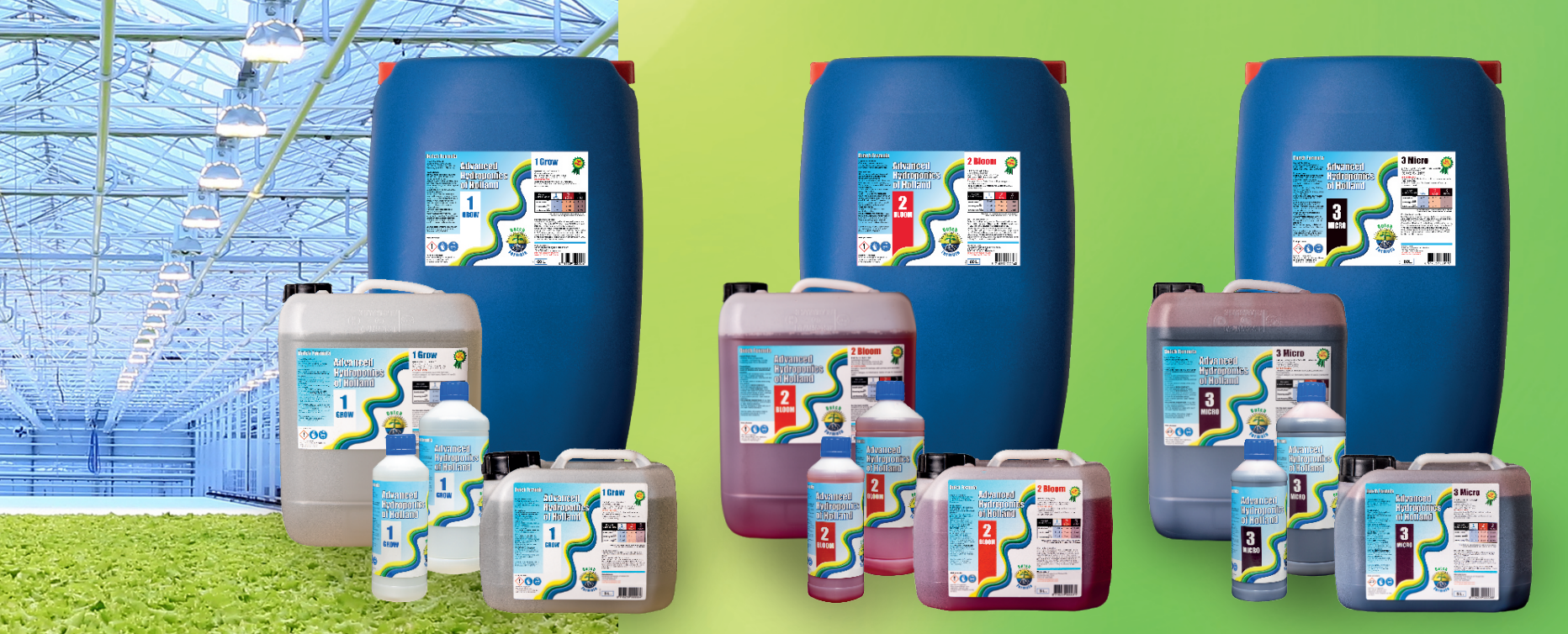
Advanced Hydroponics developed the “Dutch Formula” nutrition on the basis of more than 25 years of experience in plant cultivation and close cooperation with leading research institutions. All you need to do is follow the dosing charts and you are set for excellent results, whether in soil or if you use a hydroponic system for plant cultivation, not to mention the huge potential of aeroponics.
Our TIP: Are you interested in hydroponics, but not yet even at the starting line? Then be sure to read the separate article: Hydroponics – what does it involve and how do you start?
You will see that as your experience grows, you will soon work out for yourself how best to fine-tune your own specific combination, and in practice you will discover the strengths of the three-component Dutch Formula nutrition, especially when it comes to the growth (Grow) and flowering (Bloom) components. These three highly concentrated nutrients provide effective and balanced, complete “food” for regularly achieving above-standard yields.
Nutritional supplements Natural Power
The Dutch manufacturer does not overdo its range of nutritional supplements unnecessarily, so it includes only those additives that you will genuinely need in practice and that will help you achieve better results when growing plants in any growing medium.
While the above-mentioned basic Advanced Hydroponics fertilisers are characterised by an organo-mineral composition, all the additives listed below are 100% biological, which is also reflected in the name of the product range NATURAL POWER. What can you expect from it?
- It ensures a natural connection between nutrition and healthy plants.
- Natural Power is a very nutritious cocktail of essential natural ingredients that gives your plants an exceptionally resilient immune system.
- Increased resistance that helps protect the plant against diseases and fight damage caused by aphids, thrips or other insects.
- When using products from the Natural Power range by Advanced Hydroponics, your plants will be healthier and stronger, rich in flowers, and will provide higher yields with excellent natural flavour.
- Another advantage of the Natural Power range is undoubtedly its universal use. All products are designed for growing both indoors and outdoors. At the same time, they deliver excellent results when growing in soil, coco, rockwool and hydroponic systems.
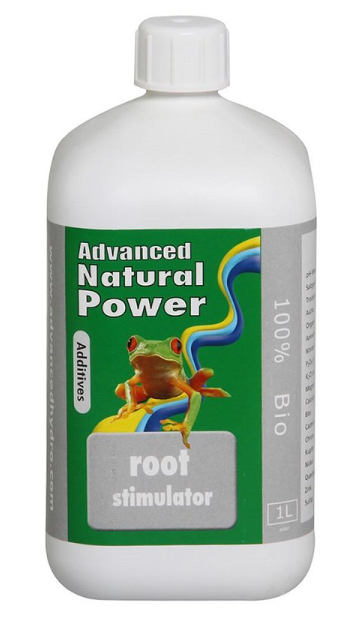
- Countless experienced growers use this original root booster!
- In short, we can say that it speeds up root development and strengthens roots. If you are interested in what root boosters like this can do, we recommend the separate article: Root stimulator - what is it for?
- The product is applied directly to the roots or to the place where roots begin to form.
- It is intended for young plants and cuttings (clones) without roots.
- The result of application from day 1 until a strong root system is formed is also a highly resilient plant immune system and increased resistance to diseases.
- For the best possible results when growing plants outdoor and indoor, we recommend the combination: Root Stimulator + Enzymes+.
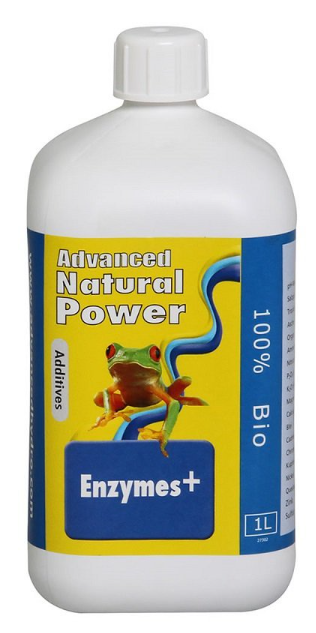
- A special enzymatic additive, enriched with a blend of herbs, activates beneficial microorganisms in the growing substrate. It thus helps remove residual salts and break down dead plant roots.
- It improves the plants’ ability to absorb various nutrients, thereby allowing healthy development.
- It makes the plant root system stronger, which is why a synergistic combination with the root stimulator Root Stimulator, or also with Growth/Bloom Excellarator, is recommended.
- The Enzymes+ product improves oxygen flow.
- Enzymes+ is added to the watering almost throughout the entire growth phase.
- For more information, we also recommend the separate article: Enzymes.
- This nutritious cocktail, very suitable for the ongoing enrichment of the watering, primarily strengthens the formation of green mass and flowers.
- The product is ideal especially for plants with a well-developed root system that are moving into the flowering cycle.
- In cultivation practice, it often helps growers solve problems with plant diseases or harmful insects, because among other things it significantly strengthens the plant immune system.
- Depending on the variety, the product can be added to the watering throughout the entire growth phase, except for the last 1 or 2 weeks.
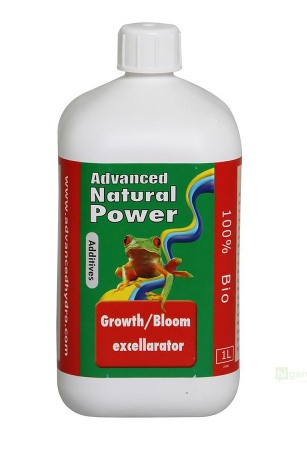
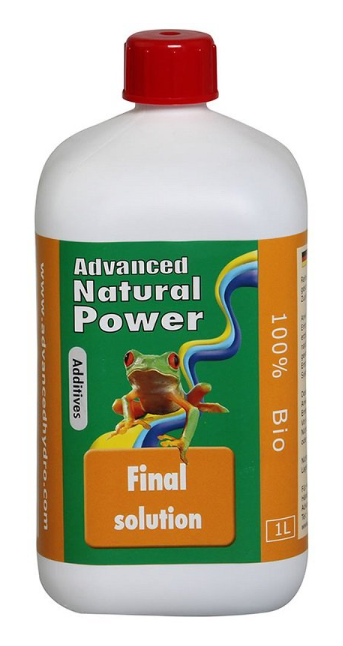
- A product proven over the years and by tens of thousands of growers for flushing plants just before harvest in order to achieve the cleanest possible harvest with wonderful aroma and flavour, which washes away excess nutrients and dead plant residues.
- We also discuss the practical importance of flushing in more detail in a separate article: How to flush?
- Final solution helps break down and remove the last residues of fertilisers in the growing substrate and also acts as a prevention against mould formation.
- The product can be used with any type of growing substrate as the only substance added to the water.
- Warning: do not use Final Solution in combination with Enzymes+.
Additives
- By its composition and effects, this additive belongs among the so-called biostimulants, which increase the supply of energy to plants and their overall vitality.
- It has the highest content of free and absorbable amino acids.
- It is suitable for all plants and can be combined with solid and liquid fertilisers.
- Through enzymatic (natural) hydrolysis and microfiltration, active, biological amino acids are directly available to the plant.
- Improved growth and flowering occur under all circumstances.
- Plants become naturally more resilient. More effective photosynthesis and better absorption of carbon dioxide (CO2) can be observed. At the same time, they are much less susceptible to various stress factors, their roots grow better and they have fuller flowers and fruits.
- Experienced growers use this additive, among other things, shortly after pruning (more about pruning, or defoliation, in a separate article: Does removing leaves make for a better harvest?)
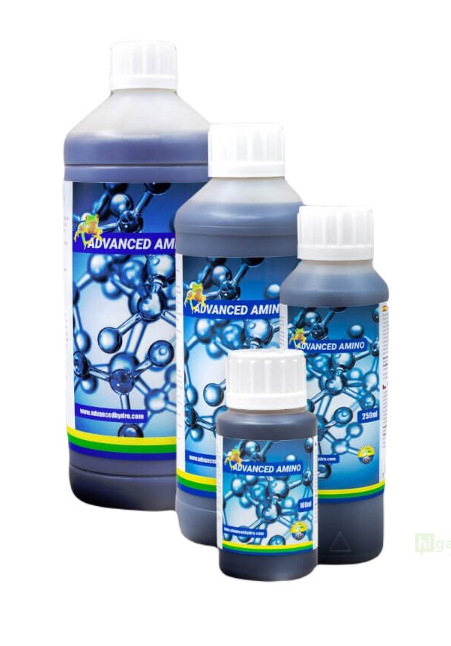
- More than one scientific study has already shown that plants generally thrive better in soil with a high silicon content. Silicon simultaneously stimulates the absorption of other essential nutrients (for example phosphorus), thanks to which plants have more energy, are more active and have healthier and more vital roots, which is reflected in higher yields.
- That is why the composition of this product is dominated by a very high-quality silicon dioxide solution (SiO2 - hydrolysed silicon), which is a well-absorbable and important nutrient that strengthens the cell wall and skin of plants. It thus provides more natural protection for plants against fungi and protection against infections.
- We also recommend the separate article: The effect of silicon on plant health.
- The high silicon concentration in Advanced Silica is easily absorbed by the plant both through the leaves and through the roots.
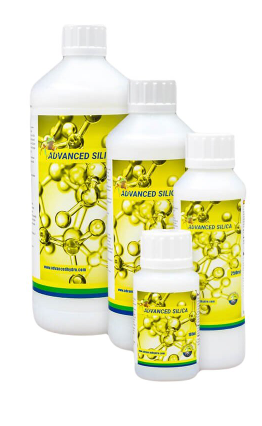
- A supplementary fertiliser with a balanced ratio of phosphorus (P) and potassium (K), which is an essential helper during the flowering phase and fruit development.
- Phosphorus provides plants with more energy (sugars) for the development of an active and healthy root system, and potassium improves water distribution so that the buds can fully develop.
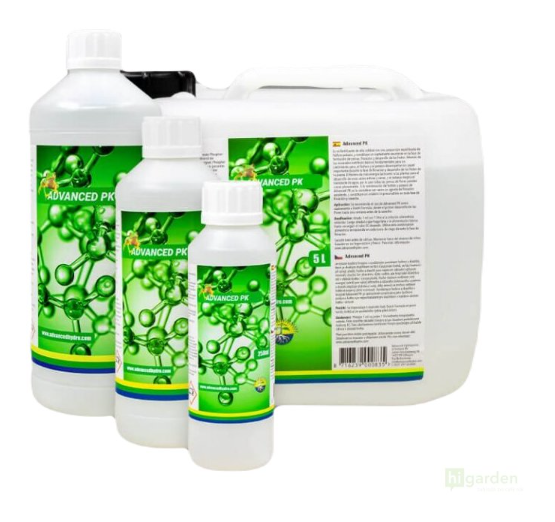
pH regulators
The Advanced Hydroponics range of additives also includes pH regulators, or concentrated substances for increasing or, conversely, reducing the acidity of the watering:
If you are just starting out with growing, an article will also help you with pH regulation, in addition to the regulators themselves: What pH of nutrient solution should you choose?
Final TIP: We often recommend getting to know a brand that interests you through discounted sets containing the manufacturer’s fertilisers and additives for the entire growing cycle. Advanced Hydroponics Starter Kit for all types of growing substrates rightly belongs among the best-selling ones. Judge for yourself and let us know!
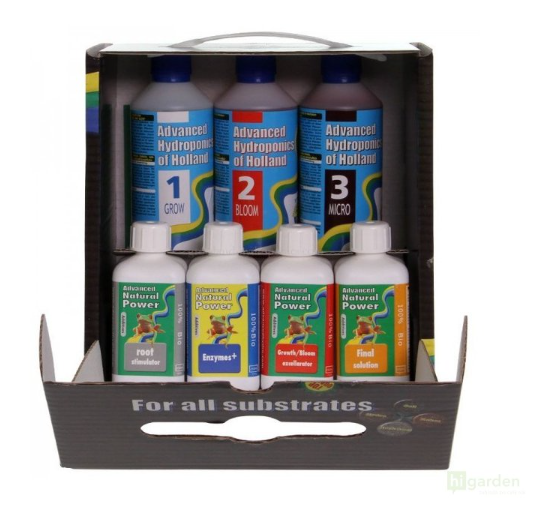
If you would like to ask us anything, we are here for you at the familiar e-mail address info@higarden.eu. We look forward to your questions!
We also recommend these products:
- LightRail 4.0 AdjustaDrive Kit, lighting rail
- T.A. GrowStream 20
- Aqua Master Tools P700 PRO2, pH and EC/CF/PPM metre and thermometer
What to read next:
- VIPARSPECTRA and growing under LED - definitely a good idea!
- Do you know what VPD is? Discover the key to perfect conditions for plant development
- WHISPERBLOWER: professional fans with unbeatable efficiency