
Fulvic and Humic Acids: Their Importance and Use in Plant Nutrition
Fulvic and humic acids are among the natural substances that significantly improve plants’ ability to absorb nutrients efficiently from fertilisers, thereby supporting their growth and overall vitality.
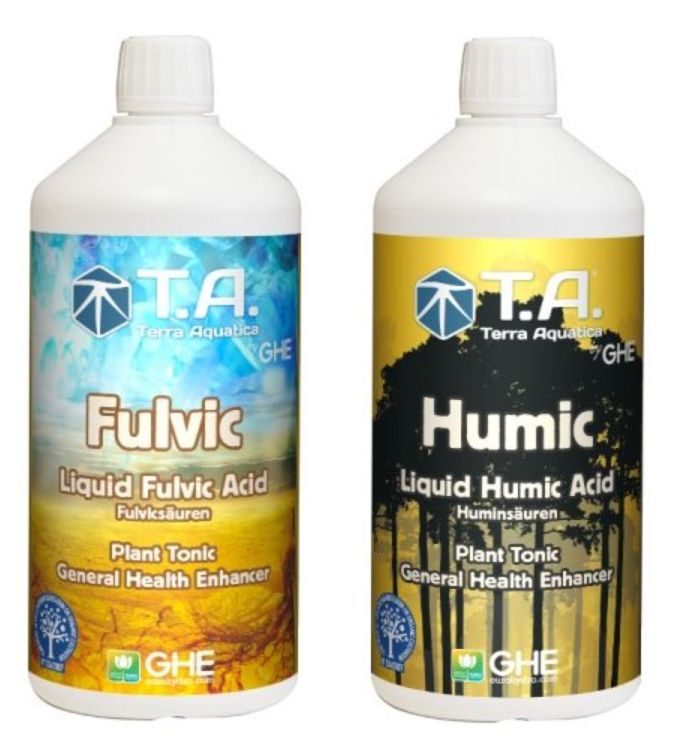
To make it easier to explain how these beneficial substances help with the cultivation of all kinds of plants, and how they can become the key to exceptionally high yields from your flowers or crops, let us begin with the most important terms from our glossary. Simply click on the term in question:
- Humus and humification
- Humates
- Fulvic acids, fulvic acids (FA)
- Humic acids (HA)
- Humins
- Chelates, chelation, chelators
- Leonardite
Humates and plant nutrition
Humate-based additives can be applied without concern both in home gardening, or indoor, and outdoors in outdoor environments. Their use is not limited by the choice of growing method or substrate either. As supplements (additives) to basic fertilisers, thanks to their excellent solubility they significantly support the development of useful and ornamental plants, flowers or crops, including medicinal herbs!
Soluble humates contain literally a wealth of natural substances that strongly support plant growth, which is the result of the first of the two most important benefits associated with the application of humic substances in plant nutrition:
- Better uptake and use of nutrients by the plant
- Stronger plant immunity
The other benefits will be covered shortly with the individual substances and products. Whether you have already clicked through the above terms, which are usually known mainly by environmentally focused growers, or not, let us summarise for each individual humic substance why it is worth using its strength in irrigation, and which specific products are a guaranteed source of it.
High-quality fulvic acid is considered by many growers to be the very best boost you can give your plants in addition to basic nutrition. If only because it is a natural chelate. What does that mean? Ultimately, it means that your plants will have a more productive root system and more important nutrients available. Fulvic acids form specific chemical bonds with certain micronutrients, preventing interaction with other ions, and all nutrients bound to the chelate can then successfully travel from the roots to the plant tissues. The result of chelation is much higher bioavailability of nutrients that would otherwise not dissolve. The importance of fulvic acids can also be summed up by saying that they help plants fully use their potential. And without having to reach for mineral supplements, you will get closer to achieving the harvest of your dreams.
That is why we recommend the top-quality additive with a high fulvic acid content and balanced pH: Terra Aquatica Fulvic (formerly G. H. Diamond Nectar).
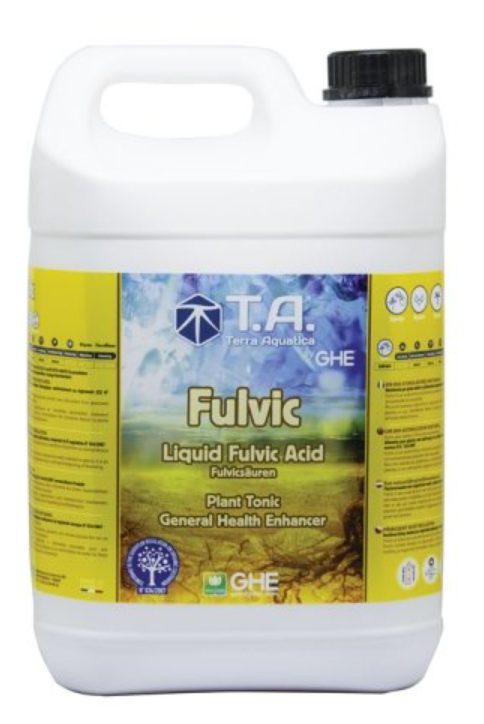
Whatever concentration of FA other conventional products may boast, the only thing that really matters is its quality and composition. You can also use this product without concern in all systems and watering methods.
How to Terra Aquatica Fulvic use it?
Add this additive to the water with every watering at a ratio of 2 ml per 1 l of water. You can also apply it as a foliar spray (3 ml per 1 l of water), up to the early flowering / fruiting stage. Want to support germination? Then soak plant seeds in a diluted solution with T. A. Fulvic.
What can you expect from Terra Aquatica Fulvic?
- shortening of the vegetative phase
- significantly higher yields
- better root development
- greater plant vitality
- increased natural plant defence
- earlier harvest
- more pronounced flavour and aroma
- higher concentration of essential oils
An excellent source of humic substances, which is trusted by both hobby growers and professional growers around the world, is the product T.A. Humic from the legendary brand Terra Aquatica, which you may still know under its former name General Hydroponics.
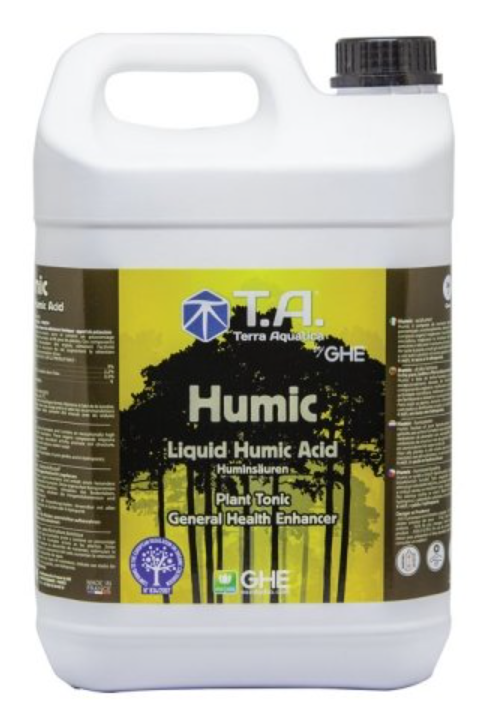
With this additive, your plant nutrition will move up several levels, as you regularly enrich it with an extremely pure dose of lignohumate organic compounds with an exceptionally high content of biologically active humates, which are gently extracted from sawdust using advanced technology as a 100% natural and renewable source! This is an organic product. In practice, this means you can confidently apply it to soil, to leaves, or anywhere that is watered by hand. On the other hand, it is not suitable for hydroponic systems, where it would spoil and clog drip irrigation (drip).
Humic acid can provide plants with a combination of various minerals, resulting in highly absorbable organic compounds. It makes the soil more permeable, protects it against the effects of toxic substances, and helps it retain water.
How to Terra Aquatica Humic use it?
Simply dilute the product as a foliar spray, or apply it with every watering as part of the nutrient solution at a ratio of 4 ml per 1 l of water.
What can you expect from Terra Aquatica Humic?
- significantly better nutrient absorption and utilisation by the plant
- support for an open soil structure and soil life (microbial activity)
- lower water consumption
- easier compost formation (an effective supplement for this purpose too)
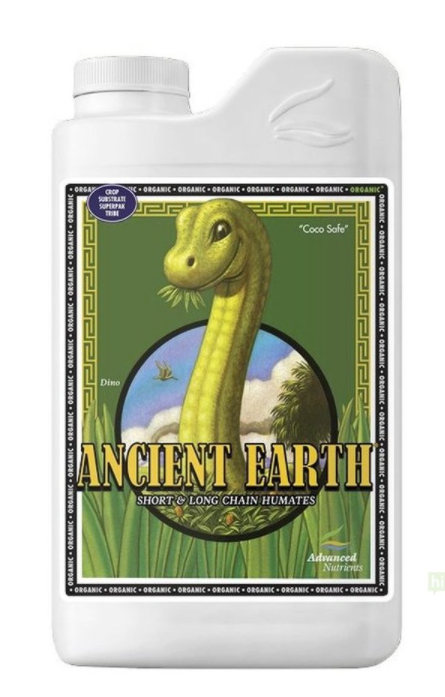
T.A. Humic can be classified together with T.A. Fulvic among universal organic biostimulants. A certified and purely organic blend of humic and fulvic acids is also represented by Advanced Nutrients Ancient Earth Organic OIM. This product, suitable for growth and flowering, not only increases the uptake and use of nutrients contained in fertilisers, but also reliably ensures better aeration of the root zone and less fluctuation in the pH of the nutrient solution, into which it only needs to be applied at a ratio of 2 ml per litre of water.
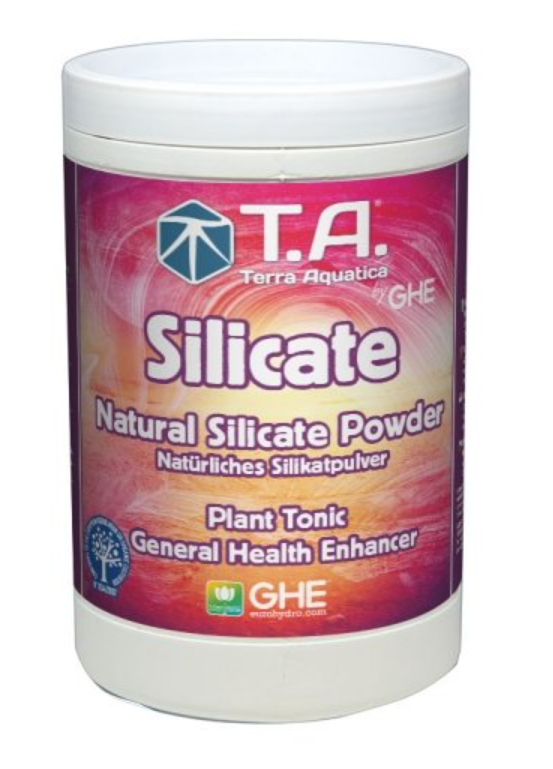
T.A. Silicate (formerly G.H. Mineral Magic) is a supplementary fertiliser that allows easy application and long-term storage. If you grow your plants in pots, apply T.A. Silicate as a top dressing around the stem. Never mix it directly into the substrate so as not to endanger soil life (microbiome) in the growing container. When growing in open ground, for example in a garden bed, you can mix this product directly into the substrate. In this case, the microbiome will survive without problems thanks to the larger volume of soil, and any excess product will be naturally washed away. T.A. Silicate is also used in hydroponics. It is added to the nutrient solution tank, after which T.A. Silicate will be released gradually. If you notice a residue of clay at the bottom of the tank, that is not a problem. On the contrary, the composition of the product will act as a pH buffer, meaning it will balance the pH of the nutrient solution. Another way to use T.A. Silicate in practice is application directly to the leaves. Simply mix the product in a measuring cup first and, if necessary, strain it through cloth. The new formula also promises use in atomisers.
We also recommend these products:
We will also be happy to recommend further interesting products based on your needs and preferences at the well-known e-mail address info@higarden.eu. Do not hesitate to ask us anything you are currently interested in. We look forward to your questions!
What to read next?
- Jungle Indabox maximises the benefits of chelation
- What is vermiculite and how to use it?
- BioNova Veganics – fertilisers not only for vegans