
Beneficial Microorganisms (Microbes) Are Indispensable Helpers
Microorganisms, or microbes, are single-celled organisms whose activity can only be observed under a microscope. They are often perceived negatively in the sense of pathogenic microbes. But on the other hand, we also have beneficial microorganisms. These are the ones that do not harm people, animals or plants and, in gardening, are instead widely used to achieve significantly greater efficiency in plant fertilisation, while also protecting plants, for example against the action of harmful pathogens. Microbes mean natural and versatile support for the development of your plants!
Without the activity of microbes, there would be no life on Earth. Such is their importance! It is not the first time we have mentioned that healthy “micro-life” is the best foundation for healthy and strong plants, capable of producing abundant flowers or large fruits with a high content of valuable substances. It is therefore no surprise that more and more growers are enriching the basic nutrition of plants with quality products with microorganisms (see below).
Bacteria, algae, fungi and protozoa, of which there are countless in soil, multiply rapidly and therefore often live in colonies or even form symbiotic relationships. A large group of microbes develops in the area of soil closest to the roots of higher plants and is technically called the rhizosphere. Because we regularly emphasise a healthy root system, you can probably already guess how positive the impact of microbes on your harvest will be. Let us now introduce at least the most important cases.
Rhizobacteria
Rhizobacteria are by far the most numerous group of microbes in the rhizosphere. The first example is bacteria that develop either directly in the root system of plants or in its immediate vicinity. The beneficial effects of rhizobacteria on colonised plants were already observed by ancient growers. Today we simply have much more sophisticated means of initiating and stimulating these processes in soil or substrate. Tips on selected products can be found at the end of this article. Are you interested in how rhizobacteria help plants, or rather growers, achieve the dream natural harvest?
- Better nutrient availability: Some rhizobacteria are able to provide plants with phosphorus and iron from soil, where these elements are present in inorganic form. Bacteria of the genera Bacillus, Pseudomonas, Rhizobium or Erwinia convert them into a form that is easily absorbed by plants, which is of course not only effective but also ecological.
- The ability to bind atmospheric nitrogen: The “superpower” of some rhizobacteria to enrich soil with nitrogen (N) is of enormous importance to every grower or farmer. The best-known example is bacteria of the genus Rhizobium, which form small nodules on the roots of leguminous plants. As German scientists discovered as early as the end of the 19th century, the nodules themselves are the place where these bacteria cluster. However, observation of their activity in a way goes back to antiquity, when farmers noticed how well plants developed when growing in a field with soil enriched with nitrogen because they had grown beans or peas there the year before.
- Natural antibiotics: Antibiotic substances produced by rhizobacteria often have antiviral or fungicidal effects. As we outlined right at the beginning, beneficial microbes and, in this case specifically rhizobacteria, are therefore indispensable helpers not only in plant nutrition but also in plant protection. Thanks to their ability to produce antibiotic substances, they help prevent root rot or the occurrence of insidious types of moulds (e.g. Botritis).
- Source of natural stimulants: Many rhizobacteria also produce phytohormones, especially auxins, the best known of which is probably indole-3-acetic acid, as well as cytokinins or gibberellins, which are synthesised in places of active growth (buds, young leaves, seeds). These plant hormones improve seed germination and cutting root formation, and therefore they are often part of the composition of many root boosters or fertilisers for cuttings and planting.
Mycorrhiza
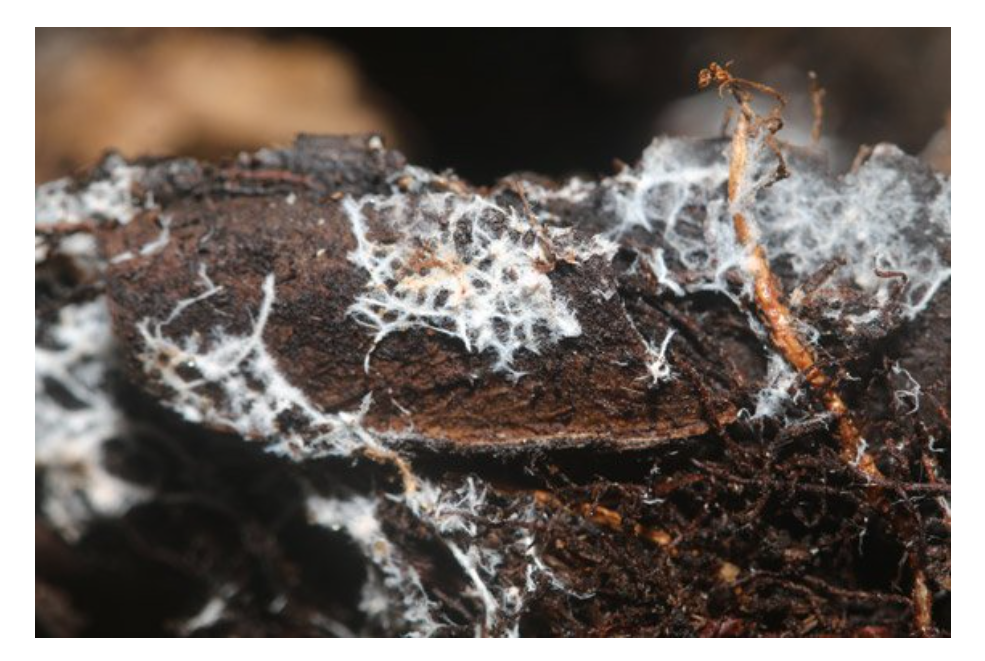
Mycorrhiza (in the picture) is when fungal mycelium (mycelium) and plant roots together create a perfectly functioning system for both sides. We deal with the symbiotic coexistence of mycorrhizal fungi with the root system of plants in more detail in a separate article: Mycorrhiza or High Yields Without Chemicals. In the field of organic agriculture, the mycorrhizal fungi of the genera Glomus, Gigaspora, Acaulospora and Sclerocystis are of greatest importance to growers.
Trichoderma
If you are interested in ways to support rich “micro-life” in soil when growing plants, be sure to read the separate article as well: Trichoderma or the Natural Way to a Bountiful and Healthy Harvest. It discusses the exceptionally beneficial fungi of the genus Trichoderma, whose effect on the root system of plants is already very well known among growers around the world. If you have not yet had the opportunity to become familiar with its effects, you will be delighted!
Quality products with beneficial microorganisms
The action of the microorganisms mentioned above is most relevant when growing plants in soil and soil-based substrates. You will therefore make the most use of it for growing herbs or tasty crops in organic quality and in combination with organic plant nutrition. From our range, we have selected several tips on popular products with microbes for the purpose of this article:
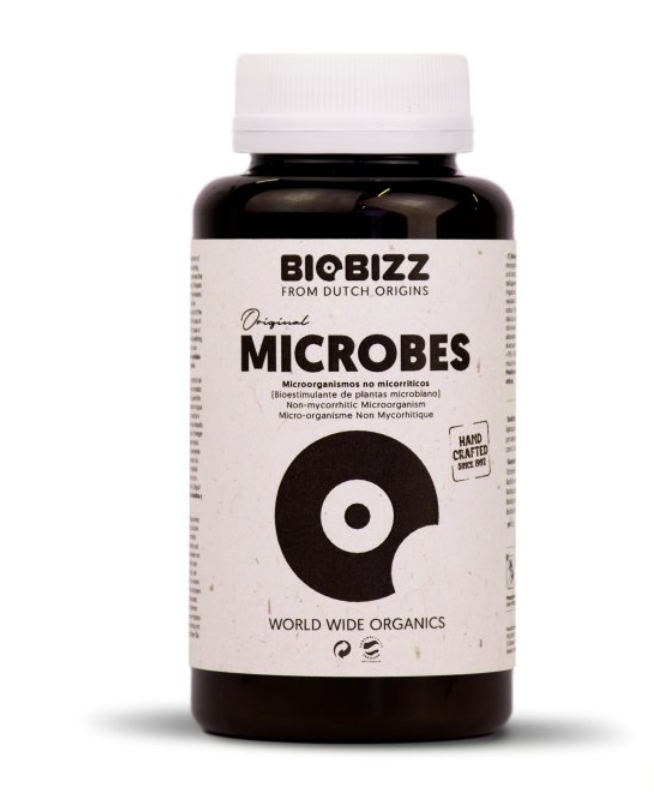
The extra concentrated product from the opening photograph of this article is a real unique item on the market in terms of composition. It contains a complete consortium of microorganisms, enzymes and beneficial fungi with a significant effect on the plant rhizosphere, where it increases the useful root surface area. The result?
- Better flow and uptake of basic nutrients (see separate article: N-P-K – what is it?) and final yield.
- Higher and better absorption of nitrogen (N), phosphorus (F), potassium (K) and micronutrients during all stages of plant development.
- Effective support for germination and early seedling growth.
- Support for flowering.
- Selected microbes produce phytohormones (see above, e.g. indole-3-acetic acid or gibberellins).
So that we do not remain only with the general term “consortium”, let us take a closer look at which microorganisms Biobizz Microbes contains:
- Bacteria: The 4 most beneficial bacterial species for substrate restoration improve the plant nutrition process, hormone production, root tissue growth and the solubility of key nutrients such as phosphorus (P). This is reflected in increased productivity and yield quality. From the guaranteed analysis we can identify the presence of the following rhizobacteria in the composition of this product (see above):
- Bacillus valezensis > 500,000,000 CFU/g
- Bacillus megaterium >200,000,000 CFU/g
- Bacillus pumilus > 250,000,000 CFU/g
- Bacillus licheniformis > 500,000,000 CFU/g
- Enzymes: The perfect supplement to beneficial substrate microorganisms, proving that although this product is not among the cheapest, its purchase and use pay off for growers, among other things, because it also serves the function of an enzymatic preparation. (We also focus on this topic in a separate article: Enzymes.) And why are enzymes the perfect supplement to beneficial substrate microorganisms? Enzymes in Biobizz Microbes increase the speed of colonisation by substrate microorganisms, as well as the rapid conversion of nutrients for their quick absorption. Among other things, they create free amino acids in the growing medium and thus increase both the activity and the actual results of the action of active microorganisms.
- Trichoderma: see above. Guaranteed analysis: Trichoderma harzianum > 10,000,000 CFU/g.
Biobizz microbes are recommended by the manufacturer to be applied once a week at a dose of between 0.2 and 0.4 g/l throughout the entire growing cycle. It does not matter whether you grow your plants in a grow tent or outdoors. This product is suitable not only for classic growing in soil, but even for hydroponics. Biobizz microbes work especially well when you combine them with other Biobizz products.
- MYKORIZA premium and other plant nutrition from the Organics Nutrients brand
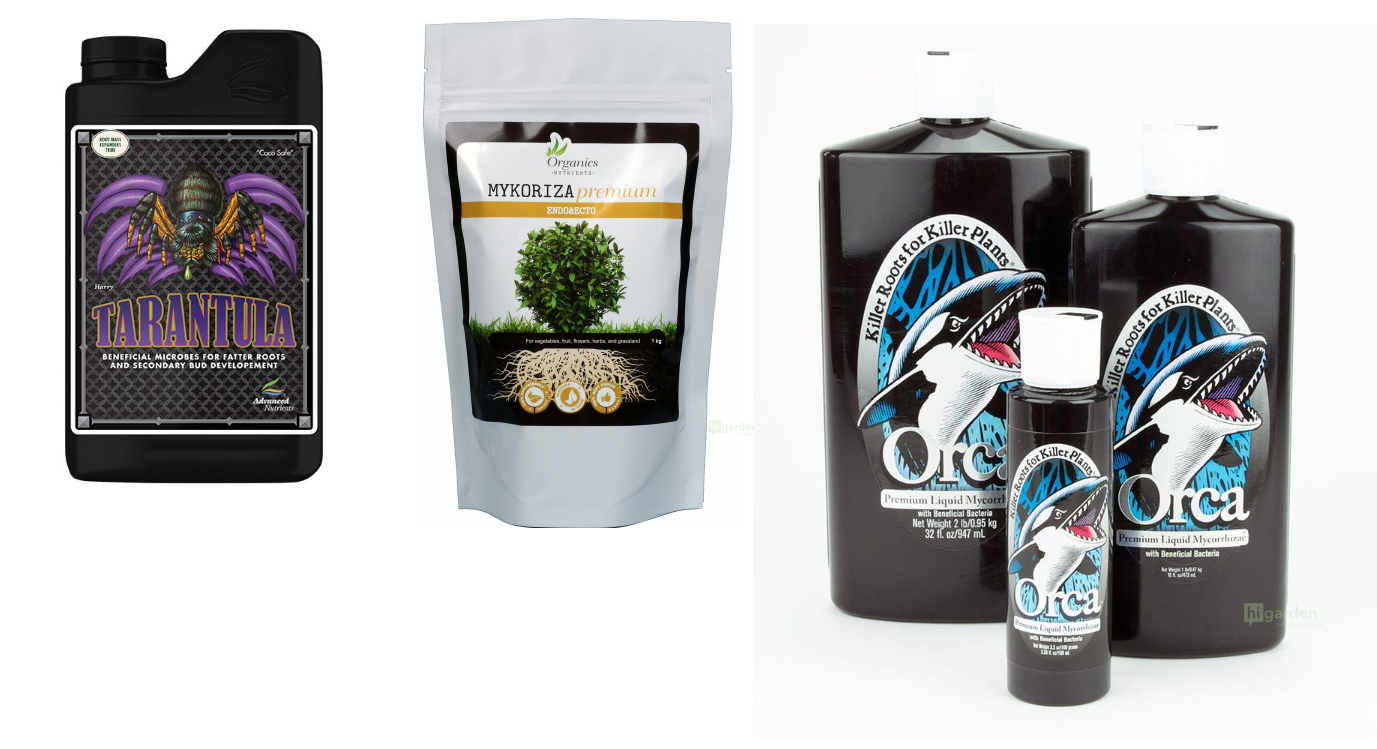
A great choice for anyone who chooses the 100% organic route in gardening is Organics Nutrients fertilisers. For example, the purely organic powder MYKORIZA premium contains mycorrhizal fungi, rhizobacteria, Trichoderma and other beneficial microorganisms. After being added to our range, it immediately became a hit. We also summarise all the new products from this manufacturer in a separate article: Organics Nutrients: the natural way to large yields.
Protect your crop with a bacterial shield created thanks to specially bred microbes guarding the root system of plants against the invasion of moulds, pathogenic bacteria or pests. The liquid supplementary fertiliser Tarantula also increases phosphorus availability. It is not used when growing plants in coco.
Inoculate the roots of your plants for a perfect harvest! This unique all-in-one blend is very easy to apply. It contains 11 strains of highly beneficial bacteria and 4 strains of endomycorrhizal fungi! You can be sure that this consortium of microbes is also working tirelessly in the root zone to create a dominant microbial ecosystem capable of successfully repelling pathogenic bacteria or fungi and thus preventing nasty problems such as pythium - a mould that can destroy entire crops in a short time.
If you would like advice, for example on which microbe product will be most worthwhile for you with regard to your individual plans and needs, do not hesitate to ask us anything via the well-known e-mail address info@higarden.eu. We look forward to your questions!
We also recommend these products:
What to read next: