
Mycorrhiza, or High Yields Without Chemicals
Do you already know what mycorrhiza is? Symbiosis, in other words the mutually beneficial coexistence of mycorrhizal fungi with plant roots. We know this remarkable symbiotic relationship from the natural world. If you apply this knowledge when growing plants in soil, your plants will benefit from it right through to harvest, when it will put a big smile on your face. Is growing herbs, fruit or vegetables still a real challenge for you? In the early stages, do you feel that although you follow proven advice and fertilise carefully according to dosage tables, your plants are still more likely to struggle than to grow vigorously and beautifully? Thanks to mycorrhiza, everything can quickly change for the better!
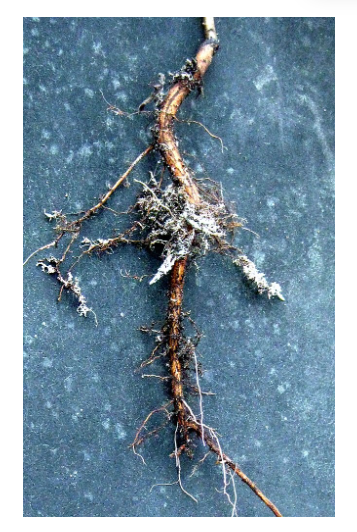
Cooperation with soil microorganisms is completely indispensable for plants. This is also shown by statistics indicating that up to 90% of roughly 400,000 known plant species allow symbiotic fungi to form colonies in their root systems. And when did this phenomenon begin to be used in plant cultivation? Surprisingly, only relatively recently. Although at the end of the 19th century the German scientist A. B. Frank observed during his experiments that pine trees growing in open soil with forest fungi were doing better than pine trees planted in a sterile environment, it took more than a century before scientists around the world began to attach proper importance to his discovery. At least in recent years the situation has been exactly the opposite, and growers therefore have access to affordable products that use this botanical phenomenon to improve the growth and yield of cultivated plants and crops.
Why fungi in particular?
Because in the plant kingdom they have no competition when it comes to survival strategy and obtaining nutrients in a wide range of environments, including extreme ones from salt water in the seas to polar regions. If we go to the absolute extreme, we find that scientists have already discovered species capable of surviving cosmic radiation! Fungi belong among so-called heterotrophic organisms, which must obtain nutrients exclusively from other organisms (unlike plants capable of photosynthesis). From this point of view, we distinguish the following types of fungi:
- Parasitic fungi: this type of fungi obtains nutrients from living organisms. Indeed, since we are already talking about extremes, some parasitic species are even capable of killing their hosts because of this.
- Saprophytes: this type of fungi, by contrast, obtains nutrients from dead bodies of animals or plants.
- Some fungal species are able to “switch” between the two modes mentioned above depending on current needs.
- Symbiotic fungi: this includes mycorrhizal fungi, the best known to growers being Trichoderma harzianum. In addition to this, a truly large number of mycorrhizal fungi have been studied, but only 270 of them live in mutual symbiosis with 70% of all plant species on the planet, including commercial crops such as tomatoes.
How does mycorrhiza work?
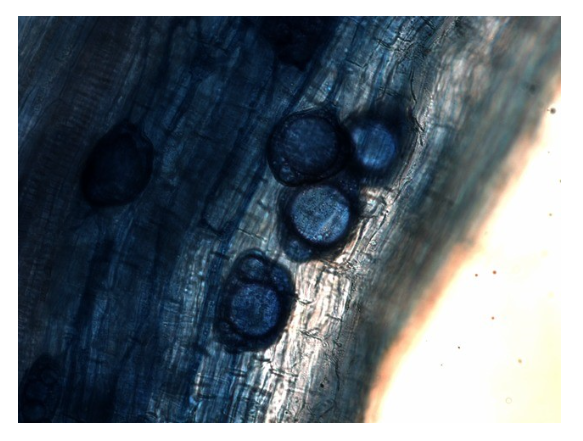
For the purposes of plant cultivation, we will limit the explanation of the principle of mycorrhiza to so-called endomycorrhizal fungi. The important thing is that these are the fungi that can live in mutually beneficial relationships with the roots of plants we want to grow outdoors or at home (for example, various types of fruit and vegetables, annual plants, grasses, ornamental plants, shrubs). The second group consists of so-called ectomycorrhizal fungi, which do not grow into the cells of plant roots and are usually found, for example, near trees.
At the beginning of the mycorrhizal process are so-called hyphae - individual cells forming mycelium, more technically known as mycelium. These fungal cells can look different, but they will always have one thing in common, namely a tip with a usual diameter between 2 and 10 micrometres. The tip of the hypha is characteristic for its ability to force its way through the soil. They move towards the roots of higher plants because of specialised hormones that plants naturally release into the soil (so-called strigolactones). This happens when the plant is running low on nutrients in the soil, typically for example in the case of phosphorus deficiency. Hyphae are able to grow by up to 40 micrometres per minute and develop incredible force when “breaking through”. Once mycelium reaches the root zone of its future host plant in this way, the tip of the hypha again serves to allow fungal cells to penetrate the roots, where they settle in the space between the wall and the membrane of the plant cell. Mycorrhiza is then the mutually beneficial process taking place around the roots of plants that have established a connection with an endomycorrhizal fungus. Once the fungus has sufficiently established itself on the plant roots after some time, the exchange of vital substances begins, which benefits both sides. Under the microscope, we can observe a kind of natural barter. We keep saying it: nature is brilliant!
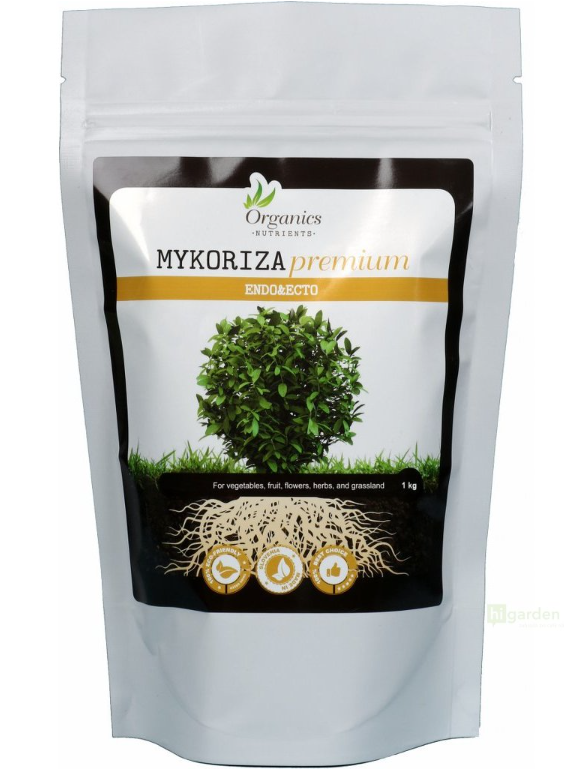
Our TIP: We highly recommend the product MYKORIZA premium - a 100% organic concentrated powder with a high content of mycorrhizal fungi (Endo&Ecto), beneficial bacteria, microorganisms and Trichoderma. Growing organically? Read a separate article about all the interesting products from the Organics Nutrients brand!
Positive effects of mycorrhiza on plant development
Fungi that depend on nutrients obtained from other organisms (see above) are naturally attracted to plant roots. Plants can sacrifice up to one fifth of all the carbon they produce for them, which fungi consume in the form of sugars as a source of energy. In return, plants receive from fungi, among other things, the following benefits:
- Uptake of important nutrients that plant roots would otherwise no longer reach in the soil. (For growers, this also means lower use of various fertilisers.)
- Up to 4x more naturally obtained phosphorus (P), the sources of which are increasingly limited from the perspective of organic farming, as well as other nutrients including nitrogen (N).
- Protection against pests and pathogens. A significantly lower risk of moulds (Fusarium, Pythium etc.) Mycorrhizal fungi actively remove various nutrients from the soil around the host that could otherwise unnecessarily attract unwanted microorganisms to these areas. Mycorrhizal fungi are even capable of producing antibiotic or biocidal chemicals designed specifically to fight parasites attacking the host.
- Many times greater resistance to drought. Mycorrhiza goes hand in hand with better-nourished plants, which are therefore generally more resistant to all abiotic stress factors (see separate article: Stress also harms plants, or Plant abiotic stress)
- Increased production of phytohormones. Given that these hormones can control almost every aspect of plant growth, the potential in agriculture is truly significant, which is why scientists are studying them more and more intensively.
- The flowers and fruits of plants living in symbiosis with mycorrhizal fungi contain more aromatic and health-beneficial substances.
It is important to realise that the root system of plants is by its nature unable to expand indefinitely, and so over time it exhausts all available nutrients in its surroundings from the soil. If you read our articles regularly, you will certainly know that the more branched and larger a plant’s root system is, the better it will do. And the mycelium of fungi can fantastically expand the root zone. Interested in the numbers? 100,000x more soil from which the plant can draw nutrients thanks to the expanded root zone! This is because, as already mentioned, fungal hyphae grow extraordinarily quickly and reach practically everywhere in the soil. The mycelium (mycelium) therefore ultimately occupies a huge area in the soil - a network to which the plant is literally connected thanks to the ongoing mycorrhiza. The tip of the hypha is able to break down nutrients for its host with incredible efficiency using various enzymes and acids for the benefit of the host plant and “pump” them thanks to the cytoplasm from various places back to the roots.
Our TIP: You can also try the long-awaited new addition to our range with the fitting name Plant Success. This is an all-in-one product that directly “inoculates” plant roots with 4 strains of endomycorrhizal fungi and also 11 strains of beneficial bacteria.

Use of mycorrhiza in coconut growing media
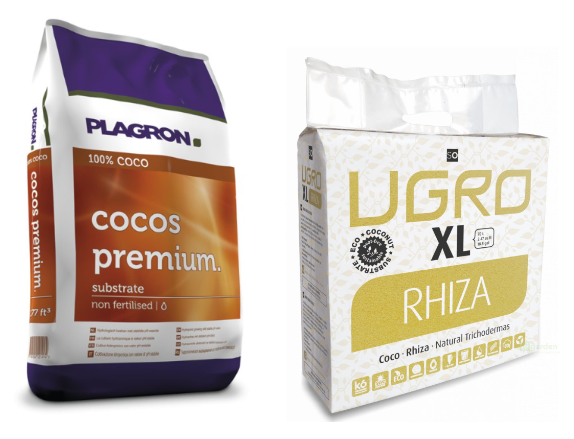
Did you know that you can use mycorrhiza not only when growing plants in soil and soil-based substrates, but also in coconut growing media? Many quality coconut substrates contain mycorrhizal fungi, whether they are sold ready for immediate use in a 50-litre bag, or in dehydrated form as compressed coconut bricks.
Mycorrhizal products (see also below) and their application can hardly be considered fertilising so much as returning beneficial microorganisms to the soil as their natural environment, from which they often disappear, for example as a result of frequent ploughing or the use of chemical sprays (pesticides). We would search in vain for growers who, despite knowing the many advantages that mycorrhiza brings, do not use any quality mycorrhizal product. For beginners, in addition to the numerous benefits in the effort to achieve a rich and high-quality harvest, the fact that there is no risk of over-fertilisation with mycorrhizal products will also be appealing.
If you would like to ask us anything, we are here for you at the well-known e-mail address info@higarden.eu. We look forward to your questions!
We also recommend these products:
What to read next:
- Root stimulator - what is it for?
- How do you grow leafy vegetables and salads?
- How to choose a propagator and what to equip it with?
Photo source: Wikimedia commons.com