
Nutrition, Growing Media and Water, Page 3
List of articles
Which Pot to Choose for Outdoor Growing: A Comparison of Plastic, Fabric and Air Pot Containers
Some people focus on fertilisers, others on light – but few pay enough attention to what the plant is actually growing in. Yet a poorly chosen pot can cause serious problems even for an experienced grower. Overheating, waterlogging, roots curled up like a ball of snakes… So: plastic, fabric, or Air Pot? Let us break it down.
Plastic pots – a cheap and proven classic
Plastic pots probably do not need a lengthy introduction. Most growers use them, whether on a balcony, in a greenhouse or in the garden. They are inexpensive, lightweight and easily available in any size. For raising seedlings, basic cultivation of herbs, flowers or even vegetables, plastic pots are certainly a functional choice. However, if you plan to grow more demanding species, such as tomatoes, chilli or medicinal plants, plastic pots have certain limitations. The main problem can be insufficient drainage, which is why we recommend using substrates lightened with perlite when growing in plastic pots (for example Plagron Growmix, BioBizz Light Mix). Another problem is overheating of the substrate, especially if the containers are exposed to direct sunlight on a balcony or terrace. Black plastic pots can heat up so much that the plant roots are damaged.
Advantages:
- Low purchase price
- Available in all sizes
- Lightweight, easy to carry
- Long service life with proper handling
Disadvantages:
- Roots become tangled
- In hot weather, the substrate overheats
Fabric pots – lightweight, breathable and ideal for the summer season
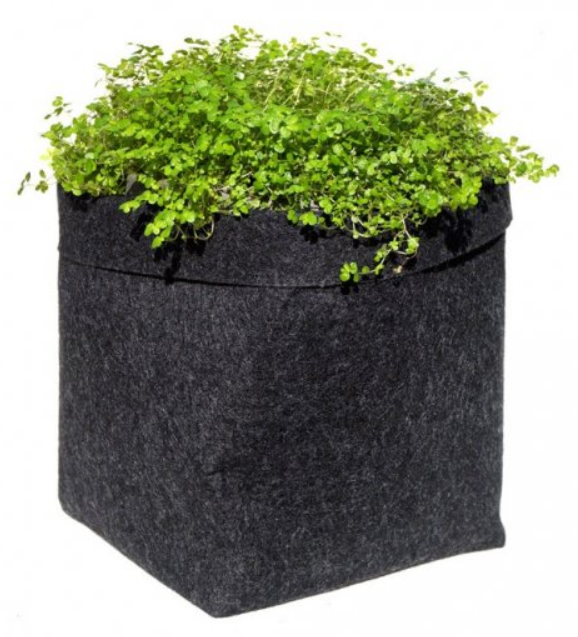 Fabric pots are often a better choice than plastic for outdoor growing. The main advantage of fabric is its breathability. The side walls of the pot are made from strong non-woven fabric, which allows better access of air to the roots and prevents them from tangling. This phenomenon is known as “air pruning” and naturally stimulates the growth of new fine roots and supports the development of a healthy root system in plants.
Fabric pots are ideal for outdoor growing because they easily drain excess water and the substrate does not overheat in them. They are also very compact, and smaller fabric pots are easy to carry, so they are also suitable for a balcony, terrace or places where you need to handle containers frequently. A small disadvantage of fabric pots is that plants need to be watered more often, because the substrate dries out faster.
Advantages:
- Air pruning
- Excellent drainage
- Lightweight and compact
- The substrate does not overheat even in direct sunlight
Disadvantages:
- Faster drying. They require more frequent watering
- Service life of approx. 2–4 seasons depending on material quality
- Larger fabric pots are not easy to carry
Air Pot – the choice of professionals
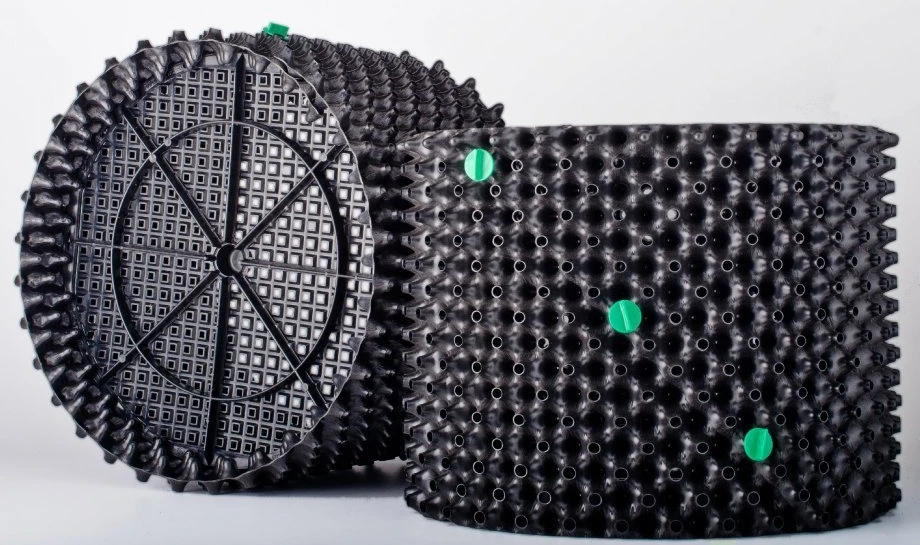 Air Pot pots look unusual at first glance. They have perforated walls and protrusions, which make them look as if they came from a space greenhouse. However, the unusual design has a purpose: to create ideal conditions for root system development. As with fabric pots, air pruning also occurs in Air Pots. The result is a denser and more even root ball than with classic plastic pots. Even with Air Pots, plants therefore need to be watered more often. Air Pots are slightly more expensive than other pots, but they are made from durable plastic and can withstand a lot. They are especially suitable for growers who know exactly what they are doing and want to get the maximum yield from their plants.
Advantages:
- Air pruning
- Excellent air circulation and drainage
- Reusable and very durable
Disadvantages:
- Higher purchase price
- More complicated handling and assembly
- More frequent watering
|
Type of grower |
Recommended pot |
Why this one? |
|
Beginner |
Plastic |
Simple, inexpensive and available |
|
Balcony grower |
Fabric |
Excellent value for money, compact storage |
|
Demanding grower |
Air Pot |
Ideal environment for root development |
|
Summer herbs, salads |
Fabric or plastic |
A less sophisticated solution is sufficient |
|
Tomatoes, chilli, hemp |
Fabric or Air Pot |
They require a healthy and strong root system |
Further useful tips for outdoor growers can be found on our Higarden blog or visit us in store, where we will be happy to advise you in person.
Gold Label - premium products for demanding growers
The family company Gold Label, with a tradition dating back to 1987, holds a leading position in the Dutch market in the production of growing media and plant nutrition. Although it has been at the forefront of the hydroponics industry for decades, it still maintains a modern approach both in terms of the production and innovation of its unique products, and in terms of external communication and customer care. We have also found in practice that it is easy to understand why, for many growers, fertilisers or growing media with the gold label are the only conceivable choice. We have summarised the advantages of the certified products of this prestigious Dutch brand for you in this article.
Did you know that Gold Label is the only growing media manufacturer in the world to hold KIWA certification, guaranteeing completely unprecedented possible quality and the health of cultivated plants?
The range of Gold Label growing media includes:
- Single-component hydroponic growing media
- Mixed hydroponic growing media
- Virgin peat growing media
Single-component hydroponic growing media
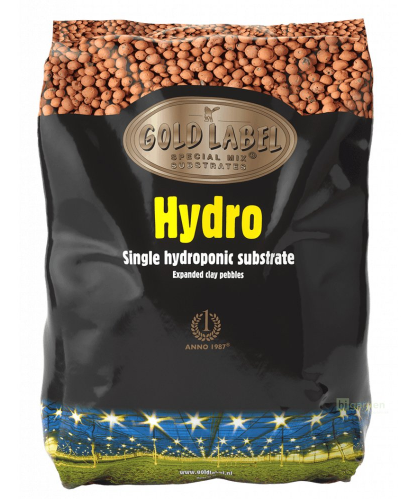
- The first example is the popular hydroponic growing medium expanded clay pebbles. These are balls with a diameter of 8-16 mm, made from expanded clay. Gold Label Expanded Clay Pebbles (Hydro Round Pebble), sold in a 45-litre pack, stand out above all for their exceptional structure:
- The unusually firm ceramic layer limits water absorption. This makes it ideal even for the most intensive hydroponic irrigation styles.
- As is well known, an optimally aerated root system brings better results when growing all types of plants. That is why improved oxygenation of the root system is also important, thanks to the round shape, which creates sufficient space for the growing medium to be saturated with air.
- This hydroponic growing medium also stands out in terms of economy. Thanks to its firm ceramic structure, it only rarely “sticks” to plant roots. As a result, it is easy to clean and can be used repeatedly without any problem!
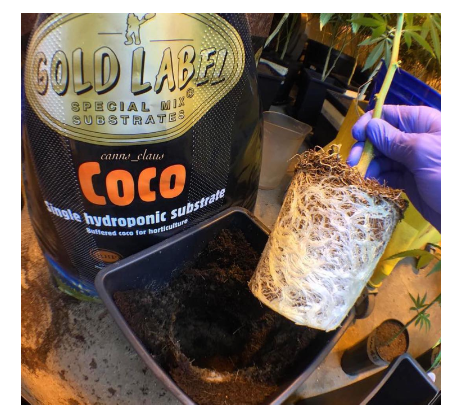
- Another single-component growing medium from the Dutch Gold Label brand that is suitable for hydroponic use is Gold Label Coco, a pure coconut growing medium of the highest quality. KIWA and RHP Horticulture certification suggest that this is thoroughly rinsed and buffered coco, which serves as an extra clean and stable growing medium in which you will have perfect control over the nutrition of your plants, whether on a mineral or purely organic basis. (You can read more about growing plants in coco in a separate article: Growing in Coco.)
- Gold Label Coco contains no residual salts.
- The buffer ensures the stability of the growing medium.
- An ideal growing medium for targeted plant nutrition, where an experienced grower supplies only the nutrients needed, and only when the plant truly needs them. The result is fantastic yields. After all, just look at the picture of the root system of a plant grown in pure coco from Gold Label. A joy to behold!
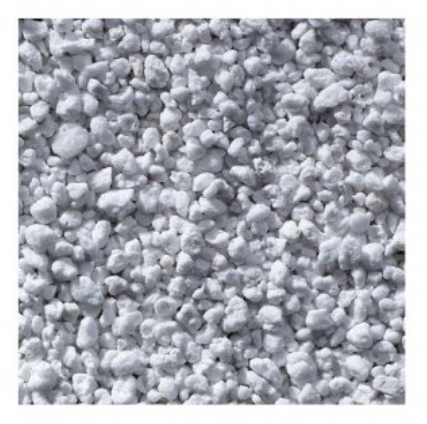
- Gold Label Perlite is quite possibly the best perlite on the market. This volcanic rock of purely natural origin is used to aerate growing media or as a rooting growing medium. It has been treated to be as light and porous as possible. This allows you to benefit from the following specific properties of this perlite:
- Its wide range of applications is made possible by its exceptional ability to absorb moisture. Gold Label Perlite creates air pockets while also helping to retain heat.
- Top-quality perlite such as this helps prevent soil compaction.
- Despite its 100% organic composition, Gold Label Perlite has a long service life and retains its stability over the long term.
- When working with perlite, you only need to take into account its increased dustiness.
Mixed hydroponic growing media
Hydro Mix 60/40 (HydroCoco 60/40) is a perfect blend of the purest clay pebbles (expanded clay) and coconut growing medium, available in 15 or 40 litre packs. This hydroponic growing medium works excellently in container irrigation, and it is especially appreciated by growers who prefer a lower irrigation frequency in hydroponics. You may already suspect that this is thanks to its ability to hold a large amount of water. The high air-to-water ratio increases oxygen levels in the root zone.
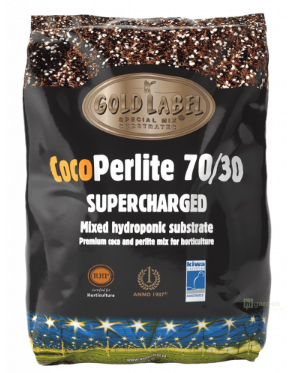
- Mixed hydroponic growing media offer growers a sensible compromise. It is a balance between control and results. The newest example in this manufacturer’s range is the nutrient-rich blend of coconut growing medium and perlite Gold Label Coco Perlite 70/30. Why try it?
- The optimal water-to-air ratio! This is a very porous and light growing medium that combines a huge air volume with high water retention and capillary action.
- Gradual release of calcium (Ca).
- RHP certification guarantees that every batch of this hydroponic blend contains clean and stable coconut fibres.
- Easy to use in cultivation practice, and thanks to the increased drainage, this mixed hydroponic growing medium is also suitable for growers who prefer regularity and a higher frequency of watering plants.
- Compared with pure coco, the Gold Label Coco Perlite 70/30 blend is less prone to overwatering, which will be welcomed, among others, by those who are just starting with hydroponics. Overwatered plants are among the most common beginner mistakes.
- We definitely also recommend this blend if you will be watering plants by hand.
Virgin peat growing media
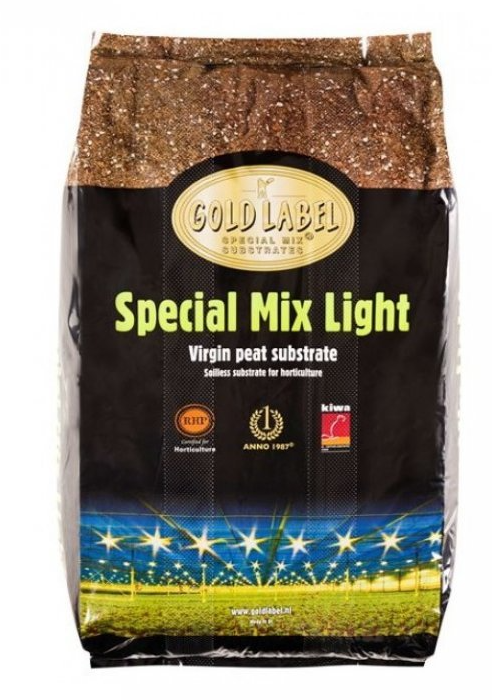
- The first representative of peat growing media with the legendary GOLD LABEL logo is Gold Label Special Mix Light, a high-quality soil blend based on Swedish virgin peat for greater control over the nutrition process of cultivated plants. It should be added that KIWA and RHP Horticulture certification once again speak for themselves.
- The Swedish peat used is capable of retaining up to ten times greater water-holding capacity!
- This is a slightly pre-fertilised soil that contains organic nutrients, making it easier to grow herbs, fruit or vegetables even if your priority is an organic-quality harvest.
- The lower concentration of nutrients serves to ensure rapid rooting of your cuttings. Young plants therefore gain an ideal foundation for their further development when using this growing medium.
- The optimal aeration of this peat growing medium is ensured by the addition of perlite.
- Special Mixlight Gold Label is available in two volumes - 17.5 and 40 litres.
- If you want to grow your plants in premium soil, of the same quality as that offered by the Dutch leader Gold Label, but want fewer worries about nutrient dosing at the start of the growing cycle, then you will be delighted by the complete soil blend Special Mix, which already contains nutrients for the first three weeks of the growing cycle and is ready for immediate use. For this reason, Gold Label Special Mix is the best choice for beginners, as it tolerates classic plant nutrition mistakes to a certain extent. As the saying goes, no one is born learned. So if you are just planning to start growing, but want to use a premium growing medium for it, get the pre-fertilised soil substrate Special SuperMix.
- 1 g of this blend is capable of absorbing 10 ml of water.
- The coarse structure of the growing medium supports root growth and stability.
Gold Label produces fertilisers with a high concentration, so although they are not among the cheapest on the market, they are worthwhile even for professionals because of the lower consumption. In any case, we recommend the detailed dosage tables from Gold Label, which will not only prevent you from wasting premium nutrition for your plants, but also make it easier to achieve the desired results. Gold Label fertilisers are worth it. At the very least, you will have a great start with them from the outset. There is no doubt about that.
The unique formula of the Gold Label brand is characterised by the so-called pH-stable profile, which minimises the risk of the well-known phenomenon of nutrient lockout as well as potential deficiencies (see the separate article: Signs of Deficiency of Important Nutrients). The high-quality chelated elements are easily absorbed and allow each plant maximum uptake of the nutrients needed for healthy and vigorous development.
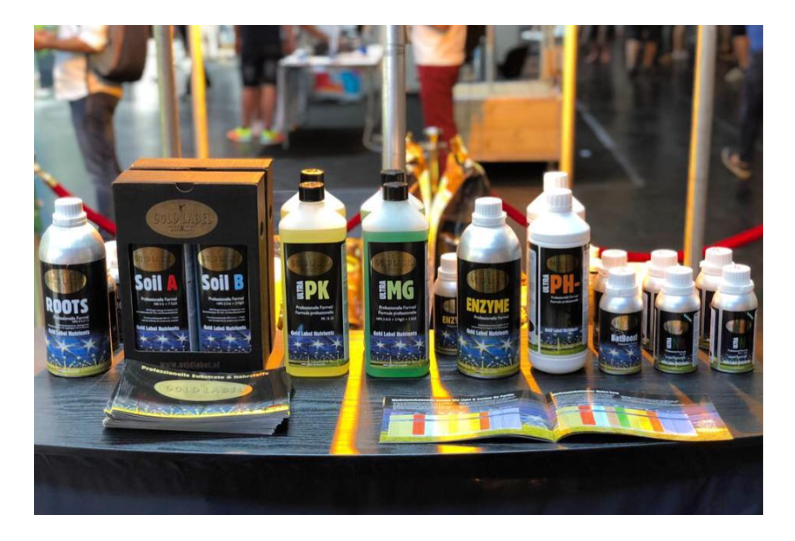
Gold Label Base Fertilisers
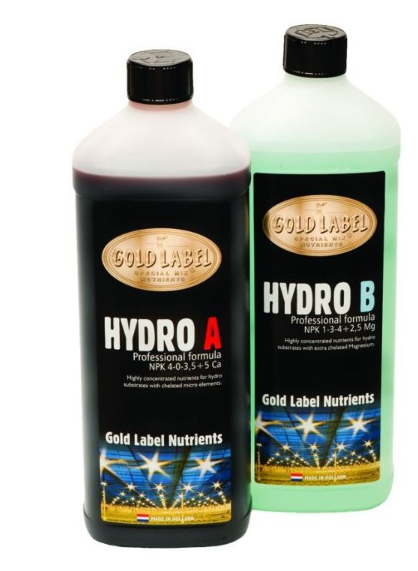
- Looking for a truly luxurious base fertiliser for hydro? Gold Label Hydro/Coco A+B is a basic two-component chelated plant nutrition, ensuring that professionals and passionate hobby growers achieve the best possible results in hydroponics. A detailed analysis of both components can be found in the product description. These are the main benefits that Hydro/Coco A+B from Gold Label offers growers of varying experience:
- Universal use in hydroponics: HydroCoco A & B is a base fertiliser compatible with all hydroponic systems. It also does not matter whether, in hydroponics, you prefer inert materials such as rockwool or expanded clay pebbles (hydroton), or whether you prefer growing in coco.
- Optimal nutrient absorption across a wide pH range.
- Designed for both the growth and flowering phases.
- If you grow your plants in soil, such as Gold Label Special Mix, then you need a base fertiliser for soil, which is Gold Label Soil A+B. This two-component, highly concentrated, chelated, complete plant nutrition will not only allow you to harvest flowers and fruits of TOP quality, but will also naturally improve their final taste and aroma. A detailed analysis of both components of Soil A & B can again be found in the product description.
Gold Label Supplementary Fertilisers and Stimulants
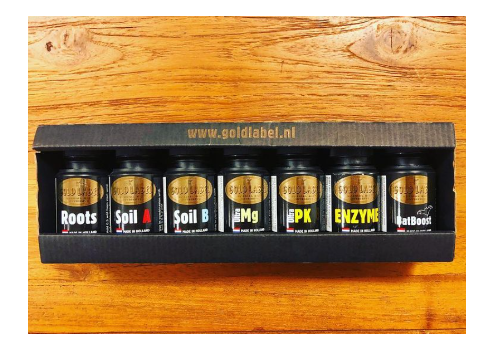
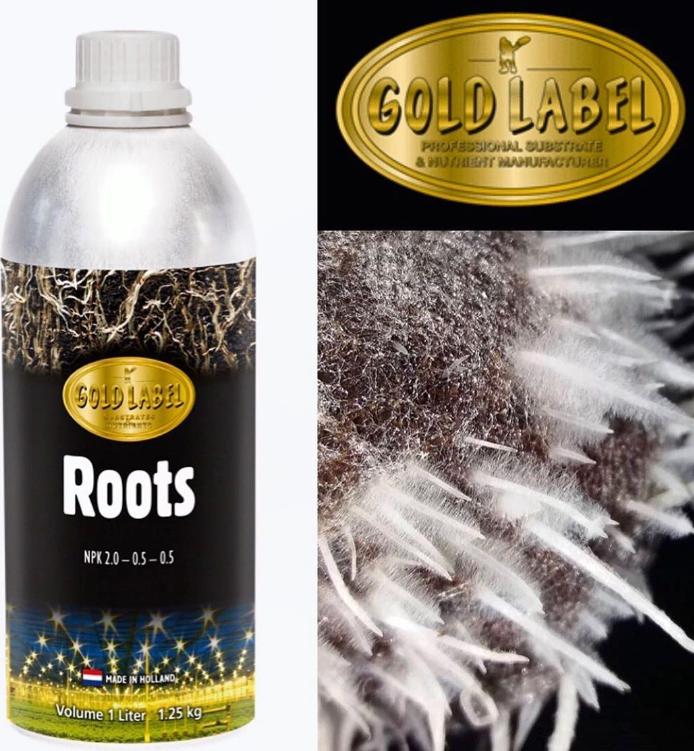
- Gold Label Ultra Roots is, without exaggeration, a seriously powerful root stimulant based on rare plant extracts, iron and amino acids. The composition also includes phytohormones and humic acids (see the separate article: Fulvic and Humic Acids: Their Importance and Use in Plant Nutrition). The image you can see was taken just 5 days after the first application at a daily dose of only 0.5 ml! There is hardly anything more to add. Perhaps only a brief summary of the main benefits:
- Healthy and vigorous initial plant development. Gold Label Ultra Roots is used for seedlings and cuttings throughout the vegetative phase.
- Explosive growth of root mass and the formation of a dense network of roots and root hairs.
- A larger root zone means a larger absorption area through which the plant can take in a greater amount of nutrients, which will positively affect its further development.
- Gold Label Ultra Enzyme is, in terms of composition and resulting effect, quite possibly the most interesting enzymatic preparation for plant nutrition on the market. Are you asking why it is worth including enzyme-based supplementary fertilisers or enzymatic additives in your plant nutrition? And what exactly are enzymes? You can find out everything important in the separate article: Enzymes.
- Ultra Enzyme is one of the professional stimulants of the Gold Label brand.
- It increases nutrient uptake by the plant because it converts unwanted plant matter into useful plant nutrients.
- It intensively cleanses and revitalises the root zone and improves the growing medium in many ways. A clean and healthy growing medium is then better prepared to support plants in optimal development.
- The result is the highest possible quality of the final harvest.
- It is a completely universal product, compatible with all products and growing systems.
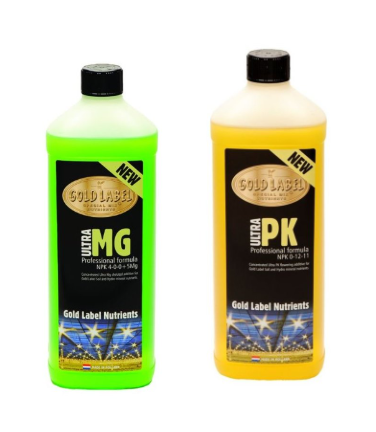
Perfect supplements to the base nutrients for versatile, intensive plant production throughout the entire growing cycle are also the stimulants Ultra MG and Ultra PK.
- Gold Label Ultra MG is characterised by its ability to perfectly balance the basic macronutrients (see the separate article: NPK - what is it?).
- It increases the production of chlorophyll, and thus the photosynthetic activity of plants (see Photosynthesis).
- An extra dose of nitrogen for fast and healthy growth.
- It supports the production of plant proteins.
- Gold Label Ultra PK acts as a powerful flowering stimulant for higher yields. Its specific feature is that it prevents the deposition of phosphorus (P) once the pH value rises above 6.2. In this way, it responds at the right moment to the current needs of the plants and increases the absorption of calcium, magnesium and other important trace elements. At the same time, it prevents build-up in water lines in hydroponic systems. When applying Ultra PK, you will enjoy steady growth and strong flowering throughout the entire generative (flowering) phase.
- Gold Label Flower Enhancer Fe (Bat Boost) is a top-class supplement that uses the unique properties of bat guano, which is a rich natural source of many important nutrients for plants of all kinds. This highly concentrated preparation, intended for application during the last 3-4 weeks of the flowering phase, also contains pure cane molasses, humic acids and seaweed extract in addition to mature, high-quality bat guano. And what results can you expect from using this product?
- Better soil quality.
- Better transport of nutrients throughout the plant.
- Better taste and overall quality characteristics of the final fruits or flowers.
Our TIP: Gold Label fertiliser sets represent the most advantageous and effective way to test the complete plant nutrition programme from Gold Label in practice. You only need to choose according to whether you grow your plants classically in soil (Gold Label Starter KIT Soil) or whether you are engaged in hydroponic cultivation (Gold Label Starter KIT Hydro). Recommended!
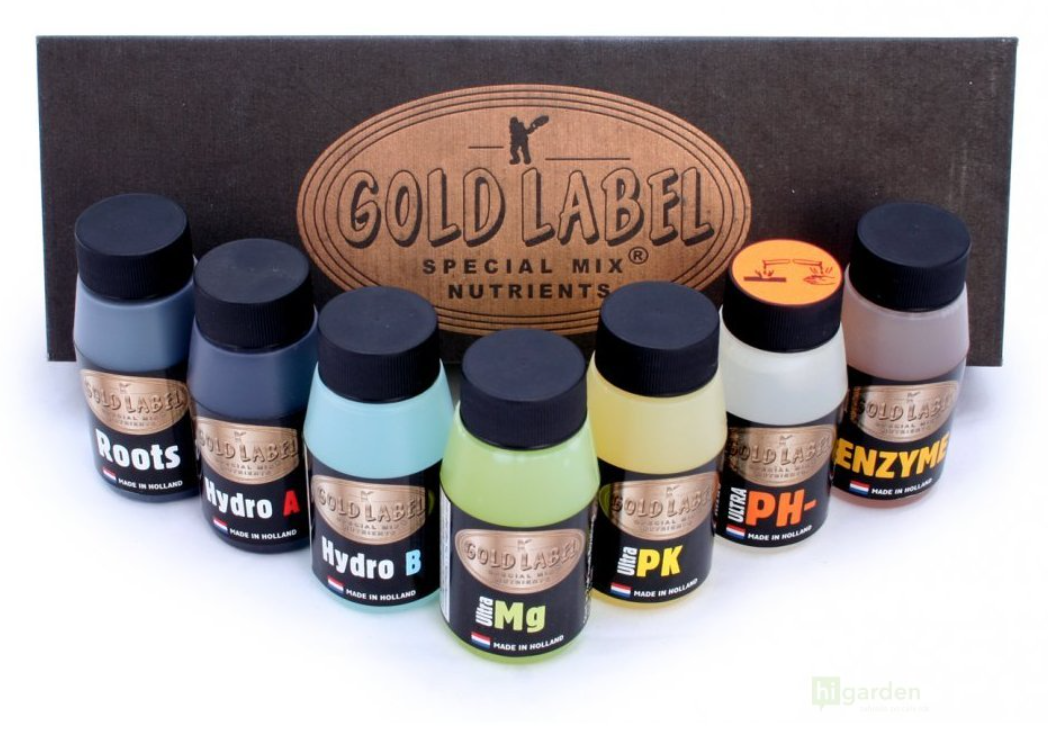
And a practical tip at the end? Remember that you will achieve the best results by combining fertiliser and growing medium from the same brand. Gold Label is definitely worth trying! More than one grower might say that this is truly advice worth its weight in gold. Do not hesitate to ask us anything you are interested in. We are here for you at the well-known e-mail address info@higarden.eu.
We also recommend these products:
- Gold Label Ultra pH- 1 l (growth and flowering)
- BioNova compressed coco brick 10 L
- Hand Trim set PRO - set for manual harvesting
What to read next:
What Are NPK Fertilisers and What Are They Used For?
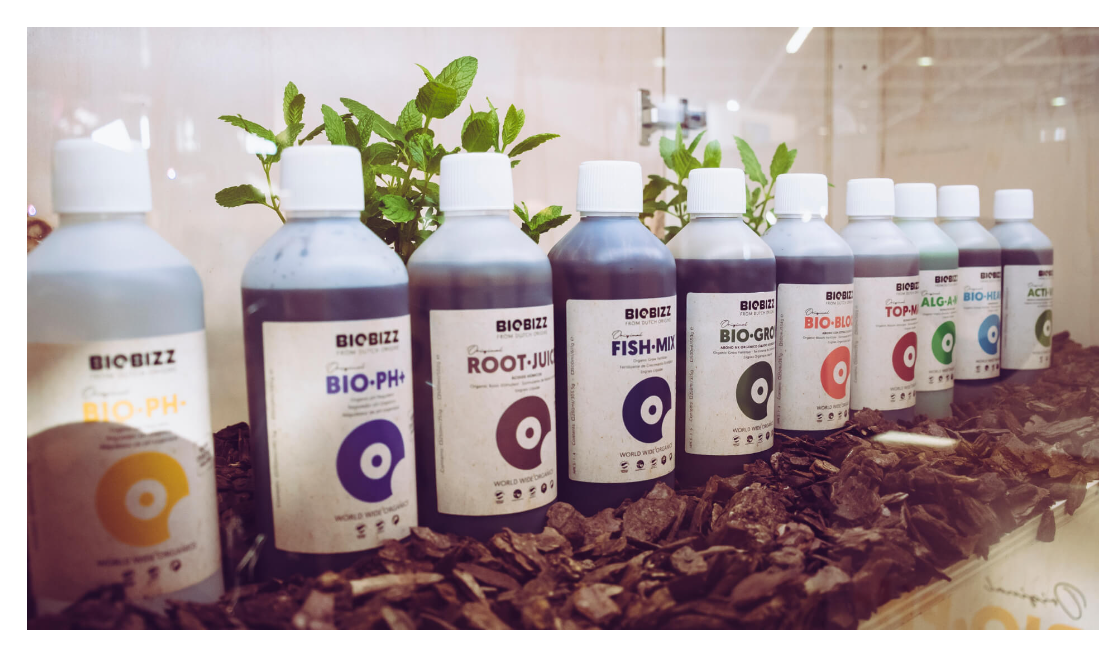 For beginning gardeners and growers, it can be difficult to choose the right fertiliser range from the seemingly confusing selection on shop shelves. Unsuitable plant nutrition can often jeopardise all your growing efforts. We will explain how NPK fertilisers work, what information you can find on the label, and how to choose the right product for your grow room, greenhouse or garden.
When growing plants, most gardeners use fertilisers to supply their plants with nutrients. This is because in most gardening methods, from indoor cultivation under artificial lighting to outdoor gardens, the substrate becomes depleted after a certain time and no longer contains enough nutrients for healthy plant development.
What are NPK nutrients
All plants need a total of 17 nutrient elements to live, and apart from three of them (oxygen, carbon and hydrogen), they obtain all of them from the soil, growing medium or nutrient solution. Roots absorb 14 elements in total, which we further divide according to how important they are from the point of view of plant nutrition.
- Basic (macrobiogenic) nutrients (nitrogen, phosphorus, potassium, sulphur, calcium, magnesium) are consumed by plants in the largest quantities and their deficiency causes serious growth disorders or death.
- Micronutrients (chlorine, iron, boron, manganese, zinc, copper, molybdenum, cobalt) are required only in minimal amounts, but a lack of micronutrients can also cause major damage to plants.
In practice, we most often encounter the need to supply plants regularly with three basic nutrients through fertilisers – nitrogen (N), phosphorus (P) and potassium (K).
The importance of NPK for plant development and health
The consumption of NPK nutrients varies in plants depending on their age, species, climatic conditions and cultivation method. You should take all the above-mentioned factors into account before you start fertilising. It is important to use fertilisers that contain NPK nutrients in the appropriate amount and ratio. If you do not, your plants may either suffer from nutrient deficiencies or you may over-fertilise them and literally burn them with an excess of mineral salts in the substrate.
- Nitrogen (N): Plants need nitrogen especially when forming chlorophyll, the green pigment essential for the process of photosynthesis, but it is also part of plant amino acids and proteins. A nitrogen deficiency is shown by yellowing leaves and slowed growth. Plants absorb nitrogen best in the form of nitrates dissolved in water. Recommended fertilisers for supplying nitrogen are organic fish emulsion or fertilisers for vegetative growth.
- Phosphorus (P): Phosphorus is important for the reproductive phases of plants and the formation of cell structures. A phosphorus deficiency is shown by darkening leaves and smaller flowers. Plants absorb it best in the form of inorganic phosphates dissolved in water. Recommended fertilisers for supplying phosphorus are bat guano and fertilisers designed to support flowering.
- Potassium (K): Potassium is key to flower formation and increases plant resistance to disease. A potassium deficiency is shown by burnt leaf edges and slowed growth. Plants absorb it best in the form of potassium salts dissolved in water. Recommended fertilisers are fertilisers for supporting flowering, PK boosters and palm ash.
Choosing an NPK fertiliser
On the packaging of every fertiliser you will find several basic pieces of information that will help you determine exactly what the formula is suitable for and what it contains.
- A trio of numbers separated by hyphens (for example 2-1-2) indicates the content of the basic nutrients nitrogen (N), phosphorus (P) and potassium (K). The order of the elements is fixed (N-P-K) and the numbers represent the percentage share of the given element in the total volume of the fertiliser.
- A detailed chemical analysis usually specifies the product composition more closely, lists other nutrient elements in the fertiliser and states their minimum content in the product.
- A list of the salts from which the nutrients contained in the fertiliser were obtained. It contains useful information for those who want to combine fertilisers from different manufacturers. Some forms of mineral salts cannot simply be mixed without precipitating. This is also why some fertilisers have multiple components in separate bottles.
- Dosage tables tell you how often and in what quantity to apply the fertiliser. If you are just starting to grow, it is best to follow the manufacturer’s instructions as closely as possible and not mix different brands.
Also read: Which are better for indoor growing, dry or liquid fertilisers?
 How to choose the right NPK fertiliser according to the growth stage
Annual plants go through two basic phases during the growing season: vegetative (growth) and generative (flowering). As they gradually move from one to the other, their nutritional requirements change. In general, during the first part of life in vegetative growth, when plants form new roots, leaves and stems, they need the most nitrogen. During flowering, their phosphorus consumption then increases. Potassium is usually absorbed from the soil throughout the entire vegetative cycle in balanced amounts.
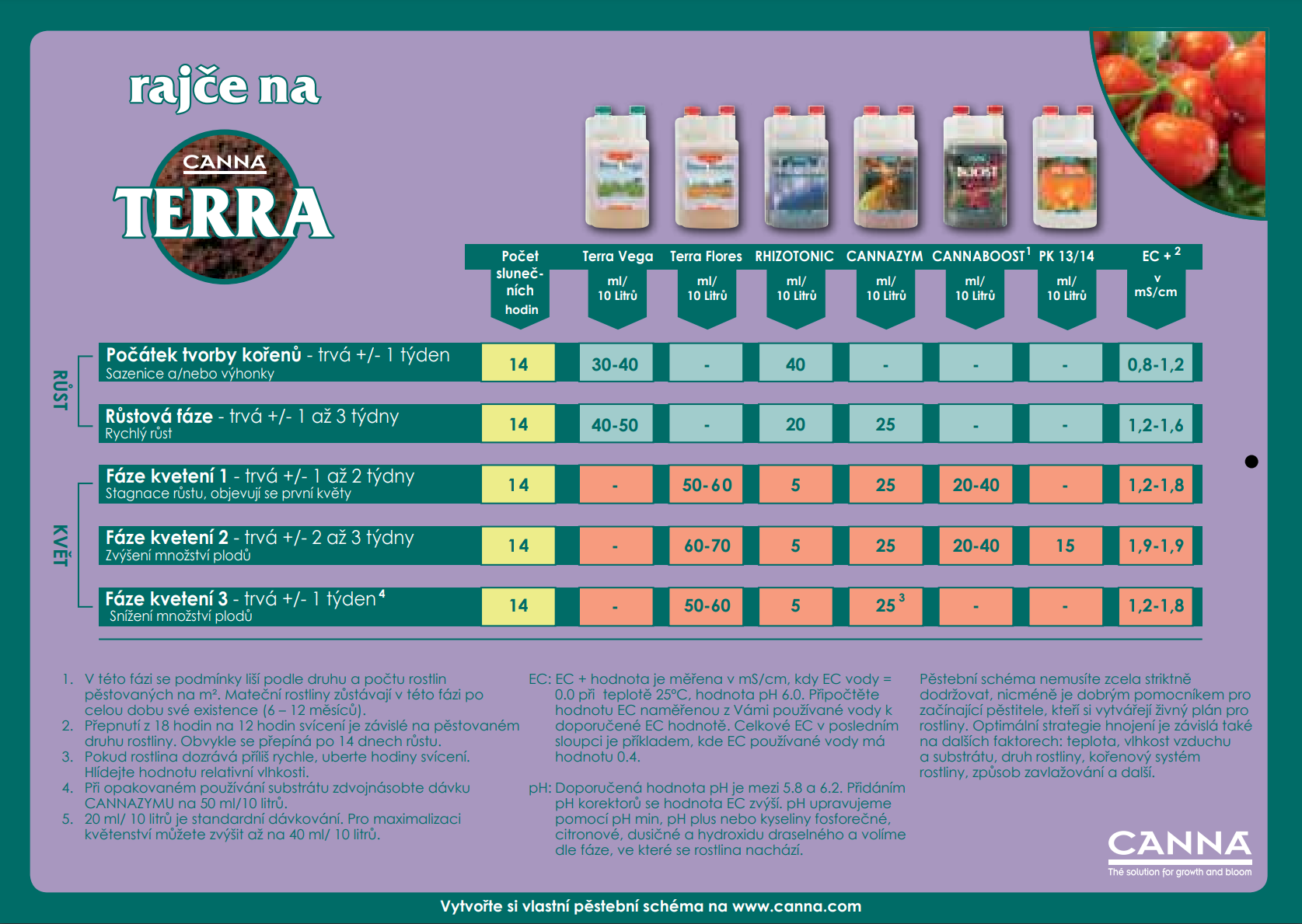
Fertiliser manufacturers include dosage tables with their products, which tell you exactly when and in what amount to fertilise. However, these are only recommendations, and an experienced grower should know the other factors affecting nutrient consumption, such as the growing medium used, temperature and other climatic conditions, the method and frequency of watering, or the specifics of the cultivar.
- Fertilisers for vegetative growth
- Fertilisers for the flowering phase
- Fertilisers for growth and flowering
Also read: Growth fertilisers: What are they for and how to use them
Introducing Unleash Oganics: A Revolutionary Microbial Root Inoculant
 A significant trend in agriculture is the effort to substantially reduce the use of synthetic and chemical fertilisers and pesticides, which have a demonstrably negative impact on the environment. For many growers, however, maintaining yields at the same level after switching to more sustainable cultivation techniques is a major challenge. We present a product that will take your cultivation to a new level.
What is Unleash?
Unleash is a preparation containing a patented blend of plant growth-promoting rhizobacteria (PGPR), which is used to inoculate the root zone (rhizosphere) with beneficial microorganisms. Rhizobacteria increase the availability of nutrients to plants, resulting in faster growth and greater resistance to abiotic stress.
Most products for supporting microbial life in the rhizosphere can only be used when growing in soil or soil-based substrates, because the microbes contained in them are unable to survive in nutrient solution or hydroponic substrates. Unleash is revolutionary in that, with regular use, it is effective not only in soil and soil-based substrates, but also in hydroponic cultivation in soilless or inert growing media.
How does Unleash work?
To properly understand the mechanism by which the microbes contained in Unleash support plant growth and nutrient uptake, we need to become familiar with the term rhizosphere. The rhizosphere is the soil in the immediate vicinity of plant roots. The rhizosphere differs from the surrounding soil in that it contains a many times higher number of microorganisms, bacteria, archaebacteria and mycorrhizal fungi, which form symbiotic relationships with plants and help them obtain nutrients from the soil. Microorganisms are attracted to the roots by exudates that plants release into the surrounding soil.
The rhizosphere is a complex environment full of intricate relationships between plants and microorganisms, which is easy to upset. This can happen, for example, when using high amounts of fertilisers, pesticides or fungicides. In hydroponic cultivation, inert or soilless substrates, the number of microorganisms in the root zone is minimal or zero. The root inoculant Unleash restores populations of beneficial microorganisms in the rhizosphere in all the above-mentioned cases, and you will achieve a higher yield.
Main benefits of Unleash
- Supports nutrient availability
The root inoculant Unleash acts as a biostimulant that makes nutrients available to plant roots. The microbes contained in Unleash act directly in the rhizosphere, making it easier for roots to absorb nutrients and allowing plants to focus all their energy on growth.
- Prevents nutrient burn
Especially in highly intensive cultivation techniques, root burn is a common problem. The microbes contained in Unleash process nitrogen, phosphorus and micronutrients from fertilisers and separate them from the bound salts that cause root scorch. In addition, adding the root inoculant to the nutrient programme helps chemically convert nitrogen and other nutrients into forms more readily available to plants, resulting in greater nutrient uptake by plants.
- Helps prevent transplant shock
Plants form relationships with microbes in the rhizosphere from the very beginning of their growth, and this symbiosis is disrupted every time you transplant them. It then takes some time before the plants can again efficiently obtain nutrients from the new substrate. By using the root inoculant before transplanting, you will help speed up this process and reduce the time loss caused by transplant shock.
- Works with various fertilisers, compost tea and other additives and nutrient supplements
The advantage of the Unleash root inoculant is that it is easy to incorporate into your nutrient programme without having to modify it in any way. The product does not contain nutrients or substances that could not be combined with commonly used additives and nutrient supplements. On the contrary, you can expect their effect on plant growth to be further enhanced thanks to inoculating the root system with microorganisms.
- Universal use in soil, soilless substrates and hydroponic growing media
The Unleash root inoculant has been tested and is proven to work in combination with a wide range of growing systems, regardless of the growing substrate or fertilisers used.
 How to use Unleash
Application instructions for conventional agriculture
- Apply Unleash at a rate of 1 litre per acre, divided into two application doses of 500 ml
- First shake the product well, then mix 500 ml of Unleash with 35 unchlorinated litres of water
- Let the solution stand for 30 minutes to 4 hours before application. The solution can be applied up to 3 days after mixing.
- After three weeks from the first treatments, carry out a second application.
- Water the soil gradually with the solution so that the product is distributed evenly.
- After application, continue watering with water for 2-6 hours so that the bacteria reach the root zone.
Note: The Unleash root inoculant is sold as a concentrate and must be mixed in a clean non-metal container with unchlorinated water for activation. Using more Unleash than recommended will not harm the plants.
Application instructions for hydroponic systems
Use the Unleash root inoculant only with unchlorinated water. The product is suitable for use with all soilless substrates, indoors and outdoors.
- For standard application, use 1 ml of the product per 4 litres of water.
- Before application, let the solution rest for 30 minutes to 4 hours.
- Apply Unleash regularly once every 2 weeks throughout the plant life cycle.
For perfect results, apply Unleash in this way:
- Soil inoculation/clones: 2 ml per 4 litres of water.
- Transplanted plants: 2 ml per 4 litres of water.
- Vegetative: 1 ml per 4 litres of water.
- Flowering: 2 ml per 4 litres of water.
How to Choose a Horticultural Substrate
In our complete guide to choosing the right horticultural substrate, we present the most important information about the composition of horticultural substrates, their correct use, and recommend the best brands and blends for growing plants indoors and outdoors, in pots, in beds or under artificial lighting.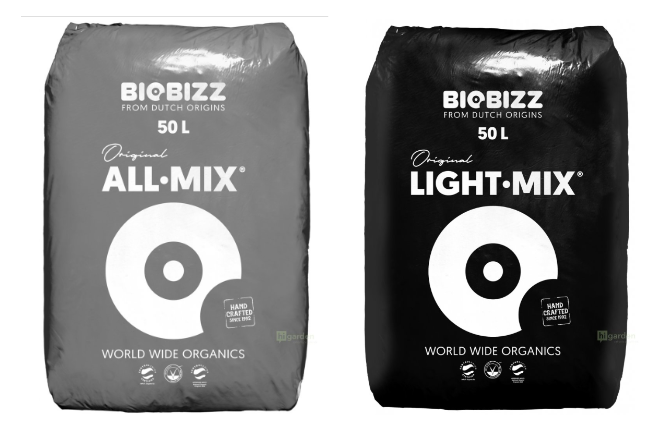
Horticultural substrates are growing media intended for growing plants in the traditional way in soil. Their main use is for growing plants in pots indoors and outdoors, or as soil for beds or greenhouses.
Also read: Guide to growing substrates
What do horticultural substrates contain?
Manufacturers of horticultural substrates adjust their composition so that the resulting blends have different properties in terms of water retention, nutrient content or soil acidity.
The basic component of every horticultural substrate is organic materials of plant or animal origin. Most often these are peat, coconut fibres, composted wood and tree bark, compost, worm humus and other substances that serve as a source of organic nutrients for plants.
Another ingredient is inorganic natural materials, which ensure aeration of the substrate, improve drainage and retain moisture. These include perlite, vermiculite, expanded clay, sand and others.
Many horticultural substrates are enriched with fertilisers, whether mineral ones with gradual release or organic soil amendments such as bat guano, bone or blood meal, alfalfa or seaweed extracts.
Other additives, for example lime and substances for pH balancing, beneficial microorganisms (trichoderma, mycorrhizal fungi) or admixtures further modify the specific properties of the substrate.
How to choose a horticultural substrate?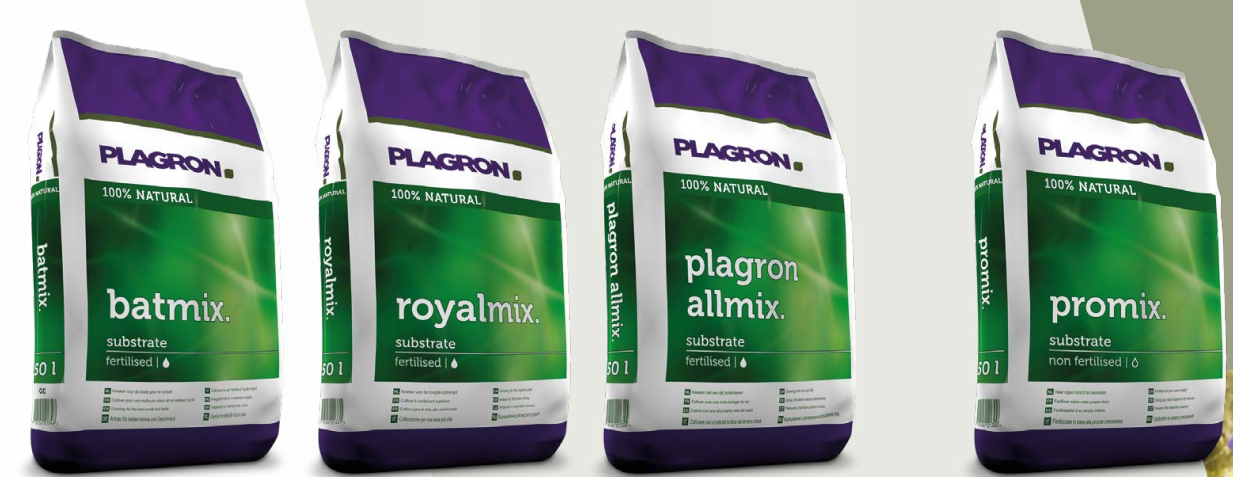
The choice of horticultural substrate depends primarily on the age of the plants and your growing method. In general, for seedlings and young plants indoors and outdoors, unfertilised or lightly pre-fertilised blends are most suitable. Horticultural mixes with a higher fertiliser content are suitable as a medium for nutrient-demanding plants, indoor growing, or as soil for beds or greenhouses. For some growers, the purely natural origin of all components of the blend may also be important, for example for organic growing or organic farming.
Unfertilised horticultural substrates consist only of a pure blend of organic and inorganic materials without added fertilisers. They are suitable as a starting medium for germination, cuttings, seedlings or young plants intended for later repotting. When growing in unfertilised horticultural substrates, it is necessary to supply plants with nutrients in the form of fertilisers, whether organic or mineral.
Lightly pre-fertilised horticultural substrates, sometimes referred to as “light-mix”, contain only a minimal amount of nutrients in the form of mineral or organic fertilisers. They are suitable either as soil for young plants intended for later repotting, rooted cuttings or for growers who want to supply plants with nutrients at their own discretion and according to their needs. Lightly pre-fertilised blends can be combined with most commonly available fertilisers and feeding programmes.
Pre-fertilised horticultural substrates are balanced blends with a medium amount of nutrients that will last plants for the first few weeks to months of life, depending on the species, pot size and growing method. They are suitable as a basic substrate for growing in pots indoors and outdoors; however, in later stages of life, plants need nutrients supplied in the form of mineral or organic fertilisers.
Heavily pre-fertilised substrates contain a high dose of nutrients in mineral or organic form and are not suitable for seedlings, cuttings or young plants, because the high nutrient content in the soil can cause leaf and root “burn”. Heavily pre-fertilised mixes are suitable for nutrient-demanding plants, as soil for beds or greenhouses, and as a medium for indoor growing under highly intensive artificial lighting.
Substrates intended for organic growing contain only materials of natural origin and are often certified for growing plants in organic quality without the use of mineral fertilisers and chemical pesticides. These substrates may be pre-fertilised or unfertilised and are suitable for cultivating plants in pots indoors and outdoors or as soil for beds or greenhouses.
- Canna BIO Terra Plus
- Atami Bio Growmix
- Terra Aquatica Organic Soil Light-mix
- BioBizz Juju Royal Light Rebel, organic substrate
Vegan substrates are, like substrates for organic growing, composed only of natural materials, with the difference that they contain only substances of plant origin. These blends are suitable for growing in pots indoors and outdoors or as soil for beds or greenhouses.
Substrates for sowing and germination contain a minimal amount of nutrients and have a finer structure to retain more moisture, and you can use them for germination and taking cuttings from plants.
Special substrates are designed to meet the specific requirements of certain plant species. Among them you will find, for example, substrates for citrus, orchids, substrates for roof gardens or herbs.
Answers to the most frequently asked questions about horticultural substrates
Can horticultural substrates be used for several growing cycles in a row?
Used growing substrate can be revitalised and used again; however, if the procedure is incorrect, there is an increased risk of disease, pests or mould. When growing indoors, it is common to replace the growing substrate with a new one after each cycle. When growing outdoors in pots or in beds, the soil can be revitalised before planting by adding compost, worm humus or a heavily pre-fertilised horticultural soil mix.
Do I need special fertilisers when growing in horticultural substrates?
Horticultural substrates may or may not contain a certain amount of fertilisers that serve as nutrients for plants. Especially when growing in pots, plants quickly deplete the nutrients from the soil and after some time it is necessary to replenish them. This is what various types of fertilisers are for, from fast-acting mineral ones to fully organic ones. The choice of the right feeding programme then depends on the plant species and your growing style.
How often should plants grown in horticultural substrates be watered?
The frequency and amount of watering supplied to plants depends on many factors; however, in general, for plants grown in beds, it is time to water the substrate if the soil has dried to a depth of one inch. For plants in pots, we can estimate the amount of water in the growing medium by weighing the growing container.
Also read: Dry or liquid fertilisers, which are better for indoor growing?
Get your garden dancing to the rhythm of reggae with JUJU ROYAL by BioBizz
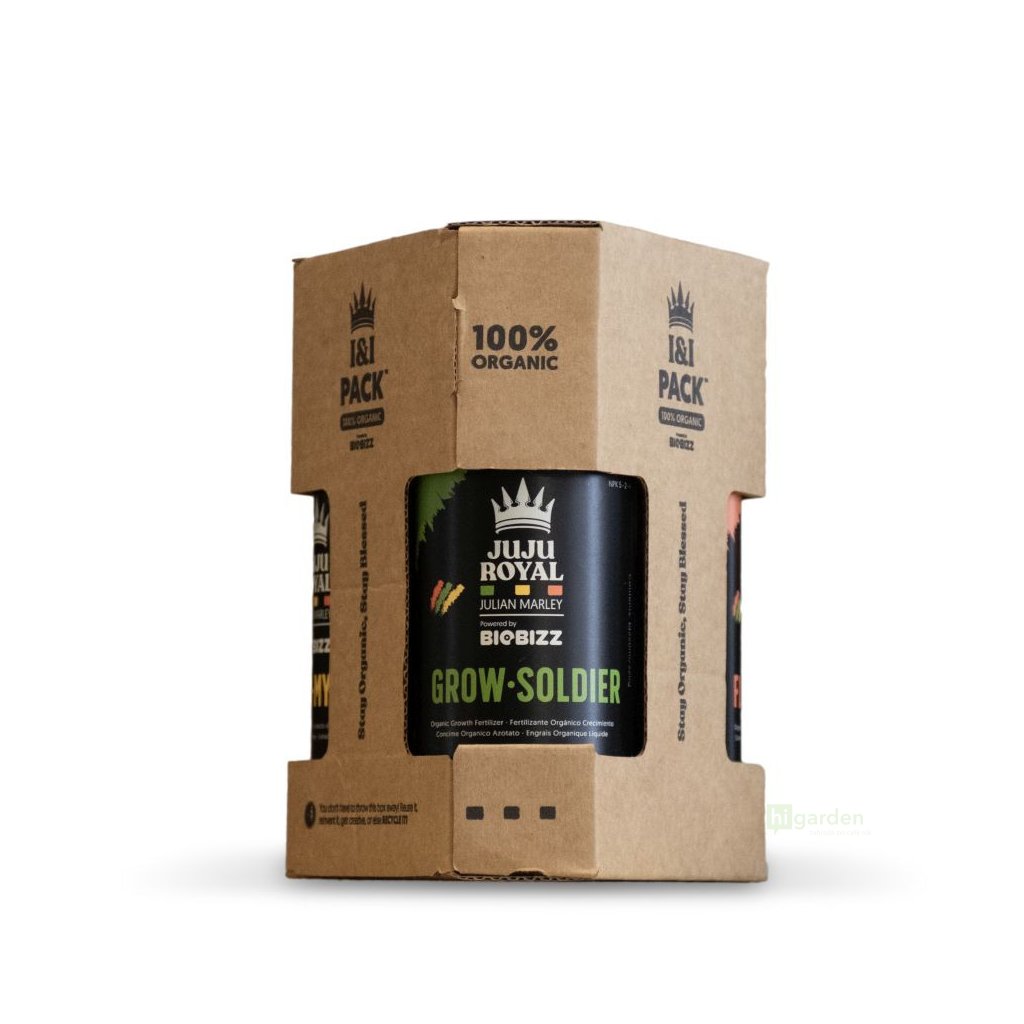 Jamaica is renowned not only for its great music, but also for its fertile soil, which local people have cultivated for centuries in a traditional way without unnecessary chemicals. Organically grown home produce is then the basis of the vegetarian I-tal diet for many Jamaicans. However, as in the rest of the world, local soil is threatened by the overuse of synthetic fertilisers and chemical pesticides. The manufacturer of organic fertilisers BioBizz joined forces with musician and activist Julian Marley to change that. The result is the unique JUJU ROYAL range of fertilisers and substrates, which you can now try at home too.
BioBizz has become well known among growers especially for its liquid organic fertilisers, which are widely used by organic farmers around the world. Their range includes a complete selection for organic and bio cultivation, including organic fertilisers, horticultural substrates, nutrition supplements and natural plant protection products. The latest fertiliser range from BioBizz – JUJU ROYAL uses a simple three-part nutrition programme for cultivating plants in all types of substrates and growing media. As with other BioBizz products, JUJU ROYAL fertilisers and substrates are suitable for indoor and outdoor growing.
Julian Marley (4 June 1975) is the son of the legendary reggae icon Bob Marley, who himself contributed to the world of music with recordings featuring a unique sound and conscious lyrics. He has released several albums, including “Lion in the Morning” and “Awake”, which refer to the roots of reggae and clearly show his father’s influence. In addition to his music career, Julian is intensely involved in charitable work and activism, especially through the Ghetto Youths foundation and now also together with BioBizz.
JUJU ROYAL fertilisers
Grow Soldier is an organic liquid fertiliser intended to support growth throughout the entire growing cycle, from seedlings to the end of flowering. It contains concentrated molasses and a balanced ratio of nitrogen, phosphorus and potassium (NPK). In producing Grow Soldier, BioBizz uses by-products from beet processing. The nitrogen in Grow Soldier is released gradually and the organic composition supports microorganisms that create a healthy soil ecosystem. Grow Soldier is suitable for all types of substrates, growing media and plant cultivation methods. Start applying Grow Soldier when the plants reach a height of 10-15 cm and continue until flowering. The recommended dosage according to the feeding chart is 1-4 ml/l.
Flowa Bloom is an organic liquid fertiliser intended for flowering plants. It contains a high proportion of easily absorbed phosphorus and animal and plant proteins, amino acids and sugars that support flower development and resin production. Flowa Bloom is suitable for all types of substrates, growing media and plant cultivation methods. It can be used on its own as a flowering fertiliser, but for optimal results we recommend combining it with Grow Soldier and humic acids. The recommended dosage according to the feeding chart is 2-4 ml/l.
Green Mystic is a growth stimulator that supports hormonal balance and the absorption of micronutrients, which increases plants’ resistance to pests and environmental stress factors such as high temperature, overwatering or drought. In producing Green Mystic, BioBizz uses an enzymatic hydrolysis process, thanks to which the mixture may contain seaweed extracts, mannitol, alginic acids and manganese in a unique liquid form. Apply Green-Mystic during regular watering so that it acts directly in the substrate together with microorganisms, or as a foliar spray for fast action. This growth stimulator has a low content of nitrogen, phosphorus and potassium and can be used at any stage of the vegetative cycle. We recommend using Green Mystic together with JUJU ROYAL growing substrates and fertilisers.
 JUJU ROYAL growing substrates
Light Rebel is a lightly pre-fertilised organic growing substrate with a reduced peat content. This airy mix, made from premium raw materials, is ideal for indoor and outdoor growing and is designed for growing aromatic plants, vegetables and herbs. Light Rebel can be used from the beginning to the end of the growing cycle, including germination, cloning and seedling propagation. The substrate is suitable for hand watering as well as irrigation systems.
Coco Kaya is a lightly pre-fertilised coconut substrate suitable for indoor and outdoor plant cultivation. The mix of coconut, peat and perlite has an airy structure that ensures optimal moisture in the root zone. It is a pre-buffered substrate that does not need any adjustment before use. When growing in coconut substrates, it is important to fertilise plants regularly with fast-absorbing organic or mineral fertilisers. We recommend combining Coco Kaya with JUJU ROYAL fertilisers. Coco Kaya is suitable from the beginning to the end of the growing cycle, including germination, cloning and seedling propagation.
Useful links
- Manufacturer’s website: biobizz.com
- Feeding charts for JUJU ROYAL: http://www.biobizz.com/wp-content/uploads/2024/01/Juju-Royal-Julian-Marley_Biobizz_Feeding-Plan_2024-EN.pdf
Compost Teas: Microbial Elixirs That Revitalise the Soil in Your Garden
 Compost teas can significantly improve the health of your plants and the quality of your soil. These biologically active solutions are full of beneficial microorganisms, contain readily available nutrients and increase plants’ resistance to disease. In this article, you will learn how to prepare and apply compost teas, and why they are an indispensable part of sustainable gardening.
Compost tea vs worm tea: What is the difference?
Beginners and experienced gardeners alike often confuse compost tea and worm tea. At first glance, these two types of organic solutions have much in common. Both worm tea and compost tea are produced as a by-product of composting, and both are associated with ecological gardening and sustainable agriculture. So what are the differences between worm tea and compost tea?
Compost tea
Compost tea is a liquid produced by extracting beneficial microorganisms (bacteria, fungi, nematodes and others) from compost using a brewing process. True compost tea contains all the organisms and soluble nutrients that were present in the compost before steeping. Depending on the preparation method, there are two types of compost tea – non-aerated and aerated.
- Aerated compost teas (ACT) are produced with a constant supply of oxygen to the water, which supports the growth of beneficial aerobic bacteria.
- Non-aerated compost teas are made by simply soaking compost in water for a certain period without additional aeration.
Worm tea
Worm tea is a liquid that drains to the bottom of home vermicomposters. Although this leachate is rich in nutrients, it differs significantly in composition compared with compost tea. The content and balance of nutrients and microorganisms in vermicomposter water are greatly influenced by the materials the worms feed on and the conditions inside. Worm tea can be useful, but it often contains more pathogens than properly prepared compost tea.
Benefits of compost tea
Compost teas are useful for both outdoor gardeners and indoor growers. They naturally support plant growth and improve overall plant health, vitality and nutrient uptake. Compost teas also improve soil structure by increasing microbial activity, which leads to faster decomposition of organic matter and the release of nutrients in the growing medium. In addition, beneficial microorganisms help plants defend themselves more effectively against harmful pathogens. Thanks to their easy preparation, application and low cost, compost teas are an ecological alternative to chemical fertilisers and pesticides, making them an excellent choice for growers practising sustainable gardening methods.
- Source of nutrients – During the steeping process, important nutrients and minerals are released from the compost and become immediately available to plants when applied to the soil or sprayed on the leaves. This means you can use compost teas as a universal natural fertiliser with a fast effect.
- Microbial life – One of the main advantages of compost teas is that they are literally full of beneficial bacteria, fungi, nematodes and other microbes. These microorganisms play a key role in the soil and food chain. Their main task is to break down organic matter into nutrients for plants.
- Disease suppression – Scientific studies have shown that compost tea can be effective in suppressing fungal and bacterial diseases that threaten plant health, and it can be used as an alternative to chemical treatment.
- Improved soil quality – Regular application of compost tea improves soil structure and its retention properties, namely aeration and the ability to retain water and nutrients. As a result, compost tea loosens clay soils and helps sandy soils retain water and nutrients better.
 How to prepare compost tea
You can prepare your own compost tea either from powder for preparing compost tea, worm humus or from your own compost. In the latter case, however, make sure it is well matured compost that does not contain any pathogen spores. Compost tea can be made with or without aeration, and you can add supplementary nutrients with a high sugar content, such as molasses, which will serve as food for microbes. For the best results, we recommend choosing the aerated method, but the most important prerequisite for success is quality compost.
You will also need:
- Non-chlorinated or standing water – The effect of compost tea depends on a thriving population of beneficial microbes. Chlorine and chloramine not only destroy harmful pathogens in drinking water, but also harm these microorganisms. While chlorine is relatively unstable and gradually evaporates from the water, chloramine must be neutralised using a carbon filter. If you are sure that your tap water contains only chlorine, leave it to stand for 1-5 days in a dark, cool place. You can speed up the process by aerating it with an air stone for 12-24 hours or by boiling the water.
- Container with an aeration system – For preparing compost tea for small or medium-sized gardens, a 10-20 litre bucket is suitable. A simple and effective aeration system can easily be assembled from an air pump, an air stone and several flexible tubes.
- Microbial food – Adding molasses or liquid preparation for compost tea will speed up the multiplication of beneficial microbes in the mixture being prepared. Use supplementary sugars in reasonable amounts to prevent imbalance and the proliferation of anaerobic bacteria in the tea.
Step-by-step guide to preparing compost tea
- Preparing the compost: Start with quality, well-matured compost or a loose mix for preparing compost tea.
- Mixing and soaking: Fill the container with water and add compost at a ratio of approximately 1 part compost to 5 parts water, or according to the instructions.
- Aeration: Leave the mixture to steep for 24-48 hours, aerating it throughout and stirring it several times.
- Straining and storage: After steeping, strain the mixture and use it immediately if possible, because at this point the tea contains the highest number of beneficial microbes.
Using compost tea
You can apply compost tea directly to the roots of plants or as a foliar spray; each of these methods has its advantages.
- Applying compost tea to plant roots: Simply pour fresh compost tea into the soil near the plant’s main stem. This method enriches the soil and delivers beneficial microorganisms and nutrients directly to the roots. Water plants with compost tea every two weeks throughout the growing season.
- Compost tea as a foliar spray: You can spray compost tea directly onto plant leaves, which provides an immediate effect in the fight against pathogens. Apply the spray early in the morning or in the afternoon to avoid scorching the leaves in the sun.
Would you like to learn more about the latest news from the world of growing and get proven guides for indoor and outdoor cultivation? Do not hesitate and read our blog.
What Do You Need to Know About the Water You Use for Watering?
Many growers do not realise how crucial the chemical composition of the water they use to water their plants is. Alkalinity, pH and the content of dissolved salts are important factors that determine whether water is suitable for plant cultivation. In this article, we will introduce you to several facts about water that every grower should know in order to achieve optimal results in their garden.
Whether you grow hydroponically or in growing media, water is one of the basic resources your plants need. However, few growers know that the chemical composition of water largely affects how suitable it is for plant cultivation. The main characteristics of water in this context are alkalinity, pH and EC.
Alkalinity expresses the water’s ability to resist acidification and is affected by the concentration of carbonates (H2₂CO₃) and bicarbonates (HCO). Other compounds also influence alkalinity, for example hydroxides, sulphides, phosphates, silicates or borates, but these are usually present in water only in minimal amounts. The higher the alkalinity of the water, the less its pH is affected by acidic substances, such as water-soluble fertilisers with a high content of ammonium or urea. Conversely, the pH of water with low or zero alkalinity will drop sharply after fertilisers are added, because it does not contain enough buffers to neutralise acids. You can determine the alkalinity of water from a laboratory analysis, and it is usually expressed as the amount of CaCO₃ or Ca(HCO₃)₂.
Alkalinity above 150 ppm CaCO₃ is considered high, and such water will increase the pH of the substrate. If the water’s alkalinity is not too high and is between 150-250 ppm, this can be addressed by using a fertiliser that creates an acidic reaction in the substrate. Such fertilisers contain more than 20% of the total nitrogen in the form of ammonium (NH₄+) or urea (the greater the proportion, the more acidic the reaction). By contrast, fertilisers that contain nitrogen only in the form of nitrates cause a neutral reaction.
- Water with an alkalinity of 60-150 ppm is considered ideal. Combine it with fertilisers that contain 20-30% of the total nitrogen in the form of NH₄+/urea.
- Water with an alkalinity below 60 ppm has low buffering capacity. Use fertilisers that contain most of the nitrogen in the form of nitrates (more than 90%) and only a small amount of ammonium or urea.
- If the water’s alkalinity is extremely high (above 250 ppm), it is necessary to reduce it first by adding acid to approximately 100 ppm and then combine the water with fertilisers with a low content of ammonium and urea.
Water pH expresses the concentration of hydrogen ions (H+) and hydroxide ions (OH-) and is an indicator of the acidity or alkalinity of a solution. We measure pH on a scale from 0 to 14, with values below 7 indicating an acidic solution, above 7 an alkaline solution, and pH 7 being neutral. The ideal pH range of water intended for irrigation is between 5 and 7, because it is close to the optimal pH value for growing most plant species (5.8-6.2). The importance of pH lies in the fact that acidity affects the availability of nutrients to plants, and at extreme values problems with nutrition occur.
- If you grow in organic growing media (soil, coco, peat), regularly monitor the pH of the substrate and keep it within the range of 5.5 to 6.5.
- If you grow hydroponically, monitor the pH of the nutrient solution and keep it consistently within the pH range of 5.6 to 6.4.
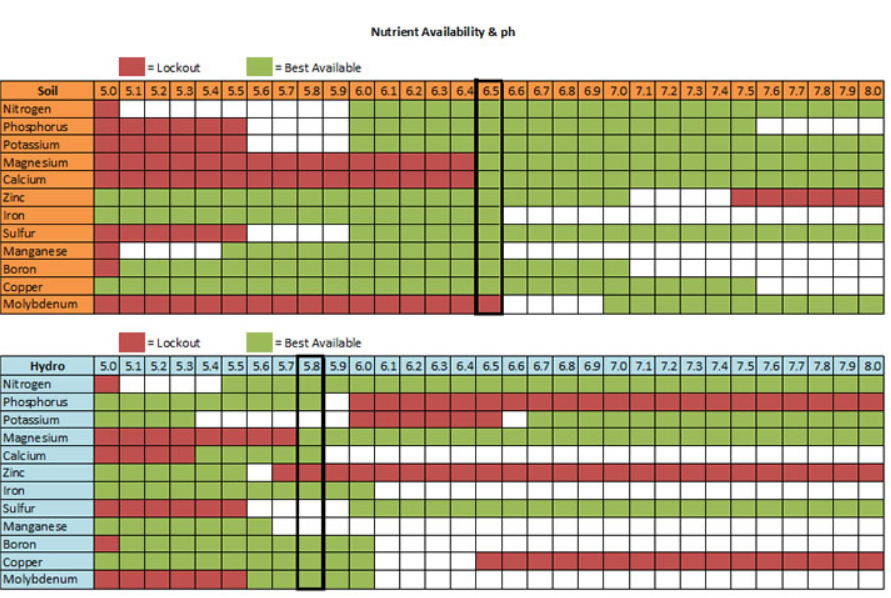
You can adjust the pH of water by adding an acid or an alkali. To lower pH, nitric, phosphoric, sulphuric or citric acid is most commonly used, with citric acid being the only organic one and therefore safer to handle. To raise pH, products containing soluble magnesium or calcium are used. When adjusting water pH, be patient, add the acid or alkali gradually, and each time mix the solution thoroughly and measure it again. You can use litmus paper to measure pH, but if you are serious about growing, it is worth investing in a digital pH metre.
EC is an abbreviation for electrical conductivity, which indicates how well a solution conducts electric current. In the context of plant cultivation, EC is used to assess the concentration of dissolved salts (ions) in the water or nutrient solution that plants use. These dissolved salts contain mineral elements and nutrients such as nitrogen, phosphorus, potassium, calcium, magnesium and others. Digital EC metres or combined EC and pH metres are used to measure EC.
The lower the EC of water intended for watering, the better, especially if you use fertilisers containing mineral salts. Adding fertilisers increases the EC of the water, and too high a salt content will cause the solution to burn the plant roots, which is reflected in burnt leaf tips (overfeeding). Rainwater, distilled water or water filtered through a reverse osmosis filter contains no dissolved salts and has an EC of 0 mS/cm. Tap water always contains dissolved salts, and its EC depends on the specific region.
- If the EC of water intended for watering is higher than 1 mS/cm (before adding fertilisers), it is necessary to first filter it through reverse osmosis or mix it with distilled water in such a ratio that the EC value falls below 0.5 mS/cm.
- Water with an EC of 0.5 – 1 mS/cm (before adding fertilisers) can be used for watering plants and in hydroponic systems, but over time salts may accumulate in the substrate, which then needs to be flushed more often with clean water.
Would you like to read more about modern methods of plant cultivation? Visit our blog.
Mycorrhiza, or High Yields Without Chemicals
Do you already know what mycorrhiza is? Symbiosis, in other words the mutually beneficial coexistence of mycorrhizal fungi with plant roots. We know this remarkable symbiotic relationship from the natural world. If you apply this knowledge when growing plants in soil, your plants will benefit from it right through to harvest, when it will put a big smile on your face. Is growing herbs, fruit or vegetables still a real challenge for you? In the early stages, do you feel that although you follow proven advice and fertilise carefully according to dosage tables, your plants are still more likely to struggle than to grow vigorously and beautifully? Thanks to mycorrhiza, everything can quickly change for the better!
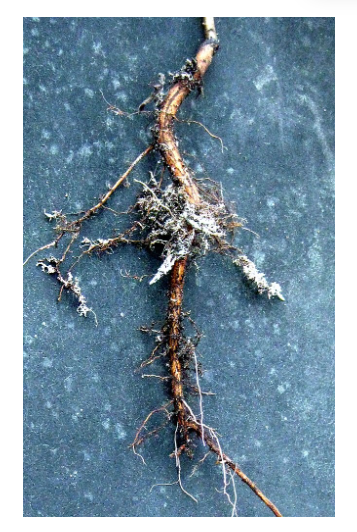
Cooperation with soil microorganisms is completely indispensable for plants. This is also shown by statistics indicating that up to 90% of roughly 400,000 known plant species allow symbiotic fungi to form colonies in their root systems. And when did this phenomenon begin to be used in plant cultivation? Surprisingly, only relatively recently. Although at the end of the 19th century the German scientist A. B. Frank observed during his experiments that pine trees growing in open soil with forest fungi were doing better than pine trees planted in a sterile environment, it took more than a century before scientists around the world began to attach proper importance to his discovery. At least in recent years the situation has been exactly the opposite, and growers therefore have access to affordable products that use this botanical phenomenon to improve the growth and yield of cultivated plants and crops.
Why fungi in particular?
Because in the plant kingdom they have no competition when it comes to survival strategy and obtaining nutrients in a wide range of environments, including extreme ones from salt water in the seas to polar regions. If we go to the absolute extreme, we find that scientists have already discovered species capable of surviving cosmic radiation! Fungi belong among so-called heterotrophic organisms, which must obtain nutrients exclusively from other organisms (unlike plants capable of photosynthesis). From this point of view, we distinguish the following types of fungi:
- Parasitic fungi: this type of fungi obtains nutrients from living organisms. Indeed, since we are already talking about extremes, some parasitic species are even capable of killing their hosts because of this.
- Saprophytes: this type of fungi, by contrast, obtains nutrients from dead bodies of animals or plants.
- Some fungal species are able to “switch” between the two modes mentioned above depending on current needs.
- Symbiotic fungi: this includes mycorrhizal fungi, the best known to growers being Trichoderma harzianum. In addition to this, a truly large number of mycorrhizal fungi have been studied, but only 270 of them live in mutual symbiosis with 70% of all plant species on the planet, including commercial crops such as tomatoes.
How does mycorrhiza work?
For the purposes of plant cultivation, we will limit the explanation of the principle of mycorrhiza to so-called endomycorrhizal fungi. The important thing is that these are the fungi that can live in mutually beneficial relationships with the roots of plants we want to grow outdoors or at home (for example, various types of fruit and vegetables, annual plants, grasses, ornamental plants, shrubs). The second group consists of so-called ectomycorrhizal fungi, which do not grow into the cells of plant roots and are usually found, for example, near trees.
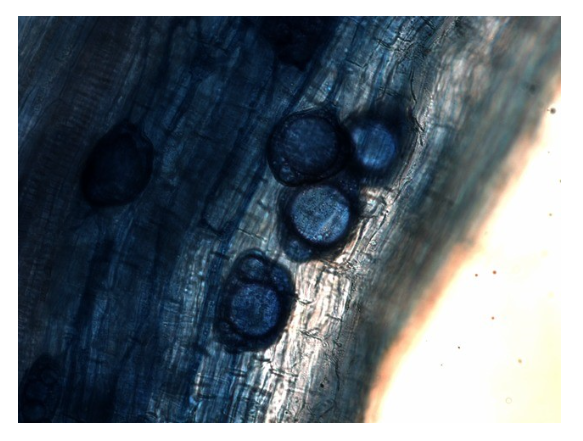
At the beginning of the mycorrhizal process are so-called hyphae - individual cells forming mycelium, more technically known as mycelium. These fungal cells can look different, but they will always have one thing in common, namely a tip with a usual diameter between 2 and 10 micrometres. The tip of the hypha is characteristic for its ability to force its way through the soil. They move towards the roots of higher plants because of specialised hormones that plants naturally release into the soil (so-called strigolactones). This happens when the plant is running low on nutrients in the soil, typically for example in the case of phosphorus deficiency. Hyphae are able to grow by up to 40 micrometres per minute and develop incredible force when “breaking through”. Once mycelium reaches the root zone of its future host plant in this way, the tip of the hypha again serves to allow fungal cells to penetrate the roots, where they settle in the space between the wall and the membrane of the plant cell. Mycorrhiza is then the mutually beneficial process taking place around the roots of plants that have established a connection with an endomycorrhizal fungus. Once the fungus has sufficiently established itself on the plant roots after some time, the exchange of vital substances begins, which benefits both sides. Under the microscope, we can observe a kind of natural barter. We keep saying it: nature is brilliant!
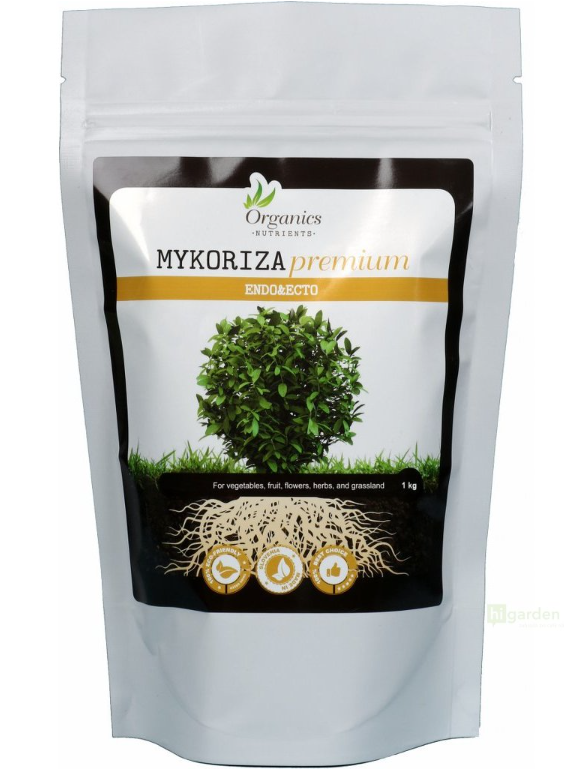
Our TIP: We highly recommend the product MYKORIZA premium - a 100% organic concentrated powder with a high content of mycorrhizal fungi (Endo&Ecto), beneficial bacteria, microorganisms and Trichoderma. Growing organically? Read a separate article about all the interesting products from the Organics Nutrients brand!
Positive effects of mycorrhiza on plant development
Fungi that depend on nutrients obtained from other organisms (see above) are naturally attracted to plant roots. Plants can sacrifice up to one fifth of all the carbon they produce for them, which fungi consume in the form of sugars as a source of energy. In return, plants receive from fungi, among other things, the following benefits:
- Uptake of important nutrients that plant roots would otherwise no longer reach in the soil. (For growers, this also means lower use of various fertilisers.)
- Up to 4x more naturally obtained phosphorus (P), the sources of which are increasingly limited from the perspective of organic farming, as well as other nutrients including nitrogen (N).
- Protection against pests and pathogens. A significantly lower risk of moulds (Fusarium, Pythium etc.) Mycorrhizal fungi actively remove various nutrients from the soil around the host that could otherwise unnecessarily attract unwanted microorganisms to these areas. Mycorrhizal fungi are even capable of producing antibiotic or biocidal chemicals designed specifically to fight parasites attacking the host.
- Many times greater resistance to drought. Mycorrhiza goes hand in hand with better-nourished plants, which are therefore generally more resistant to all abiotic stress factors (see separate article: Stress also harms plants, or Plant abiotic stress)
- Increased production of phytohormones. Given that these hormones can control almost every aspect of plant growth, the potential in agriculture is truly significant, which is why scientists are studying them more and more intensively.
- The flowers and fruits of plants living in symbiosis with mycorrhizal fungi contain more aromatic and health-beneficial substances.
It is important to realise that the root system of plants is by its nature unable to expand indefinitely, and so over time it exhausts all available nutrients in its surroundings from the soil. If you read our articles regularly, you will certainly know that the more branched and larger a plant’s root system is, the better it will do. And the mycelium of fungi can fantastically expand the root zone. Interested in the numbers? 100,000x more soil from which the plant can draw nutrients thanks to the expanded root zone! This is because, as already mentioned, fungal hyphae grow extraordinarily quickly and reach practically everywhere in the soil. The mycelium (mycelium) therefore ultimately occupies a huge area in the soil - a network to which the plant is literally connected thanks to the ongoing mycorrhiza. The tip of the hypha is able to break down nutrients for its host with incredible efficiency using various enzymes and acids for the benefit of the host plant and “pump” them thanks to the cytoplasm from various places back to the roots.
Our TIP: You can also try the long-awaited new addition to our range with the fitting name Plant Success. This is an all-in-one product that directly “inoculates” plant roots with 4 strains of endomycorrhizal fungi and also 11 strains of beneficial bacteria.

Use of mycorrhiza in coconut growing media
Did you know that you can use mycorrhiza not only when growing plants in soil and soil-based substrates, but also in coconut growing media? Many quality coconut substrates contain mycorrhizal fungi, whether they are sold ready for immediate use in a 50-litre bag, or in dehydrated form as compressed coconut bricks.
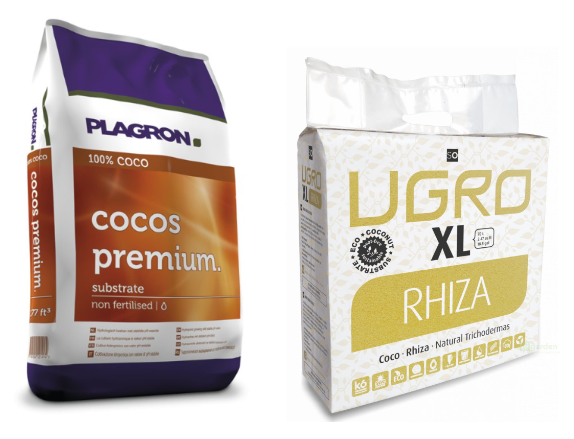
Mycorrhizal products (see also below) and their application can hardly be considered fertilising so much as returning beneficial microorganisms to the soil as their natural environment, from which they often disappear, for example as a result of frequent ploughing or the use of chemical sprays (pesticides). We would search in vain for growers who, despite knowing the many advantages that mycorrhiza brings, do not use any quality mycorrhizal product. For beginners, in addition to the numerous benefits in the effort to achieve a rich and high-quality harvest, the fact that there is no risk of over-fertilisation with mycorrhizal products will also be appealing.
If you would like to ask us anything, we are here for you at the well-known e-mail address info@higarden.eu. We look forward to your questions!
We also recommend these products:
What to read next:
- Root stimulator - what is it for?
- How do you grow leafy vegetables and salads?
- How to choose a propagator and what to equip it with?
Photo source: Wikimedia commons.com
BioNova Living Soil: One fertiliser for 12 weeks (and exactly three plants)
It is here! The times when we had to grow in secret are irreversibly coming to an end, and from the new year we will finally get down to proper growing. How can you grow those longed-for three plants simply, without worries and unnecessary work? Try BioNova Living Soil – a soil fertiliser for indoor and outdoor growing.
Living Soil is like instant soup for plants, only without additives, flavour enhancers and a guilty conscience. It is a granular slow-release soil fertiliser containing all the nutrients plants will need over a three-month growing cycle. Which is exactly long enough for terpene-rich “tomatoes” to grow in your little garden.
What makes BioNova Living Soil different from other fertilisers? In addition to nutrients, it contains beneficial microorganisms that break down organic matter in the soil into further food for plants. This creates a natural nutrient cycle in the soil, and you have even less work with fertilising. No complicated tables or dosing like in chemistry lab classes. You simply mix it with the soil, water it, and that is it.
How to use BioNova Living Soil
First of all, let us make it clear that Living Soil is a soil fertiliser, so it is not for growers in hydro, coco or rockwool. Soil microbes need a stable environment and organic matter to feed on. For growing, use your favourite soil mix with one exception – avoid heavily pre-fertilised substrates. Living Soil already contains enough nutrients on its own. The most suitable are mixes intended for organic growing (for example Canna BIO Terra) or light mix substrates.
You may also be interested in: How to choose a horticultural substrate according to the growing method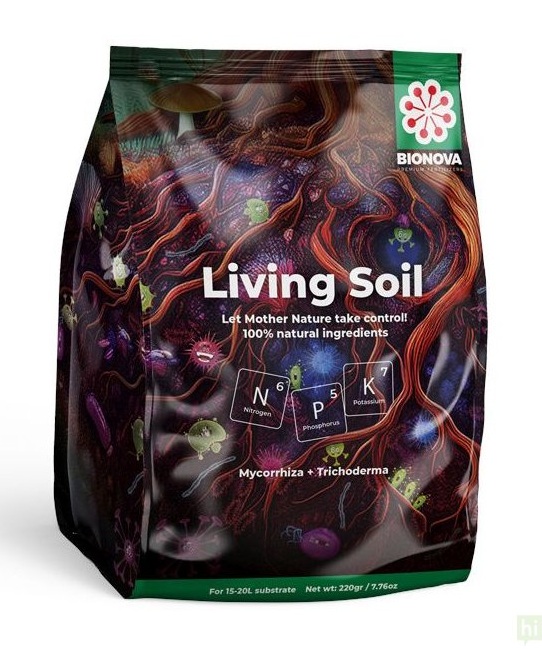
How much Living Soil you will need depends on your growing style. One pack is enough for 15 to 20 litres of substrate. That means two packs of Living Soil are just right for three 5-litre pots, and you will still have some left over. You can also use larger fabric pots, which are excellent for outdoor growing. Do not forget that once you mix Living Soil with the soil, you create a pre-fertilised substrate, and such a substrate is not suitable for germination or clones. Transplant into the pot only seedlings with three to five sets of leaves.
You may also be interested in: How to pre-grow seedlings
After transplanting, care for the plants as you are used to. The fertiliser is already taken care of, so water only with clean water. If you use tap water for watering, let it stand for at least a day. Chlorine kills beneficial soil microorganisms. Chemical pesticides, insecticides and mineral fertilisers are just as harmful to the microbes, so avoid those as well. If you feel the plants are lacking nutrients, reach for a fast-acting organic fertiliser.
Would you like to learn more about how to grow green happiness without effort and unnecessary worries? Follow our Higarden blog, where you will find practical advice for beginner growers as well as experienced cultivators.