
Lighting, Page 3
List of articles
Plant Lighting – What to Use and How to Supplement Light?
In recent years, indoor plant growing, that is, cultivation in an indoor environment - in a room, grow tent or even a mini greenhouse - has become increasingly popular. In addition to a suitable growing container, substrate and nutrients, another important factor for plant growth and overall vitality is light. If you enjoy growing, but your flat or house does not exactly have an abundance of windows or enough window sills, supplementary lighting for plants may be the right step.
There is a wide range of plant lighting available on the market that can be used for cultivation. LED lighting, however, offers the best price-to-performance ratio. The main difference compared with classic discharge lamps, which can also be used in indoor growing, is that LED lights have lower energy consumption. Other advantages include a long service life, which manufacturers state at between 30,000 - 100,000 hours depending on the specific product, which is many times more than conventional discharge lamps. There is also a low amount of emitted heat, so it is not necessary to deal with its removal using additional fans or ventilation, and a high efficiency in converting input energy into visible light.
| Light source | Luminous efficacy |
| classic light bulb | 12 lm/W |
| sodium discharge lamp | 104 lm/W |
| metal halide discharge lamp |
115 lm/W |
| LED light bulb | 100 - 130 lm/W |
If you want to fully replace daylight for plants, you need to provide them with a light source with an appropriate spectrum for the vegetative or flowering stage. Full-spectrum LED fixtures are therefore ideal, as they provide the full range of colours. This allows plants to ensure photosynthesis and, with it, all physiological processes necessary for their life
How should plants be supplemented with light?
The duration of supplementary lighting will vary depending on whether the plant is shade-loving or light-loving. While the former will only need 2-4 hours in the evening to extend the day, light-loving plants placed far from a window will require more intensive supplementary lighting throughout the day. To make it easier to manage these cycles, a timer switch is used, which you can use to control when the light turns on according to your preferences.
Artificial light should be placed as close to the plants as possible, as its effectiveness decreases significantly with distance. The ideal placement is 20-40 centimetres from the plant, but no more than one metre. For supplementary lighting of smaller houseplants, you can use LED light bulbs with a standard E27 fitting, which can be placed in any household lamp. Artificial light is also excellent for pre-growing seedlings, forcing herbs at home or growing sprouts.
You can find further advice and everything you need for the care of your ornamental and useful plants at higarden.eu.
Shades: What Are They and How Do They Work?
Are you considering a reflector and looking for the most suitable solution at the best price? What should you choose based on, and which parameters should you look at? Then you are in the right place.
The basic parameters of reflectors that should be taken into account when choosing are the reflector’s reflectivity, light spread and its uniformity, the illuminated area, and the recommended reflector power.
Reflector reflectivity is stated in % and indicates how much of the incoming light is reflected back from the reflector onto the growing area. Reflectivity itself is very important, as the discharge lamp shines half of its output upwards, away from the plant leaves, and the reflector reflects this light back to where it is needed. Every lost percentage therefore counts, and the difference between a basic and the best reflector can mean up to 10% lost light output, thereby causing a lower yield or higher consumption due to the need to use a more powerful light source.
The cheapest reflectors have a value of around 80%. Typical examples are reflectors costing a few hundred, such as Hammer; in the lower mid-range, we reach reflectivity of around 90%, represented for example by Waveflector reflectors. The upper mid-range is represented, for example, by the WAVEflector Vegagreen range, which has reflectivity of around 95%.
The highest class is represented by reflectors from the Adjust-a-Wings brand and its derivatives, which in the top range have reflectivity above 97%, and all ranges also have the most even spread of reflected light.
This brings us to the second parameter, which is light spread. Making use of all the light produced by your source (usually a discharge lamp or CFL fluorescent lamp) does not yet ensure even plant growth and its maximum use. Every reflector reflects a different light intensity to a different place, so one plant has more light than another, to which the reflector reflects less light. The differences can be as much as 50%, and given that the reflector reflects around 50% of the light output of the discharge lamp, the difference can be very significant and have a negative effect on the plant. One will have too much light and may start to dry out - information for reducing the temperature in the tent - while the other has too little light and its full potential is not being used.
Quality reflectors are also manufactured in several sizes, and it is necessary to choose one that best matches your growing spaces, just as we do not recommend using light sources with a higher output than the reflector is recommended for. Unless you have a specific reason for doing so, you will probably not achieve a higher yield, quite the opposite.
A specific type is CoolTube reflectors, where the discharge lamps are enclosed in a glass tube and allow outside air to flow around the discharge lamp directly out, thereby affecting the temperature in the grow tent only minimally. Given the need to exchange air for plants as well, this solution is particularly suitable where the grower is dealing with problems of excessively high temperature in the tent and normal ventilation is no longer sufficient.
Which reflective films work better in a growing space? Glossy or matte?
Recently, in the field of indoor plant cultivation, we have noticed one significant trend concerning reflective film, or rather the colour and surface finish of the reflective material on the inner walls of a grow tent or grow room. Many growers prefer, or at least believe, that the best reflective material is matt white. So read on to find out why diamond, mylar and glossy reflective materials in general are a better choice for any growing space.
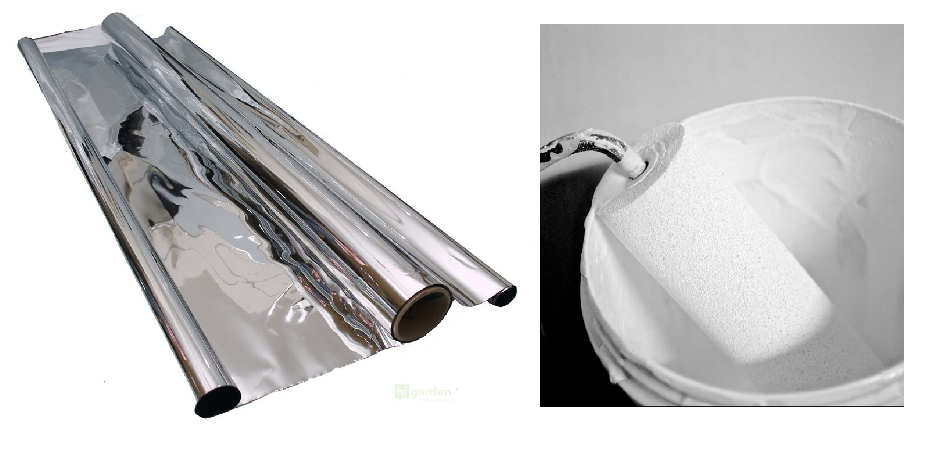
Many growers think that white, more precisely matt white, is always the best option for the inside of a grow room. To settle the matter once and for all, it was necessary to test a wide range of grow lighting inside growing spaces of different designs and sizes. The result may come as a surprise to many.
Independent tests show that matt white reflective surfaces are just as effective inside growing spaces as the standard reflective lining commonly found in grow tents, such as the bestseller Mammoth Pro+ 120 with 600D Mylar reflective material on the inside.
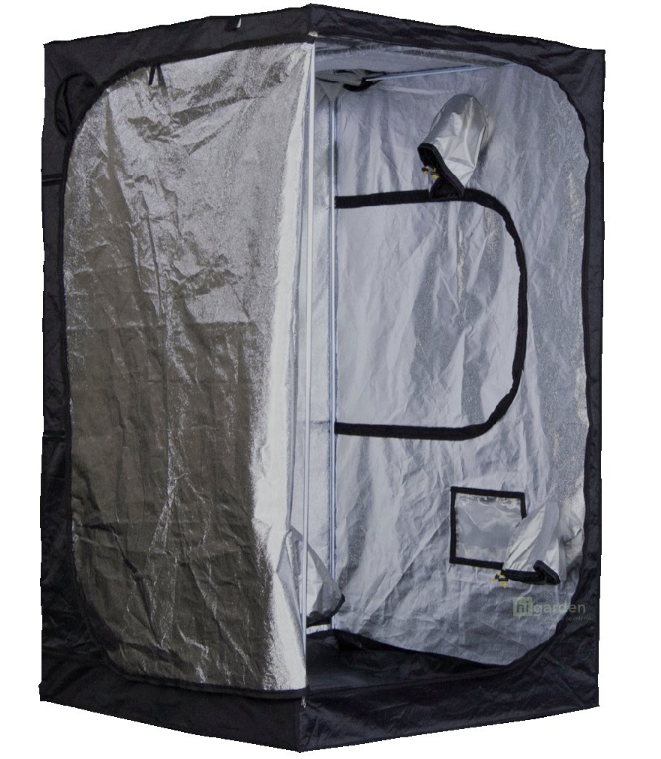
Matt white is therefore no better in practice than silver reflective film for indoor plant cultivation. In this case, the simplest and cheapest solution is simply the best - standard silver Mylar. Here are three more tips for reflective films that reliably outperform matt white in practice:
- Silver ECO film
- Diamond ECO film - 99.9% light reflection!
- Diamond REFLECT-A-GRO film
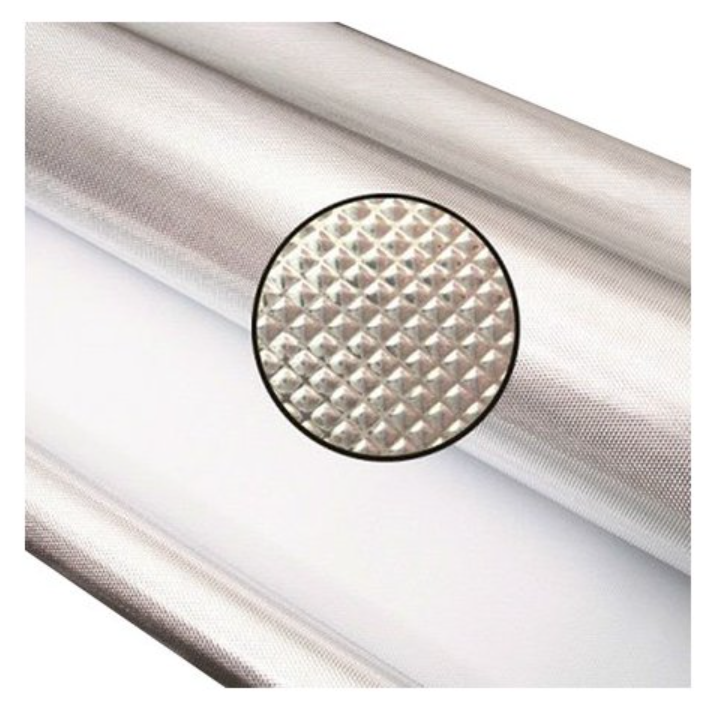
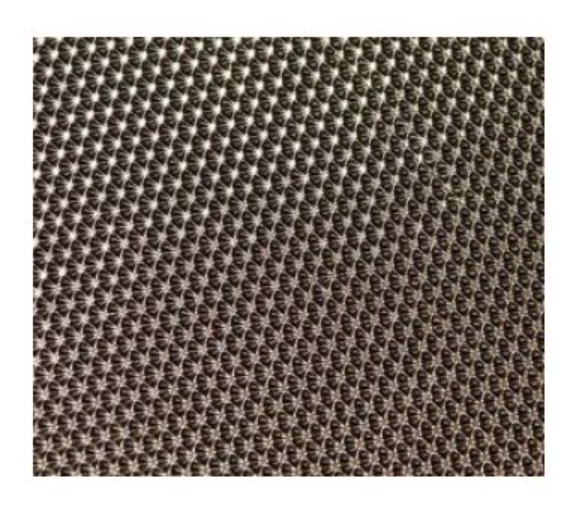
Advantages of silver reflective films and diamond reflective films
In both cases, this is a very good, proven reflective surface that does not crease and, above all, effectively directs light radiation. This means that light radiation from a discharge lamp or another artificial light source is reflected from the wall of the grow tent or room and directed downwards, in the case of a grow tent to the bottom of the tent. As shown by the results of independent testing, the disadvantage of a matt white reflective surface is that it reflects light radiation in all directions.
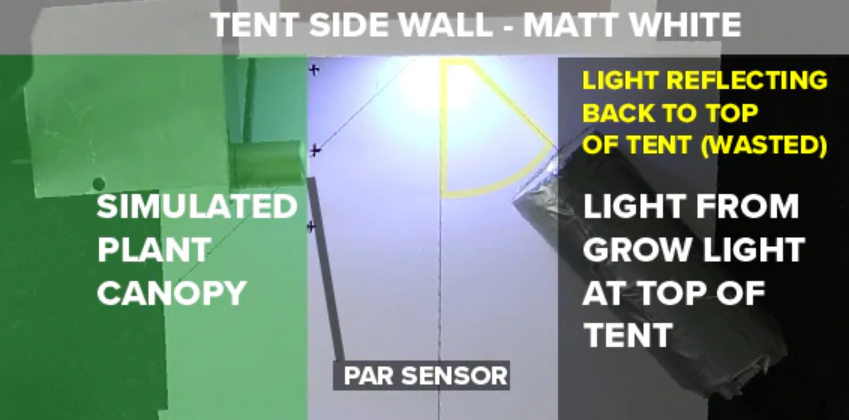
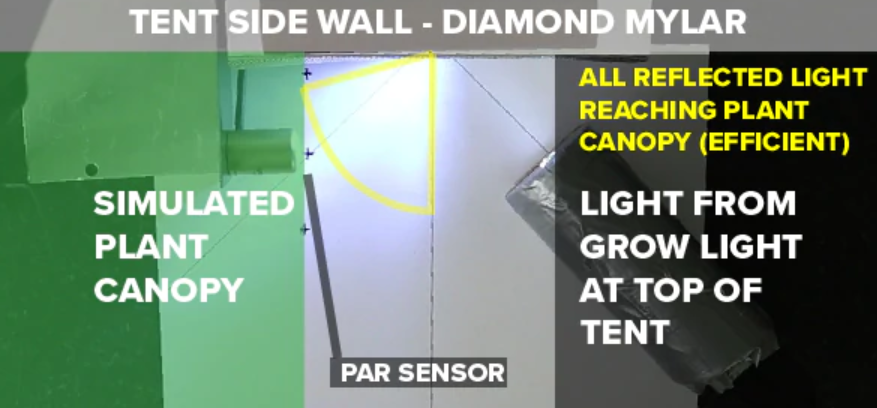
This fact is nicely illustrated by the photographs from the testing of reflective surfaces in diamond (fig. 1) and white (fig. 2) versions. The light source is on the right and the PAR sensor is on the left. The crosses simulate the tops of plants inside the tent.

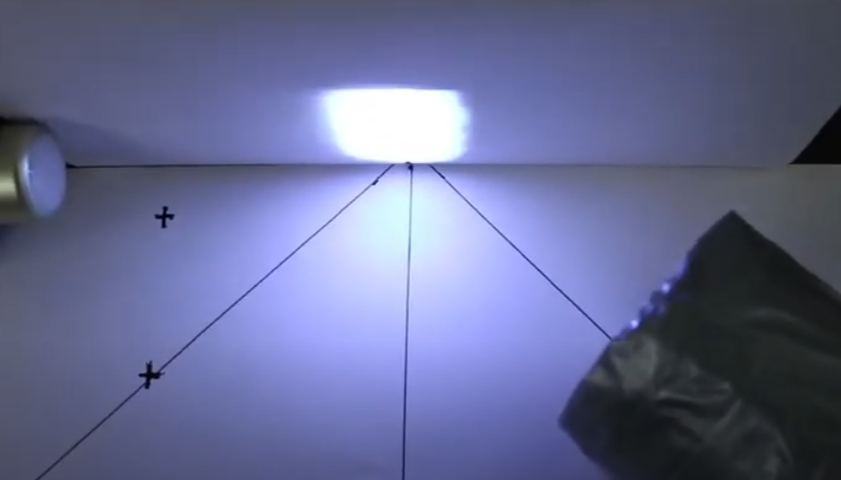
Can you see the difference?
- When light hits a matt white surface, it is scattered, i.e. emitted in all directions. A lot of the light then reflects back to the upper part of the tent, where it is of no use to the plants and its energy is therefore wasted. It is therefore true that when using matt white film, we are literally wasting light in the tent.
- And now the better option. As soon as light reflects from a silver Mylar surface or from diamond film, it is reflected down onto the tops of the plants. This means that the vast majority of the light falling on the side walls of the grow tent or room is directed exactly where it should be. That is, into the growing area, where the light energy is used to the maximum for the healthy development of your plants.
The images come from an elegant and convincing experiment, which you can watch in full in the video. To save you time, however, we have already told you which type of reflective surface will serve you more effectively, meaning one that ensures the light is evenly distributed in the tent while also directing it towards the growing plants. If you would like to ask us anything, not only about reflective film, we are here for you at the well-known e-mail address info@higarden.eu. We look forward to your questions!
We also recommend these products:
What to read next:
- AutoPot hydroponic systems for economical operation and high yields
- How to choose a circulation fan?
- TechGrow timers: a different league of switching!
Digital ballast with automatic lamp detection
If you do not underestimate the choice of a high-quality electronic ballast, the efficiency of your indoor growing activities will increase rapidly. Read why.
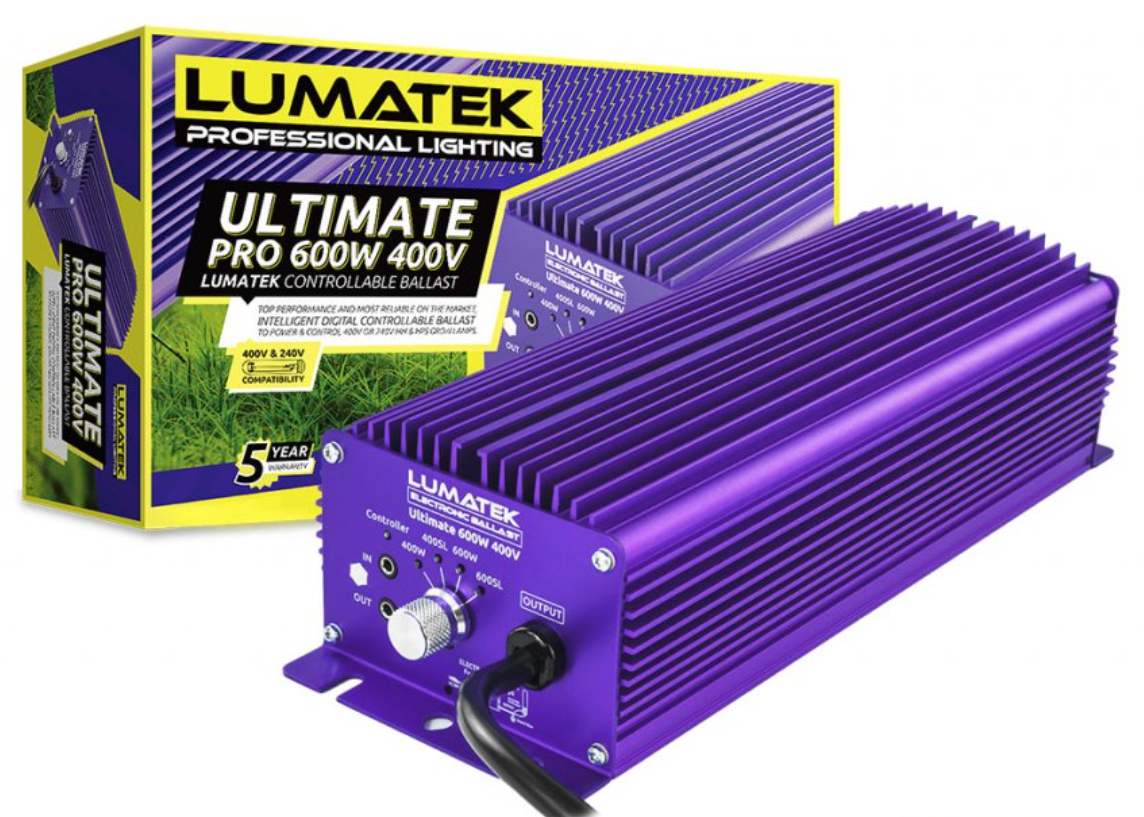
- First of all, you have the option of getting for your grow box such an indispensable partner for discharge lamps, which will work perfectly with both 240 V and 400 V lamps.
- And it is precisely this digital ballast from the prestigious British brand Lumatek that has the key advantage of being able to detect the given lamp itself, after which it supplies it with electric current at the appropriate voltage.
- When it is supplied with current at a voltage of 400 V, the operating frequency of the lamp is 120 kHz. But if the voltage is only 240 V, the frequency drops to 90 kHz. These figures lead to one important conclusion, namely that discharge lamp achieves up to a quarter higher luminous intensity when supplied with a voltage of 400 V!
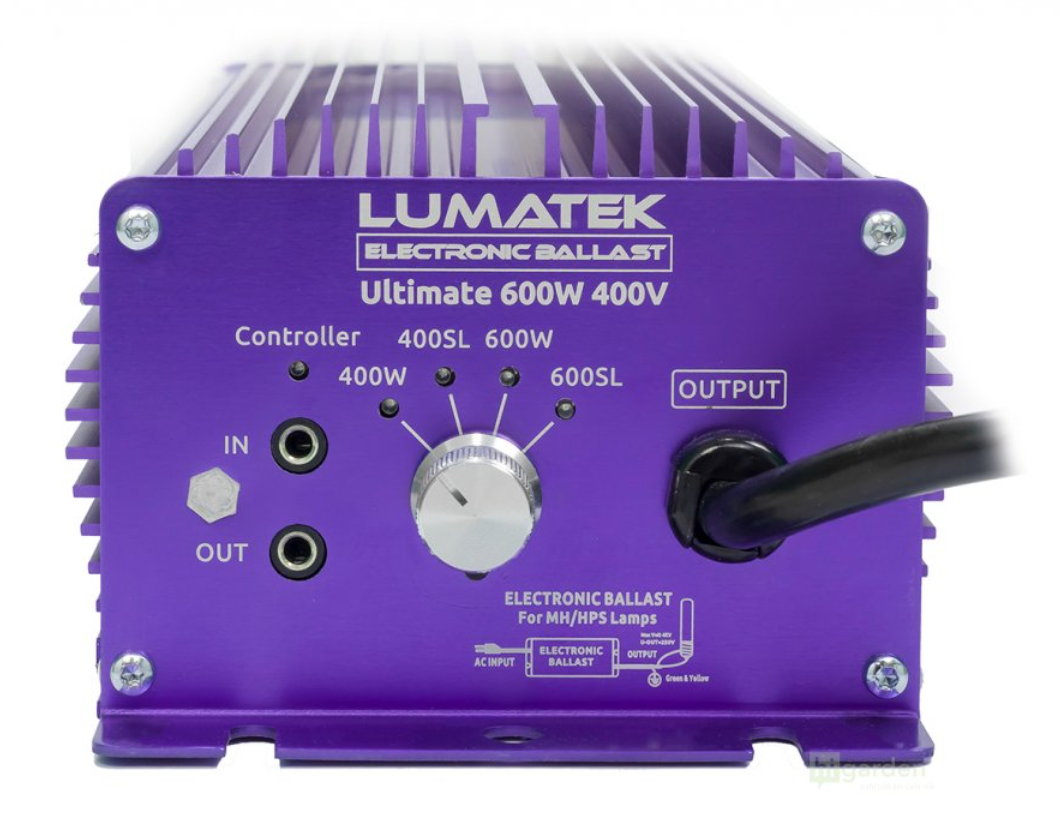
- Another reason to get the electronic ballast Lumatek Ultimate Pro 600 W is the unique CONTROL TECHNOLOGY, which gives growers the option to regulate the output of the light source easily.
- The feature in the form of the above-mentioned Control function also allows growers advanced functions, especially convenient lighting timing and simulation of sunrise or sunset (digital dimming 1%).
- Thanks to the fact that these ballasts excel at compensating for fluctuating voltage, they also contribute to a significant extension of the lifespan of every discharge lamp.
- Among the advantages of this device is, last but not least, reliability and long service life. Over time, there is no risk of overheating or gradual loss of performance.
- It is no coincidence that the manufacturer provides a 5-year warranty on it! And in addition, as you are used to with us, you also have an above-standard 30-day money-back guarantee for a worry-free purchase. But we dare say that you will be so satisfied with this upgrade to your grow room that both guarantees will serve purely as a tool for stress-free purchasing.
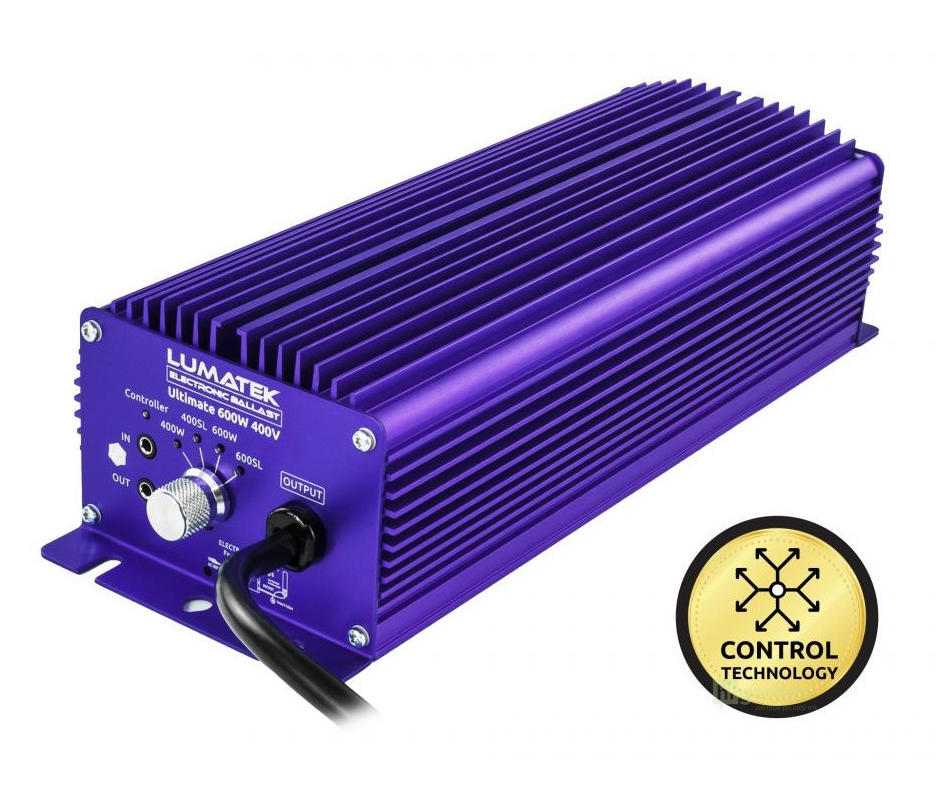
Whether you were immediately interested in our tip for an electronic ballast with advanced functions, or you would like to compare it with other models, do not hesitate to ask us anything at the well-known e-mail address info@higarden.eu. We look forward to your questions!
We also recommend these products:
- LUMii Black Digital Kit 600W KIT (2 990 Kč)
- PRIMA KLIMA fan 400 m3/h, 125 mm, with thermal regulation (3 299 Kč)
- Lumatek ZEUS 600 W PRO 2.9 (24 990 Kč)
What to read next?
- Comparison of top LED lights from Lumatek: ZEUS PRO vs. ZEUS PRO 2.9
- Stylish HOMEbox Ambient grow tents combine the pleasant with the useful
- How powerful a discharge lamp should you choose?
Long-Awaited New Arrivals: LED ZEUS PRO 2.9 and LED ATS PRO
The British brand Lumatek has long been one of the pioneers and leaders in the field of artificial lighting for indoor plant cultivation. And very soon we will expand our range with hot new products, following on from the success of the ATTIS and ZEUS product lines. That is why now is the right time to tell you more about them!
If you have decided to prefer full-spectrum LED lamps over classic discharge lamps, then you are on the best path to phenomenal results in your indoor gardening. After all, we recently wrote about the differences between HPS and LED lighting for plants in a separate article, which is just as relevant today. We also believe that today’s topic will be useful if you are planning to upgrade or expand your growing equipment. We are talking about LED technologies for the cultivation of all kinds of plants, which are clearly ahead on a global scale, and therefore represent an investment with a significant return for every passionate grower.
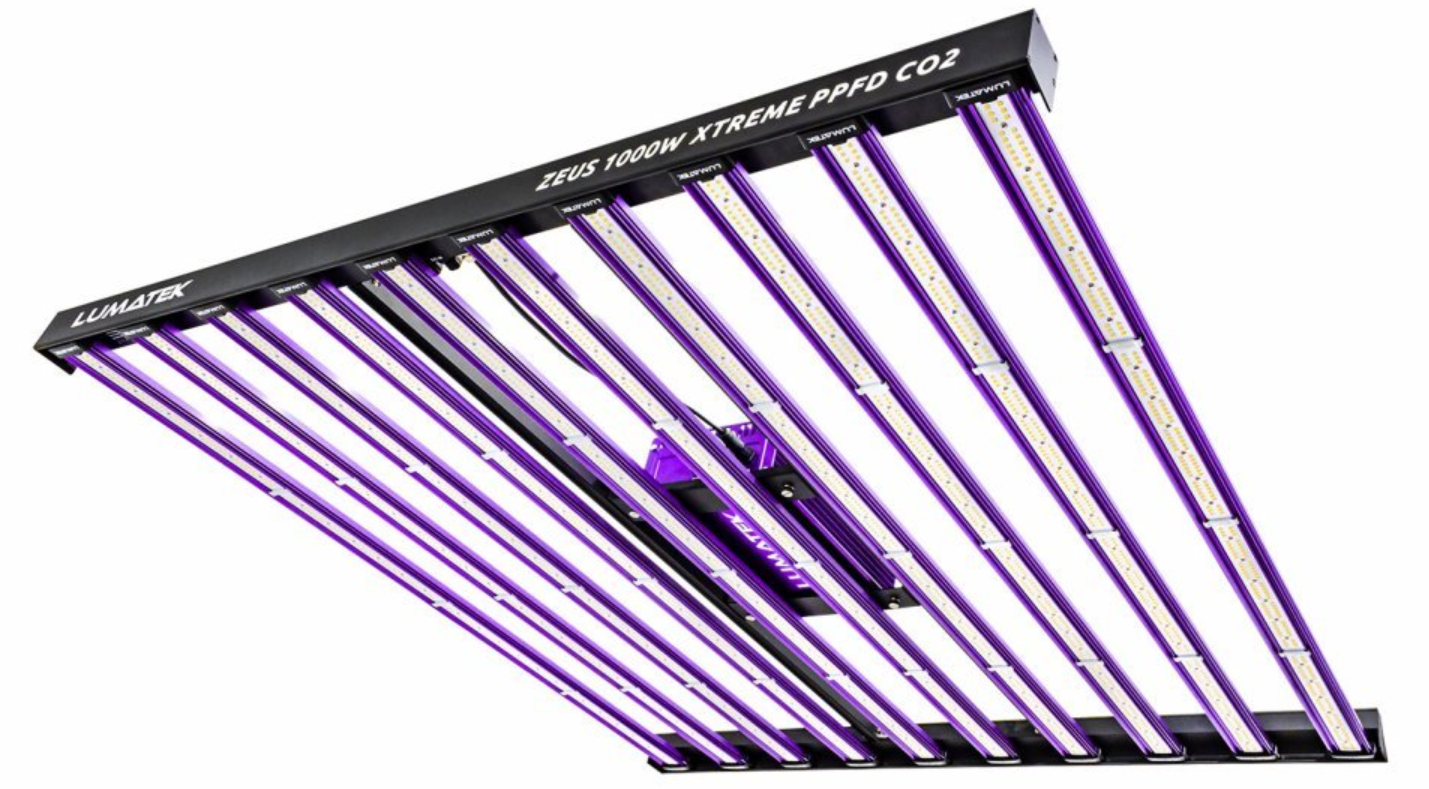
If you are among those who like to stay ahead, you can already pre-order the new products from Lumatek from us at an exclusive price. Let us introduce them now!
ZEUS 2.9
The series of top-class LED fixtures with a higher specification, designated 2.9 in the sign of exceptional lighting efficiency, namely 2.9 µmol/J, has its flagship in the model you can see in the image above - Lumatek ZEUS 1000W EXTREME. As the name suggests, the most anticipated, most advanced, in short the best grow LED lamp we believe has ever been made breaks the current limits of what output this full-spectrum lighting can deliver, with a lifespan of more than 60,000 hours of lighting! The refined design also allows, among other things, efficient carbon dioxide supplementation for even higher yields.
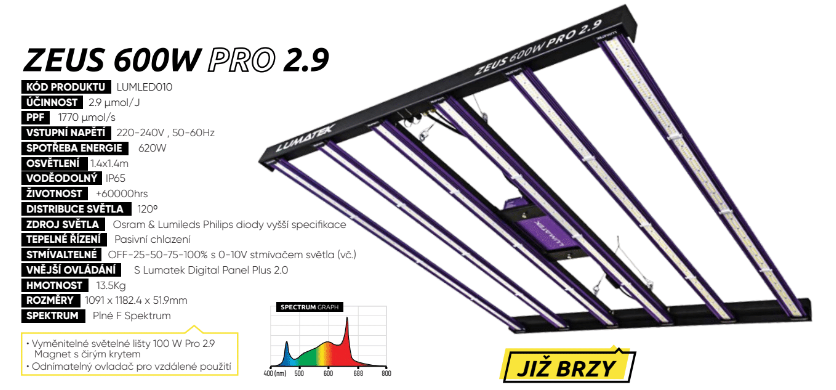
Another new product this year is the improved versions of the popular 465W Compact PRO and 600W PRO models in the form of these products: Lumatek ZEUS 600W PRO 2.9 and Lumatek ZEUS 465W PRO 2.9. The photograph below illustrates the higher version with a photon flux of PPF 1770 µmol/s and an efficiency of 2.9 µmol/J. An unrivalled offer, complemented by real results in growing rooms.
So how can the new ZEUS range generally be defined?
- Very high efficiency of 2.9 µmol/J and PPF output for intense radiation with an even more balanced spectrum
- World-class Lumatek LED driver
- New Clear Glue protective cover technology for LED bars
- More efficient and more durable solution for the top bin of LEDs
- External control via Lumatek Control Panel 2.0
- Replaceable Pro 2.9 magnetic light bars with protection
- User-friendly control and easy Plug & Play installation
- Removable remote control
- 5-year warranty!
These LED fixtures will be hard to compete with on the market, and if you have at least a medium-sized or even significantly larger grow box, you will certainly find their purchase worthwhile.
ATTIS PRO
The proven ATTIS series LED fixtures, ideal as the main source of lighting for smaller growing boxes, once again offer a choice of two wattages in the brand-new PRO series: ATTIS 200W PRO and ATTIS 300W PRO. The higher version, with a photon flux of PPF 816 µmol/s and an efficiency of 2.7 µmol/J, is again illustrated by the photograph below. The new range is characterised especially by a higher specification of white, red and far-red LEDs.
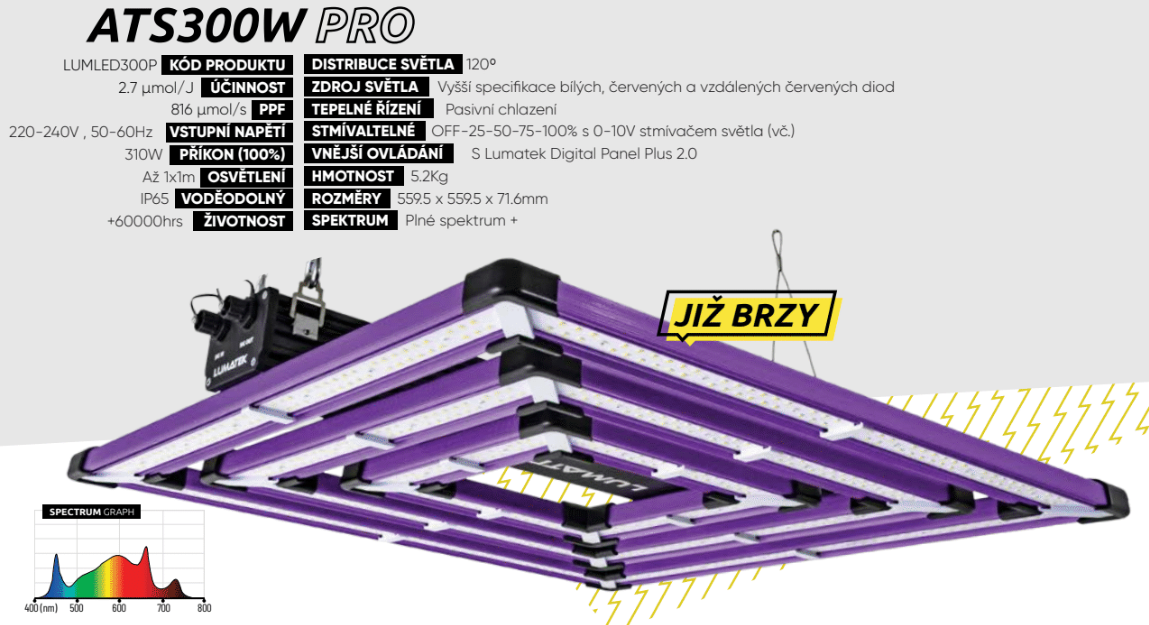
In our opinion, full-spectrum LED plant lighting has been perfected in the PRO series. The light spectrum is even more balanced, the light spread even more uniform, and thanks to the timeless design, which is also exceptionally functional because it contains no moving parts or fan, both the 200W and 300W units are designed for reliable and quiet operation for many years.
Let us summarise their main features briefly:
- Best price / µmol ratio on the market!
- High real efficiency, no figures pulled out of thin air, as is common with copies from various brands, with honourable exceptions Lumen King
- Balanced full spectrum and fully dimmable LEDs
- Improved light spread and uniformity
- Compact design ideal for confined spaces
- Very high PPF output at high radiation intensity
- More efficient and more durable top-bin LEDs
- New Clear Glue protective cover technology on LED bars
- World-class Lumatek LED driver
- External control via Lumatek Control Panel Plus 2.0
- Easy Plug & Play installation
- IP65 protection
We recommend these products:
- Lumatek ZEUS 1000W EXTREME PPFD CO - LEDs for the most demanding users, you will not find better. And not at a better price either!
- Lumatek ZEUS 600W PRO 2.9 - higher version for higher yields in medium or larger growing boxes.
- Lumatek ATS300W PRO - the best LED fixture for smaller grow boxes, equipped with a higher specification of chips of the latest generation.
- TLED VF - fluorescent tubes for supplementary lighting of plants in their immediate vicinity, suitable for example in the corners of a tent, where they illuminate places that the top light cannot reach.
- LED Set 200W Attis MASTER - growing set suitable for anyone who wants an excellent harvest in the comfort of home, at a favourable price. The complete set already contains everything needed, just start!
What to read next:
- Growing under artificial lighting: HPS vs. LED
- Grow box in a block of flats
- Plant cultivation and carbon dioxide. How and why to use it?
We cannot wait to add these LED growing gems to our range. We have no doubt they will fly off the shelves, and we believe the reasons are clear after reading this article. If you are choosing lighting for your grow box, we will be happy to provide you with even more information at the well-known address info@higarden.eu, or take a look directly at the details of the individual LED fixtures from Lumatek.
Comparison of the Top LED Lights from Lumatek: ZEUS PRO vs. ZEUS PRO 2.9
The leader in the development and manufacture of grow LED lights, the renowned British brand Lumatek, recently enriched the market with hot new products for 2021 in the form of full-spectrum luminaires. Today we will focus on the differences within the unrivalled ZEUS range. Many customers had already sworn by the original version.
With the arrival of the brand-new ZEUS 600W PRO 2.9, many growers are asking us how the new product differs from the previous version (2.7). So what is new, and what is the difference? Is it worth paying a little extra for the additional output, and does it pay to upgrade the original version?
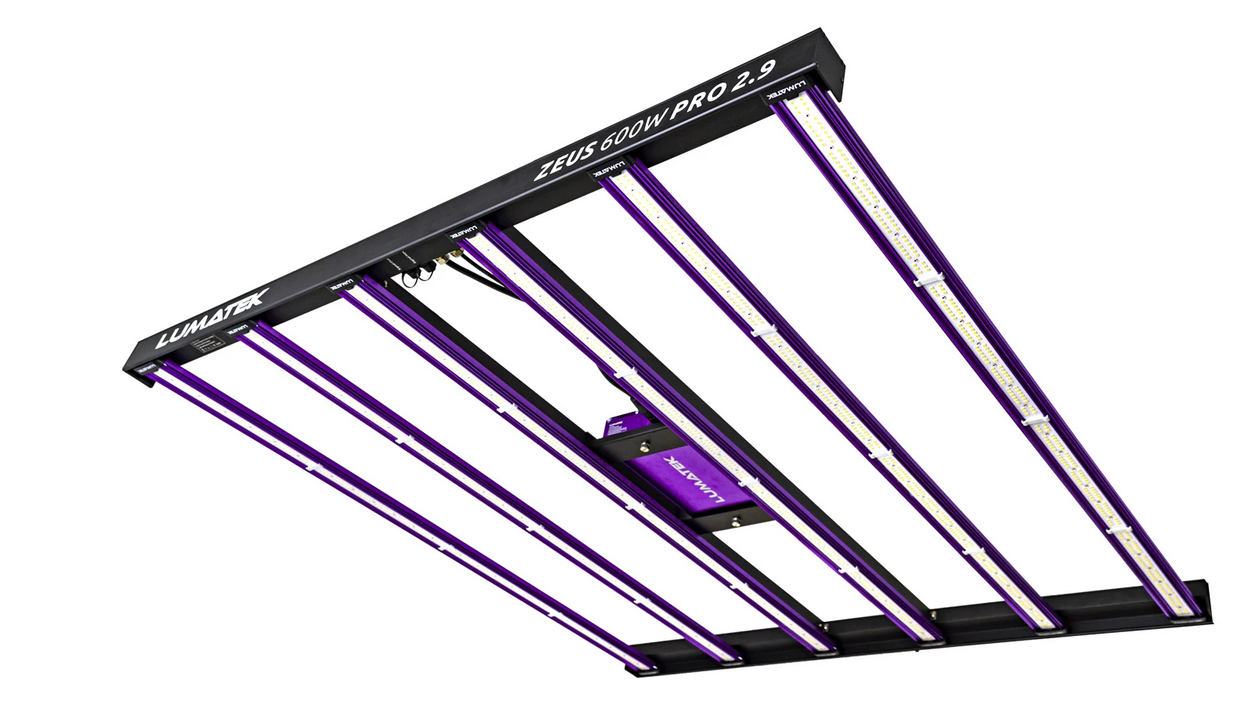
- The design and main parameters remain the same as in the previous version. After all, they are already quite unique compared with competing products.
- If we had to describe the main difference between the above models in one word, it would be a four-letter word: BARS. The manufacturer devoted considerable effort to developing each LED bar so as to maximise its efficiency, which it achieved mainly thanks to the following two changes:
- The protective cover from the original model has been replaced by CLEAR GLUE protective technology. In the new product, the original cover is therefore replaced by a special protective silicone coating, ensuring safety when conducting electric current as well as a significantly more efficient way of transmitting light with lower thermal emissions.
- Lumatek increased the electrical efficiency of the PCB (printed circuit board, a basic component of electronics) by using higher-quality LED diodes, which are unmatched on the grow light market in this price category. The new diodes are characterised by overall higher efficiency and even better colour rendering, among other things thanks to a proportionally larger share of red light. Thanks to these red diodes, with higher electrical and photon flux efficiency than white diodes with “full spectrum” commonly achieve, the manufacturer was able to increase the overall efficiency to 2.9 μmol/s/J, while remaining within the appropriate wavelength range necessary to ensure effective photosynthesis and healthy growth.
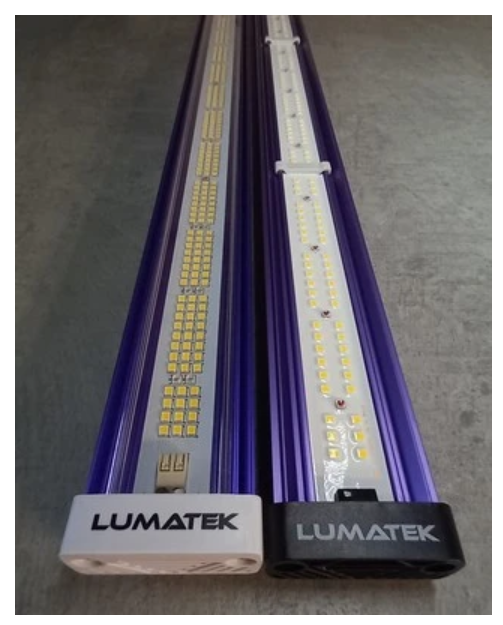
- For experts, we have the so-called PAR maps (see below) directly from the manufacturer, providing a fairly accurate visual comparison of both versions of these exceptional LED lights. The maps for both lights are based on the same growing environment (1.2 m mylar reflective grow boxes at full power and suspended 18 inches from the black grid).
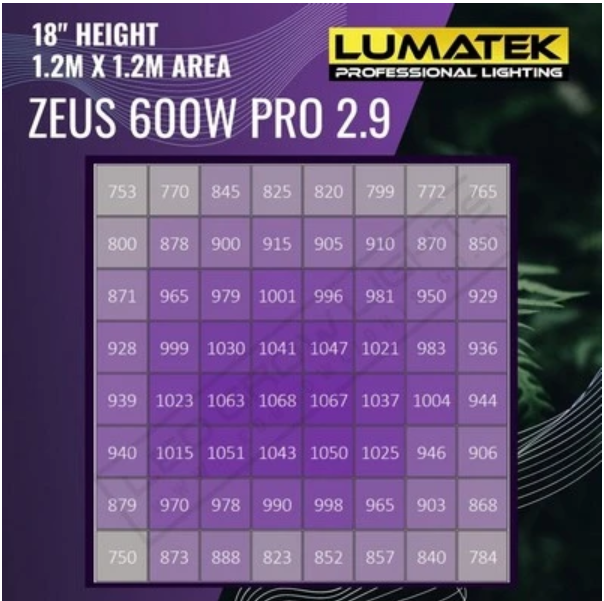
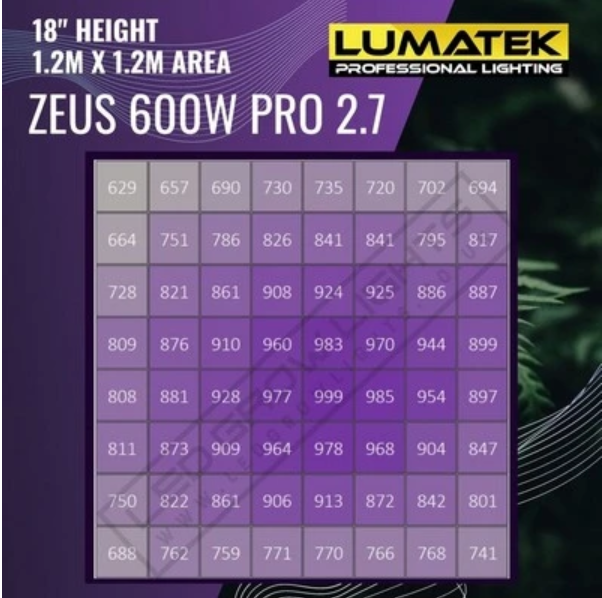
- In short, the difference in PPF (total light output) between the two models is around 10% in favour of the new 2.9 version.
- It is also worth noting here that independent tests by growers from around the world confirm the values declared by the manufacturer. Lumatek is truly one of the honourable exceptions in this respect, and the values listed for its products do not resemble election promises by politicians, unlike those of some other manufacturers. For this honesty, combined with its technological lead, it is always our number one choice when it comes to selecting grow LED lights.
Is it worth paying extra for the additional output of an LED lamp?
- If you are looking for a large, ultra-efficient light (by which we mean a genuine 2.9 micromoles per joule) at a reasonable price, then you simply will not find a more advantageous device than the ZEUS 600W PRO 2.9.
- If you need to achieve this level of efficiency with a higher-power LED luminaire and equivalent total light output, it will also depend on the current ambient temperature, air exchange capacity, electricity costs per kWh and, last but not least, whether you view it from the perspective of the return on the entire investment.
- For owners of the 2.7, who were initially attracted by the high efficiency and feel that they are already maximising the use of these values, the extra photons will certainly come in handy.
- In terms of value for money, it is enough to look at the difference between the price and the PPF in these luminaires.
- There is no straightforward answer to whether it is worth upgrading from 2.7 to 2.9, but it can be easily determined. You only need to realise how much you are using the potential of one or more of your current 2.7 luminaires. For existing owners of the ZEUS 600W PRO 2.7, the extra yield, expressed as approximately a 10% increase in light from the improved luminaires, is only worthwhile if their current light is already maximised. That means you are already using the full potential of the 2.7, but you would still benefit from even greater output.
In any case, and per watt, the new LED lamp ZEUS 600W PRO 2.9 produces approximately 10% more light than the previous version, that is simply an undeniable fact. Now it only depends on how appealing this is to you personally, so that you can achieve higher yields and better harvest quality. The robust new product also has a clearly better construction, including a more efficient and more durable solution for the top LED array. The removable remote control is also a welcome feature. If you would like to ask us anything, we are here for you at the well-known address info@higarden.eu.
We also recommend these products:
- BioNova Starter pack AutoFlower Supermix (1,990 CZK): a comprehensive and discounted nutrition set of basic fertilisers for cultivating autoflowering plant varieties (autoflower).
- LED lighting for grow boxes from Lumatek (from 6,990 CZK): the best investment in lighting for your new grow box.
- Prima Klima carbon filters (from 949 CZK): uncompromising quality and a great price.
What to read next?