
CANNA Substrates and Fertilisers: 30 Years of Research for Successful Indoor and Outdoor Plant Cultivation
Although the Dutch manufacturer, whether it concerns quality substrates, base fertilisers or unique additives, it does not particularly rely on loud marketing campaigns, today it is, according to a survey of professional growers from 14 countries around the world, the number one choice. CANNA products are offered by more than 95% of grow shops. We also know very well what their advantages are, whether from the experience of our experts or customers. In this article, we will therefore introduce them in more detail, including practical advice for effective use of selected products in practice.

Tradition and innovation in brief
The roots of the world-famous Dutch brand CANNA go back to the 1980s, when everything was started by a pair of enthusiasts. The sharing of the long-term successes and experience of growers – the founders – led to the establishment of research centres not only in the Netherlands, but gradually also in other countries from Spain, through Italy, to Canada and the USA. Today, dozens of scientists and other highly qualified employees work in these research centres, whose task is not only to develop and continuously innovate, but also to thoroughly test different fertiliser recipes as well as the effects of lighting, temperature, humidity, air movement and other key factors influencing results in plant cultivation. An integral part of their work is also daily quality control, involving a number of steps. The manufacturer places emphasis above all on the actual needs of plants, which are the subject of never-ending research.
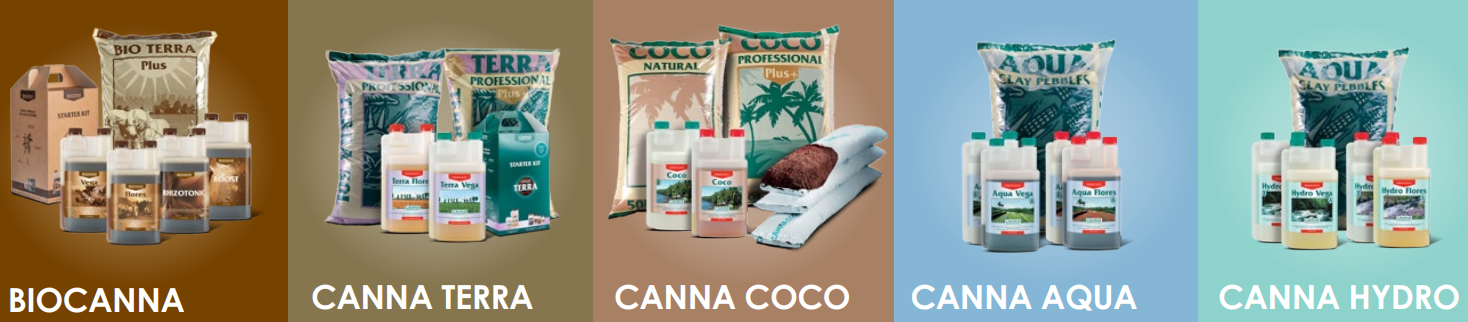
Canna offers growers of different experience levels several product ranges for different cultivation methods, so every grower will find something to suit them. Before we introduce them one by one, it will be useful to begin with a brief summary of what all CANNA products have in common:
- MODERN RESEARCH AND INNOVATION WITH PLANT NEEDS IN MIND
- EXTENSIVE TESTING PROCEDURES
- OPTIMAL PRODUCTION CONDITIONS
- HIGH QUALITY STANDARDS
Each cultivation method offers growers a slightly different potential. You may already know that, for example, growing in coconut or hydroponics brings different advantages and challenges than growing in soil. Some growers prefer simplicity, while for others the greatest priority is the highest possible yields, even though they must devote much more care and attention to the plants during the cultivation cycle. We discuss all cultivation methods in separate articles on our blog.
This 100% organic product range, comprising certified organic fertilisers, additives and substrates, was created for the easiest possible cultivation of all kinds of plants and agricultural crops in harmony with nature. In practice, using Biocanna products places the lowest demands on growers’ knowledge and experience. It also requires the least time and equipment. The only thing you need to think about as a grower is sensible dosing. We can, however, say that quality organic fertilisers also tolerate certain inaccuracies that a beginner grower may easily make.

Advantages:
- An ideal range for organic farming and outdoor plant cultivation. These organic fertilisers naturally improve soil properties (quality soil microflora), and rain washes them out of the soil only very slowly, which is again a significant economic plus directly proportional to the scale on which you grow plants outdoors. If you are interested in outdoor plant cultivation, you can also read a separate article: How to grow outdoor?
- Even during indoor plant cultivation, the organic BIOCANNA range does not pose a risk of overfeeding or, conversely, significant deficiencies of important nutrients. The substrate pH regulates itself, and you do not need to worry about the electrical conductivity of the solution – EC.
- The result is a natural, organic, yet intense taste and aroma of the crops and flowers you grow.
What to watch out for:
- BioCanna has no real disadvantages in terms of processing. It is more a matter of the fact that organic plant nutrition when growing in soil generally does not offer growers the same potential in terms of final yields as coconut and hydroponics, or aeroponics.
- When growing plants in substrate, make sure that the substrate is not waterlogged.
- Precise adjustment of the dosage of individual nutrients is not necessary, and in reality not even possible. (But that is more of an advantage for beginners.)
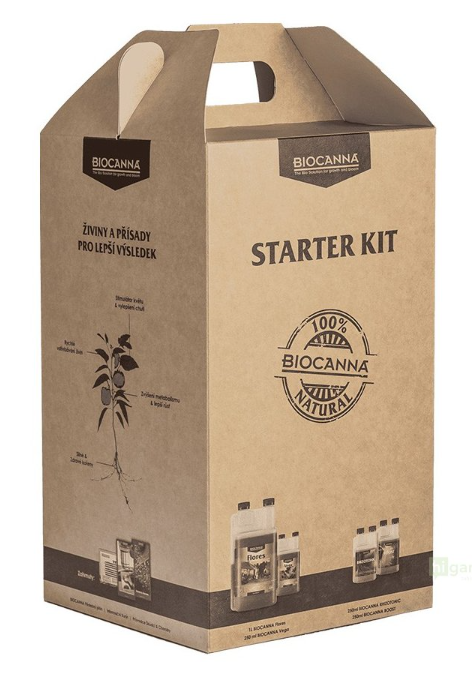
Our TIP: BioCanna Starter Kit is the best and most cost-effective way to get practical experience with Dutch nutrition made on a purely natural basis. This discounted set contains base fertilisers as well as stimulators for growth and flowering.
CANNA TERRA
This product range is focused on growing plants in soil, or rather peat substrates such as Canna Terra Professional - a mix of black and granulated peat of the highest quality, perlite ensuring aeration, and carefully selected organic substances supporting rapid plant growth. As the name suggests, one level higher in terms of quality and composition is Canna Terra Professional Plus. This range also includes Canna Terra Seed Mix as a substrate specially intended for sowing seeds and rooting cuttings.
The difference compared with the BioCanna product range above lies in the combination of soil mixes with mineral fertilisers:
- Canna Terra Vega during the growth phase.
- Canna Terra Flores during the flowering phase.
This difference is also reflected in higher yields, and growing with the Canna Terra range using mineral plant nutrition is exceptionally simple, making it ideal for beginners. However, you can forget about an organic-quality harvest here. This really depends on personal preferences and plans, which of course may change over time.
The TERRA range is very versatile and suitable for growing plants in peat substrates both indoors and outdoors. It does not matter whether you use flower pots, window boxes, or whether your plants live, for example, in the increasingly popular raised beds.
Advantages:
- Higher harvest potential than organic plant cultivation offers.
- Nutrient deficiencies do not appear as quickly as when growing in coconut or using hydroponics.
- Substrates, or soil mixes, are pre-fertilised and have carefully adjusted pH. In addition, they maintain the correct ratio of moisture, aeration and nutrient saturation for several days. All this again makes your growing beginnings and the healthy development of young plants, including the rapid expansion of their roots at the start of the cultivation cycle, much easier.
- The TERRA mineral fertilisers provide plant roots with nutrients in an available form so that they can use them immediately to fulfil the genetic potential of each plant and achieve a plentiful harvest.
What to watch out for:
- Using mineral fertilisers means that you will need to measure and, if necessary, also adjust the irrigation parameters. By this we mean the values of pH and EC, because only continuous measurement of pH and EC in the substrate can lead to perfect results. Reliable pH and EC metres will help you. One of our tips can also be found at the end of this article. If you prefer the Terra range (or other mineral fertilisers), we recommend the articles:
- Electrical conductivity of the solution - EC
- Which pH of nutrient solution should you choose?
- Substrate needs to be kept just moist enough. A waterlogged substrate is a common beginner mistake that you should avoid at all costs in order to prevent root rot and other unnecessary complications.
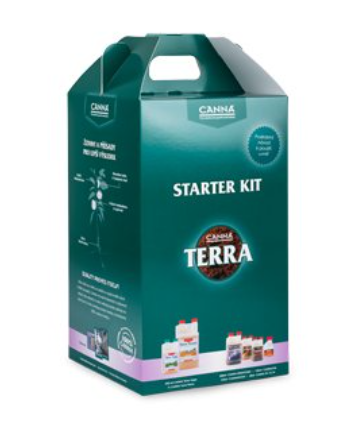
Our TIP: Canna Terra Starter Kit is again the most cost-effective way to see for yourself, on one square metre of growing area, the rich harvest made possible by comprehensive plant nutrition, which is so necessary to achieve it.
CANNA COCO
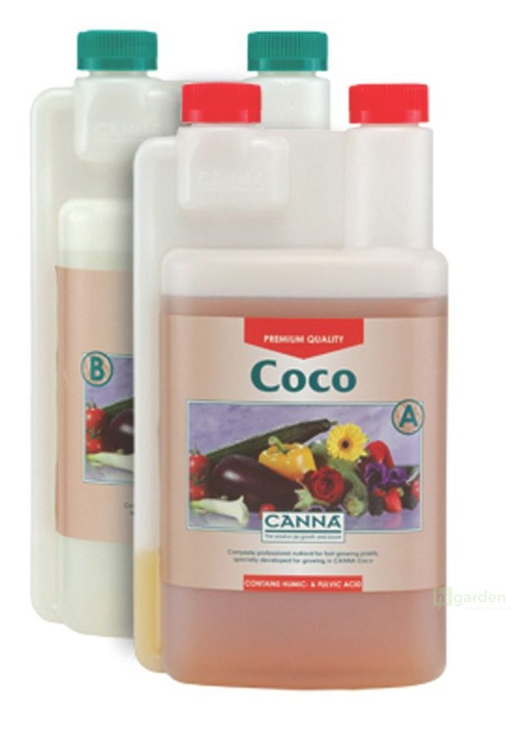
Combine the organic origin of soil with the properties of an inert growing medium such as rockwool. Coconut substrate offers growers a yield potential close to hydroponics while also providing ease of cultivation. It is therefore no surprise that growing in coconut is becoming increasingly popular. And the product range developed by Canna specifically for growing plants in coconut substrates is certainly a perfect choice, not least because the Dutch manufacturer is a pioneer in coconut cultivation.

Differences in Canna coconut substrates:
- In addition to the standard Canna Coco range, there is also Canna COGr. What is the difference? COGr slabs are intended for window boxes used in industrial cultivation.
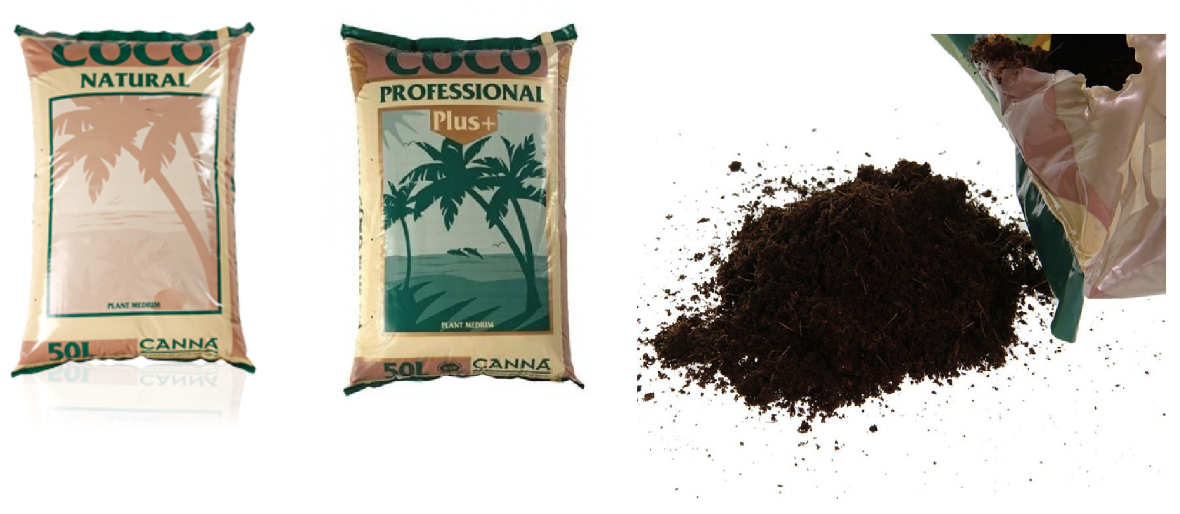
- Substrate CANNA COCO Plus is much easier to use, is sold already moistened, and in addition to growing mats Canna Coco it is also available in a 50-litre bag, allowing convenient cultivation in pots of various shapes and sizes.
- Canna Coco Natural is a natural medium based on coconut fibres - a very lightly buffered organic product, with the certainty that it contains no harmful viruses or soil-borne disease spores. Thanks to the light buffering and only slight moistening, the product is much lighter. There is less water inside the packaging. The product weighs 11-12 kg and can therefore be transported easily. On site, it only needs to be moistened a little more with water. It is a reliable coconut medium, but its use is not as simple as in the case of CANNA Coco Professional Plus.
- Every grower prefers something different, but both variants are certainly worth trying.
Advantages:
- Potential for high yields. This is especially true when using automatic irrigation, including AutoPot systems (see below).
- Cultivation without effort. This is also demonstrated by the same dosing ratio of both components of the fertiliser for coconut Canna Coco A+B.
- Coconut fibres are an ecological and renewable raw material that is environmentally friendly and can also be used repeatedly in the form of a growing substrate.
- Once you ensure sufficient drainage in growing containers, coconut is practically impossible to overwater. This is another major advantage of this inert and very airy growing medium, especially in the quality offered to growers by quality coconut substrates such as Canna Coco Professional Plus. Many growers have literally described this coconut substrate as “idiot-proof”, which is also its greatest advantage and the reason why, given the high prices of fertilisers and the complexity of hydroponic systems, more and more growers are turning to this substrate.
- Watering by hand? Coconut absorbs water with nutrients perfectly, so you can water plants at longer intervals.
- Coconut substrate can act as a buffer, storing water and nutrients for the plant. Buffering can work in several ways. There are water buffers, pH buffers, nutrient buffers and coconut buffer. You can learn more in the manufacturer’s video: Coconut and buffering.
What to watch out for:
- The concentration of fertilisers in the nutrient solution, indicating the values of EC and pH, plays a key role during the cultivation cycle, because coconut behaves like other inert growing media and all nutrients are supplied to it by the grower. Again, therefore, if you want to have all cultivation processes perfectly under control, it is necessary to continuously monitor and, if necessary, also adjust the values of pH and EC (see above).
Hydroponic fertilisers and substrates from Canna
Now fans of hydroponics, and also aeroponics, will find something to suit them. Before we introduce what this group, mostly already experienced growers, is offered by the traditional Dutch brand, it will certainly be sensible to emphasise in advance the difference between the AQUA range and the HYDRO range.
In hydroponics, either open run2waste (run-to-waste) systems or closed systems operating on the principle of recirculation of water with nutrients are used, which we naturally refer to as recirculating.
- Recirculating systems are perfectly compatible with the CANNA AQUA range.
- The advantage is that the used nutrients do not need to be drained from the system, and when using a suitable substrate, the roots have plenty of air available for desirable explosive development.
- The disadvantage of recirculating systems is the risk of the spread of plant diseases precisely as a result of recirculation.
- For run-to-waste hydroponic systems, CANNA HYDRO products are perfect.
- The advantage is easier regulation of cultivation processes, as plants in these systems receive a constantly fresh solution with precisely set pH and EC. Run2waste hydroponic systems in combination with Canna Hydro products are clearly the better choice if you only have poor-quality tap water with an EC of 0.75 or higher. Water quality is certainly a topic in itself and can definitely be worked with (see the separate articles below - recommended).
- The disadvantage of run-to-waste systems follows from the very principle of their operation. This means higher water and nutrient consumption.
CANNA AQUA
Hydroponic systems and aeroponic systems are today a tool for fulfilling the greatest growing ambitions. These hydroponic fertilisers were developed precisely for those aiming for maximum results in both hydroponics and aeroponics. They help growers face the greatest challenges and pitfalls of hydroponics. The Canna Aqua product range includes, in addition to the basic two-component fertilisers Aqua Vega for growth and Aqua Flores for flowering, also the perfect hydroponic growing medium based on expanded clay pellets Aqua Clay Pebbles.
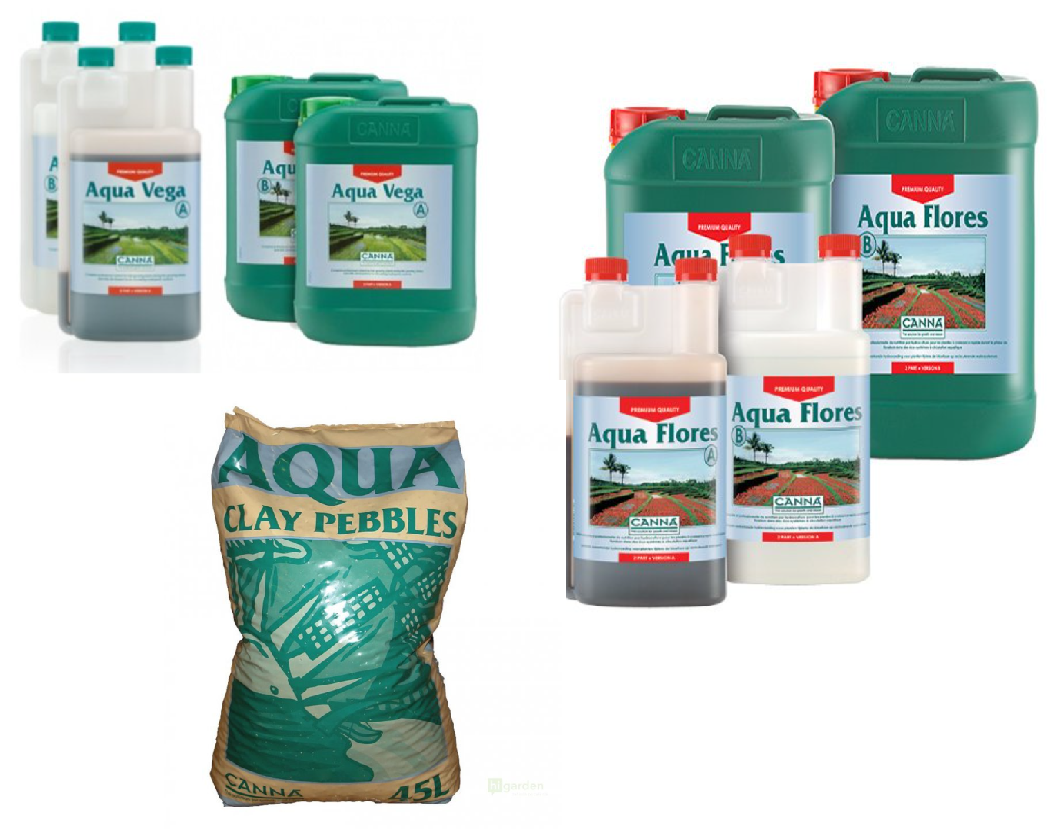
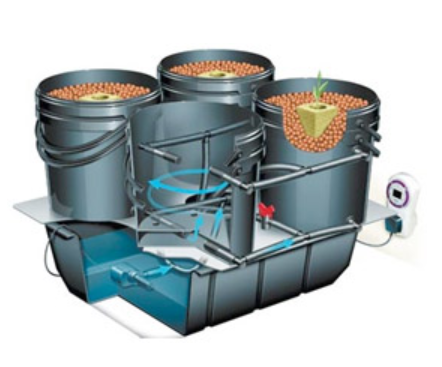
It is now important to mention its essential specific feature. AQUA range products are created directly for recirculating hydroponic systems - NFT systems or, for example, bubblers.
Advantages:
- Potential for a breathtaking harvest!
- The possibility of precise nutrient dosing, appreciated especially by more experienced growers.
- Continuous automatic regulation of pH. At the beginning, set the EC value to 0.2 and pH to 5.2. Then you can be sure that the pH will continue to stay within the 5.2–6.2 range.
- The composition of the AQUA range fertilisers is adapted to the needs of plants grown in hydroponic systems where the nutrient solution is constantly circulating.
- Space for rapid correction of any deficiencies during the cultivation cycle.
What to watch out for:
- As with the previous product ranges, it is necessary to closely monitor not only the What to watch out for:
- As with the previous product ranges, it is necessary to closely monitor not only the pH and EC of the nutrient solution, but also its temperature! You can learn more in a separate article: Why and how to maintain a stable nutrient solution temperature?
- Any deficiencies will show up quickly, but Canna Aqua products give you room to correct them in time.
CANNA HYDRO
Perfect hydroponic fertilisers for inert media such as rockwool in particular. Thanks to the fact that plants receive exactly what they need, they will reward you with a fantastic harvest. However, no one is born an expert, and therefore let us not forget that hydroponics leading to a fantastic harvest already requires some experience. (That, however, does not yet mean that beginner’s luck cannot accompany you, does it?)
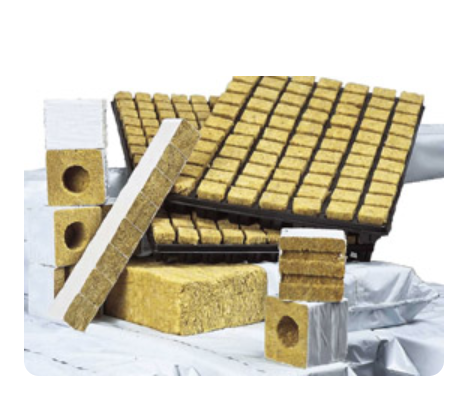
This product range is a nutrient preparation for plants grown in irrigation systems in which the runoff water is not returned to the system, but is drained away. We have already mentioned the advantages and disadvantages of these systems above. The advantages of the HYDRO range include the possibility of use for hard or, conversely, soft water. The substrates used in these systems are mostly inert. The ideal choice is again Aqua Clay Pebbles.
Advantages:
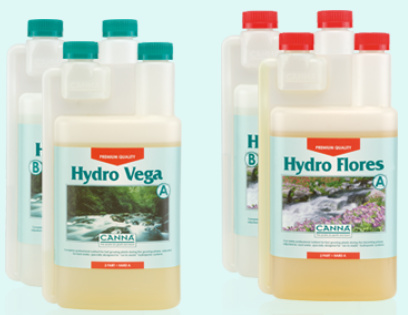
- You will make full use of the plant’s potential. Experienced growers who no longer make beginner mistakes achieve truly impressive yields in hydroponics using the two-component fertilisers Canna Hydro Vega for growth and Canna Hydro Flores for flowering!
- Perfect control over nutrient dosing and the pH of the nutrient solution.
- There is no risk of problems with fluctuations in pH and EC values.
- The Hydro range prevents the development of any diseases or pathogens in run2waste hydroponic systems.
- As in the case of the Aqua range, Hydro also allows any deficiencies to be corrected quickly, which is appreciated even by less experienced growers who are attracted by hydroponic plant cultivation and who already want full control over the entire cultivation cycle precisely thanks to the run-to-waste method.
What to watch out for:
- The run-to-waste method is most sensitive to precise nutrient dosing. Clear dosing tables will help you with this.
- In these open hydroponic systems, pay particular attention to ensuring that your plants always have enough moisture, but at the same time that no more water with fertilisers drains away than is absolutely necessary. The good news is that if you take care, runoff can be kept below 15%, bringing us to a similar nutrient solution consumption as in some recirculating systems.
CANNA products for adjusting the nutrient solution:
Before the unique Canna additives come into play, we must not forget the products that can be used together with the main nutrients to improve and adjust the nutrient solution.
- Supports nutrient uptake by the plant for stronger and healthier plants and higher quality of their flowers or fruits.
- A highly concentrated product for adjusting soft water. Soft water contains few dissolved minerals and has an EC of less than 0.4. If this is the case with the water you use to irrigate your plants, there is nothing better than applying Canna Calmag Agent, and only then the base fertilisers and, if necessary, other supplements.
- A full dose of CalMag Agent concentrate is also necessary if you use water treated by reverse osmosis (RO), which has almost zero EC.
- A solution for calcium and magnesium deficiency (see separate article: Symptoms of important nutrient deficiencies).

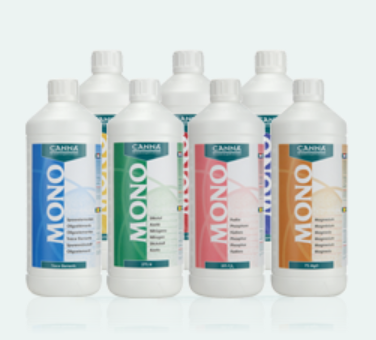
MONO - single-component nutrients (mono-nutrients): easily diluted liquid minerals that plants are able to absorb immediately. Despite the collective name, it is not the rule that one package contains only a single element. An example from the MONO range is Canna Trace mix containing 6 basic trace elements.
 Maintaining the correct pH value is absolutely essential for your plants’ ability to absorb nutrients. That is why there are also products from the specialised pH-range (pH-series) from the Canna brand. However, be careful not to use pH+ and pH- products too often, as they neutralise the concentration of sodium bicarbonate and the buffering capacity of the water. You can also prevent adding too much pH- or pH+ by first diluting the acid with water and only then adding it to the nutrient solution. Products intended for pH adjustment are concentrates. Sometimes it is difficult to adjust the pH correctly on the first attempt. To make life easier, dilute one part of the product with ten parts of water and use the solution to adjust the pH value in the nutrient tank.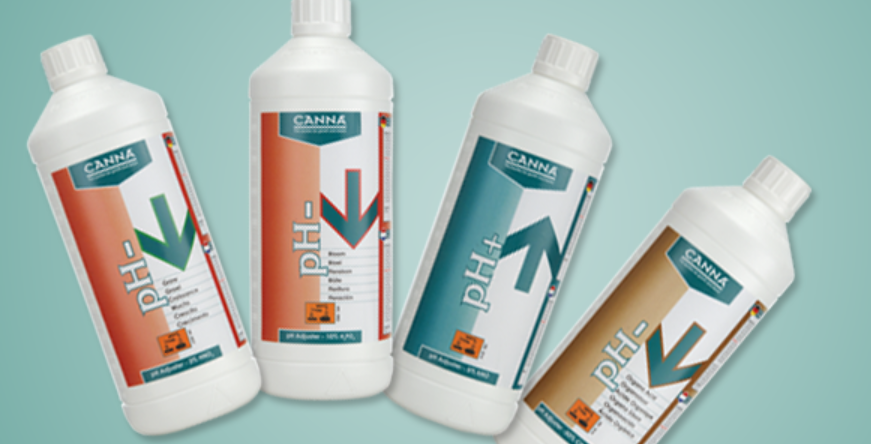
Canna Flush: We introduced this special product in the context of flushing in a separate article: How to do a flush?
ADDITIVES CANNA
In addition to the 4 product ranges we have introduced, and the above-mentioned products for adjusting the nutrient solution, Canna also manufactures unique supplements that allow growers to achieve better results with the same effort. That is right. Thanks to Canna additives, you can take your results to an even higher level, as we will explain a few lines further on. However, the best way to see this is directly in practice!
Canna certainly does not belong among manufacturers offering various “4 in 1” boosters, because the plant’s needs change throughout its life and advanced research shows that such preparations are not exactly the best route to a plentiful and vigorous harvest. For example, adding extra phosphorus (P) and potassium (K) to plants is suitable only for a limited, well-timed period. Otherwise, the substrate will become unnecessarily salted, while the pH will undesirably decrease.

More volume and fewer residual salts for better taste!
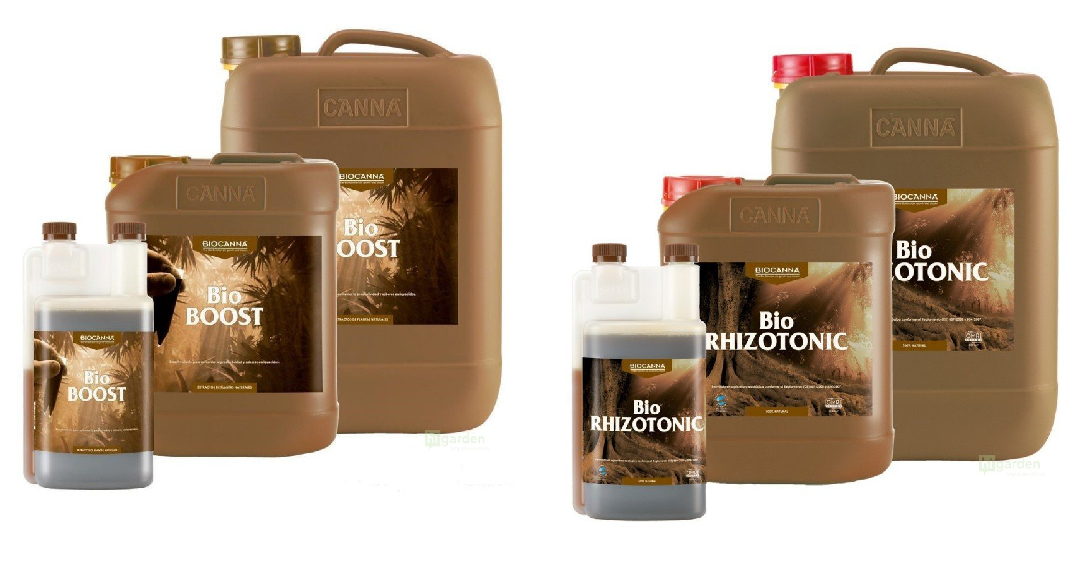
- Cannaboost speeds up plant metabolism and chlorophyll production, and therefore also photosynthesis. Chlorophyll at the cellular level consists of amino acids and enables the plant to synthesise various carbohydrates it needs for its growth and function, precisely through the process of photosynthesis. The energy captured through photosynthesis is then transported throughout the plant, usually as a complex of sugars or carbohydrates. Most sugars move upwards from the leaves, where they are used for growth and later for the production of flowers or fruits. Some sugars are transported downwards, where the plant’s root system consisting of roots and root hairs is located. In the immediate vicinity of the root hairs there are many small micro-organisms, especially beneficial mycorrhizal fungi, which absorb metabolites and energy from the root and receive nutrients and moisture from the substrate, which they pass on to the plant. When a fungal micro-organism dies, it decomposes and is released into the soil in the form of nutrients. The components contained in CannaBOOST are absorbed by the root system and fungi in the root zone.
- Cannaboost contains plant extracts and highly specialised carbohydrate chains (oligosaccharides, amino acids) that help plants produce better flowers and fruits. So when we feed the plant with this product, the sugar content in the fruits increases. The unique composition works with any growing medium. You can apply it to the roots or as a spray directly on the leaves. In both cases, it ensures that the plant forms larger flowers. Once the flower turns into a fruit, the components contained in Cannaboost, together with the sugars created thanks to increased photosynthesis, make the new fruit even larger and also improve its taste. The fruit also absorbs nutrient ions from the Canna nutrient product PK 13/14 (see below) better.
- We dose BOOST to plants from the second vegetative phase so that we make the best possible use of the potential of this pure stimulant without mineral nutrients, which can enrich the nutrient solution from the beginning until the very end of the plant’s life. BOOST does an excellent job even during flushing. At this time, when you are watering the plants only with clean water, it stimulates the plant to use all undesirable fertiliser residues to form valuable and aromatic substances, including terpenes, sugars and mass.

More beautiful, stronger and whiter roots in less time! For faster and more intensive rooting.
- Rhizotonic is classified among strong vegetative stimulants for plant roots.
- You can use this root stimulant throughout the entire cultivation cycle from seedlings to harvest.
- Rhizotonic improves the overall health of plants for optimal results:
- Strengthens the root system.
- Improves nutrient uptake and utilisation.
- Reduces stress and pest problems.
- Feeds the leaves.
- Its natural composition is based mainly on algae. In addition to algae, Canna Rhizotonic contains a range of beneficial nutrients and vitamins.
- As with the BOOST mentioned above, Rhizotonic can be combined with any growing medium.
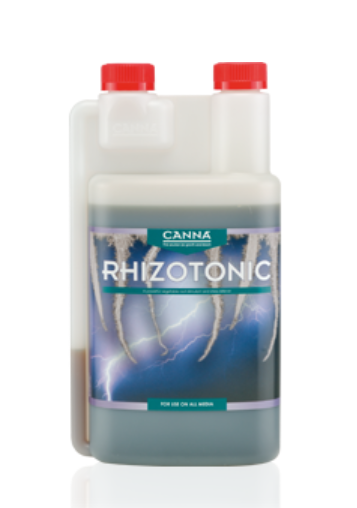
- Are you interested in how Rhizotonic works in practice? It stimulates root growth and improves plant strength, which is especially important during the first weeks of its life. Once the organic substances (amino acids, various trace elements, vitamins B1 and B2, etc.) that make up this product are absorbed by the plant, they are practically immediately converted into growth hormones in the root cell. Rhizotonic increases the surface area of root hairs. Amino acids together with vitamins help the applied minerals be absorbed into the plant roots, which ultimately allows plants to absorb more water and nutrients.
- Nitrogen, which is supplied in the solution with the Rhizotonic product, is absorbed by bacteria, which then release it mainly in the form of nitrate, available directly in plants, and to a lesser extent in the form of ammonia, which the plant can absorb.
- Rhizotonic also contains components acting as antiviral, antimicrobial and antimycotic (anti-fungal) agents, which help reduce the activity of pests and pathogens, or eliminate them completely.
- Rhizotonic also helps plants recover after each watering and after exposure to stress, as is typically the case with every transplanting.
- Similarly to BOOST (see above), you can apply Rhizotonic not only to the roots in the form of irrigation, but also as a spray directly on the leaves, as shown in the picture. Chloroplasts inside the cell need nitrogen (N) to maintain the maximum amount of chlorophyll, and they multiply because the plant needs as many of them as possible. Nitrogen from the Rhizotonic product is directly available to the plant, which means it can be absorbed much more easily.
Our TIP: Organic additives from the BIOCANNA range
If you grow organically, use the organic variants of the two products mentioned above: Canna BIO Boost and Canna BIO Rhizotonic.
Healthy environment in the root zone.
Cannazym is classified among enzymatic preparations. What are enzymes? And how are they useful to our plants? You can find the answers to these questions in a separate article.
This inimitable blend of more than 12 types of enzymes, enriched with vitamins and extracts of desert plants, is renowned among growers especially for the following reasons:
- It supports the health of the root system.
- It breaks down dead roots and prevents diseases.
- It supports microflora in the root zone.

You will find PK-labelled supplementary fertiliser for the flowering phase based on phosphorus and potassium from most manufacturers, so it cannot be missing from the range of the Dutch brand Canna either. The composition of this product consists of highly concentrated elements to support flowering and works perfectly with Cannaboost, which we have already introduced. With correct dosing and cultivation practices, this combination can often provide truly breathtaking blooms! It should also be added that all Canna additives work together very synergistically.
- Phosphorus (P) is needed more than ever during the flowering phase, because among other things it strengthens cell formation in the inflorescences.
- Potassium (K) plays a significant role in the overall quality and strength of plants. It also enables plants to produce enough sugars, without which the flowers could not develop properly, let alone become beautiful and large.
When it comes to applying Canna PK 13/14, the most important thing is correct timing. Plants have an increased need for phosphorus and potassium at the peak stage of flower and fruit formation. And PK 13/14 is here precisely to meet their increased demands during this limited period around the 3rd week before harvest. The composition of the product increases the osmotic potential of plant cells, which are then able to absorb much more nutrients.

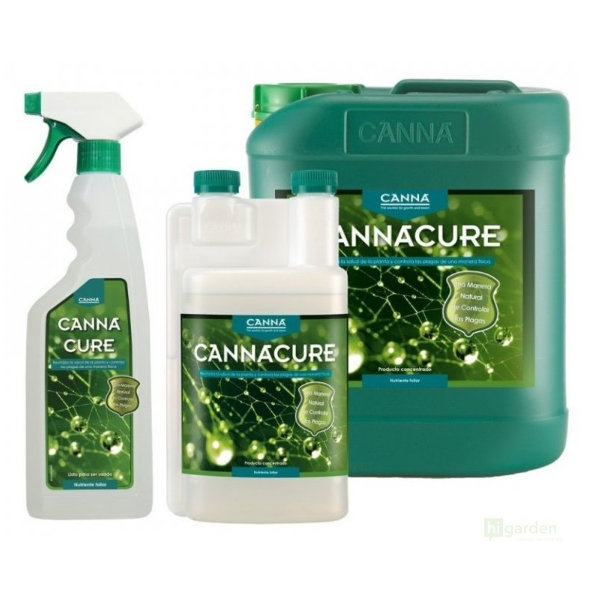
How to deal with pests? Start by getting this pest spray, without which many of our customers can no longer imagine cultivation, because it is not only practical, but above all effective. At the same time, it is also completely natural and very gentle on plants. The results?
- Canna Cure keeps plants healthy and vital. It reliably eliminates pests and powdery mildew.
- In addition, it nourishes plant leaves and stimulates their growth.
- Thanks to its non-toxic and biodegradable composition, you can use it without worry from seedlings to harvest.
Practical advice and summary
The range of the Dutch brand Canna is the result of many years of careful research, and as you have surely noticed, the individual products are designed to complement each other as much as possible. However, they are certainly not “self-saving”, just as no others are. There are no shortcuts to growing success. Therefore, at the end we will at least list the most important advice and instructions for growing with the Canna brand. The grower’s tasks include knowledge of plant needs, which Canna has focused on so intensively for years, as well as the specifics of the chosen cultivation method. Only then can the final result be firmly in their own hands.
Organic and mineral fertilisers
Before a plant can absorb any nutrient, a whole series of biochemical processes must take place in the soil. Plants can only absorb nutrients in the form of various ions or chelates. These are formed on the basis of chemical reactions, or through the action of soil micro-organisms and fungi.
Natural processes are also used when growing in a peat substrate using organic fertilisers (organic = natural), such as those from the BIOCANNA range, with which you no longer need to monitor the pH or EC of the nutrient solution. When you add irrigation to the flower pot, the micro-organisms present in the substrate fairly quickly transform the natural fertiliser into substances
The TERRA, COCO, AQUA and HYDRO fertiliser ranges are already considered mineral fertilisers in terms of plant nutrition composition, providing plants with nutrients in the form of ions and chelates, i.e. the form plants are able to absorb immediately and use for their development. Unlike organic cultivation, however, it is important to carefully monitor pH and EC. It is not enough to rely on self-regulating mechanisms in the soil.
How to mix a nutrient solution from Canna mineral fertilisers and additives?
Here is the recommended procedure. We remind you that detailed dosing tables from the manufacturer are also available to you.
- Fill the container with the required amount of water.
- Let the water stand for 12–24 hours so that chlorine compounds, which have a negative effect on soil microflora, can evaporate. The process can be accelerated using a circulation pump.
- Adjust the water temperature to 18 °C (18–22 °C) and measure the water’s EC to check the input value.
- Shake the bottles of fertilisers and additives you will be using.
- Use the dosing table to determine the required amount of all components.
- Add 80% of the recommended amount of component A and stir the solution. Then add 80% of the recommended amount of component B and stir the solution again.
- Add the additives in the recommended amount in the following order. Stir the solution each time: RHIZOTONIC, CANNAZYM, BOOST, PK 13/14.
- Add the remaining 20% of components A + B to reach the required EC, stir and measure using an EC metre.
- Measure the pH and adjust it with pH- (or pH+) to the correct values. Stir continuously.
- Let the solution stand for 10–15 minutes and check the pH again before you start watering the plants.
If you use hard water, we recommend checking the solution values again after 1 hour. With very hard water, white cloudiness may be observed when adding some components to the solution. In that case, it is recommended to adjust the preparation procedure. Immediately after filling with water, add the usual amount of pH- (or adjust the pH to 5.0). Then proceed according to the instructions, including measuring and adjusting the pH again if necessary. A mixed solution of mineral fertilisers (Terra, Coco, Aqua...) has a shelf life of max. 14 days; its pH needs to be checked continuously (it may gradually rise) and the tank should be stirred before use. If you also add organic components (additives Rhizotonic, Boost, Cannazym), the solution shelf life will be max. 7 days, and higher temperatures above 22 °C shorten this period further. A solution with organic BIOCANNA fertilisers has a shelf life of max. 24 hours.
Watering
How often and how much should you water? As a general rule, the following can be used:
- Per square metre of growing area completely covered by plant growth, 4-6 litres of water per day are needed.
- However, the exact amount of water needed depends on the overall climate and can vary significantly according to the substrate and irrigation system.
With
With Canna TERRA substrates you can use an estimation method based on the weight-to-volume ratio of the flower pot, provided its volume is no more than 30 litres:
- An example is a 10-litre flower pot.
- After full watering, it will weigh approximately 7.5 kg (75% of its volume). Now wait until this value drops to 30% and the flower pot will weigh 3 kg.
- Then water it with an amount of water corresponding to 3-5% of the pot volume (300-500 ml). This will increase the weight of the flower pot to 3.3-3.5 kg.
- Then wait with the next watering until the weight drops back to 3 kg.
- Practice makes perfect, so over time you will learn to tell by hand from the weight of the flower pot.
Why CANNA states a use-by date
Stating a recommended use-by date is not entirely common for fertilisers. In the case of CANNA products, however, it is an integral part of the quality guarantee. Mineral fertilisers in particular have the potential to last for many years without major changes. However, this always depends on the way they are stored. Even when stored correctly without access to light, some substances slowly decompose and crystallise. The recommended use-by date guarantees that, if the product is in unopened packaging and stored properly, its quality and the content of all nutrients are fully preserved during this period. With CANNA, you can simply always rely on first-class quality and product homogeneity. Even after the expiry date has passed, the product remains usable and completely safe for plants, only some of its components may no longer be present in the declared amount. It is advisable to store organic fertilisers and additives BIOCANNA as well as additives from natural raw materials (Rhizotonic, Cannazym, Boost Accelerator) in the refrigerator.
If you have any questions about the CANNA or BIOCANNA range, please do not hesitate to send them to the well-known e-mail address info@higarden.eu. We are here for you!
We also recommend these products:
- Milwaukee KIT (case set for measuring pH and EC)
- Boost Buddy CO2 Bag, natural CO2 generator
- LUMii Black Digital set 600W KIT
What to read next:
- AutoPot hydroponic systems for economical operation and high yields
- What water do you use to water your plants?
- Reverse osmosis (RO)