
Step-by-step growing, Page 5
- Growth phase
- Flowering and Harvest
- Processing and storage
- Hydroponic growing
- Seedlings and propagation
- Speciality Crops
- Outdoor Growing
- Seeds and Germination
List of articles
What Is Bioponics?
In two words: organic hydroponics. Have you heard of it? If not, read today’s article, in which we explain what this smart and ecological method involves and how it brings growers the joy of surprisingly vigorous plant growth.

Bioponics provides plants with soil humus combined with a range of large organic molecules. The results will surprise even experienced growers!
The term bioponics itself was introduced in 2004 by William Texier, co-founder of the legendary brand General Hydroponics, which was recently renamed Terra Aquatica. Below you will find a link to a separate article where we outline the changes, whether it concerns fertilisers or hydroponic systems, in short, what is changing into what. Among other things, this gentleman is also the author of this “hydroponic bible”. His concept of bioponic plant cultivation marked a real breakthrough, as it crowned years of effort by scientists seeking a practical route to organic hydroponics.
The main advantages of this method are, in practice, a combination of classic hydroponics and an organic way of cultivating plants:
- The principle of sustainable organic agriculture
- A smaller volume of leaves and stems with the same yield as classic hydroponics
- Significant savings in water and nutrients
You may be wondering why bioponics is associated with the above-mentioned benefits? Yes, the second and third points in particular may pleasantly surprise you. To improve flowering, plants grown “bioponically” receive only a very small amount of nitrates, while at the same time undesirable excessive vegetative growth is reduced. Simply put, the plant produces what you really want and is glad not to have to waste energy on the rest. You therefore do not need as much nutrient solution, and bioponics represents not only an ecological but also, last but not least, an economic advantage, because in total you need a smaller amount of water and fertilisers.

The principle on which bioponics works in practice is called liquid earth. The ideal source of nutrients here is the BioSevia product, whose effectiveness is further significantly improved by the additive T.A. Trikologic (G.H. Bioponic Mix), which works on the basis of a highly effective mixture of microorganisms, including the beneficial fungus Trichoderma, which takes care of healthy microbial life, as it can form its own colonies that prevent the formation of undesirable ones and thus protect plants, for example against mould. BioSevia therefore provides a humus base with large organic molecules, and Trikologic also takes care of their effective breakdown in addition to plant protection. This creates a solution with similar properties to optimally prepared soil for growing plants. That means quality, light, well-aerated and full of nutrients and beneficial microorganisms. Then all that is needed is to add an inert growing medium, whether you choose expanded clay balls (keramzit or hydroton) or a quality coconut substrate.
However, bioponics, like every growing method, also has its pitfalls. Here is an overview of what you should watch out for so that a rich harvest awaits you at the end of the bioponic growing cycle:
- pH levels pH (max. 7.5) and EC: Be sure to measure regularly and, if possible, accurately. BioSevia does not affect the water pH. If, in bioponics, the pH exceeds the stated limit value, lower it to 6.0, gradually, over the following five or six days. In the case of the electrical conductivity of the solution, it is advisable to anticipate its drop and ensure that the plants have an optimal supply of nutrients. In bioponics, as elsewhere, the golden rule for plant nutrition applies – neither too much nor too little.
- The plant’s proper environment: Measure the temperature as well; room temperature is ideal. Proper air circulation will be ensured by fans.
- Filtration: In the nutrient solution, it is necessary to capture especially larger elements which could damage the plant root system in the absence of an effective filter. Filters with reverse osmosis represent an excellent long-term investment. You will find a link to a separate article below again.
We recommend these products:
- T.A. Trikologic (from CZK 139) contains the mycorrhizal fungus Trichoderma.
- BioNova Cocomix Plus (CZK 339) - 50 litres of 100% coconut substrate of the highest quality.
- Reversní osmotická jednotka MAXQUARIUM (CZK 7,790) for perfect filtration.
What to read next?
- Reverse osmosis (RO)
- G.H. - T.A. or What is changing into what
- Growing under artificial lighting: HPS vs. LED
If you have any questions about bioponics or need advice on choosing products, do not hesitate to contact us at the well-known address info@higarden.eu.
How to Store Your Harvest Properly?
What is the best way to store fresh or dried herbs and food? Today’s article answers these questions. You will find out how to hermetically seal and perfectly preserve anything natural that you need to keep in its original condition for up to a year or even longer, whether it is active compounds, nutrients, aroma or flavour. We will also explore a patented technology that monitors the optimal humidity for you, so your dried treasures stay practically fresh indefinitely.
There is no point beating around the bush. The answer to the question of what to store herbs, fruit, vegetables, coffee, tea, flour, tobacco, in short anything you like, in is: Tightvac.
Growers have taken a liking to these practical vacuum containers, which are also suitable for use in any kitchen, as a reliable solution for storing freshly harvested produce and preserving its intense aroma as well as rare or health-beneficial substances.
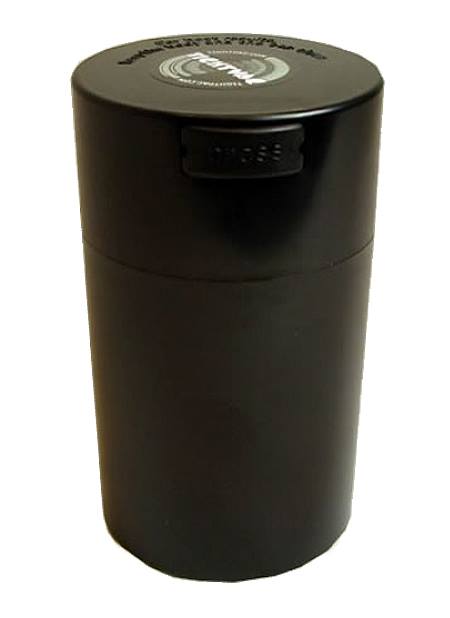
Most growers buy several airtight Tightvac containers at once, as they are available in a range of variants. You can choose from many volumes, from 60 ml up to ten litres, as well as between a transparent and an opaque variant. Our customers prefer the 1,300 ml opaque variant most. All products in the Tightvac range are made from durable, food-safe plastic.
The containers and small containers open and close easily by pressing a button, or rather by pushing down, after which air is automatically drawn out of the interior, and the precious contents, whether hidden or visible, end up in a vacuum. Tightvac stores, preserves and keeps the harvest dry. No mould or other forms of spoilage of the precious crop are a threat any more. Another advantage is easy handling.
How can you protect the harvest against drying out and becoming damp?
That is exactly what the patented, simply brilliant technology we mentioned right at the beginning of this article is for. It takes the form of smart sachets with an indicator card, Integra Boost, and works as follows...
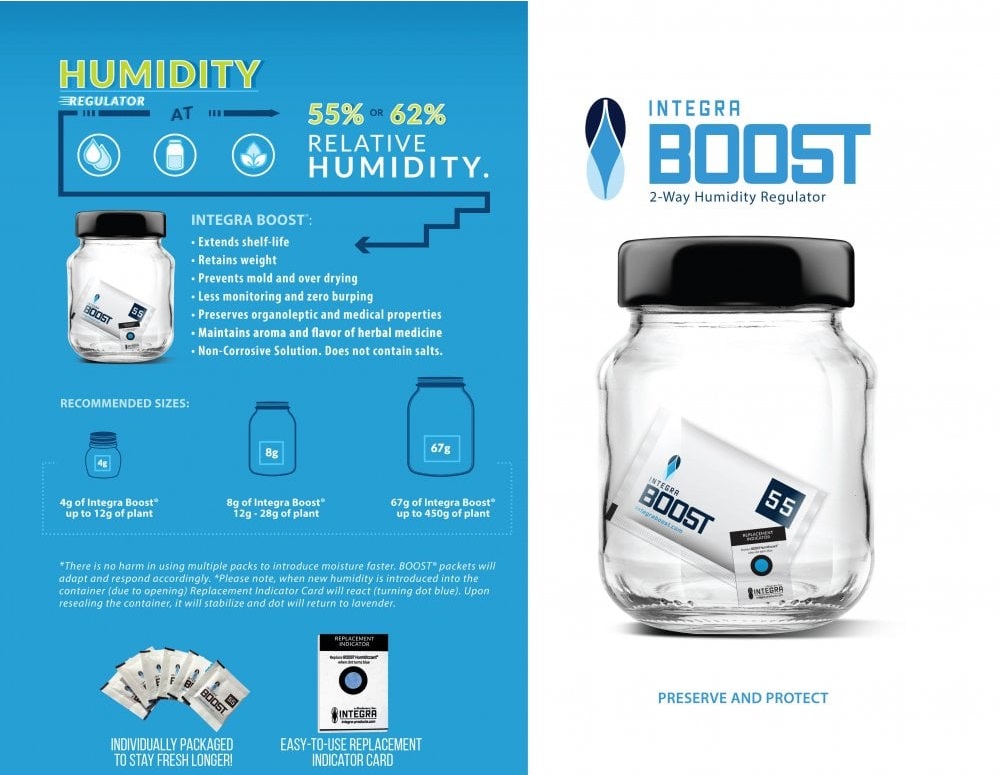
The sachet absorbs excess moisture from the plant, regulates the humidity inside any sealed container to the required 62 % or 55 %, and once its capacity is full, you will know it from the blue dot on the indicator. At that point, simply replace the sachet with a new one, which you can repeat practically indefinitely, with absolute certainty that, for example, dried herbs will never become too dry or too damp.
These products meet strict standards for safe food storage, so you do not need to worry about placing Integra Boost products, which work on both sides with relative humidity, into any sealed container in which you store dried herbs, food or spices. In the ideal case, this can be the vacuum container Tightvac. The durable sachet is also not easily torn or damaged. Just in case, it contains only non-toxic substances and no salts.
Sachets with different weights are available, depending on the size of the harvest and the container. It will be most helpful to give typical examples of harvest size in relation to the size of the Integra Boost sachet. Both figures are given in grams:
- 4 g sachets are ideal for a smaller harvest in the range of 12 grams or less.
- 8 g sachets are among the bestsellers and maintain perfect humidity for a harvest size in the range of 12–28 grams.
- 67 g sachets take care of dried herbs weighing up to 450 grams.
How do you read the indicator card?
- Pink indicates the optimal relative humidity of 62 %.
- Lavender indicates the optimal relative humidity at the required value of 55 %.
- As soon as fresh air enters the container, humidity regulation begins, shown by the changing colour gradually turning blue, which we have already explained...
Crop degradation is also prevented by Boveda products. Their functional composition is achieved by a combination of potassium citrate and acetate. These two-way humidity regulators also have their supporters among growers and offer similar benefits in practice to Integra Boost. The characteristic feature that distinguishes them is 58 % humidity, instead of 55 % in the case of IB. The second variant remains at 62 %. Here, the indicator card is replaced by a gel content, which hardens once the sachet’s capacity is exhausted.
You now know how to store your harvest intelligently so that it remains in the same condition for many months as when you sealed it in the container. And thanks to two-way humidity control, you can say goodbye once and for all to worries about crop degradation. Finally, we have one more piece of advice for you. Remember that the more often you open the containers, the sooner the regulating sachets will be used up. If you would like to ask us anything, do not hesitate to write to us at info@higarden.eu.
- TightVac - vacuum containers in various sizes
- Integra Boost - sachets for optimal humidity
AutoPot Hydroponic Systems for Efficient Operation and High Yields
From greenhouses in your garden through grow tents to entire acres of commercial growing areas – AutoPot hydroponic systems are used everywhere. In this article, we will introduce the individual product ranges from the British manufacturer in detail, including maintenance-free systems and the latest innovations, so that you know which irrigation system for growing herbs, fruit or vegetables will suit you best. From experience, we know that every AutoPot hydroponic system has the potential to exceed the expectations with which a customer - grower purchases it. In short: less effort and higher yields!
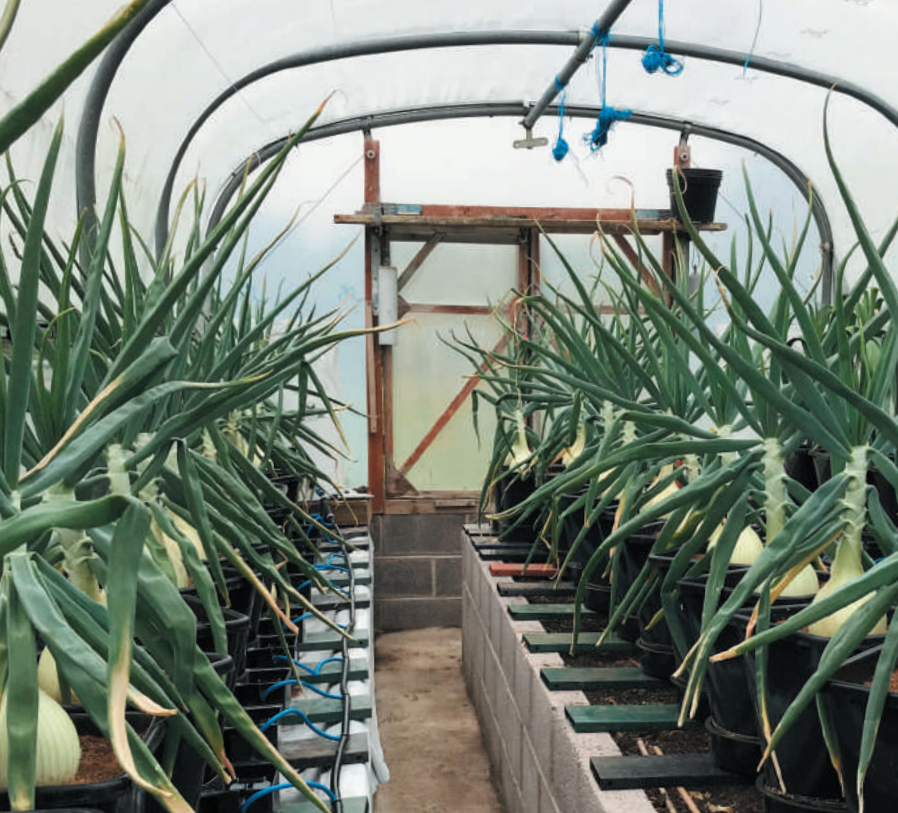
It has been proven that AutoPot systems reduce water and nutrient consumption by 50%, while also substantially increasing yields.
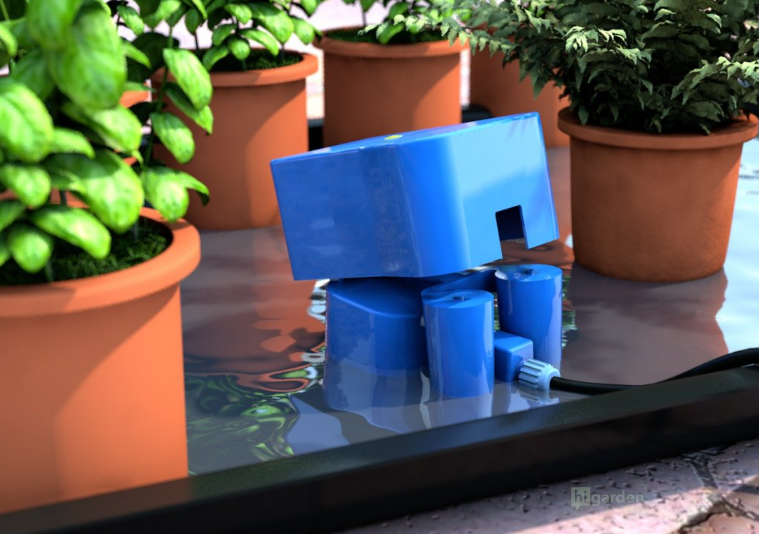
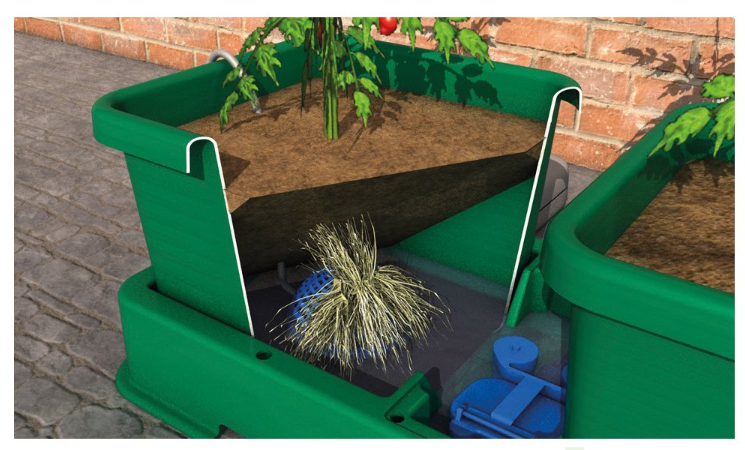
What do AutoPot irrigation systems have in common? It is certainly their ability to consistently meet the requirements of individual plants. The result is healthy and even development. AutoPot systems, using AQUAvalve technology, are the only irrigation systems of their kind in the world in which each individual plant controls its own irrigation and receives fresh water enriched with nutrients exactly when it truly needs it. And that is a great advantage in hydroponics, whether you grow your plants on a small or large scale.
Important notice: The basic prerequisite for successful growing with AutoPot hydroponic systems is following the instructions in the manufacturer's manual (pp. 6 - 12). According to these instructions, it is especially important to prepare the substrate properly substrate, meaning to layer it, mix it, etc. It is also essential to water the plants from above for the first 7 - 14 days and only switch the system on once the plants have rooted through. In Czech, based on the manufacturer's manual, we have prepared Tips for growing with AutoPot irrigation systems, which will help you avoid unnecessary mistakes.
AQUAvalve5
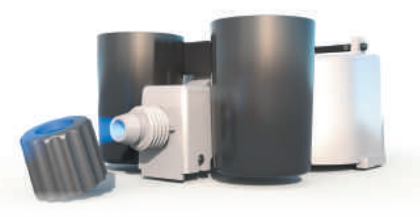
This unique technology, suitable for mineral and organic plant nutrition alike, controls the flow of water to the plants after connection to the water supply by means of simple gravity pressure from the reservoir. The needs of growers naturally evolve under the influence of increasingly diverse options for plant nutrition, and this is exactly what the 66% larger inlet responds to, speeding up the flow of nutrient solution, regardless of which hydroponic fertilisers are dissolved in the water. This reduces the risk of hose blockages (especially with organic plant nutrition, which would not be realistic in hydroponics without this technology) as well as the overall maintenance demands of the system.
Regular cleaning of the system ensures proper operation and a long service life. If you use organic fertilisers, do not forget that after your plants have used up the contents of the reservoir with nutrient solution, the entire AutoPot system must be thoroughly cleaned after switching off the valve and disconnecting it from the reservoir, and the hoses must then be flushed (see manufacturer's catalogue p. 8). If you use mineral fertilisers, it is not necessary to clean the reservoir after every emptying.
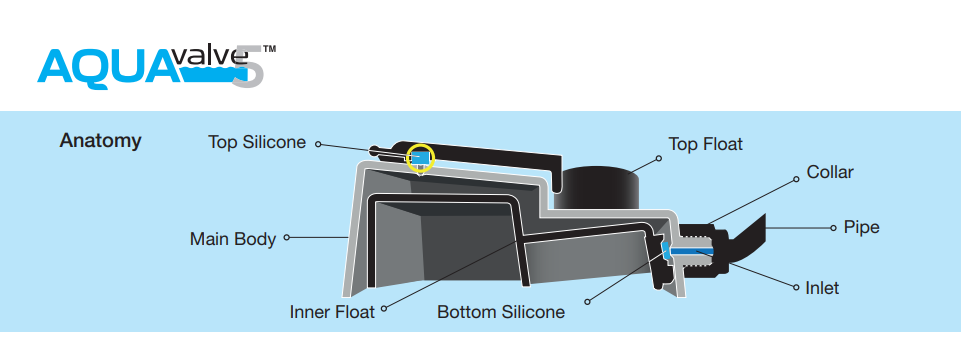
Hydroponics + AutoPot = joy from results
Before we introduce the individual types of AutoPot hydroponic systems, here is a summary of the biggest benefits that Autopot hydro systems, created for easy and successful hydroponics, bring to growers of various categories:
- Healthier, heavier and more productive plants that receive fresh nutrients exactly at the right time.
- No more daily watering. You can leave AutoPot completely unattended for several weeks, so no holiday or business trip will stand in the way of your passion for growing plants.
- Economical operation without the need for power. AutoPot hydroponic systems do not require electricity, a pump, a timer or water piping.
- Environmental sustainability. With AutoPot systems, you do not waste water. Water and nutrients are always used to the maximum.
- Universal use. Whether you are growing ornamental plant species or planning to harvest tasty edible crops or medicinal herbs, you can grow any variety you want in AutoPot systems. The same applies to the growing medium. AutoPot hydroponic systems are extremely versatile in this respect too. It is enough for the chosen substrate to have good absorption properties and be sufficiently aerated. Aeration is ensured by adding perlite, and in Autopot systems a 50% mix of perlite or expanded clay with coconut fibre or soil mix has proven effective. We especially recommend high-quality buffered and stabilised coco from a renowned manufacturer such as BioNova Cocomix Plus.
Now that you know why, like thousands of growers, we support the combination of hydroponics and the AutoPot brand, it is high time to introduce the individual product ranges from the comprehensive assortment that offers options for every grower.
Within the individual types of AutoPot hydro systems, we begin with this range, which has won over the hearts of home and urban growers in particular, not only in the United Kingdom. These are economical and modular, simple self-watering systems.
The difference between the classic version and the XL version lies in the volume and design of the pots – complete square 15-litre, or 25-litre square pots with a round base.
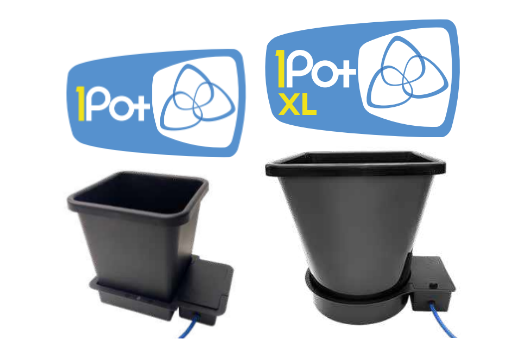
A major advantage of the 1Pot system is its ease of use, which is why, like the Easy2grow range below, it is a great choice for anyone starting with hydroponics. Thanks to their reliability and build quality, they are also a common part of the growing arsenal of much more experienced fans of hydroponic plant cultivation on the way to above-standard yields and a rewarding harvest.
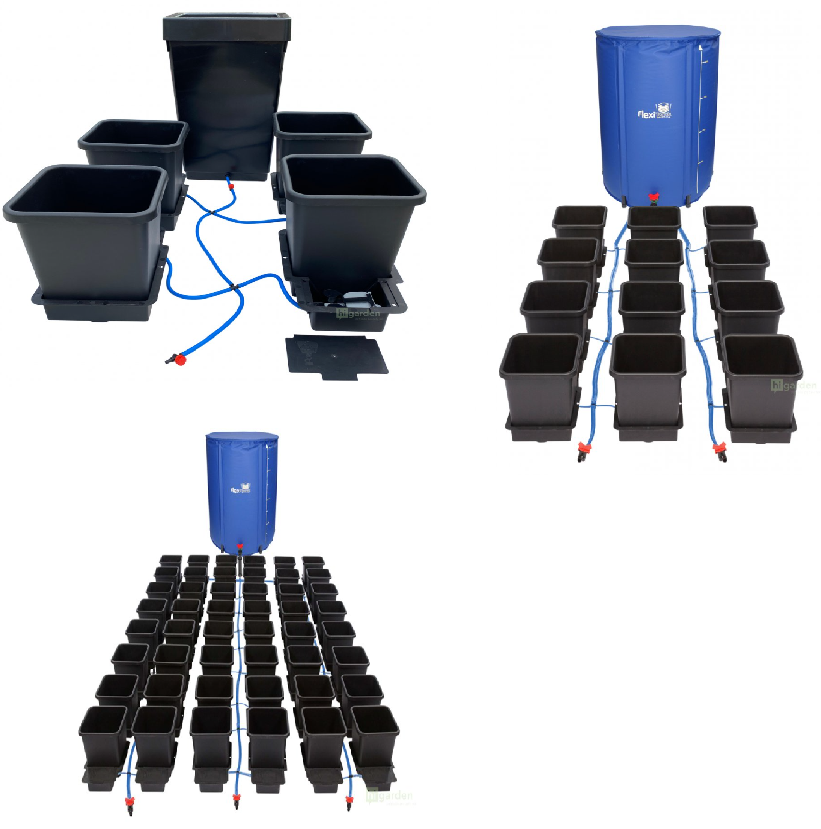
Perhaps the greatest advantage of the AutoPot 1Pot systems, and at the same time another reason why professional growers also use them with enthusiasm, is the possibility of easily expanding each system with additional growing containers connected to a reservoir with nutrient solution.
That is precisely where their magic lies, in our view. As a beginner grower who needs to get to grips with the basic hydroponic principles with the first crop, you can start with a single plant or just a few plants in combination with a small reservoir and then, because appetite grows with eating, expand the whole system in line with increasing needs with additional pots, of which there can easily be 50 or even 100 in combination with a large reservoir. Commercial growers use even more, so the possibilities do not end at one hundred. The images clearly illustrate the expansion options of these exceptionally popular modular systems. Shown are three of the best-selling sets with 4, 12 and 48 pots, which is always matched by the volume of the reservoir or Flexitank.
The maintenance-free Easy2grow hydroponic systems, which again rely only on gravity pressure, are perfect for a grow tent, greenhouse, polytunnel and garden. They are also the answer to the question of how and in what to grow delicious strawberries or other popular types of fruit and vegetables without wasting a single drop of water. It is no coincidence that, on a global scale, these are the best-selling systems from AutoPot!

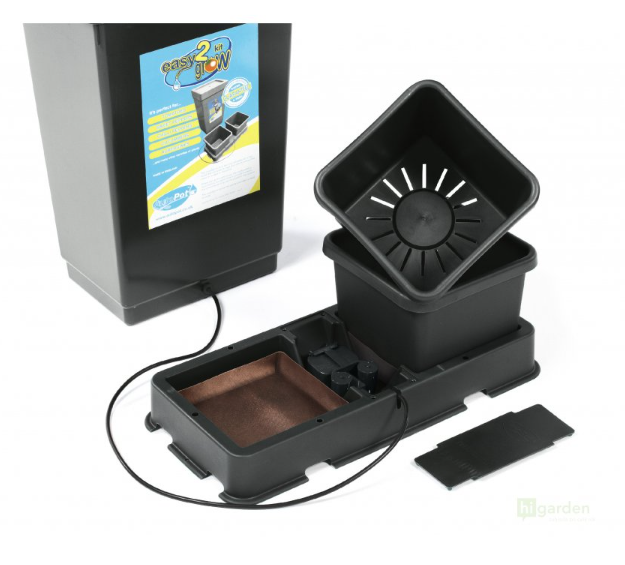
As with the 1Pot product range, we also encounter the possibility of expanding the entire system depending on the increasing demands and experience of each grower. Since the basic model consists of a pair of growing containers, the entire growing system can always be expanded by an even number of additional pots. As for their number, the possibilities are again almost unlimited. For illustration, we present an image of the easy2grow system with 6 pots, which, together with the basic module, is among the most popular for home growing of various types of crops. The diagram shows the possible layout of this system.
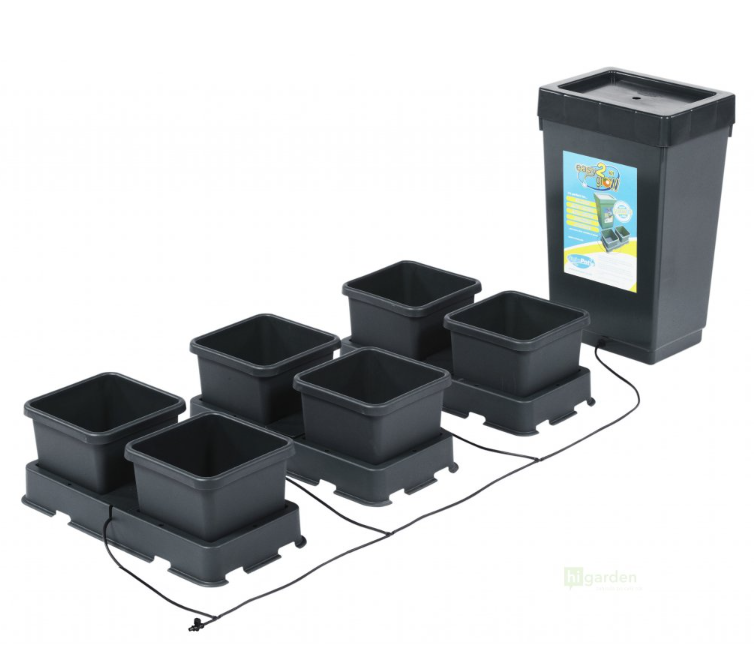
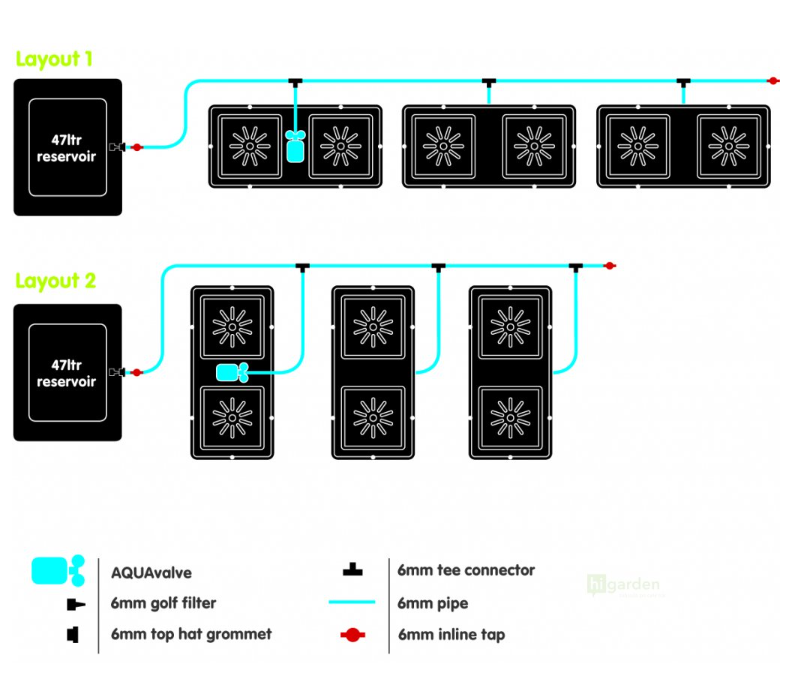
What characterises the Autopot Easy2grow hydroponic systems?
- Phenomenal efficiency. And of two kinds. The first advantage is spatial efficiency. Make the best possible use of the space in your grow box or greenhouse! And easy2grow also brings growers maximum growing efficiency during the initial growth phase of mature plants, which do not suffer from a lack of space, while the above-mentioned AutoPot AQUAvalve technology ensures that they are fed and watered exactly as needed.
- Variability. Thanks to the almost unlimited expansion options of the growing system in terms of the total number of modules connected to the reservoir with nutrient solution, and thanks to the option of choosing 8.5-litre or 15-litre pots, you can easily alternate the crops grown.

Maximum space for the growth of your plants and minimal maintenance demands. That is, in brief, how the so-called AutoPot Tray systems can be characterised.
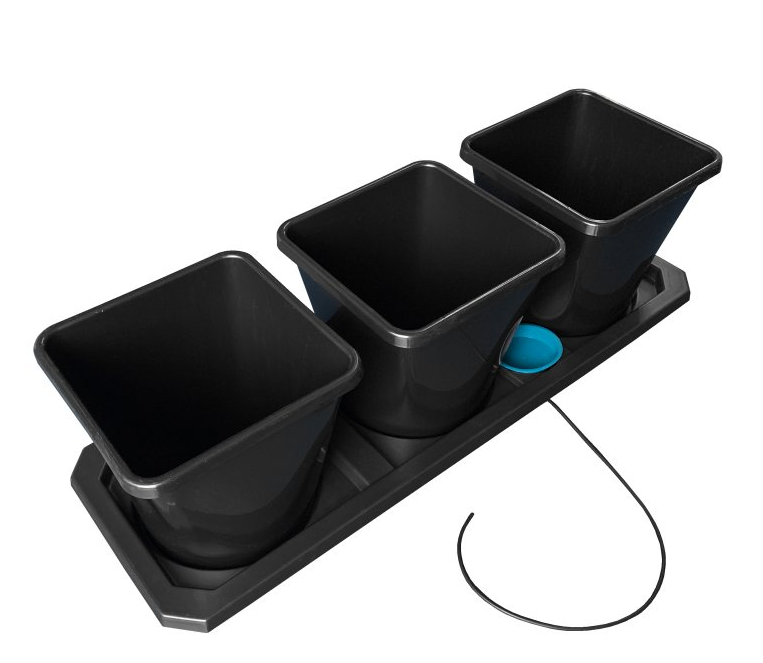
This type of hydroponic system is suitable for every stage of mature plant growth. You will recognise it by the fact that several pots are placed in one reservoir with a top cover, while all the pots that are part of the given tray system are served by a single AQUAvalve valve. Depending on the number of pots and the appropriate reservoir volume, AutoPot tray systems are available in three variants:
- AutoPot Auto3 XL system incl. 50L Flexitank
- AutoPot Auto8 system incl. 100L Flexitank
- AutoPot Auto9 XL system incl. 100L Flexitank
What are their biggest advantages?
- 100% use of growing space. Watering a larger number of pots in one set using a single AQUAvalve valve means a radical reduction in the footprint of the hydroponic system. Make use of all the growing space you have available without having to worry about access to individual growing containers with a saucer. That is why these AutoPot hydroponic systems excel in confined spaces!
- Minimal operating and maintenance demands. These “reservoir systems” allow growers to water plants with zero run-off. This means they do not require waste water piping, and for plants arranged relatively close together, a smaller amount of light is also needed. Fewer valves and fittings therefore significantly reduce both the maintenance demands of these systems and the overall water consumption.
- Design tailored to plant health. All AutoPot tray systems have a specially shaped base that minimises the proportion of standing water. The lid blocks light, and dirt is trapped right at the inlet to the reservoir.
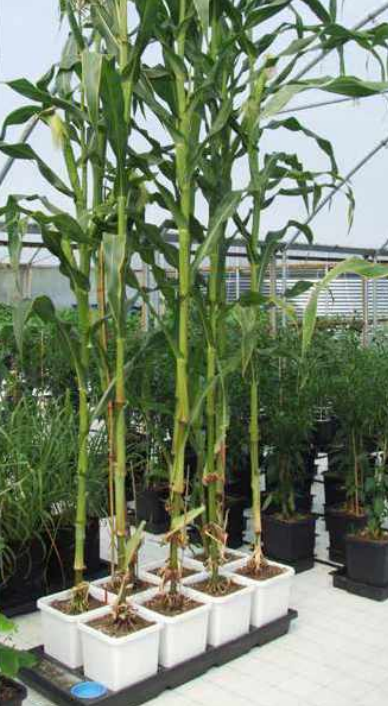
Are you growing fast-growing plants or leafy greens? With its new product range AQUAplate, AutoPot offers growers the possibility of cultivating plants without substrate. Give your plants direct access to nutrient-rich water, which is important for their proper development!
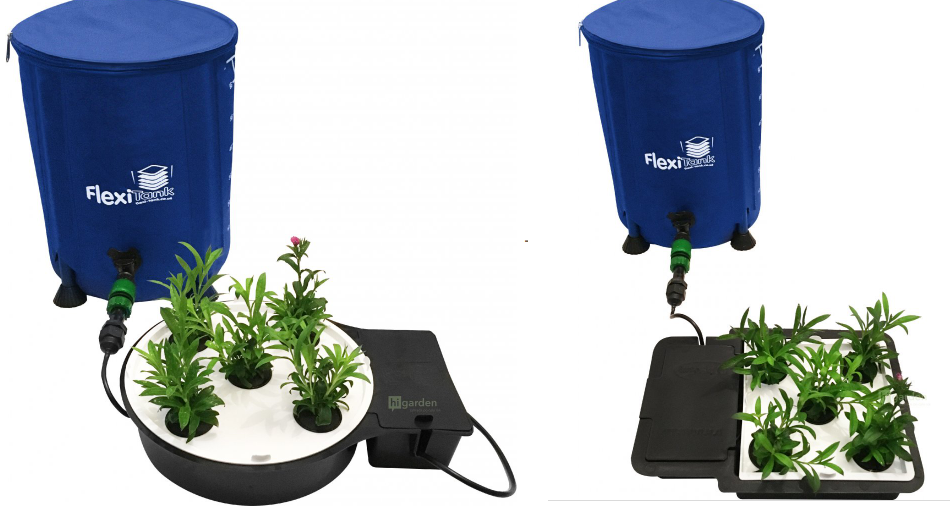
As you can see in the image, the AQUAplate range includes two types of modules: square and round. In practice, both modules are simply connected to a reservoir with nutrient solution (see below) and you can happily grow! Another undeniable advantage of these modules is their low purchase price.

Using AQUAplate modules in practice is very easy. The plant is first placed into the black neoprene collar. (An alternative to the AutoPot collar can be the so-called root plug, or a young plant rooted in a propagation medium.) A blue foam disc is inserted into the bottom of the special perforated pot. The plant secured in the neoprene collar is then placed into the upper part of the pot. After that, you only need to place the prepared pots onto the module itself and connect it to the reservoir with nutrient solution.
This inexpensive and flexible irrigation system, which you can assemble in no time, allows you to turn any growing tray into an autonomous AutoPot system!

- The easy2GO irrigation kit can be extra easy to install anywhere: in your home, greenhouse, conservatory or even on a terrace.
- This AutoPot irrigation kit is perfect for classic holiday watering of plants and, unlike other products for this purpose, you will return from holiday to vital plants.
- The easy2Go kit is the ideal solution for hobby growers who want to use very large pots or simply maintain several smaller pots, watered using a single reservoir of nutrient solution.
- The Easy2Go kit contains everything needed to connect to any water reservoir.
- You only need a water container with a minimum volume of 30 litres and a flat garden tray with a minimum depth of 30 mm.
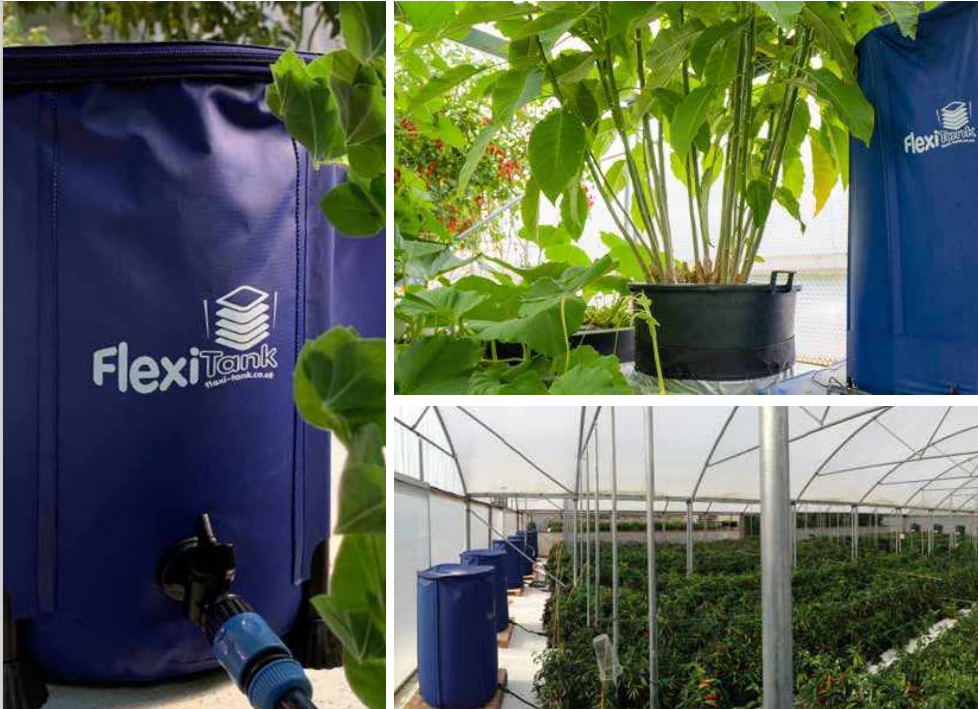
If it is a reservoir for a larger hydroponic system, then FlexiTank. Why? Besides the fact that it is a revolutionary approach to storing water, including rainwater, and above all the world's best-selling foldable reservoirs, which of course must have its reasons, it is especially important to highlight the following features of these unique, flexible reservoirs:
- Lightweight yet durable construction and outer shell.
- Easy assembly within a few minutes. No additional tools are needed for assembly and commissioning.
- Lower storage and transport costs.
- High level of sealing.
- A wide range of designs for every growing space. FlexiTank flexible reservoirs are available in volume variants from 25 up to 1,000 litres, with the smaller 25-litre and 50-litre reservoirs in particular fitting practically anywhere a quality water reservoir is needed. These variants are made so that no growing space is too small for Autopot hydroponic systems.
The more demanding customer will appreciate the improved FlexiTank PRO range, which stands out through the combination of clean design, perfect form and functionality. The “pro FlexiTanks”, defined by their light-coloured design, offer growers even greater possibilities regardless of climate, which is why they are especially worthwhile for outdoor plant growing. FlexiTank PRO foldable water reservoirs offer the following advantages:
- They are reflective and light-tight.
- They have an ultra-strong design, eliminating the risk of tipping over.
- They feature internal capacity markings and hidden supports (see image).
- When folded, they fit into a small box (see image).
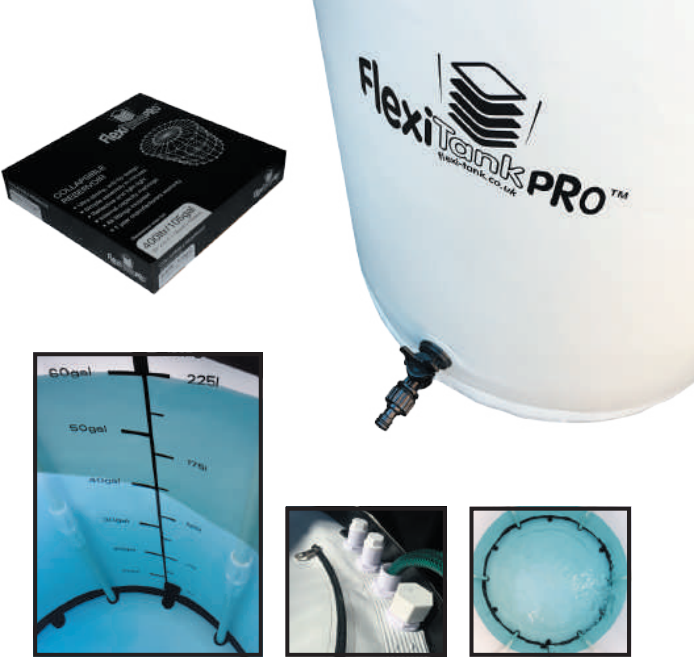
The foldable water reservoirs in the PRO version are available in three sizes:
Keep the nutrient solution in the reservoir at the correct values for up to a week longer!
Do you know the water mixer for reservoirs? It is a gadget without which experienced growers can hardly imagine hydroponics any more. Besides preventing the degradation of the nutrient solution, the reservoir water mixer also supports its oxygenation.
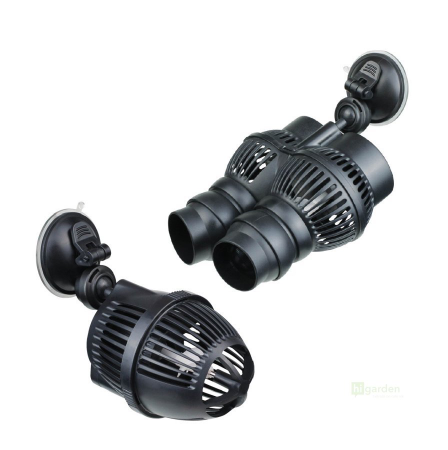
Original AutoPot accessories available
The range from the British brand AutoPot also includes all the accessories that may come in handy when growing plants using hydroponics.
The number one choice for indoor and outdoor irrigation
Finally, we would like to remind you of what we mentioned at the beginning. All AutoPot irrigation systems require zero power and you really do not need pumps, timers or any other devices to operate them, while also being able to leave them unattended for several weeks. All that is needed for their operation is gravity pressure from a water reservoir. In short, power-free growing. That is why the AutoPot range has gradually surpassed other market leaders, and growers are more and more delighted with it with every harvest!
AUTOPOT RECOMMENDS
AutoPot Airdome is used for better oxygenation of the root zone. It is an inexpensive and indispensable accessory for AutoPot systems, and using it increases yields by up to 130%! What is more, you can assemble it in half a minute.
The British manufacturer recommends Dutch Biotabs fertilisers to all growers who prefer natural plant nutrition. When using Biotabs, nutrients are delivered directly to the pots and the reservoir is then filled only with adjusted water.
These products are very interesting in themselves, and they also work perfectly with AutoPot irrigation systems. The same applies to the brands Canna and BioBizz. AutoPot also maintains a long-term partnership with BudBox, the British number one manufacturer of grow tents. AutoPot also partners with Lumatek - the obvious choice for artificial lighting, for example in a BudBox grow tent.
We will be happy to help you choose the right equipment from AutoPot's comprehensive range to suit your growing plans and needs. So do not hesitate to ask us anything at the well-known address info@higarden.eu.
We also recommend these products:
- Autopot Aquabox Spyder plain for growing in raised beds!
- Shogun fertilisers
- BioNova Starter pack AutoFlower Supermix
What to read next:
- The best fans for a grow box: EC or AC?
- How to grow outdoor?
- SHOGUN: the best British fertilisers with an emphasis on research
Hydroponics Made Easy: EBB & FLOW
This advanced hydroponic technique is also known as “Flood and Drain”, the ebb and flow method. It allows growers absolute control over the plant root system and its nutrient supply. Read more!
- To begin with, it should be noted that Ebb & Flow – this is already hydroponics for the demanding. This hydroponic growing technique, used on so-called EB tables, which is characterised by exceptional efficiency, is therefore intended mainly for demanding, more advanced growers.
- As we mentioned above, with EBB & FLOW you have almost 100% control over the entire growing process, and what is the greatest advantage for more experienced growers can cause unnecessary damage at the beginning. However, as they say, no one is born learned, and sometimes you have to start somewhere, so theoretical preparation will only help you, whether you consider yourself an experienced grower or are only just beginning to flirt with hydroponics. At the beginning, or even before that, read the introductory article about hydroponics HERE.
- The table top, which consists of a shallow filling tray, is filled with nutrient solution at certain regular intervals and then drained again after a few minutes.
- The plants are either in individual pots, or the entire tray is filled with growing medium.
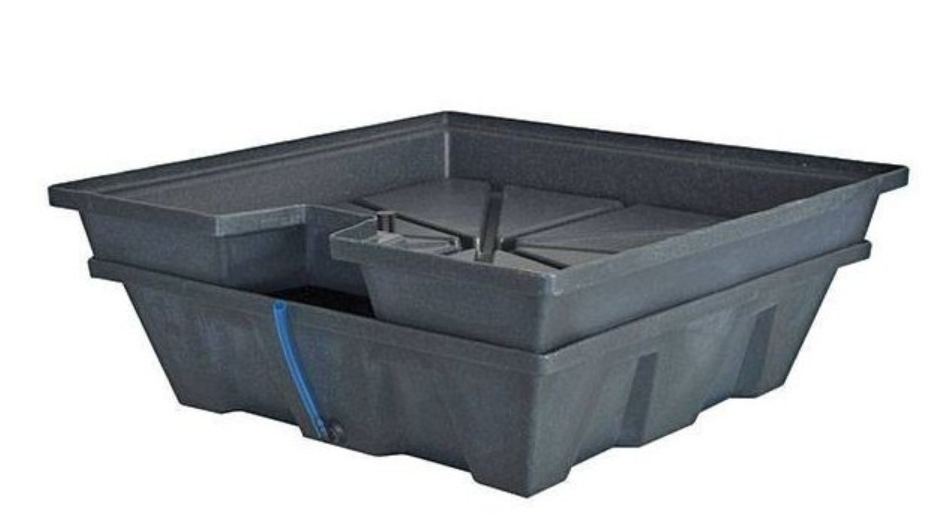
- We recommend the complete flood tray system from General Hydroponics, which you can also see in the image below.
- EBB FLOW brings growers maximum variability when it comes to the ongoing adjustment and control of irrigation for the purpose of supplying plants with the nutrients they need.
- In addition to herbs, fruit or vegetables, this method is also widely used for growing ornamental plants, which, when using EBB FLOW systems, do not need repotting for several years.
- When growing with the EBB & Flow system, residues of nutrients left after the last watering dissolve during the flooding of the substrate.
- This effectively prevents the formation of undesirable deposits and their direct consequence in the form of overfertilisation of plants due to too high a concentration of nutrient solution.
- Any watering that already exceeds the so-called retention capacity of the substrate in terms of volume flows immediately back into the tank with nutrient solution.
- One of the most important things a grower must keep an eye on when growing by the EBB FLOW method is choosing the correct irrigation cycle. Then the plant roots have enough oxygen and nutrients, and you avoid overwatering.
- Watering is supplied to the plants by means of a pump.
- Individual cycles are controlled by timers.
- Most EBB FLOW systems are made so that the nutrient solution reservoir is located below the pots, or growing trays, with the substrate and plants.
- “FLOOD”: Water with nutrients is usually supplied to two-thirds or three-quarters of the height of the growing medium, and even higher in the case of young plants that still have short roots that do not reach deep enough.
- “DRAIN”: Once the nutrient solution reaches the required level, it stops being pumped further by the pump and returns to the reservoir.
As we have already mentioned, the frequency of watering is decisive, so how should it be set correctly?
- The optimal length of the interval between flooding and draining cycles depends primarily on the size and depth of the EB table.
- The choice of substrate also matters (see below). The frequency of watering must, among other things, be adapted to the ability of the given substrate to retain water, in other words its retention properties.
- Keramzit (hydroton): watering 2 to 3 times a day.
- Rockwool: watering once a day (i.e. rockwool retains more water than clay pebbles or granules).
- These are starting intervals. However, once the plants, or rather their roots, grow larger, the frequency of watering is gradually increased... There is no universal guide, however, with regard to the individual needs of plants. Pay even more attention to your plants from the early stages of development. As beginners, you face a difficult task, namely avoiding overwatering or drying out the plants. Experienced growers, on the other hand, can tell from observation alone how the plants are doing and whether they need more or less watering. In the first case, you will at least gain this experience.
- In practice, it is helpful to remember the rule that before each subsequent watering you should let the substrate dry out slightly.
- The essence of the whole method lies in finding a suitable watering regime, and once you manage that, you can congratulate yourself, as you have succeeded in a very advanced growing challenge!
- To help you achieve this, we have one more practical tip for you. Carefully record from the very first day how much water has been lost from the tank, while the water should never reach the bottom of the pot or growing tray.
- Young plants then need less water than older, more mature plants.
- It may also matter whether you are growing drought-tolerant or moisture-loving plant species using this hydroponic technique.
- As a general rule, it is recommended to water plants during the warmest part of the day.
- In winter, plants need a smaller amount of watering than in summer.
- If you need to water more often, for example with regard to specific fertilisers diluted in a certain amount of water, only shorten the intervals between watering, but do not water the plants unnecessarily too much at once.
- If you identify pests on your plants, in addition to other measures reduce watering and water only once a day; in the case of a more severe infestation, watering every other day is sufficient temporarily.
Which substrate should you use?
- Within the hydroponic ebb and flow method, inert media are used, such as perlite, rockwool or other inert media suitable for hydroponics.
- The decisive property of the substrate is its ability to retain water. The higher, the better.
- However, the growing medium must also work well as drainage.
- For example, keramzit (hydroton) requires somewhat more frequent watering than perlite.
- Do not forget that the substrate should not extend higher than 1 cm below the edge of the growing container.
Shallow or deeper system?
Deeper systems use a larger volume of nutrient solution and provide more space for the plant root system. In addition, old air is displaced from the root zone every time the substrate is watered with newly pumped nutrient solution. Excess water returns to the reservoir, and in the meantime beneficial fresh air travels to the plant roots. The root aeration time is significantly longer than with shallow Ebb & Flow systems. In deeper systems, it takes longer for the substrate to dry out, which is linked to the need for further watering.
If you have any questions about hydroponic cultivation of plants through EBB & FLOW systems, do not hesitate to contact us at the well-known address info@higarden.eu.
We also recommend these products:
- Ebb&Grow General Hydroponics - complete flood tray system (4 999 Kč)
- BioNova Starter pack Hydro Supermix (1 990 Kč)
- VitaLink Clay Pebbles, 45l Hydroton (369 Kč)
What to read next?
- How to prepare rockwool?
- What are Cal-Mag products used for and how should they be used?
- Reverse osmosis (RO)
How to Grow Delicious Strawberries at Home?
Do you know anyone who does not like strawberries? We certainly do not. Ensure a supply of fresh, organic-quality fruit all year round. All you need to do is follow the advice in this article, and shop-bought “artificial” strawberries will be a thing of the past. Here are our tips for a healthy harvest, grown at home, extra rich in vitamins and other beneficial substances for the body!

Let us get straight to the point. How can you look forward to a fairy-tale strawberry harvest several times a year?
- The key is to choose a suitable variety that bears fruit all year round (for example, the Rujana everbearing strawberry), as some types of strawberries only produce in summer. By contrast, the year-round ones will delight you for up to five years. There are also varieties that are more resistant to diseases than others.
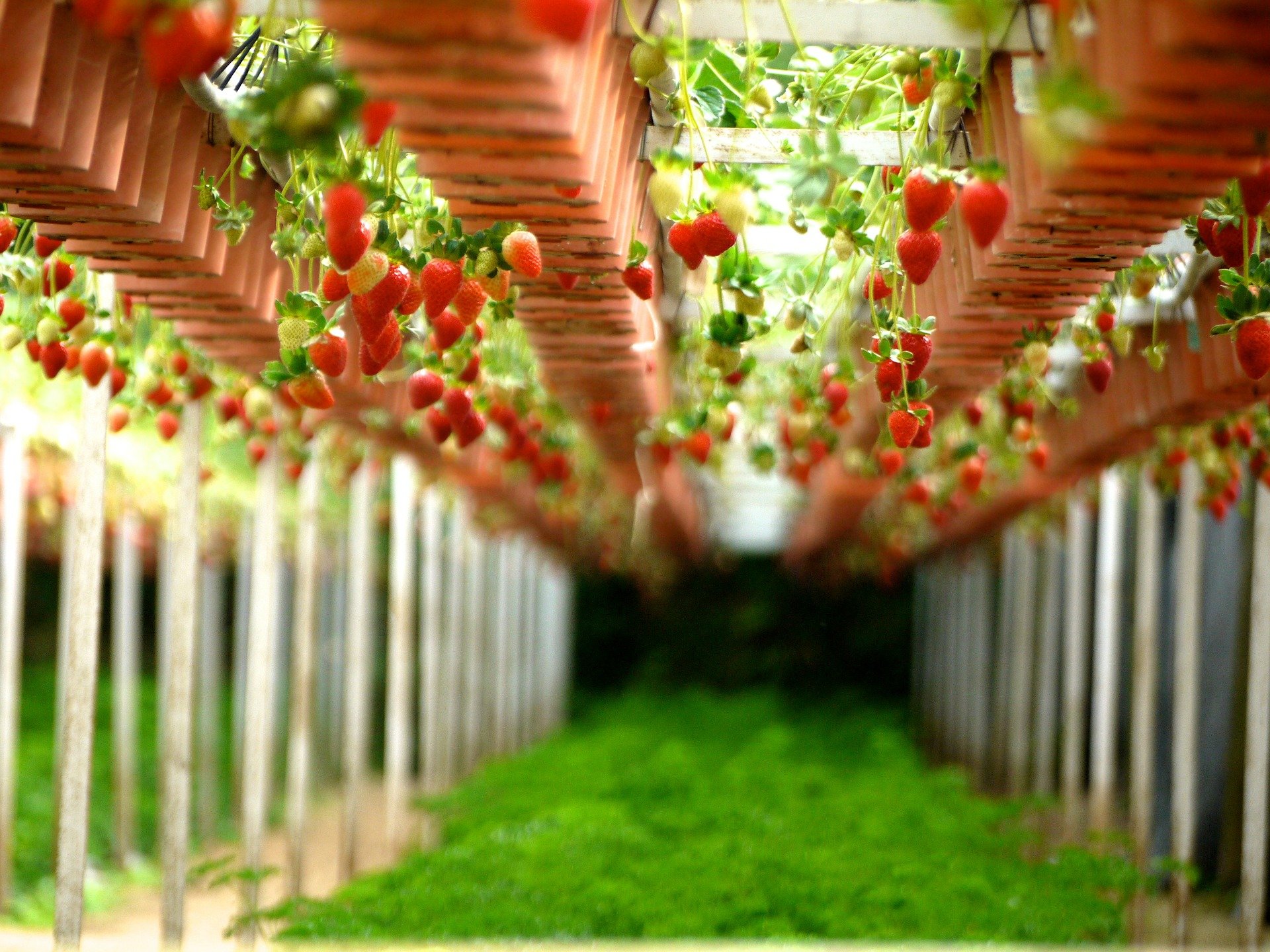
- For a continuous supply of this favourite vitamin-rich fruit, a controlled growing environment will serve you best, namely a grow box or a room. A greenhouse or conservatory is also suitable.
- On a balcony or in the garden, in a self-watering planter or hanging pots, you can comfortably grow trailing varieties that form red fruit on long runners. Runners require their own care, namely trimming at the third offshoot, and in winter do not be afraid to cut them back completely.<
- For growing strawberries outdoors and indoors, growers have recently also taken a liking to fabric wall planters, which save space and create a strawberry decoration on any wall.
Whichever pot you choose, it is important to prepare it properly for strawberries:
- First, spread a drainage layer of expanded clay on the bottom of the pot for better water drainage, which also permanently reduces the risk of overwatering strawberries to a minimum.
- Then fill the pot or planter with soil up to the crown of the young plant. The substrate must not cover the crown, because the stems grow from it.
- Pots for growing strawberries should not be less than 35 cm in diameter. The root system of strawberries is rather shallow, but the runners definitely need space. Here you can choose from a wide range of pots and planters in a suitable size.
- Place the pots where they will receive as much sunlight as possible, or under a quality artificial light source. In winter, do not be afraid to place the pots near a radiator.<
- You can grow strawberries in practically any soil. For certainty of excellent taste, 100% natural Bio Soilmix will provide you with. And because we see no reason to want anything other than 100% organic fruit with an intense and full natural flavour when it comes to strawberries, we also recommend for their cultivation the organic fertiliser range from BioNova, offering an excellent price-performance ratio, both for basic nutrition and supplements for optimal strawberry development.
- Another option for fertilising strawberries well for a rich and juicy harvest is the Czech-made nutrition JUNGLE Garden, which contains one Base component and the second component G4 is developed specifically for growing delicious strawberry fruit.
- In addition to soil and moisture, strawberries only need enough light, whether in the form of direct sunlight or artificial lighting in a grow tent.
- Buy strawberry seedlings at the moment when you plan to plant them straight into the ground, or into a pot. Small plastic pots from the shop are not intended for young strawberry plants to remain in for longer than absolutely necessary; otherwise, they will root and after transplanting their growth will no longer be optimal.
- When buying strawberry seedlings, make sure their leaves are clearly completely healthy, meaning without any spots and beautifully green. Brown and curled edges are definitely not to be taken! Also check the root system, which should already contain a considerable number of light white roots.
- You can also grow strawberries from seeds. In that case, these propagators will serve you perfectly. They are also ideal for rooting cuttings.
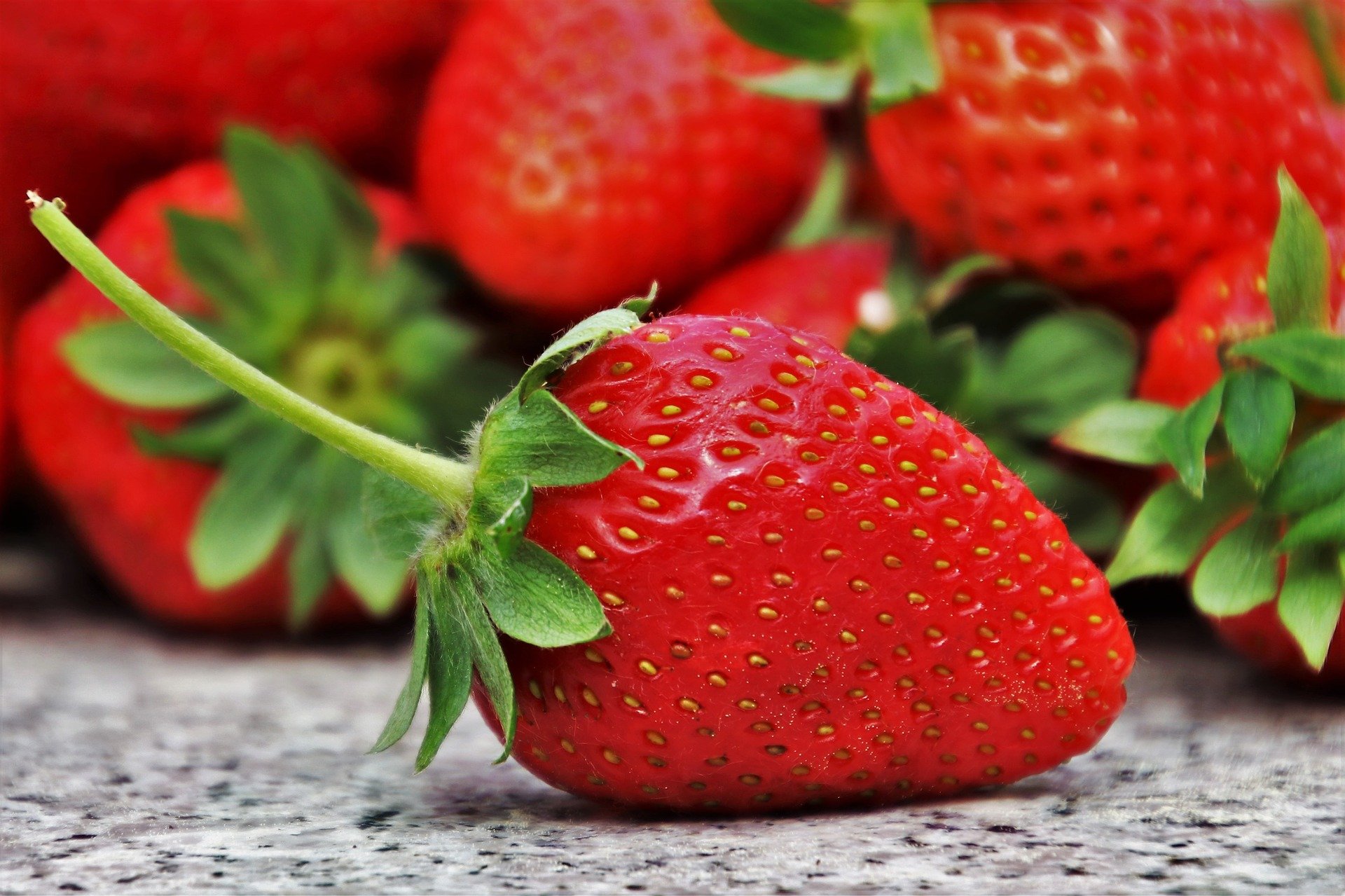
- Growing strawberries is really easy and brings a lot of joy. You only need to watch out for rot and various diseases, which is helped by the quality natural prevention CANNA CURE. Strawberries are particularly prone to mould, so one of the fungicides will also come in handy.
We recommend these products:
- Pro Pot Wall 8 (599 Kč) - a practical fabric planter with 8 pockets creates ideal conditions for strawberries and, in a home environment, also a living still life with fresh strawberries.
- ROOT!T propagator (549 Kč) - the complete propagation set contains a propagator, propagation sponges, 2x fertiliser and even a book.
- Canna CURE (from 349 Kč) - a spray representing perfect prevention against plant diseases, including mould and the most common pests that could spoil the strawberry harvest.
- Jungle GARDEN Base + G4 strawberries – a combination of Czech-made fertilisers that is tailored directly for growing all strawberry varieties.
What to read next?
If you have any questions about growing strawberries or if you need advice on choosing products, do not hesitate to contact us at the well-known address info@higarden.eu.
How to Pinch Plants Correctly?
Learn the techniques of pinching plants and pinch like an experienced gardener. These lines will provide you with the theory. You can then eagerly head out into the garden and apply the theory directly in cultivation practice.
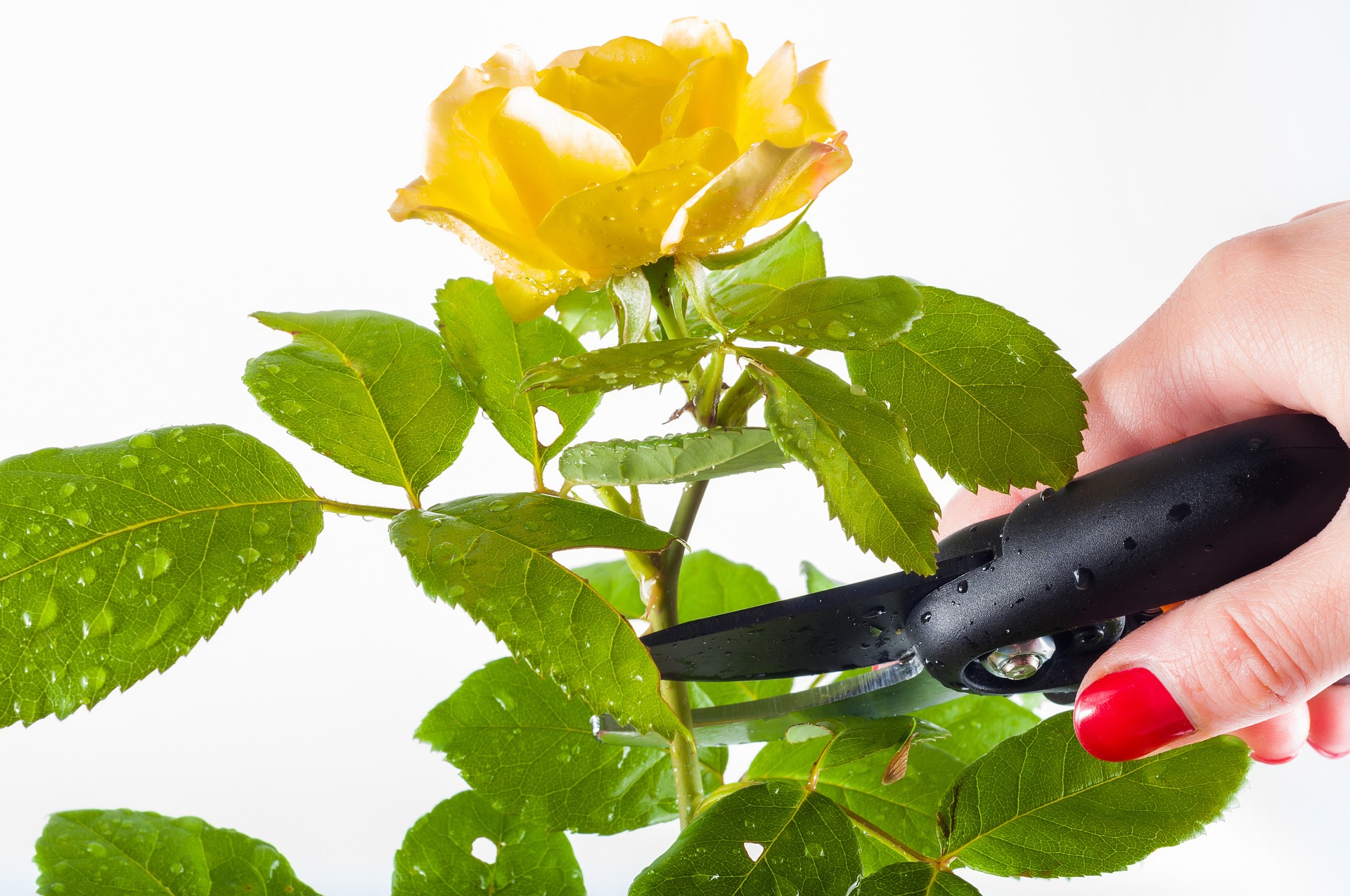
Plants and flowers are pinched for two main reasons. With proper pinching, you will achieve a more beautiful harvest, as you give the plants the desired shape, and you will also support their healthy development.
Many not only beginner growers hesitate to pinch, and the word itself creates a feeling of complexity and the impression that it is not really that necessary in order to harvest. Yet it is a very simple method that will help you achieve a much better harvest.
Influence plant growth in terms of height, direction and final shape. It is in your hands. And with quality scissors, or other aids such as gloves, plant growth management can be enjoyable.
To pinch a plant means to cut or trim its shoots and branches, thereby beautifully encouraging, or rather maximising, branching, which is a highly desirable phenomenon in plants.
With every pinched shoot, you increase the number of branches, but at the same time you also reduce the plant’s height. Are you interested in how it is that the number of branches increases in the end? If you make the cut in the right place, two new shoots will form instead of one. When you gently pinch these two shoots, the principle repeats itself and from one branch we already have four! Well, judge for yourself, isn’t it a little magical? As a gardener, you simply have that power. You will discover that cultivation gives a person space to create and does not have to be only about sowing, watering and harvesting. If you do not yet have experience with pinching, but this idea has caught your interest, or even excited you, let us explain how to do everything correctly.
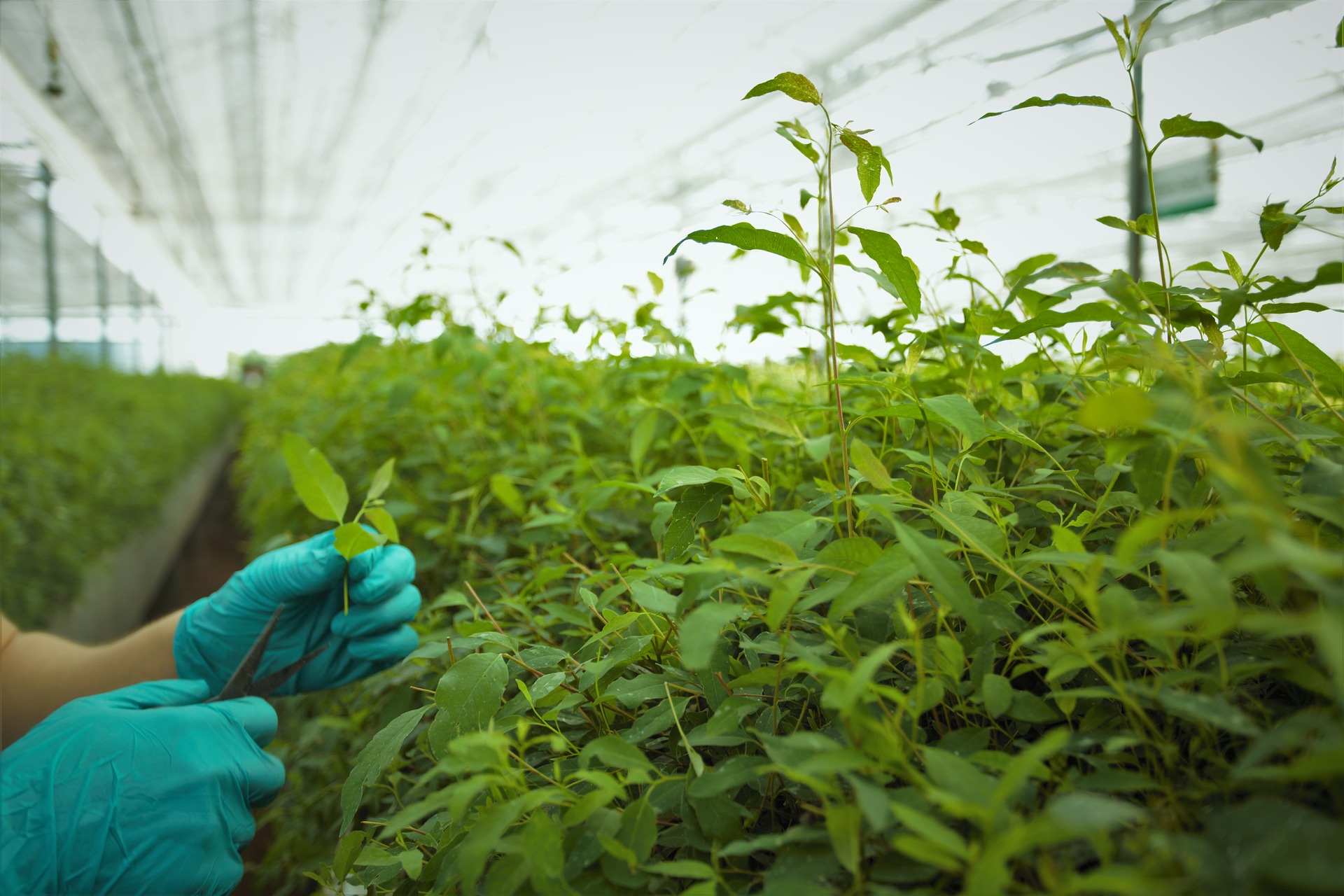
It mainly depends on the type of plant you are pinching. With small plants there is nothing to discuss; use smaller and sharp gardening scissors together with a bit of manual dexterity. For large plants you will need a sterile scalpel. With a little exaggeration, pinching is actually surgical work; you must be as precise as possible. The place and execution of the cut are crucial – always pinch off the shoots just above the junction of two branches opposite each other. Remove only part of the tip. In addition to managing the growth of an existing plant, you can also grow a completely new plant from the top. Simply dip the pinched top into water, where it will root easily and well with the help of a suitable root booster. You can learn more about supporting rooting in a separate article. If you know in advance that you are cutting or trimming the top in order to grow a new plant, make an angled cut.
If you are just starting out, you do not have to jump straight into the whole harvest by trial and error. Try pinching only the tops of a single plant and observe how it develops after your gentle “surgical” intervention compared with the other beauties.

Finally, it is also important to mention the correct timing. So when should plants be pinched? It is determined by how many times you plan to carry out this task during the growing cycle. If only once, wait until just before flowering. If more than once, start pinching a little earlier during the vegetative phase.
Have you found pinching plants difficult so far and had to gather your courage? Do not hesitate, it is a pleasure! If, after reading this article, you still have unanswered questions in mind, we will be happy to remedy that at the well-known address info@higarden.eu. We look forward to your questions!
Introducing Vertical NFT Hydroponic Systems
Last time, as part of our mini-series Hydroponics Made Easy, we introduced in general terms how hydroponic systems of the NFT type work. In today’s article, we will take this popular hydroponic method even further thanks to the unique vertical irrigation systems from VAKPLAST!
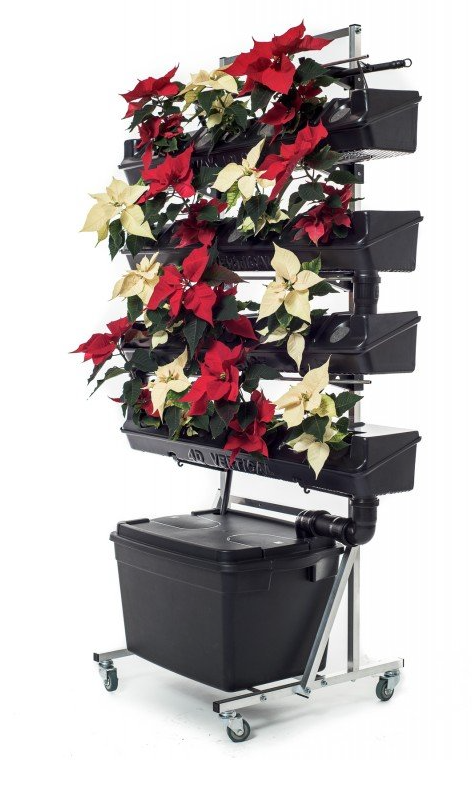
So what are the main advantages of a vertical hydroponic system?
- First and foremost, it is certainly the growing area. Compared with horizontally designed systems, VAKPLAST products save a great deal of space, or allow you to grow far more plants in the same area. In numerical terms, vertical irrigation systems use up to more than 3.5 times the growing area!
- A Czech company based in Ostrava, which has the entire technology protected by utility models and patents, manufactures and supplies these products to the market, so you always have the certainty of availability of all necessary parts and accessories.
- One of the most significant advantages is undoubtedly also the intelligent distribution of water by a drainage system along the entire length and width of the growing containers, so all your plants have a constant supply of water as well as the precisely defined amount of nutrients throughout the entire growing cycle.
- Experienced growers who work with hydroponics also appreciate the cleverly designed automatic oxygenation of the nutrient solution, which takes place through the transition between individual levels.
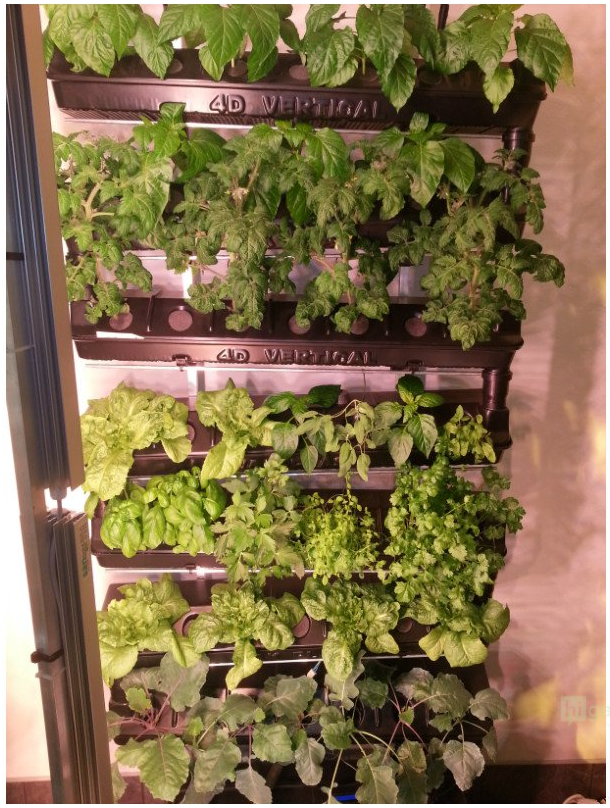
- The nutrient solution reservoir has a removable lid, which in practice allows for easy inspection of the nutrient solution at any time. This is also the only growing medium. Reliable control is ensured by precise pH and EC metres.
- By not needing any growing medium other than the nutrient solution, and by maximising the growing area and the yield from it while keeping electricity costs the same, vertical NFT systems ultimately offer an exceptionally economical operation, not to mention waste minimisation.
- Maintenance is also easy. The design of these irrigation systems allows good access to the plant root system as well as to the plants themselves, of which there can be up to 245 in one system!
- A practical hook system is used for simple and quick fastening of larger plants.
- All Vakplast vertical hydroponic systems have adjustable feet, so even slight unevenness in the floor will not cause you the slightest problem.
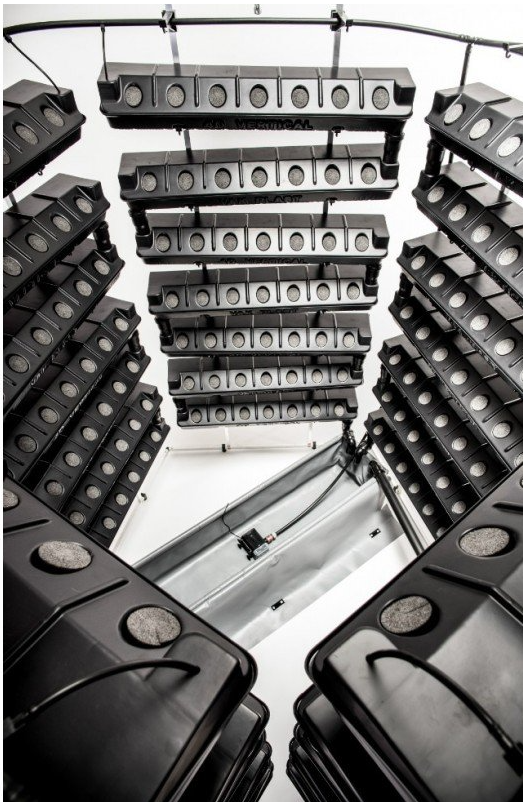
- Each growing container has a rim, thanks to which the lid fits in easily. The drain is already part of the container itself. As a result, there are no water leaks.
- The lids of the growing containers are flat or slanted. You can choose according to the type of plants being grown. For example, flat lids are more suitable for growing lettuce or smaller plants, while slanted lids are practical for larger plants.
- Whether you choose the smallest and least expensive or, conversely, the most expensive and most sophisticated variant, or anything in between based on individual needs, the entire system can always be dismantled, cleaned and reassembled in a short time.
Vertical hydroponic systems are a gateway to a world of new possibilities for plant cultivation, and the Ostrava manufacturer offers a total of 8 patented variants so that everyone can enjoy their advantages:
- Small single-wall (9 900 Kč)
- Small three-wall (29 900 Kč)
- Small four-wall (39 900 Kč)
- Small five-wall (44 900 Kč)
- Large single-wall (14 900 Kč)
- Large three-wall (44 900 Kč)
- Large four-wall (54 900 Kč)
- Large five-wall (66 000 Kč)
Together with our specialists, we tested all the variants. We were delighted by how each of the above models is designed to serve perfectly a specific group of growers, tailored to their needs. If, after reading this article, you would like to find out which group you belong to, do not hesitate to ask us anything via the well-known e-mail address info@higarden.eu, and we will be happy to advise you on your choice!
What to read next?
- Reverse osmosis (RO)
- Growing under artificial lighting: HPS vs. LED
- Trichoderma, or the natural way to a rich and healthy harvest
How to Flush?
Flushing is carried out at the end of each growing cycle with the aim of harvesting high-quality plants free from fertiliser residues and other unwanted substances.
There are a considerable number of plant flushing methods, so in today’s article we will focus on the absolute basics that every grower who cares about the final quality of their harvest should definitely know.
- The presence of salts or other residual substances in the substrate can negatively affect the development and taste of plants and crops.
- In addition to the aforementioned “cleansing” of plants or crops, which is especially important for future consumption and processing, flushing has another essential purpose, namely encouraging plants to make maximum use of fertilisers.
- By omitting all nutrition during the final week of the growing cycle and flushing the plants with water only, ideally from reverse osmosis (see the link to the separate article below), the nutrients and any as yet unassimilated salts are processed within the plant body. Simply put, the plant begins to “draw on its reserves”. The process described can also be compared to the human body, where energy that the body does not have time to process is stored in fatty tissue. Once we reduce food intake, the body uses energy reserves from fatty tissues.
- For flushing, use lukewarm water at around 24 °C. And as mentioned above, it is best to use the options offered to growers by reverse osmosis units.
- The water intended for flushing should have an adjusted pH in the range of 5.8–6. These two limit values define the pH range pH at which all nutrients dissolve as required. If the pH is higher or lower, the nutrients precipitate out of the solution.
- The basic rule of flushing is simple. The more you flush the plants, the more nutrients are washed out of their root system.
- The concentration of nutrients in the solution gradually decreases during flushing, and this process can be stopped at any time. One example is leaving only a “pinch” of nitrogen, which is no longer enough for vegetative growth, but is ideal and at the same time necessary for the further development of a flowering plant. Regularly check the concentration of nutrients in the solution by measuring both the soil and the water.
- Timing plays a very important role in flushing. It is important to estimate the reduction in nutrients appropriately in relation to the current stage of flower ripening. If you reduce the plant’s nutrient supply too early, it will have a negative effect on the final yield.
What is needed for flushing:
- pH metre for measuring the acidity or alkalinity of the solution.
- EC metre for measuring the electrical conductivity of the solution.
- TDS metre for measuring the effectiveness of reverse osmosis (RO).
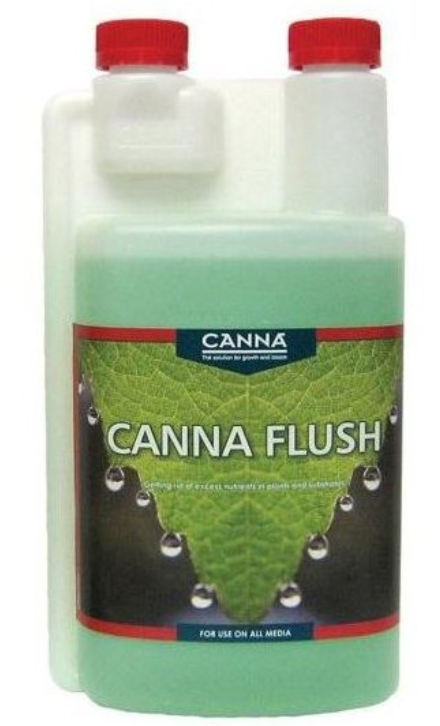
The well-known manufacturer of fertilisers and substrates has created a special additive focused directly on flushing, thanks to which you can significantly increase the value and improve the taste of the harvested crop for a few pounds. Plants and their fruits are more easily freed from unwanted salts, while friendly bacteria or moulds remain untouched. We recommend it!
3 basic flushing methods:
- Passive flushing: Nature itself naturally removes nutrients from the soil, helping the plant to ripen.
- Active flushing: The grower helps the plant to ripen by removing nutrients (primarily nitrogen) from the soil.
- Flushing using flushing agents: These agents contain various macronutrients or micronutrients, hormones, enzymes, sugars, etc. Plants respond promptly to a sudden change in the composition of the feed solution in a way that is desirable for the grower, namely by suddenly beginning to focus all their energy on ripening the flowers instead of producing additional new flowers.
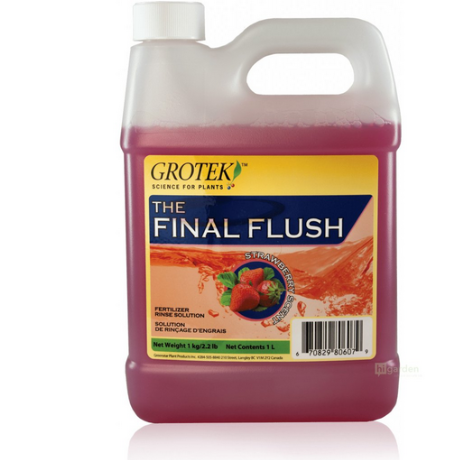
Whether you want to let plants in pots ripen in an indoor or outdoor environment, you can also use the flushing product Final Flush by Grotek for flushing about a week before the planned harvest, which is produced in several variants allowing the final taste and odour of the harvested fruits to be influenced according to the grower’s wishes and preferences.
If you have any questions on the topic of flushing, please do not hesitate to contact us at the well-known address info@higarden.eu.
We recommend these products:
- Canna Flush (from CZK 119)
- Milwaukee KIT - Martini metre pH/EC/TDS/Tem (CZK 2,819)
- Final Flush - various scents and flavours (from CZK 349)
What should you read next?
- Reverse osmosis (RO)
- What pH of nutrient solution should you choose?
- Electrical conductivity of the solution (EC)
Tissue Cultures and Micropropagation: The Future of Plant Propagation?
In today’s article, you can broaden your horticultural horizons and discover a new global trend in the field of cloning plants through tissue cultures. This is still a less well-known method of plant propagation than the well-known cultivation (propagation) from seeds or cuttings, which for many years was also the only way to propagate plants.
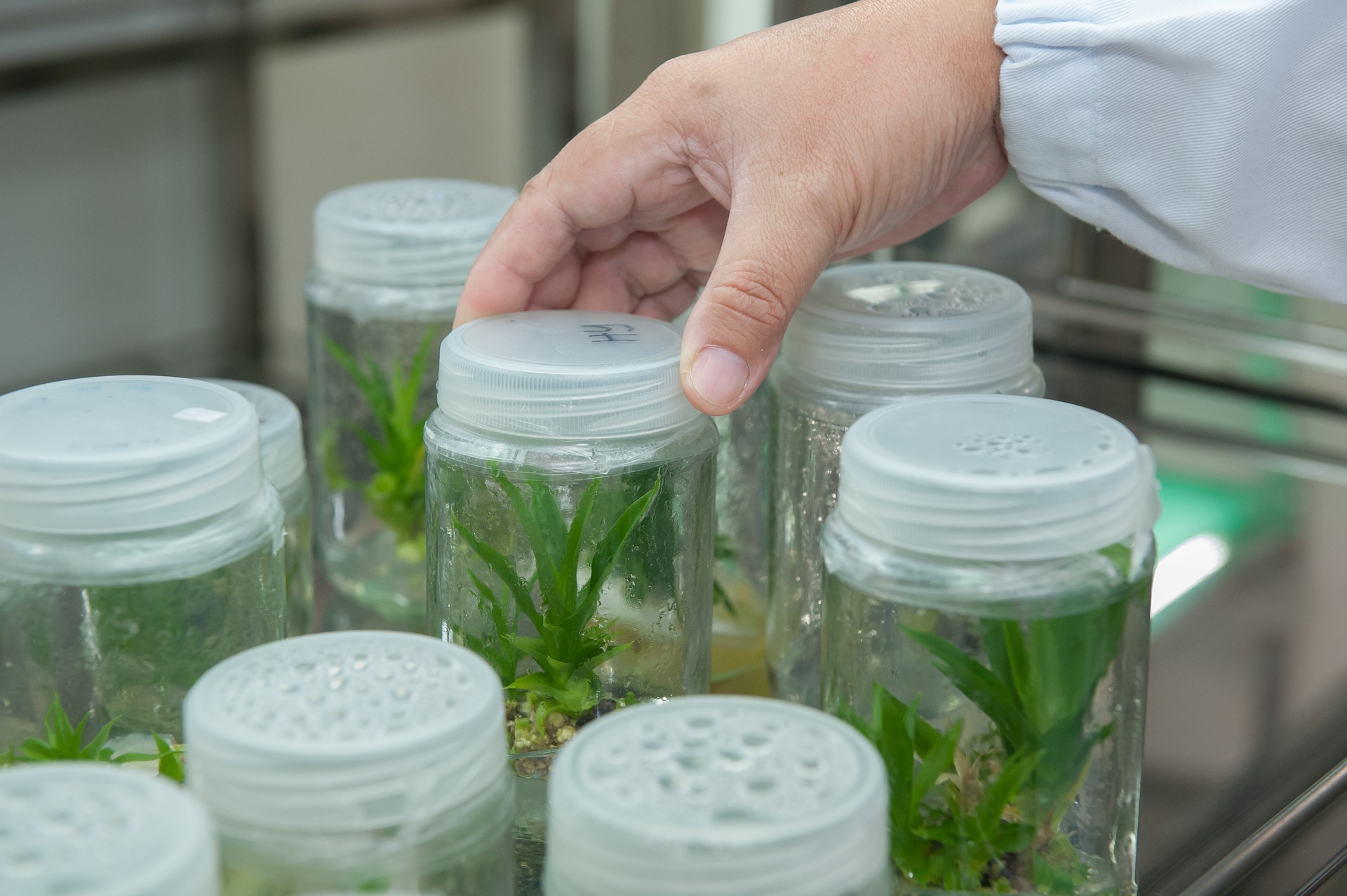
What is tissue culture micropropagation?
To answer this question, it is first necessary to define certain boundaries between the terms micropropagation and tissue culture. So what is the difference between them, and what is the connection?
The micropropagation process requires tissue culture for the propagation of seedlings. These two terms are often confused. The main difference between micropropagation and tissue culture lies in the fact that micropropagation means, in practice, the controlled production of a large number of plants from a small amount of plant material, whereas tissue culture can also be described, for the purposes of plant propagation, as the initial step of micropropagation. Hence tissue culture micropropagation.
Micropropagation:
- Plant propagation by growing seedlings in tissue culture and then planting them out
- The two steps are tissue cultivation and introducing new plants into the soil.
- It is used to produce a large number of clones.
Tissue cultures:
- A technique for maintaining and growing plant cells, tissues or organs, especially on an artificial medium in suitable containers in a controlled environment.
- The three steps are introducing the explant into the tissue culture medium, propagation and the initiation of root formation.
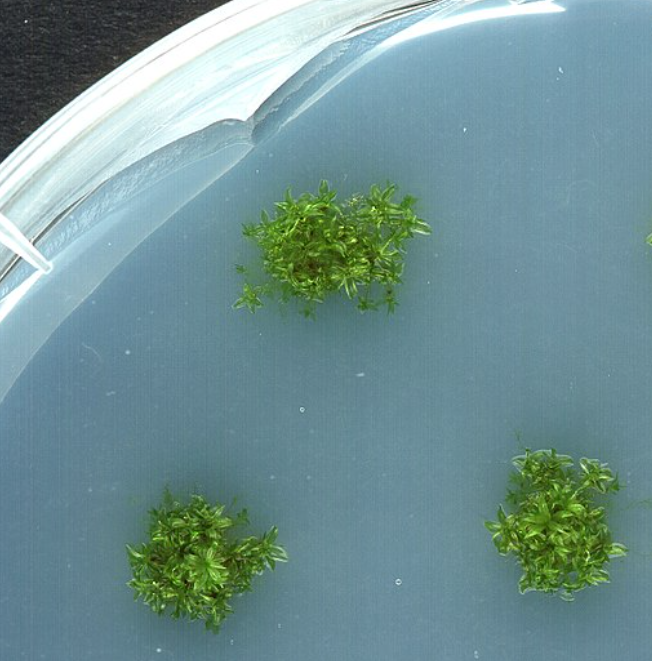
This cloning technique uses plant cell cultures. These are grown in sterile Petri dishes. At the beginning of this process, as with conventional cuttings, there is also a mother plant. However, only the so-called explant, or plant sample, is taken from it, which is then placed in a sterile environment, usually a nutrient-rich gelling medium containing vital nutrients including vitamins and hormones that stimulate the development of shoots and roots in the young plant.
The controlled cloning environment allows the tissue culture to be preserved for practically unlimited periods until the grower decides to use the sample. Whether the plant sample is at that moment in the growth, rooting or propagation phase, these processes can be initiated at any time by adding further solutions with a high content of nutrients and hormones. Then, once the plant has developed sufficiently in all respects and is ready for propagation, exceptionally identical clones are produced in high numbers.
The attentive reader will already have realised that the almost laboratory-like work with tissue cultures goes beyond indoor gardening itself and moves towards microbiology, and therefore requires an exceptionally clean environment. If, however, you enjoy experimenting, go ahead. All you need is a home micropropagation kit. A sterile starting environment is essential for future seedlings so that pests or plant diseases do not occur.
When genetics takes the lead
An undeniable advantage of tissue cultures is that the clones remain genetically perfectly identical to the mother plant.
Here too, cloning through tissue cultures excels over conventional methods, because it is more precise, cleaner, and therefore allows the grower to secure plant genetics exactly as needed. Traditionally grown clones are also usually more susceptible to disease and may suffer from genetic mutations from the original mother plant.
That is why tissue cultures are increasingly used to achieve a particular genetics of high value.
Genetic stability is often a priority in the world of cultivation, and tissue culture micropropagation meets this perfectly.
By contrast, compared with clones, growing new plants from seeds cannot be strongly recommended in terms of genetic stability. In addition, the whole process is more time-consuming and financially demanding, especially if you are aiming to grow herbs with medicinal effects, which usually root relatively easily and quickly.
A solution for commercial and smaller growers
Without doubt, this is not only the future, but in many cases already the present for commercial growers. Tissue cultures are already commonly used, for example, by large-scale banana growers. This method of cloning plants, where new individuals are produced from stored cell cultures within a short period in the thousands, shows exceptional efficiency on a large scale. Producing ordinary clones in the way we have known until now requires constant care and attention for the “mothers”. If we focus on the popular and often discussed autoflowering varieties, long-term maintenance of mother plants essentially becomes “mission impossible”, because so-called autoflowering plants do not respond to changes in photoperiod in the same way as conventional varieties.
With tissue cultures, there is not only far less trouble, but they also take up nowhere near as much space, not to mention the fact already mentioned, namely the almost unlimited storage time.
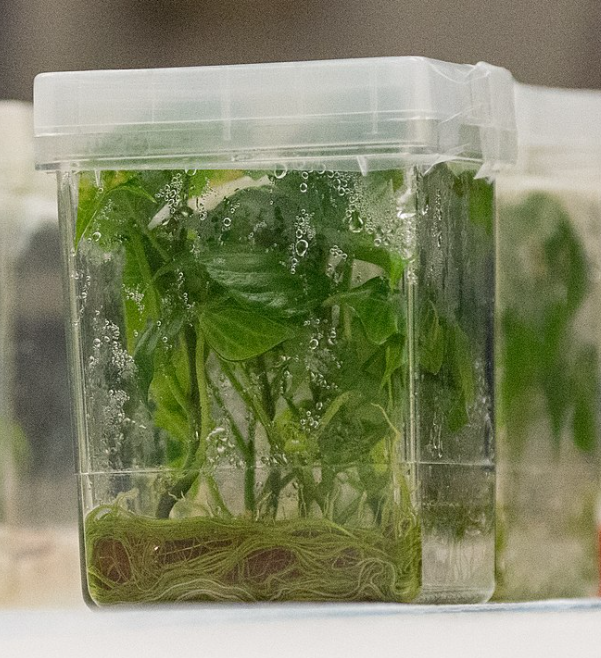
The advantages of tissue cultures naturally also apply to everyone who gardens on a normal scale. Thanks to this revolutionary method, every grower has the opportunity to influence the genetic disposition of their crops.
What are the other undeniable advantages of using tissue cultures?
- When tissue cultures are used, the plant genetic material is sterilised several times over. During the actual collection and later during propagation. It is literally impossible to find traces of pathogens on the resulting clones, so even the mature plants later stand out for their exceptional vitality and yield.
- Sometimes it is desirable to revive very rare seeds that are already several years old. This is possible through micropropagation in a test tube.
- Have you ever fallen in love with one of your mother plants, and then felt heartbroken that the cuttings taken from it were losing quality over time to the point that they had less and less in common with the donor plant? If so, you may know that, apart from senescence, the most likely cause was the gradual accumulation of bacterial, fungal or viral diseases throughout the entire line of clones. And as you already know, in tissue cultures based on a 100% sterile environment, you would look in vain for traces of pathogens.
Although tissue cultures are already successfully used by many commercial growers, for ordinary growers this method of plant propagation is still uncharted territory. If you enjoy challenges and innovative procedures, we definitely recommend finding out more about micropropagation. If you would like to ask us anything, we look forward to your questions at the well-known e-mail address info@higarden.eu.
We also recommend these products:
What to read next?
- ROOT!T for taking and propagating cuttings
- Organics Nutrients: a natural way to achieve high yields
- Czech electric Sunflower Trimmer is achieving success all over the world
How to Make Plant Propagation Easier?
Although spring is ideal for sowing and propagation, it is not too late in summer either. Would you like to grow radishes, lettuce or perhaps spinach now as well? Or do you need to propagate one of your houseplants? We will show you how you can use growth stimulators, a suitable substrate or a propagator to ensure success at any time of year.
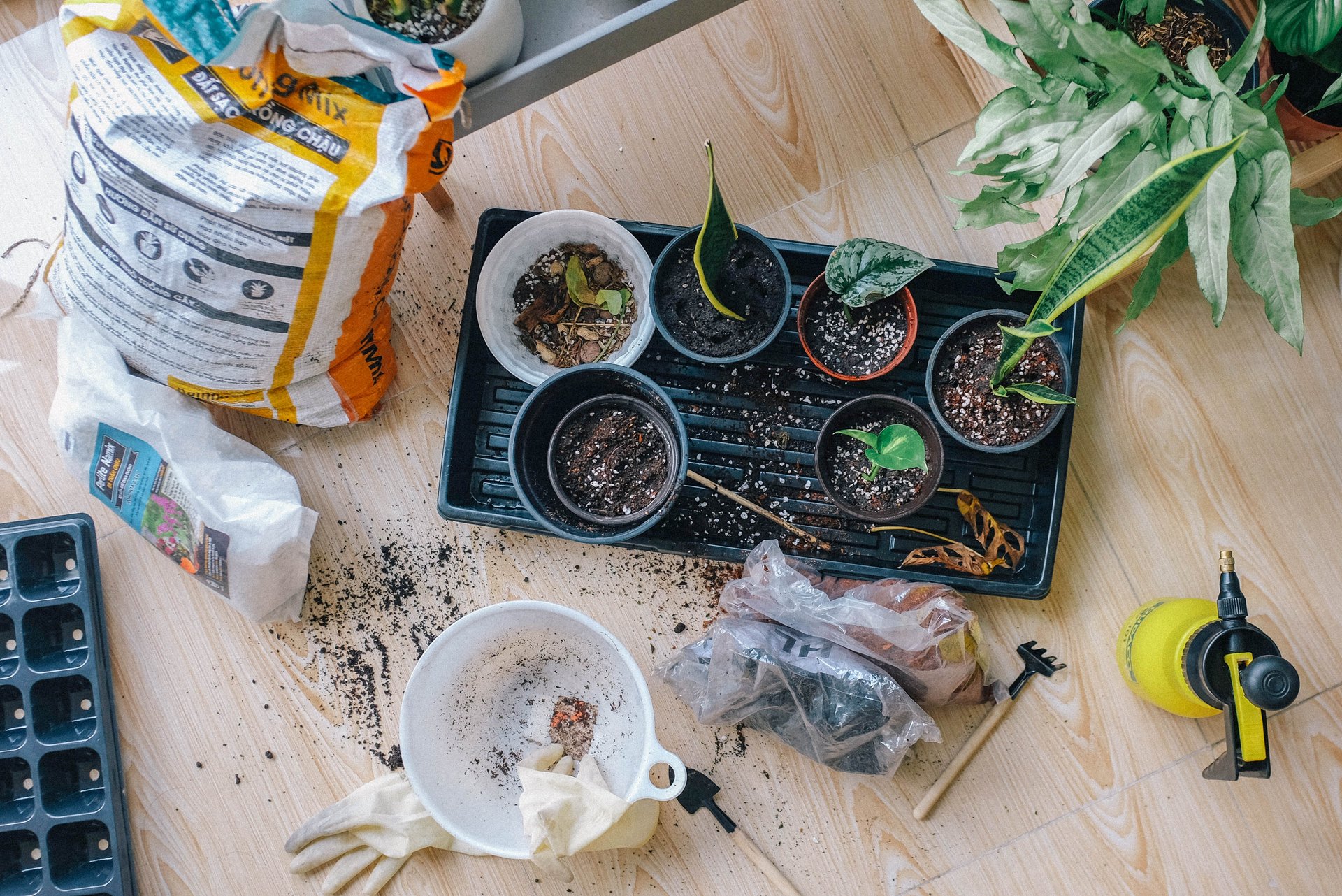
One of the simplest ways to propagate a plant is by taking cuttings. It is enough to remove a section of the apical shoot from the mother plant. This does not harm the plant in any way, and the cutting usually roots within a few weeks. For more effective rooting of cuttings, you can use a root stimulator. Remove the leaves from the lower part of the cutting (approx. 2-4 cm), dip it into the stimulator and carefully place it into the prepared substrate so that you do not wipe the stimulator off. The plant will then root much more easily and in a shorter time. Another option is to use a special fertiliser for young plants and cuttings. It has a specific composition so that the plant does not get burnt, and it supports the development of the root system and growth.
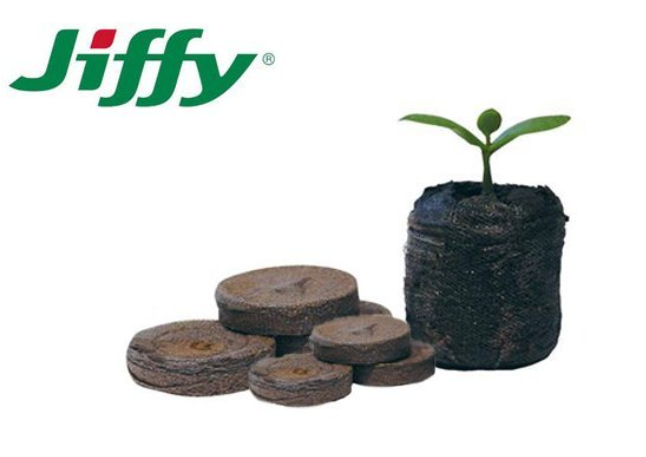
Another aspect of successful propagation is the substrate. Suitable options are lightly pre-fertilised mixes aerated with perlite. The nutrient content here is minimal, and after about the first week we fertilise according to the plants' needs, for example with the aforementioned fertiliser for cuttings. Another option for propagation or sowing is growing cubes or Jiffy tablets. Their advantage is easy use, a balanced ratio of air in the substrate and good water absorption. Peat tablets are also very compact, contain a mixture of peat and coconut fibres, and only gain their volume after being watered and swelling. After germination or rooting, the plants are transplanted into the substrate together with the tablet, and the roots simply grow through it over time.
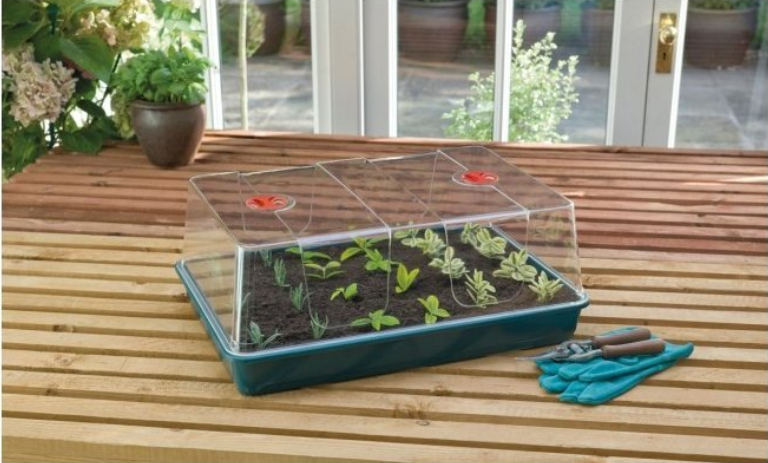
The final tip for supporting seed germination or the establishment of cuttings is to use home propagators and greenhouses. In addition to the ordinary ones, there are also heated models with a thermostat for creating specific temperature conditions. The ideal place is a windowsill where direct sunlight does not fall, so that burning or overheating cannot occur.
If you enjoy growing plants at home, you will find all equipment for indoor growing at Higarden.cz.