
Step-by-step growing, Page 9
- Growth phase
- Flowering and Harvest
- Processing and storage
- Hydroponic growing
- Seedlings and propagation
- Speciality Crops
- Outdoor Growing
- Seeds and Germination
List of articles
How to Use Growing Mats?
Because a growing mat as an inert medium is excellent for use in a window box as well as for drip irrigation within a hydroponic system, let us now briefly focus on the TOP growing mats on the market and their practical use.
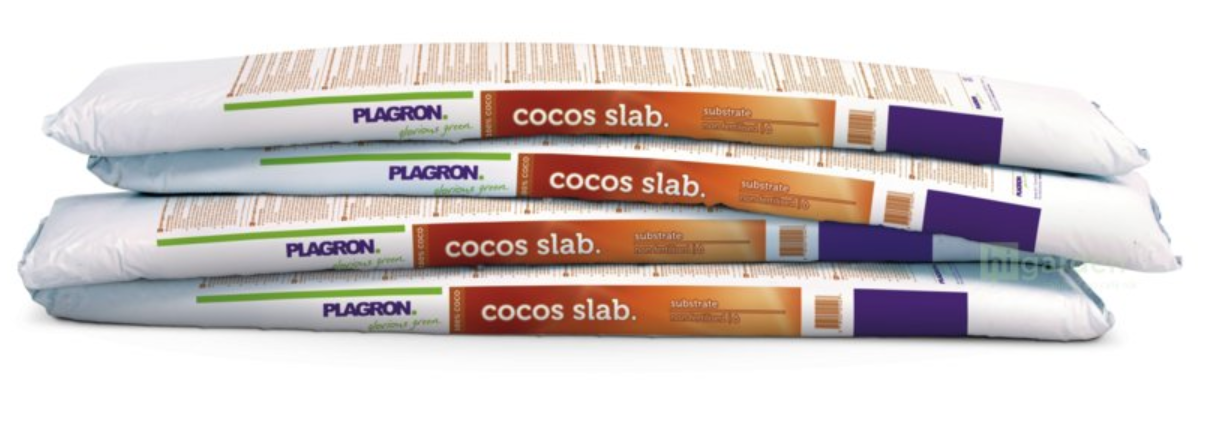
These growing mats for plant cultivation are made from coconut fibres (besides Cocos Slab, for example also UGro Slab - compressed mat). Compared with the mineral-based mats listed below, they stand out above all for their 100% natural composition and meet the strictest quality standards (RHP).
When using the one-metre growing mat Cocos Slab from Plagron, proceed as follows:
- Shake well before use, but do not rinse. The substrate is ready for immediate use.
- Just check that the drainage holes at the bottom of the Cocos slab are large enough.
- Place the plants into the Cocos slab.
- pH of the water to 5.5.
- The advantage of this growing mat from the Plagron brand is the fact that it naturally ensures low EC values.
- The manufacturer’s dosing tables will help you with the nutrition of plants grown in growing mats. Dosing tables are provided directly by the manufacturer. The Cocos Slab growing mats are a truly perfect medium for hydroponics. If you decide to use them, we recommend combining them with two-part nutrition from the same brand, namely Plagron Cocos A+B, as well as with the supplements Power Roots, Pure Enzymes and Green Sensation.
- The substrate itself contains no fertilisers, so you can dose the nutrition above according to the dosing tables from the very first day. However, the substrate contains the beneficial fungus Trichoderma, which has a beneficial effect on the healthy development of a strong root system in your plants, as it can surround it and effectively protect it, for example against mould attack.
- You can also use these growing mats from Plagron repeatedly. This, together with their purely organic origin and composition, is their main advantage compared with Grodan growing mats (see below). You can tell when it is time to replace the growing medium after several months by the measured value of EC, if it is higher than 1.8, or pH, if it is lower than 5.4 or higher than 6.5. You will find everything for measuring pH and EC values HERE.
Classic, Master and Expert (Grodan)
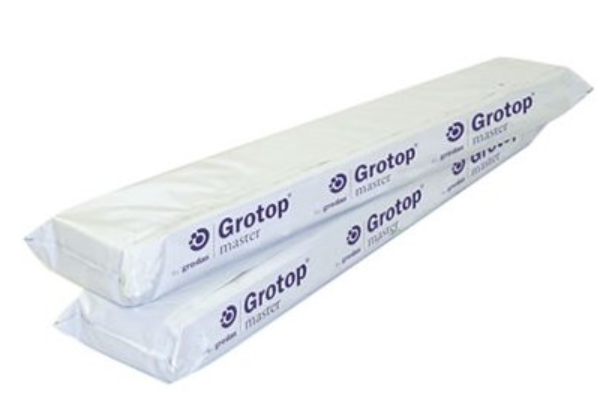
- Grodan growing mats have a mineral origin. They are made of horizontal fibres from high-quality basalt wool (rockwool), which slightly raises pH.
- As an example, we can mention the best-selling Grodan Master growing mats with different densities of hydrophilic fibres. Compared with the Classic or Expert mats, we found better water management and fertilisers with the MASTER mat.
- These growing mats have a balanced ratio of water and air. They are firm yet airy, increase the plants’ oxygen absorption and uptake of fertilisers, and maintain stable pH. They also ensure uniform plant development in the slab. In addition, they allow full control over the electrical conductivity values of the solution. As a result, among growers they are considered one of the most popular growing media for hydroponics.
- We recommend using one growing mat for only one growing cycle!
- You can use them on their own, but also as a practical base for rockwool propagation cubes.
- Before use, rockwool needs to be soaked in lukewarm water at approx. 25 °C, preferably already with adjusted pH in the range of 5.8–6.
COGR - compressed mat (Canna)
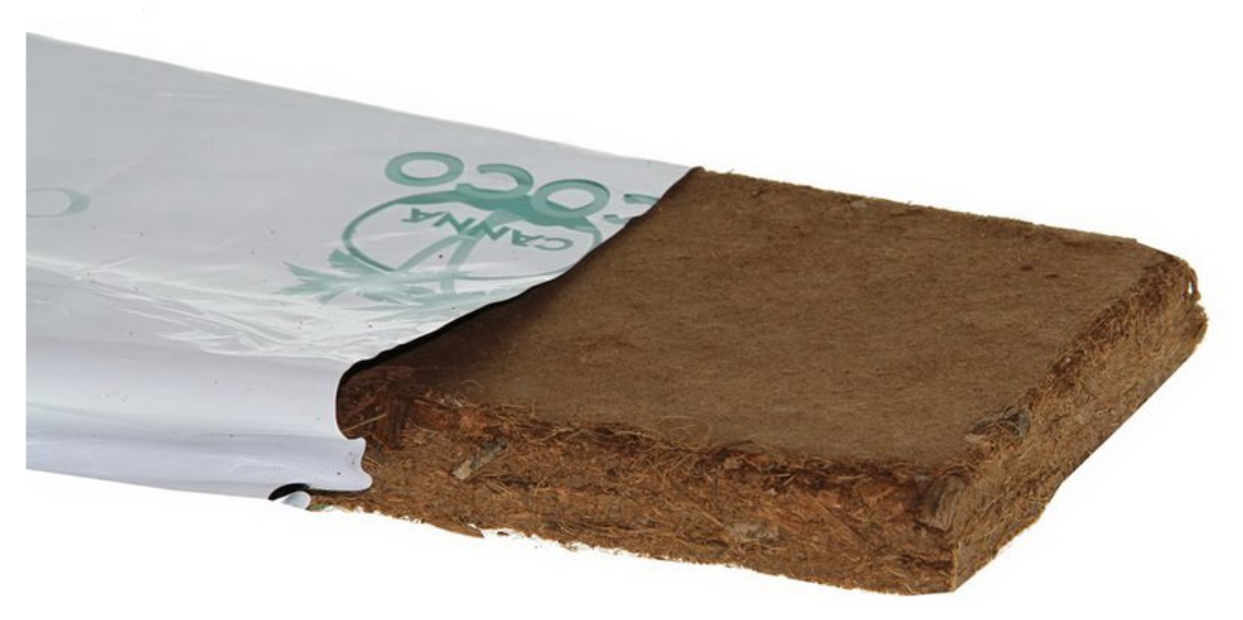
A separate chapter in the case of growing mats is Canna COGR - compressed mat, made from a special blend of coconut husks, fibres and coconut granulate, which will satisfy even the most demanding hydroponics enthusiasts.
- This inert substrate from a prestigious manufacturer is simply a clear guarantee of maximum aeration as well as absorption of nutrients and moisture!
- Just like Plagron mats, you can also use Canna COGR repeatedly - even up to three times in a row, and moreover without the slightest loss of quality.
- It is important first to moisten the compressed slabs with the special COGR Buffering Agent. Then it is necessary to fertilise with COGR Vega during the vegetative phase and switch to COGR Flores during the flowering period.
- In terms of practical use, part of these growing mats can be crushed and divided into any flowerpots. You therefore do not have to limit your purchase only to window boxes and hydroponic systems.
If you are involved in hydroponics and have not yet tried growing mats, perhaps now is the time to put that right. And if you have any questions, we will be happy to answer them at the well-known address info@higarden.eu.
We also recommend these products:
- Plagron Cocos A+B (from 329 CZK): two-part plant nutrition ideal for cultivating plants in Cocos Slab growing mats.
- Libra hydroponic window box (199 CZK): designed for both coconut and rockwool growing mats.
- pH and EC metres (from 99 CZK)
What to read next?
When to plant individual types of herbs, fruit and vegetables?
The gardening season is in full swing, so today we have prepared a practical article for all gardeners and outdoor growers, which will show you when the ideal time is for sowing and planting popular plant species and agricultural crops. Take a look at tips on what to plant and when until the end of the year.
May
With the beginning of May, which has May right in its name, you have ideal timing for sowing cucumbers or field lettuces, for example. Pre-grown tomatoes or peppers are also looking forward to being transplanted into a prepared bed. Another typically May crop, which has its irreplaceable place in many recipes, is courgette. However, we recommend waiting until roughly mid-May, until the ground frosts have definitely passed. In mid-May, you can also confidently start sowing tomatoes and peppers if you have not already pre-grown them. Also be sure to reach for seeds of beans, sweetcorn, and we must not forget aubergine or even watermelon.
The second half of May is also associated with ornamental window boxes, which can be placed outside in the fresh air and spring sunshine. You still have time to plant an ornamental garden using purchased seedlings. In places that receive plenty of sunlight, geraniums, petunias, lobelias or purslane are an excellent choice. Shadier spots are best used by planting mint and begonias.
You can also sow biennials, which will amaze you with their beauty only in the following year. If you plant nasturtium, which boasts edible flowers, you can consume them for health from August until autumn. Among similar annuals that can be planted in May, we also include calendula. And if your garden is decorated with a garden pond, May offers the ideal time to plant water lilies.
June
In the first summer month, you can sow more healthy vegetables into the beds in the garden or in the field. Here are our tips: kohlrabi, carrots, cabbage, leeks, Brussels sprouts, and if you decide to sow lettuces as well, you will ensure a continuous harvest for the next period.
During June, it is also the ideal time to take cuttings of ornamental shrubs. By dividing clumps, you can propagate and transplant perennials growing in spring, ideally by mid-month.
June is also dedicated to sowing these beautiful biennials: pansies, forget-me-nots, daisies and carnations. However, before your pansies emerge, they will benefit from shading.
July
In summer, after returning from a swim, you can devote yourself to sowing other types of vegetables. Carrot varieties with a shorter root will still take hold without any problem. Chinese cabbage or spinach are also popular. The sunshine again favours the cultivation of various types of lettuce.
In July, it is also worth paying attention to planting new strawberry seedlings. This is a period when woody plants such as thuja, junipers, cypresses or yews can be easily propagated vegetatively.
Let us now have a quick botanical quiz, do not look at the next paragraph. July is inseparably associated with the planting of a medicinal perennial plant grown as a biennial. Can you guess which one it is?
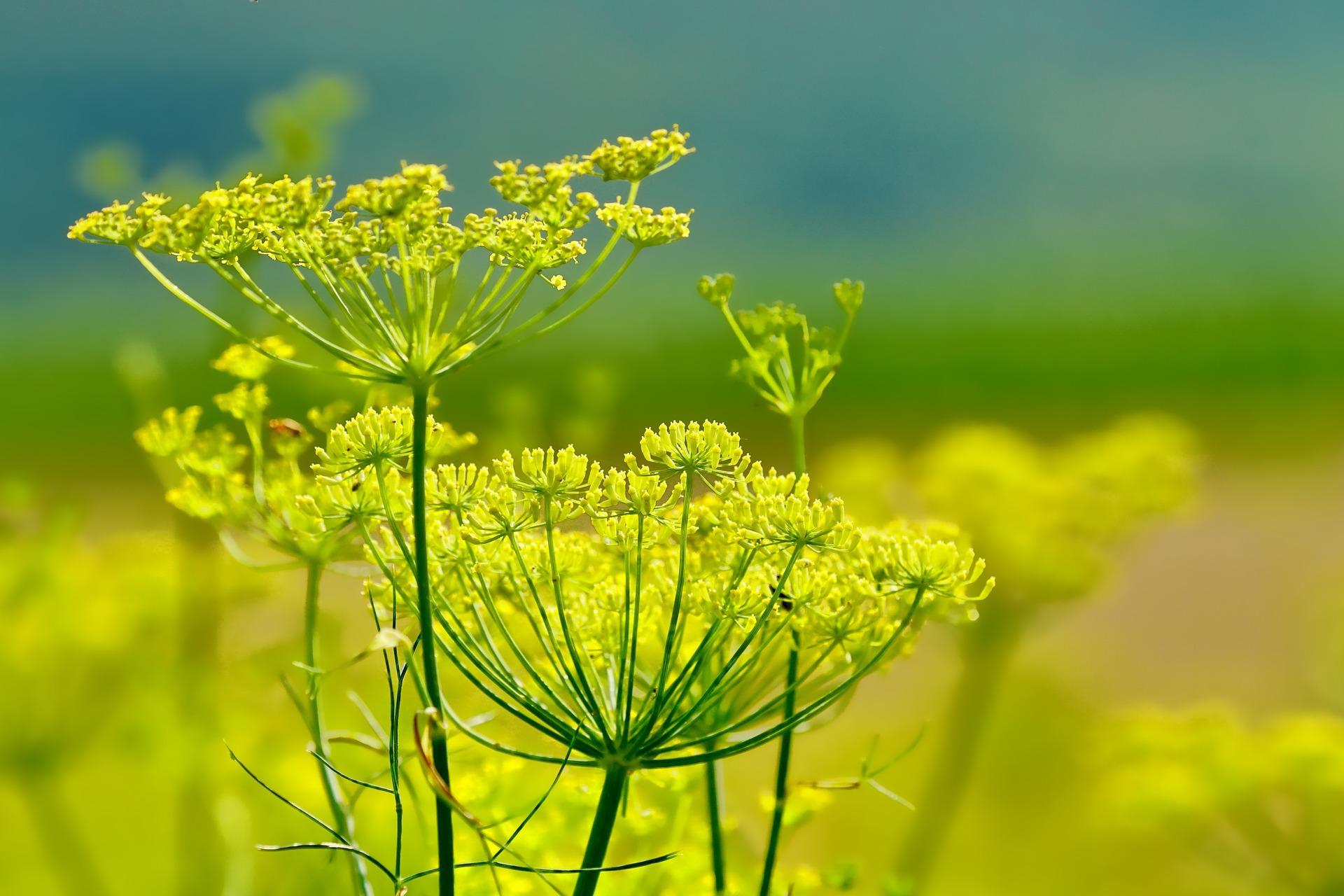
One more small clue before your eyes slide to the answer. This medicinal plant grows most in our climate conditions in South Moravia. And its name is common fennel (Foeniculum vulgare), which you can see below in the picture. Dried fennel is, of course, especially popular in the kitchen in the form of a spice. In the human body, it has beneficial effects, among other things, against intestinal cramps and bloating.
August
If you sow lamb's lettuce in August, you will secure a tasty harvest until the first frosts. Do not forget that you will enjoy a favourite part of meals best in BIO quality. In August, you still have room to plant spinach or lettuces intended for the autumn harvest.
For beauty and health, do not forget radishes or white radish, again using purely organic fertilisers. Growers and gardeners here regularly begin planting kale, black salsify and winter onions in August, which they will harvest the following year.
September
If you want to harvest vegetables in the same year, this is also possible at the beginning of autumn, especially in the case of early radishes, early lettuce and rocket.
If you want to start planting and harvest in spring, plant parsley, spinach or chervil, but in the second half of September it is usually too late, so it is better to rely on the first weeks.
As for ornamental flowers, September is clearly the month for planting bulbs. This group of plants includes, for example, daffodils, hyacinths or tulips.
October
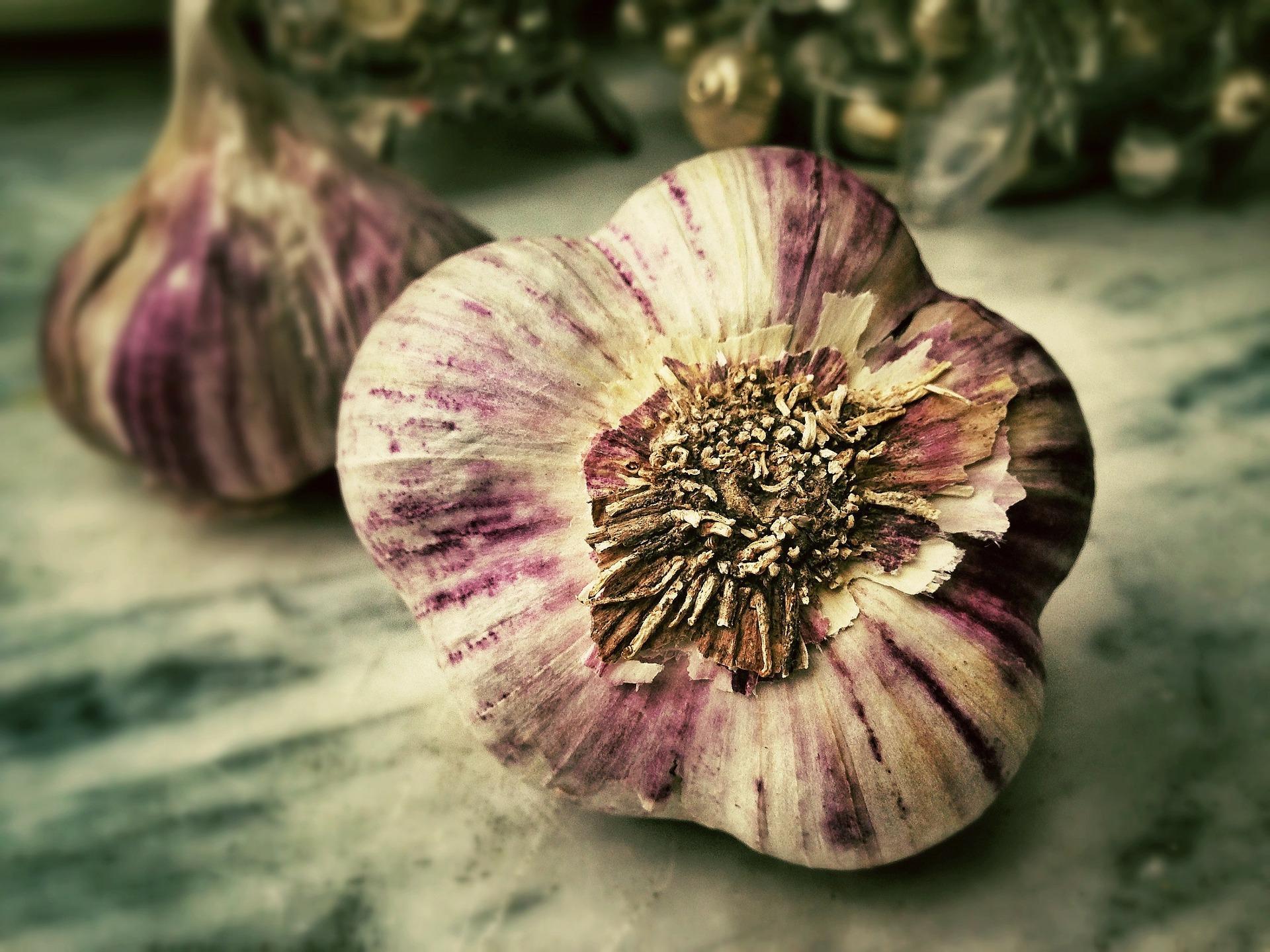
The month of October is a clear answer to the common question of when to plant garlic other than in spring, so go ahead! We only recommend choosing lighter, non-waterlogged soil for autumn planting of this natural antibiotic, as in heavy and wet soil garlic planting material is often attacked by diseases that help prevent it from overwintering. This powerful perennial herb is commonly grown by planting individual cloves of separated garlic directly into the beds. If you grow garlic in proper bio quality, in addition to its fantastic aroma in garlic soup or other dishes, you will also feel its beneficial effects on the body. It is rich in vitamins A, B and C, selenium, calcium and iodine.
November
There are also winter varieties of garlic that you can safely sow in November. And onions as well.
While we are on the subject of how to plant, do not forget to get quality seeds. Your acquaintances often advise you best based on experience from the previous season or even many years of experience, and if you have no one to ask, we are here for you and will be happy to advise you. Call or write to the well-known address info@higarden.eu.
- Garden tools
- Sowing substrate
- 100% organic fertilisers - a complete range
Stress also harms plants, or: Abiotic stresses in plants
Plants are like people. Their health depends on living conditions, proper nutrition, and they are equally harmed by intense stress, also known as the “enemy of yields”. What kind of stress? In this article, we will focus on the specific stress factors that your plants should definitely not face if you want to achieve a beautiful harvest. Read on to find out how to prevent negative influences.
Just like humans, every plant has certain genetic predispositions and innate defences. Modern cultivation, much like medicine, offers effective means of strengthening the natural defence mechanisms of plants as well as practical devices for maintaining optimal conditions for their growth and vitality.
Once a plant is repeatedly or long-term exposed to excessive stress, a stress response occurs. The plant’s receptors, for example photosensors responding to the intensity of light radiation, first trigger a kind of internal alarm, which activates all available defence mechanisms, with the help of which the plant continues to survive. This period of resistance rarely passes without significant damage; it is usually harmed, or even completely destroyed by exhaustion, much like the flower in the picture. 
Unlike us humans, plants are sessile. They therefore cannot run away from stressors around the nearest corner or to a wellness centre. It is therefore the task of every grower to balance suitable conditions so that the plants they care for remain calm and full of life. Below we will discuss the most common abiotic stress factors. From the grower’s point of view, we can imagine under this term flooding, nutrient deficiency, excessively high radiation, low temperatures and the like. As the saying goes, too much of anything is harmful. And that applies in the plant kingdom too. Stress can therefore be caused by a deficiency as well as an excess. We also often encounter a combination of several factors at once. For example, wilting, caused mainly by a lack of water, can also be a response to excessive radiation. A plant’s ability to tolerate stress depends mainly on its intensity and duration. Heat stress can destroy a crop in a short time. Water deficiency within a few days...
Physical stress factors
- extremely high or low temperatures
- drought (water deficit), as well as overwatering or flooding
- mechanical damage
Among the most common abiotic stressors of plants is unsuitable climate. If you grow outdoors, it is necessary to pay increased attention to plants every year, especially during the hot summer. Individual species
have their own temperature optimum, which we can meet perfectly especially when growing indoors. The microclimate inside a grow box or grow room can be conveniently regulated thanks to fans and ventilators, or heating. Changes in outdoor temperatures often also require changes to the settings of indoor elements. In summer heat, your plants will appreciate the presence of CMH or LED lighting due to the lower amount of heat emitted into the growing environment.
Just as destructive as heat can be for plants cold or, when growing outdoors (or in a large outdoor greenhouse), frost. Under the influence of low temperatures, changes occur in the internal cell structures of plants, growth slows down and leaves lose their colour. During frosts and light frosts, tissues are damaged. Plants such as tomatoes or beans are very sensitive to cold.
Always protect the roots as well as the above-ground parts of plants from extreme temperatures.
In hydroponics, protect tanks with nutrient solution from direct light and maintain a temperature of 18-26 °C. Tank cooling can help you with this.
Maintaining optimal temperature and humidity with the use of humidifiers and digital measuring devices is relatively easy, but many beginners make mistakes in placing the probe from a combined thermometer – hygrometer, which should not be missing from the basic equipment of any grower. We recommend placing the probe in the upper third of the plant’s height, that is, somewhere just below the top. Circulation fans are an ideal helper that ensures continuous airflow around the plants. The higher humidity needed for seedlings is excellently maintained during pre-growing in small greenhouses and propagators.
Drought is related to reduced air humidity and is generally better tolerated by plants with a shorter life cycle. Dry substrate is, however, clearly bad, as it does not support the development of new roots. Nature has equipped plant leaves with microscopic stomata that open and close depending on air humidity. As soon as the plant feels drought, it closes the stomata to prevent water loss. The problem for the grower is that closed stomata do not exactly go hand in hand with effective photosynthesis. So watch out for dehydration throughout the entire growing cycle. The best prevention is regular watering.
The mentioned abiotic factors are also excellently prevented by the innovative perforated pots from the brand Hercules and other fabric pots, which help with proper watering and maintain optimal aeration of the root system.
Recommended temperature and humidity ranges for indoor growing:
For the growth stage, the ideal temperature is 21-28 °C in light, 18-23 °C at night, and humidity between 50 and 70 per cent. For the flowering and fruiting stage, lower air humidity of 35-50% is recommended, with daytime temperatures of 21-26 °C and night temperatures in the range of 18-23 °C. Seedlings benefit from higher air humidity of up to 80%.

Chemical stress factors
- Plant and substrate undernutrition
Proper, or rather rich, plant nutrition is the basis of a healthy and juicy harvest. The possibilities available to today’s grower are so varied that this stress factor can be practically eliminated with appropriate plant care thanks to a wide range of fertilisers and supporting additives for the growth and flowering stages. All you need is suitable nutrition so that nothing is lacking for the plants and their roots. We may also encounter oxygen deficiency, so do not forget sufficient aeration of the substrate, which is enabled for example by perlite.
In the case of soil, another difficulty associated with chemical processes acting on the plant is its over-salination. Salinisation of the soil, whether by natural or artificial means, reduces water uptake.
It is also important to ensure that the plant does not have to face a high concentration of toxic ions and heavy metals such as mercury, aluminium or cadmium. Toxins may also be contained in polluted water, so it depends on what water you grow in and what water you use for watering. (This is so important that we will soon dedicate a separate article to this topic.) The presence of toxins disrupts the uptake of nutrients from water or soil and disturbs mineral balance. Heavy metals not only directly threaten the life of the plant, but can completely devalue the final harvest!
- Polluted air
Just as toxins can act from the soil, plants and agricultural crops absorb many harmful substances from the air (especially when growing outdoors), which of course harms them. We are mainly talking about oxygen radicals such as ozone, the excess of which around the green parts of plants significantly accelerates ageing processes. In addition to ozone, growers encounter the effects of sulphur dioxide, ammonia and nitrogen oxides.
- Excess light
An excessive amount of light also contributes to the formation of oxygen radicals. The result is the destruction of chlorophyll. Simply put, in a grow tent or greenhouse, it is enough not to overdo it. Outdoors, it is again necessary to use gardening instincts together with information about the planted species and, on that basis, give them a suitable level of exposure.
We believe that the time you have devoted to reading will help you avoid common mistakes in practice, which cost both plants and your wallet, and we wish your plants in your care the very best. If you would like to ask us anything, we are here for you every day, call or write to info@higarden.eu, so that growing with us is a pleasure for you.
- Perlite
- LED lighting
- CMH lighting
- Thermo-hygrometers
- EC / pH metres