
Grow Three Plants Outdoors – Part 4: The Start of the Growth Phase, Fertilising and Pruning
At the end of May and the beginning of June, the outdoor season gets fully underway. There are more sunny days, and if you have not done so already, now is the right time to plant your seedlings in their outdoor location. Over the following weeks and months, the plants will go through the vegetative period, during which they direct all their energy into growth. Today we will learn how to care for plants grown outdoors so that they lack nothing during the growth phase.
In the previous part we focused on planting seedlings and caring for plants after transplanting. Your seedlings should now be planted in an outdoor location or in a large pot and acclimatised to outdoor conditions. In today’s part, we will explain how to fertilise plants grown outdoors during the growth phase and talk about shaping and trimming. We will also show you how and when to water correctly.
Fertilising during the vegetative phase
 About a week after transplanting outdoors, you should notice new growth on the plants. New, healthy green shoots are a sign that the seedlings have taken successfully and are ready for the vegetative phase. In the case of photoperiod varieties, the plants will not start flowering until August, when the length of the night approaches 12 hours, or after 3 to 5 weeks from germination if you are growing autoflower varieties. The better the plants do during the vegetative phase, the better the harvest you will get in autumn. The growth rate will depend on the weather and also on the amount of nutrients in the substrate.
In beds the soil should contain enough nutrients and it should not be necessary to fertilise the plants, at least during the vegetative phase. However, this is only the case if you care for the beds properly and regularly work organic matter into the substrate in the form of compost, worm humus and mulching. If you begin to notice nutrient deficiencies on plants growing in open ground already during the vegetative phase, this may indicate both a nutrient-poor substrate and poor pH. We described how to care for beds and adjust soil acidity in the previous part.
When growing in pots, the soil will sooner or later become depleted and it will be necessary to fertilise the plants. If you are growing in light substrates (light-mix), the plants may start to run short of nutrients just a few weeks after transplanting. In pre-fertilised or living soil substrates, nutrients may last for a month or longer. How quickly the substrate becomes depleted also depends on the size of the growing container. The more soil the plants have available, the more nutrients they can draw from it.
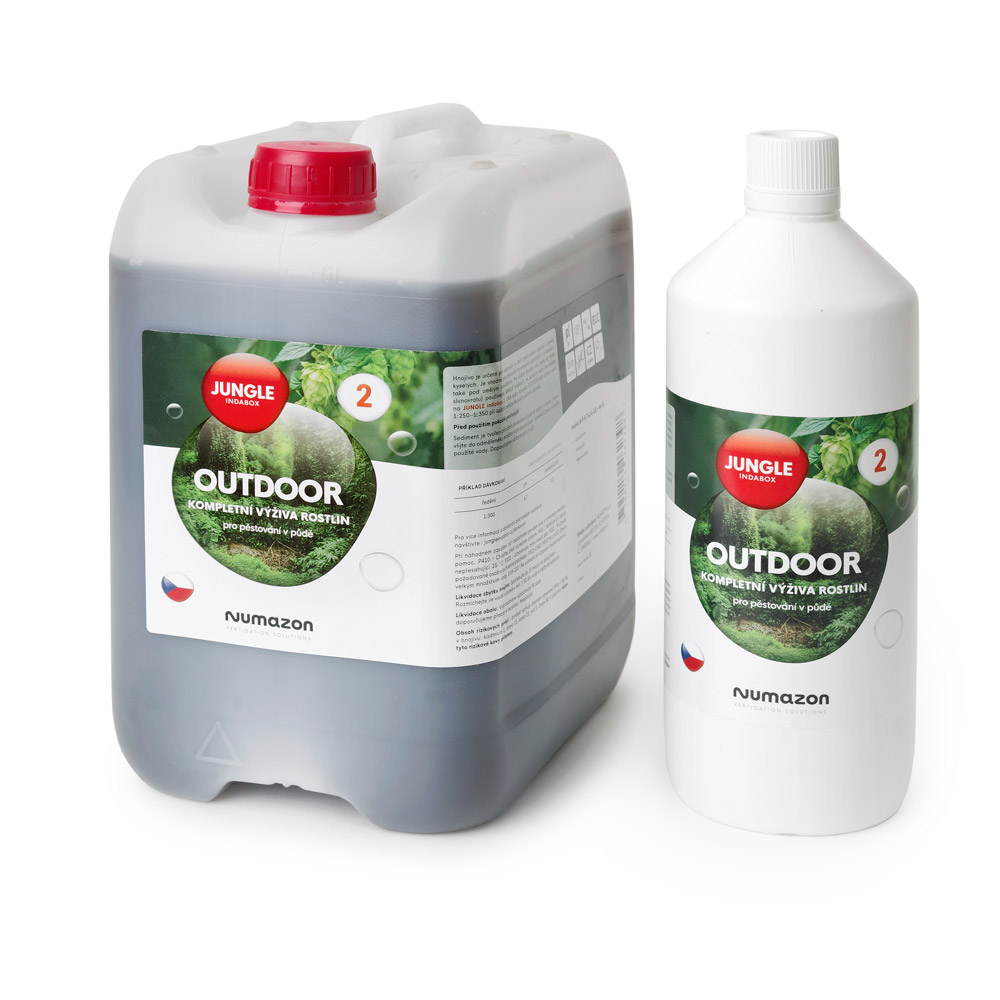
During the vegetative period, plants most often lack nitrogen (N), a nutrient element they need to form new leaves and roots. A nitrogen deficiency first appears on the plants as yellowing of older leaves in the lower parts. The fastest way to supply plants with nitrogen is a growth fertiliser. The suitable type of fertiliser depends on your cultivation method. When growing in open ground, we recommend using organic growth fertilisers, which are ecological and gentle on soil microbes. When growing in pots in soil mixes, it is also possible to use mineral fertilisers for soil, but they should not be combined with biofertilisers or living soil substrates.
You may also be interested in: How to use growth fertilisers
Watering outdoor-grown plants
 It is almost impossible to give universal instructions for watering plants. The amount and frequency of watering depend on many factors – the type of substrate, the age of the plants and, in outdoor growing, also the weather. In general, plants do best in moist soil and long periods of drought slow their metabolism and reduce yields. On the other hand, roots benefit when the soil is not constantly overwatered and has time to dry out partially between waterings.
In beds it is usually not necessary to water plants as often as in pots, because they have deep roots that draw water from the lower layers of soil. Even so, you should not leave watering entirely to nature, especially with young plants with underdeveloped root systems. Check the moisture of the substrate regularly and water the plants as soon as the soil dries to a depth of 3–5 centimetres. Rainwater or tap water that has been left to stand is suitable for watering outdoor plants.
HIGARDEN TIP: You can slow the rapid evaporation of water from the soil on hot days by mulching or by planting cover crops, such as alfalfa and other species capable of fixing atmospheric nitrogen.
When growing in pots, simply lifting the container is often the easiest way to find out whether it is time to water the plants. After the first thorough watering, lift the growing container so that you know how much it weighs when fully watered. Water plants in vegetative growth whenever the growing container is noticeably lighter, approximately 60–80% of that weight. When growing in large pots and raised beds, proceed in the same way as in open ground and water whenever the top 3–5 centimetres of the substrate have dried out.
You may also be interested in: How often to water plants grown in pots
Trimming and bending
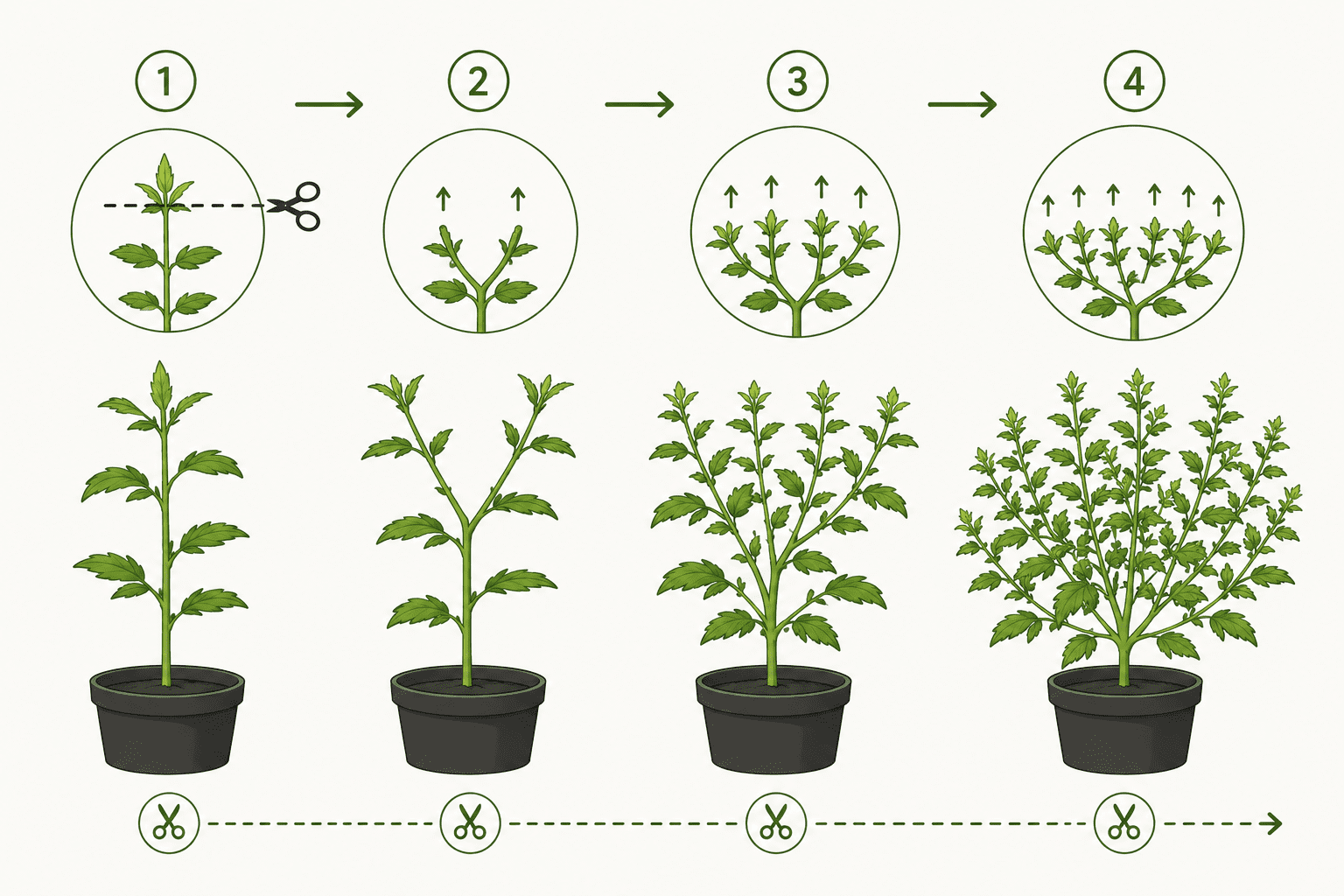 During the vegetative phase, many growers trim or bend plants to give them the desired shape or adapt them to the specific conditions of the growing site. The most common method is topping, which you can start as soon as the plants have at least three levels of true (serrated) leaves. Simply pinch off the tip of the shoot on the main stem just below the top with sharp scissors or a scalpel. Two new tops will grow from the side nodes located on the stem where the leaves emerge. The process can be repeated until the plants begin to flower. The more times you top a plant, the bushier it will become.
HIGARDEN TIP: If you are growing in a windy location, we recommend tying the main stem of the plant to a bamboo support stake, which will give the plant support during sudden gusts of wind.
Other important techniques for outdoor growers are tying and bending plants, especially when growing in greenhouses and polytunnels. Remember that, with the exception of autoflower varieties, plants will continue to grow in height for quite a long time into the second half of summer. Therefore, when growing in a limited space, it is necessary to start tying the plants quite early so that they gradually fill the entire space.
You may also be interested in: LST and other techniques for shaping and training plants
In the next part we will explain how to protect plants from pests and how to prepare them best for flowering so that they reward us with a rich harvest at the end of the season. For more useful advice and guides for outdoor and indoor growers, visit the Higarden blog.