
How Often Should You Water Plants
We at Higarden are surprisingly often asked a simple-sounding question by our customers. How often should I water plants grown in pots? The answer, however, is not as simple as it may seem. The drying of the substrate is influenced by several factors, and there is no universal watering method that works every time and for everyone. Rather than trying to stick to a predetermined schedule, it is much more practical to learn to recognise when a plant needs watering.
What all affects how often plants need to be watered? First of all, it is the age of the plant and the extent of the root system. Small seedlings need only a few drops of water, while mature flowering plants can drink several litres of water a day. The frequency and amount of watering are also affected by the type of growing medium. Plants in soil need watering least often. Coco and hydroponic substrates require regular and frequent watering. Last but not least, it also depends on whether you have your plants in a classic plastic pot or a fabric pot, which dries out the fastest.
How often to water seedlings
You may be surprised, but growers make the most mistakes when watering seedlings. Most guides state that young plants need plenty of moisture. That is true, but seedlings definitely do not benefit from an overwatered substrate. They will grow slowly in it, and roots drowned in water will not breathe and may start to rot.
So how should you water seedlings correctly? When watering for the first time after germination, give the plants only a small amount of water around the stem, for example with a pipette or a sprayer. Only the next day, or once the substrate has dried a little and you can see that the root has taken hold, can you add more water. Your aim should be for the top layer of the substrate to dry out every two days. If it takes longer, try increasing the temperature in the growing area or increasing the light intensity (if the plants can handle it). The humidity when growing seedlings should be between 60 and 70%, but if the substrate is drying too slowly, you can speed up drying slightly by reducing humidity.
You may be interested in: A detailed guide to raising seedlings
How often to water plants in the vegetative stage
 Once the plants have grown a little and you transplant them into larger pots, you can start giving them more water. As with seedlings, however, plants grown in pots do better with less water at more frequent intervals, not with a substrate that is overwatered for long periods. This applies especially in the first days after transplanting, when the roots have not yet spread through the whole pot. Initially after transplanting, give the plants a smaller amount of water and gradually increase it.
Each type of substrate retains water in a slightly different way. Soil substrates dry out the slowest and, under normal circumstances, it is enough to water plants every 2 to 4 days. Coco substrate dries out faster and most growers water plants every day or every other day. Rockwool (mineral wool) dries out the fastest and is particularly suitable for irrigation systems that deliver nutrient solution to plants automatically at regular intervals several times a day.
You may be interested in: How to fertilise plants in the vegetative stage
Plants grown in pots benefit when the substrate dries out sufficiently between individual waterings. However, that does not mean you should deprive them of water. A good trick is to weigh the pot before and after each watering. If you see that the top layer of the substrate is dry and the growing container is noticeably lighter, it is time for the next watering. Water plants with a developed root system thoroughly, ideally so that a little water runs out through the bottom of the pot.
OUR TIP: If plants grown in soil or coco need watering more than once a day, then the pot is too small for them and you should transplant them into a larger one.
How often to water plants in the flowering stage
Flowering plants can be incredibly thirsty. This is doubly true if they are grown indoors under powerful LED grow lighting. Most growers water flowering plants grown in soil substrates every 2 to 3 days. In coco, watering is needed more often, usually once a day or every other day, but in some cases even twice a day.
In the flowering stage, make sure the substrate dries out sufficiently between individual waterings. Buds are very susceptible to mould, and overwatered plants are the first to be affected by grey mould (Botrytis cinerea), which causes flower rot.
You may be interested in: The most common myths about watering plants
How to water plants in coco substrates
In the previous lines, we hinted several times that coco substrates retain water a little differently from soil-based ones. Coco fibres dry out faster than soil and, even when fully watered, allow air to reach the roots. That is why it is sometimes said that coco cannot be overwatered. This is a slight exaggeration, but it illustrates well the fact that plants planted in coco are watered more often than those in soil.
However, the porosity of coco also has one small disadvantage. Coco substrates do not forgive irregularity. Once they dry out completely, they lose their retention properties and cannot hold as much water as before. That is why it is important to be consistent and not let the coco substrate dry out completely.
Once your plants in coco have rooted well, try to thoroughly drench the pot with each watering so that a small amount of water runs out through the bottom of the pot. Coco substrates do not contain nutrients themselves, and when growing in them, fertilisers based on mineral salts are used. If watering is insufficient, these accumulate in the substrate and, if too much builds up there, they burn the plant roots.
You may be interested in: How to measure EC when growing in coco
How to water plants in soil and living soil
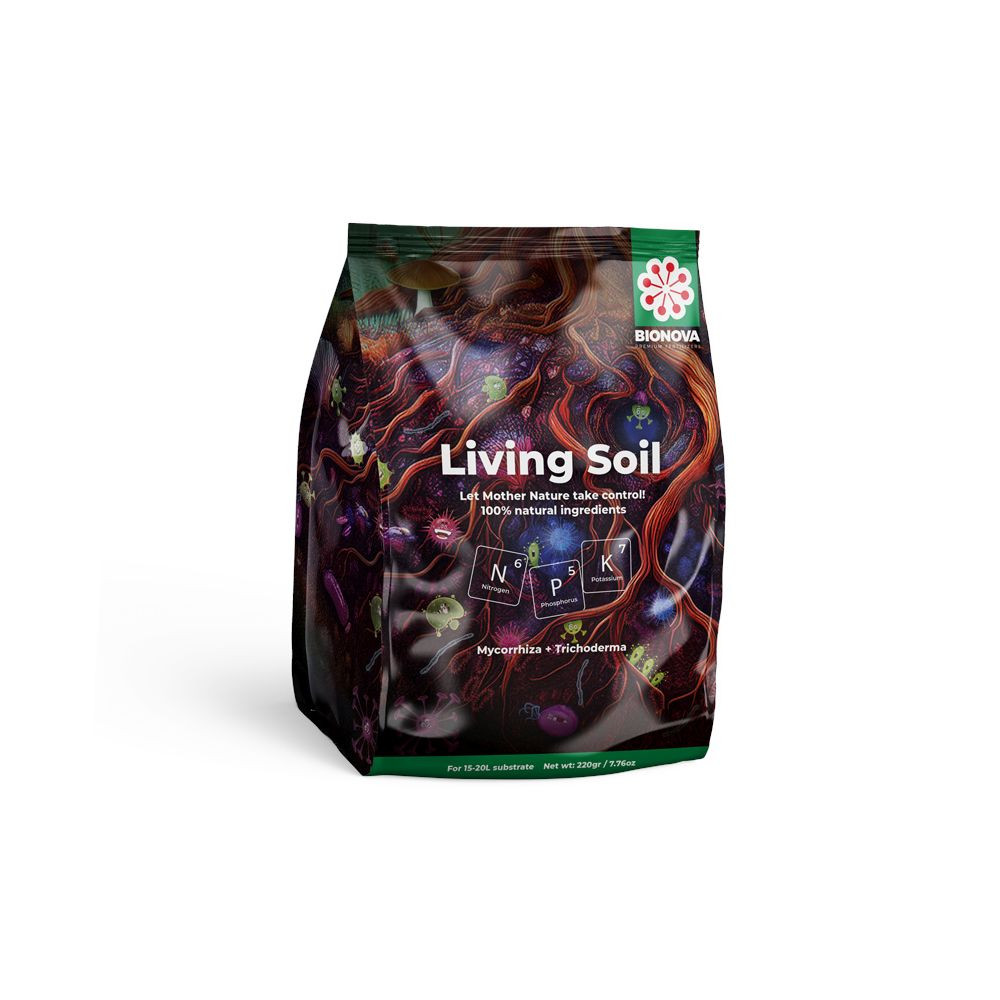 As already mentioned, soil and soil-based substrates retain water better than coco or rockwool. This means they do not require watering as often, but on the other hand it is easier to overwater soil. When growing in soil, water only when the top 2 to 3 centimetres of the substrate are dry and the pot is noticeably lighter.
If you grow with mineral fertilisers, make sure that some of the water runs out through the bottom of the pot with each watering so that the pH and EC in the substrate are balanced. Living soil requires slightly different handling. This type of substrate is full of beneficial microorganisms that do not suit an environment that is too dry and cannot tolerate mineral fertilisers or chemical sprays. When growing in living soil, keep the soil always slightly moist and water only with clean water.
You may be interested in: How to grow in living soil without fertilisers
How to water plants in fabric pots
Fabric pots are breathable, which benefits the root system because air supports so-called air-pruning and prevents the roots from circling. However, this also means that the substrate in fabric pots dries out faster than in plastic ones. Expect to water at shorter intervals, roughly one third to one half more often. Water plants in fabric pots slowly so that the water has time to soak in. If you are too hasty, most of the water will run out through the bottom of the pot. Do not forget to place the pots on a saucer or a plastic tray.
You learn to water plants best through practice, and it is only one of many skills every grower needs to master. However, you should pay the same attention to fertilising, climate control and choosing the right genetics. If you want to learn more about indoor and outdoor growing, follow the Higarden blog, where we bring guaranteed guides and tips written by our growing experts and without AI nonsense.