
Hydroponics Made Easy: Drip Irrigation
Drip irrigation, micro-irrigation, or simply DRIP – these are all well-established terms among growers for the classic method of watering plants, based on economical water dosing. Read on to find out how it works and what benefits it brings to growers!
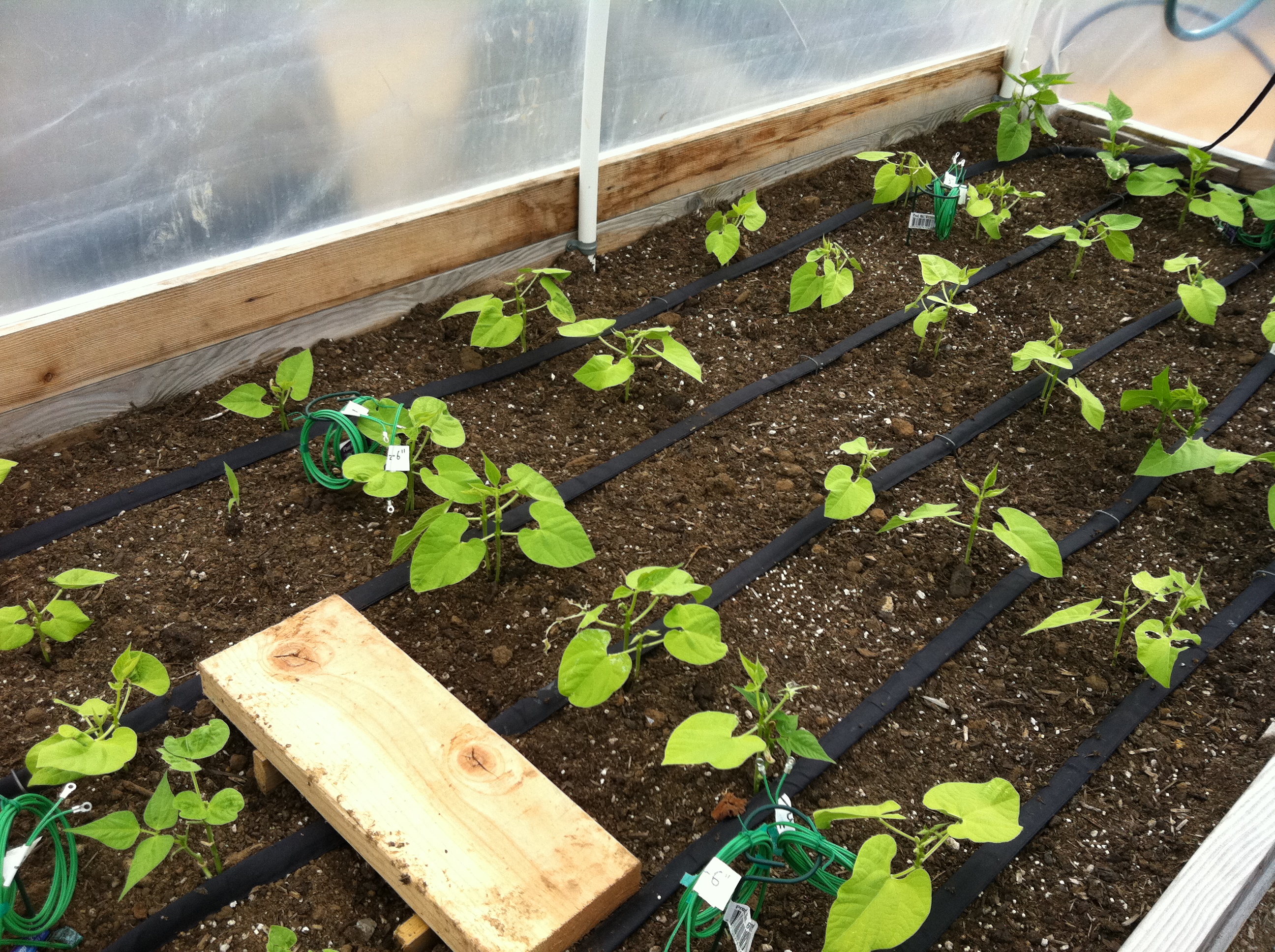
In addition to achieving minimal water consumption, drip irrigation makes the watering process significantly more efficient. This is especially true if you grow a larger number of plants.
If you expect a proper harvest in your garden or perhaps in a greenhouse, manual watering is a thing of the past! However, the drip method also finds use when growing herbs in the comfort of home or, conversely, in agriculture on a large scale.
The larger the scale, the greater the water savings. And over the long term, water savings always show. Besides the economic aspect, there is of course also the environmental one. With a drip irrigation system, you certainly will not waste water. At the end of the article, we will also discuss how important the properties of the water you use to water your plants are, as well as the quality of the water source.
What is drip, or how does drip irrigation work in practice?
Drip can sometimes seem unnecessarily complicated to beginner growers, yet the opposite is true. So let us take it step by step. What does a drip irrigation system consist of?
- Water source (tank, well, mains water supply).
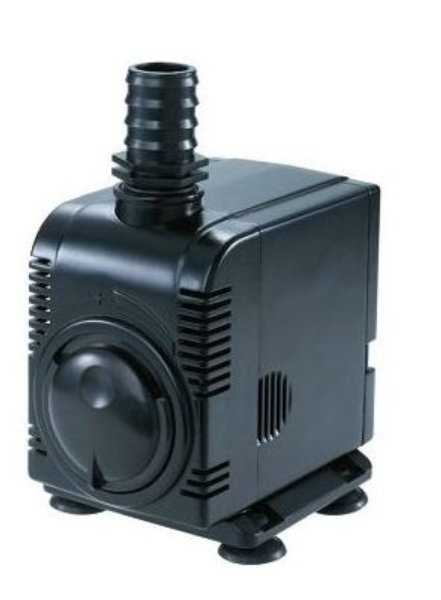
- Pump (see image, except when using a tap)
 Water distribution, or rather the distribution of tubing (capillaries and hoses), which are connected to the water source. At the end of the capillaries are connected irrigation needles, which are inserted into the soil.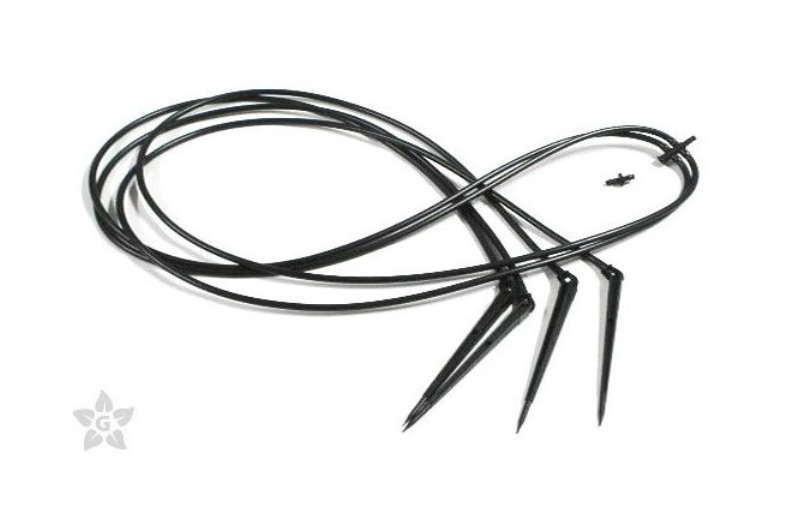
- Reducers, connectors, end caps, valves and various shaping components (connectors, connectors).
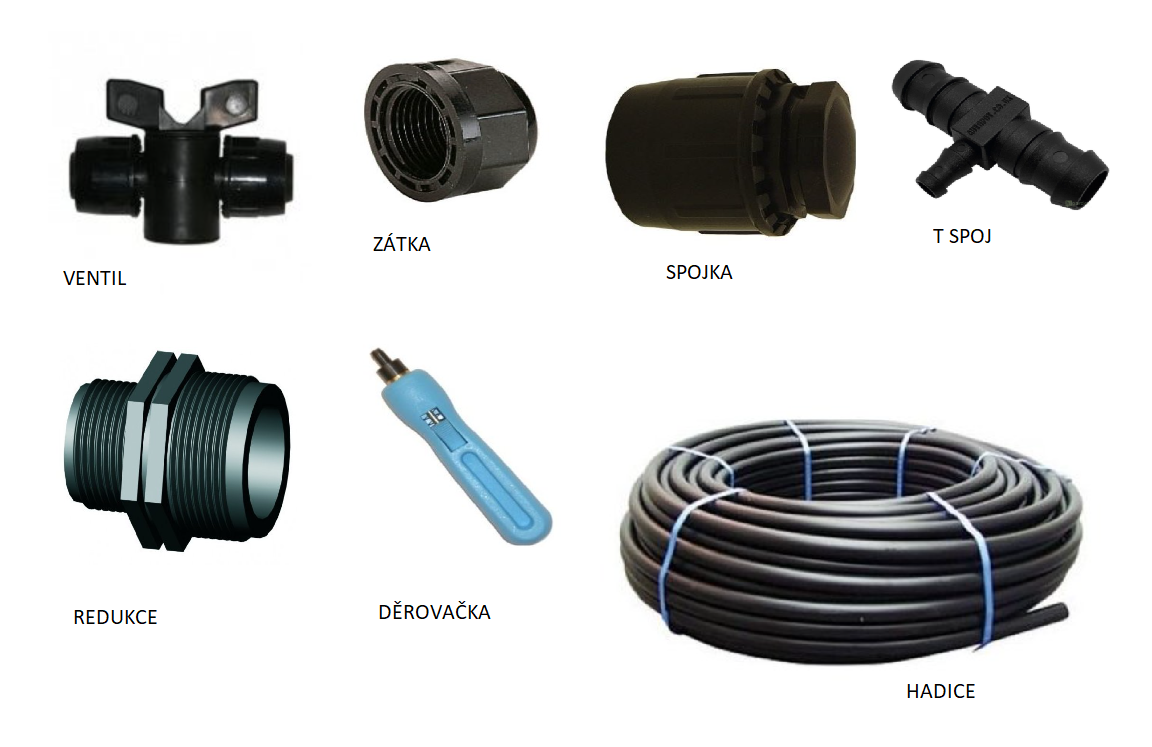 Assembling drip irrigation - how do you do it?
- When assembling drip irrigation, the grower’s first task is to lay out the hose around the plants so that it does not cross over itself anywhere, let alone become tangled, and so that water and nutrients, driven from the tank or well by a pump with sufficient flow rate and head, can flow evenly through the irrigation system.
- Next comes the hole punch, with which you make holes in the hose in places that are ideal for irrigation. In addition to ordinary hole punches, you can also make the work easier by using the lever hole punch. For the smallest drip systems with thin-walled distribution piping, in which there are only a few holes, a 3 mm hole punch will suffice.
- A cutter is used to cut the drip tubing.
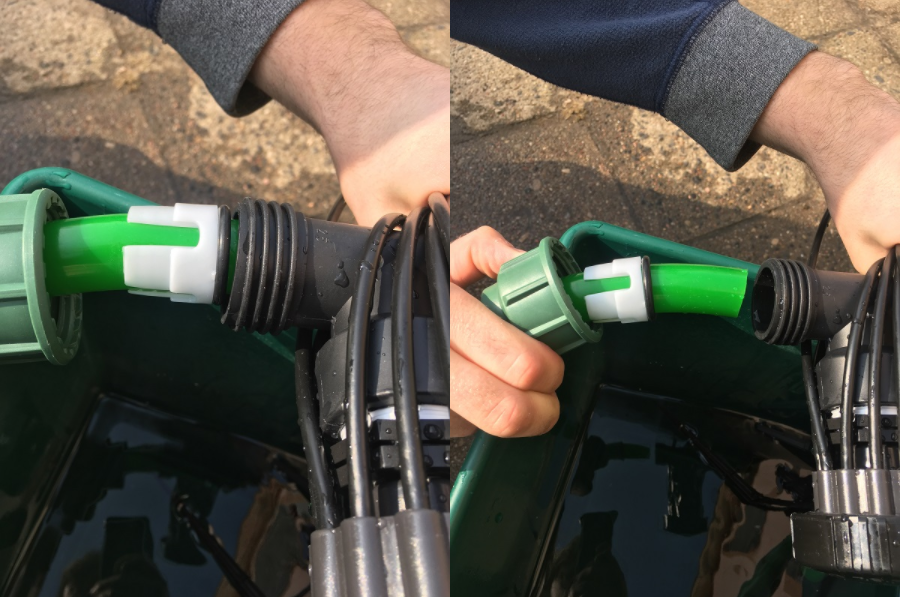
- Even when making the holes, bear in mind that water and nutrients need to be brought as close as possible to the plant roots. This is made possible by the end capillaries. “Basic” end capillaries are available in the form of capillary needles. However, many growers swear by multi-part capillary distributors with end needles (Topspin). Correct system connection is also essential, as you can see in the image. This will prevent leaks of water with precious nutrients. When connecting, pay particular attention to the correct placement of the seals.
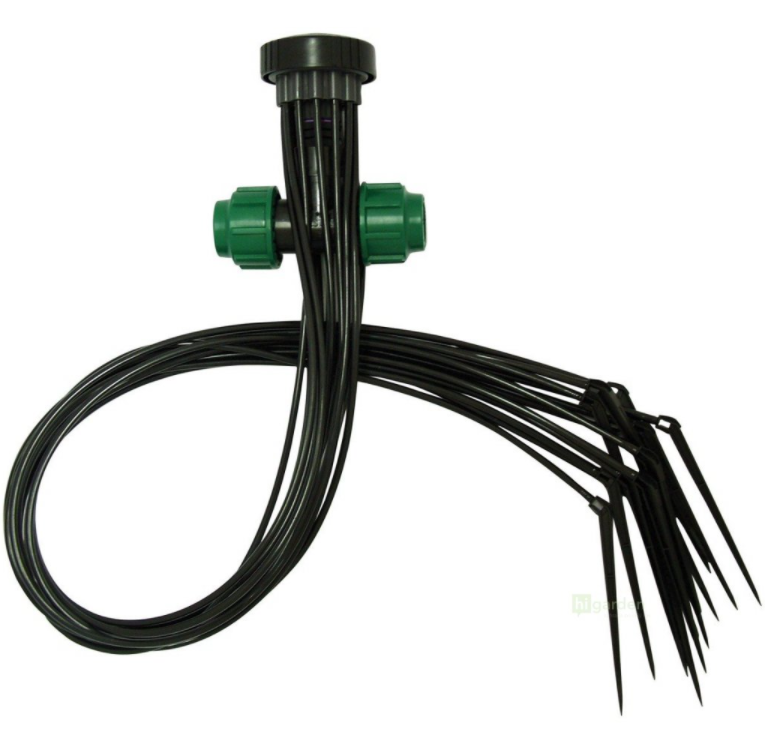
- Thanks to the fact that through capillary needles the watering gets below the surface directly into the substrate, the nutrient solution no longer evaporates into the air afterwards. It is precisely the high rate of water evaporation that is typical of long-outdated manual watering, because with each growing cycle you would use a disproportionately larger amount of water than when you assemble your own drip system.
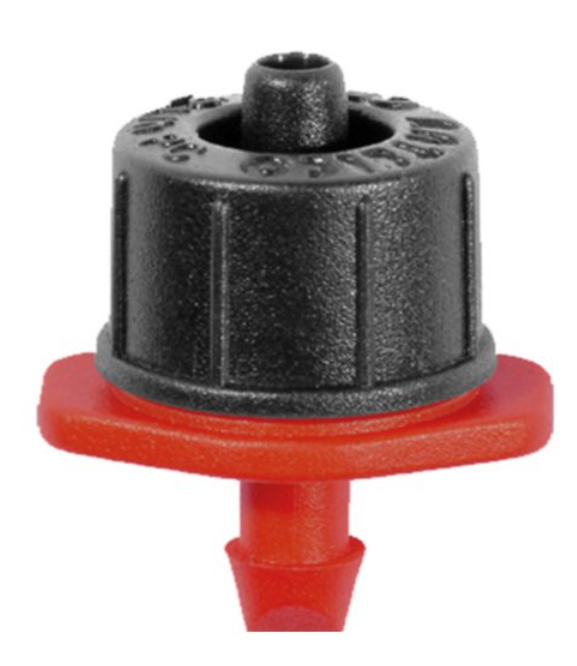
We must not forget what capillary pressure irrigation means. It is drip irrigation that works with higher water pressure, more precisely from 0.5 bar upwards. This is also associated with a greater water column height, with the equivalent of 0.5 bar being a 5 m water column. It is worthwhile for short water runs of approximately 2 metres and when irrigating only a few plants. The downside of pressure drip irrigation, however, is the uneven distribution of nutrient solution to individual plants. In drip systems of this type, growers therefore use pressure valves (see image), which for a few pounds will ensure that all the plants in the system receive regular watering of the same intensity, regardless of the distance from the water source and regardless of how high the water column leading from the pump is. Different variants of drippers with a pressure valve differ from one another in the amount of watering released per hour. If you decide on pressure drip irrigation, do not forget that you need to choose a pump with a greater head than the starting pressure. If the starting pressure is 0.5 bar, choose a pump whose head is at least 0.6 bar after subtracting the height difference within the whole system.
Our TIP: When working with a drip system, practical waterproof tape can be useful in many situations.
Automatic drip irrigation