
Grow three outdoor plants – Part 2: Germination and seedling pre-cultivation
Preparations for the outdoor season are slowly reaching their peak. Anyone who wants to be among the first legal outdoor harvests this year should not sleep through the start of spring. That is why, at Higarden, we have prepared a guide for outdoor growers that will take you through outdoor cultivation step by step. In the second part, we will focus on germination and pre-growing seedlings.
In the previous part of our series for outdoor growers, we introduced different ways of outdoor cultivation, selected the right variety and planned germination. Today we will focus on how to germinate seeds properly and learn how to pre-grow seedlings for outdoor planting.
How to germinate seeds for outdoor cultivation
Many growers germinate seeds in a paper towel or a glass of water. Both of these methods are functional, but they have one major disadvantage. When moving a germinated seed into the substrate, it is easy to damage the fragile root. It is much safer to germinate in propagation plugs or in a sowing substrate, where you do not have to handle the germinated seeds.
When growing outdoors in soil, you can use peat plugs, cubes made from organic substrate, propagation cubes made from mineral wool or coco plugs for germination. If you want to germinate directly in a sowing substrate, get small plastic pots for germination or disposable pots that decompose in the soil.
You may also be interested in: How to choose the right medium for germination
 Seeds need enough moisture, warmth and time to germinate. Most varieties germinate best at room temperature (21–26 °C). Seeds will also germinate at lower temperatures, but it will take considerably longer and there is a risk of mould. If you are germinating somewhere cooler, place a heating mat under the seeds.
Whether you are germinating in soil, propagation cubes or plugs, it is important that the substrate remains sufficiently moist throughout the entire germination period. If the seeds dry out for even a few hours, they will probably die. The most reliable way to keep germinating seeds moist is in a small plastic propagator – propagator.
To moisten the substrate, you can use ordinary tap water at room temperature. Even better is to add a microbial inoculant containing beneficial soil microorganisms to the water. Mycorrhizal fungi and other beneficial microbes live on the roots, where they help plants absorb nutrients from the substrate. If you treat the seeds before they germinate, the microbes will colonise the roots from the very first moments of the plant’s life and protect them against pathogens that cause damping off.
If the seed is fresh and has been stored correctly, the seeds should germinate 3 to 7 days after sowing. Some varieties or older seeds may take longer to germinate, but if the sprout has not appeared within 14 days, the embryo is probably dead.
You may also be interested in: Germination from A to Z
How to pre-grow seedlings for outdoor planting
 Correct timing is essential for the success of your outdoor season. If you put plants outside too early, spring frosts can kill them. If you wait too long, you will deprive them of valuable days of sunlight. Because spring weather is often unpredictable, most growers prefer to wait with outdoor planting until the second half of May after the Three Ice Saints, as the folk saying advises. However, you will do no harm if, by then, you pre-grow healthy seedlings from seed. This will give the plants a few weeks’ head start, and after transplanting they will reward you with faster growth.
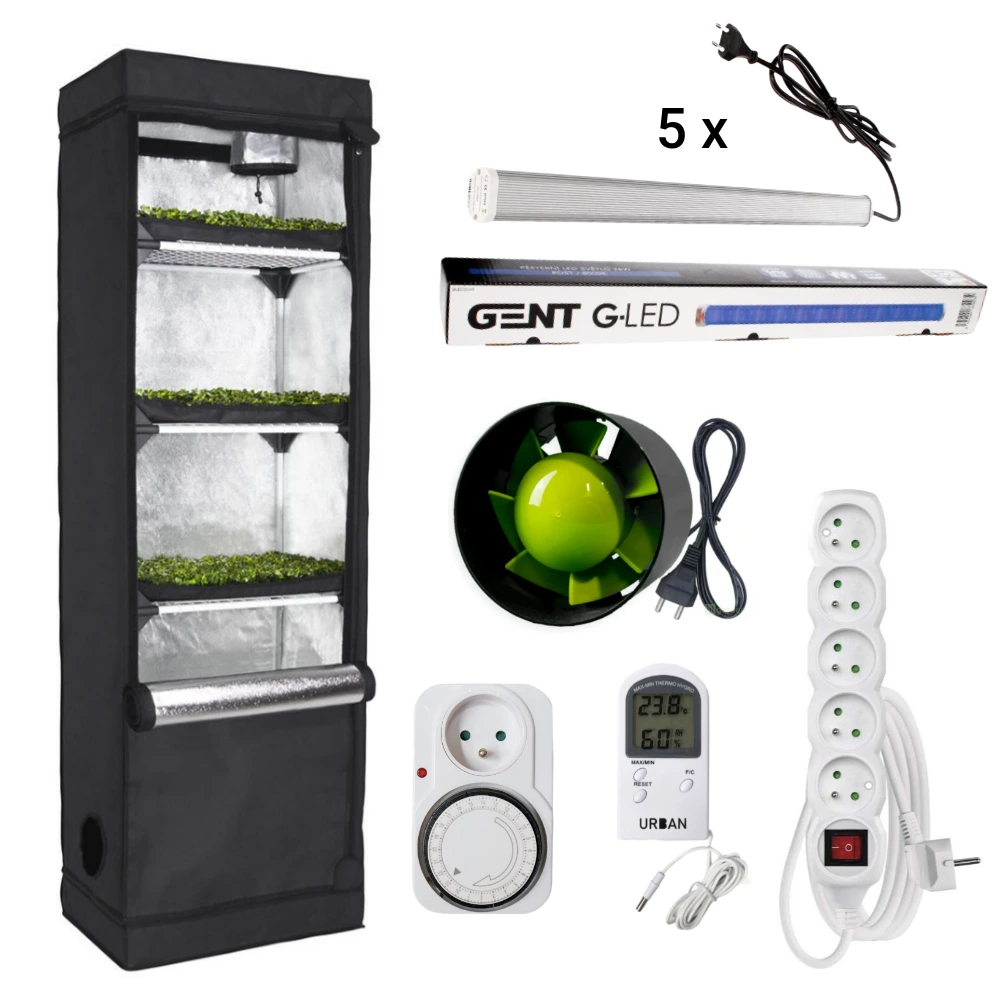
You can pre-grow seedlings on a sunny windowsill, but it is better to illuminate them with weak light with a growth spectrum for approximately 16 to 18 hours a day. Plants under artificial light will grow noticeably faster and better than on a windowsill. Your seedlings will do even better if you place them in a grow box, where they will have not only enough light, but also higher air humidity.
If you are growing from seeds of photoperiod varieties, you can start germination two weeks (seedlings on a windowsill) to four weeks (indoors under artificial light) before the planned planting. For autoflower seeds, start a little later or grow the seedlings under stronger artificial light. With autoflowers, it is important that nothing slows the plants down in the first weeks of life and that they can grow properly before they start flowering.
The best option for growing seedlings is an organic soil substrate that contains enough nutrients for the first few weeks of life. Avoid heavily pre-fertilised mixes that could burn small plants. Lightweight substrates of the “light-mix” type are also not suitable, as they contain only a small amount of nutrients and are more suitable for growing with mineral fertilisers. In the first few weeks, you can support seedlings with a root stimulator, or with a weak organic growth fertiliser.
Substrates suitable for growing seedlings for outdoor planting
- BioNova Bio Soilmix
- BioBizz All-Mix
- Plagron Allmix
- Canna Bio Terra Plus
- Atami Bio Grow Mix
- BioBizz Juju Royal Light Rebel
You may also be interested in: A detailed guide to pre-growing seedlings
In the next part of Grow Three Plants Outdoors, we will transplant the seedlings to the outdoor site and briefly discuss choosing fertiliser for outdoor cultivation.