
What is the easiest way to grow indoors?
Indoor cultivation can seem like quite a challenge – complex equipment, EC and pH measurements, switching light modes, and endless fine-tuning of details. But it can also be done more simply. All you need is the right approach, and nature will take care of most of the work. We will show you the easiest way to grow indoors for beginners or for those who want to cultivate easily without unnecessary stress.
Indoor cultivation takes many forms – from high-tech hydroponic gardens, through growing in pots, to raised beds. What all these methods have in common, however, is the optimised environment in which the plants are kept. Unlike outdoor growing, indoors plants have access to the maximum possible amount of light and water, and the growing space has the ideal temperature and air humidity. The only thing that can slow them down in such conditions is a lack of nutrients. Proper plant nutrition is often the stumbling block for both beginners and advanced growers. How can this be avoided?
You may also be interested in: My first grow box – equipment for beginner indoor growers
Growing in pre-fertilised substrates
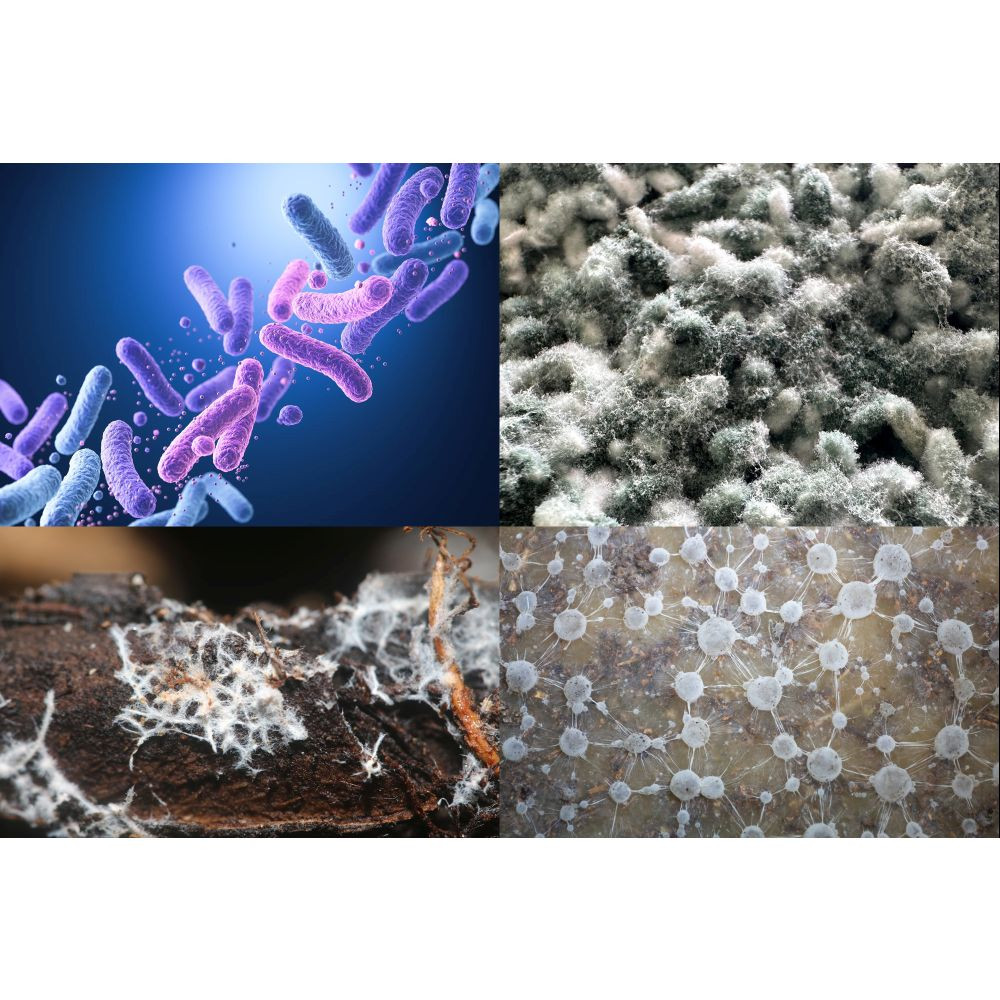 Just as there are many cultivation methods, there are countless ways to feed plants. Many indoor growers use highly effective mineral fertilisers. These are extremely effective, but they have one major disadvantage – plants become literally dependent on them. Mineral salts bypass the natural nutrient cycle, which depends on the cooperation of soil microorganisms and plants. That is also why they work so quickly. However, this ability comes at the cost of the need to fertilise often and precisely using a nutrient solution with adjusted pH and EC. Mineral fertilisers are usually used in hydroponics and in growing in soilless substrates such as coco, mineral wool (Grodan), perlite or expanded clay (LECA).
You may also be interested in: Mineral or organic fertilisers – which should you choose?
Organic fertilisers stand in contrast to mineral ones. They require soil microorganisms to work and therefore function somewhat more slowly. But that is precisely where their magic lies. Simply put, in organic growing all the nutrients that plants obtain from the soil must first be processed by microbes. The advantage of this process is that plants take from the soil only what they really need. It is enough for the substrate to contain sufficient nutrients. Thanks to this, complex measuring is not necessary when growing with organic fertilisers, and the risk of over-fertilisation is minimal.
Under the broad term organic fertilisers, you will find various formulations. Liquid organic fertilisers, which are added regularly to watering, are very popular among growers. However, if you want to grow really simply, go for dry organic fertilisers and pre-fertilised growing substrates. The following nutrition programmes are intended for growing in soil, and what they have in common is that for a large part of the growing cycle you will water the plants only with clean water, while the fertilisers take care of the rest.
BioNova Living Soil
BioNova Living Soil is an organic soil fertiliser that enriches any soil substrate with the necessary nutrients and all the required microbes. You can use any standard growing substrate; the most suitable are those intended for organic growing (for example Canna BIO Terra) or light mix type substrates. Avoid only heavily pre-fertilised mixes containing mineral fertilisers. After mixing, you will obtain an organic substrate that only needs to be watered, throughout the entire growing cycle.
You may also be interested in: Everything about BioNova Living Soil
Biotabs
Biotabs is a brand of organic fertilisers that offers a complete nutrition programme for organic growing. The basis consists of solid fertiliser tablets, which can be combined with all standard substrates except pre-fertilised ones. At the beginning of the growing cycle, the tablets are inserted into the pot, and the plants are watered only with water. In the Biotabs programme you will then find a range of useful organic additives with which you can enrich the substrate, as well as liquid organic products for plant protection and support of flowering.
You may also be interested in: Everything about Biotabs organic fertilisers
Pre-fertilised soil mixes
Pre-fertilised horticultural substrates differ from the previous two options in that they do not always contain only organic fertilisers. Light-mix type substrates contain only a small amount of fertiliser, which lasts the plants for the first few weeks of life, and are then combined with organic or mineral fertilisers. Nutrients in heavily fertilised substrates last longer, but certainly not for the entire growing cycle. A proven practice for many growers is to use liquid organic fertilisers in combination with these substrates. This gives them the best of both worlds. In the first few weeks, they do not need to fertilise the plants during the peak of the vegetative phase, and during flowering they can supply the plants with nutrients as needed.
You may also be interested in: How to choose a horticultural soil substrate
How to grow in pre-fertilised substrates
Although a substrate full of nutrients will certainly do a lot of the work for you, your indoor garden will still need some care. An optimal climate in the growing space is a given. We have discussed the importance of temperature, air humidity and the amount of light many times on the Higarden blog. If it is too cold in the growing space or you are lighting the plants with weak light, they will not thrive even with the best fertilisers.
You may also be interested in: What are the ideal conditions for indoor growing
If you are growing with organic fertilisers, always water the plants with clean water that you have left to stand or filtered to remove chlorine. Chlorine harms the microorganisms in the soil. Soil microbes are also killed by the use of chemical pesticides and herbicides or by too many salts from mineral fertilisers.
It may happen that the plants lack nutrients. For example, if you leave them in the vegetative phase for a very long time, grow plants with a long flowering period, or have used a pot that is too small. In such a case, you can supply the plants with nutrients using a fast-acting liquid organic fertiliser. If you want to act really quickly, you can switch to mineral fertilisers for growing in soil during the growing cycle.
You can find more practical guides, product reviews and growing tips on the Higarden blog, where we draw on real experiences from indoor and outdoor growers.