
How to repot plants
Transplanting stresses plants and, if it is not done correctly, it can significantly slow their growth. On the other hand, gradual transplanting from a smaller pot into a larger one benefits plants, as it stimulates them to form new roots. Whether you grow indoors or outdoors, we will show you how to transplant plants gently and at the right time.
How often, and how many times during a growing cycle, should plants be transplanted? Most growers first germinate seeds in seed trays, on a tissue or in water, and only after germination do they plant them into a small pot for raising seedlings. Young plants do not yet have a well-developed root system, and in a smaller pot it is easier to maintain the appropriate moisture, salinity and acidity of the substrate. If you transplant a germinated seed straight into a large pot or into a bed, it can easily happen that you overwater the substrate and suffocate the roots. You should transplant plants into a larger pot once the roots have grown through the substrate. When growing indoors, it is usual to transplant plants once or twice during the vegetative phase. Plants grown outdoors in beds are usually transplanted only once.
You may also be interested in: How to choose the right pot
How to tell when it is time to transplant plants into a larger pot
 An experienced grower can reliably tell when their plants have exhausted the space in the pot and it is time to transplant them. The main signs are roots growing through the drainage holes in the bottom and the substrate drying out quickly. If you have to water plants more than once a day, the pot is probably too small for them. The exception is growing systems based on frequent watering, such as ebb and flow or hydroponic and self-watering systems.
Seedlings are usually grown in small plastic pots with a volume of up to 1 litre, where they grow for roughly two weeks to a month. If you grow indoors and want to give plants a long vegetative phase, first transplant them into a medium-sized plastic pot with a volume of roughly 3–5 litres. After another few weeks and before flowering begins, transplant the plants into the final large pot. For autoflowering varieties or when the vegetative phase is short, transplant seedlings straight from the small pot into the final growing container.
You may also be interested in: How often to water potted plants
How to transplant plants gently
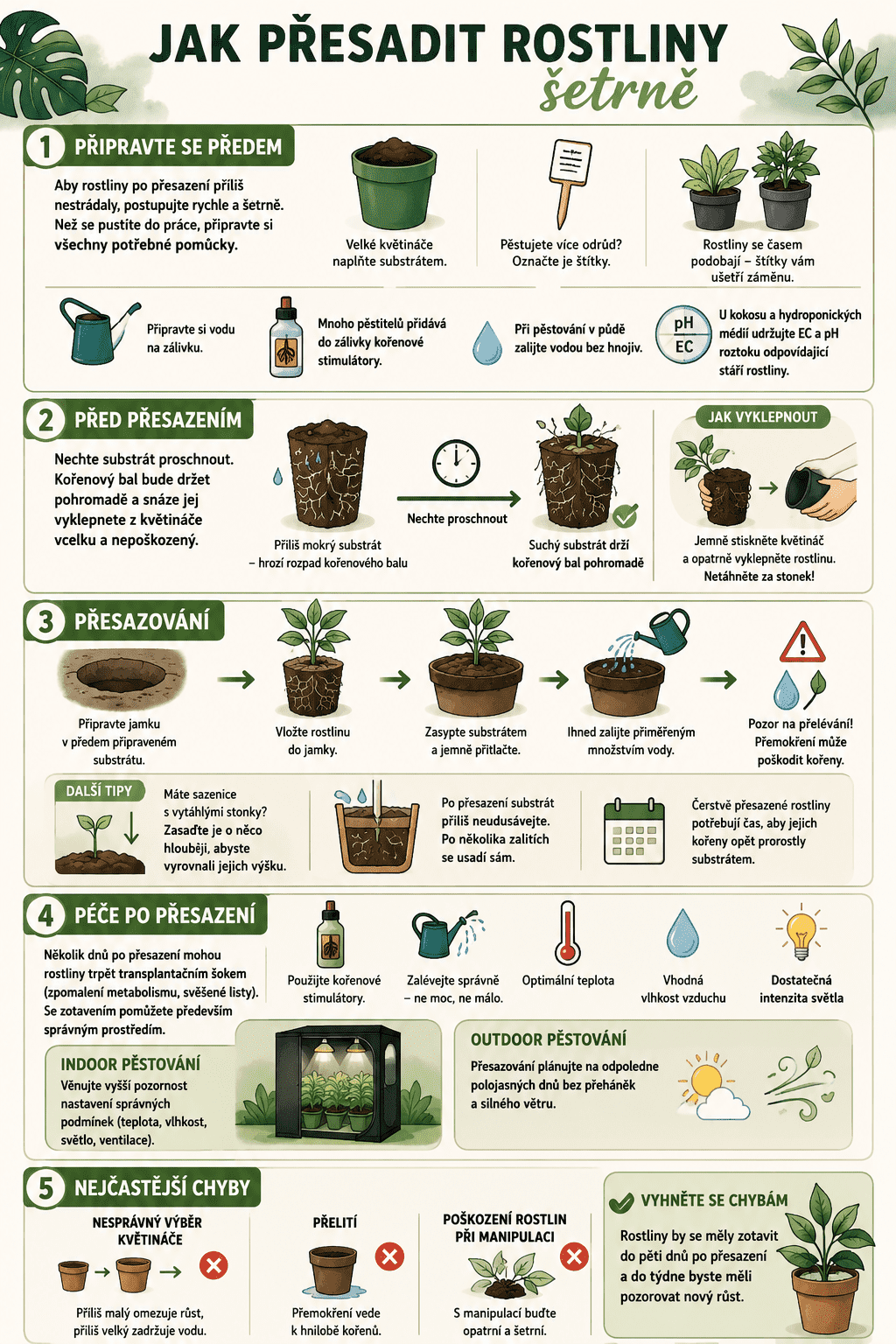
To ensure plants do not suffer too much after transplanting, you must work quickly and gently. Therefore, before you start, first prepare all the necessary equipment. Fill the large pots with substrate and, if you are growing several varieties, label them with labels. Trust us, even if the plants seem different to you now, once they grow larger it can be difficult to tell one from another. Also prepare water with which you will water the plants. Many growers add root stimulators to the watering solution after transplanting. If you grow in soil, you can water transplanted plants with water without fertilisers. In coco and other hydroponic media, it is necessary to maintain the EC and pH of the watering solution appropriate to the plant’s age.
You may also be interested in: How and why to measure the EC and pH of the nutrient solution
Before transplanting, let the substrate dry out. This will help keep the root ball together and should make it easier to knock it out of the pot in one piece and undamaged. Transplant plants into pre-prepared holes and water them immediately with an appropriate amount of water. Be careful not to overwater! Remember that freshly transplanted plants need some time for their roots to grow through the substrate again. After transplanting, do not compact the substrate too much; it will settle after a few waterings. If you are transplanting seedlings with elongated stems, you can plant them a little deeper to even out their height.
You may also be interested in: When and how to use root stimulators
Several days after transplanting, plants may suffer from transplant shock, which is shown by slowed metabolic functions and drooping leaves. In addition to root stimulators and proper watering, the right climate will help them recover, especially optimal temperature, air humidity and light intensity. When growing indoors, pay greater attention to setting the correct conditions. Outdoor growers should always plan transplanting for the afternoon on partly cloudy days without showers and strong wind.
The most common mistakes when transplanting are choosing the wrong pot, overwatering, and damage to plants during handling is also not unusual. If you avoid them, your plants should recover within five days after transplanting and you should see new growth on them within a week.
Further proven tips and guides for indoor and outdoor growers can be found on the Higarden blog.