
Technology and Equipment, Page 5
List of articles
Odour Filter - How to Choose?
How do you choose an odour filter, and what should you watch out for when choosing one? That is a common question, and in this article I will try to give you a few reference points to help you find your way around.
What capacity should an odour filter have? - The capacity of an odour filter is stated in the same way as for fans, and it is the ability to clean a certain amount of air per hour of operation, stated in m3. That is, m3/h. You always need a filter with a higher capacity than the maximum output of the fan; otherwise, there is a risk that it will be “blown through” and the filter will start letting odours through, even though it is otherwise perfectly fine. 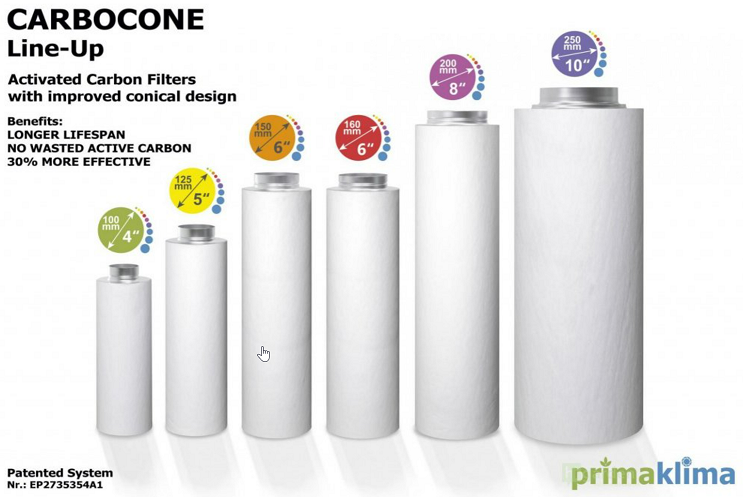
How much more powerful can an odour filter be? - In theory, there is no limit. If you use a filter with a capacity of 4,000 m3 on a fan with an output of 800 m3, the setup will work, but the filter will be enormous and you will probably have a space problem. In practice, filters with a capacity 10-50% higher than the maximum output of the fan used are usually employed. For our case of an 800 m3 fan, a filter with a capacity from 880 m3 to 1,200 m3 is suitable. The higher the maximum capacity you choose, the longer the filter will last.
How long will the filter last? - This question is very difficult to answer; it is usually stated in the range between 6 months and 2 years, depending on the chosen filter series and its intended purpose. Overall, the filter’s lifespan is affected by 3 factors.
- The first is the amount of activated carbon in the filter,
- The second is the quality of the carbon, and its “tamping” so that the gaps are always even and no air pockets form, for which manufacturers use special tools.
- The last, and very important, is the “dirtiness” of the air that the filter is meant to clean. If the odour is strong and there is a lot of dust in the air that clogs the filter, you may need to replace the filter every few months; if the odour is mild, the filter may last significantly longer than its stated lifespan.
How do you connect the filter? - Air is always drawn through the filter so that the fan draws in already clean air. Filters are also usually made so that there is a coarse fabric on the outside that catches larger impurities - (this fabric can be replaced or even shaken out when the air is very dirty) and the air cleaned in this way is then filtered by activated carbon. If you connect the filter the other way round, meaning you blow air through the filter, large particles in the air will clog the activated carbon and significantly reduce its lifespan, as well as that of the fan, which is better off drawing in clean air.
Is it possible to replace the carbon in the filter and thereby extend its lifespan? - Theoretically yes, but because replacing the carbon is not just a matter of pouring out the used carbon and pouring in new carbon, but also very much about placing the carbon in the filter so that no air pockets form and at the same time the carbon is not “tamped” too much and the filter permeability is not reduced too much, and thus its real capacity. When replacing activated carbon at home, it is therefore necessary to count on the fact that the filter may work, but the filter parameters will be significantly worse than those of a new, originally manufactured filter.
We also recommend:
- You can find a wide range of odour filters here.
- Prima Klima Carbocone filters with extended lifespan
- Quiet WHISPERBLOWER fans
What to read next?
Discover modern Garden Highpro grow tents
The progressive Spanish brand produces, among other growing accessories, modern Probox grow tents, which have also received considerable attention, for example at the Prague Cannafest. From our point of view, they can be summed up in two words: affordable reliability. Not only in the Czech Republic have growers been impressed by the excellent price-to-quality ratio and workmanship, which is sufficient even for growing the most demanding and sensitive plant varieties. This, combined with the growing number of customer enquiries directed precisely at PROBOX grow boxes, prompted us to create this article, in which we will clearly divide the Garden Highpro grow tents and present their main advantages.
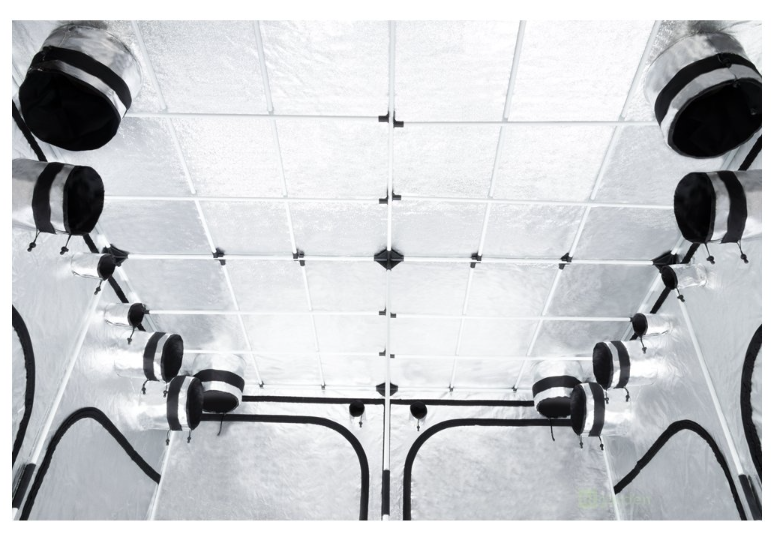
Whether you are among professional indoor growers, or you are still more of a beginner home grower, you will certainly appreciate the fact that Garden Highpro grow tents make high standards more accessible. Within the range of the Spanish manufacturer, we can therefore compare a total of five product lines, while the sixth product line (PROPAGATOR) already includes propagators, which we discuss in a separate article: How to choose a propagator and what to equip it with?
ProBox Basic and EcoPro for a really good start
The basic product line of PROBOX grow tents from Garden Highpro consists of 7 grow boxes in various sizes. Each of them is an ideal choice especially if you want to choose a cheaper first grow box that will not disappoint you after a while just because of its low price, but will instead pleasantly surprise you in terms of stable aluminium construction and overall workmanship, including the materials used. Even the “basic” variants of Garden Highpro grow boxes feature a patented, strong and stable structure, which guarantees their long service life.
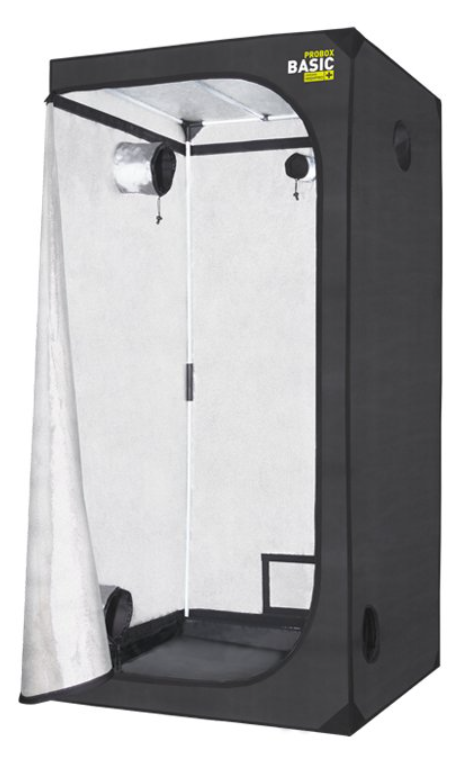
What features does the basic Probox version offer?
- The sufficiently strong and durable outer Nylon 420D fabric ensures that the tent walls will not be damaged or torn easily.
- The inner reflective film Mylar with 97% reflectivity serves as the reflective material. Its importance is covered in more detail on our blog in a separate article: Which reflective films work better in the growing space? Glossy or matte?
- Soft, double textile openings (sockets) for ventilation, together with mesh windows, ensure a constantly optimal climate inside the growing space. And that is how it should be!
- The waterproof textile tray prevents irrigation water from leaking through the bottom of the grow tent.
- Even the basic versions of PROBOX grow tents pleasantly surprise with light yet highly durable zips.
- Assembly of these grow boxes is quick and easy. The same applies to handling them.
The individual models differ from one another mainly in size and the load-bearing capacity of the aluminium structure:
- The smallest new model – the tent for growing smaller plants PROBOX BASIC 40 has dimensions of 40 x 40 x 160 cm and its structure has a load capacity of up to 28 kg. It is followed by the 60 and 80 variants.
- If, on the other hand, you want the largest possible grow tent in the basic version, it will be the BASIC 240L model with dimensions of 240 x 120 x 200 cm and a load capacity of 36 kg. As the dimensions and other photos suggest, it is the only one in the basic Probox Basic product line that does not have a square, but a rectangular base. In such a growing space with 8 openings for intake or extract and a pair of cable openings, it is already possible to grow several mature plants, whether we are talking about growing fragrant or medicinal herbs, juicy fruit or delicious vegetables.
- For indoor growing of any plants on one square metre, the two-metre-high PROBOX BASIC 100 was made, followed by the more spacious 120 and 150 variants.
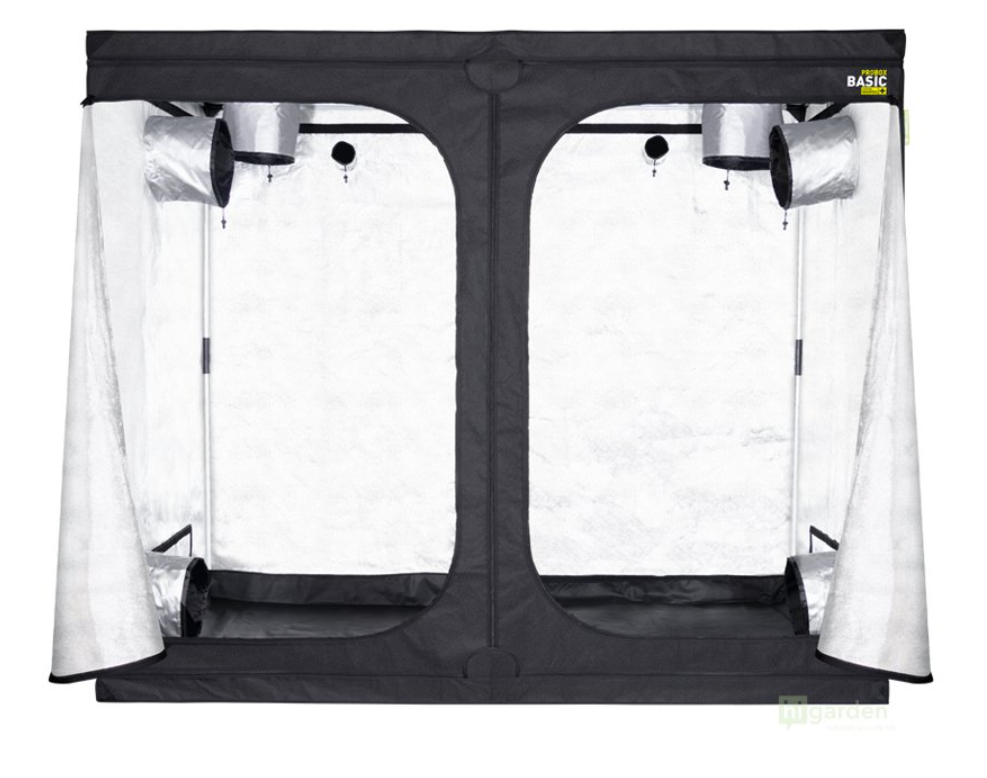
The above-mentioned features such as durability and long service life, time-saving assembly, easy handling or the waterproof tray against leaks - all these are advantages of the grow tents from the Spanish manufacturer Garden HighPro, which we also find, together with possible improvements, in the higher ranges (see below).
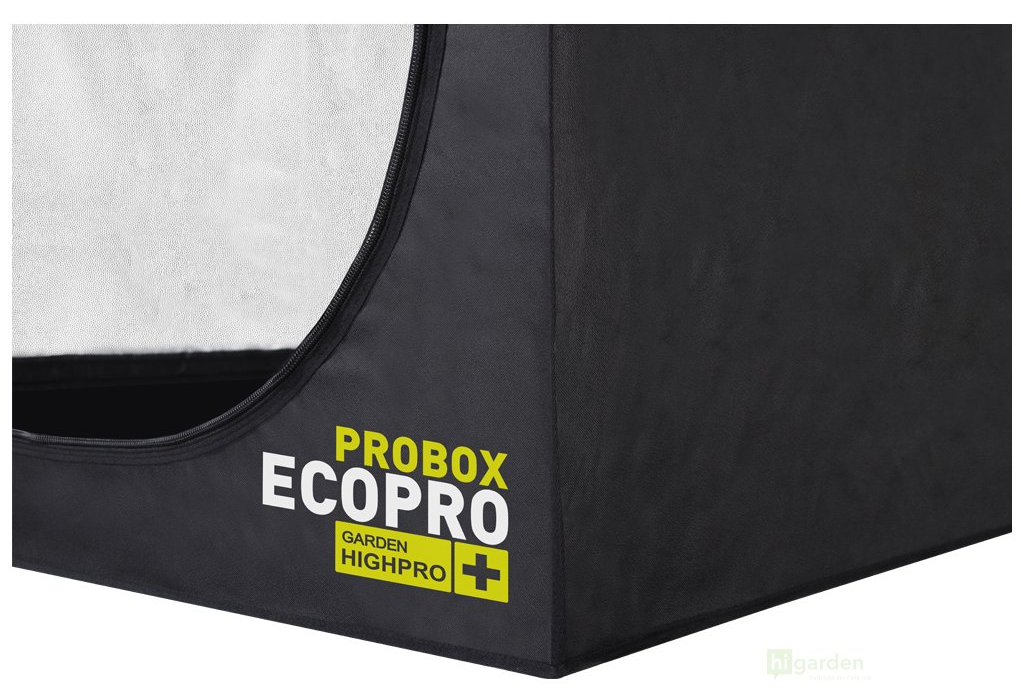
Our TIP: A great alternative to the basic grow boxes from GARDEN HIGHPRO are the grow tents of the EcoPro series, whose reflective lining uses special Pearl PRO technology, and which for many growers are quite possibly the most attractive products in terms of price across all the grow tents in our range. For growing on one square metre of growing area, for example, the Garden High ProBox EcoPro Tent 100 is used. However, other sizes are also available, led by the long-term most popular variant, the EcoPro 60 with dimensions of 60 x 60 x 140 cm, which in practice will impress you if you are looking for a quality yet inexpensive small grow box for year-round home growing of a smaller number of plants.
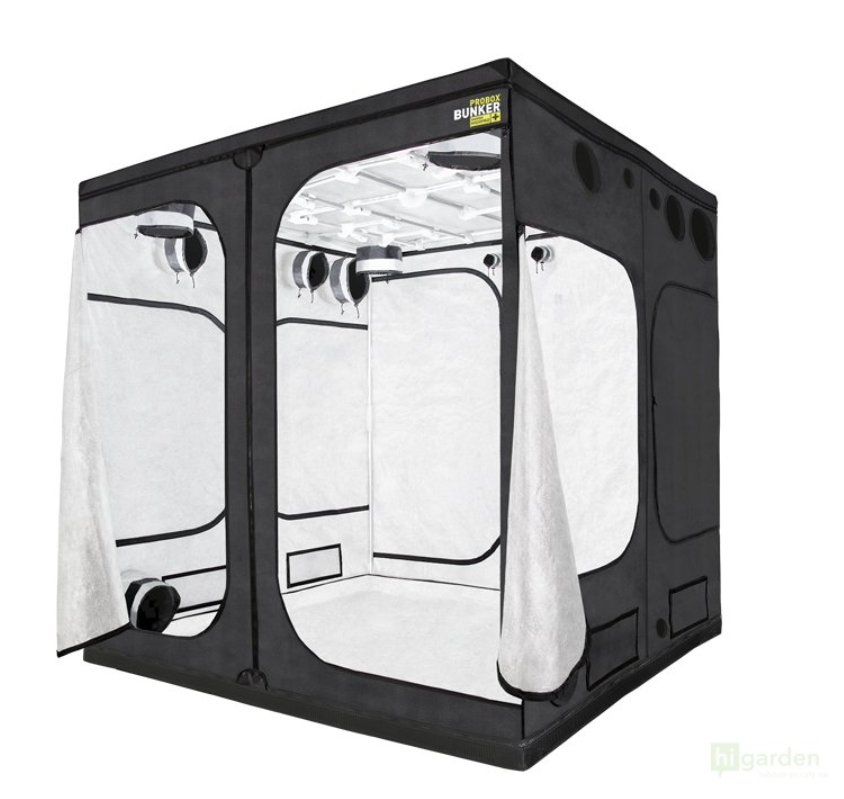
ProBox Bunker for above-standard space
The name of this PROBOX grow tent product line is more than apt, because with regard to the dimensions, as well as the robust design, these are more like “growing bunkers”. Do you want to regularly grow plenty of plants in the comfort of your home? Do you have bigger plans indoors or simply a large hydroponic system? Large grow boxes with a favourable price tag will make it much easier to realise them, no doubt about that!
The Garden Highpro PROBOX BUNKER grow tents are characterised by above-standard height, which starts at 240 cm for the lowest variant, while the other three of the four models (300L, 300XL and 300 XXL) already rise to a height of three metres, bringing growers the following practical advantages:
- They allow the cultivation of taller plant species.
- They provide enough space both for healthy plant development and for related equipment, from lighting through pots to circulation fans.
- In tall grow boxes, stable climatic conditions are also easier to maintain, which are among the absolute basics of successful growing and a plentiful harvest.
Above-standard load capacity (in the case of the Probox 300XXL variant, up to 129 kg!) also allows the trouble-free hanging of large odour filters as well as the installation of professional LED lighting, when using a discharge lamp also larger shades (reflectors), any other accessories or even practical lighting hangers, without being unnecessarily limited by the total weight of the grow box equipment.
The advantages in terms of construction quality and materials used remain the same as in the basic range above. However, there are still some important differences:
- Large rear and front doors allow convenient access and provide the necessary overview of how the individual plants are doing in different parts of the growing space.
- Another difference also lies in the textile used, as the outer shell of these “growing bunkers” is made of a special extra-strong Nylon 1600D fabric.
- Double and soft ventilation sleeves are important for trouble-free intake and extract of air.
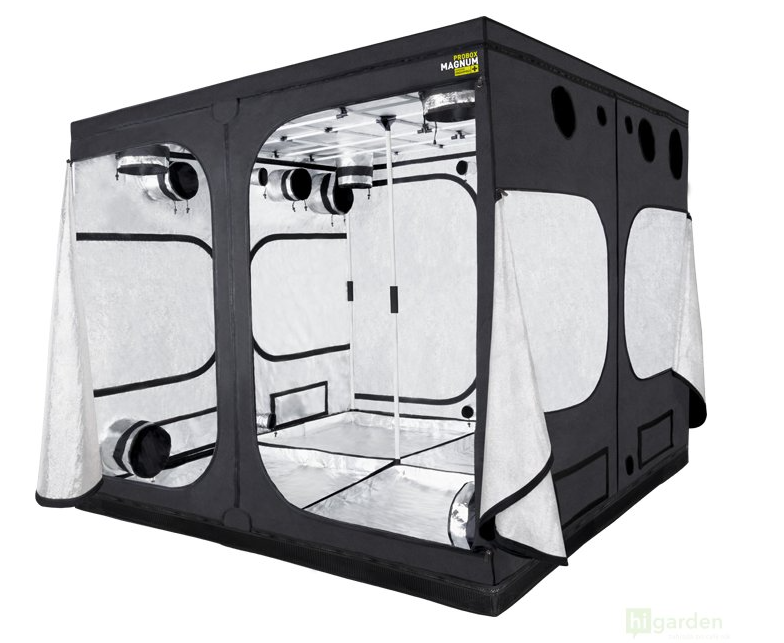
Probox Magnum for more demanding indoor growers
The PROBOX MAGNUM product line includes one medium (MAGNUM 150) and four larger grow tents (variants 240, 240L, 300L or 300XL).
Grow boxes from this series offer even more demanding growers, in addition to top-class Mylar reflectivity (97%), a proven extra tear-resistant Nylon 600D fabric, so with sensible handling these grow boxes, just like the MASTER versions (see below), will last for years even with continuous use. This is also helped by the exceptionally durable and 100% light-tight zips, which are again found in the “master” MASTER series of tents below.
At first glance, every user will also notice the stronger patented structure with 20 mm poles, which is associated with increased load capacity, the importance of which we have already explained. The load capacity of the smallest variant PROBOX MAGNUM 150 is 54 kg. On the other hand, the largest Garden High Pro Magnum grow box 300XL has a load capacity of 81 kg.
Probox Master – TOP grow tents even for the most demanding
The highest range of 7 PROBOX MASTER grow boxes from Garden High Pro also relies on excellent light reflection inside the growing space thanks to the certified Mylar lining, which is gentle on plants. A major advantage is the Jumbo side openings for even easier access to plants and control over their growth. A sufficient amount of air inside the tent is ensured by large mesh windows as well as the appropriate number of double, soft and reinforced “extraction sockets” or sleeves for convenient connection of growing ventilation.
From this “master” range, indoor growers choose the right variant of their new grow box both on the basis of the overall size of the growing space and, last but not least, according to whether they want its base, or foundation, to be rather square, which is the vast majority of cases including the best-selling version ProBox Master 240, or rectangular. For each range, it certainly depends not only on how large the plants or smaller bushes you want to grow are, but also on where you plan to place the grow tent in the home.

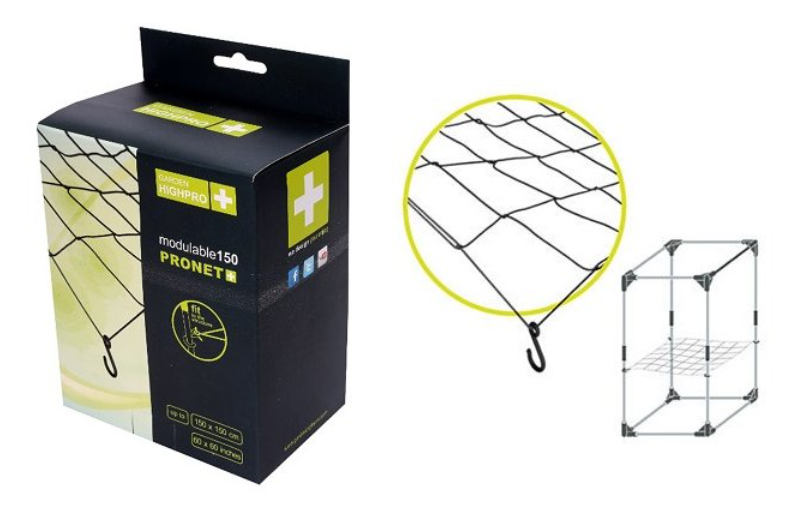
Our TIP: In practice, you will certainly sooner or later find support nets for boxes useful. PRONET is an original support net directly from Garden Highpro, which is adjustable and available in two sizes.
Are you interested in the excellent price-to-quality ratio offered by Garden Highpro (PROBOX) grow tents, but are you still not quite sure which version is right for you? No problem, the range is truly wide and the details matter. That is why our specialists will be happy to advise you on your choice. Send your questions to the well-known e-mail address info@higarden.eu.
We also recommend these products:
What to read next:
How to choose a propagator and what to equip it with?
In the world of indoor gardening, we often face an initial question: What are propagators? How do they differ from other grow tents, and what are they actually used for? The biggest difference lies in their size, which determines their practical use. That is why today we will focus on the smallest grow tents, which are used mainly for germinating seeds, raising seedlings and propagating plants when growing at home.
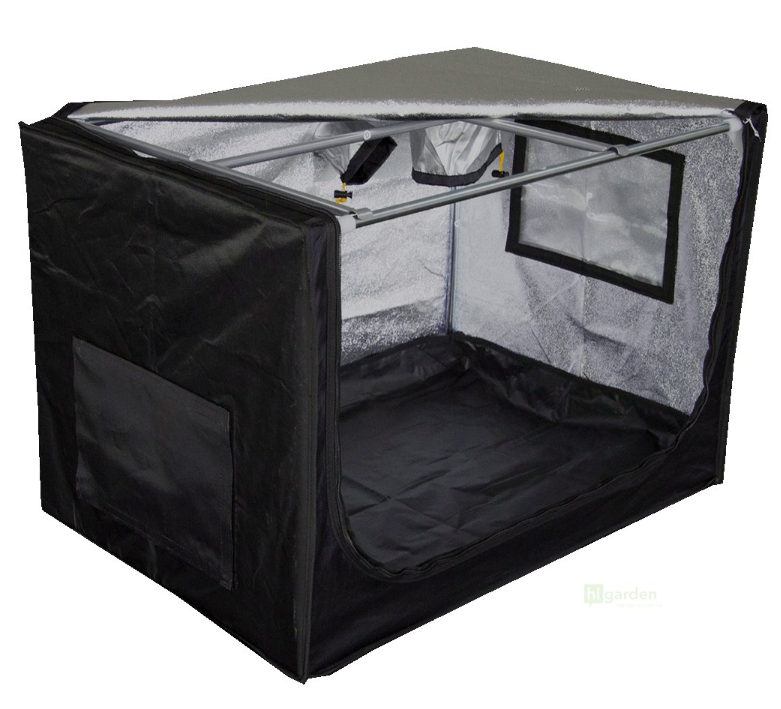
Using propagators for the safe cultivation of plants in the early stages of development, in other words before you transplant them into a classic grow tent (indoor) or perhaps into a garden bed (outdoor), will certainly help you achieve excellent results, so that the reward for all your care for the plants is nothing less than a rich harvest full of colour, flavour and fragrance. Why?
It is simple. Propagators, such as the new product from the legendary Dutch grow tent manufacturer Mammoth, which we chose for the main image, provide young plants with an optimal and controlled growing environment precisely when things can still become more complicated from the grower's point of view. All the more so if you are just starting with cultivation, whether at home or outdoors. It is no secret that the youngest plants are still very susceptible to diseases or pest attacks. That is why an experienced grower knows that at the beginning of the growing cycle, which can be especially important when growing plants indoor several times a year, there is nothing better than a well-equipped propagator.
Our TIP: Every home grower who likes to save time and money will appreciate the popular small propagation set. It already contains everything you need to put it into operation. In the product description you will also find further recommended equipment for growing in a propagator, i.e. for the highest possible success rate when germinating seeds and rooting young plants quickly, so that they have a perfect foundation for the next stages of development right from the start and are sufficiently developed and vigorous before transplanting. Propagation sets, such as the one in the picture, can also be customised to your needs.
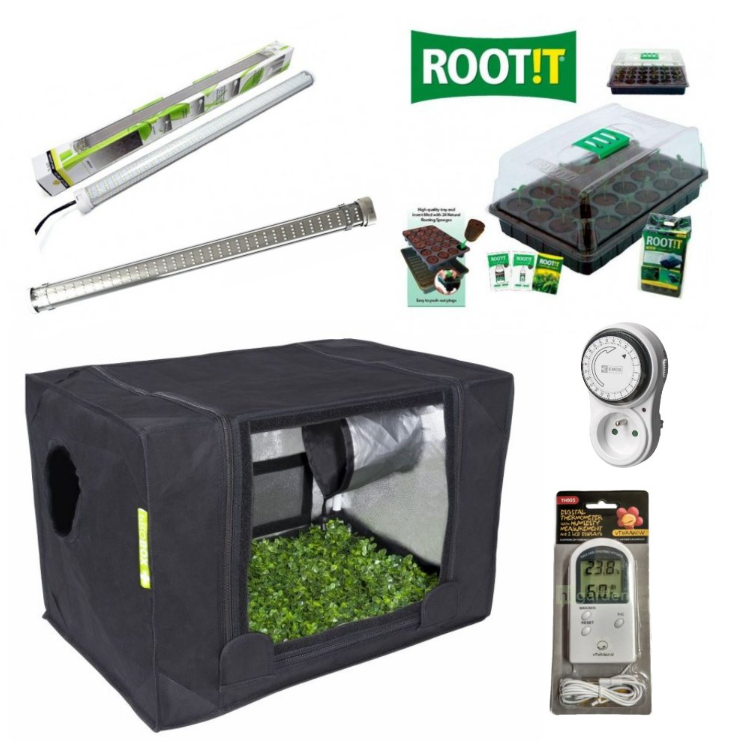
This brings us smoothly to the answer to the question of what to equip a propagator with:
- Artificial lighting source for propagators
- As a grow light for a propagator, most growers choose mainly TLED lamps - grow lights with a growth spectrum based on energy-saving lamps (CFL), but you can also use energy-saving lamps.
- Quality TLED lighting or a CFL lamp in a propagator, as a small and enclosed growing space, emits enough light with a blue-white spectrum that stimulates plant growth and at the same time is characterised by minimal electricity use and heat emissions.
- The fact that so-called energy-saving lamps and especially TLED lamps for seedling lighting emit only a minimum of heat is essential so that there are not excessively high temperatures inside a small propagator without a fan, which would have a negative impact on the development of young plants.
- Proper seedling lighting, or cloning lighting, must have a higher colour temperature. You can later use this type of plant lighting later in the vegetative phase as the main light source if, for home herb growing, a small grow tent is enough for you, or for supplementary lighting of shaded areas if you use a large growbox or a medium-sized growbox. It can also be used beyond germination, cloning or cuttings, for houseplants placed in darker locations, or for overwintering plants.
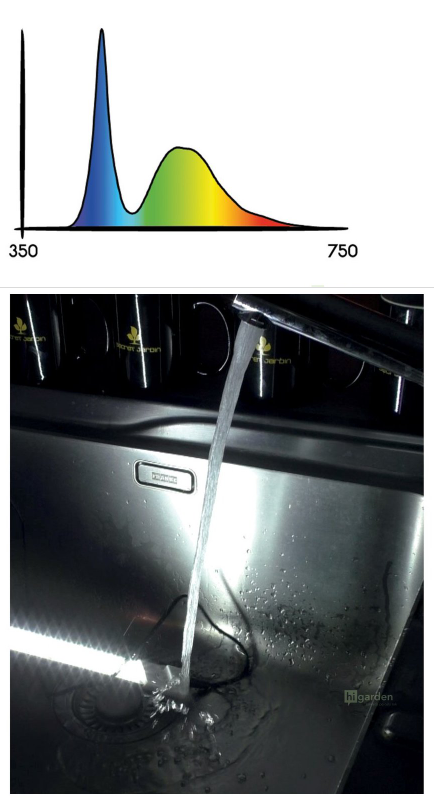
- Growers have excellent experience with propagators, especially when it comes to TLED lighting from the Secret Jardin brand, or try VF TLED. 20W Secret Jardin Cosmorrow® offers, in addition to the required light spectrum, extreme resistance to impact and water, as illustrated by the next image.
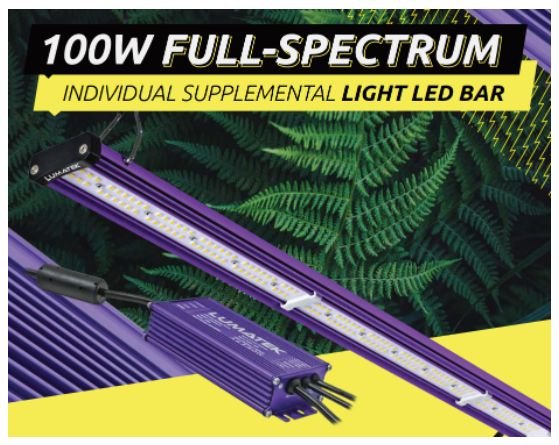
Our TIP: 100W full-spectrum supplementary Lumatek BAR 2.9. LED lamp with its own ballast from the British brand Lumatek is among the new products for supplementary lighting of plants or direct lighting of seedlings. It is simply suitable wherever a universal standalone grow LED bar is needed. At the same time, it serves as a perfect primary light source in small growing spaces, and is therefore also very suitable for propagators, which makes it a modern LED seedling lighting with high real efficiency even for the most demanding customers. Recommended!
- Timers for propagators
- Switching the lighting in the propagator on and off is reliably handled by mechanical timers.
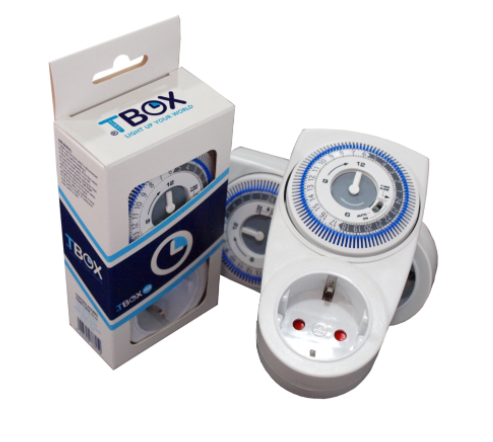
- A more sophisticated option is digital timers, which you will later use more effectively indoors for reliable and convenient switching on/off of even a larger number of grow lights in a classic grow tent or growing room.
Our TIP: TechGrow timers: a different league of switching!
- Propagation medium and mini greenhouse (cloche)
- You may already know that seedlings inside a growing space, which in this case is a propagator, require significantly higher relative humidity than more mature plants. In figures, up to 80%. If you do not ensure sufficient humidity inside the propagator when germinating seeds or raising seedlings, you cannot count on success. How can such an environment be created? It is easy with a cloche, which in the world of cultivation and gardening is often also called a mini greenhouse.
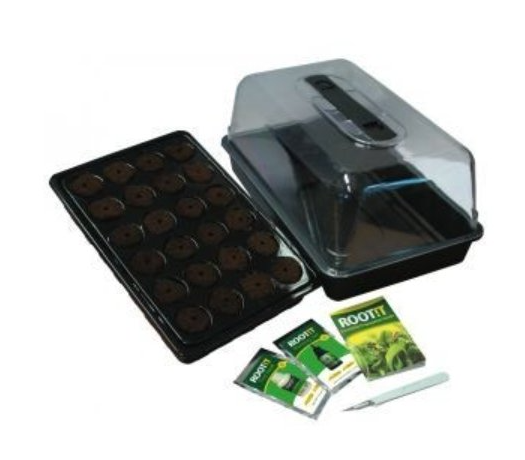
- Furthermore, you need to use a propagation medium (propagation cubes and Jiffy) or propagation substrate, with good absorption properties, so that vigorous plants emerge from the seeds and can later handle the stress associated with transplanting. That is why an elegant solution is offered by the set from ROOT!T, which specialises in cuttings and cloning. This discounted propagation set includes, in addition to a medium-sized cloche with a transparent lid and ventilation flaps, also quality, purely natural propagation medium including propagation plugs, and even the first plant nutrition and a unique stimulating product that helps young plants develop strong roots right from the start.
- Devices for measuring temperature and humidity in a propagator
- The microclimate inside the propagator needs to be monitored. A reliable metre will help you with this. Get one that can measure both temperature and humidity accurately. An ideal device for measuring temperature and humidity in a propagator is, for example, the temperature and humidity metre (VF), which is also a standard part of the above-mentioned propagation set.
- Suitable nutrition for seedlings and cuttings
- Now that you know how to create ideal conditions for seedlings and cuttings, it would be a shame not to support them with nutrition made specifically for the youngest plants. Here is therefore one “secret” recipe for successful germination and vigorous growth of your seedlings, which will soon develop a healthy, strong and robust root system: Shogun Start. The calculator directly from the manufacturer will help you dose the product precisely.

Our TIP: Shogun Fertilisers has not been on the Czech market for long, so you may not yet know this manufacturer. If you are among growers who try to stay up to date and do not miss any proper new product, be sure to read the separate article, which is not just about the youngest plants: SHOGUN: the best British fertilisers with an emphasis on research.
Comparison of propagators
Finally, we will take a more detailed look at the individual variants of standalone propagators, regardless of which complete growing equipment you ultimately choose for them.
We have explained why greenhouses and cloches are used in plant propagators. In a way, both of these elements are combined by the robust mini greenhouses / propagators HGA Garden.
From classic propagators, whose construction and workmanship already draw on grow tents in terms of the materials used, we recommend in particular the following propagators:
- Dark Propagator: the professional propagator from the renowned French brand Secret Jardin is among the absolute top products in the category of small grow boxes for pre-growing and cloning plants. How many clones would you like? DP60 and DP90 are perfectly made and affordable cloning mini laboratories. If you want the same workmanship with a larger growing space, choose DP120, consisting of a floor, 3 cultivation levels and 2 shelves for storing cuttings. This model is also among the largest.
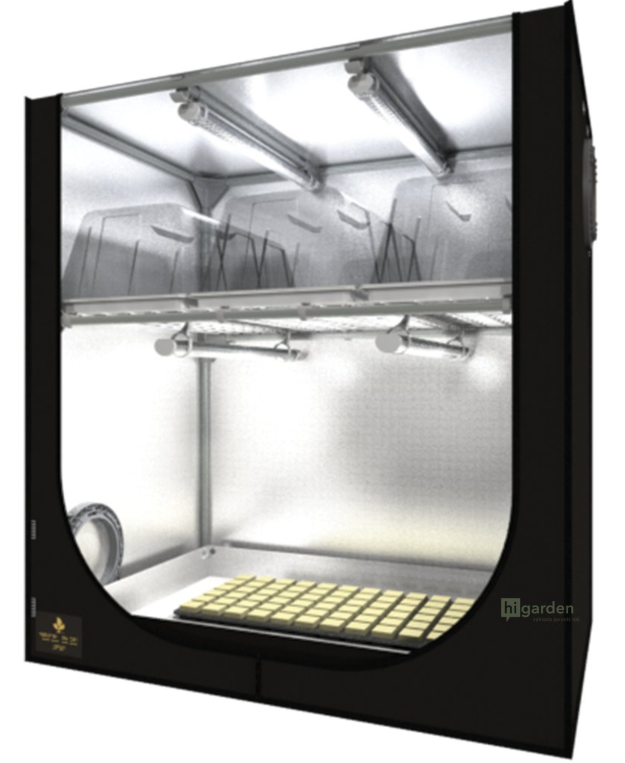
- Among larger propagators, the five-tier PROBOX propagators are increasingly sought after:
- XL variant allows the cultivation of almost 1,500 young plants! At the same time, you can pre-grow different varieties or genetics from seed in one propagator.
- L variant is cheaper and offers half the capacity across 5 tiers, which still means up to 720 successfully pre-grown seedlings.
- The PROBOX range from the renowned grow tent manufacturer Garden HighPro is also complemented by handy smaller propagators in the M and S variants.
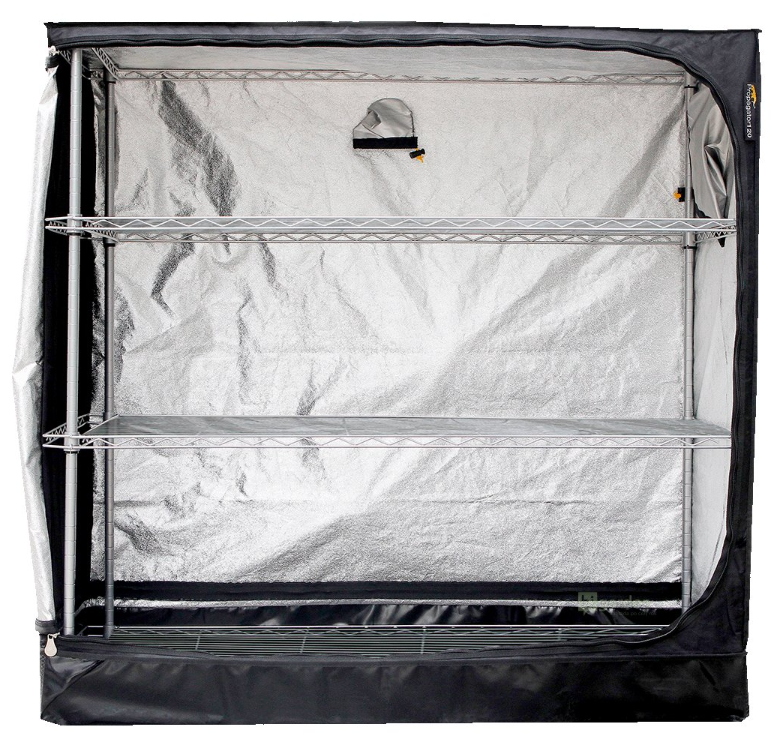
- Mammoth Propagator 125 has three removable shelves and, above all, an absolutely opaque single-layer shell. The base is also removable, and the overall construction of these “mammoth” propagators corresponds to the parameters of grow boxes from the LITE+ series.
Do you have any further questions about propagators? Do not hesitate to contact us via the e-mail address info@higarden.eu, where we will also be happy to advise you both on choosing a propagator you will really use and on selecting suitable equipment.
We also recommend these products:
What to read next:
TechGrow for the Second Time: Microclimate Under Control Thanks to Flawless Multifunctional Controllers!
Last week we introduced you in more detail to the unique timers from the TechGrow brand. The Dutch manufacturer is also a leader in the field of fan speed control fans or, for example, carbon dioxide levels in the growing environment, increasing the yield and final quality of your crops. It is precisely innovative and multifunctional products of this kind that are in focus today. Relative humidity, temperature and CO2 concentration. All this, and more, can play a role in plant cultivation in a grow box or greenhouse to your advantage once and for all. There is certainly plenty to look forward to!
Enriching the growing space (for example inside a grow tent) with carbon dioxide makes it possible to increase your yields by up to a fifth. If this is new information for you, you can read a separate article on plant cultivation and carbon dioxide. It is not the only reason to generate enough CO2 where you grow your plants. And when it comes to the most advanced methods available on the market, TechGrow is making a strong statement through a varied range of exceptional products, which we will now look at more closely.
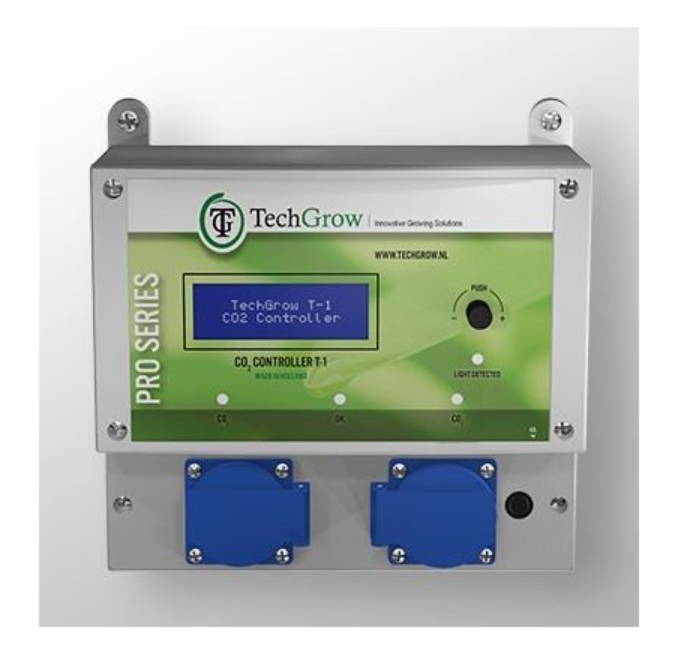
TechGrow T-1 Pro CO2 controller
Why start with anything other than the most advanced CO2 controller of its kind on the market, right? This device ensures the optimal CO2 concentration inside a grow tent or room, while also allowing convenient control and precise monitoring. Controller, regulator, monitor. In short, it is all in one, because a rich, high-quality harvest is usually the advantage of growers who have their growing spaces perfectly under control, whether it is the CO2 level or, for example, temperature or humidity. Although this professional CO2 controller offers indoor growers plenty of useful functions, which we will come to shortly, its configuration is usually a matter of a single minute! For that reason, it suits not only professionals and commercial growers, but also beginners who want to put together their first growing setup with a high level of efficiency and reliability.
Are you asking what all this smart box can do?
- It features an automatic counter for accurate and reliable dosing of carbon dioxide. It is important to mention that it allows dosing to be set so that you can easily achieve a stable CO2 level in a closed growing space during indoor plant cultivation.
- T1 Pro automatically stores a weekly log. The 7-day storage capacity allows you to track your progress during the process of indoor plant cultivation.
- It also controls delayed activation of CO2 enrichment in the grow tent or room. This function makes it a truly intelligent sensor capable of ensuring optimal plant growth even during your absence.
- An important part of this smart device’s equipment is a sensitive ppm sensor, thanks to which the T1 Pro is fully adjustable in the range from 300 ppm to 2000 ppm or from 300ppm to 10,000 ppm.
- The clear display, which updates itself every second and whose backlight switches off after 60 seconds in line with energy efficiency, allows the connected sensors to read actual as well as minimum or maximum values. In addition to the CO2 level, it also displays temperature and humidity if the temperature and humidity sensor is also connected. The sensors can be connected using a standard network cable.
- The built-in calibration function allows the CO2 sensor to be calibrated in fresh air.
- There are also LED indicators for CO2 dosing, light detection and stable climate.
- If there is a power cut, all current settings are automatically saved. Automatic fault detection also prevents complications caused by cable failure or poor connection to the sensors.
- If a light sensor is connected, the T1 Pro automatically switches between day and night mode.
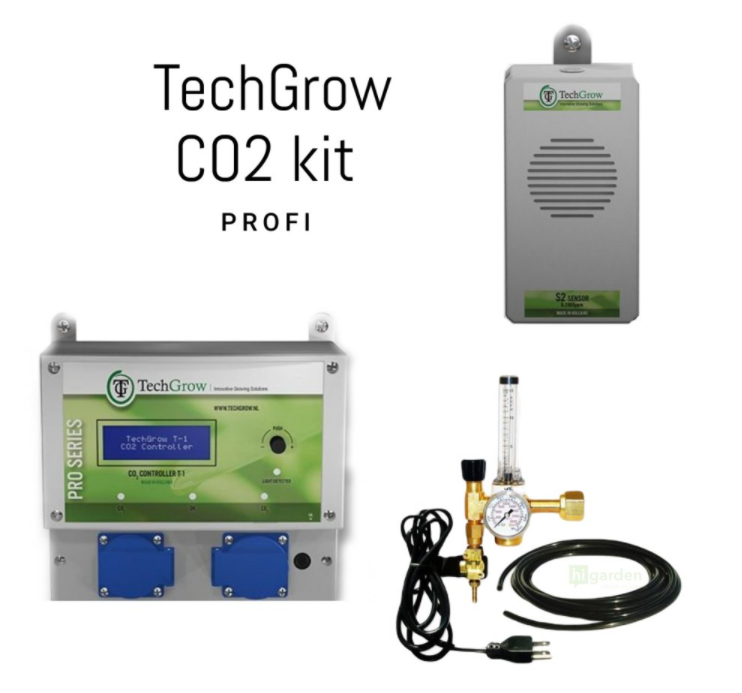
We started with the best, and that is why the multifunctional T1 Pro is the basis of the complete professional set: TechGrow CO2 kit – PROFI. It is ready for immediate use thanks to the balanced combination of the following three components:
These complete sets are our TIP for today. In addition to the PROFI set (pictured), we will shortly introduce two lower variants as well, namely MEDIUM and BASIC.
TechGrow T-Micro CO2 controller
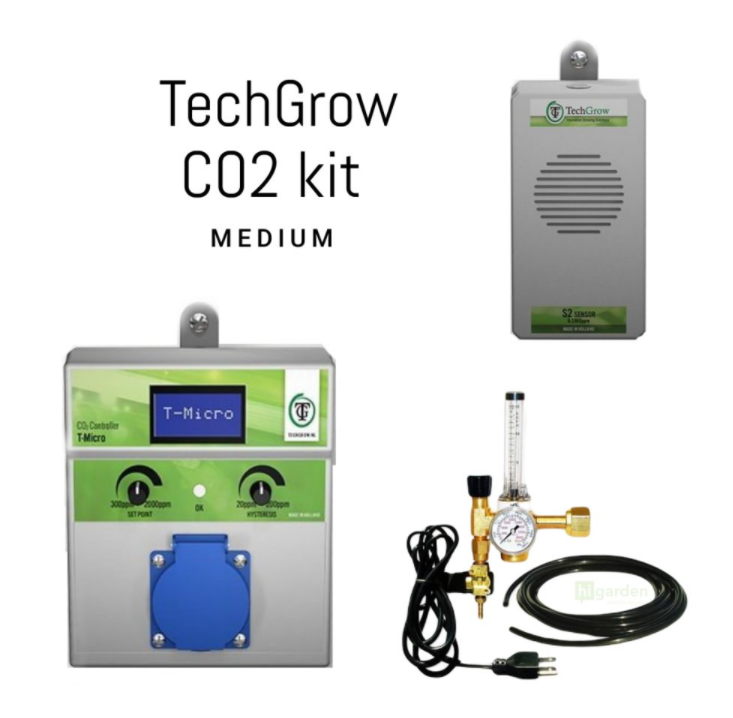
In this case, it is the smallest CO2 metre in the TechGrow range. However, the size of this digital device does not change the fact that, just like the more advanced T1 Pro it is among the most reliable devices for monitoring and regulating carbon dioxide in the growing space. That is beyond dispute. This device offers professional and hobby growers a fully flexible and scalable solution in every growing room, whether small or large. Even without your presence in the grow room, it reliably ensures that the carbon dioxide source switches on or off at the right time. What are its other advantages?
- Automatic voltage detection (110 V / 230 V), as well as cable failure or poor connection to external sensors.
- The light sensor allows automatic switching between day and night settings.
- T-Micro is a metre and controller in one, offering easy Plug & Play commissioning.
- It is adjustable from 300 to 2000 ppm.
- It measures every second.
- The LCD display shows actual values, including the set value and hysteresis. If there is a power cut, the set values are automatically restored thanks to the internal memory.
- LED indicator provides up-to-date information at all times on whether CO2 is being dosed or not.
- This control unit is also equipped with a calibration function, thanks to which the CO2 sensor can be calibrated in fresh air.
T-Micro forms the basis of the complete MEDIUM set (pictured), which you can start using immediately. Recommended!
TechGrow T-Nano CO2 controller
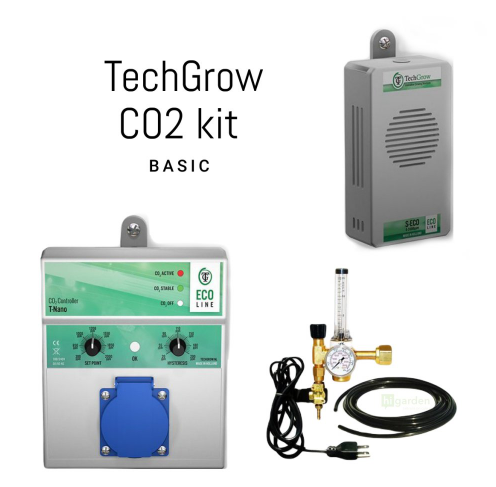
If you do not yet have much experience with indoor plant cultivation, the simpler CO2 controller T-Nano will probably be more than sufficient for you. It is logically the cheapest, but it still relies on top-quality workmanship, high performance and ease of use, while carrying out highly accurate measurements inside small and large grow boxes, greenhouses or other growing spaces. How does the TechGrow T-Nano controller work?
- It automatically detects voltage (110 V / 230 V).
- You can easily set the desired carbon dioxide level in the growing space or the value and hysteresis using a pair of rotary knobs. The controller takes care of the rest for you.
- In this model too, you can rely on indicator “LEDs” that inform you whether CO2 is being dosed at the moment or not, whether the climate is stable, or whether the relay is currently switched off due to the night mode in progress.
- As with the higher variants, the T-Nano CO2 controller also allows for a power cut. In such a case, fully autonomous backup of the set value and hysteresis is activated.
- The external sensor has a light sensor that allows automatic switching between day and night mode.
- As soon as an error occurs in the connection between the controller and the external sensor, or if the cable fails, the device automatically alerts you to the error.
As you have probably already guessed, the basic set BASIC (pictured), which you can use immediately just like the higher configurations, is built on this economical variant (Eco Line) of the multifunctional controller from TechGrow in the form of the T-Nano. In short, Plug & Play!
TechGrow T-Mini Pro CO2 Controller
If you are looking for simplicity, for example because you are still gaining your first experience in the field of indoor plant cultivation, but at the same time want a compact digital controller / monitor with a clear display, then you will appreciate the smallest variant complementing the Pro range – TechGrow T-Mini. Once again, this is an “all-in-one” device. However, one single knob is enough to operate this multifunctional controller! At the same time, you can rely on a professional device representing a welcome upgrade even for the growing equipment of experienced growers. Let us state its key features:
- It is fully adjustable in the range from 300 ppm to 2000 ppm.
- It has a built-in sensor for carbon dioxide, temperature and relative humidity. The device therefore displays the exact current value as well as the minimum and maximum values of CO2, temperature and humidity on a display that refreshes every second and automatically switches off the backlight after 60 seconds to save energy.
- The integrated light sensor allows automatic switching between day and night mode.
- As with the above versions, a calibration function is also available for calibrating the CO2 sensor in fresh air or indoors.
- In the event of a power cut, you can rely on memory for the set values and hysteresis.
- There are also indicator LED diodes for CO2 dosing and stable climate.
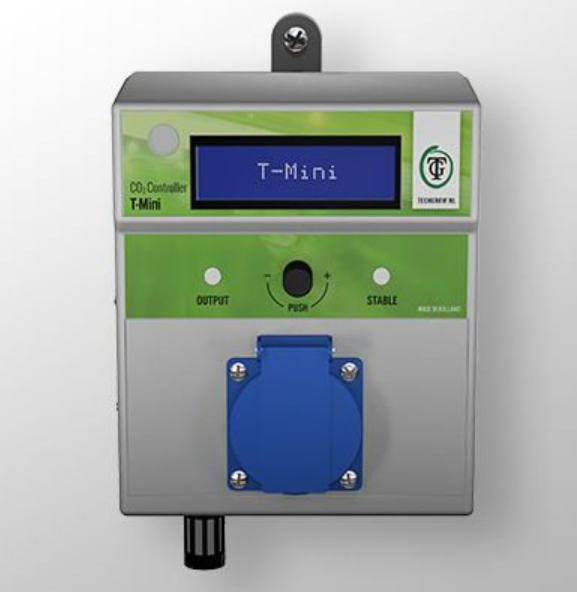
At the beginning of this article, we introduced the TechGrow T-1 Pro CO2 controller in detail as the most advanced CO2 controller of its kind on the market. The good news for all connoisseurs and seasoned growers who value top-quality equipment for their grow room is that we also have its expanded version in stock, the TechGrow T-2 Pro CO2 controller 14A, or alternatively the TechGrow T-2 Pro CO2 controller 7A. What extra benefits does the expanded version, whether with 14 A or 7 A capacity, bring from the user’s perspective?
- The 14A version is suitable for connecting fans with a maximum airflow of up to 10,000 m3/h! The fan control has 2 setting options: automatic or manual. The 7A version has half the capacity, which means that a fan with a maximum airflow of 5,000 m3/h can be connected to it.
- Continuous measurement and regulation of CO2, temperature and relative humidity.
- At night it extracts excess CO2 from the air.
- Pulse dosing for measured addition of CO2.
- Quick menus for a practical overview of all settings.
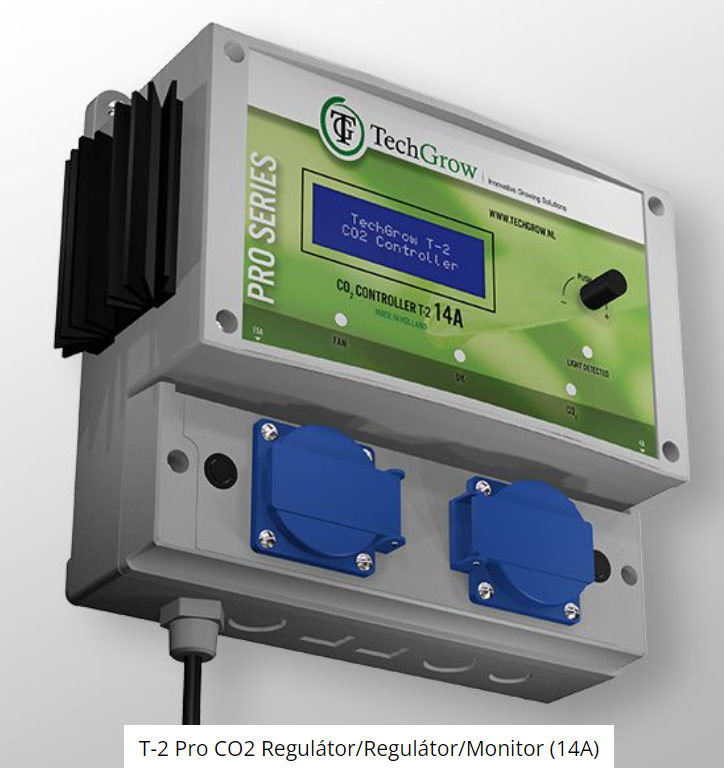
We also recommend other top-quality controllers from TechGrow
- Fan speed controller with day and night mode: This climate control unit can distinguish between the fan speed that is desirable during the day or during the night. Unlike the products above, it no longer allows external sensors to be connected. It is therefore an advanced air handling controller without the function of measuring relative humidity, temperature or CO2 concentration inside the growing space.
- TechGrow Clima Control Basic Plus 14A is used to regulate the speed of up to 2 fans and also to regulate temperature based on data from a temperature probe.
- The speed of two fans at once and the temperature are also controlled by the handy TechGrow Clima Control ECO 15A controller, which is also exceptional for its ability to accelerate more smoothly than other controllers. The result is a more stable climate inside the grow tent or room. Your plants will therefore not be exposed to unnecessary temperature shocks.
- TechGrow also manufactures the quality Humi Heavy hygrostat for convenient control of a humidifier or dehumidifier.
You may have noticed that TechGrow products are often available in several configurations. For example, the TechGrow Clima Control Plus 14A, which allows you to regulate relative humidity in addition to temperature and speed, is available either in a cheaper version as a standalone controller, or you can pay extra for a model equipped with sensors measuring temperature and humidity.
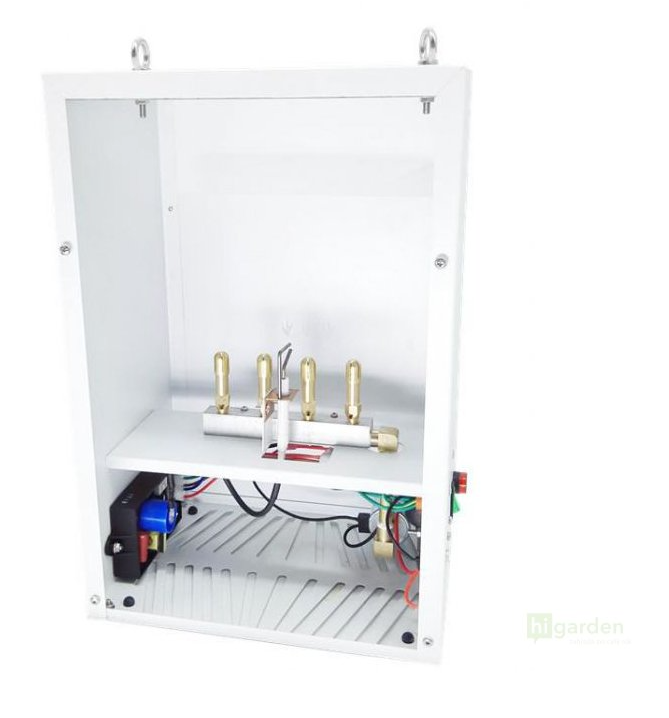
Repetition is the mother of wisdom, so it is worth emphasising how significantly achieving a stable and optimal CO2 level in the growing space helps faster growth and ripening of crops. That is why extra-powerful CO2 generators also have their irreplaceable place here. They run on natural gas and are especially perfect for greenhouses or other larger enclosed growing spaces. Because their generator works with electric ignition, the overall gas consumption is much lower than with other generators. These CO2 generators can be easily connected to a gas cylinder and are supplied with 4 burners. Through the illustrative photograph, you can get an idea of what it looks like inside them.
The complete range of the Dutch manufacturer TechGrow is simply top-class, but also very extensive. Therefore, we hope that this article has helped you to orientate yourself better in it and gain an overview of at least the most important benefits it offers users in practice. If you have any other questions, please do not hesitate to ask us at the well-known address info@higarden.eu. We are here for you and look forward to your questions!
We also recommend these products:
- TechGrow Clima ECO 5A controller (minimum and maximum speed)
- TechGrow Clima ECO 5A controller (minimum speed and temperature)
- TechGrow Clima ECO 5A controller (temperature and relative humidity)
What to read next:
- How do you choose a circulation fan?
- WHISPERBLOWER: professional fans with unrivalled efficiency
- Torus Hydro perfectpH: revolutionary pH stabiliser
Plant Cultivation and Carbon Dioxide: How and Why to Use It?
You will surely remember the abbreviation CO2 from chemistry lessons. There are optimal growing conditions. And there are also optimal conditions enriched precisely with carbon dioxide. Did you know that by adding it to the growing space, for example a grow box, you can easily increase yields by up to 20%?
It has been proven that carbon dioxide is clearly beneficial for plants. And not just a little. With a slight exaggeration, we can say that for plants it is, in a way, a kind of “energy drink”. CO2 therefore supports plant growth and ripening.

During the day, plants need enough carbon dioxide and at night they need oxygen. There is enough carbon dioxide in the atmosphere to support the growth of plants grown in outdoor conditions. Even so, they can absorb much more through their roots and leaves and make full use of it for their own benefit, and therefore, of course, for the grower’s benefit as well.
A lack of CO2 can be observed especially in indoor gardening. In the vast majority of cases, insufficient ventilation or poor air circulation is to blame. In plants, low CO2 concentration in the air most often shows itself in slow growth, by as much as 30 or 40%.
We recommend remembering the basic rule of cultivation when it comes to deliberately adding carbon dioxide to the air. The more light plants have, the more CO2 they need. Under intensive cultivation beneath artificial lighting, this of course applies doubly. It also follows that with a low carbon dioxide concentration, the efficiency of the lamps used is unnecessarily lower, whether you use high-pressure discharge lamps or modern LED diodes.
Enriching the air in a grow box with CO2 ultimately also ensures better use of fertiliser.
You will reach the desired harvest much sooner, possibly by as much as two weeks compared with a growing cycle that is not accompanied by CO2 supplementation.
Once you increase the carbon dioxide concentration in your home grow room to at least around 500 pmm, growth will speed up by up to 15%. Quite often, however, it can be by a full 20%. The limit concentration is then 1000 pmm. At that level, we can expect growth to accelerate by almost half. However, this limit should not be exceeded. A proper grower must therefore not be greedy when saturating the air with carbon dioxide.
Now you know why we can clearly recommend adding carbon dioxide to every indoor grower, regardless of experience. It is therefore the right time to introduce practical and affordable products that will ensure the air in your grow room is saturated with carbon dioxide. The products in question are available in the form of practical tablets or in a cheaper variant, namely hanging bags for a grow tent.
 Popular GURU CO2 tablets stand out thanks to gradual release.
Safety
Do not forget that when handling all products for supplementing CO2 in a grow box, increased caution and responsibility are necessary, as carbon dioxide itself is a colourless, odourless and tasteless gas that normally occurs in the air at normal concentrations. Why is it not directly poisonous to humans? That does not change the fact that it is unbreathable. Before entering a growing space in which equipment for enriching the air with carbon dioxide is used, it is necessary to ventilate thoroughly!
Do you cultivate plants indoors? Whether in soil, coco or hydroponically, now you know that a few tablets or a bag with carbon dioxide are enough and your efforts will bring significantly more fruit. For more information or help choosing specific products, do not hesitate to contact us. Call or write to info@higarden.eu.
- CO2 products
How powerful a discharge lamp should you choose?
The following lines will reveal the answer to one of the most common questions asked by beginner growers who use grow tents as a source of artificial lighting for plant cultivation and choose discharge lamps. Do you already know how many watts will be just right for you?
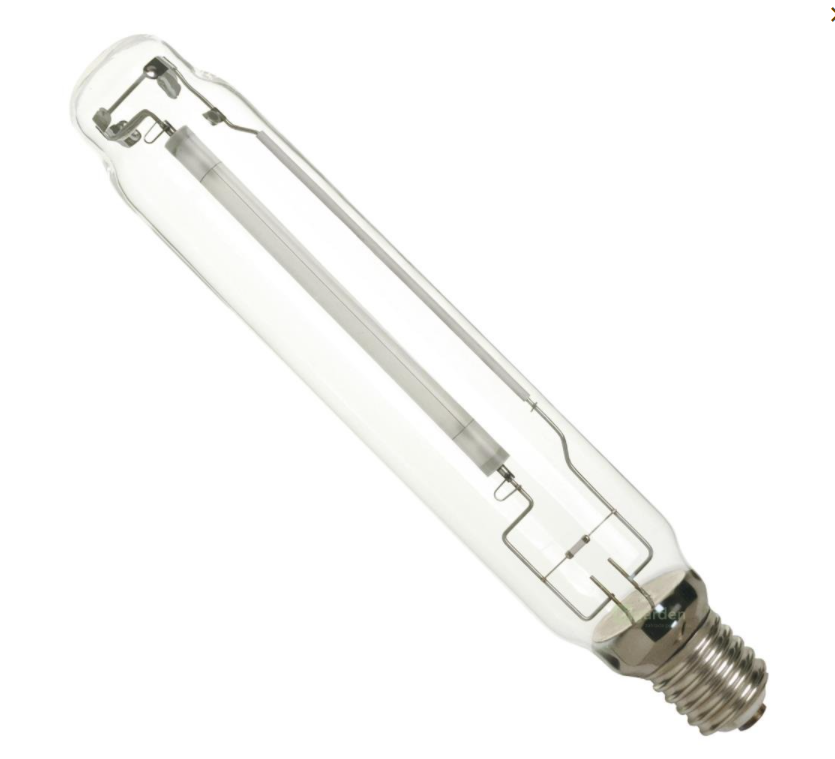
When it comes to the parameters of high-pressure discharge lamps (HID), the wattage of artificial lighting for your plants that will be adequate in relation to your growing space and plans can be estimated as follows:
- 70W discharge lamps are intended to illuminate a growing area of 35 x 35 cm with an effective reach of 25 cm.
- 150W discharge lamps are intended to illuminate a growing area of 45 x 45 cm with an effective reach of 35 cm.
- 250W discharge lamps are intended to illuminate a growing area of 60 x 60 cm with an effective reach of 50 cm.
- 400W discharge lamps already allow reliable coverage of 1 square metre of growing area with an effective reach of 80 cm.
- 600W discharge lamps are intended to illuminate a growing area of 120 x 120 cm with an effective reach of 1 metre.
- 1000W discharge lamps can easily cover a growing area measuring 150 x 150 cm with sufficient light intensity.
However, we must not forget that an important prerequisite for the above values is the use of a high-quality reflector in combination with a high-quality reflective material inside the growing space.
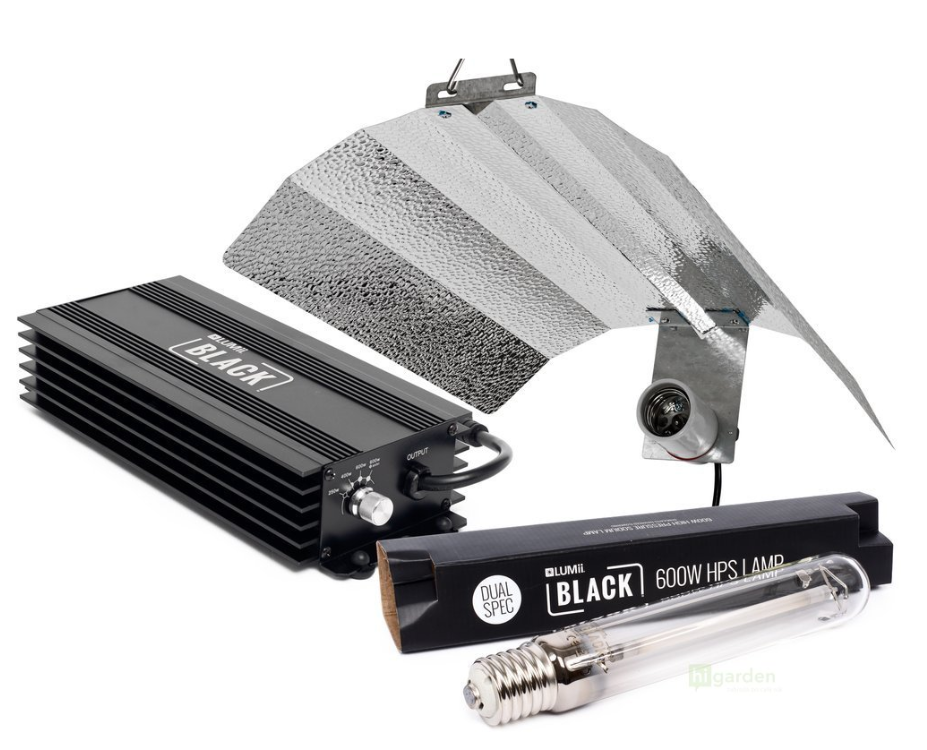
Our TIP: Take advantage of the exceptionally favourable price-performance ratio offered by the LUMii Black Digital Complete 600W KIT. Not only is it one of the bestsellers, but in addition to the lamp and ballast, the price also includes a high-quality reflector!
When it comes to wattage, there are also certain generally accepted rules among growers:
- Mother plants and cuttings (clones) require at least 20 watts (W) per square area. A square foot is equivalent to an area measuring 30 x 30 cm.
- During the flowering phase, stronger lighting is needed, namely 25 to 40 W.
- The greater the output of the grow lamp, the lower the wattage you need in relation to the growing area.
- Many growers solve the situation in an elegant way, namely by replacing one large lamp with several smaller ones whose wattage is the same in total. However, the difference between the two options, and at the same time the advantage of the second variant, lies in the even distribution of light. This is, of course, especially true for discharge lamps, because modern LED lighting takes care of even light distribution on its own.
- Keep in mind that the intensity of light radiation reaching the plants decreases rapidly as their distance from the discharge lamp increases. In practice, you will find that each discharge lamp has a certain reach that is sufficient for the formation of flowers and fruits as you would wish. And again, unlike LED technology, you must subtract a safe distance from this reach from the tops of the plants to prevent them from being scorched by the lamp! Here, the quality and power of the grow tent ventilation system plays an important role, in other words, how and how effectively heat is removed from the tops of the plants.
- The reach (see above) is also related to the height to which the planted plants will grow. It is necessary to bear this in mind. A perfect solution even for taller varieties, so that you can grow them without the risk of scorching their tops, is grow tents with an increased frame height, such as the Dutch Mammoth grow boxes HC or HOMEbox Ambient, marked with a plus sign.
If you need advice on choosing one or more discharge lamps, do not hesitate to ask us anything via the well-known e-mail address info@higarden.eu.
We also recommend these products:
- Spectromaster 250W HPS discharge lamp (449 Kč)
- Spectromaster 400W MH discharge lamp growth (649 Kč)
- Lumatek 1000W 400V DE Growth and Flowering HPS (2 599 Kč)
What to read next?
Which Light to Choose for a Grow Tent - Discharge Lamps, Part 1.
Are you planning to get started and do not know which light is suitable for which tent? Is just one enough for growth and flowering? And what about so-called dual lights? We will answer this and many other questions in the following articles.
The first criterion according to which you should choose the power of the discharge lamp is the size of the space, often the grow tent, which you plan to use for cultivation.
- 250W discharge lamps are suitable for a tent with dimensions of around 60x60 cm. You can take 50x50 cm as the minimum, and in a tent larger than 80x80 cm, 250W is too little and you are "wasting space".
- 400W discharge lamp is ideal in a tent of around 80x80 cm - in a tent under 70x70 cm, you will already not know what to do with the heat. There will be too few plants to make use of so much light. On the other hand, in a 100x100 cm tent you will already be looking at a 600W discharge lamp, and from 120x120 cm a 400W one is unnecessarily weak.
- 600W is a discharge lamp with the best price-performance ratio not only in terms of its own price/Watt output, but also because the necessary accessories such as the ballast are not much more expensive than the weaker variants. This light is ideal for space dimensions of around 100x100 cm - 120x120 cm. The size is already sufficient for proper extraction, and the plants can make use of all the light from the discharge lamps. Also, all accessories are usually limited for use with discharge lamps up to 600W.
- 750W professional discharge lamps usually used for special sets from manufacturers in the USA. The tent size is similar to that for 600W discharge lamps. They are usually supplied as a set with a ballast and reflector, and the recommended tent dimensions range between 100x100-130x130 cm, and I would definitely not recommend putting them into smaller spaces.
- 1000W are already professional discharge lamps and are suitable for experienced growers; the equipment is usually more expensive (but given the efficiency, it can easily pay off in the long term, as for example you only need one reflector, one cable, one timer socket, etc.), as most common active components are manufactured with a limit of approx. 690W (3A at 230V for those familiar with electricity). It is necessary to pay attention to which components you use so that they are sufficiently powerful. As for the tent, we recommend them for tents from 140x140 cm to approx. 160x160 cm.
- 1200W - this is a set of 2x600W, with which you illuminate twice the area as with a 600W discharge lamp, i.e. 200x100 cm - 240x120 cm.
- 2000W+ these are sets with multiple light sources, usually multiples of 600W or 1000W, and the area they can illuminate is always multiplied by the number of sets used. ;-)
In the next part, we will look at the differences between MH and HPS discharge lamps, and you will also find a tip on how to use the energy from discharge lamps to the maximum!
What Is Reflective Film and Which One Should You Choose?
Light in the growing area should certainly not fall anywhere other than on the plants, so that they can grow and flower intensively thanks to it. Reflective films are therefore one of the most important tools for growers engaged in indoor plant cultivation to achieve a massive harvest in the shortest possible time. Which film is best? You will learn everything in the following article.

You may think that a good reflector is enough for perfect light reflection in the growing area. Yes, a reflector will help you direct the light flow as needed, so you cannot do without a quality shade, but in addition to the direction of the light, it is also necessary to deal with the intensity with which it falls on your plants.
Walls, floor and ceiling – light in the growing room is reflected there through the reflector. Each time it hits these surfaces, losses in light intensity are inevitably associated with it. And that is, of course, something we do not want. That is precisely why these surfaces are lined with reflective film.
Let us summarise what reflective film is good for:
- You make maximum use of the light source in the growing area.
- Thanks to reflective film, more light falls on the plants and its rays also reach shaded areas, where larger or smaller parts of the plants usually suffer from a lack of it, which is why supplementary lighting is also used for their supplementary lamps.
- Reflective film also protects plants from top burn.
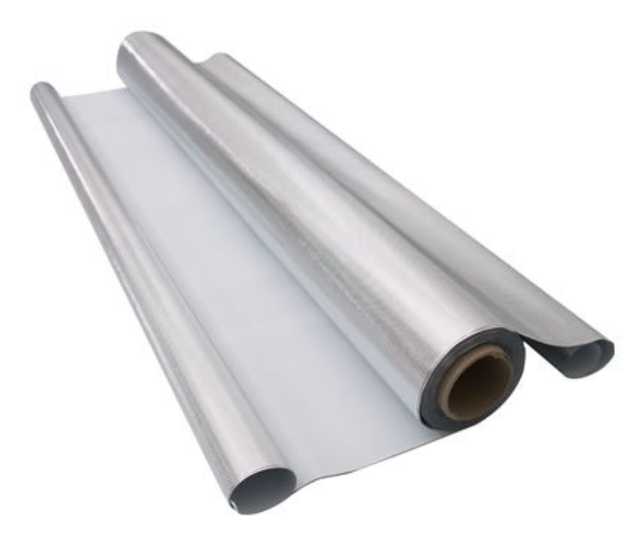
Diamond reflective film ECO is available in our range at an unbeatable price.
We will now look at how the individual reflective films differ from one another based on the production materials and their properties:
- Black-and-white PE film is the basic type of reflective film and, as the name suggests, consists of two layers, with the white one reflecting light (reflectivity approx. 90%) to harder-to-reach places and the black one absorbing it. This also clearly determines its placement on the wall of the grow room, with the white side facing inwards and the black side facing outwards. The advantage of this type of film is its low price and decent light reflection. The disadvantage is its lower ability to diffuse light evenly, as more advanced types of film can do.
- Silver films reflect light more than half as well again as the black-and-white film above, so your plants make use of 50% more light. Silver film is easy to work with, but again it is characterised by a lower ability to diffuse light evenly. It is a durable material resistant to creasing and wear, easy to maintain and also completely non-toxic, whether you choose the REFLECT-A-GRO, MYLAR or ECO version.
- Diamond films are available in our range in two versions. The A-GRO version will of course do a better job, but you will not go wrong with the cheaper version either, which is the diamond film ECO. What is the difference compared with silver films? It is the ability to diffuse light evenly. By using diamond film, you will therefore not only ensure that your plants make use of more of the light radiation from the discharge lamp, but the lighting will also be even, which is an added value that will certainly be reflected in the final yield. The disadvantage may be maintenance, as the film needs to be washed and polished with a dry cloth.
- ORCA are Canadian-made films with a unique surface topography formed by fibres of high-density specialised reflective plastic. The white colour of the film ensures a high standard in both factors mentioned above, namely reflectivity and even light diffusion. ORCA film is also much easier to clean than diamond film. Simply wipe it with a damp cloth and that is it. The main advantage is the Canadian manufacturer’s promise that by using ORCA film you will significantly reduce growing costs, as you can afford to use a discharge lamp with lower output for the designated growing area.
We recommend these products:
- ORCA Grow Film ™ - reflective film - TOP film on the market, nothing more needs to be said.
- Diamond film REFLECT-A-GRO - unbeatable price-performance ratio and at the same time the best-selling reflective film in our range. A great choice for everyone!
- Diamond reflective film ECO - once again an excellent price-performance ratio. The cheaper version of diamond film still offers 99.9% light reflection and is easy to wash. It is also available in our e-shop at an exclusive price!
- Silver film REFLECT-A-GRO - a luxury non-flammable film offers 50% better light reflection than ordinary black-and-white film and also approximately 22% better reflection than MYLAR film.
Now you know why reflective film is important and perhaps also which film to choose. Also consider whether it is more worthwhile for you to buy at the price per metre, or to buy an entire roll. If you are still unsure, we will be happy to advise you on light reflection at the well-known address info@higarden.eu.
What to read next:
What do I need a ballast for?
Many people ask us about the differences between magnetic and digital ballasts. Sometimes they also ask what they are for at all. We have therefore tried to answer the most common questions:
1) Do I need a ballast for all discharge lamps? - Yes, there is no HPS, MH or CMH discharge lamp on the market that does not need a ballast, regardless of whether its power is 70 W or 1000 W. An exception may be the CFL energy-saving lamp, which, however, contains the ballast in its base.
2) Why do I need a ballast then? Because a discharge lamp needs much higher voltage for its "ignition" than 230 V, which is initially supplied by the starter (magnetic ballasts) or voltage converter (electronic ballasts) to provide the necessary voltage at the start.
3) So does the ballast do nothing after that? No, during normal operation it again limits the voltage below 230 V, because the discharge lamp requires a lower voltage than the usual 230 V to run
4) What is the difference between a magnetic and an electronic (digital) ballast?
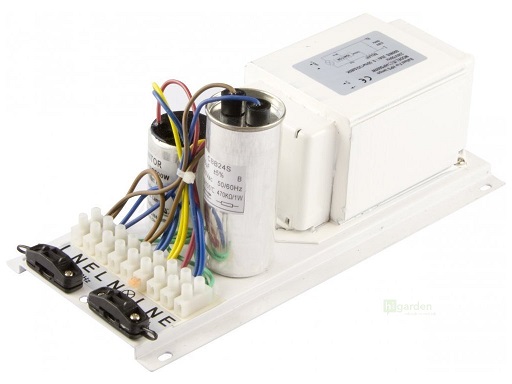
a) Magnetic - The original technology based on a starter and choke. Low efficiency caused by the very low light frequency (50 Hz), individual components degrade over time, thereby reducing the efficiency of the ballast, and due to its principle it also reacts with a delay to fluctuations in the electrical grid, which reduces the lifespan of the discharge lamp. The ballast cannot be adjusted either and works only at a preset power. Due to the ferrite core of the transformer, buzzing may occur.
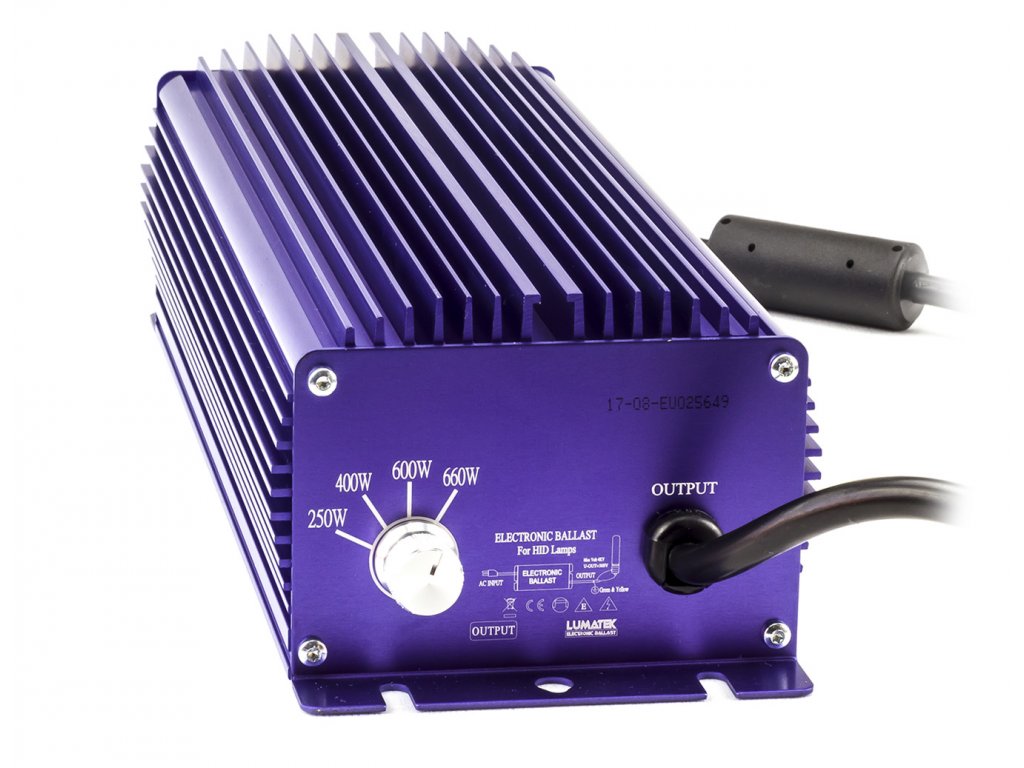
b) Electronic (Digital) - Modern ballasts based on a frequency voltage converter. They operate at a frequency of 30 - 50 kHz (approximately 1,000 times higher frequency). Thanks to the electronics, they react immediately to fluctuations in the grid and always deliver the optimal voltage and current. Most digital ballasts allow power switching, so they can be used with discharge lamps of different wattages (a popular setup is a 400 W growth discharge lamp and a 600 W flowering discharge lamp). Efficiency is also significantly higher, as the power consumption of the ballast itself is approximately one third of that of the magnetic variant. It contains no transformer and is therefore completely silent. The components do not change their properties over time, so their efficiency remains the same throughout their service life. The mean service life, that is, the average lifespan, of digital ballasts is also significantly longer than that of their magnetic predecessors, and they are therefore better in practically every respect. However, these advantages come at a higher purchase price, which is nevertheless returned several times over through the savings during the life of the electronic ballast.
¨
5) What is the difference between the individual ballast brands? - Whether magnetic or electronic ballasts, it always depends on the components used, that is, their quality as well as their price, which allows the manufacturer to significantly influence both the lifespan and the efficiency of the ballast.
6) Which ballasts do you recommend then? - Generally, those that we have tested ourselves and those that are popular among our customers. Mainly:
- Among magnetic ballasts, we recommend the time-tested LUMii Black ballasts. They have a protective casing and IEC connectors, thanks to which they have a lower surface temperature and also work on a Plug & Play principle. So there is no cable wiring.
- For digital ballasts, we recommend Lumatek ballasts, which offer maximum quality for their price, a 5-year warranty and excellent warranty service. In terms of price-performance ratio, we then recommend LUMii Black ballasts (not to be confused with their magnetic variant of the same name), which are very reliable.
- A separate category is 400V Lumatek ballasts, which deliver up to 15% more light at the same power consumption, but we will talk about those another time.
Which Light to Choose for a Grow Tent - Discharge Lamps, Part 2.
In the previous article we looked at which lamp wattage is suitable for tents of different sizes. But which type of lamp should you choose?
The basic types of lamps include MH (metal halide) and HPS (High Pressure Sodium). The basic difference between these two lamps is the composition of the light spectrum they emit. 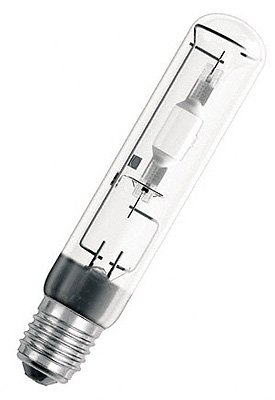

MH lamp on the left and HPS lamp on the right
MH (Growth) - For growth, a light source with a higher proportion of blue light is suitable, which plants in the growth stage can use better - in this way the lamp imitates the light emitted in spring, when the plant is growing and there is still plenty of time before "winter". This light is best imitated by an MH lamp and is therefore always labelled as a growth lamp. Although it cannot emit the same amount of visible light as an HPS lamp (the figure given in lumens), it can still produce more suitable light for growth at the same power consumption than an HPS lamp with a higher proportion of visible spectrum and thus a higher lumen value. MH lamps are also characterised by a higher colour temperature, ranging between 4000K and 6000K, with values close to the 4000K limit being used more often for cultivation.
HPS (Flowering) - The plant can make much better use of the yellow-red part of the spectrum, which imitates summer weather and, together with the shortening of daylight, causes the plant to flower in order to ensure the survival of its species into the next growing season. HPS lamps best imitate this period and have a light spectrum composition adapted to it. An HPS lamp usually has a colour temperature (chromaticity) between 2000K and 3000K.
For comparison, an illustrative graph of the light spectrum of MH and HPS lamps 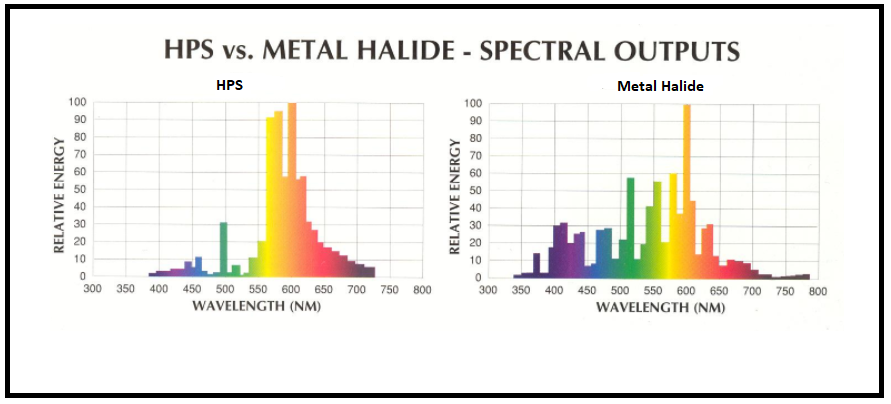
In the previous article, I also promised you a tip on how to use the energy from the lamp to the maximum. The principle is very simple. If you use the most common 600W lamp, buy a 600W HPS lamp and a 400W MH lamp. Your plants are still small during growth and do not need as much light as they do during flowering. Save money and buy a weaker lamp, and save further on energy.
If you use a setup with a 400W HPS lamp, you can use a 250W MH lamp for growth, or conversely, with a 1000W HPS lamp you can use a 600MH lamp for growth.
DO NOT FORGET that you will need a switchable ballast, which will allow you to use 2 different lamps so that you do not burn out the weaker lamp before you even start. More about ballasts can be found in our article what do I need a ballast for?