
Complete Guide to Fertilisers for Indoor Growing
Choosing the right fertiliser for indoor growing is a stumbling block for many growers. It is easy to get lost in the huge range of fertiliser types and brands intended for different substrate types and growth stages. In this complete guide to fertilisers for indoor growing, we will show you how to choose the ideal nutrition for soil, coco and hydroponics, and how to find your way through the range of growth and flowering fertilisers.
If you have visited the shop or the Higarden website for the first time, our range of fertilisers may seem excessive. Do you really need so many different types and brands? The truth is that a wide selection of fertilisers is not just for show. Indoor growing can take many forms, and each substrate, species or growth stage requires a specific type of plant nutrition. In the following lines, we will guide you through buying fertiliser for indoor plants step by step.
Types of fertilisers for indoor growing
 When it comes to plant nutrition, indoor growing offers two main approaches. You can either rely on nature and use organic fertilisers to create an environment for your plants similar to a fertile bed. Or you can choose immediately acting mineral fertilisers, which supply plants with nutrients in the form of mineral salts.
You may also be interested in: Organic or mineral fertilisers: which should you choose?
What is the difference between organic and mineral fertilisers? The main difference is that for organic fertilisers to work, plants must grow in a substrate inhabited by soil microorganisms, which first “pre-digest” the organic nutrients for the plants. That is why they are usually used only when growing in soil substrates.
On the other hand, nutrients in the form of mineral salts can be absorbed by plants immediately, without first being broken down by microorganisms. Mineral fertilisers can therefore be used not only in soil, but also in hydroponics and when growing in coco and inert substrates such as rockwool, expanded clay or perlite.
You may also be interested in: How to choose a growing medium for indoor growing
It is not possible to say simply whether mineral or organic fertilisers are better. Mineral salts act very quickly and are effective. On the other hand, if handled carelessly, it is easy to overfeed plants. Organic fertilisers act more slowly and their effectiveness depends more on environmental factors. However, under the right conditions they require much less work and plants are practically not at risk of nutrient deficiencies.
Both approaches can be combined under certain circumstances, but it is always necessary to balance the amount of mineral salts in the soil so that microorganisms can survive in it. Combined organo-mineral fertilisers are used for this purpose.
How does growing with organic or mineral fertilisers differ?
Both types are available in different forms. Most indoor growers use liquid fertilisers for convenience, but there are also powder forms or fertilisers in tablet or granule form.
You may also be interested in: Are liquid, powder or solid tablet fertilisers better?
Mineral fertilisers are first mixed with water, and plants are watered with the resulting nutrient solution, or they grow immersed directly in it in the case of hydroponics. With a nutrient solution, it is always necessary to measure the amount of nutrients and acidity using an EC meter and pH meter.
You may also be interested in: How to measure EC in hydroponics and growing in soilless substrates
Organic fertilisers are applied directly to the water or mixed into the substrate in the case of tablets or granules. With organic fertilisers, it is usually not necessary to measure EC because they do not contain mineral salts; however, it is advisable to slightly lower the pH of the irrigation water when watering.
When to choose mineral fertilisers
If you grow hydroponically or in inert substrates (rockwool, perlite, expanded clay): In purely soilless systems, nutrient solutions made from mineral fertilisers are significantly more effective than any organic alternatives.
You are aiming for maximum yield and rapid growth: When growing indoors under intense light, mineral nutrients usually deliver higher and more stable results than purely organic nutrition.
You are growing species with a short vegetative cycle or seedlings: When growing plants with a short vegetative cycle (pepper seedlings, leafy vegetables), organic fertilisers may release nitrogen too slowly. When growing with mineral fertilisers, seedlings are usually larger and grow faster.
When to choose organic fertilisers
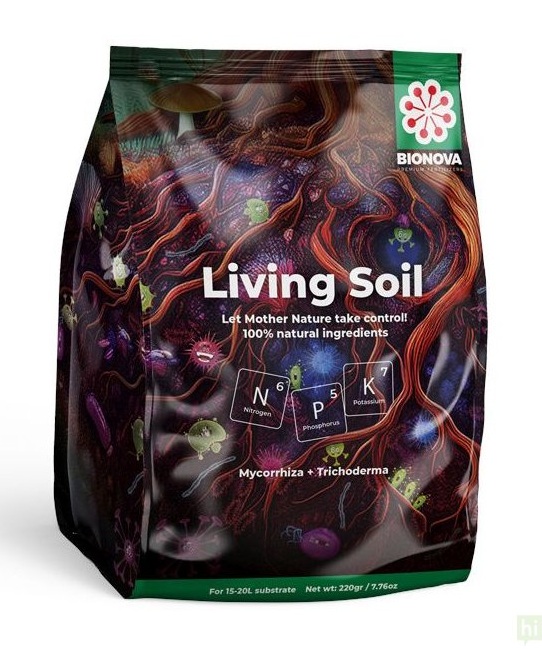 You grow in soil or a substrate rich in organic matter: When growing in soil, it is often easier to take advantage of beneficial microorganisms and grow organically. This is especially advantageous for beginner growers, who are relieved of most of the worries associated with measuring irrigation and plant nutrition.
You care about the quality and terpene profile of flowers and fruits: In tomatoes and medicinal plants, studies have repeatedly shown that organically grown crops have better taste and aroma.
You want to use one substrate for a long time: Living soil and other ecological growing methods depend on the long-term sustainability of substrate quality, which can only be achieved with organic fertilisers.
Fertilisers for indoor growing by growing medium
When choosing a fertiliser, one of the most important factors is the type of substrate. Each growing medium has its specifics. A fertiliser for hydroponics will not work in soil or coco.
Fertilisers according to the plant growth stage
At different stages of its life, a plant has different requirements for nutrient composition, especially the main NPK nutrients, which it consumes in the largest quantities. During the growth stage, plants need increased amounts of nitrogen for leaf and root development. Flower fertilisers contain a higher proportion of phosphorus and potassium, which support flower formation.
- Fertilisers for seedlings and cuttings
- Fertilisers for the growth stage
- Fertilisers for the flowering stage
You may also be interested in: How to use growth fertilisers
Choosing the right fertiliser does not have to be complicated if you know what to base your decision on. The key is to take into account the growing medium, the chosen growing style and th