
Equip yourself for the autumn harvest
Our plants are enjoying the last summer rays and the scent of ripening harvest hangs in the air. Harvest time is approaching, and all the effort invested can finally begin to pay off. To get the most from your crop, you will need the right tools. We bring you proven products and tips that will help you harvest like professionals.
Scissors
 Quality gardening scissors with a thin tip should be part of every grower's basic equipment. You will use them not only for harvesting, but also for trimming and shaping plants or cloning. Here we would like to emphasise that paper scissors or manicure scissors are not a suitable substitute in this case, unless you want to end up with carpal tunnel inflammation. For heavy work (thick stems, large leaves), large spring-loaded gardening scissors are suitable, where you can choose the version with straight or curved blades. Fine finishing and trimming are best handled with pruning scissors or Mini Clippers.
Protective equipment
The resin of some plants can cause a mild allergic reaction on direct contact with the skin, manifesting in a similar way to a nettle sting. When harvesting and handling plants, protect your hands with disposable nitrile or vinyl gloves. Long clothing covering the forearms is also suitable, and if the season has been successful and you are facing a real jungle to tackle, you may also find a protective suit useful. Finally, one more secret tip from us. Resin can stick to any surface, and the easiest way to remove it from tools, hands or clothing is with pure ethyl alcohol.
Harvesting and trimming
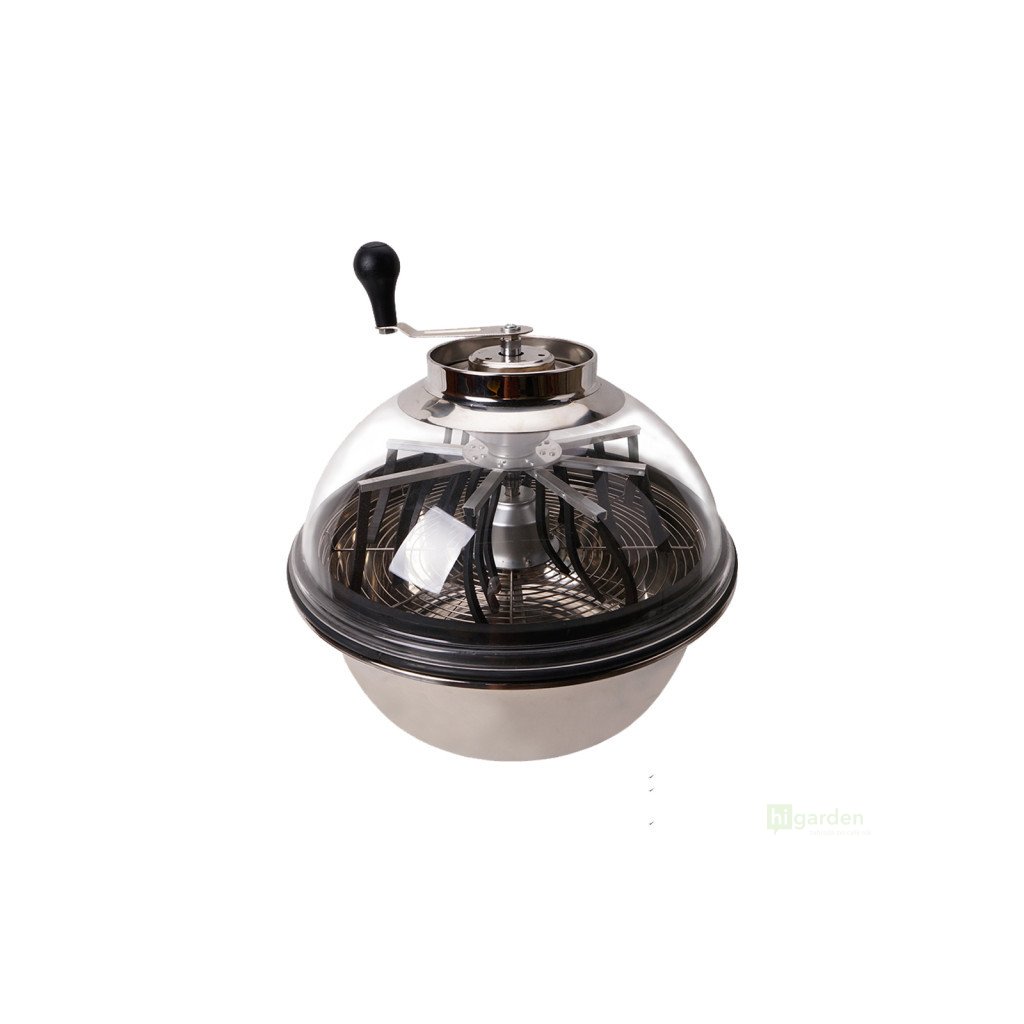 Most growers do not use the whole plant and, when harvesting, must separate the useful parts (flowers) from those that will be used in another way or discarded (stems, leaves). During trimming (cleaning), the aim is to remove all excess leaves from the final product, which increases quality and helps prevent mould during drying. You can clean the flowers before drying (wet trim) or after drying (dry trim). In both cases, you are looking at several to dozens of hours of work with scissors, and if you want to save your back, it is worth investing in a trimming tray, which also catches the valuable resin falling from the flowers during harvest. For larger growers and the lazy, there are mechanical trimmers and trimbags that will do a good part of the work for you.
Drying
Properly dried herbs retain their strength, aroma and medicinal properties even during long-term storage, without the risk of mould or spoilage. The best place for drying herbs or mushrooms is a well-ventilated dark room with a temperature of around 20 °C and humidity of approximately 40-50%. Be careful of dust or other impurities that could spoil the final product. Drying nets are practical, as they ensure the material dries evenly. If you are processing the harvest at home and are bothered by an unpleasant odour that may disturb those around you, dry the crop in a grow tent, which you should ventilate with a fan with a carbon odour filter.
Storage
Under the right conditions, it will take approximately two weeks to a month for the flowers to dry sufficiently and be ready for storage. If you want your herbs to retain their aroma, we recommend storing them in a dark, cool place in jars with airtight lids, which you should open regularly (at least once a week) for a few minutes to vent excess moisture. This will prevent mould and degradation of the dried material. To preserve quality, it is important that the plant material does not dry out completely. To maintain the appropriate humidity, use Integra Boost or Boveda sachets.
And something extra: How to extract resin
 Some growers are constantly looking for ways to multiply the pleasure brought by the aroma of herbs even further. For those of you who want to enjoy a pure terpene profile, there is resin extraction, thanks to which you can obtain high-quality concentrates such as rosin and others. There are various extraction methods, such as mechanical sieving or using solvents (DME and others), but the cleanest product is guaranteed by water separation. This consists of soaking resin-rich dried material in cold water, where the resin glands called trichomes separate from the plant material and are then captured in a series of sieves with microscopic holes. To get started, all you need are Urban Bubble Bags and several buckets. If you want to save yourself work when mixing and get the maximum from the dried material, we recommend equipping yourself with a pollen separation washer.
Are you sorry that the growing season is coming to an end and would you rather grow all year round? Try indoor cultivation of plants under artificial lighting. You can find out how on our Higarden blog!