
Most Common Nutrient Deficiencies in Plants: How to Identify, Address, and Prevent Them
Are your plants turning yellow, curling and slowing their growth? They may be lacking essential nutrients. Learn to recognise the signals your plants give you and find out how to help them quickly.
In total, plants need 17 nutrient elements to live. They obtain oxygen, carbon and hydrogen from the air. The remaining nutrients are taken from the soil or nutrient solution. Nutrient elements are divided into macronutrients, which plants need in the greatest amounts, and micronutrients, also known as trace elements or minerals.
- Macronutrients: nitrogen (N), phosphorus (P), potassium (K), calcium (Ca), sulphur (S), magnesium (Mg), carbon (C), oxygen (O), hydrogen (H)
- Micronutrients (trace elements): iron (Fe), boron (B), chlorine (Cl), manganese (Mn), zinc (Zn), copper (Cu), molybdenum (Mo), nickel (Ni)
Macronutrients are absolutely essential for plants, and their deficiency is clearly reflected in the plants. Plants need the primary macronutrients most of all – nitrogen (N), phosphorus (P) and potassium (K). In indoor growing, we may also encounter a deficiency of secondary macronutrients - calcium (Ca), magnesium (Mg) and, exceptionally, sulphur (S).
You may also be interested in: Everything about the primary nutrients NPK
Nitrogen
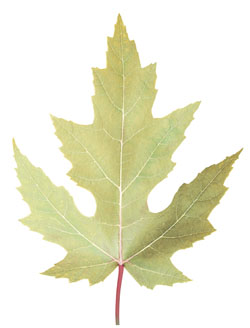 Nitrogen is most often lacking in plants during the vegetative phase, when they produce a large number of leaves. It is important in the formation of chlorophyll and is an essential component of proteins and nucleic acids.
Symptoms of nitrogen deficiency in plants
How can you tell if a plant is lacking nitrogen? The most obvious sign is yellowing leaves, which first affects the old leaves in the lower parts of the plant. This is because nitrogen is a mobile element that plants can freely move to where they need it most, namely to new shoots and leaves. In some varieties, nitrogen deficiency is shown by purple colouring of stems and leaf petioles.
- yellowing leaves and pale green colour
- lower leaves gradually fade and wilt
- slowed growth
- new shoots are lighter in colour
- earlier onset of flowering
- purple colouring of stems in some varieties
Why plants lack nitrogen and what to do
The most common reason for nitrogen deficiency is incorrect fertilisation. When growing outdoors, the cause may be soil poor in organic matter. Therefore, if you grow in the same place every year, it is important to regularly add compost or another source of organic matter to the soil, for example humus. If it is too late for that and you need to act quickly, we recommend using fast-acting liquid organic fertilisers for growth.
You may also be interested in: What NPK fertilisers are and what they are used for
In indoor growing, the reason may be too little fertiliser. This can be corrected simply by increasing the concentration of fertilisers in the nutrient solution. If you feel that you are fertilising sufficiently and yet the plants still look undernourished, the opposite may be true: excessive use of mineral fertilisers. This leads to salt build-up and the “locking” of nutrients in the substrate. In such a case, the solution is to flush the substrate with clean water with adjusted pH and then water it with a solution at the correct pH and EC.
You may also be interested in: What effect pH has on nutrient uptake
A common cause of problems not only with nitrogen but with plant nutrition in general is unsuitable substrate pH. When growing outdoors, this problem is less common and is dealt with by liming the soil or adding organic matter. Indoors, it is usual to lower the pH of the water with every watering, because water with fertilisers has a pH that is too high.
Phosphorus
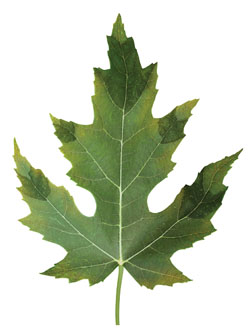 Phosphorus is essential for plants in root and leaf formation, photosynthesis and the uptake of other nutrients, as well as during the reproductive phase and flowering. Plants need phosphorus from early growth until harvest, with demand increasing when flowers are initiated – the transition to flowering.
Symptoms of phosphorus deficiency in plants
Plants with a phosphorus deficiency in their nutrition are stunted and have small leaves. The deficiency first appears on older leaves, which turn dark green, wilt and take on a blue-purple colour. If the phosphorus deficiency persists for several weeks, dark brown necrotic spots appear on the leaves and the leaf blades curl downwards. Plants with a phosphorus deficiency in their nutrition will still flower, but the flowers will be weak and few in number.
- dark green leaves with necrotic spots
- leaves darken from the edges and have a purplish colour
- deformed or curled leaf blades
- slow growth and flowering, small flowers
- purple colouring of stems in some species
Why plants lack phosphorus and what to do
When growing in soil, phosphorus deficiency is rare, and in such cases the cause is almost always incorrect pH of the growing medium. Outside the pH range of 6 to 7, the solubility of phosphates drops sharply. Soil pH can be adjusted by liming or by adding sulphur. If you need to act quickly, you can use phosphorus fertilisers in a sensible dose. Better more often and in smaller amounts, so that soil microorganisms are not destroyed and fertilisers are not leached into groundwater.
You may also be interested in: How to choose a fertiliser for indoor and outdoor growing
Indoors, phosphorus deficiency can also be caused by unsuitable pH of the substrate or nutrient solution. In such a case, it is enough to adjust the pH of the nutrient solution or substrate at the next watering. Less often, nutrition problems are caused by an unsuitable N:P:K ratio. However, if you use professional fertilisers for indoor growing and follow the feeding tables, your plants should not lack phosphorus.
You may also be interested in: Organic or mineral fertilisers – which are better?
Potassium
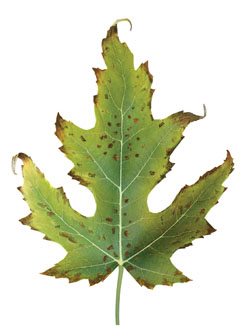 Potassium is an important element for water transport, as plants use it to control stomata. These small pores on the leaf surface regulate how much water evaporates from the plants and thus effectively control transpiration. Plants need potassium throughout the entire growing cycle.
Symptoms of potassium deficiency in plants
Potassium deficiency is initially difficult to recognise in plants. Plants that lack only a small amount of potassium still look healthy. They may even be slightly taller, but they are identified by slightly burnt leaf edges with yellowing tips. If the potassium deficit is more serious, the leaf veins remain green, but the petioles and stems turn red and dark necrotic spots begin to appear on the leaves.
- burnt leaf edges and tips
- leaves discolour from the edge towards the centre
- veins remain green
- slow growth and smaller flowers
- deformed and drying leaves
Why plants lack potassium and what to do
A large pro