
First two weeks of the plant's life, day by day
For many growers, the first days of a plant’s life are the most nerve-racking stage of the entire cultivation cycle. A single lapse in attention is enough for precious seeds, often bought for a considerable sum, to be lost. We will show you how to care for your seedlings during the first two weeks so that they grow into healthy and productive plants.
How a plant fares in the first days after germination often determines its entire life. Well-fed seedlings that form abundant roots from day one and quickly produce new leaves grow into strong and productive plants. If a plant struggles during the first days and fails to establish properly, it often means it will remain weak throughout its life and produce fewer flowers. So how can you ensure that your seedlings have everything they need from the very first moment of life?
You may be interested in: Detailed guide to pre-growing seedlings indoors
Before you start germinating
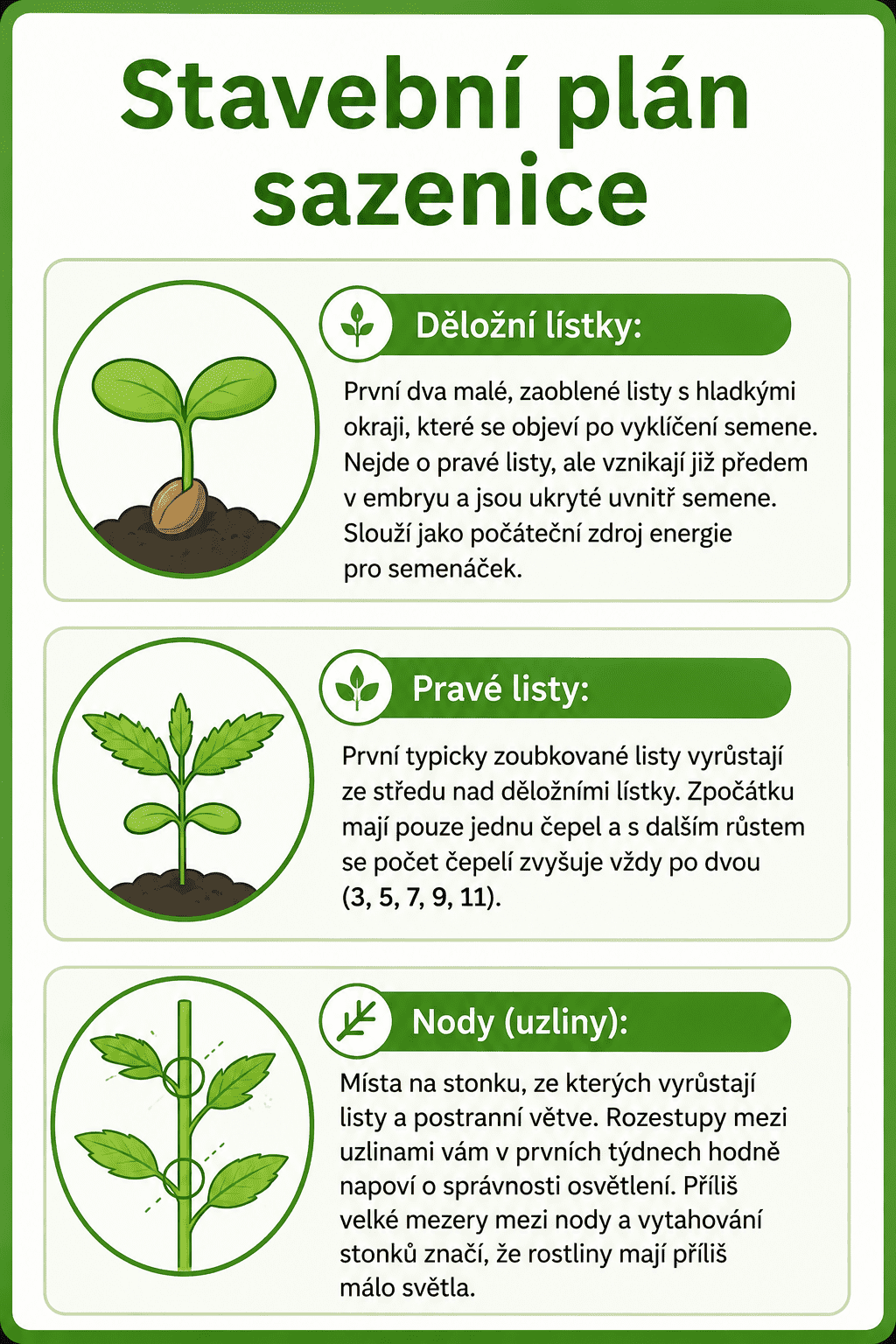 Every grower should keep in mind that seed quality is an important factor that will affect the entire cultivation cycle. No miracle can be grown from poor-quality seed or from seeds of a poorly chosen variety, not even by the best gardener. Fresh seeds no more than two years old germinate best, but with good storage even seeds that are decades old may germinate. When germinating very old or rare seeds, enzyme-based germination stimulators are useful, as they can help older seed stock to germinate as well.
You may be interested in: How to choose quality seeds for indoor and outdoor growing
There are several germination methods. Some growers germinate seeds between moistened paper towels or soak them in water for 24 hours before placing them into the substrate (priming). However, the most reliable and seed-friendly method is germination in propagation cubes or rolls made of coconut fibre, rockwool, peat, or a mixture of organic materials.
You may be interested in: Which substrate is best for germination
The correct climate is absolutely essential for successful germination. Seeds germinate best at room temperature (22–26 °C). It is also important that the substrate does not dry out during germination, otherwise the process stops and the seeds die. In the first days after germination, seeds need high air humidity above 70%. These conditions are best maintained in a plastic propagator, where you can germinate seeds safely and provide them with a secure environment in the first days of life.
You may be interested in: How to germinate step by step
Days 0–2: Germination in the dark
As soon as seeds come into contact with water, they begin to absorb surrounding moisture and metabolic processes are activated within them. At an optimal temperature of 25 °C, the seed activates within a few hours, the embryo inside begins to swell, and the protective shell cracks. The first thing to appear is the rootlet (radicle), the main root that anchors the plant in the substrate and immediately begins searching for water and nutrients. During the first two days, do not shine light on the seeds. Research suggests that darkness helps the rootlet grow through the substrate.
Temperature: Keep the temperature in the range of 22–26 °C. If you are germinating in a cold place, place a heated mat with thermostat under the propagator.
Humidity: Air humidity should exceed 70%. The substrate must not dry out.
Light: Not needed.
Days 3–4: The seedling emerges
If conditions are correct and the seeds are healthy, the shell protecting the embryo (the seed coat) should crack between the second and fourth day after sowing. The seedling begins to grow downwards under the influence of gravity, but sometimes the rootlet may initially grow upwards and the seed head with the cotyledons becomes trapped in the substrate. In that case, carefully break open the propagation cube and turn the seedling to face downwards.
Do not disturb: If it is not absolutely necessary, do not touch germinating seeds or move them from place to place.
Stable temperature and humidity: Seeds need peace and a stable environment. In the propagator, maintain the temperature in the range of 22–26 °C and high air humidity. If the substrate dries out, moisten it gently with a sprayer.
Light: As long as the seed head remains hidden under the substrate, light is not needed.
Days 5–6: The first leaves break through to the surface
Four to seven days after planting, the seed head should appear above the surface of the substrate. During the following 12 to 24 hours it opens and two round cotyledons appear, which are already capable of photosynthesis. It is time to transplant the propagation cubes with the germinated seeds into a small pot with the chosen growing medium.
You may be interested in: Which growing medium is right for you?
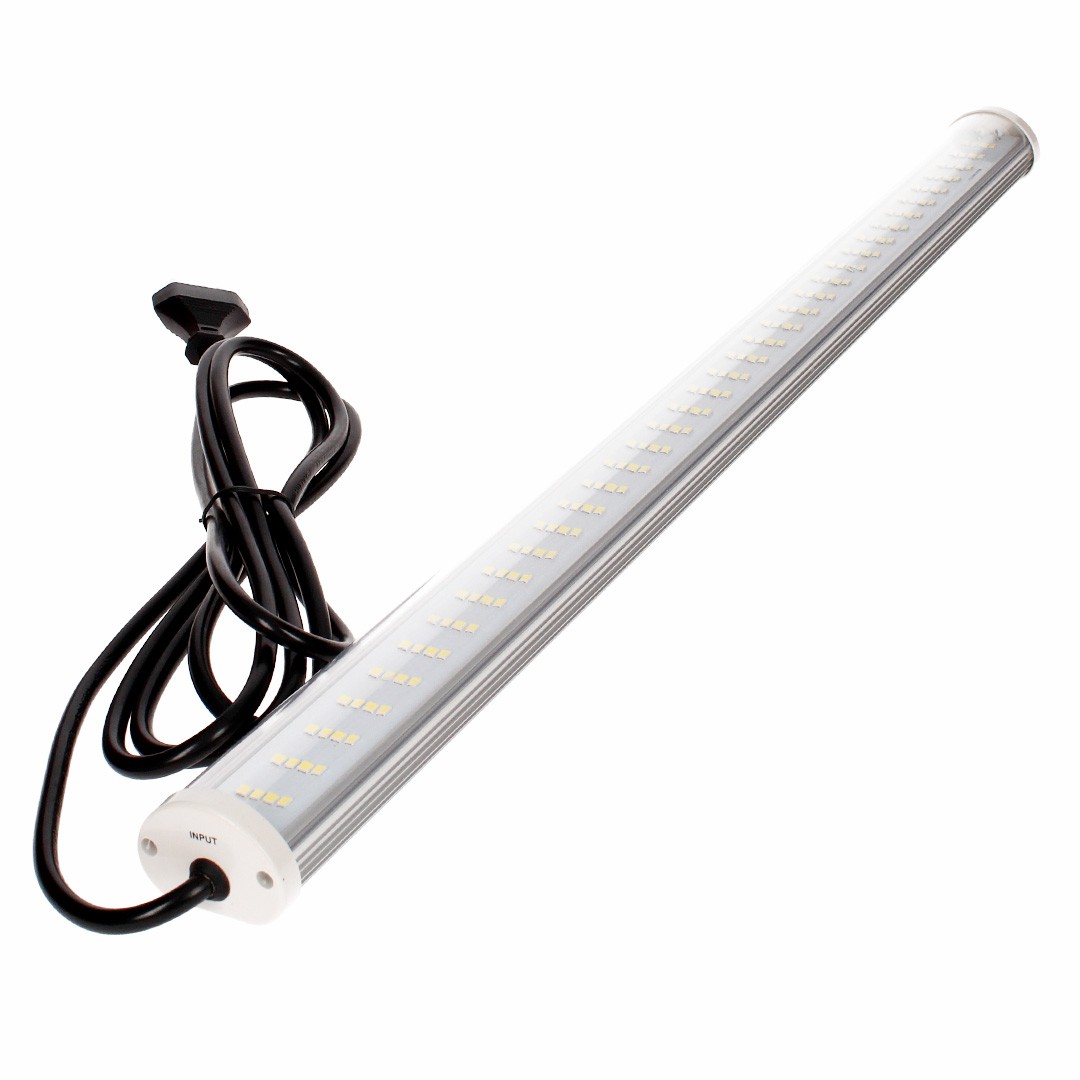
Light: As soon as the first leaves appear above the surface, it is time to provide the seedlings with light. However, it should not be too intense, as this could burn the young leaves. An ideal choice is a TLED light in the growth spectrum with an output of several dozen watts, hung 60 to 90 centimetres above the plants. The aim is for the light intensity (PPFD) to be in the range of 100–200 µmol/m²/s.
Light period: Most growers light seedlings on an 18/6 schedule, meaning 18 hours of light and 6 hours of darkness. The photoperiod can also be extended to 20/4 or 24/0, which speeds up growth but may stress the plants.
Watering: After transplanting into the substrate, water the germinated seeds with only a small amount of water. It is better to water plants less and more often during the first days. If you drown them in water, oxygen will not reach the roots and the seedlings will grow slowly. The water should have adjusted pH (6–7 for soil, 5.5–6.5 for coconut and hydroponic substrates).
Stuck seed coat: Sometimes the seed shell gets “stuck” on the cotyledons, which cannot unfold. If this happens, carefully remove the shell with tweezers.
Days 7–8: The first true leaves
 After a week from sowing, your seeds should have fully developed cotyledons and, if you look between them, you should see the first sign of the true serrated leaves. If your seeds are taking a little longer, wait two