
Growing Substrate Guide
Growing media are essential for successful plant cultivation, whether in the home environment or in professional agriculture. From traditional soil-based mixes to modern coconut substrates or mineral wool – each type of growing medium has its specific properties and uses. Explore with us the advantages and disadvantages of individual growing substrates and find the most suitable one for your plants.
By growing substrate we mean a material or mixture intended for plant cultivation, which serves as a medium retaining water, air and nutrients absorbed by plant roots. A growing substrate may consist of organic materials such as soil, coconut fibres, clay pellets (expanded clay) or inert materials such as perlite, vermiculite or mineral wool (rockwool).
Coconut substrates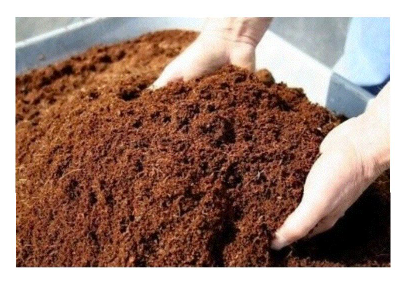
Coconut growing substrates are made from finely crushed coconut fibres and coconut husks. The added value of this growing medium is that it combines the advantages of soilless and soil-based substrates, which makes it highly versatile. Coconut growing substrates can be used for growing in pots with manual watering as well as irrigation systems, outdoors in beds and in greenhouses.
If you choose coconut as your growing medium, you will need water-soluble fertilisers for preparing a hydroponic nutrient solution. Pure coconut substrate does not contain any nutrients on its own and serves only to anchor the roots, which you must supply with water and nutrition. Coconut substrates retain water very well while also protecting plants from overwatering, so they are a suitable growing medium even for beginners. The only thing you must watch out for is not letting the coconut substrate dry out completely, as it will lose its ability to retain water.
Advantages: neutral pH, supports the growth of beneficial bacteria and fungi, excellent retention properties, versatile use
Disadvantages: zero nutrient content, poor-quality mixes may contain a high salt content, some coconut substrates need to be buffered before use
Rockwool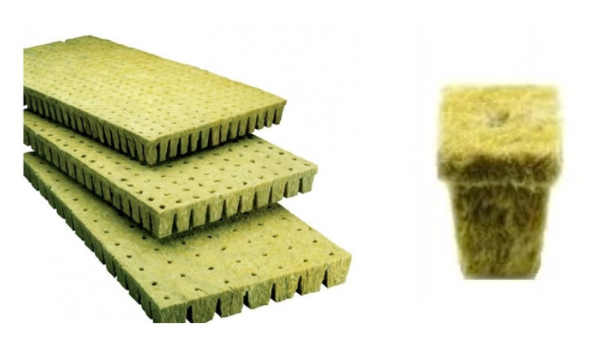
Rockwool is mineral wool made from molten basalt rock, which is then formed into cubes or mats. The result is an inert medium that retains water and air exceptionally well and is ideal for hydroponic growing, seed germination and cuttings. Standard rockwool is manufactured so that 18% of its volume is reserved for air, even when fully saturated. At the same time, mineral wool dries evenly, so plant roots have constant access to water.
As with other soilless substrates, mineral wool contains no nutrients and plants must be fed with hydroponic fertilisers. Rockwool itself has a high pH, so the cubes or mats must first be soaked in an acidic solution with a pH of 5.5 before use. First adjust the pH of standing water to the required value using acid for lowering pH and then rinse the medium thoroughly. From this point on, the pH of the nutrient solution should not exceed 6.1, so that the alkalinity of the mineral wool is balanced.
Advantages: inert and sterile substrate, high ability to retain water and air, reusable
Disadvantages: may irritate skin and eyes if handled carelessly, pH adjustment required, contains no carbon for microbial life
Expanded clay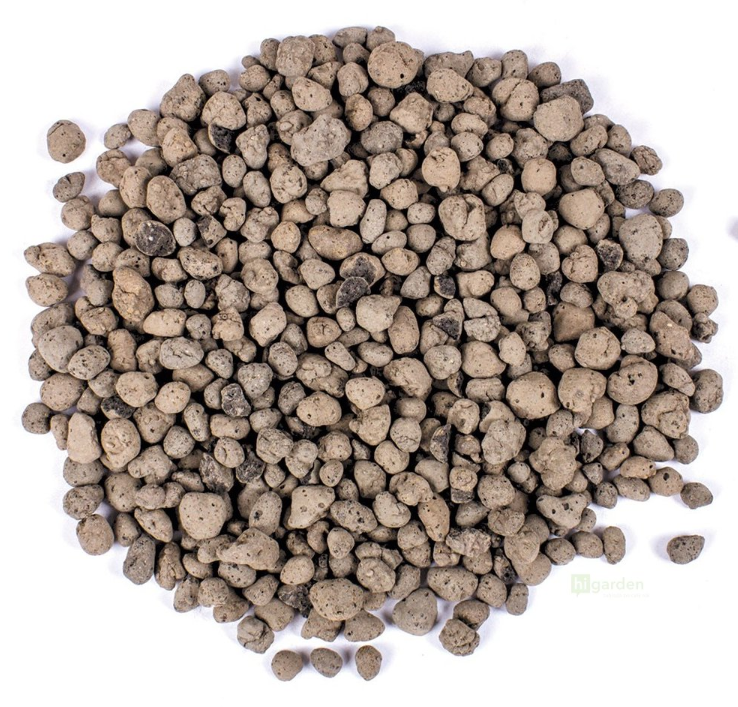
Expanded clay, also known as LECA, is a porous material created by heating clay to a high temperature. It resembles small lightweight pebbles that can be used as an additive to soil in various types of hydroponic systems (run-to-waste, DWC, NFT, ebb and flow, drip irrigation) or as a medium for anchoring plants in aeroponic growing.
If you use expanded clay as a standalone growing medium, you must supply all nutrients to the plants in the irrigation water in the form of water-soluble fertilisers. In addition, as with rockwool, you must first rinse the growing substrate and carefully monitor the pH of the nutrient solution throughout the entire growing cycle.
Advantages: does not decompose, neutral pH, retains water and nutrients, good aeration of the root zone
Disadvantages: must be rinsed before use, dries out quickly, difficult to store
Perlite and vermiculite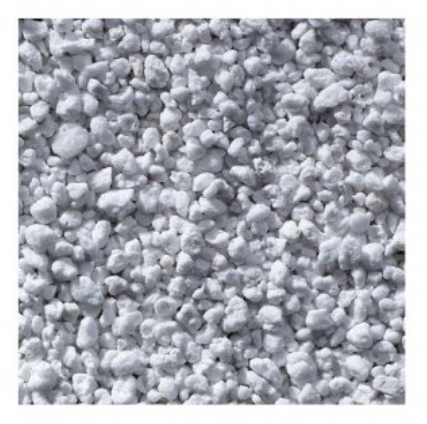
Perlite and vermiculite are created by heating rock to a high temperature. In the case of perlite, the result is a bright white crushed material made from lightweight stone. Vermiculite has a slightly finer structure and an ochre colour. Perlite and vermiculite are used as an additive to horticultural and coconut substrates, for germination and cuttings, or as a medium for hydroponic growing using irrigation systems.
Perlite and vermiculite are inert substrates, so all nutrition must be supplied to plants in the form of hydroponic nutrient solution. Vermiculite differs from perlite in that it has a greater ability to retain water and nutrients and breaks down over time, which may slightly increase the pH around the root zone. Perlite is more durable and does not decompose or affect the pH of the root zone, but on the other hand it has minimal ability to retain water and nutrients.
Advantages: sterile, almost or completely neutral pH, good access of air to the roots
Disadvantages: non-renewable resource, irritating dust, small particles may clog irrigation systems
Soil-based horticultural substrates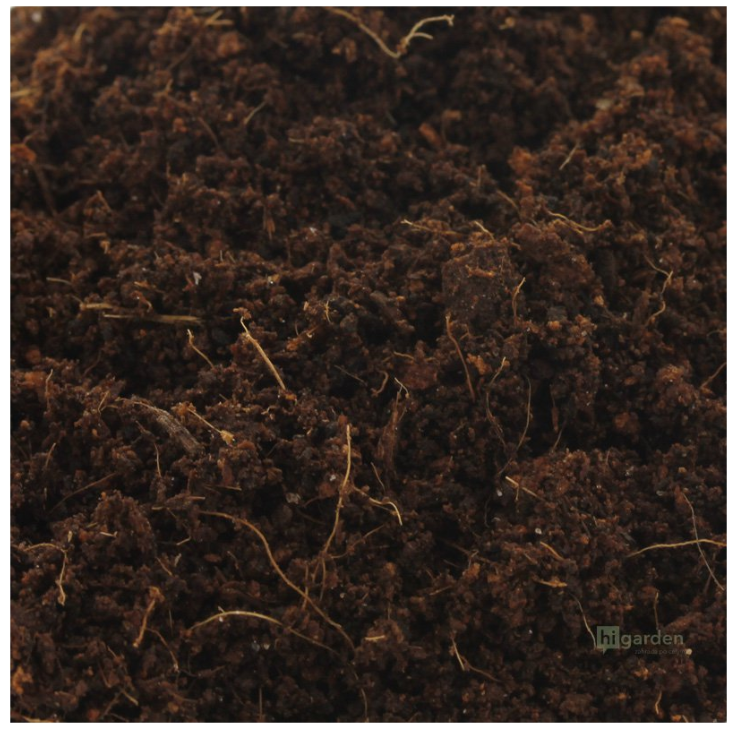
Soil-based horticultural substrates are a traditional growing medium that can take many forms. Sowing substrates for seed germination or cuttings, light substrates for the first weeks of plant life, medium-fertilised and heavily pre-fertilised substrates or soil mixes suitable for organic growing. Horticultural substrates can be used for growing in pots with manual watering as well as irrigation systems, outdoors in beds and in greenhouses.
The main advantage of soil as a growing medium is its natural nutrient content, which the soil provides, or the manufacturer may add fertilisers to the mix that serve as nutrition for plants in the first weeks after planting. When growing in soil-based substrates, you can use fertilisers for growing in soil, including mineral salts in the form of nutrient solution, powder or, for example, slow-release pellets. At the same time, you have the option to grow completely without chemicals using purely organic fertilisers. Thanks to their high buffering capacity, soil mixes can cope with pH fluctuations better than other substrates, and are therefore a suitable choice for beginner growers.