
Watch out for the most common mistakes during the vegetative phase
Growers often take the vegetative stage for granted or see it as a necessary evil, and do not think they could make any mistakes during this period. However, the opposite is true. A healthy vegetative phase is essential if you want a proper harvest. Are you making any of the following beginner mistakes and losing yield because of them?
Plants go through several developmental stages during their life. Their life begins with germination, and once the seed takes root and leaves begin to grow, they move into the growth (vegetative) stage. During this stage, they direct all their energy into growth, the formation of new leaves and the development of the root system. This is followed by the flowering (generative) stage, during which flowers and, if pollination occurs, seeds are formed. Every grower’s goal is to care for plants during the vegetative stage so that they enter flowering in full health.
Leggy stems in seedlings
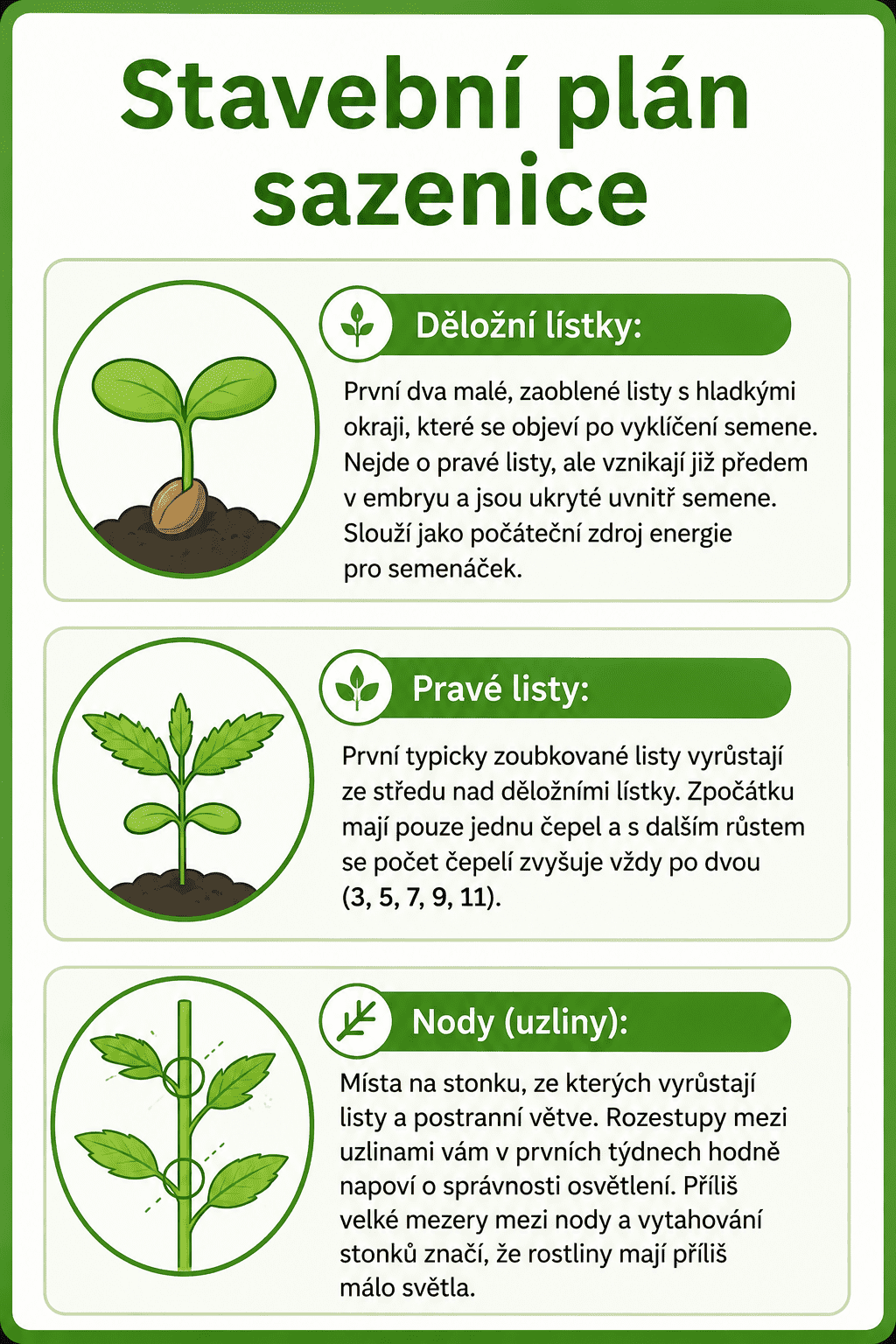 Right at the start of the vegetative stage, many growers find that their seedlings have stems that are too long and thin, causing them to break and bend. The most common cause is too low light intensity, which forces plants to grow upwards in an effort to outgrow competition and get closer to the sun. Leggy stems are often seen when growing seedlings on a windowsill, especially in the spring months when the sun shines less. That is why it is better to raise seedlings under artificial lighting, including those intended for outdoor planting.
You may also be interested in: How to pre-grow seedlings indoors
Leggy stems in seedlings can also be caused by an unsuitable light spectrum. If the grow lighting used for raising seedlings emits too much radiation in the red part of the spectrum and too little blue light, the plants will respond by elongating their internodes (the distances between individual nodes). The blue part of the spectrum, by contrast, stimulates plants to grow compactly, increases stem diameter and supports the formation of new leaves and roots. That is why only growth grow lights with a sufficient proportion of blue light should be used for raising seedlings.
You may also be interested in: Light spectrum and its effect on plant growth
The cause of leggy and generally weak stems in seedlings can also be a nutrient deficiency. In some species, young plants with a lack of phosphorus preferentially invest energy in stem elongation rather than leaf and root growth. The result is seedlings with leggy stems and small leaves. That is why growth fertilisers contain a proportion of phosphorus in addition to potassium and nitrogen.
You may also be interested in: How to use growth fertilisers
Watering, fertilising and incorrect substrate pH
Incorrect watering and problems with plant nutrition are closely related and are among the most common mistakes made by beginner growers. The moisture level of the substrate affects the plant’s ability to absorb nutrients. In an overwatered substrate, oxygen does not reach the roots, which slows nutrient uptake and can end in root rot. That is why the substrate should always be allowed to dry out partially between waterings. When growing in open ground in beds, it is usual to water only once the top 3–5 centimetres of soil have dried out. In pots, you can check the amount of water in the substrate by lifting the container or by checking the top layer of soil if it is a large growing container.
You may also be interested in: How often to water potted plants
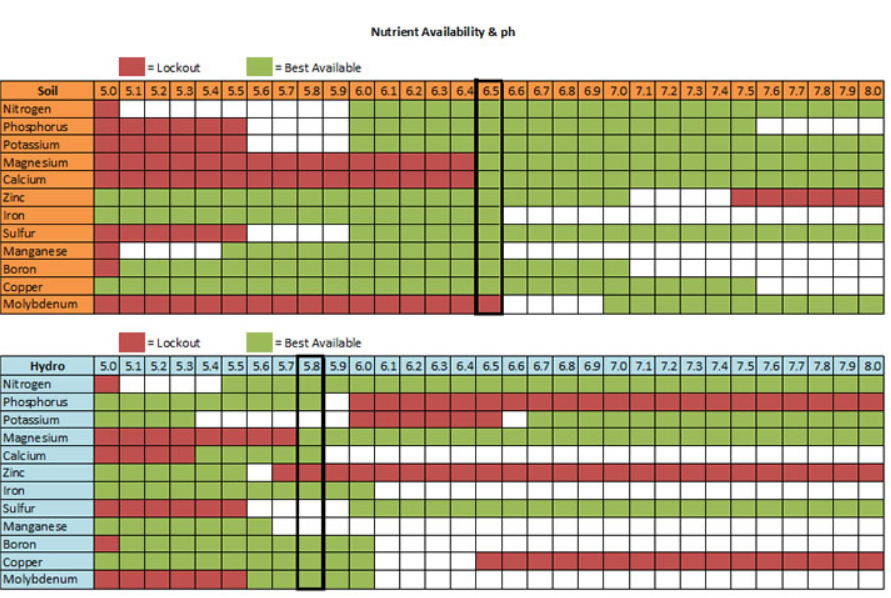 The acidity or alkalinity (pH) of the substrate affects the extent to which roots can absorb individual nutrient elements from the substrate. If the environment around the roots is too acidic or, conversely, too alkaline, some nutrient elements will be absorbed less or not at all and the plants may suffer from nutrient deficiencies. The optimal pH range for growing in soil and organic substrates (soil, coco, peat) is 5.5–6.5, and for hydroponics and inert substrates (rockwool, perlite, expanded clay) 5.6–6.4.
You may also be interested in: Why the pH of irrigation water and substrate is important
During the vegetative stage, plants most often lack nitrogen (N), which they need for the formation of new leaves, roots and amino acids. Nitrogen deficiency in plants first appears as yellowing of the large leaves in the lower levels. The fastest way to supply plants with nitrogen is through mineral growth fertilisers. However, it is better to prevent nutrient deficiencies with regular fertilising and a feeding regime that matches the location and growing method.
You may also be interested in: How to choose fertilisers for indoor or outdoor growing
Uncontrolled plant shaping
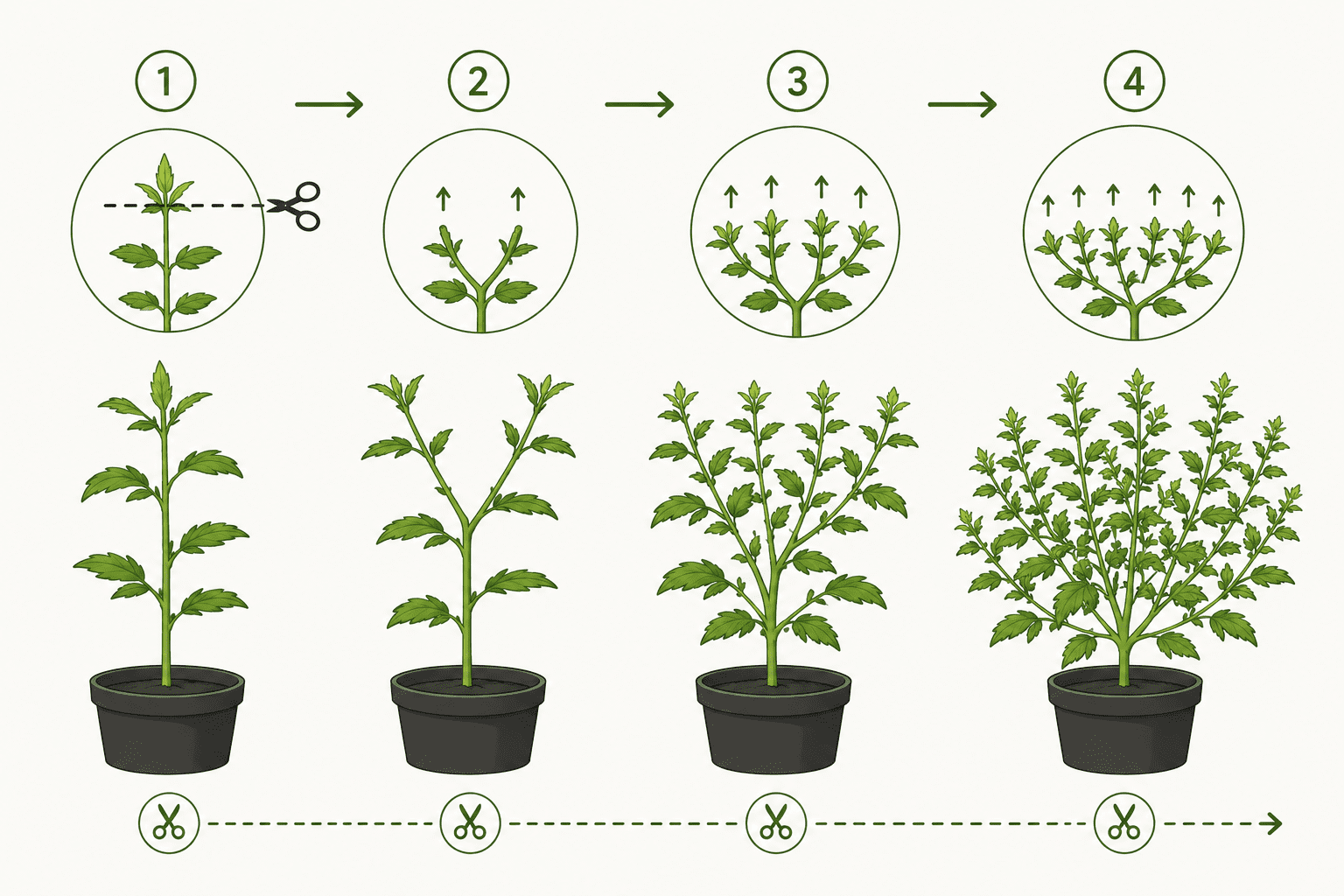 If plants are not restricted in any way, they can grow incredibly quickly during the vegetative stage. In addition, once they begin to flower, they can “stretch” several times more in height. This can make it difficult, especially for beginner growers, to estimate how large the plants will eventually be. Without any intervention, most varieties grow into a Christmas tree shape with one main branch. Auto-flowering varieties and indicas tend to be somewhat shorter; after the transition to flowering, they grow roughly one to two times their size and their total height rarely exceeds 1.5 metres. Pure sativas or hybrids with a predominance of sativa genes can easily grow to 3 metres or more and stretch to three times their length during flowering.
You may also be interested in: How to choose seeds of varieties for indoor growing
Especially for indoor growers, but not only for them, it is important to learn basic plant shaping techniques. Topping is the simplest and most common way to increase coverage of the growing space and thus the yield from plants. This is especially useful when growing in grow boxes (grow tents) or in greenhouses. You can start topping once the plants have at least three levels of true serrated leaves. Bending, tying down or weaving into nets (ScrOG) are also useful. Whichever technique you choose, most LST methods require you to start training the plants already during the vegetative stage.
You may also be interested in: LST and plant shaping techniques
Would you like to learn to grow like the professionals? On the Higarden blog you will find a fresh dose of guides, tips and news from the world of growing every week.