
What is the maintenance solution (KCl) for?
With the exception of organic plant cultivation, growers cannot do without regular and accurate measurement of pH. In this article, we will advise you on how to extend the life of a pH meter probe many times over and how to ensure accurate results from every measurement in the long term. Did you know that it is very important that your pH probe does not dry out? If it does not remain moist, you will not be able to calibrate your pH meter and the measurement of pH values will be distorted. Read on to find out why and how to use maintenance or storage solutions!
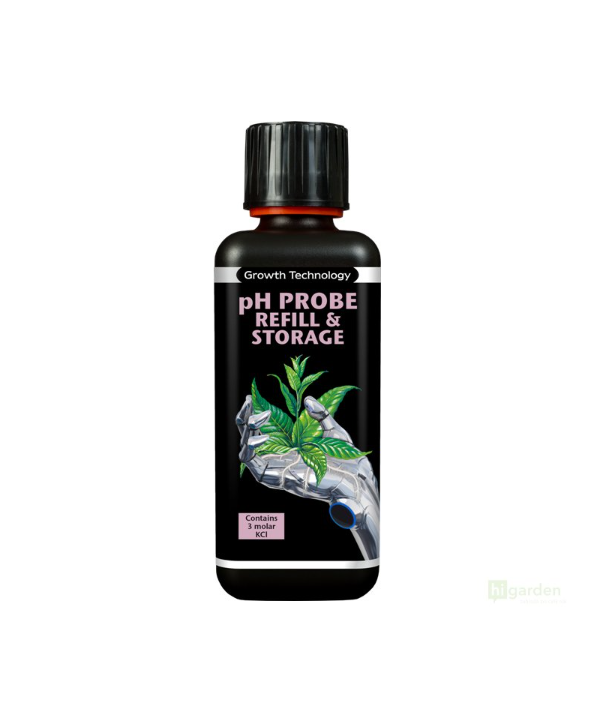
In general, all manufacturers provide only a 6-month warranty with regard to probe life, because there is no way to verify that the customer uses a storage solution. That makes it even more important to use a storage solution so that your probe serves you for as long as possible even after the period guaranteed by the manufacturer has expired.
The function of an electrolyte-based storage solution is to keep the hydrated membrane sensitive to pH and the so-called porous membrane hydrated. Simply put, it ensures that your probe does not dry out.
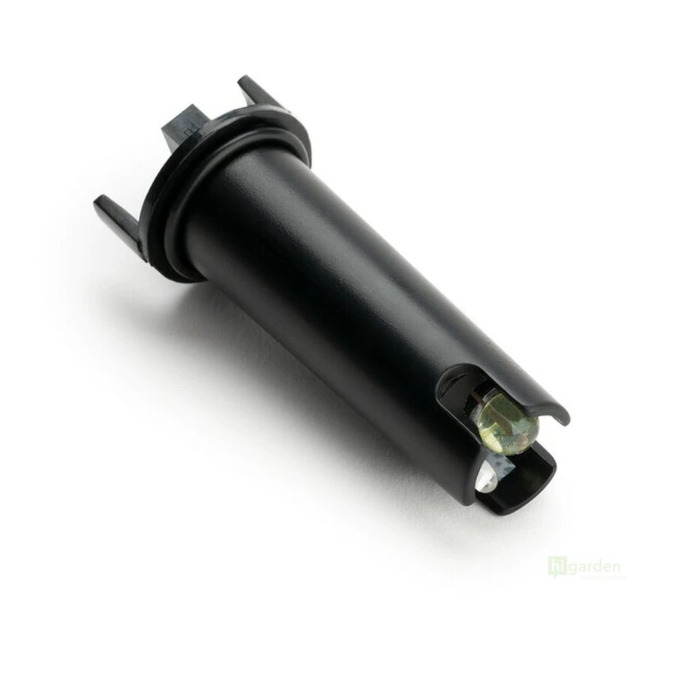
With a new probe for pH meters, you will usually find that there is a small cap on its tip, the so-called filling cap, containing a storage solution. The filling cap should be kept for future use. If you notice small salt crystals around the seal of this cap, this is not a fault. Chemically, it is completely non-toxic potassium chloride. The cap should be tightened by hand and any excess salt can be rinsed off with tap water.
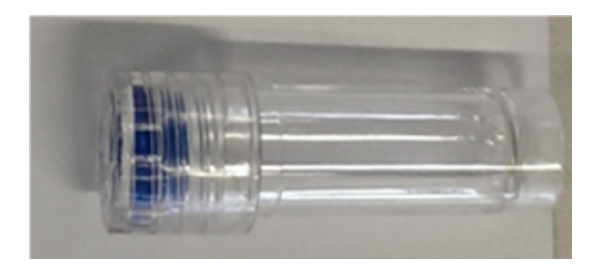
In the picture you can see an example of a pH filling “cap”, usually supplied with all pH sensors.
You now know that the glass membrane on the pH sensor has a thin gel layer that must remain hydrated for the probe to stay functional.
If you did let this gel layer dry out, the probe’s response to changes in pH would slow down significantly, or there might be no response at all, which of course we do not want. Long-term loss of hydration is often irreversible. If the drying was only brief, you can test the probe’s response in pH buffer solutions. The probe should respond to a 3 pH change, for example from pH 4 to pH 7, in less than 30 seconds.
The response of a pH probe can sometimes be improved by alternating exposure to a strong base and acids. The procedure is as follows:
- Immerse the probe for 10 minutes in 0.1 – 1M NaOH.
- Then immerse the probe for 10 minutes in 0.1 – 1M HCl.
- After regeneration, place the probe in a storage solution for another 15 minutes.
But why not save yourself the trouble and work by using a storage solution straight away, right? For inspiration, we at least present a trio of proven storage solutions that our customers buy most often: