
Growing in fabric pots
Plastic and clay flower pots are a long-standing staple that most growers reach for. However, plastic ones are not exactly environmentally friendly, and the substrate in them can overheat in the sun. In recent times, textile pots have therefore rightly been gaining their place on the market. How should they be used, and what are their advantages?
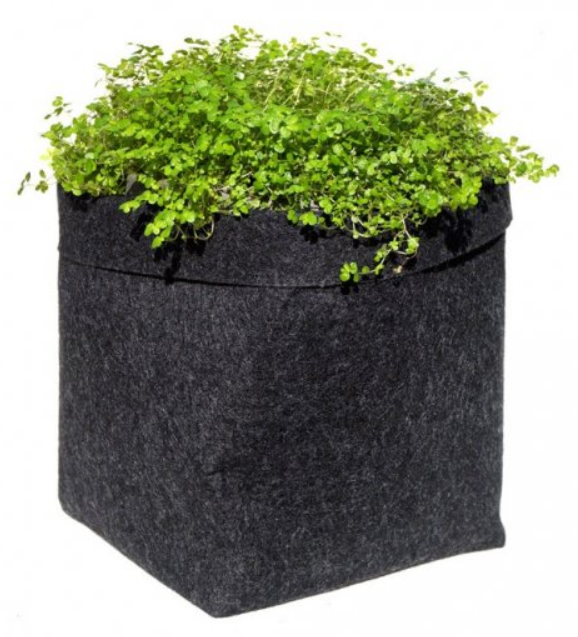 Advantages of growing in textile
In a textile pot, the plant develops a rich root system. It can therefore make efficient use of water and supplied nutrients, which has a major effect on its vitality, size and final yield. If a root reaches the outer wall of the pot, or rather the air, it does not curl its growth downwards, as is the case in ordinary pots, where a dense round mat of roots then forms. Instead, it responds by branching fine root hairs, thereby creating new root tips throughout the entire volume of the pot, through which nutrients are absorbed into the plant. The root system thus makes better use of the pot’s full capacity, and the plant does not need to be repotted as often.
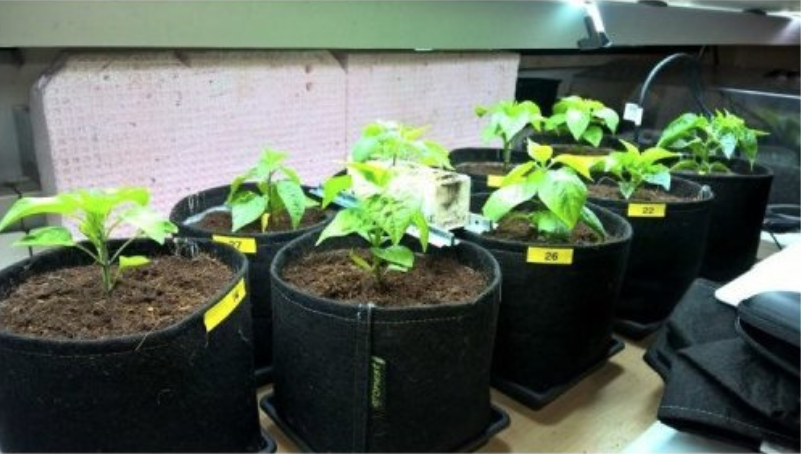
Textile pots are also excellent for growing seasonal crops, because they can be sterilised and reused. Another undeniable advantage is their compact storage, whether they are 4-litre or 50-litre variants. They can be used for both indoor and outdoor growing on a terrace, balcony or in the garden. They have excellent thermoregulatory properties, so the substrate does not overheat in the sun, as it does in plastic pots.
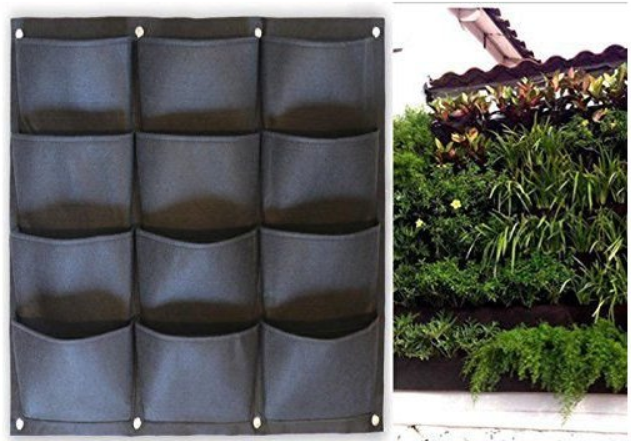
Another variant of the standard square or round textile pot is vertical pots with separate pockets. This is an excellent option for growers who are short of space, whether at home or in the garden.
Plant care - differences in watering
When using textile pots for growing plants, there are two differences to keep in mind. The root system is densely spread throughout the entire volume of the pot, so we must water the entire surface of the substrate, not just the part near the stem, where the water more or less runs straight down to the bottom.
As the textile pot is permeable and “breathes”, plants usually require more frequent watering than in plastic pots. On the other hand, there is a lower risk of overwatering, as the branched roots use more water and any excess remains in the saucer, which we can then pour away if necessary.
Although this is a relatively recent innovation, you do not need to worry about a high initial investment with textile pots; the smallest ones are already sold from 40 Kč.