
How to increase terpene content in your harvest?
In today’s article, we will focus on how to fully use the potential of growing aromatic and medicinal plant species. Fragrant herbs such as lavender, but also citrus fruits, for example. You will learn how to ensure that your harvest is characterised once and for all by an exceptionally intense fragrance. And as the title of the article suggests, it is above all necessary to maximise the amount of contained terpenes, which are responsible not only for a pleasant scent, but also for beneficial effects on our physical or mental well-being.
It is precisely terpenes that, as specific organic compounds, give individual plants their unmistakable scent. It is simple. The more terpenes there are, the more intoxicating aroma we can expect. Beautiful and healthy plants should pleasantly impress every grower with a proper natural fragrance, and so we will now explain everything essential that relates to a high terpene content in every harvest.
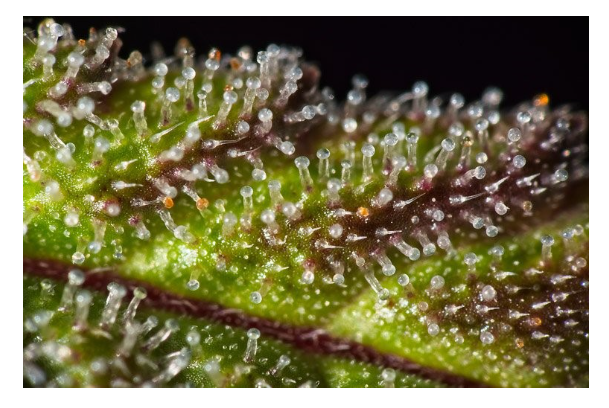
There are tens of thousands of these volatile substances, formed in the trichomes on the surface of plant leaves, in nature, and each terpene has its own unique aroma. And because nature is a master of alchemy, once we smell a particular plant, the scent we perceive represents a combination of terpenes that are currently dominant. As you can see from the following lines, fragrance is not the only reason to try to achieve the maximum possible terpene content with every harvest. Let us mention at least the most important ones:
- Limonene: at the beginning of the article, we mentioned citrus fruits, and it is limonene that is responsible for their fresh scent. Numerous health benefits have also been proven for this substance, whether in the form of anti-inflammatory, antioxidant or anti-stress properties.
- Myrcene: lemon grass, mango, thyme or hops, for example. Myrcene predominates everywhere there, and a small amount of it is also added to beer.
- Pinene: herbalists know this terpene with its spicy forest scent very well, and have used its beneficial effects since time immemorial as part of therapy for easing inflammation or asthmatic problems. Pinene is commonly found, for example, in conifers, oranges, rosemary, dill or parsley.
- Beta-caryophyllene: the spicy and woody scent of this terpene is probably best known thanks to cloves. It is no coincidence that in herbalism and natural healing, cloves are often used to treat painful dental conditions. Beta-caryophyllene relieves pain because it contributes to the release of analgesic endorphins in the body and at the same time suppresses the psychological component of perceived pain. Besides cloves, it can also be found, for example, in black pepper or basil.
- Eucalyptol: a remarkable amount of this terpene can be found not only in eucalyptus, but also in sage, wormwood, bay leaf, or cardamom.
- Nerolidol: the woody and earthy scent of this terpene can most easily be compared to fresh tree bark. Nerolidol is found in ginger, jasmine, cajeput, lavender, lemon grass, eucalyptus, basil, black and green tea, cardamom, stevia, tarragon, lemon verbena, thyme or star anise. It is interesting that this terpene, for which numerous studies point to possible anti-inflammatory or even neuroprotective effects, also plays a protective role in the wild against being eaten by certain herbivores.
After introducing some of the best-known and most useful aromatic terpenes, we can move on to the methods that allow growers to support their content in the final harvest as much as possible.
Factors that most affect terpene content in the harvest
- Careful selection of the variety
It should be borne in mind that the representation and composition of rare terpenes in the harvest are largely influenced by the genetic predispositions of the selected variety. The genetics of a given variety or phenotype literally determine which terpene will dominate in the composition, as well as which terpene will not be represented at all. If, for example, when growing medicinal herbs you expect certain health-related properties, it is important to take an interest in the choice of genetics in relation to dominant terpenes in advance and accordingly carefully select the variety to which you will then devote proper care when growing in a grow box, in a greenhouse or in the garden.
- Optimal growing conditions
This point should not surprise you in any way, as it is obvious that if you provide your plants with a stable and favourable microclimate, they will reward you with a high level of production of rare aromatic substances. This is easiest to achieve in a grow tent, and you will be able to enjoy a harvest with a high terpene content several times a year (see, for example, the separate article: Choosing your first tent with everything included).
Our TIP: Discover modern Garden Highpro grow boxes!
It is also necessary to avoid degrading already formed terpenes due to an unsuitable growing environment, which would be a great pity and would be reflected significantly in the final quality and value of your harvest. Therefore, do not forget to keep an eye above all on insufficient humidity or excessively high temperatures. The most critical period in this respect is the late flowering stage. At this point, the plants have usually already managed to produce most of the terpenes. And because terpenes belong among volatile substances, you must do everything as a grower to protect ripening plants from high temperatures, whether when growing outdoors during hot summer months or indoors, where quality grow room ventilation will also help provide your plants with optimal conditions for development all year round.
- Spectrum and intensity of the light source
Light has a huge influence on terpene production. Whether it is grow lamps or the sun, plants mainly need truly usable light for terpene production, from which they draw energy for key biochemical processes.
On the other hand, it is important to emphasise that you will not support the desired content of aromatic substances at all if you overdo it with the intensity of the light rays falling on the surface of your plants. Excessive light intensity causes so-called flower bleaching, and you can almost say goodbye to terpenes.
That is why we will be happy to advise you on choosing a suitable grow lamp for a grow box, or you can use ready-made complete grow box sets. On this topic, we have also prepared these separate articles for you: