
Powdery Mildew and Botrytis: Plant Mould and How to Get Rid of It
Few things frighten a grower more than noticing signs of mould on their plants. They will probably lose a large part of their harvest. How can you prevent mould that attacks plants, and how can you get rid of powdery mildew and botrytis? We answer these questions in the following lines.
Whether we are talking about indoor or outdoor cultivation, the main moulds that attack plants are powdery mildew and grey mould. Powdery mildew appears mainly on leaves and looks like a white coating. Grey mould, known as botrytis, is most dangerous on flowers, where it causes rot.
What is powdery mildew
Powdery mildew is a fungal disease of plants caused by parasitic fungi of the Erysiphaceae family. It is very easy to recognise - it looks like a white, flour-like coating on the leaves. Powdery mildew first attacks young leaves, on which white spots appear. As the infection spreads, the white patches grow and the plants begin to look as if someone has sprinkled them with plain flour.
Powdery mildew spreads most quickly in warm and humid conditions. The fungus thrives best in poorly ventilated places with air humidity of 70 – 90% and temperatures of 20 – 25 °C. Powdery mildew spores are light and spread easily through the air, so one infected plant can cause an outbreak throughout the entire grow room, greenhouse or garden.
How to recognise powdery mildew on plants
- white or greyish-white spots on leaves
- gradually spreads to the whole plant
- leaves turn yellow, curl and die off
- slow growth
Spray for powdery mildew
Sprays against powdery mildew are most effective when used early and preventively. To combat powdery mildew, you can use chemical fungicides, biological products and natural (plant-based) sprays. Classic systemic fungicides can significantly limit fungal growth on leaves and tend to be more effective. However, it is necessary to take possible toxicity into account, especially when growing medicinal plants.
You may also be interested in: Sprays and sprayers – everything you need to know
An alternative to chemical sprays against powdery mildew is biofungicides. Biological sprays work on the basis of beneficial microorganisms (e.g. Bacillus, Pseudozyma, Trichoderma) that compete with powdery mildew and support the plants’ natural defences. These products can also be used in organic cultivation.
Sprays against powdery mildew with plant extracts, botanical fungicides and biofungicides, which contain a mixture of antifungal substances of natural origin (terpenes, phenols), are also attracting increasing attention. These substances limit spore germination and fungal growth while being gentle on the environment. With natural products, regular preventive application is often important.
What is botrytis
Botrytis cinerea is a parasitic fungus that causes moulding of the above-ground parts of plants. Under the right conditions, botrytis can attack plants at any stage of growth. By far the most dangerous time, however, is during flowering, when it causes flower rot.
Botrytis overwinters in the form of sclerotia, which remain in dead plant material. In spring, botrytis produces spores that spread by wind and land on plants, where they try to settle. Infection is helped by high humidity above 65% and temperatures around 15 – 25 °C. Flowers and fruits growing close together are very sensitive to botrytis.
How to recognise botrytis on plants
- greyish-white clumps of mould on flowers and leaves
- flowers falling apart when touched
- noticeably dried out or darkened parts of flowers
Spray for botrytis
Sprays against botrytis have the disadvantage that the fungus can easily develop resistance to chemical fungicides. That is why biological products are increasingly used for protection against botrytis.
Products against botrytis containing beneficial microbes (Bacillus, Trichoderma, non-Saccharomyces yeasts, etc.) are more effective when combined with or alternated with low doses of classic fungicides. Plant extracts are also effective against botrytis, as they can suppress fungal growth and have a smaller impact on the environment.
Warning: When growing medicinal plants, never apply sprays directly to ripening or already ripe flowers.
Prevention against mould
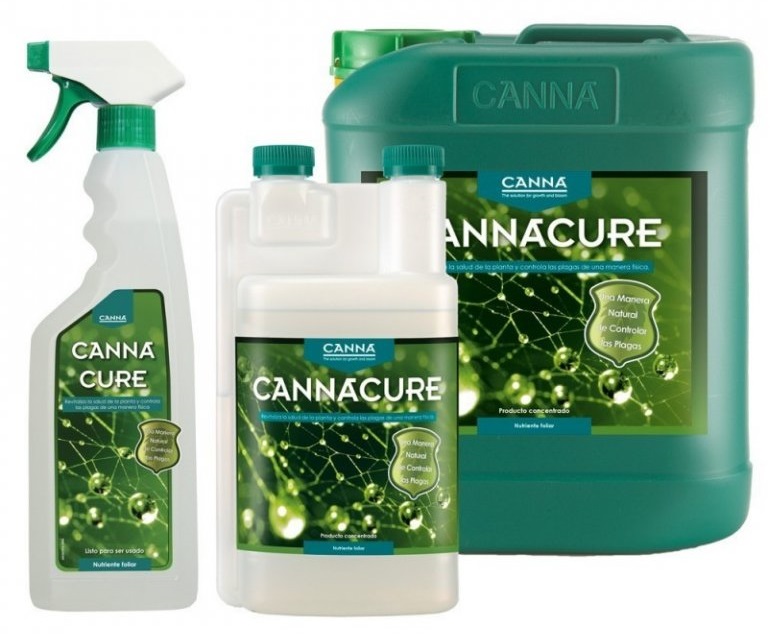 The simplest way to prevent mould on plants is prevention. Once mould develops on plants, eliminating it without losing the harvest is almost impossible. The basic rules of mould prevention are:
1) Correct humidity and sufficient air circulation: High air humidity and stagnant air are the main causes of mould. When growing indoors, always use circulation fans to move the air in the growing area. Reduce humidity with the help of an air dehumidifier. In a greenhouse, it is advisable to maintain a gentle draught.
2) Cleanliness in the growing area: Mould spreads through spores that float freely through the air and settle on plants and in every corner of the grow room. Regular disinfection and соблюдение hygienic principles significantly reduce the chance that spores will multiply and mould will attack your crop. In this respect, dead plant material is the worst, as it is literally a breeding ground for mould spores.
3) Preventive sprays against mould: There is a wide range of preventive sprays for indoor and outdoor plants. Apply them during vegetative growth and at the start of flowering to increase the plants’ resistance to infection.
For more practical guides, grower tips and recommendations for proven products, visit the Higarden blog, where we cover everything important about healthy plant growth and successful cultivation.