
Whiteflies: Guaranteed Methods for Combating the Greenhouse Pest
Are tiny white flies fluttering around your plants? Then you are dealing with whiteflies. These are common insect pests found on plants grown in greenhouses, indoors and outdoors. Whiteflies are not among the most dangerous insects, but they suck sap from leaves, spread diseases and it is a good idea to get rid of them quickly. Fortunately, it is not particularly difficult. We will advise you how to do it!
What are whiteflies and why are they so dangerous?
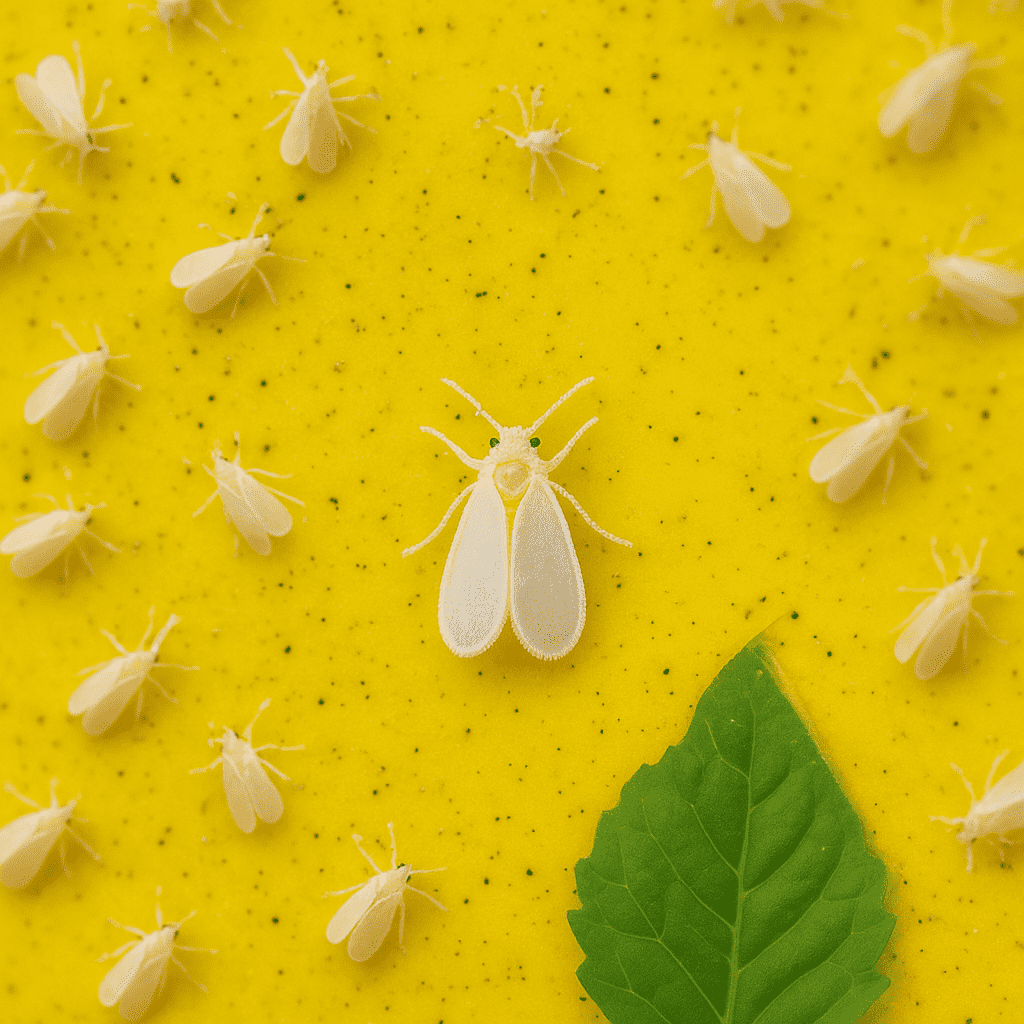 Whiteflies (Aleyrodidae) are small insects related to aphids that feed by sucking plant sap. At first glance, these tiny white flies may seem harmless, but they can cause considerable damage to plants. In addition to weakening the plant through feeding, they also excrete sticky honeydew – a sugary substance that settles on leaves and encourages mould growth. This reduces the leaves’ ability to carry out photosynthesis and further weakens the plants. Whiteflies are also carriers of various viral diseases that spread very quickly between plants, especially in a greenhouse or grow box or indoor growing room. If you allow whiteflies to multiply, you can easily lose an entire crop.
How do you recognise that you are dealing with whiteflies
Spotting whiteflies is not particularly difficult. Adults look like white flies and are approximately 1-2 millimetres long. You will usually see them fluttering around plants, but most of them live on the underside of leaves, where they suck sap. If you want to check how serious the whitefly infestation is, try gently shaking the plants and watching how many fly out from under the leaves. Other signs of a whitefly infestation include:
- White spots on leaves: Whiteflies excrete a waxy white secretion that leaves traces on leaves and encourages mould growth.
- Damaged leaves: Infested plants have wilted leaves covered with pale specks.
- Whitefly eggs: You will find whitefly eggs on the underside of leaves in a characteristic circular arrangement.
Natural methods of fighting whiteflies
If you have noticed whiteflies around your plants, before reaching for chemicals, try proven natural methods. They are gentle on nature and often very effective:
- Yellow sticky traps: Whiteflies are attracted to the colour yellow, and if you place yellow sticky traps around infested plants, you can easily catch the adults. Replace the sticky traps regularly.
- Biological control: Very effective against whiteflies are parasitic wasps (formosa, E. eretmocerus), predatory mites (Amblyseius swirskii) and entomopathogenic fungi (bassiana, I. fumosorosea)
- Bio spray for whiteflies: Against whiteflies, try insecticidal sprays containing essential oils (Rock Effect) and other biodegradable products (for example CannaCure, BioBizz Leaf Coat, BioNova NovaFoliar, Botano Health).
- Preventive sprays against whiteflies: Before getting rid of whiteflies, it is easier to prevent an infestation. Therefore, regularly treat even healthy plants with preventive protective sprays, which will protect them from pests and pathogens and improve their vitality.
Products against whiteflies
If you fail to eradicate whiteflies with natural means, more effective methods are next. In this case too, however, you can choose between ecological sprays against whiteflies and chemical insecticides. When using them on plants intended for consumption, be cautious. These products require a safety interval and may harm your health.
- Systemic insecticides: Sprays containing the active ingredient acetamiprid work excellently against whiteflies (Mospilan). They have a long-lasting effect and act on all developmental stages of whiteflies, from larvae to adults.
- Sprays for whiteflies: You can also try sprays containing azadirachtin or sprays targeted at eliminating whiteflies.
- Homemade spray for whiteflies: A spray made from neem oil is also very effective against whiteflies. Simply mix 5 millilitres of NeemAzal with 1 litre of warm water and a drop of liquid soap. Apply this mixture twice at three-day intervals at first, and then continue applying until the whiteflies are eradicated. Please note that neem oil has a strong taste and odour and is not suitable for application on medicinal plants in full bloom.
You may also be interested in: How to deal with spider mites
For more advice on fighting pests and further tips and tricks for indoor and outdoor growers, visit our Higarden blog.