
Pests
List of articles
Fungus Gnats: How to Get Rid of the Annoying Insects in the Substrate
Are small black flies circling your pots, and do translucent larvae with black heads occasionally emerge from the soil? Then you are dealing with fungus gnats. These inconspicuous pests can trouble plants more than it may seem at first glance. The adults do not cause damage, but the larvae feed on fine roots, carry pathogens and slow growth. The good news? They can be successfully controlled – with natural and biological methods. We will show you how.
What are fungus gnats and why are they dangerous?
Fungus gnats (Sciaridae) look like tiny mosquito-like flies growing to a size of 1-4 millimetres. Female fungus gnats lay eggs in the substrate, from which translucent larvae with black heads hatch. It is the larvae that cause the biggest problems. They feed on organic material, algae and young roots, thereby disrupting the plants’ uptake of water and nutrients. The result is slowed growth, yellowing leaves and the overall decline of the plants. Fungus gnats also carry moulds and pathogens, which, in combination with a humid environment, can have a devastating effect on your plants.
How do you know that you are dealing with fungus gnats?
An infestation of fungus gnats is not difficult to notice. The main sign is adult fungus gnats flying above the substrate, especially when watering or handling plants. You will find fungus gnat larvae just below the surface of the substrate. If you do not intervene in time, you may notice these symptoms on the plants:
- wilting even when fully watered
- slow growth
- yellowing leaves
Natural methods of controlling fungus gnats
When your garden is infested with fungus gnats, try natural methods first before resorting to chemical sprays. The following proven methods work against fungus gnats:
- Yellow sticky traps: Adult fungus gnats are attracted to the colour yellow. Place yellow sticky traps around the plants and catch as many adults as possible. Replace the sticky traps regularly.
- Let the substrate dry out: Fungus gnat larvae need moisture to survive and thrive in waterlogged substrate. Let the soil dry out thoroughly between waterings to reduce the larval population around the roots.
- Watering with a weak hydrogen peroxide solution: A weak solution (for example, 3% hydrogen peroxide diluted 1:4 with water) helps kill larvae in the substrate. Apply once every few days, ideally only as a one-off treatment.
Products against fungus gnats
Chemical sprays are less effective in the case of fungus gnats than they are with other insect pests, and it is better to get rid of them by natural means. Biological protection and protective bio sprays based on natural oils are effective.
- Biological control against fungus gnats: Parasitic nematodes (Steinernema feltiae), bacteria (Bacillus thuringiensis var. israelensis) and predatory mites, which actively hunt the larvae, are effective against fungus gnats.
- Sprays against fungus gnats: Biocont Na smutnice v substrátu, Agro Natura Smutnice
- Preventive products for protecting plants against fungus gnats: Biocont PREV-GARD, Neem Azal, Rock Effect, CannaCure, BioBizz Leaf Coat, BioNova NovaFoliar, Botano Health
You may also be interested in: How to deal with spider mites, How to deal with whiteflies, How to get rid of slugs
For more advice on how to combat pests and further tips and tricks for indoor and outdoor growers, visit our Higarden blog.
Whiteflies: Proven Methods for Fighting the Greenhouse Pest
Are tiny white flies fluttering around your plants? Then you are dealing with whiteflies. These are common insect pests found on plants grown in greenhouses, indoors and outdoors. Whiteflies are not among the most dangerous insects, but they suck sap from leaves, spread diseases and it is a good idea to get rid of them quickly. Fortunately, it is not particularly difficult. We will advise you how to do it!
What are whiteflies and why are they so dangerous?
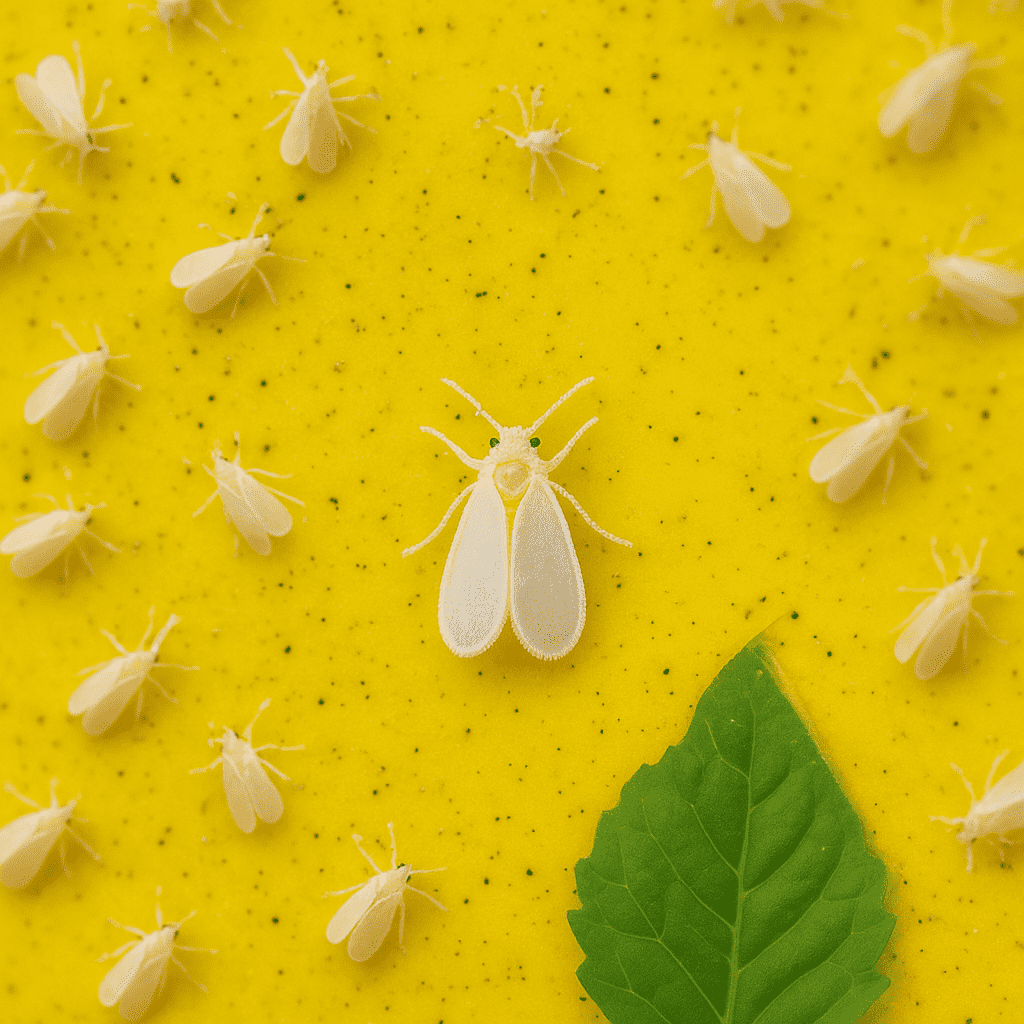 Whiteflies (Aleyrodidae) are small insects related to aphids that feed by sucking plant sap. At first glance, these tiny white flies may seem harmless, but they can cause considerable damage to plants. In addition to weakening the plant through feeding, they also excrete sticky honeydew – a sugary substance that settles on leaves and encourages mould growth. This reduces the leaves’ ability to carry out photosynthesis and further weakens the plants. Whiteflies are also carriers of various viral diseases that spread very quickly between plants, especially in a greenhouse or grow box or indoor growing room. If you allow whiteflies to multiply, you can easily lose an entire crop.
How do you recognise that you are dealing with whiteflies
Spotting whiteflies is not particularly difficult. Adults look like white flies and are approximately 1-2 millimetres long. You will usually see them fluttering around plants, but most of them live on the underside of leaves, where they suck sap. If you want to check how serious the whitefly infestation is, try gently shaking the plants and watching how many fly out from under the leaves. Other signs of a whitefly infestation include:
- White spots on leaves: Whiteflies excrete a waxy white secretion that leaves traces on leaves and encourages mould growth.
- Damaged leaves: Infested plants have wilted leaves covered with pale specks.
- Whitefly eggs: You will find whitefly eggs on the underside of leaves in a characteristic circular arrangement.
Natural methods of fighting whiteflies
If you have noticed whiteflies around your plants, before reaching for chemicals, try proven natural methods. They are gentle on nature and often very effective:
- Yellow sticky traps: Whiteflies are attracted to the colour yellow, and if you place yellow sticky traps around infested plants, you can easily catch the adults. Replace the sticky traps regularly.
- Biological control: Very effective against whiteflies are parasitic wasps (formosa, E. eretmocerus), predatory mites (Amblyseius swirskii) and entomopathogenic fungi (bassiana, I. fumosorosea)
- Bio spray for whiteflies: Against whiteflies, try insecticidal sprays containing essential oils (Rock Effect) and other biodegradable products (for example CannaCure, BioBizz Leaf Coat, BioNova NovaFoliar, Botano Health).
- Preventive sprays against whiteflies: Before getting rid of whiteflies, it is easier to prevent an infestation. Therefore, regularly treat even healthy plants with preventive protective sprays, which will protect them from pests and pathogens and improve their vitality.
Products against whiteflies
If you fail to eradicate whiteflies with natural means, more effective methods are next. In this case too, however, you can choose between ecological sprays against whiteflies and chemical insecticides. When using them on plants intended for consumption, be cautious. These products require a safety interval and may harm your health.
- Systemic insecticides: Sprays containing the active ingredient acetamiprid work excellently against whiteflies (Mospilan). They have a long-lasting effect and act on all developmental stages of whiteflies, from larvae to adults.
- Sprays for whiteflies: You can also try sprays containing azadirachtin or sprays targeted at eliminating whiteflies.
- Homemade spray for whiteflies: A spray made from neem oil is also very effective against whiteflies. Simply mix 5 millilitres of NeemAzal with 1 litre of warm water and a drop of liquid soap. Apply this mixture twice at three-day intervals at first, and then continue applying until the whiteflies are eradicated. Please note that neem oil has a strong taste and odour and is not suitable for application on medicinal plants in full bloom.
You may also be interested in: How to deal with spider mites
For more advice on fighting pests and further tips and tricks for indoor and outdoor growers, visit our Higarden blog.
Spider mites: Proven tips on how to protect your crop
 Spider mites are one of the most dangerous pests a grower can encounter. These tiny arachnids, almost invisible to the naked eye, can cause enormous damage and, if not stopped, can destroy an entire crop within a few weeks. In this article, we will look at how to recognise spider mites, why they thrive on your plants, and how to deal with them effectively.
What are spider mites and why are they so dangerous?
Spider mites are tiny arachnids from the spider mite family, whose most common representative in indoor growing rooms and gardens is the two-spotted spider mite (Tetranychus urticae). These microscopic insect pests grow to just 0.4 mm, have four pairs of legs, and vary in colour depending on the species and environment – from green and yellow to red.
Spider mites reproduce incredibly quickly and, under ideal conditions (warmth and dryness), can cover an entire plant within a few weeks. In addition to their rapid reproduction, spider mites are also tricky because they can easily hide in folds between leaves. Females create shelters in the tops of plants or between leaves, where they lay eggs. Larvae hatch from these after 3–15 days, mature over the next few days, and continue colonising. At high temperatures and low humidity, this cycle speeds up dramatically. That is why spider mites are such a common problem in enclosed indoor spaces or greenhouses.
How to tell if you are dealing with spider mites
It is difficult to spot spider mites on plants, as you often will not see them with the naked eye. However, you should certainly not overlook the warning signs that accompany a spider mite infestation:
- Tiny yellow-white spots on the leaves, especially on the underside, where spider mites most like to suck sap.
- Fine webbing between leaves, on stems, and on the tops of plants. A typical sign of a severe spider mite infestation.
- Wilting and premature drying of leaves, even though the plants have enough water.
Natural methods of fighting spider mites
If you have spotted spider mites on your plants, before reaching for chemicals, try proven natural methods. They are gentle on the environment and often very effective:
- Changing the climate: Spider mites like dryness and warmth. If you grow indoors, lower the temperature below 25 °C and increase the relative humidity to 60-70%, which will slow their reproduction. Better air circulation will also help, making it harder for the pests to move around the plants.
- Mechanical cleaning: Spider mites can be removed from leaves mechanically, most easily with a damp cloth or a vacuum cleaner set to low power. If possible, try showering the plants.
- Biological protection: Predatory mites persimilis, californicus, A. andersonii, N. fallacis and G. occidentalis are also effective against spider mites, as is the predatory gall midge Feltiella acarisuga, as well as Stethorus punctillium and Oius insidiosus.
Products against spider mites
In the case of a severe spider mite infestation, you need to use sprays – but even then, you can choose between gentler and more radical solutions.
Natural sprays and soaps against spider mites
These products are gentle on the environment and, in addition to spider mites, also protect plants against pathogens and other insects. Proven natural products against spider mites include:
- Neem oil: Biocont NeemAzal
- Oil emulsions: Rock Effect
- Biological sprays: BioBizz Leaf Coat, Canna Cure, NATURA, BHB MM, Spider Plant
Chemical sprays against spider mites – acaricides
Products designed specifically against sucking insects such as spider mites are called acaricides. However, when using them on plants intended for consumption, be cautious. These products require a safety interval and may harm your health.
- Biocont PREV-GUARD
- AgroBio Karate
- SmC Spidermite Control
- Agro Sviluška STOP
- Spruzit Pest Free
- Nissorun
You may also be interested in: How to get rid of slugs
For more advice on how to fight pests and other tips and tricks for indoor and outdoor growers, visit our Higarden blog.
Sprays and Sprayers - Everything You Need to Know
Experienced growers usually do not rely solely on conventional watering in the form of nutrient solution applied to the roots of plants, but also use small or large sprayers or atomisers, with which they apply certain nutrition or plant protection as a spray. In this article, you will find out what can be sprayed, with what, and why!
How to spray correctly?
Right at the beginning, it is important to realise that whatever type of product is applied as a spray, its declared effectiveness depends to a large extent on the quality of its application. Inside a growbox, where you can easily create the perfect microclimate, you will not need the following advice very much. All the more reason to keep it in mind when growing plants outdoors (outdoor).
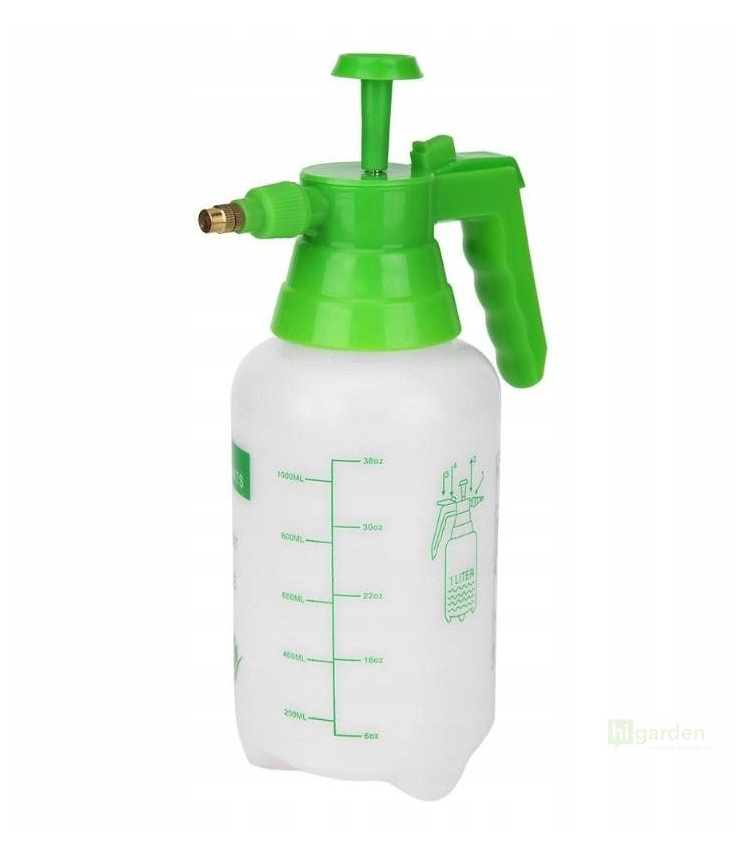
- This point may seem completely obvious, yet some beginner growers consider the small holes through which water flows out of a conventional watering can for manual watering to be spray application. And a quality sprayer to be unnecessary. When using a watering can, the solution immediately runs off the plants, so you would only waste it without any result, and in the worst case you could also damage the vegetation around the given plant. So just to be safe - never a watering can, always a sprayer. We will look at specific sprayers and the principle of how they work a few lines further on.
- Weather and current conditions play a key role when spraying plants in the garden. First of all, always watch out for still air. If you use chemical sprays, the wind can easily carry them to unwanted parts of the garden. If the composition of your spray is purely natural, it is a waste to use it unnecessarily, so spray the garden only when there is no wind. Weather, especially in summer, is also linked to the outdoor temperature. You should not apply spray in direct sunlight or at temperatures above 25 °C. That is why spraying is usually done in the morning or in the evening. Going out into the garden with a spray after lunch is not a good idea. The surface of the plants should be dry during application, so also make sure that it is not still damp and that rain is not expected in the next few hours. In connection with rain, it should be mentioned that some sprays work systemically and others as contact products. While systemic products penetrate to the plant tissues within a few hours, contact products act only on the surface of the plant, so even a light downpour means wasted effort and money again.
- It is worth regularly dismantling and cleaning the sprayer.
- Last but not least, we must not forget to protect ourselves (gloves, goggles, respirator and other protective equipment) when using chemical pesticides, which are toxic. Do not drink, eat or smoke while working with chemical sprays.
Sprayers and atomisers - how do they work and how to choose one?
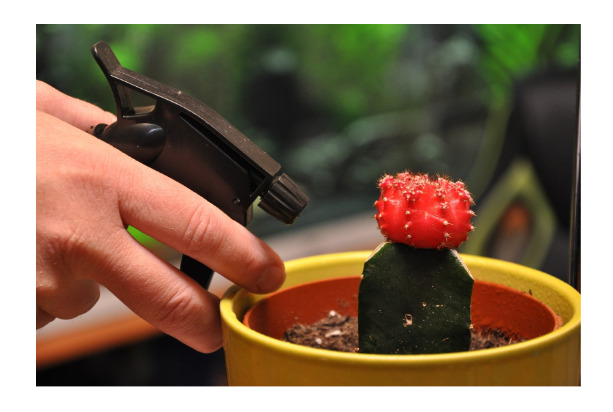
A sprayer disperses small droplets of the given liquid, which then adhere to the surface of the plants, where they can act in the desired way. Even more sophisticated and effective are foggers (see below). If you choose quality, your sprayer will last for several seasons, during which you will be able to mist, fertilise and protect all your plants precisely and evenly with its help.
A small atomiser is usually used at home for misting houseplants or balcony plants with clean water or for foliar spraying. And if you have a grow tent in which you harvest herbs, fruit or vegetables several times a year, you are surely already thinking that smaller, and above all pressure sprayers will certainly also find practical use inside a growbox, where they will serve you perfectly for foliar spraying!
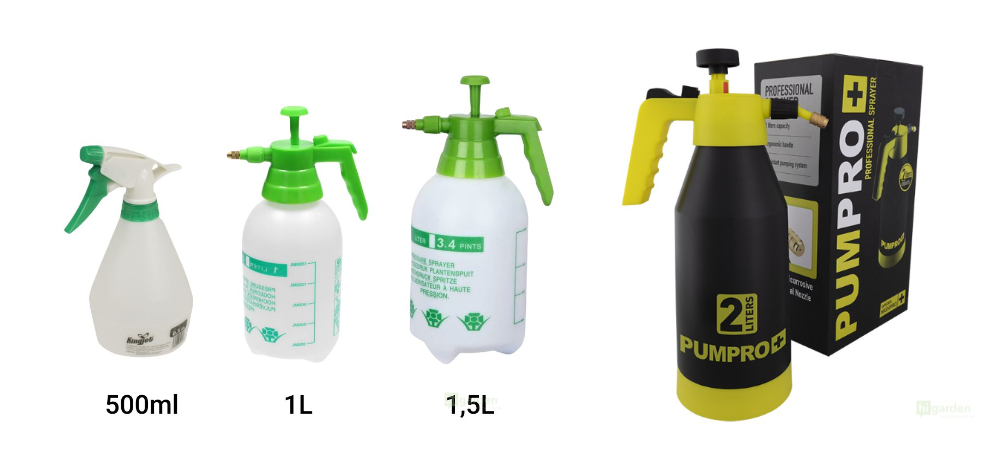
The smallest atomisers, as you can see in the picture, are usually mechanical (500 ml version). In general, we recommend pressure atomisers more (1 and 1.5 l versions), equipped with a piston pump, a valve in the sprayer head, a lock for continuous operation and an adjustable nozzle for setting the stream. The growbox is also perfectly suited to the 2-litre Garden Highpro PUMPRO. With smaller sprayers and atomisers, you will certainly appreciate how easy they are to clean. In addition, they are lightweight, so handling them is not hard work at all.
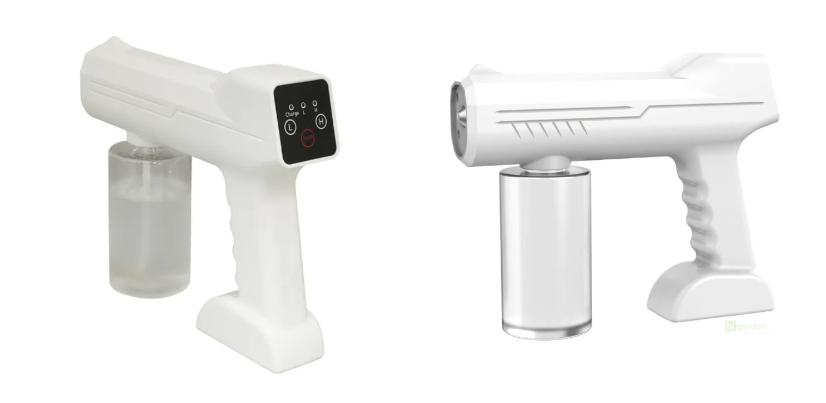
Our TIP: Are you among growers who are interested in high-tech tools? Then you will surely be pleased by a new addition to our range, the automatic handheld fogger VAPR Nano Spray Gun. This powerful battery-powered fogging gun brings exceptional comfort and efficiency when spraying any solution or spray. Dosing a large amount of liquid at low pressure creates a typical mist, ensuring better reach and effectiveness of the spray.
Large and backpack sprayers
A pressure sprayer with a volume of 5 or even 20 litres can be strapped to your back, which is a very popular and practical method of spraying when caring for a garden or greenhouse in general. We recommend, for example, the popular Aquaking sprayer.
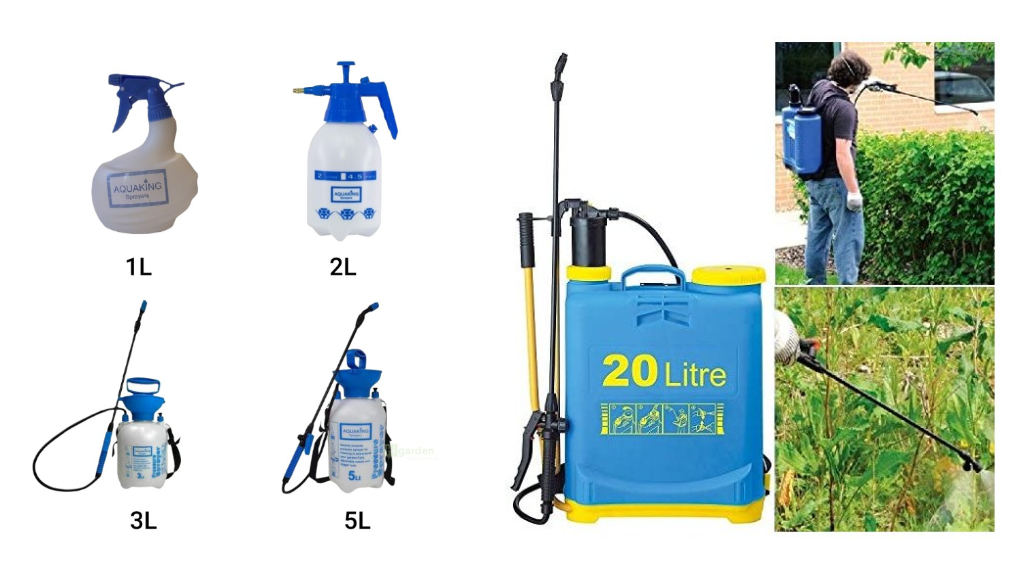
For greater spray reach, you can use the popular spray gun with an adjustable lance.
The advantages of misting follow from the operation of the above-mentioned new product VAPR Nano Spray Gun, but if you wanted to apply this principle on a larger scale, there is the reliable electronic fogger - atomiser from Aquaking with an output of 1000 W and an effective reach of up to 8 metres!
The purpose and composition of the spray
Now we will explain what can be applied to plants through a sprayer or atomiser.
- Clean water: Used mainly in small mechanical atomisers for misting houseplants.
- Fertilisers: For some products, or in our articles about them, you will find a mention that they are suitable not only for use in watering, but also as a foliar spray. Foliar feeding has the advantage, as an extra-root, supplementary plant nutrition, that you supply the plant with the necessary nutrients immediately. A good example is the 100% organic spray biostimulant Biotabs Boom Boom Spray. In the case of organic products, plant nutrition and protection can be applied at the same time.
- Protection against pests and diseases: Herbicides against weeds and moss, fungicides against moulds, and insecticides against pests. As part of prevention and while the situation allows it, definitely prefer biological products. Chemical ones should serve purely for extreme situations, when there is no other option. This approach is important for the final quality of the harvest, human health, soil health and environmental protection. More information and plenty of tips on specific products await you in separate articles: How to deal with pests and How to deal with plant diseases. The absolute long-term hit is the universal and 100% natural spray Canna CURE. Unique is the spray BioBizz Leaf Coat, which you can use even during winter, and about which you can read more in a separate article: BIOBIZZ can inspire growers to embrace ecological agriculture. The renowned Dutch brand BioNova developed the bio pesticide NovaFoliar, which not only protects the plant against the action of pests, but also cleans the surface of its leaves with a focus on blocked stomata.
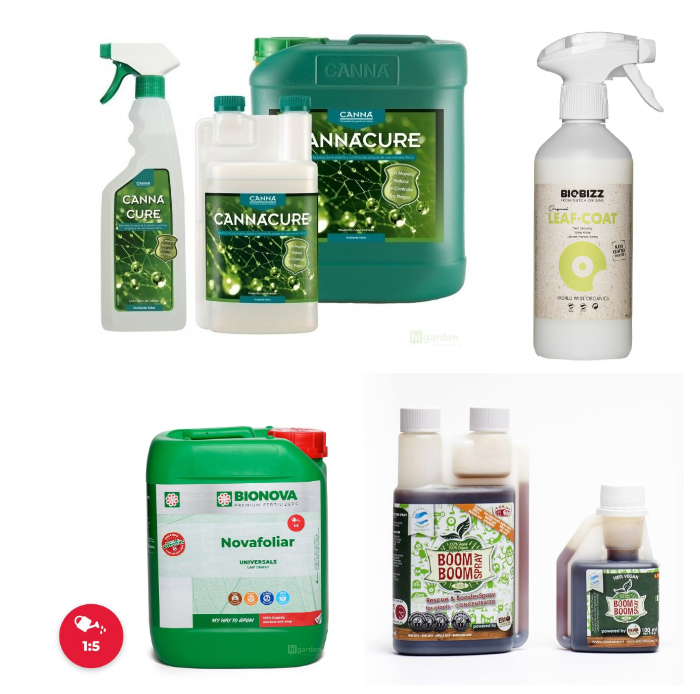
With purely natural products, a combination of plant nutrition and protection in one spray is common. If you would like to ask us anything, we will be happy to advise you at the well-known e-mail address info@higarden.eu.
We also recommend these products:
What to read next:
How to Get Rid of Slugs
Slugs can destroy a crop in a single night, even if you have spent weeks working on it. How can you get rid of them once and for all without destroying the rest of the garden? We have prepared an overview of all available methods, from natural ones to proven products.
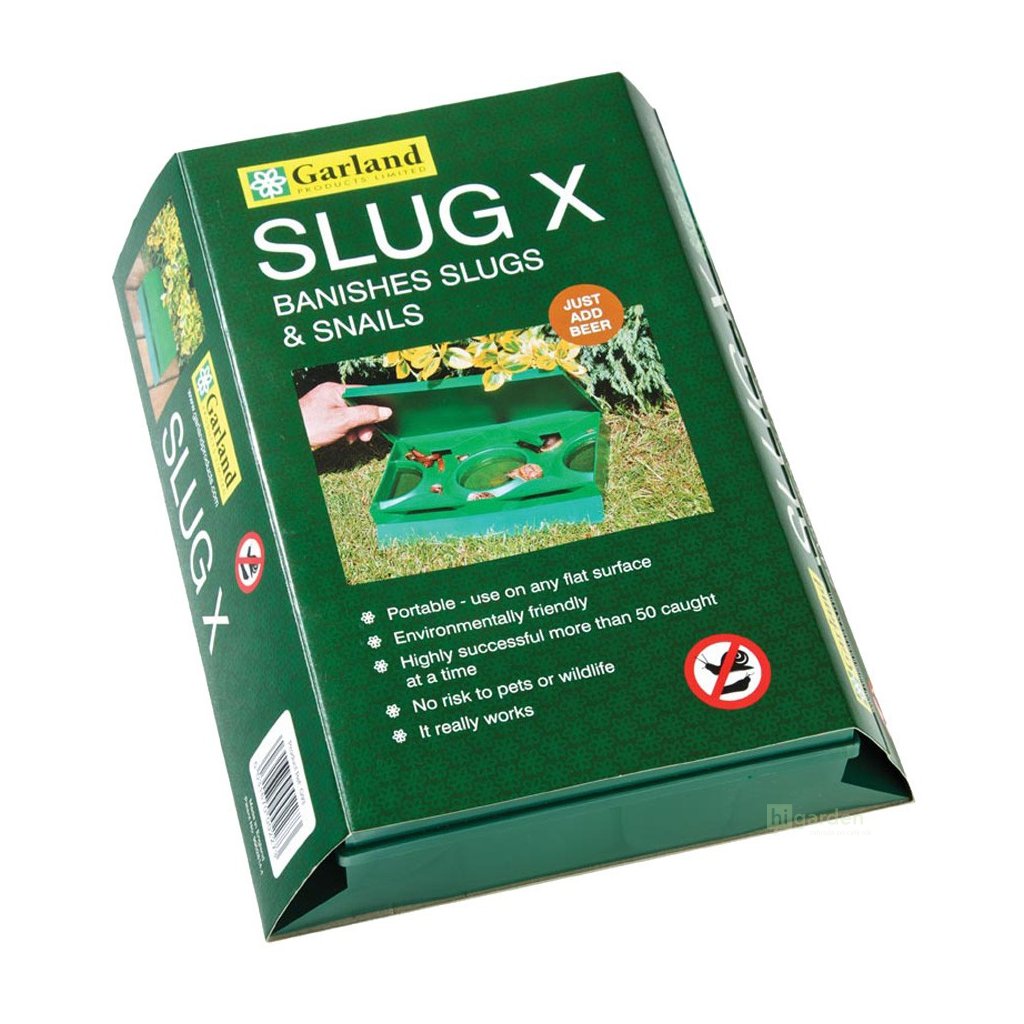 Slugs are found in practically every garden. The most damaging is the Spanish slug (Arion vulgaris), a species of slug that spread to us from Western Europe and has become the nightmare of Czech growers in recent years. Slugs hide in damp shelters during the day and only go out to feed after dark. They are omnivores, but they most enjoy young and juicy parts of plants. In spring, slugs therefore often feed on freshly sprouted shoots of lettuce, strawberries, courgettes or tomatoes, but they do not turn down hemp, herbs or flowers either. Slugs prefer a damp and warm environment and are most active at night after rain or after the garden has been watered. This pest reproduces very quickly and a single slug can lay hundreds of eggs during the season. Thanks to the lack of natural enemies, slugs spread incredibly quickly, and if you do not want to lose your crop, it is advisable to protect it using all available methods.
Prevention against slugs
As with all pests, prevention is always easier than eradication when it comes to slugs. Slugs prefer environments full of damp places where they can hide from the sun and dryness. If you adjust the garden so that you minimise such conditions, you will significantly reduce the risk of infestation.
The basis is to keep beds clean. Regularly remove weeds, fallen leaves and other debris. Water in the morning rather than in the evening so that damp soil does not attract slugs overnight. A great preventive measure is to grow in raised beds or pots with a protective edge. If you mulch, choose straw rather than wood chips, as it makes movement more difficult for slugs.
- Regularly remove weeds, fallen leaves and dead plant parts from the garden.
- Water in the morning so that the soil is not damp overnight.
- Use raised beds or planters.
Mechanical methods for removing slugs
In the case of slugs, mechanical removal is quite effective. At least if the infestation does not reach biblical proportions. You can collect slugs by hand; it is easiest with a head torch after dark. You can also place mechanical traps with beer around plants, which attracts slugs. The basis of success when “hunting” slugs is regularity. If you go into the garden every evening, you should be able to reduce their numbers to an acceptable level.
- Collect slugs early in the evening or in the morning.
- Place slug traps on the beds.
- Remove slugs from the garden every day to reduce their population.
Natural repellents and barriers against slugs
If you want to get rid of slugs without chemicals, you can try using ecological products such as sand, sawdust or copper tape. By themselves, these methods will not be 100% effective, but in combination with mechanical removal and prevention they can save your garden from a slug disaster.
- Line the edges of pots and raised beds with copper tape, which slugs cannot cross.
- Spread sand, ash or sawdust around plants, which will dry out the slugs’ mucus.
- Plant species that slugs do not like, such as garlic, thyme or lavender, along the edges of beds.
Proven slug control products
It may happen that the above methods are not enough and you have no choice but to use modern slug control products. These are usually slug pellets, which are very effective, but some types can be toxic, for example to pets. Gentler products, such as parasitic nematodes, can also significantly reduce the slug population in the garden.
- Use non-toxic slug pellets based on iron.
- You can also use biological slug control in the form of nematodes of the genus Phasmarhabditis.
Last but not least, we must also mention the natural enemies of slugs in our article, such as hedgehogs, frogs, birds or slow worms. Although it is difficult to influence the presence of these animals in your garden, you can at least strive to create a clean and non-toxic environment where they will thrive. You can also use Indian Runner ducks, which specialise in hunting slugs.
Looking for more useful advice for outdoor and indoor growers? Visit the Higarden blog, where you will find verified information and guides for both beginners and experienced growers.
How to Deal with Pests?
This article directly follows the post about plant diseases. The individual pests and diseases in relation to plants are linked above all by the fact that your plants are first and foremost protected from them by quality prevention.
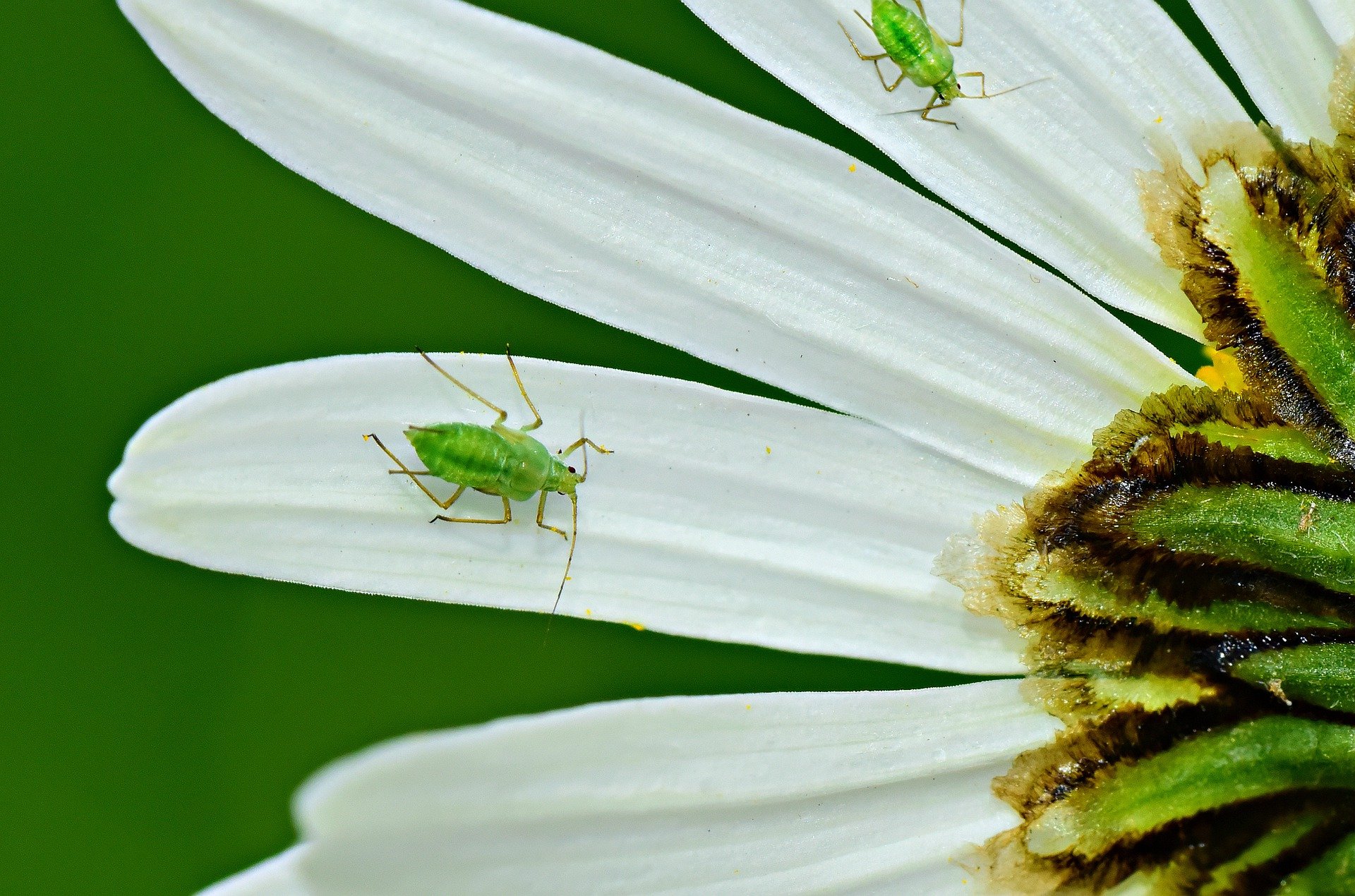
Every grower should have at least a basic awareness of the well-known pests that commonly attack plants, because, as they say, fortune favours the prepared.
Indoor growers, who cultivate plants in a controlled environment provided by grow tents, do not have to struggle with pests as much. However, it is necessary right from the start to dispel the common myth that, in indoor growing, pests will avoid your plants completely even without proper prevention. For example, fungus gnats are paradoxically found more often on plants grown indoors. Preventive protection of plants against pests is therefore certainly an area that should not be underestimated, whether you grow herbs, fruit or vegetables mainly at home or outdoors.
A common feature of the pests in this article is their tendency to stay on the undersides of leaves. It then depends quite a lot on whether the plant is harmed by adult individuals, which can be seen on the vegetative parts of the plant and are mostly flyers (for example aphids), or rather by larvae (for example fungus gnats) in the soil, which needs to be checked both for their presence and for the optimal moisture of the substrate.
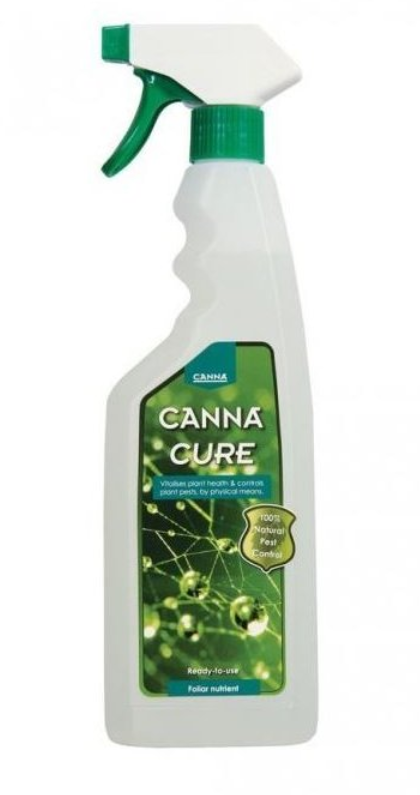
- Our TIP: Start by getting Canna CURE!
- Right at the outset, we warmly recommend the foliar spray against pests Canna CURE, which indoor and outdoor growers alike quickly came to like after its launch thanks to its effective yet ecological composition. It is exceptionally versatile, and you can use its strength when growing in any growing medium.
- In addition to comprehensive plant protection, Canna Cure also significantly supports photosynthesis.
- It works by creating a protective film on the leaves.
- With regular use of CannaCure, you will achieve remarkable plant vitality, and the plants will be resistant to possible attacks from various pests.
- What makes this liquid preparation with insecticidal and fungicidal properties stand out from similar products is its ability to literally control the occurrence of pests on the surface of plants. It is precisely this feature that makes this unique preparation a truly exceptional product, the only one of its kind.
So what are the most common types of pests, and how can you deal with them effectively?
APHIDS
Who would not know these little (3-10 mm) pests, right?
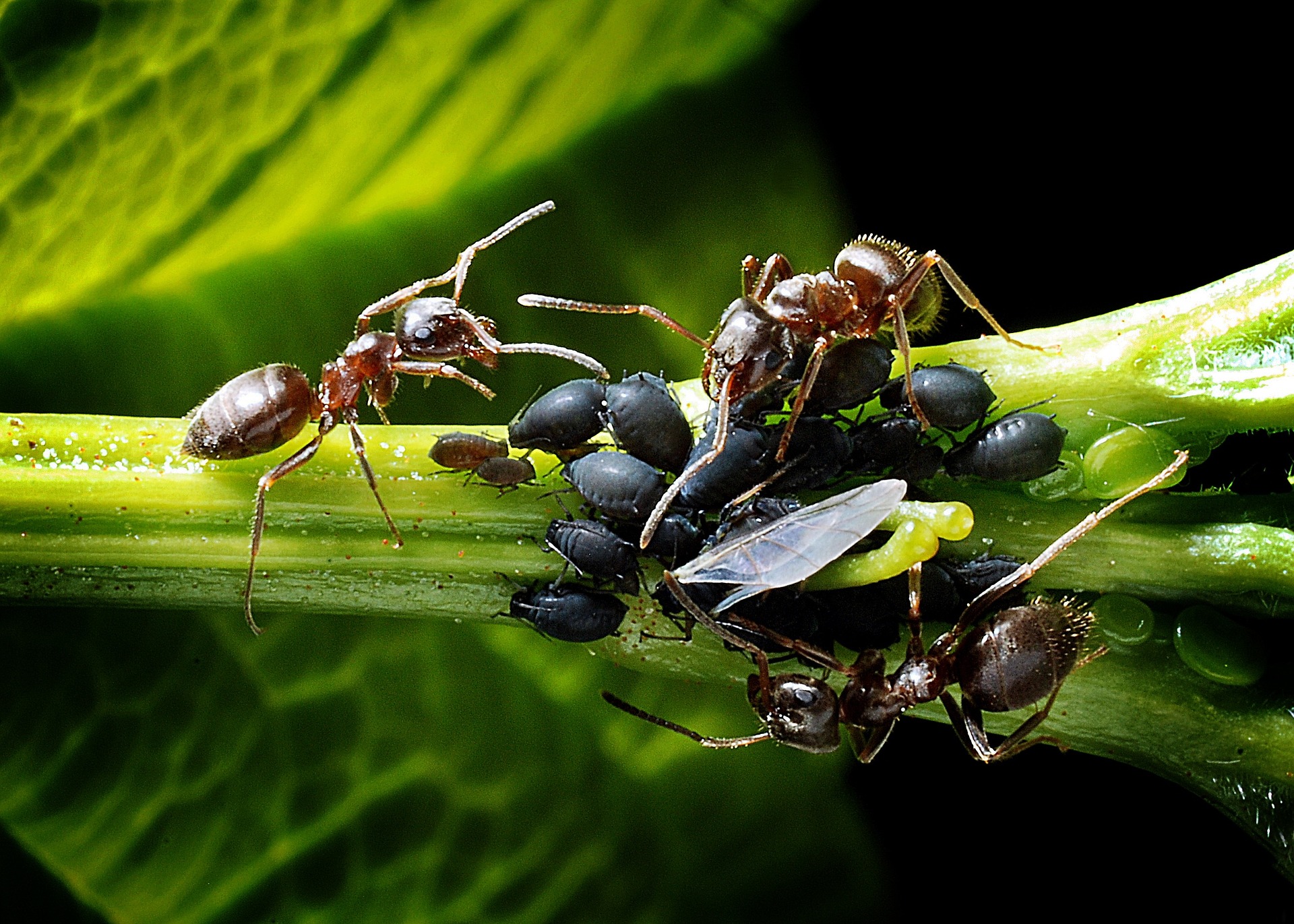
- They feed on sap from stems, leaves or flowers and literally suck the life-giving energy out of plants, which can even lead to their complete death.
- Aphids attack many plant species, and above all they are attracted to young plants in the early stages of development. If young leaves are affected, they will never reach full size, even after the pests have been eliminated.
- Every grower has probably encountered aphids at least in the garden. However, aphids are a typical example of a pest that can devastate your crop even indoors.
- There are several species of aphids, but the options for eliminating them are the same.
- So as not to stray too far from growing practice into biology, we will add just one interesting and rather unpleasant fact: a single adult aphid produces, over its life cycle, an average of 50 to 250 females with the same reproductive ability. That means only one thing. As soon as you spot just a few aphids on your plants, immediately move on to eliminating them, otherwise their population in your pots or beds will soon increase at rocket speed!
- A fairly reliable indicator of aphids on a plant is an ant crawling over the plant or, for example, a seven-spot ladybird.
- Recognising the presence of aphids is also made more difficult by the fact that aphids tend to stay on the undersides of leaves. They can also be various colours, including green, which is of course difficult to spot on green plants. Aphids are therefore the hardest to notice at all. After that, identification is relatively easy.
Prevention:
- Canna CURE – pest spray or, for example, the 100% organic pesticide BioNova NovaFoliar
- Effective air filtration for indoor growing
Elimination:
- You can remove a few individuals manually, by hand or with a cotton swab. A simple shower is also an option, meaning removal of the pests with water pressure in the case of plants grown in a pot.
- You can best eliminate a larger aphid population with an effective biological or chemical product. For example, try the proven Mospilan or the INPORO spray from the Czech company AgroBio.
- If you decide on chemical treatment, observe the product’s pre-harvest interval, which indicates the time that must pass from application to consumption.
SPIDER MITES
- This eight-legged sucking pest with a solid body belongs to mites, which drain sap from plants together with life-giving energy.
- Infested plants show significantly slowed growth and a reduced ability to form flowers and fruit.
- In our region, you will most often encounter the two-spotted spider mite (Tetranychus urticae) and the European red mite (Panonychus ulmi). The two-spotted spider mite multiplies somewhat faster than the European red mite, but believe that both species are capable of multiplying their numbers on your plants incredibly quickly, before you can say “crop destroyed”. That is why, first and foremost, we again stress proven prevention, which, like any elimination, is practically the same as in the case of the aphids mentioned above.
- Spider mites are often revealed on leaves by conspicuous pale spots, which can be seen from above, even though the spider mites themselves are found attacking the underside of the leaves.
- Spider mites are quite difficult to observe because they rarely grow to a size of 0.7 mm. In growing practice, we essentially only observe tiny moving dots. If you use a magnifying glass, the spider mites reveal eight legs, as this number is quite unusual among plant pests.
- Spider mites are also related to spiders, and so they may also be revealed by characteristic white webs on plants, which are very fine but fairly strong.
- If it comes to elimination, we again choose biological products first, and a chemical insecticide should only come into play after they fail.
FUNGUS GNATS
- Fungus gnats (Sciaridae) hatch from eggs in the growing medium. Often we “buy” them together with the substrate, especially if it is a cheap universal version from the supermarket.
- The eggs hatch into larvae that threaten plants by feeding on their roots. And because a healthy root system, which absorbs water and nutrients well, is the basis of a vital plant, this results in slowed development or even death.
- Fungus gnats can also appear in other waterlogged growing media. They like moisture.
- Growing media such as perlite or expanded clay, on the other hand, do not suit fungus gnats.
- You will usually notice fungus gnats as confused flying flies (2-4 mm) on the surface of the substrate, which have hatched from larvae. The problem in the case of fungus gnats is therefore mainly the larvae; you no longer need to deal with the adult flies resembling mosquitoes.
- Any substrate can be sterilised before you plant into it. For example, you can put it in an oven heated to a high temperature, although this is not very practical at home because of the smell. A better option is to pour boiling water through the substrate. Once it has cooled to normal temperature, you can plant.
- There is a close connection between watering and the occurrence of fungus gnats. Overwatering plants and wet substrate again unnecessarily increases the likelihood of fungus gnats and their larvae. A proven trick for eliminating larvae in the substrate is to let the substrate dry out to a depth of 2-3 centimetres before each watering.
- Practical sticky traps and sticky arrows also work well on adults.
- If you do not notice the adult flies or the larvae, you can recognise fungus gnat infestation by the fact that the plant’s leaves turn yellow and the plant as a whole does not thrive. In addition to root rot, fungus gnats also cause various fungal diseases of the root system.
 WHITEFLIES
- Whiteflies (Aleyrodoidea) are related to aphids and also harm plants by sucking sap from them.
- As adults, they grow to 1-2 mm. They are striking for their bright white colour and considerable ability to fly, which often gives them away. Simply shake the plant you want to check for whitefly infestation. If it is infested, the whiteflies will fly into the air and after a while settle back on the affected plant. Identification is therefore easier than with many other pests. Simply put, you will not find a flying pest of bright white colour that flies in a similar quantity and just as well as whiteflies, feeding at the expense of plants always in large swarms.
- Reliable identification and capture of adults is again made possible by sticky traps and sticky arrows.
- Prevention and elimination of whiteflies is practically the same as in the case of aphids in terms of means and methods.
THRIPS
- Of the several hundred species of thrips (Thripidae), in our climate you will most often encounter the onion thrips (Thrips tabaci), which completes our list of the best-known plant pests, and which also attacks countless plant species.
- You can recognise thrips most easily by their typical wings, from which their name is also derived. The fringes on the edges of the wings are clearly visible at first glance.
- Thrips are also among the sucking pests, but in addition to plant leaves they do not disdain flowers or fruit either.
Pest Control and Effective Plant Protection
Everything is turning green, the growing season is in full swing, but your plants do not look healthy even though you are giving them all the care they need? It may happen that, on closer inspection of the leaves or the substrate, you find unwelcome guests in the form of pests. How should you deal with them, and what preventive measures should you take for healthy plants?
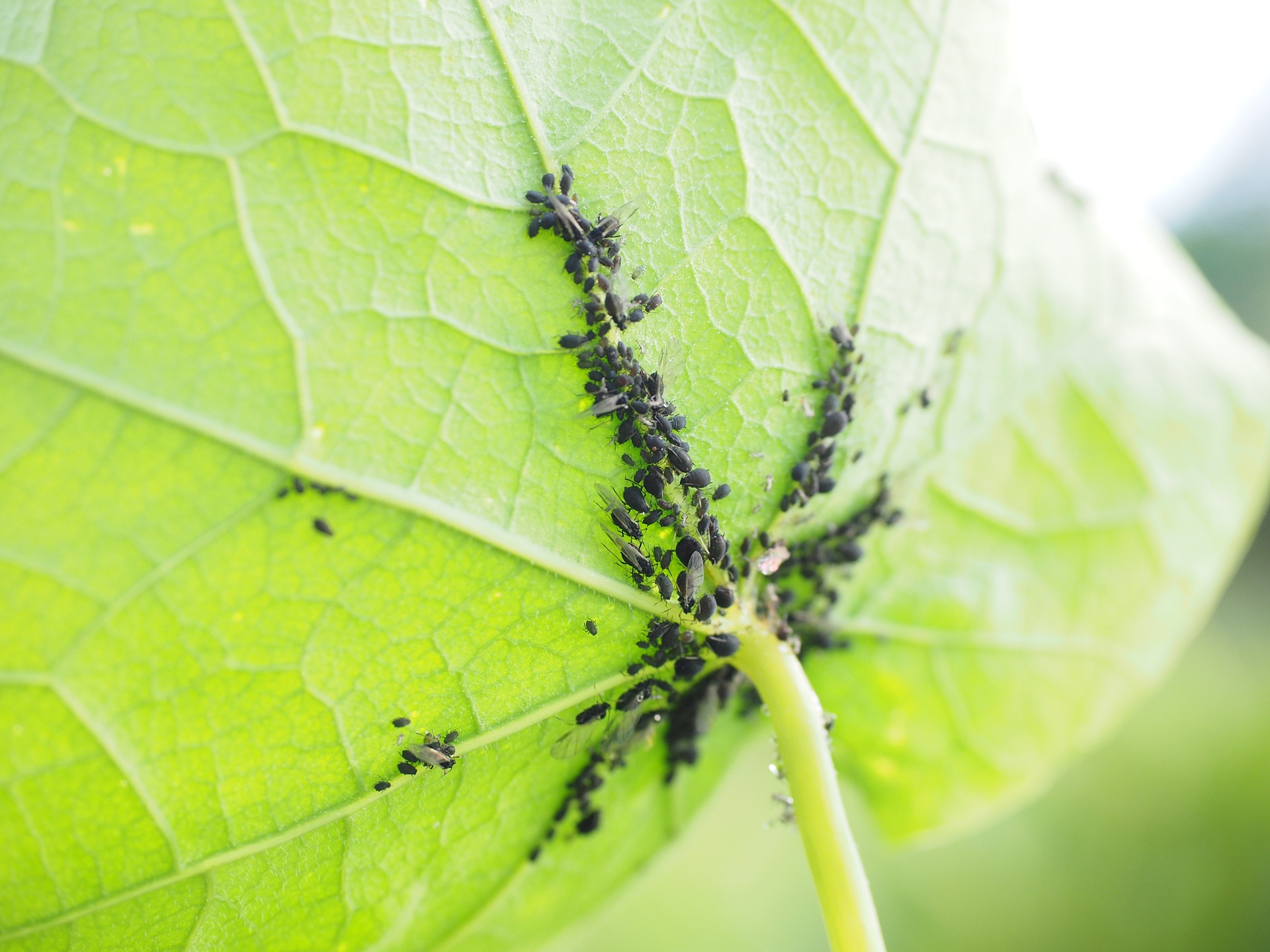
Among the best-known pests at home and outdoors in gardens are aphids, spider mites and scale insects. Whiteflies, fungus gnats, thrips or mealybugs can also trouble your plants. The first step you can take as part of prevention happens already in the shop where you buy the plant. Always check carefully whether any pests are present on the underside of the leaves, on the stem, flowers or in the substrate. Even if you do not see any, a bad sign can also be the webs made by spider mites or the sticky residue on leaves secreted by scale insects.
If you do bring an unwelcome guest home, or pests appear on your balcony or in your garden, the phase of dealing with the problem begins. If possible, separate the infested plant from the others to prevent the pests from spreading. Also check the other plants thoroughly to see whether they have already been infested by pests from the infected plant.
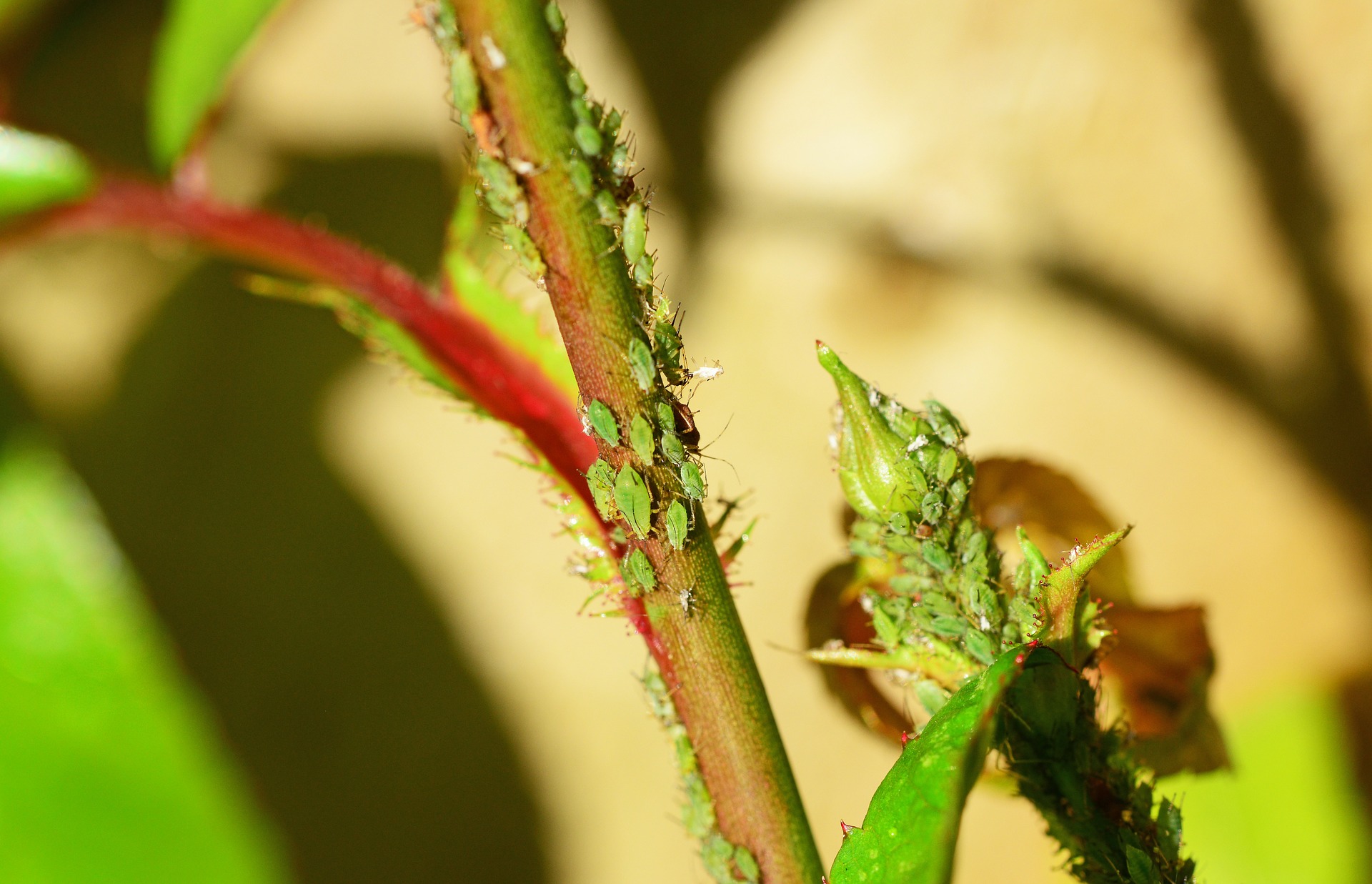
In the e-shop we offer many products that can be used against sucking and chewing pests, including products on a natural basis. However, it is always important to intervene in time and usually repeatedly until the pests have completely disappeared. In the case of edible crops, it is necessary to find out from the packaging the protection period for the specific crop on which we are using the spray, and to avoid application before harvest, whether because of taste or partial toxicity. To catch flying pests, it is then possible to use classic sticky boards or arrows, which are hung above the plant or inserted directly into the substrate. Thanks to them, you can detect the presence of a pest in time and, if necessary, intervene immediately. However, every battle always comes at a cost, whether in leaves, the plant’s vitality, the quantity or the taste of the fruit.
Regular inspection and preventive protection are therefore the most important and best things you can do for your plants. Because preventive sprays need to be repeated, we recommend using one of the natural products that are suitable for both ornamental and edible plants and, in addition to protection against pests, also supply plants with nutrients and help their overall resistance. They are usually based on oils or other natural substances that reliably destroy pests but are harmless to people, pets and beneficial insects. As most pests occur on the undersides of leaves, do not forget to apply the spray to these parts as well.
Listing controls
7 items total