
How to use EC meters in hydroponics and soilless substrate cultivation
In hydroponic and soilless growing systems, mineral nutrients are the only source of nutrients for plants, and their precise dosing is crucial for proper metabolism and root development. Electrical conductivity (EC) is a quick and reliable method of determining the concentration of dissolved salts in the nutrient solution and substrate. In this article, we will look at the principle of measurement, common grower mistakes, and the correct use of EC meters in practice.
Indoor growing is not free, so most growers try to ensure that their plants make the most of the energy from grow lighting. In an ideal case, the conditions in the grow room are set so that plants in full growth receive light all day long that corresponds to the midday sun on a summer day. For plants to convert this energy into growth and the production of metabolites, their nutrition must match it as well. The only way to dose highly effective mineral fertilisers used in indoor growing accurately is to measure the concentration of dissolved salts in the irrigation water and growing medium precisely.
What EC means and why it is important for growers
EC (electrical conductivity) is a quantity that expresses the electrical conductivity of a solution. Growers measure the EC of the nutrient solution to find out how many nutrients it contains in the form of mineral salts. The unit of EC is µS/cm2 (microsiemens per square centimetre), and the higher the EC value, the more concentrated the solution is. Tap water contains small amounts of dissolved calcium, magnesium, sodium and potassium, which increase its EC. It is extremely important to know the EC of the water you use to prepare the irrigation solution. The more dissolved salts tap water contains, the less fertiliser you can add to it. Too high a concentration of mineral salts can burn plants. Tap water usually has a value of around EC 0.3 µS/cm2, but in some regions it may be higher. Water with an EC above 0.5 µS/cm2 is not suitable for watering, and it is better to remove the minerals first using reverse osmosis.
Approximate EC values for different growth stages
- Seedlings and the beginning of the vegetative phase – EC 1.0– 1.5
- Peak vegetative phase – EC 1.5 – 2.0
- Peak flowering – EC 2.0 – 2.5
- Ripening – EC 1.5 -2.0
How to measure EC
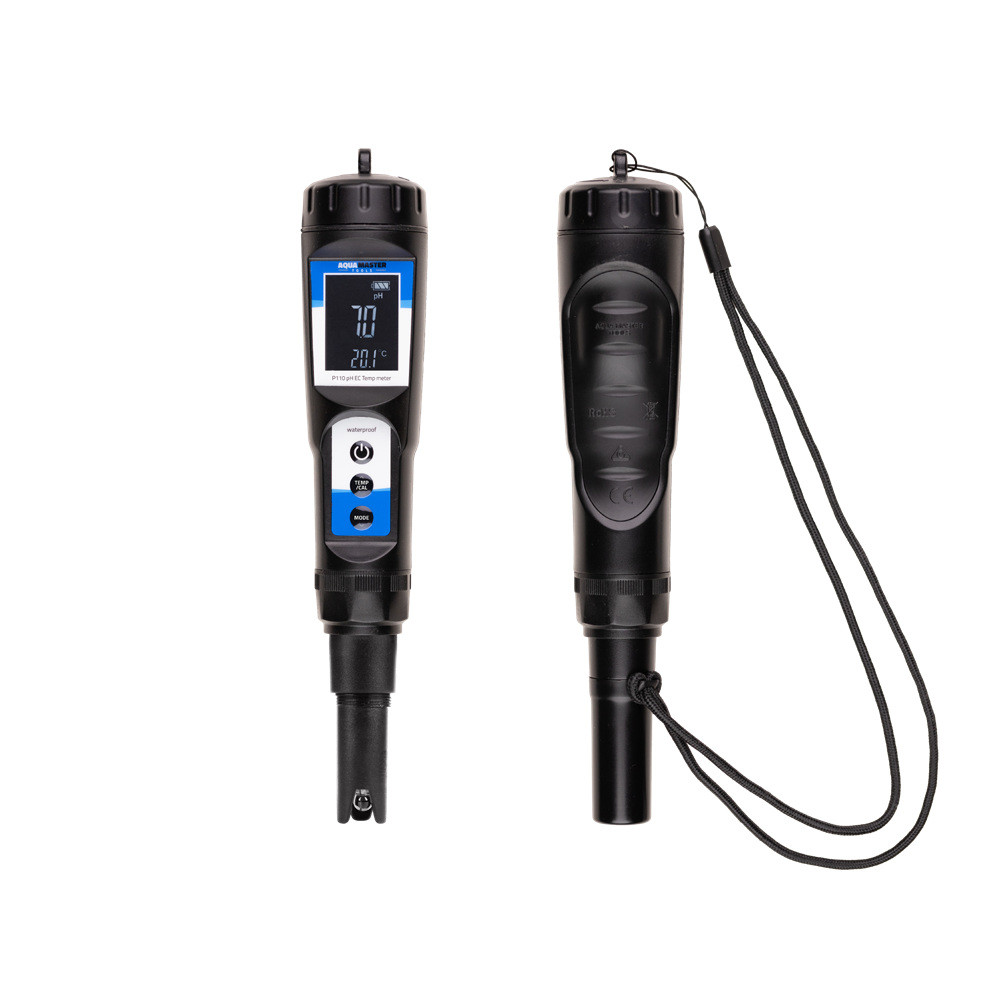 Electronic EC meters are used to measure EC, and they usually take the form of a digital pen with a measuring probe at the tip. Reading the values takes only a few seconds, and some devices also measure the temperature or pH of the solution. The method and frequency of measurement will vary depending on whether you are growing hydroponically or in soilless substrates.
Measuring EC in hydroponic systems
When growing hydroponically, measure the EC of the nutrient solution at least once every two days. First top up the tank with clean water, measure the EC, and then add fertilisers to raise the EC to the required value. A common problem for beginner growers is fluctuations in the EC of the nutrient solution flowing through the hydroponic system. This is usually caused by the nutrient solution tank being relatively small compared with the amount of water the plants use. If this is also your case and you have to top up the tank too often, look for a larger one.
Measuring EC in soilless substrates
When growing in coco, rockwool and other soilless substrates, EC does not fluctuate as quickly as in hydroponics, and measurements only need to be taken roughly once a week.
- Before measuring, water the plants in the usual way. A few drops of water should drain from the bottom of the pot after watering.
- Leave the pots to stand for one hour.
- Place a tray under each pot and water with 150–350 ml of distilled water, depending on the volume of the growing container.
- Wait a few minutes for the leachate to drip into the tray, then measure it with the EC meter.
Remember that the EC of the substrate will be slightly higher than the EC of the irrigation water, due to salt build-up in the root zone. However, if you measure a significantly higher EC in the substrate than in the nutrient solution, the plants are at risk of overfertilisation. If you want to reduce the EC of the substrate, flush the pots with clean water with adjusted pH until approximately 30% of the volume runs out of them.
OUR TIP: Would you like to make measuring the EC of the substrate around the root zone easier? Try the Aqua Master Tools EC meter with a sodium probe for substrate!
You may also be interested in: Tips for measuring EC
Care for EC meters
EC meters are essentially laboratory equipment and, as such, require proper handling and care. Without regular calibration and careful hygiene, even the best EC meter will not measure correct values. After each measurement, the probe must be rinsed with clean water so that salt residues from the nutrient solution do not dry on and affect the next measurement. For this purpose, we recommend using distilled water, which contains not even trace amounts of minerals.
EC meter probes need regular calibration. Ideally, the device should be calibrated before each use, although once a week is sufficient. When calibrating, follow the manual, which will also tell you which type of calibration solution to use. Use a fresh calibration solution each time you adjust it, pouring some into a cup so that the rest in the bottle does not become contaminated.
It is true that even the most expensive EC meter will not last forever and will need replacing. The disadvantage of cheaper devices is that only the probe cannot be replaced. So if you are serious about growing, it is worth looking for an EC meter with a replaceable probe, which will last much longer with good care.
For more advice and tips for beginner and experienced growers, and industry news, follow our Higarden blog for growers.