
How to plant germinated seeds?
Allowing seeds to germinate directly in the growing medium is, in practice, and especially if you have paid extra for their quality, a somewhat more demanding discipline than using the tried-and-tested “trick” of damp cotton wool or paper. That is why many growers first let plant seeds germinate “externally” in this way, and only then comes the proper planting of already germinated seeds into the substrate. Read a simple guide on how to do it.
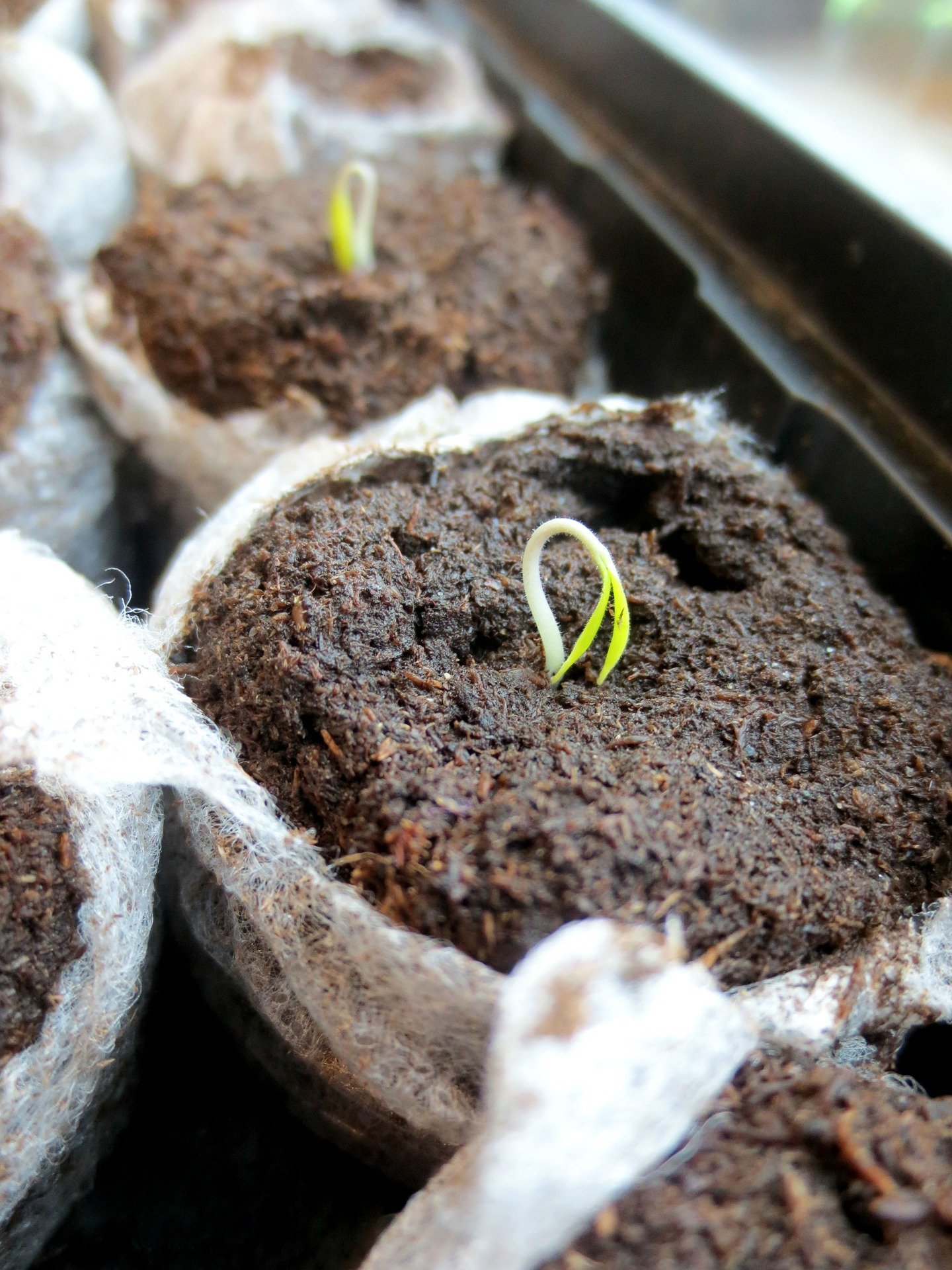 Source: Ecolife Permaculture
- Climate is the first factor directly determining the healthy growth of freshly germinated seeds. They should “grow” under ideal temperature and humidity. It is therefore advisable to measure these values continuously. The measured temperature should then be in the range of 24–28 °C and humidity from 70 to 85%.
- Another factor according to which we recommend planting germinated seeds is their size. You can apply the golden rule and plant them to a depth corresponding to their size. For example, if the seed is 0.5 cm large, gently press it into the substrate to a depth of 0.5 cm.
- Always plant germinated seeds with the sprout facing down! The plant will then emerge to the surface more easily, and you will be almost there.
- Beginning growers often make the common mistake of watering germinated seeds too heavily. However, if you water germinated seeds too early or even overwater them, the consequences in the form of dead roots or stem are difficult to remedy. Another unnecessary and common beginner mistake is watering plants directly at the stem. It is much better to water around it, with a slight distance.
- Lighting for freshly germinated seeds, representing the plant in the earliest stages of development, is another factor that must be monitored. In this part of the vegetative phase of the plant, it is necessary to set the lamps as high above the plants as possible and give them 18 hours of light and 6 hours of darkness each day.
- Larger rockwool growing cubes provide an ideal environment for the development of young seedlings. A new alternative is Agra-Wool - 100% natural cube made of stone wool, featuring a small hole in the centre.
- Young plants in the early stages of development, whether you are growing fruit, vegetables or herbs, are very well supported not only by basic nutrition for the vegetative phase, but also by a quality root stimulator.
We recommend these products:
- Canna Rhizotonic or for example BioNova BN Roots - proven root stimulators for a successful start and the subsequent course of the plant’s entire growing cycle.
- The best substrates (soil, coco) in terms of price and performance from the Dutch brand BioNova.
- Grodan growing and propagation cubes
- Agra-Wool - growing and propagation cubes made from 100% natural material.
- HERCULES - modern plastic pots will make your journey from seedlings to beautiful flowers and fruits easier.