
Does removing leaves for a better harvest make sense?
The topic of leaf removal, defoliation, or, in technical terms, defoliation has been the subject of passionate debate among growers for many years. Among growers around the world, we can find both staunch opponents and supporters. There is therefore no generally accepted verdict on whether it is better to leave plant leaves alone or whether it is worth devoting attention to this technique. The fact remains, however, that professional growers also repeatedly use it on various plant species and achieve impressive results, so this technique probably does have something to it. All the more so because today, even in home conditions, an increasing number of experienced indoor growers consider defoliation a normal part of their cultivation routine, which significantly contributes to their high and regular yields.
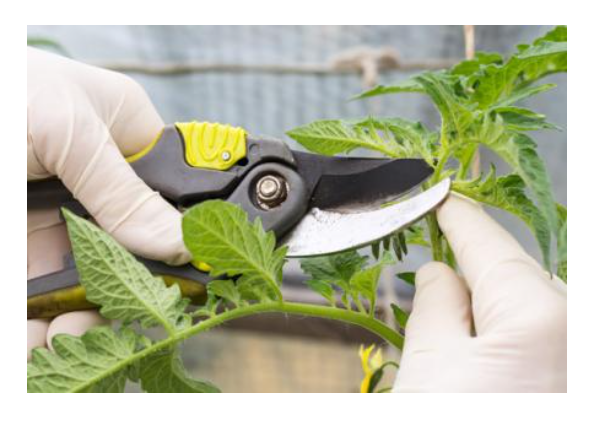
We also know the natural process of defoliation from nature. Just think of leaves falling. Let us now explain why the targeted removal of plant leaves makes sense not only in outdoor growing, but also in the case of indoor cultivation of plants under artificial lighting such as usually LED lamps or discharge lamps.
Improving air circulation and reducing humidity inside the growing space
In indoor growing rooms and inside grow tents, practically any vegetation is often very dense to impenetrable, because every grower naturally tries to use the growing space with artificial lighting to the maximum in order to grow as many healthy plants as possible in the given area. The number of plants does not have to be the only priority. Some growers let the plants grow considerably before changing the photoperiod so that they fill the entire growing area as much as possible.
However, far from all of these growers realise in practice that the denser the vegetation inside the growing space, the more it ultimately hinders the flow of fresh air between individual plants, which is very important for their healthy and vigorous development.
Our TIP: Circulation fans help increase the flow of fresh air around plants precisely where it is most needed. If you do not yet have one in your grow box or room, even at the start of summer, be sure to read the separate article: How do you choose a circulation fan?
Another problem arising from the fact that plants carrying lots of leaves are crowded together inside the growing space is increased humidity. Humidity itself is not such a big problem, but in combination with the above-mentioned lack of fresh air supply, exhaled air from the plants accumulates around their lower leaves. This air is no longer sufficiently saturated with carbon dioxide (CO2). The significance of CO2 for plants is also covered in a separate article: Plant growing and carbon dioxide. How and why should it be used?
Our TIP: Give plants in the grow box an extra dose of carbon dioxide thanks to the natural CO2 generator!
If we have dense vegetation in the growing space, insufficient fresh air circulation around individual plants together with increased humidity creates an ideal environment for dangerous moulds, which thrive in such stagnant air. Where plant leaves touch, the highest concentration of moisture also occurs, and therefore the leaves are often wet and stuck together at the points of contact. And that is exactly the phenomenon you want to prevent.
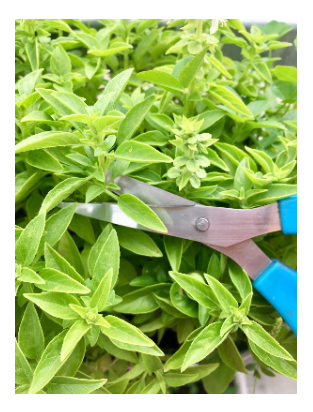
Improving light access to plants
For plants to develop, their green parts, by which we mean primarily the leaf area, must receive enough light radiation. Moreover, it must be of sufficient intensity for most leaves to receive their daily portion of photons. In nature, this is arranged by the sun, which is not only a source of light with extremely high radiation intensity, but also moves across the sky during the day, gradually changing the direction and angle at which the sun’s rays fall on plant leaves. In indoor gardening, even the most powerful light source remains fixed in one position all the time. The above-mentioned density of vegetation therefore also becomes an important variable. It is common for less light to penetrate into the lower levels, so that leaves in the darker parts of the growing space do not achieve the optimal level of photosynthesis. Therefore, if we set aside the effect of defoliation for a moment, TLED lamps for supplementary lighting of shady areas are used in grow tents or other Previous article Next article