
What are Cal-Mag supplements used for and how to use them?
Plants cannot develop healthily without sufficient intake of calcium and magnesium. To supplement these vital minerals, or as an agent for stabilising pH, most growers use supplementary fertilisers, generally known by the familiar abbreviation Cal-Mag. It is hard to find a grower who does not use Cal-Mag. That is why, in this article, we will tell you everything you need to know about them and recommend proven products.
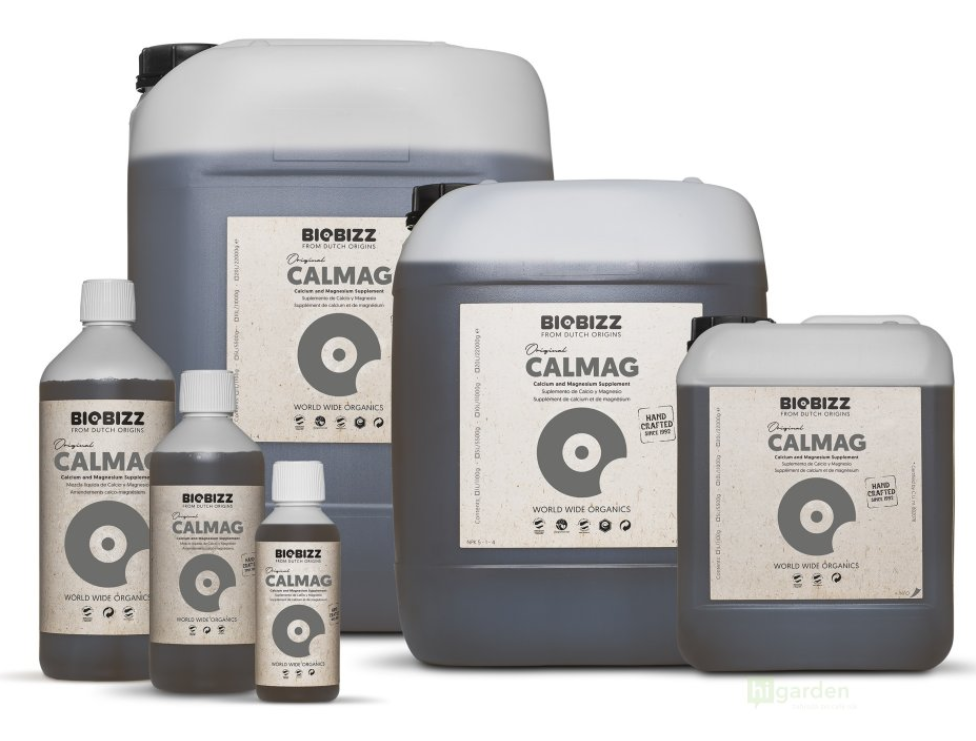
Why is Cal-Mag so widely used?
- The synergistic combination of calcium and magnesium benefits plant structure and helps plants with photosynthesis.
- Calcium also improves the plant’s defence against pathogens and helps with the uptake of other minerals, such as iron and magnesium. Once calcium levels drop, the plant will also be deficient in iron and magnesium.
- Plants need different amounts of calcium and magnesium at different stages of development. Getting the optimal levels of both elements at the current stage is therefore a challenge for every grower.
- You can read about what a possible deficit of these two elements causes in a separate article, which we link to below. Of course, an excess of them is not beneficial to plants either.
How should Cal-Mag be dosed?
- Depending on which specific Cal-Mag product you choose, also select the dosing tables from the relevant manufacturer. We will recommend selected products at the end of this article.
- Dosage will always vary depending on the situation you are dealing with:
- When applying Cal-Mag to address existing deficiencies, use 5 ml per 4 l of water.
- For preventive use of Cal-Mag to avoid deficiency, use 1.5 ml per gallon.
- If the plant is in good condition, stop adding Cal-Mag to the watering solution once the flowering stage reaches its peak. Supplementing calcium and magnesium in the later stages of flowering would unnecessarily risk a harvest of hard buds due to nutrient residues in the buds.
- The frequency and dosage of any Cal-Mag supplement also depend on other factors, such as the growing medium or the water you use for watering (What water do you water your plants with?).
- Diagnose your plants and growing environment. Use measuring tools, but also your eyes. Check whether you can spot any signs of calcium and magnesium deficiency. We describe the signs of nutrient deficiency, such as calcium and magnesium deficiency, in a separate article HERE.
- The degree, or extent, of calcium and magnesium deficiency in the plant will affect how often you use Cal-Mag.

Cal-Mag and pH values pH
- Cal-Mag is not used only to supplement calcium and magnesium deficiencies, as it might seem at first glance.
- Sometimes the problem is an imbalance in pH, which causes nutrient lockout, as a result of which the plant “starves”.
- Remember that:
- Adding Cal-Mag will not solve the problem if you do not stabilise pH.
- Before you conclude that yellowing leaves or other familiar symptoms are the result of calcium deficiency, always first check pH using a pH meter!
- Does Cal Mag increase or decrease pH? Adding Cal-Mag fertiliser affects pH in different ways depending on the concentration of its components. Fertilisers with a higher nitrate nitrogen content, such as Cal-Mag 15:5:15, increase pH, while fertilisers with a higher ammoniacal nitrogen content in a 20:20:20 ratio are more likely to lower the pH of the growing medium.
- Although adding Cal Mag can affect the pH of the substrate, you should not use supplements to lower pH. Adding more calcium can block other nutrients, which stresses your plants even more. We recommend using a pH calibration solution. It will help you keep the growing medium within the correct pH range. And when carrying out a control measurement of the pH of the growing medium, do not focus so much on the values on the soil surface, but above all check the pH of the runoff water Previous article Next article