
Jungle Indabox maximises the benefits of chelate binding
Read on to find out what the main advantages are of plant nutrition with micronutrients in chelated form, which is by far the most effective way for your plants to absorb the nutrients contained in fertiliser. Such fertilisers include world-class Czech products from the Jungle Indabox brand.
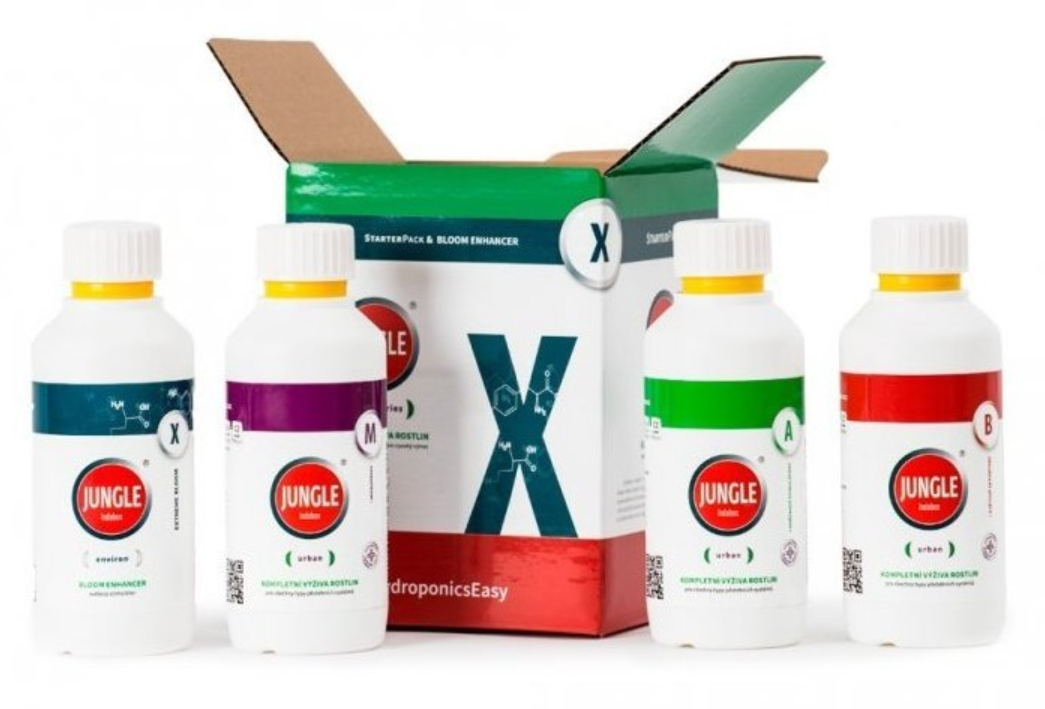
- The most important metallic micronutrients for plant nutrition, such as iron, manganese, copper or zinc, are usually supplied in ordinary mineral fertilisers in the form of ionic compounds (zinc chloride, copper sulphate, etc.).
- However, the drawback of ionic compounds during the fertilising process lies in their tendency to react easily and spontaneously with other components of plant nutrition, which leads to undesirable chemical interactions, the result of which is insoluble compounds that can be toxic to plants, especially in the case of over-fertilisation! This is all the worse because over-fertilisation is one of the common beginner mistakes. An unhealthy high content of metallic micronutrients caused by over-fertilisation may then be harmful not only to the plants themselves, but even to the end consumer.
- If you want to take the path of organo-mineral or bio-mineral plant nutrition, you do not even need to go beyond our country, because in the Czech Republic we have a renowned manufacturer whose fertilisers and additives can easily stand up to global competition.
- Metallic micronutrients are therefore a good servant but a bad master in plant nutrition. That is why JUNGLE indabox fertilisers use a chelate bond to distribute these key nutrients.
- To better imagine the term chelate bond, we can use the expression “a cage of amino acids”. Amino acids, that is, substances capable of chelation, form a chelate bond in combination with minerals, or a complex of “amino acid-mineral-amino acid”. You will certainly remember molecular and compound models from school. The shape of such a complex strikingly resembles tongs or pincers (see the image below). This is also where the term itself comes from, derived from the Greek word “cheilos”, meaning pincer.
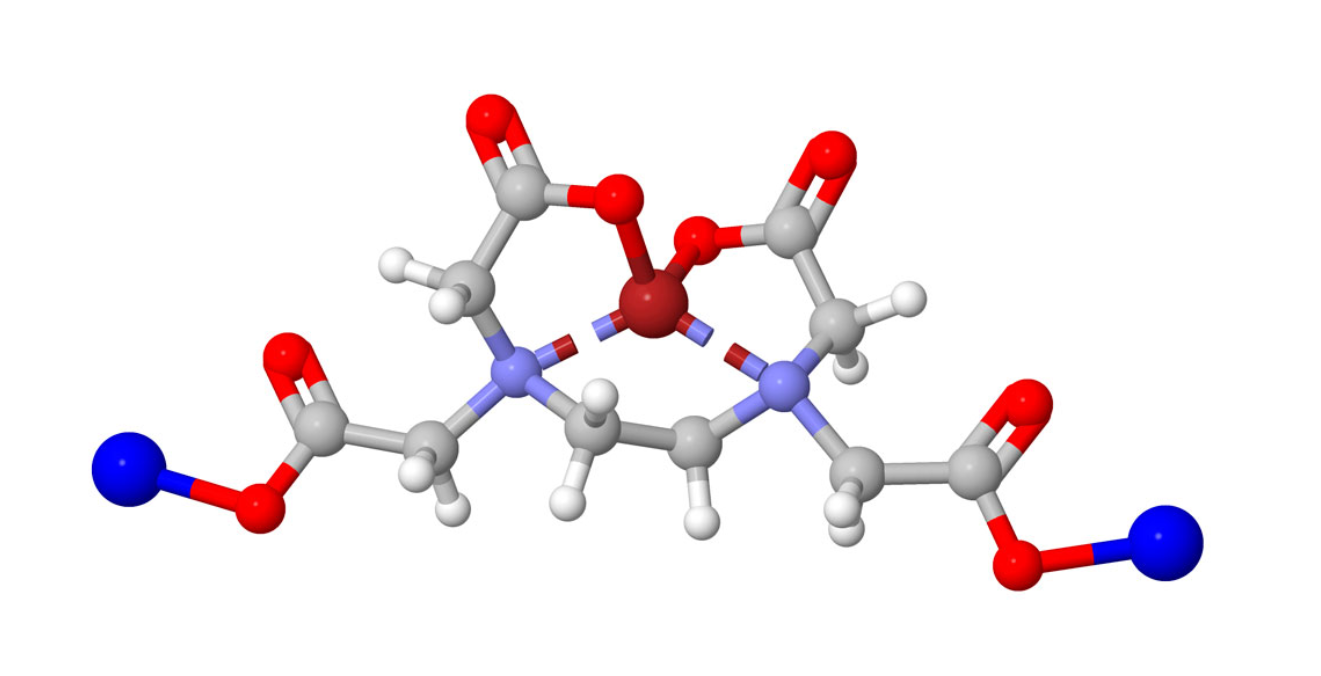
- The chelate molecule has a purely organic character, because plants are able to produce acids of the above-mentioned type themselves and then naturally use them to release metal from the soil and transport it in trace amounts into the plant body. A typical example is citric acid. As the manufacturer states, we can summarise that the organic chelate molecule has the following properties:
- It prevents the toxic action of metallic elements on plants, because the plant only “unpacks” the chelate when it actually needs the given metal atom.
- Amino acids act as carriers enabling significantly more efficient transport of nutrients to the target cells of the plant body. In short, we achieve better absorption of fertilisers, which is of course also associated with more economical management and long-term savings.
- Another advantage of chelate molecules is the availability of important micronutrients across a wide range of pH.
- For growers who like to go more deeply into the composition and operating principles of fertiliser, we will also mention the three most commonly used chelating agents, including the possibilities of chemical bonds:
- EDTA: ethylenediaminetetraacetic acid chelates copper, zinc, manganese and iron (Fe2+ and Fe3+)
- DTPA: diethylenetriaminepentaacetic acid chelates iron only.
- EDDHA: ethylenediaminedihydroxyphenylacetic acid also chelates iron only.
- Fertilisers from the Jungle Indabox brand, unlike those from other manufacturers, also provide zinc, manganese and copper in chelated bonds, and the results in the form of higher yields will not be long in coming.
- The main chelating organic compound used is FeEDDHA, which is illustrated in the image below.
- Research accompanying the development of plant nutrition from Jungle Indabox (Numazon) shows that the use of FeEDDHA in the manufacturing process is highly effective in the subsequent application of fertilisers. Usually, only a fraction of the usual dose is sufficient, which would be enough in the case of fertiliser compositions from other manufacturers, who mostly use Fe-EDTA as paradoxically the least stable of these chelating compounds, with as much as 80% in an environment with pH above 6.5 breaking down in about 14 days, or alternatively the second classic variant in the form of citric acid.
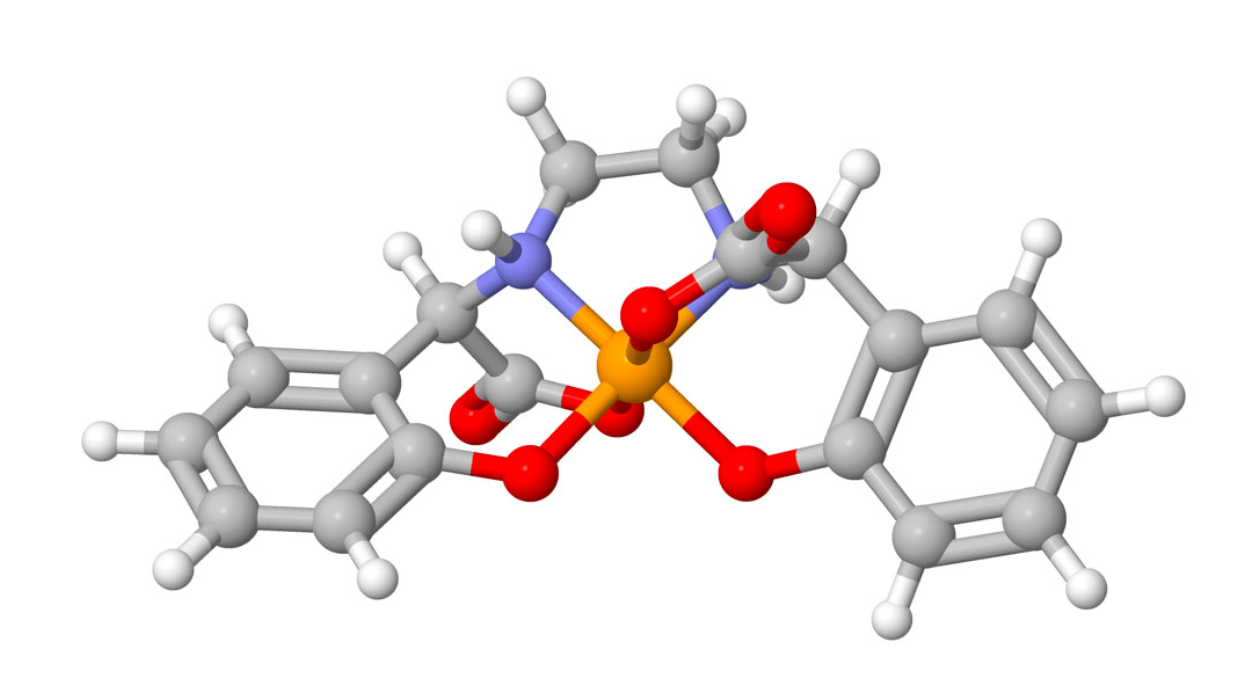
- As soon as you get your hands on Jungle Indabox fertilisers, you will certainly notice the striking red-purple colouring of the MICRO component. This is caused by the phenol-Fe(III) bond, which ensures much greater stability than we can observe with purely carboxyl chelating agents such as EDTA (see above).
Our TIP: Jungle Indabox StarterPack URBAN X MINI is among the top 3 best-selling discounted sets in our e-shop for an easy start and a cost-effective introduction to complete nutrition from the Czech manufacturer throughout the entire growing cycle.
Czech scientists have a considerable reputati