
Humidifier or dehumidifier?
That is the question we answer in this article! Optimising growing spaces and climate control using suitable devices is absolutely essential for plant health, as you may already know from growing practice or from our previous blog posts.

Proper humidity inside a growbox or growing room is especially crucial when cultivating indoor plants. It depends both on the type of plants being grown and on the current developmental stage they are in.
Our TIP: In addition to the progress of the growing cycle, growers also deal with humidity as part of proper harvest storage. In this case, alongside modern devices that maintain the required humidity in storage areas, it is also possible to use simple but perfectly functional Integra Boost sachets to maintain ideal humidity directly inside the storage container. (You can read about how to store the harvest properly in a separate article HERE.)
We will now look at the use of devices for easy and reliable climate control in any space, which we already mentioned in the heading.
These devices require a power source and water to operate. Depending on how the water source is provided, we distinguish two types of humidifiers:
- Humidifiers with their own water source in the form of an integrated tank. An example is the best-selling ultrasonic humidifier HUMIPRO 4L. It is equipped with a clear LED panel and a double nozzle with 360° rotation. These humidifiers stand out for their simple operation and, last but not least, the option of output regulation, unlike the type of humidifiers mentioned below.
- Other humidifiers need water supplied externally, or rather a special head with a float must be immersed in it, which is either included in the package or can be purchased separately. A classic example is humidifiers that create the typical water mist, such as the Ultrasonic Mist Maker. These devices have a certain number of membranes, whose vibrations turn the water into mist. The output of these humidifiers depends precisely on the number of these membranes. For smaller growboxes and growing spaces, a humidifier with a single membrane will therefore be sufficient in practice, but there are also humidifiers with nine membranes for really large growing spaces.
- Unfortunately, there is no simple conversion from square metres of growing area to the number of membranes. There are other variables as well. It also depends on:
- The correct placement of the humidifier, meaning in the direction of airflow.
- The type and intensity of heating in the given room or grow box.
- The extract air, which also reduces humidity in the growing space.
- The placement of the grow box and the average ambient temperature.
- It should be added that occasional cleaning is sufficient; however, if you immerse Mistmakers in a sufficient amount of water, they allow almost continuous operation. That is a major advantage. The same applies to the blocking sensor for moments when the water in the tank runs out. The devices stop automatically and the membranes remain undamaged. The other side of the coin is the lack of output regulation, which means these devices always run at full power.
- Cloning and cuttings: “Humidifiers” are widely used for successful rooting of young plants during the early developmental stages, when it is necessary to maintain a minimum humidity of 60% in the growing space.
- Houseplants: A classic example of when a quality humidifier is invaluable is also flats and apartments, which are often overheated by central heating, especially in the colder months.
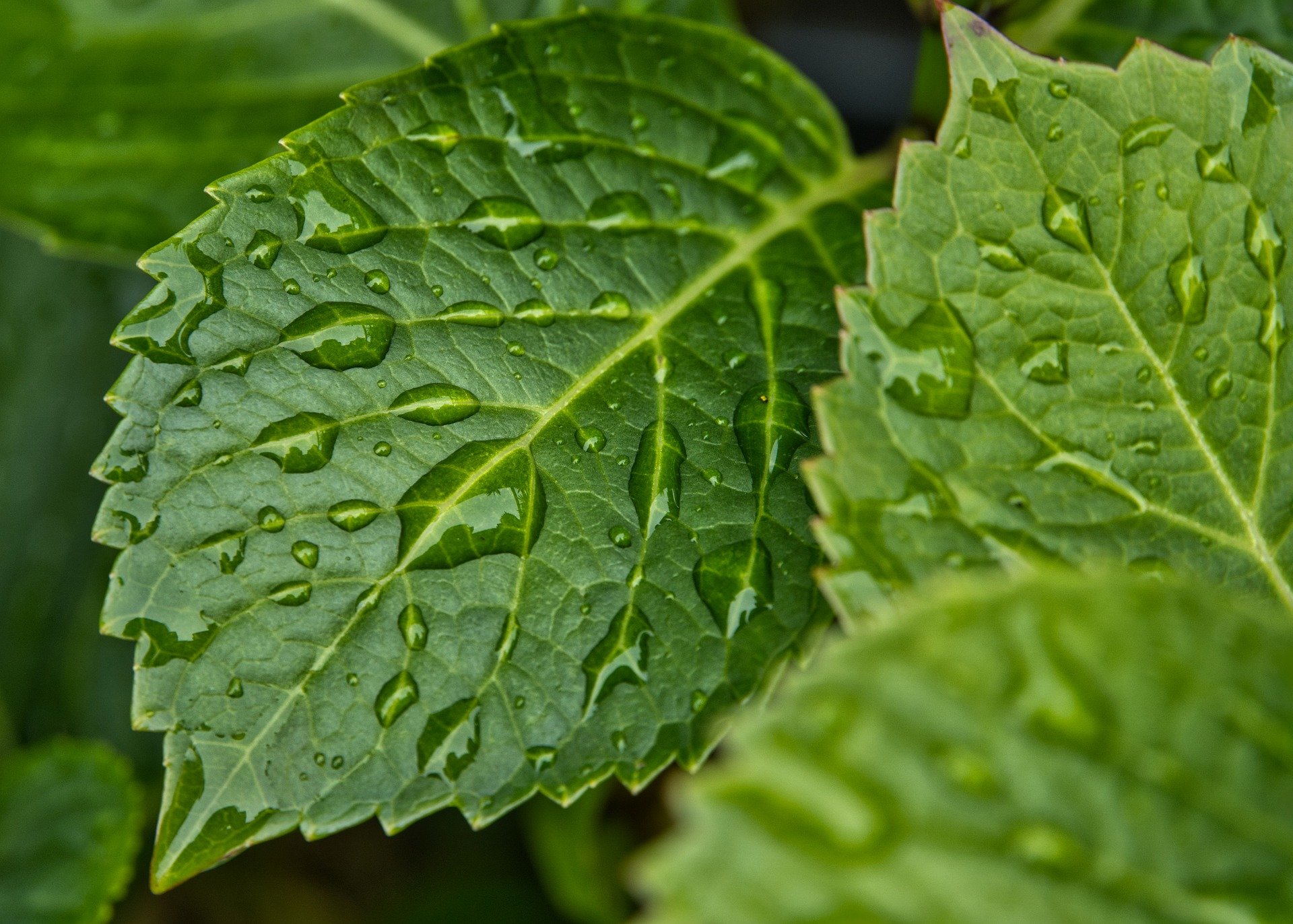
- You already know that in the case of young plants and clones, it is very important to maintain at least 60% humidity in the growing space. In later developmental stages, however, high humidity becomes harmful, and if plants are placed in a humid environment, for example in a later flowering stage, you risk the presence of mould. And fruit mould is the last thing you want to deal with in the late flowering stage.
- When it comes to the final quality of the harvest during drying, dehumidifiers again prove to be an irreplaceable helper, because you need to achieve the lowest possible humidity in the given room, and even increasing the fan speed to maximum is often not enough.
- An example of a practical dehumidifier that does not take up unnecessary space even in a grow box is the Hutermann HD-250 or its more powerful counterpart, the Hutermann HD-500.
- These devices stand out for their very economical operation, for which you no longer need any additional preparations.
- They work on the principle of drawing in moisture and then condensing it, with the water collecting in an integrated removable tank. Once the container is full, the device switches off automatically.
Our specialists will be happy to advise you on climate control, and especially on the long-term maintenance of optimal climate conditions not only in growing spaces. Please direct your questions to the well-known e-mail address info@higarden.c