
How Does Plant Health Relate to Root Temperature?
Today we will partly follow up on the article: High temperatures in indoor growing. How can you avoid them? We will proceed on the assumption that most growers who already have at least minimal experience are well acquainted in advance with the ideal temperature range that suits their plants. However, by no means does every grower also monitor the climate in the root zone separately. Do you know how many degrees are just right for your plants?
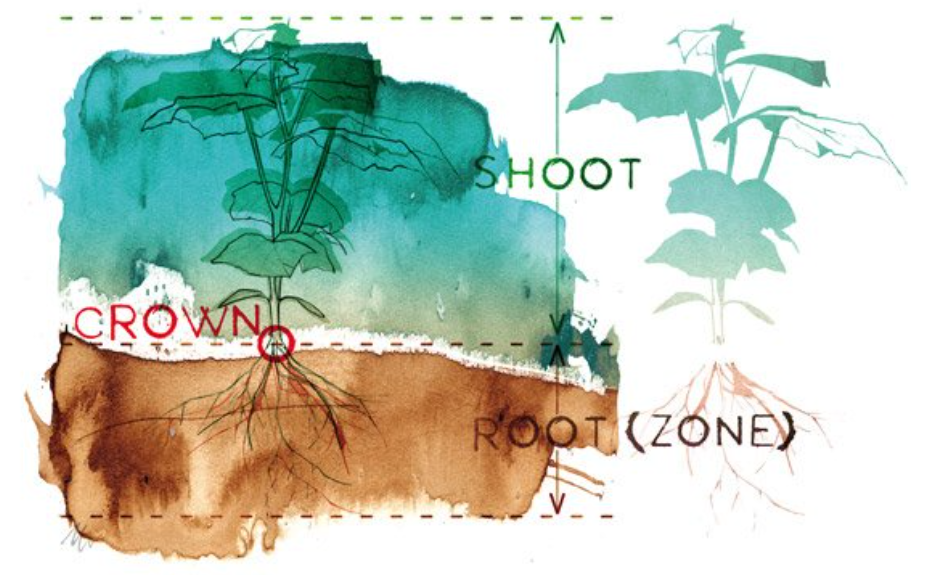
Do you carry out temperature measurement in the root zone? It is important, because the temperature in the area of the plant root system is governed by different laws than the temperature prevailing around the above-ground parts of the plant. So what is the ideal root temperature?
Heat is such a fundamental factor in plant growing, regardless of the conditions, because its intensity significantly affects the most important biochemical processes taking place in the plant body (photosynthesis, etc.).
However, growers do not perceive heat in the same way every time, because they distinguish between these types:
- Air temperature
- Temperature of the leaves
- Temperature in the root area
The first two points relate to the above-ground parts of the plant. However, different factors determine the temperature underground, i.e. in the immediate vicinity of the roots. As far as the above-ground parts of plants are concerned, it is generally known that most fast-growing plants thrive in a temperature range of 20–30 °C. At night it is better to move towards the lower limit, and in harmony with the sun’s rays, plants during the day prefer a warmer climate, which can approach the proverbial thirty. Many growers then automatically take these well-known rules and apply them to the underground parts of the plant as well. However, there is one catch. Do you already know what it is?
Roots are not capable of thermoregulation
Unlike the above-ground parts (stems, leaves, flowers), the underground parts of plants (roots) do not have the ability to thermoregulate. So what is the ideal temperature for them? The above-ground parts of plants use mainly the process of transpiration to regulate themselves, and thanks to this they can cool down even in distinctly summer temperatures, whether they prevail outdoors or inside a grow box. However, the roots of plants, as their underground parts, function best at temperatures around 20 °C. And let us not forget that the temperature of roots underground is influenced by different natural mechanisms than the temperature of plants in the above-ground parts.
Temperature may fluctuate during the day. But what happens underground?
The grower’s day is just beginning, so we have two possible scenarios here. While indoor growers have their grow tent and grow lighting switch on automatically, when growing plants outdoors we can, during sufficiently warm months, welcome the sun’s rays that we rely on to light our plants during the day. In both cases, however, a thermometer would show relatively low values at the start of the day, so there is no reason for cooling through transpiration. The rate of transpiration will, however, rise rapidly in connection with the increasing temperature during the day. As the day warms up, the energy and temperature in the plant tissues and in the air increase. For example, in summer it is quite common that half a day is enough for the thermometer to climb from 19 °C to thirty, and the plants therefore have to cope with a difference of more than 10 degrees!
Underground, or rather in the root zone, we do not see such significant temperature fluctuations (see above). The temperature of the root zone (in the substrate) changes far less than the temperature of the air and plant tissues above ground. When growing plants in soil or substrate, the temperature difference over the whole day may therefore be only 1 °C, and the roots of plants will be perfectly happy if the temperature remains around the optimum throughout the day, which is usually considered to be 21 °C. What would definitely not suit them, on the other hand, are significant temperature fluctuations, which must be avoided.
You are probably therefore wondering what happens once the temperature around the roots does, after all, rise alarmingly. In such a case, oxygen dissolved in the water in the optimum amount is no longer available to the roots of the plants. As the temperature rises, its amount decreases. Higher temperatures in the root zone are also a major attraction for bacteria, as a result of whose action root rot and root dieback may occur. In practice, this problem is probably most closely associated with hydroponic systems, where it is beyond dispute that the temperature can be maintained in the range of 19–24 °C. (You can gather more practical information about hydroponics in separate articles such as “Hydroponics – what does it involve and how do you start?” or “Hydroponics made easy: drip irrigation - drip”.)
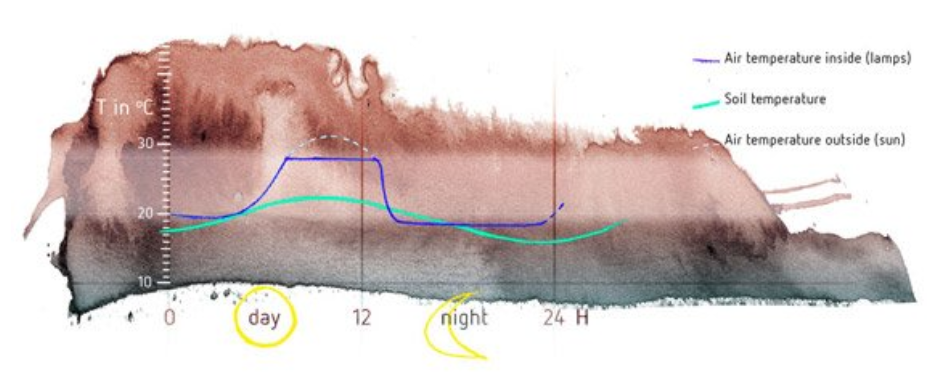
Classic soil and peat substrates have the advantage, in terms of roots and temperature fluctuations, that the roots of plants grown in soil are not always quite so sensitive to temperature increases. In any case, and regardless of whether it is a hydroponic system, a more or less pre-fertilised, or bio soil mix based on high-quality peat, or the increasingly popular coconut substrate, the above temperature range can be considered “golden”, or universally valid. In short, it is a temperature range in line with the ideal conditions for the development of your plants, regardless of which growing medium you are currently using.
While the air temperature around the above-ground parts of the plant rises noticeably over the course of the day, the situation in soil or substrate is quite different, and only slight changes in the ambient temperature occur here during the day. Temperatures that are too low in the immediate vicinity of the roots are undesirable and should never fall below the minimum, which is considered to be 18 °C. At temperatures lower than 15 °C, growth in otherwise fast-growing plants slows significantly, or stops altogether.
We now know the correct root temperature. But how can it be maintained? Depending on the preferred growing method, there are several options available to effectively prevent temperature fluctuations.
- In outdoor growing (see separate article: How to grow outdoors?) there is usually no reason to measure the temperature in the root zone. The temperature in open ground only rises above a healthy level in truly rare cases. Such a case may be a hot summer in dry areas, when it is worth relying on white geotextiles and mulching the soil. Flowerpots and window boxes also make it possible to resist substrate overheating, simply by placing them in a shady spot. If that is not possible, you can wrap them in reflective foil, or simply make things easier and get Hercules aerated pots. You can also partly prevent substrate overheating by using fabric pots (see separate article: When is it worth preferring fabric pots to plastic ones?).
- In indoor growing, of course, all control of temperature and growing conditions in general is not in the hands of nature, but in ours as growers. If necessary, we regulate it using technology, because as soon as an increase in temperature is desirable, heating will help us. If, on the other hand, we need to reduce the temperature inside the growing space, air conditioning will help us do so. Some growers devote themselves to indoor gardening without heating and without air conditioning, and yet it works for them. So how do they do it? First and foremost, they must have a clear idea in advance of what the temperature of the incoming air will be during the year and what source of artificial lighting they will use (see separate article: Do not underestimate the exchange and circulation of air inside the growing space). At the same time, they must realise what has already been mentioned here, namely that in pots or hydroponic systems the temperature changes much faster than in open ground.
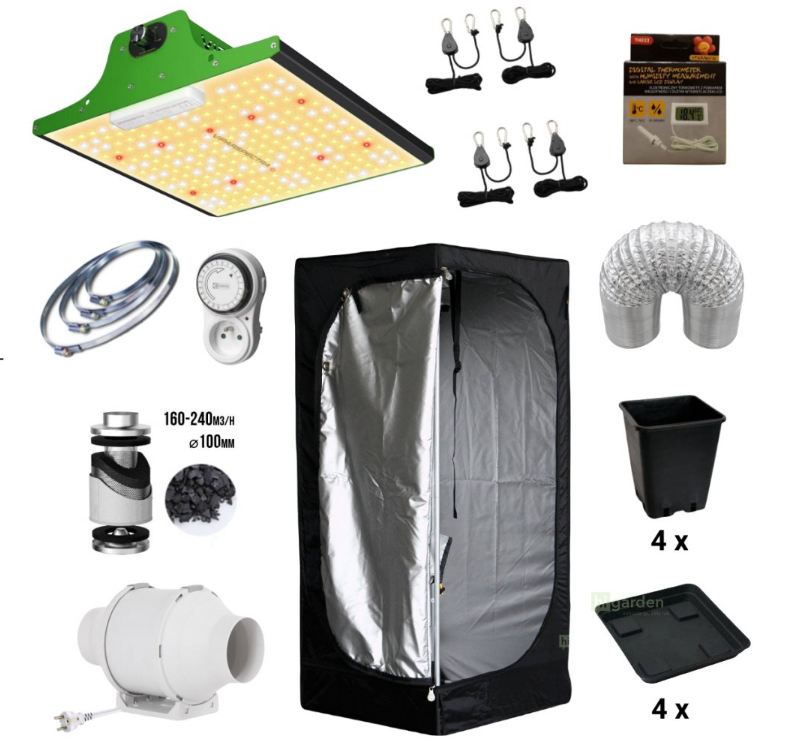
Our TIP: A great price-to-performance ratio for mutually complementary growing equipment is offered by Growbox Sets - Complete Kits, which only need to be plugged in and then you can watch how the plants are doing. One basic LED setup is shown in the picture for illustration, but we will also be happy to adapt more or less sophisticated setups to your requirements. You can then harvest in the comfort of your home several times a year!
Let us now clarify which factors ultimately have the greatest influence on the temperature in the root zone. First and foremost, it is always the temperature of the surrounding air during the day and night (alternation of light and darkness, day and night cycle). In an enclosed growing space, two things matter:
- the temperature of the incoming air, i.e. into the growing space (grow box, indoor growing room, etc.)
- the type of artificial lighting used (see article: Growing under artificial lighting: HPS vs. LED
To better illustrate the effect of the two factors above when growing plants indoors, the following three model examples will help us:
- The incoming air temperature is in the range of 19–21 °C and you are lighting the plants with a discharge lamp. Such a combination is absolutely fine. During the dark phase, when the discharge lamps are not lit, the temperature is ideal, and after the grow lighting is switched on it rises only to a healthy level (max. 30 °C). This suitable incoming air temperature causes the substrate to cool naturally at night, and it does not have time to overheat beyond a tolerable limit even during the light phase (during the day).
- The incoming air temperature is 24 °C. If this statement applies to the air brought into the growing room at night, during the dark phase, we are already at the very limit of tolerable climatic conditions compatible with the optimum development of your plants. The problem is mainly that their roots do not have the same opportunity as in point 1, i.e. to cool down to a lower temperature during the night. And during the day, once the light phase begins, the air temperature in the growing space will start to rise mercilessly. If we are using classic discharge lamps to light the grow box, we should certainly be more cautious than when using LED lighting, which emits far less heat compared with a powerful discharge lamp. On the other hand, if, for example, you are growing distinctly heat-loving plant species, the higher incoming air temperature will make it easier for you to achieve the ideal temperature for the light phase.
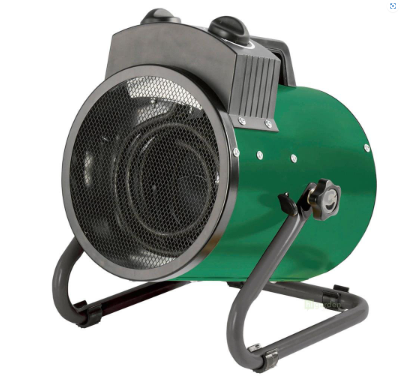
- And then we have the extremes, when the incoming air has a temperature of 25 °C or higher, or conversely the incoming air temperature barely reaches 18 °C. In both cases, it is not possible to achieve the optimum temperature range in the root zone. How can the situation be saved? During the nights by means of heating (see separate article: It is getting colder! Get TOP heating not only for winter). In case you need to raise the temperature in the growing room. When the problem is exactly the opposite and your plants can no longer cool down sufficiently, as we explained above, an investment in air conditioning or at least a modern LED grow lamp will help, which is energy efficient, full-spectrum (so-called full-spectrum luminaires such as, for example, ViparSpectra PRO Series P600 etc.) and generates only a negligible amount of heat into the surroundings.
The nutrient solution and its temperature also play an important role
The temperature measured in the root zone is logically also influenced by the temperature of the nutrient solution. That is why we also recommend reading the separate article: Why and how to maintain a stable nutrient solution temperature? Once again, we come back to the fact that the temperature range in the substrate will show much smaller changes than in the case of hydroponic systems. A high-quality peat substrate maintains its own temperature range. In hydroponic systems and in tanks for automatic plant irrigation, so-called flow coolers are sometimes used.
We have also saved one more (very) important warning for the very end of this article, as it too is related to the temperature of watering. Some less experienced growers, once they get the impression that the root system of their plants is significantly overheated or, conversely, suffering as a result of low temperatures, begin to act unnecessarily impractically in good faith. They try literally to cool or warm the roots of the plants directly through watering (water + nutrients), which, however, must have exactly the same temperature as that prevailing in the root zone (see the link to the article above). If you were therefore to cool or warm the root system using watering with a temperature that differs by several degrees from the current temperature of the root zone, you would expose the roots of your plants to such stress that their development could be significantly slowed.
The temperature of the roots and the health of the plants now depend only on you; you already know the options and the principles. If, however, you would like to ask us anything, or if you would like advice, for example, on configuring the equipment for your indoor garden, we are here for you at the well-known e-mail address info@higarden.eu.
We also recommend these products:
What to read next: