
The Most Common Nutrient Deficiencies in Plants: How to Identify, Address and Prevent Them
Are your plants turning yellow, curling and growing more slowly? They may be lacking key nutrients. Learn to recognise the signals your plants are giving you and find out how to help them quickly.
All in all, plants need 17 nutrient elements to live. They obtain oxygen, carbon and hydrogen from the air. They take up the other nutrients from the soil or nutrient solution. Nutrient elements are divided into macronutrients, which plants need in the greatest quantities, and micronutrients, also known as trace elements or minerals.
- Macronutrients: nitrogen (N), phosphorus (P), potassium (K), calcium (Ca), sulphur (S), magnesium (Mg), carbon (C), oxygen (O), hydrogen (H)
- Micronutrients (trace elements): iron (Fe), boron (B), chlorine (Cl), manganese (Mn), zinc (Zn), copper (Cu), molybdenum (Mo), nickel (Ni)
Macronutrients are absolutely essential for plants, and their deficiency has a noticeable effect on them. Plants need primary macronutrients—nitrogen (N), phosphorus (P) and potassium (K)—in the greatest quantities. When growing indoors, we may also encounter deficiencies of secondary macronutrients—calcium (Ca), magnesium (Mg) and, occasionally, sulphur (S).
You may also be interested in: Everything about the primary NPK nutrients
Nitrogen
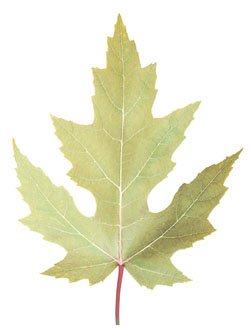 Plants most often lack nitrogen during the vegetative phase, when they produce a large number of leaves. Nitrogen is important for chlorophyll production and is an essential component of proteins and nucleic acids.
Symptoms of nitrogen deficiency in plants
How can you tell if a plant is lacking nitrogen? The most obvious sign is yellowing leaves, which first affects the older leaves in the lower parts of the plant. This is because nitrogen is a mobile element that plants can freely move to where they need it most—that is, to new shoots and leaves. In some varieties, nitrogen deficiency causes the stems and leaf stalks to turn purple.
- yellowing leaves and a light green colour
- lower leaves gradually pale and wilt
- slower growth
- new shoots are lighter in colour
- earlier onset of flowering
- purple stems in some varieties
Why plants lack nitrogen and what to do
The most common cause of nitrogen deficiency is incorrect fertilising. When growing outdoors, the cause may be soil that is low in organic matter. So, if you grow in the same place every year, it is important to regularly add compost or another source of organic matter, such as humus, to the soil. If it is too late for that and you need to act quickly, we recommend using fast-acting liquid organic fertilisers for growth.
You may also be interested in: What are NPK fertilisers and what are they used for?
When growing indoors, the cause may be too little fertiliser. You can easily correct this by increasing the fertiliser concentration in the nutrient solution. If you think you are fertilising sufficiently but your plants still look undernourished, the problem may instead be excessive use of mineral fertilisers. This leads to a build-up of salts and nutrients becoming “locked” in the growing medium. In this case, the solution is to flush the growing medium with clean water adjusted to the correct pH, then water it with a nutrient solution at the correct pH and EC.
You may also be interested in: How pH affects nutrient uptake
An unsuitable growing medium pH is a common cause of problems not only with nitrogen but with plant nutrition in general. When growing outdoors, this problem is less common and is addressed by liming the soil or adding organic matter. When growing indoors, it is common to lower the water’s pH with every watering, because water containing fertilisers has a pH that is too high.
Phosphorus
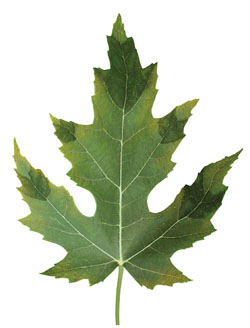 Phosphorus is essential for plants in the development of roots and leaves, photosynthesis and the uptake of other nutrients, as well as during the reproductive phase and flowering. Plants need phosphorus from early growth through to harvest, with consumption increasing as flowers begin to form—when the plant transitions to flowering.
Symptoms of phosphorus deficiency in plants
Plants lacking phosphorus in their diet are stunted and have small leaves. Phosphorus deficiency first appears on older leaves, which turn dark green, wilt and develop a blue-purple colour. If the deficiency persists for several weeks, dark brown necrotic spots appear on the leaves and the leaf blades curl downwards. Plants lacking phosphorus will flower, but the flowers will be weak and few in number.
- dark green leaves with necrotic spots
- leaves darken from the edges and turn purplish
- deformed or curled leaf blades
- slow growth and flowering, small flowers
- purple stems in some species
Why plants lack phosphorus and what to do
When growing in soil, phosphorus deficiency is rare, and in such cases the cause is almost always an unsuitable pH in the growing medium. Outside the pH range of 6 to 7, the solubility of phosphates drops sharply. Soil pH can be adjusted by liming or adding sulphur. If you need to act quickly, you can use phosphorus fertilisers in a reasonable dose. It is better to apply smaller amounts more frequently to avoid damaging soil microorganisms and leaching fertilisers into groundwater.
You may also be interested in: How to choose a fertiliser for indoor and outdoor growing
When growing indoors, phosphorus deficiency may also be caused by an unsuitable pH in the growing medium or nutrient solution. In this case, simply adjust the pH of the nutrient solution or growing medium at the next watering. Less often, nutrient problems are caused by an unsuitable N:P:K ratio. However, if you use professional fertilisers for indoor growing and follow the feeding charts, your plants should not lack phosphorus.
You may also be interested in: Organic or mineral fertilisers—which are better?
Potassium
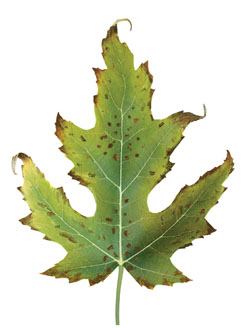 Potassium is important for water transport because plants use it to control their stomata. These tiny pores on the surface of leaves regulate how much water evaporates from plants, thereby effectively managing transpiration. Plants need potassium throughout the entire growing cycle.
Symptoms of potassium deficiency in plants
Potassium deficiency is initially difficult to recognise in plants. Plants that are lacking only a small amount of potassium look healthy. They may even be slightly taller, but their mildly scorched leaf edges and yellowing tips give them away. If the potassium deficiency is more severe, the leaf veins remain green, but the leaf stalks and stems turn red and dark necrotic spots begin to appear on the leaves.
- scorched leaf edges and tips
- leaves discolour from the edges towards the centre
- green veins
- slow growth and smaller flowers
- deformed and drying leaves
Why plants lack potassium and what to do
Many organic fertilisers used for growing outdoors (guano, fish emulsion, alfalfa, bone meal, animal manure) contain relatively little potassium compared with their phosphorus and nitrogen content. As a result, even gardeners growing in fertile soil may encounter a deficiency of this element. Cold, high levels of sodium, calcium or ammonia (NH₄ ⁺) in the growing medium also slow potassium uptake. An environmentally friendly way to add potassium to the soil is wood ash . For a quick potassium boost in the soil, you can use potassium fertilisers.
When growing indoors, the most common causes of potassium deficiency in the soil are incorrect fertilising or an unsuitable pH. Potassium uptake problems may be caused by excessive calcium and magnesium levels in the nutrient solution or growing medium. As always, the solution is to first measure the EC and pH of the growing medium and, if the values are incorrect, flush it and water with a nutrient solution containing the appropriate amount of fertiliser.
Calcium
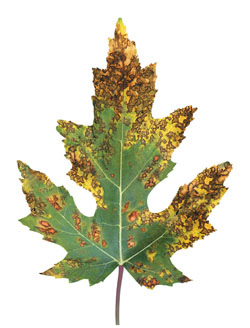 Although calcium is classed as a secondary nutrient, it is absolutely essential for plants. It is part of plant tissue and is vital for root growth. One of calcium’s most important roles is regulating the permeability of the stomata, which allows plants to control transpiration. This element also affects growth hormones and the transport and uptake of other nutrients, especially potassium.
Symptoms of calcium deficiency in plants
The main sign of calcium deficiency is clearly defined brown-yellow necrotic spots on new leaves. If plants do not receive calcium, older leaves are also affected, particularly around the edges of the leaf blades, which then look as if they have been scorched by fertiliser. Brittle stems that break easily are another symptom of calcium deficiency in plants.
- necrotic spots on leaves
- yellow or brown patches around the edges of leaves
- stunted plants
- dark green leaves
- rotting roots
- twisted and dying shoots
- sparse inflorescence
Why plants lack calcium and what to do
When growing in soil, calcium deficiency is rare and occurs only when growing in very acidic soils. This can be corrected by liming the soil, for example with dolomitic limestone.
Unlike soil, hydroponic growing media (rockwool, coconut, perlite, expanded clay) do not contain calcium, so it must be supplied along with the other nutrients in the form of fertilisers. If you use soft, distilled or reverse-osmosis-filtered water for watering, you need to add CalMag to the nutrient solution and increase the EC to 0.2–0.4 mS/cm.
Magnesium
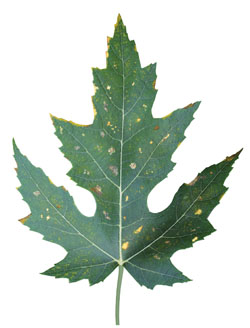 Plants use magnesium to produce chlorophyll—the green pigment essential for photosynthesis. It also activates hundreds of enzymes and supports the transport of sugars from the leaves to the roots and fruit, directly affecting yield. In addition, magnesium helps regulate plants’ energy metabolism and increases their resistance to drought, heat and light.
Symptoms of magnesium deficiency in plants
Magnesium deficiency first appears on older lower leaves, which turn pale while their veins remain green. Leaves in the middle of the plant are then affected, developing rusty spots. The symptoms gradually spread throughout the plant. Magnesium deficiency may not become apparent straight away; it is most noticeable during flowering, when newly emerging flowers are affected.
- yellowing leaves in the lower and middle parts of the plant
- necrotic spots
- young leaves remain green
- dry leaf edges
Why plants lack magnesium and what to do
When growing in soil, magnesium deficiency is rare. It is usually encountered in clay soils or when potassium, ammonia or calcium levels are high. When growing in pots, magnesium deficiency can occur when plants are watered with rainwater or filtered water. The easiest way to prevent magnesium deficiency when growing in garden beds is to regularly lime the soil with dolomitic limestone.
Unlike soil, hydroponic growing media (rockwool, coconut, perlite, expanded clay) do not contain magnesium, so it must be supplied along with the other nutrients in the form of fertilisers. If you use soft, distilled or reverse-osmosis-filtered water for watering, you need to add CalMag to the nutrient solution and increase the EC to 0.2–0.4 mS/cm.
Would you like to learn to grow like the professionals, or are you looking for the latest news from the world of indoor and outdoor growing? You can find all this and much more on the Higarden blog.
Leaf photo: canna-cz.com