
How to fertilise correctly?
If you want to support your efforts in plant cultivation as much as possible, fertilising is an absolutely essential and key part of it. It may seem complicated to some, but it is not rocket science. Let us look together at the basic rules which, if followed, will have you cheering over your harvest.
Fertilisers usually contain three basic nutrients, abbreviated as NPK (N - nitrogen, P - phosphorus, K - potassium). In the vegetative stage of the plant, a sufficient amount of nitrogen (N) is needed, which supports growth and the formation of strong green parts of the plant, namely stems and leaves. This is made possible mainly by nitrogen’s ability to form chlorophyll, which is responsible for the proper course of photosynthesis. Phosphorus (P) is important in the vegetative stage mainly for healthy growth of the root system. When growing outdoors, the growth stage usually lasts longer; in indoor conditions, it quickly moves into the flowering stage. Plants begin to flower either on the basis of photoperiod (according to day length) or depending on their age. In this case, flowers and fruits begin to form once the plant is sufficiently mature. When moving into the flowering stage, we reduce the supply of nitrogen in favour of potassium (K) and phosphorus, which support abundant flowering and increase yields. Potassium then helps in the formation of important compounds in the plant and at the same time improves overall resistance to disease and stress.
.jpg)
In addition to a lack of nutrients at a given stage, we must also watch out for over-fertilising. In an effort to “treat” their plants, it can easily happen that we over-fertilise them and thereby destroy them. Each plant is only able to absorb a certain amount of nutrients; the rest remain in the substrate and salinise it. It is therefore necessary to follow the recommended doses from fertiliser manufacturers and not try to improve things for the plants in good faith. Moreover, if you use special substrates, they are usually pre-fertilised for the first 2-4 weeks of growth, so fertilising only begins after this period. For the correct dosing of nutrients in certain stages of plant development, it is not necessary to calculate the ratios of individual components in a complicated way, but you can use a wide range of organic and mineral fertilisers exactly according to your requirements and cultivation method.
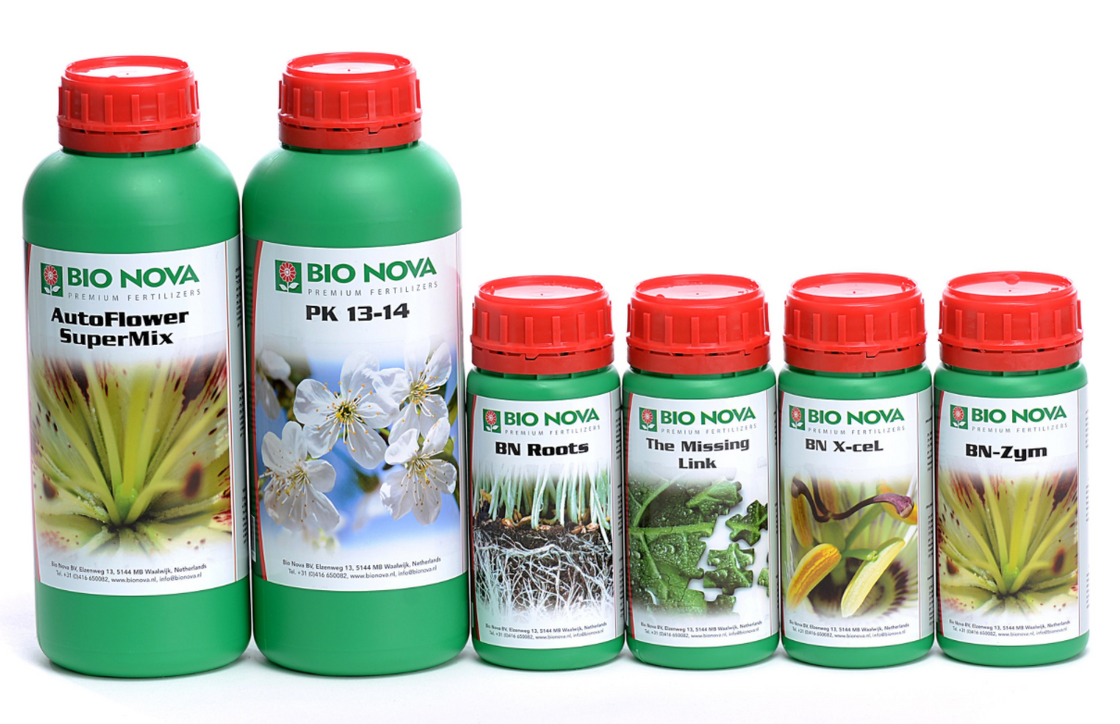
A new addition to our range is fertilisers from the Dutch company Bio Nova, which are environmentally friendly, easy to use and ensure high yields. The Bio Nova dosing tables will help you with precise fertiliser dosing, so you do not have to worry about over-fertilising or, conversely, a lack of nutrients. We also offer fertilisers from the brands: Plagron, Advanced Hydroponics, BioBizz,Canna and many others.