
What not to forget when making your first purchase at a grow shop
Legalisation is fast approaching, and more and more of you are asking which grow box to buy and how to equip it. Anyone who has read the guide to their first purchase on the Higarden blog knows that without grow lights, ventilation, substrate and fertilisers, nothing will grow. However, that is only the absolute basics. To avoid unnecessary mistakes and disappointment, it is worth thinking through every detail when making your first purchase. In this article, we will look at equipment that beginners often forget.
Measure twice, cut once
 Remember that your grow tent should last for many years. Therefore, before you decide on one, it is better to think everything through twice. It goes without saying that the grow box should fit into your room, but otherwise the rule is that the bigger, the better. In a larger space, it is easier to maintain the correct microclimate and there are no such fluctuations in temperature and humidity. In a spacious grow box, plants have more room to grow and do not shade one another, so they make better use of the light from grow lights.
- Grow box 60 x 60: The absolute minimum if you want to grow anything other than a few herbs for the kitchen. You will probably not get much out of a small “sixty”, but everything you need will fit inside.
- Grow box 80 x 80 cm to 100 x 100 cm: A skilful grower can make use of every centimetre of space, and you can easily grow three plants in a medium-sized tent.
- Grow box 120 x 120: The gold standard among growers, easily large enough for three nice plants with plenty of room. Suitable for LST or weaving into nets.
- Large grow boxes: The largest grow boxes can resemble a small room and are probably a little too much for growing within the limit. However, if your dream is your own indoor garden, where you will grow enough tomatoes for yourself and a wide circle around you, you will find everything you need at Higarden.
You may also be interested in: My first grow box
Do not forget that you will need accessories to install the equipment in the grow box. To hang lights and fans, you will need several hanging ropes with a hook (rope ratchet). You will also need several metres of ventilation ducting and metal cable ties to tighten the joints. Your basket should also include binders for securing electrical cables and universal textile tape (duct tape). It will easily seal joints and repair small tears in the ducting. For one medium-sized grow box (80x80 to 120x120), you will need approximately:
- 4 x rope ratchet (2 for securing lights, 2 for the extract fan)
- 3 x cable tie
- 3-5 metres of ventilation ducting
You may also be interested in: How to choose ventilation ducting for a grow box
Climate control
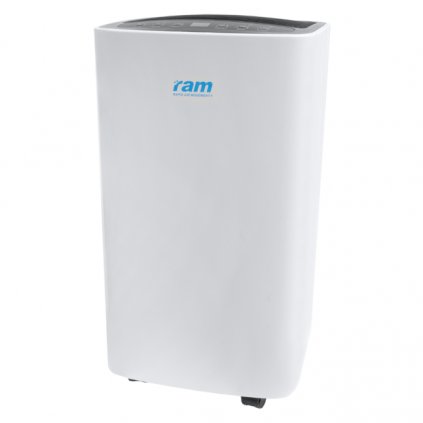 In the advice articles on the Higarden blog, we have repeatedly emphasised the importance of climate control in indoor growing. Many beginner growers underestimate how much water their plants “sweat” through transpiration. This is especially true during the vegetative growth stage, when they can consume several litres of water per day. It is easy for relative humidity to rise too high, even if you ventilate the room with the grow tent regularly. A humid environment then becomes an attraction for mould spores, especially botrytis (Botrytis cinerea), which causes flower rot. The best solution for keeping humidity under control in the growing area is to place an air dehumidifier in the room with the grow box. Set it according to the current growth stage of the plants. Sensors in dehumidifiers are usually reliable, but you should still monitor the humidity in the growing area with a thermometer with a hygrometer.
- 65-75 % for seedlings and cuttings: High air humidity prevents young plants from dehydrating, especially because they cannot rely on well-developed roots for water uptake. It also allows them to focus their energy on developing a strong root system instead of constantly trying to find water.
- 55-65 % during the vegetative growth stage: Plants in the vegetative growth stage grow very quickly and need a high nutrient intake. Therefore, it is recommended to maintain a higher temperature and humidity in the growing area, which speeds up photosynthesis and nutrient uptake without encouraging mould development.
- 40–55 % during flowering and before harvest: During flowering, keep humidity around 55%, and as harvest approaches, reduce the humidity in the growing area to the lower limit. This will prevent mould formation and support resin production.
Most indoor growers have more trouble with excessively high humidity than with dry air, but that can happen too. If the relative humidity in the growing area is below 40% for a long time, plants will evaporate water faster than the roots can absorb it. This will force them to close their stomata and slow down photosynthesis, which will show itself in slow growth, small flowers and nutrient deficiencies. In such a case, the humidity in the growing area can be increased with a humidifier.
You may also be interested in: What are the ideal conditions for indoor growing?
Measuring instruments
When growing indoors, you cannot do without fertilisers, and most of them require precise dosing. In theory, you can follow the dosing tabl