
What is vermiculite and how to use it?
On the market for products for indoor and outdoor gardening, a wide range of substrate enhancers is available, and in such quantities that it is certainly worth introducing a proven helper for easier orientation, which growers of all categories commonly use as an additive to substrates.
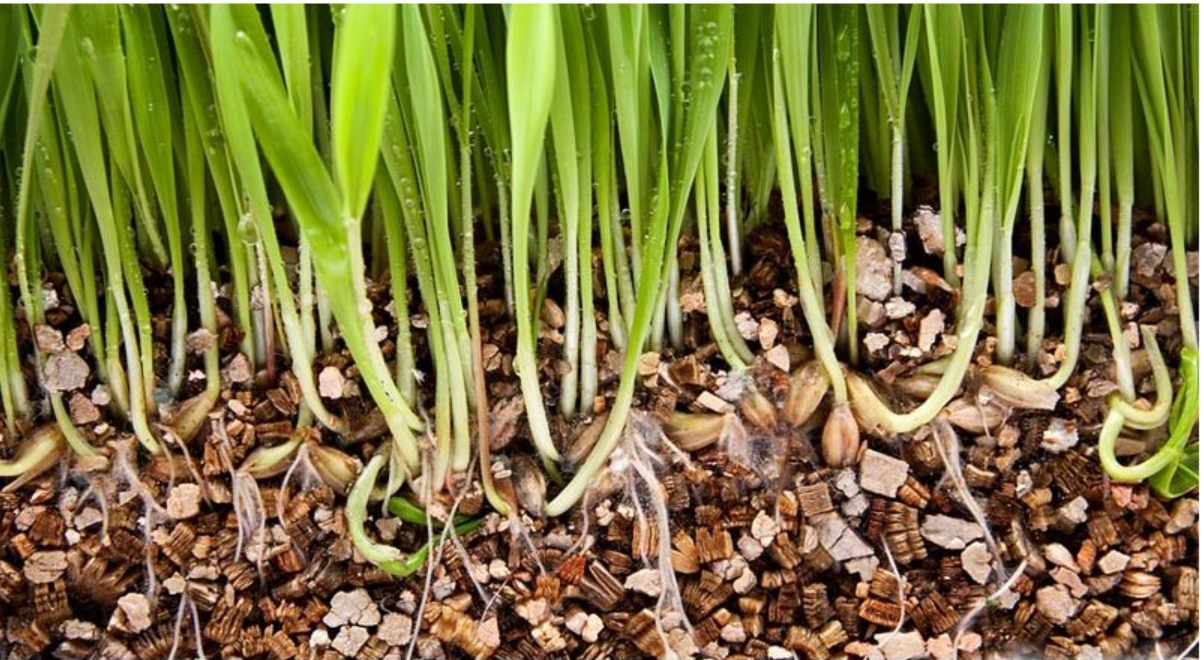
- First, let us answer the basic question from the title of this article: under the term vermiculite there is a natural mineral of mineral character, in other words a rock that is mined all over the world.
- The traditional Czech product from Grena is made of vermiculite originating from South Africa.
- Vermiculite has no odour. It neither smells nor stinks. It is a pure mineral, intended for universal use and effective enrichment of soil, just as it is common to use other additives such as perlite, which it also fully replaces.
- The basic property of vermiculite is its considerable absorption of water, which it then gradually releases to plant roots. After all, it is for this property that this sterile mineral has become popular with gardeners, especially on hot summer days.
- Vermiculite not only retains water excellently, but also gradually releases nutrients that we supply to the soil through fertilisers.
- Once you add vermiculite to the soil, you will ensure better management of fertilisers and lower water costs!
- Another advantage of vermiculite is its high resistance to mould.
- Another property in which vermiculite excels is its ability to multiply its volume depending on the temperature. In other words, it expands when heated. This property is used in the production process, when vermiculite undergoes a process of exfoliation, and thus becomes sterile.
- Unlike similar mineral substances, you will not find any asbestos in vermiculite.
- This rock is very popular in the world of gardening, as in practice it replaces perlite, sand and peat at the same time. Among other things, it enriches plants with magnesium, calcium and a whole range of other trace elements.
- We already mentioned above that vermiculite is especially useful in hot summer months. During this period, it is not only drought and heat that threaten the root system of plants, but we must also not forget the intensity of sunlight. The same applies when growing indoor, for example in a grow tent, when the growing space is filled with radiation generated by a source of artificial lighting with high intensity. Thanks to the fact that vermiculite acts as a natural insulator, adding it to the soil also helps prevent scorching of the plants, or rather their roots, which it helps protect.
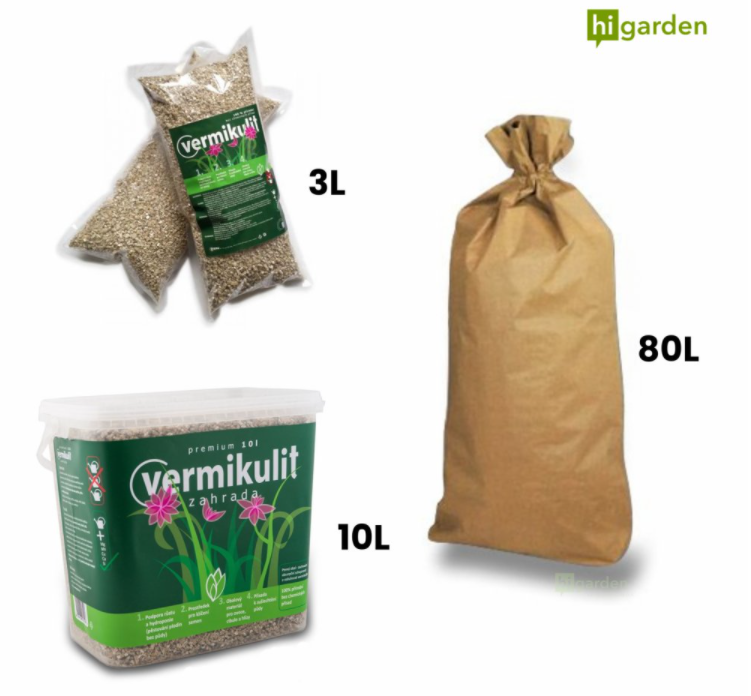
Practical uses of vermiculite:
- Additive for substrates for houseplants. If you grow houseplants, mix vermiculite in a ratio of 30% vermiculite and 70% substrate.
- Seed germination. During germination, vermiculite can be used on its own.