
Grow Three Plants Outdoors – Part 5: Protecting Plants from Pests
In the second half of June, astronomical summer begins and the outdoor season gathers pace. Rising temperatures and sunny days, however, do not favour plants alone, but also insect pests. In Czech gardens and greenhouses, we most often encounter slugs, spider mites, whiteflies and various types of caterpillars. In the fifth part of the series “Grow Three Plants Outdoors”, we will tackle the most common insect pests in Czech gardens.
In the previous part, we focused on fertilising during the vegetative phase and learned how to water and trim plants correctly. If everything goes according to plan, your plants should have large leaves with a healthy green colour and grow like mad. What can threaten them, however, are insect pests. When growing outdoors, it is practically impossible to avoid them. That is why prudent outdoor growers usually use a range of preventive measures and do not wait until an infestation breaks out.
A good practice is to place sticky traps around the plants, which help monitor pest occurrence and also serve partly as a protective barrier. Different colours of sticky traps attract different types of insects. Preventive protective insect sprays with natural pesticides are also effective in outdoor cultivation. A good practice is to plant companion species around beds, which attract natural insect predators and repel pests. These are often fragrant herbs that you can use in the kitchen!
Slugs
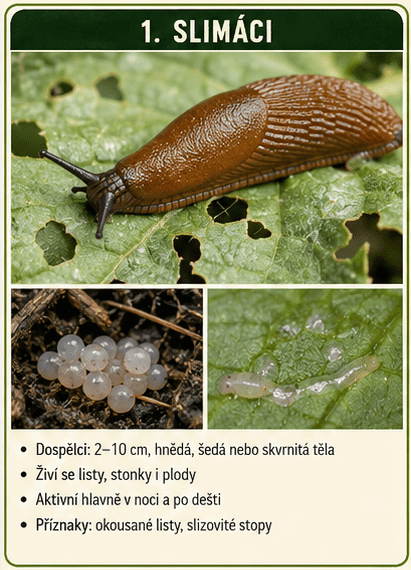 Slugs can be found in practically every garden, and they pose the greatest danger especially to freshly transplanted seedlings and young plants. Slugs feed on leaves and are most active at night after rain or after the garden has been watered. You can easily recognise slugs on plants by chewed leaves and slimy trails.
Prevention against slugs consists of minimising places where they can hide from the heat and breed. You can often find slug eggs under stones, old pieces of wood or even under saucers beneath pots. The fewer such places there are, the smaller the number of slugs in your garden will be.
Protection of plants against slugs in the form of copper tape is most effective when growing in pots and raised beds. It also helps to scatter sawdust, sand or ash around the plants, or to plant species with a strong scent along the edge of beds, such as lavender, thyme or garlic.
A proven remedy against slugs is non-toxic slug pellets based on iron, which only need to be scattered around the plants. Biological plant protection against slugs in the form of nematodes of the genus Phasmarhabditis is also effective.
You may also be interested in: Complete guide to slugs
Spider mites
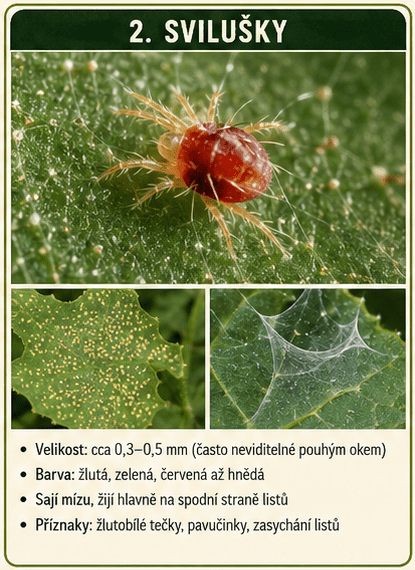 Spider mites are insect pests that many growers fear more than any others. These tiny spider-like creatures reproduce incredibly quickly, cover leaves and flowers with fine webs, suck sap and get into every fold of the plant. If the grower does not intervene in time, spider mites are capable of destroying a crop within a few weeks. Spider mites are very small (about 0.4 mm) and are easy to overlook at first. They usually live under leaves and are revealed by tiny yellow-white dots on the leaves and fine webs.
Prevention against spider mites in outdoor cultivation is largely based on supporting the plants’ natural defence mechanisms. Plants grown outdoors are to some extent protected by wind and regular rain, which mechanically remove spider mites from the plants. Natural spider mite predators, such as ladybirds, various mites or spiders, also help. A healthy garden with diverse life is therefore the first defence against spider mite multiplication.
Protection of plants against spider mites in the form of preventive sprays is usually a better solution than allowing the pests to settle on the plants. Effective natural sprays against spider mites are oil emulsions (Biocont NeemAzal, Rock Effect) or universal natural protective sprays and soaps (BioBizz Leaf Coat, Canna Cure, NATURA, BHB MM, Spider Plant). Apply the preventive spray to the plants regularly according to the manufacturer’s recommendations throughout the vegetative cycle.
A proven remedy against spider mites is chemical sprays against spider mites and sucking insects called acaricides (Biocont PREV-GUARD, AgroBio Karate, SmC Spidermite Control, Agro Sviluška STOP, Spruzit Pest Free, Nissorun). These pesticides often have a long pre-harvest interval, and when growing medicinal plants they must be used only on parts of the plants that are not intended for consumption and only during the vegetative period. Before use, always familiarise yourself thoroughly with the risks of the product in question.
You may also be interested in: Complete guide to spider mites
Aphids
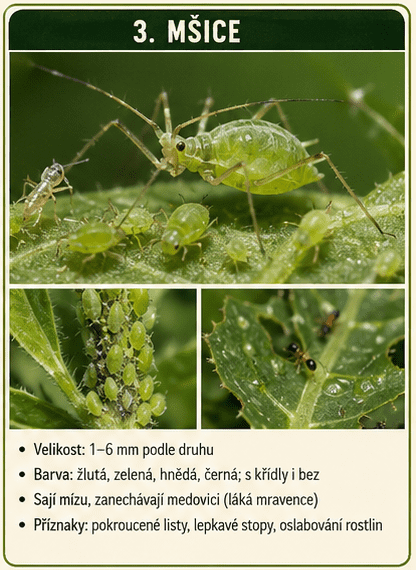 Aphids is a collective term for a genus of insect pests with many specific subspecies. In our gardens, we most often encounter aphid species living on leaves, where they suck sap, weaken the plants and transmit diseases and pathogens to them. Adult aphids grow to 4–6 millimetres, are usually coloured from yellow through green to brown depending on the species, and may or may not have wings. Aphids often live in symbiosis with ants, which drink honeydew, the sweet secretion left behind by aphids. A typical sign of aphid infestation is curled leaves and sticky traces.
Prevention against aphids outdoors is similar to that for spider mites. Healthy plants and a diverse garden are the first and most important line of defence. Aphids have a wide range of natural enemies, from ladybirds, through hoverfly larvae, lacewings, predatory bugs to parasitic wasps.
Protective natural sprays against aphids are an effective preventive measure, as in the case of spider mites and other insect pests (see above).
A proven remedy against aphids is chemical insecticides against sucking insects. However, aphids quickly develop resistance to them, and chemical pesticides should never be used outside the vegetative period. Before use, always familiarise yourself thoroughly with the instructions for use and the risks of the product in question.
Whiteflies
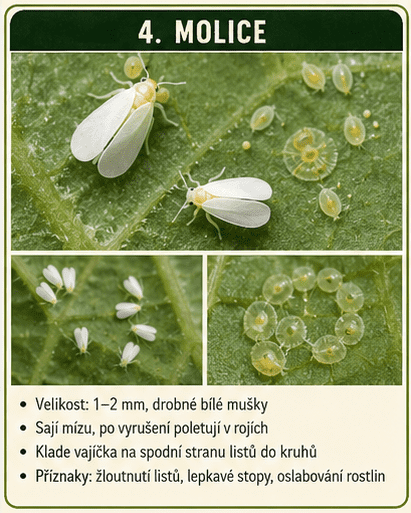 Whiteflies (Aleyrodidae) are tiny white flies related to aphids that also feed by sucking sap. In outdoor cultivation, whiteflies are most commonly found in greenhouses, but we also encounter them when growing in raised beds and pots. Adult whiteflies are not hard to notice. The 1–2 millimetre flies usually flutter close to the plants or sit on the leaves. Whiteflies characteristically lay their eggs on the underside of leaves in a circular arrangement.
Prevention against whiteflies outdoors consists of regular sprays and caring for the garden’s biodiversity, as with other pests (see above). Whiteflies are attracted to the colour yellow, and yellow sticky traps are an effective way to identify and partly slow down an infestation.
Protective sprays against whiteflies are most effective in the form of plant oils, especially those containing Indian neem (Biocont NeemAzal).
A proven remedy against whiteflies is chemical insecticides against sucking insects, taking into account all the specifics of their use (see above). However, it is unusual for whiteflies to threaten plants to such an extent that it is necessary to resort to such drastic measures.
Caterpillars
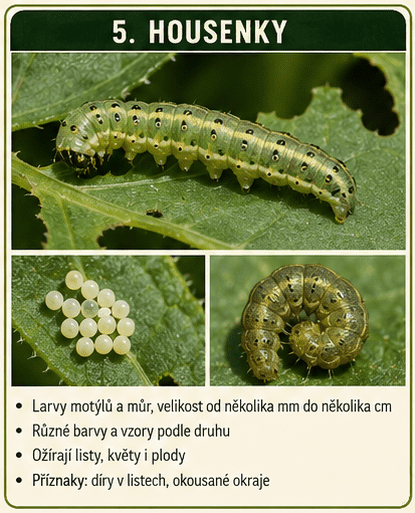 Caterpillars are the larvae of butterflies and moths that feed on plant leaves and are a common problem in field cultivation. In home gardens, caterpillars only rarely multiply excessively and usually do not pose a serious problem for growers.
Prevention against caterpillars consists of following the principles of integrated plant protection (IPM), that is, caring for the garden, regular sprays and proper plant nutrition.
After today’s short detour into the insect kingdom, in the next part of our series we will return to cultivation. We will talk about how to care for plants before the start of flowering so that they reward us with the richest possible harvest in autumn.