
Why and how to maintain a stable temperature of the nutrient solution?
Are you interested in hydroponic cultivation of plants, or have you been practicing it for some time? If you are encountering mold in hydroponic systems or if your plants are not growing as vigorously as they should and the quality of harvested flowers or crops is disappointing, you may have underestimated the importance of the optimal temperature of the irrigation solution (nutrient solution). With the correct and stable temperature of the nutrient solution, you can prevent these risks.
If you read our blog regularly, you know this is not the first time we emphasize quality irrigation in every respect, starting with what water you use to water your plants. Especially in hydroponics, water quality and the nutrients dissolved in it play an absolutely crucial role and are the foundation of successful cultivation both in indoor as well as outdoor environments. Besides water filtration we monitor pH and EC of the nutrient solution, which is made possible by pH and EC meters. (You can also read the articles: Which pH to choose for the nutrient solution and Electrical conductivity of the solution – EC). Filtration, pH, EC – but what about temperature? Many growers still forget how important its stability is.
Nutrient solution temperature vs. dissolved oxygen
This is doubly true for recirculating hydroponic systems such as NFT, Ebb & Flow, Atami Wilma etc.). Especially with these hydroponic methods, practically every degree Celsius outside the ideal temperature range becomes a problem that will later negatively affect your results.
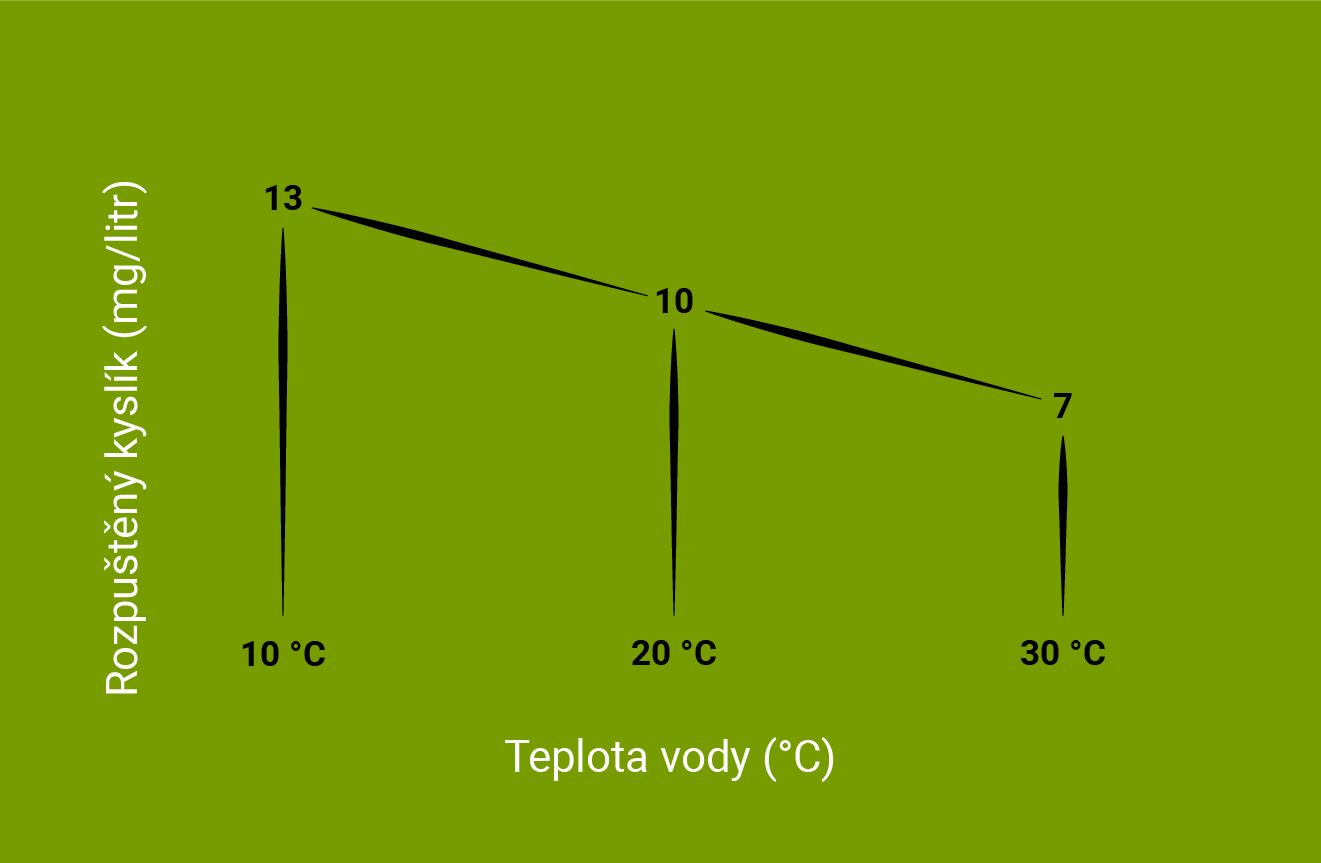
We will get to ideal temperatures shortly. Now let's explain the important relationship between water temperature and the amount of dissolved oxygen in it — and, as is known, plants need as much oxygen as possible for healthy, vigorous development. As you can see in the graph, there is a proportional relationship between water temperature and the amount of dissolved oxygen.
The following factors cause less oxygen to dissolve in water:
- Rising temperature
- Amount of dissolved substances
- Atmospheric pressure
Temperature, which most affects the final oxygen saturation of the water, together with the amount of substances (nutrients) dissolved in it, can — unlike pressure — be influenced quite well. And that's good, because if the nutrient solution temperature is consistently too high or too low, plants will likely be weakened and thus unable to fully express their potential. Therefore, with correct nutrient solution temperature you can in most cases avoid the inevitable consequences leading only to below-average yields.
Consequences of a long-term high nutrient solution temperature:
- The amount of dissolved oxygen in the water decreases. Insufficient oxygen supply negatively affects root system development, plant growth, overall health, and final quality.
- Nutrient solution, when its temperature remains above the optimum for extended periods, significantly increases the risk of fungal or bacterial diseases in plants.
- High nutrient solution temperature combined with intense lighting, whether artificial or sunlight, often results in algae growth. Algae then consume even more oxygen.
Consequences of a long-term low nutrient solution temperature:
- Slow plant growth.
- Plants may suffer from undernourishment because they cannot absorb the required amount of nutrients from an overly cold nutrient solution.
Watch out for temperature fluctuations — stability first
Regarding water temperature, or rather nutrient solution temperature, we have detailed the risks associated with both extremes. Another serious and frequent problem in growing herbs, agricultural crops or other types of plants is frequent changes in water temperature, which cause unnecessary stress — rather, shock — to the plants.
So avoid temperature swings at all costs! Try to keep the nutrient solution temperature with as little fluctuation as possible so your plants can grow steadily and remain vital until harvest.
With this important notice we touched on the topic of plants and stress, which we dedicated a separate article to: Stress harms plants: Abiotic plant stresses
What nutrient solution temperature should be maintained in hydroponic systems?
It depends on the water source, but also on the surrounding environment.
First of all, measure the temperature in the water reservoir. The reservoir may be external or part of a recirculating hydroponic system. When measuring, remember the old saying "Measure twice..." and, to be safe, measure the reservoir temperature several times. Measured values can vary depending on the current time of day. Combined pH meters that can also measure temperature will become a reliable assistant for frequent measurement of nutrient solution temperature, so you'll always have all these important irrigation values under control. For measuring temperature alone, a classic water thermometer may suffice.
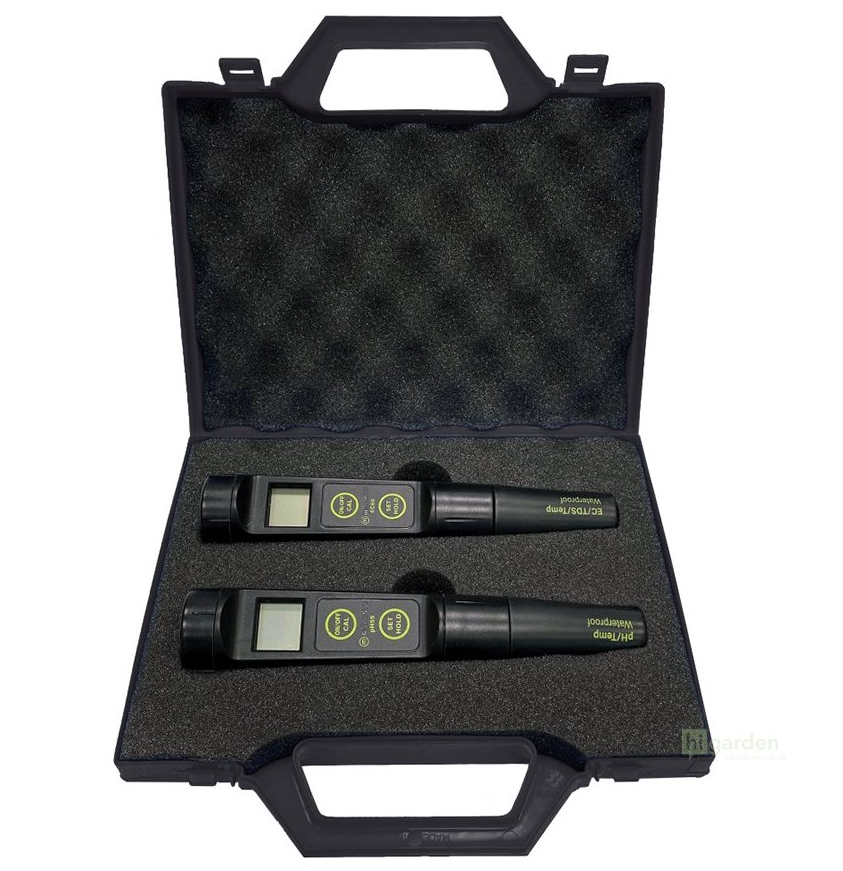
Combined measuring options including temperature are offered, for example, by the very popular meters in a practical case from the reputable manufacturer Milwaukee KIT – Martini pH55 + EC60. For hydroponics purposes it is perfect also because it can measure TDS (Total Dissolved Solids), i.e. the total amount of salts dissolved in the nutrient solution.
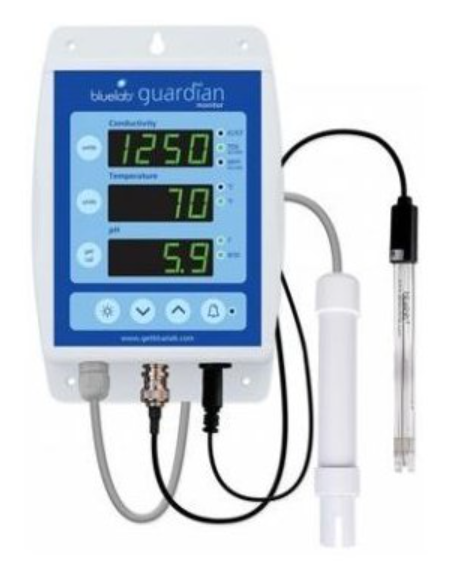
If you appreciate a more technically advanced combined device already labeled as a monitor, we recommend the Bluelab Guardian Monitor for monitoring acidity, conductivity and temperature of the nutrient solution. Its undeniable advantage is the ability to set an alarm that will automatically notify you whenever the values stray from normal.
Now we reach the core of the matter: the recommended nutrient solution temperatures for hydroponic cultivation of plants. We would like to give you exact numbers, however even if you look elsewhere on the internet the recommended hydroponic values may vary slightly. The experience of professional growers is clear: the most important thing is to observe how your plants perform and respond flexibly to changes. Still, you can use the following information as a starting point.
- Nutrient solution temperature in recirculating systems: approximate minimum 15 °C, approximate maximum 26 °C.
- A range of 20–25 °C provides the correct temperature for healthy root system development in hydroponic cultivation. And as you probably know, a healthy root system is the basis of any decent yield.
- It is generally true that at temperatures exceeding 25 °C parasitic fungi (oomycetes) of the genus Pythium develop.
What to do if you measure incorrect temperatures?
If your thermometer, meter or monitor shows values significantly outside the stated range, action is required. The nutrient solution temperature can be influenced either directly or indirectly.
Indirect adjustment of nutrient solution temperature
Indoor growers have it a bit easier than growers who practice hydroponics in outdoor conditions. In a grow tent there are several ways to change the temperature in the grow space and thus influence the reservoir temperature. Here they are:
- Switch to a different type of lighting as needed depending on heat emissions.
- LED fixtures, CFL energy-saving lamps or CMH lamps emit less heat.
- HPS and MH lamps emit considerably more heat.
- Use heating inside the grow box or, conversely, an air cooler.
- Bring cold or warm air into the grow environment using a fan.
Direct adjustment of nutrient solution temperature
A direct solution is clearly more effective for adjusting the reservoir temperature, since you do not need to change other growing environment parameters.
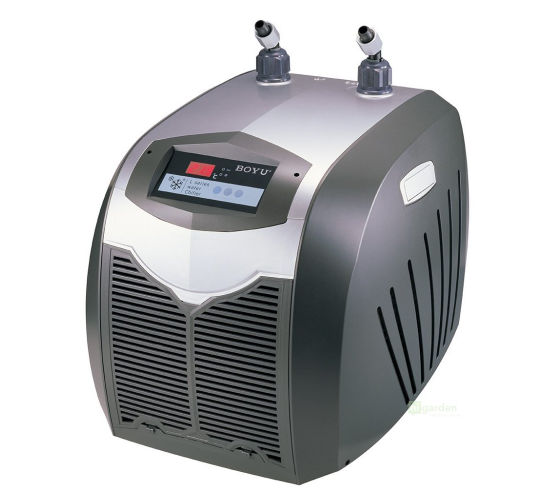
- Easy optimization of reservoir water temperature is possible with digitally controlled reservoir cooling, i.e. a chiller. It is a water flow device regulating temperatures on a scale from 18 °C to 35 °C. So whether you are fighting low or high temperatures, simply connect the chiller to the reservoir or hydroponic system and a constant nutrient solution temperature will become a matter of course! Chillers from the traditional brand Boyu are also not particularly noisy and, with reasonable care, will please you with long life. They are available in four variants, which you should choose based on water flow and recommended reservoir capacity in addition to price.
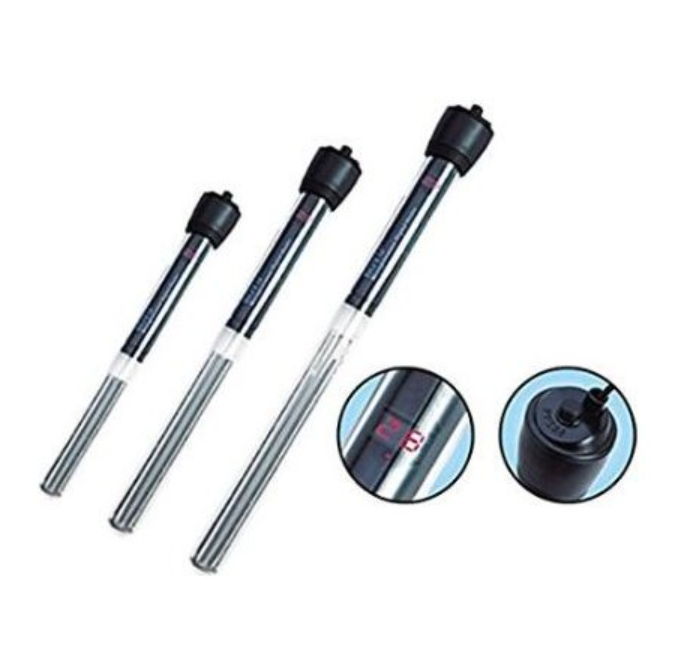
- The proven BOYU submersible reservoir heater is equipped with a built-in temperature controller (thermostat), so you can easily set the desired temperature simply by turning the control knob. You can choose variants with power 100 W, 200 W, or 300 W.
Whether it's choosing cooling, heating or any other question regarding the correct nutrient solution temperature or hydroponics in general, we look forward to your questions at the usual email address info@higarden.cz.
We also recommend these products:
- TECO HY-500 - reservoir cooling and heating
- Atami WILMA Small - 4x6L, 60x60x20cm
- BioNova Hydro Supermix
Further reading:
- Torus Hydro perfectpH: revolutionary pH stabilizer
- TBOX: a new product worth it!
- Hydroponics made easy: drip irrigation (drip)