
What is a maintenance solution (KCl) used for?
With the exception of organic plant cultivation, a grower cannot do without regular and precise measurement of pH. In this article we will advise you how to extend the life of a pH meter probe by multiples and how to ensure long-term accurate results for every measurement. Did you know it is very important that your pH probe does not dry out? If it does not remain moist, you will not be able to calibrate the pH meter and pH measurements will be distorted. Read why and how to use storage solutions!
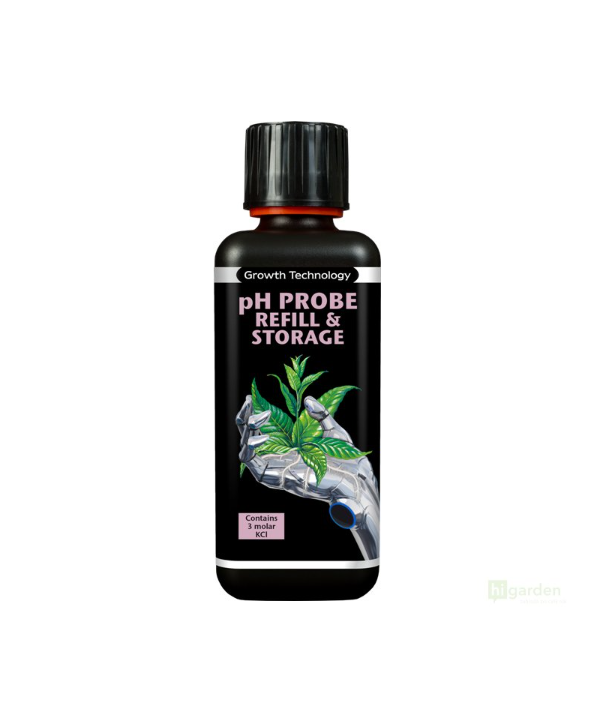
Generally, all manufacturers provide only a 6-month warranty for probe lifespan because it is impossible to verify whether the customer uses a storage solution. For that reason it is especially important to use a storage solution so that your probe serves you as long as possible even after the manufacturer-guaranteed period has expired.
The function of an electrolyte-based storage solution is to keep the gel layer of the pH-sensitive and so-called porous membrane hydrated. Simply put, it prevents the probe from drying out.
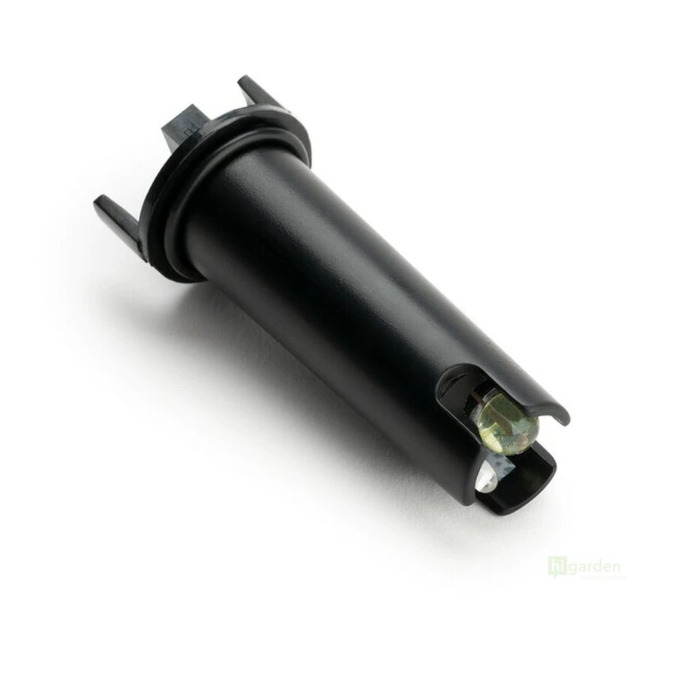
On a new probe for pH meters you will typically find a small cap on its tip, a filling cap that contains a storage solution. The filling cap should be kept for future use. If you notice small salt crystals around the seal of this cap, it is not a defect. Chemically this is harmless potassium chloride. The cap should be tightened by hand and any excess salt can be rinsed off with tap water.
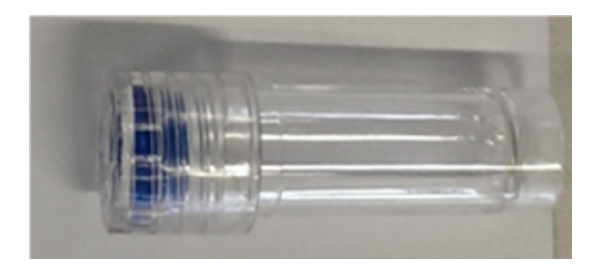
The image shows an example of a pH filling “cap”, usually supplied with all pH sensors.
You now know that the glass membrane on a pH sensor has a thin gel layer that must remain hydrated for the probe to stay functional.
If this gel layer is allowed to dry out, the probe's response to pH changes will slow down significantly, or it may stop responding at all, which of course we want to avoid. Long-term loss of hydration is often irreversible. If drying occurred only briefly, you can test the probe's response in pH buffer solutions. The probe should respond to a 3 pH change, for example from pH 4 to pH 7, in under 30 seconds.
The response of a pH probe can sometimes be improved by alternating exposure to a strong base and acid. The procedure is as follows:
- Immerse the probe for 10 minutes in 0.1 – 1M NaOH.
- Then immerse the probe for 10 minutes in 0.1 – 1M HCl.
- After regeneration, place the probe in a storage solution for another 15 minutes.
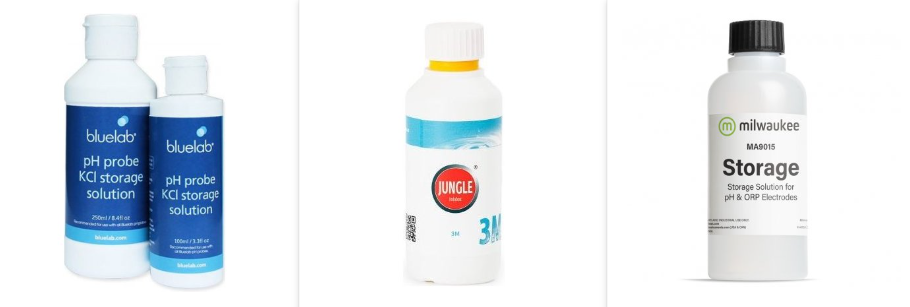
Why not save yourself the trouble and effort right away by using a storage solution? For inspiration, here are three proven storage solutions that our customers buy most often:
- Growth Technology KCL storage solution, 300ml
- Jungle Indabox 3M - KCL storage solution
- Milwaukee KCL storage solution, 230ml
When deciding how to store a pH probe, each part of the electrode assembly must be evaluated: the measuring electrode, the reference electrode, or a combined electrode. The storage duration should also be considered. There is a difference between long-term storage for weeks or months and short storage intervals between individual measurements.
Measuring electrodes can be stored dry for a long time. However, before using a measuring electrode, it must be hydrated for at least 48 hours in normal tap water or a slightly acidic solution to form the outer gel layer on the pH-sensitive membrane. Cleaning solutions are ideal for this purpose. Nevertheless, to be ready for immediate use, most manufacturers supply their measuring electrodes hydrated (see above).
Storing reference electrodes
For wet storage—which is compatible with long-term storage—there is nothing better than a quality storage solution. Never store reference electrodes dry—always keep them wet—because when dry the reference electrolyte slowly penetrates the membrane and crystallizes on the outer side of the electrode. Salt crystals themselves do not cause a problem, but the reference electrode could dry out completely, which would result in a significant increase in membrane resistance. Even if the reference electrode is later replenished with the correct electrolyte (storage solution - KCl), the high membrane resistance may not disappear immediately, causing large measurement errors or making measurement impossible. Therefore, when storing reference electrodes it is strongly recommended to keep them hydrated using a storage solution. However, avoid storing them in tap water or in distilled water. Any penetration of these liquids through the membrane will significantly increase the membrane potential, dilute the electrolyte concentration, and seriously distort subsequent pH measurements.
Storing combined electrodes
A combined electrode consists of a measuring electrode and a reference electrode joined into a single sensor. Storage conditions therefore must be suitable for both the measuring and the reference electrode. It has been found that the optimal storage liquid is a 3M KCl electrolyte, such as Growth Technology KCL storage solution. If the sensor is refillable, the filling port must be closed during storage.
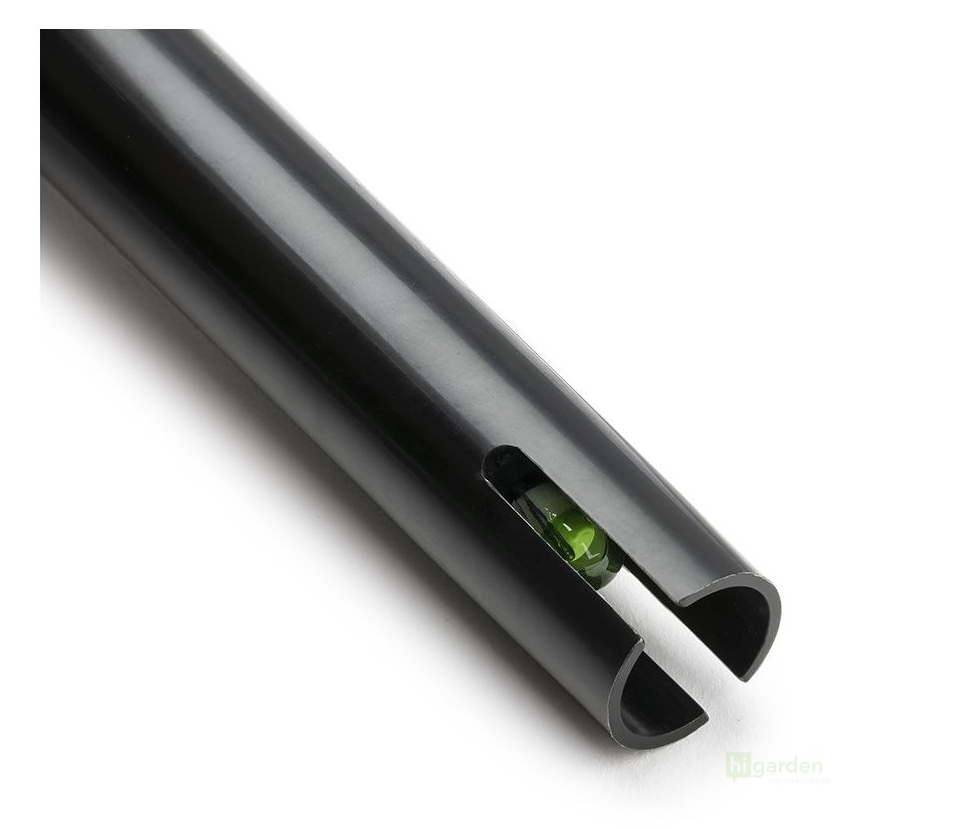
Everything explained above about storing reference electrodes also applies to storing combined electrodes. But beware of gel-filled combined pH sensors. These electrodes have no filling port and you must avoid drying their membrane at all costs! Therefore, gel-filled combined electrodes must be stored wet in a storage solution, which also applies to polymer pH sensors.
For completeness, when it comes to standalone EC probes, they should always be stored clean and dry. If you would like to ask us anything, we are here for you at the usual email address info@higarden.cz.
We also recommend these products:
- Measurement kits
- Replacement probes for pH and EC meters
- Aqua Master Tools P160 PRO, pH and TDS/PPM meter and thermometer
What to read next:
- How to use calibration solutions and pH meters?
- Hydroponics - what it involves and how to start?
- Does removing leaves make sense for a better yield?