
Pumps and Irrigation
 Water and Its Storage
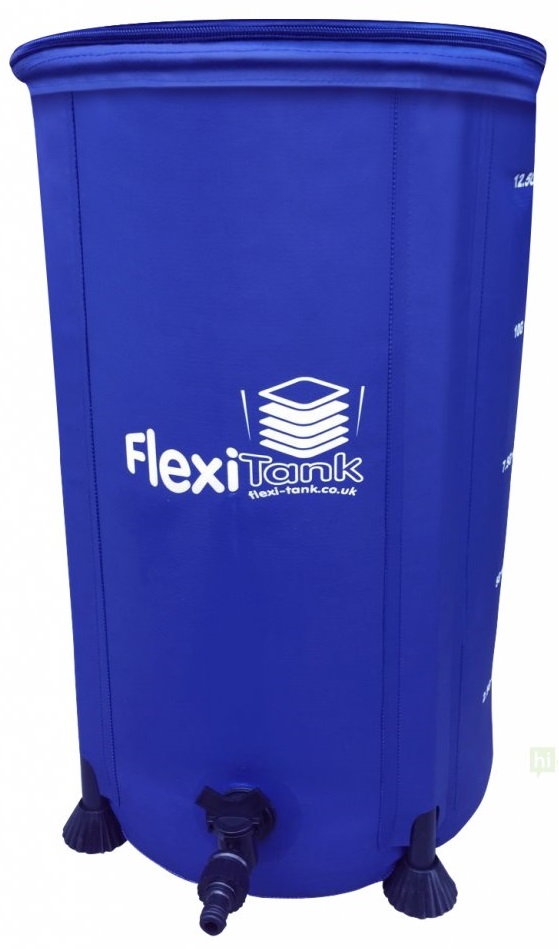
Water is becoming scarcer, so storing it makes sense. And why not make the most of a barrel or tank? Today you can find flexible tanks with a tap and quick connector from volumes of 25L up to 1000L, as well as plastic barrels and IBC containers. Then just add a water filter to remove impurities, a timer to control watering intervals, and assemble the distribution according to a prepared plan.
If you're thinking about watering your garden from a tank or barrel, the first decision is how you'll get the water to your plants. Besides watering cans, you can irrigate using a pump or by the very popular gravity-fed method. We'll look at the individual options in the following text.
Circulation Pumps and Submersible Pumps
If you've decided on irrigation using a pump, the following lines are mainly for you. First we'll look at how to work with pressure and head and what to consider when choosing a pump.
If you need one main value, this basic conversion will be useful: Head 10 m = pressure 1 bar
Next, you need to know that pressure loss occurs with certain pipe lengths. The following guide may be useful:
- Pressure losses in vertical runs are calculated like this: 1 m of vertical run = 1 m from the maximum pump head = 0.1 Bar
- Pressure losses in horizontal runs are calculated like this: 10 m of horizontal runs = 1 m from the pump head = 0.1 Bar
- Additional losses can arise from installing a filter, elbows and a non-return valve. Allow for a loss of 0.5 Bar.
Example calculation of required pump head:
Example calculation of required pump head:
Example configuration of a pump without regulation and filter:
- Well depth: 30 m - pressure loss 30 m from pump head = 3 Bar
- vertical runs above the well: 5 m - pressure loss from pump head 5 m = 0.5 Bar
- horizontal runs 60 m - pressure loss from pump head 6 m = 0.6 Bar
- required pressure at the most distant and highest draw-off point: 3.5 Bar = 35 m from pump head
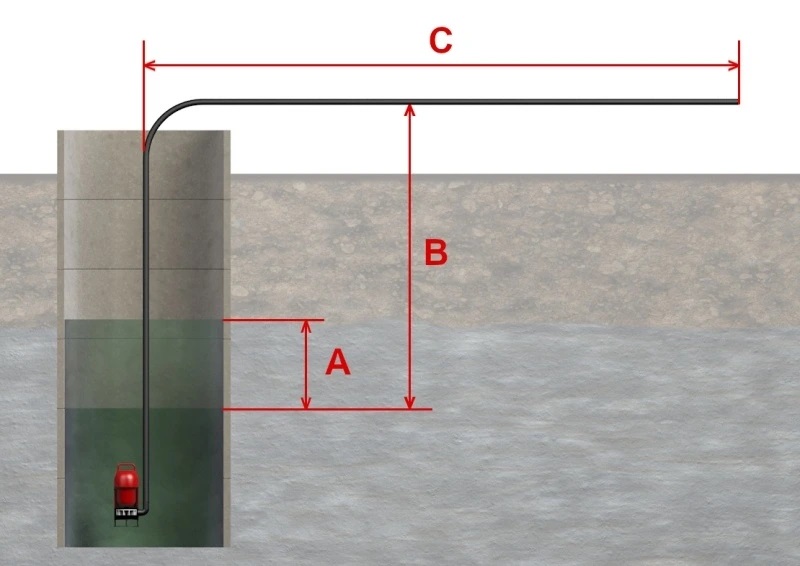
3 Bar + 0.5 Bar + 0.6 Bar + 3.5 Bar = 7.6 Bar * 10 = pump head 76 m
- A. Variable water level is already counted as part of the vertical distance
- B. Vertical distance
- C. Horizontal distance
 Gravity-fed Irrigation
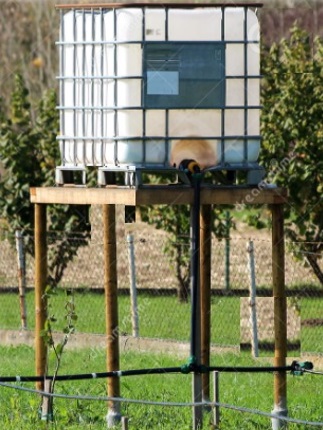
Don't have an outlet on the balcony or electricity at the cottage? Gravity-fed irrigation is for you. The key is to place the tank as high as possible to create sufficient pressure. An IBC tank of 1000 L placed 1 m above the ground has a pressure of 0.1 bar. Ideal placement is 1–2 m. For such pressure use distribution tubing with a diameter of 16–20 mm with a maximum length of 30 m. For branching we can use either tubing with built-in drippers at constant intervals or use branched dripline without drippers and install drippers at the required distances and flow rates. As the conditions show, sloped plots have a significant advantage when solving drip irrigation by gravity.
Solar Irrigation
If you can't use gravity feed due to lack of an elevated tank and you also don't have electricity, solar irrigation is a suitable option. The automatic solar irrigation SOL- C12 is ideal for balconies, small gardens and plots. It works wherever there is no mains water pressure or electrical connection. Unlike simple irrigation timers, it waters plants according to need, so they are not watered too little or too much. A 200 L barrel usually lasts up to 14 days. The more sunlight, the more IRRIGATIA waters. The system switches off at night.
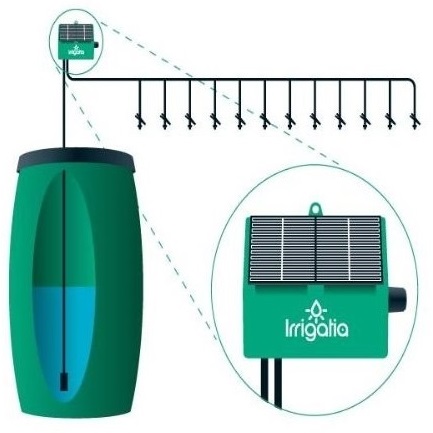
Capacity: 12 × 20 L pots or 12 × tomato plants or 24 × pepper plants or 36 × strawberry plants or 12 m of bed
The kit includes:
- solar panel
- pump
- 15 m irrigation hose
- 12 drippers
- T connectors
- irrigation needles
- 3× rechargeable AAA batteries
We also offer a solar irrigation system for a 24 m bed SOL-C24, for a 60 m bed SOL-C60 and for passionate growers we offer SOL-C120, which can water up to 2 beds of 60 m each.
Water Distribution
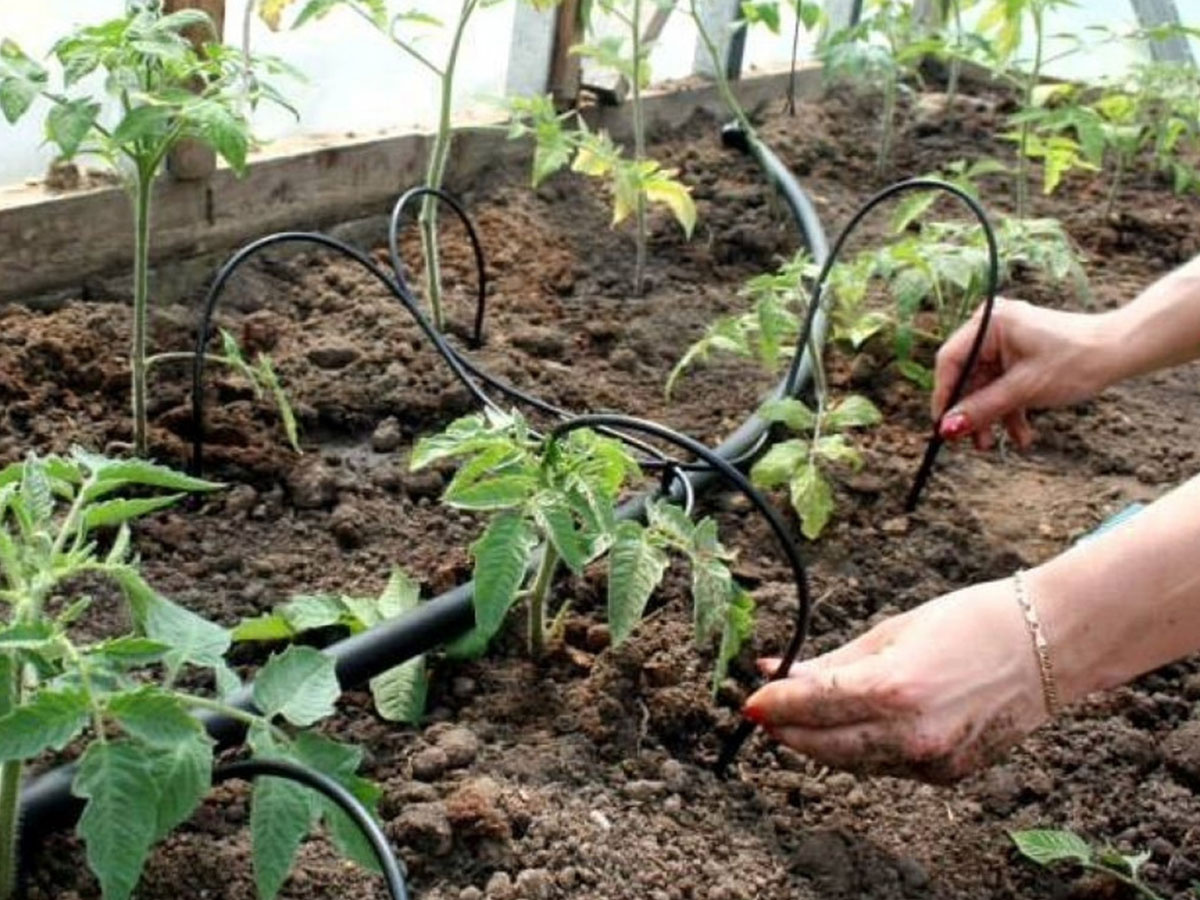
Storing water doesn't just mean keeping it in tanks and barrels, but above all saving it and using it sensibly. Regulating watering is therefore not only efficient for plants but also beneficial for you. Drip irrigation is very popular and easier to implement than it may seem. Using irrigation needles you deliver water exactly where it's needed. When choosing components it's always crucial to stick to the dimensions. So if you make the main distribution pipe with a diameter of 16mm, and branching of 6mm, it's important to choose couplings, elbows and taps for the main run in the 16mm size and all components in the branching in 6mm size. We definitely recommend measuring everything carefully and deciding on the layout. You'll save time and money. More on how to build your own irrigation system can be found in the article Hydroponics Made Easy: Drip Irrigation.
Irrigation Scheduling
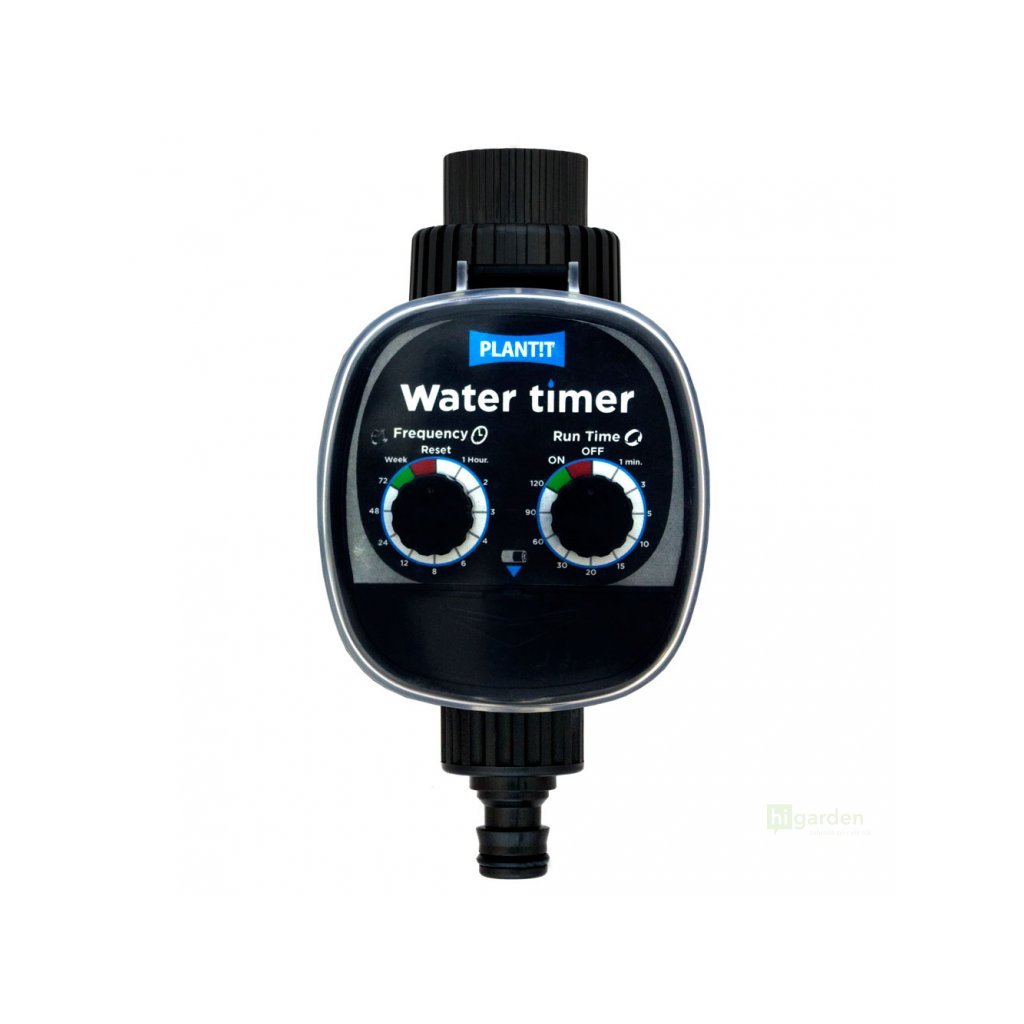
Whether you irrigate using a pump or by gravity feed, you'll need to control the irrigation. A flow timer and ideally a pump switching timer can help with that. Set irrigation ideally for early morning or evening when the sun is setting, but you can also water in the morning and evening. During flowering, especially for cucurbit plants, it's advisable to water in the morning so that spores are less likely to develop at night. There is a wide selection of irrigation timers: digital, analog, pressure-based, non-pressure... Our best experience is with the PLANT!T Water timer- Ventil s časovačem na závlahu. Intuitive settings and included accessories, including a filter, make it a 'Plug'n'Play' product. Switching timers suitable for pumps are, for example,
Do not hesitate to ask us anything you're interested in. We are happy to advise you on choosing specific products and their use. You can reach us at the familiar email address info@higarden.cz. We look forward to your questions!
We also recommend these products:
- Float switch for irrigation automation
- AutoPot Easy2grow 48 květníků vč. 400L Flexitank
- Round water barrel, including lid and valve
What to read next:
- How to Grow Outdoors?
- How to Grow in a Greenhouse?
- Hydroponics Made Easy: Drip Irrigation (drip)