
What are the developmental stages of a plant?
Today we have a botanical note that will be useful in your growing practice. The developmental stage at which a plant currently is located is important, among other things, for correct fertilizer dosing.

Plant development can be divided into the four phases listed below. For you as a grower, the two middle ones are particularly important for fertilization, namely the vegetative phase, i.e. the growth phase and the flowering or fruiting phase.
- Embryonic: cell division itself begins and plant tissues form as the basis of the future plant body.
- Vegetative (growth): this begins with seed germination and ends with the arrival of the first flowers after the stems and leaves have reached their maximum size. Depending on the plant species it usually lasts 3–16 weeks. In nature the end of the growth phase happens automatically (summer turns into autumn and the sun shines for a shorter time). However, if you grow plants in grow tents or in a growbox, the end of the growth phase is in your hands and is triggered by shortening the lighting period. You must effectively force the plant to stop growing by providing 12 hours of light and 12 hours of darkness each day. An honorable exception are autoflowering plants, so-called autoflowering, which start to flower automatically depending on their age. Within plant growth we distinguish three smaller phases: embryonic, elongation and differentiation. It is enough to know that cells in plants gradually divide and increase their volume, and these processes can be effectively supported with appropriate means, thanks to which you will achieve not only explosive plant growth but also greater vitality and immunity in young plants. The physiological processes in the plant associated with its growth require especially an adequate supply of nitrogen. You can add that to the basic growth nutrition. After seeds germinate and break through to the surface of the substrate, they become seedlings that are soon transplanted, for example from a propagator into larger pots, so they can fully develop their root system, through which they take up nutrients for further development until the end of the cultivation cycle. Therefore we warmly recommend adding a quality root stimulator to the watering during this period.
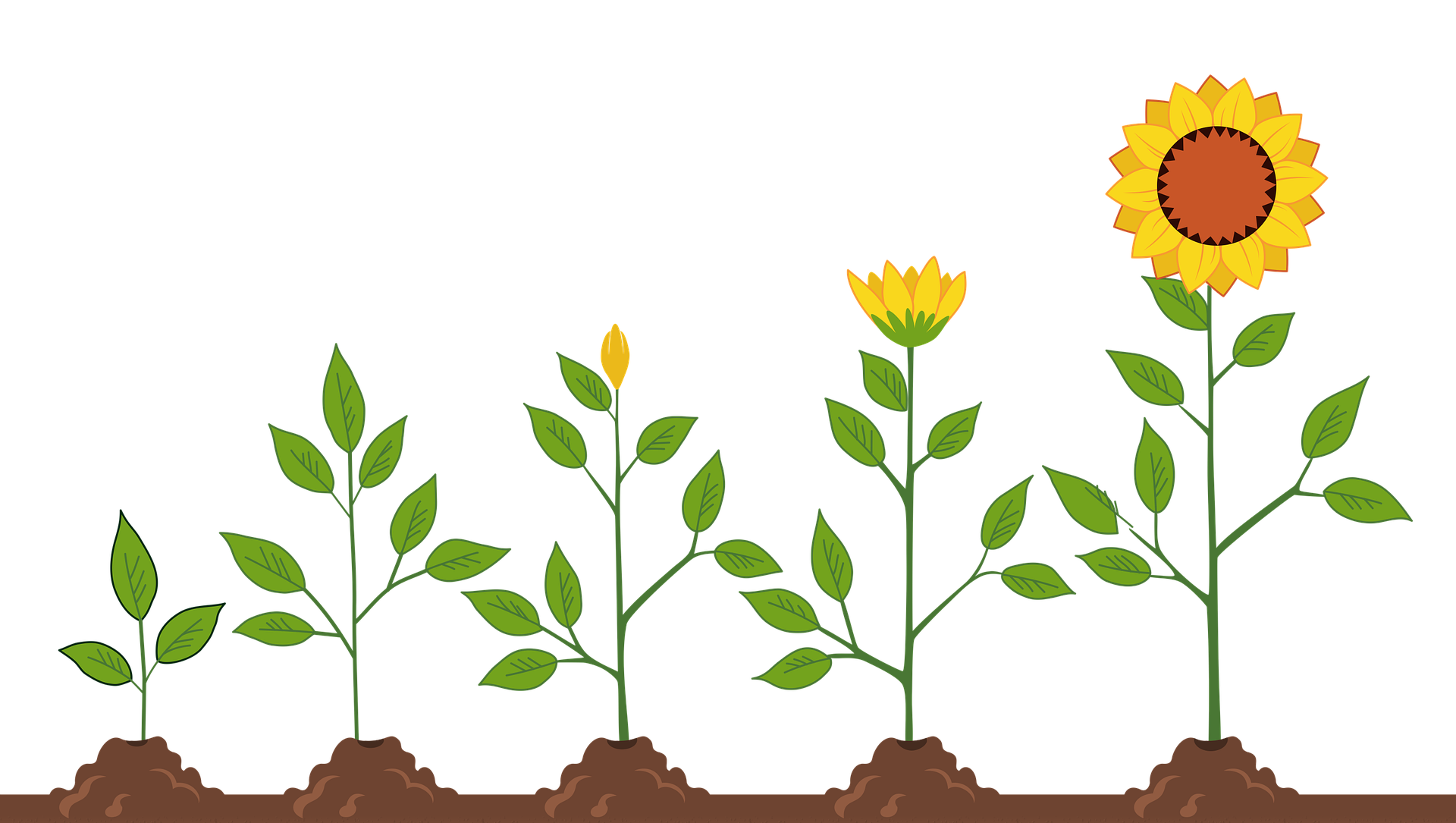
- Maturation (flowering): in this phase the plant's reproductive organs form, which leads to vegetative and sexual reproduction and the formation of flowers or fruits. In this phase plants consume the most phosphorus and potassium, and bloom fertilizers are adapted to these needs, as are bloom boosters or other supplements, for example enzyme-based products that support biochemical reactions in plants during this period, because a rich flowering and large, juicy fruits are, of course, what every grower wants this phase to end with. And when is a plant mature? As soon as its organs are fully developed.
- Aging: you no longer need to pay attention to this phase from a cultivation point of view, because you have already harvested. However, it is an opportunity to clarify terms like annuals, biennials and perennials. Plant organs naturally age and die during this phase, and those terms indicate the length of a plant's life from the initial cell division in the embryonic stage to this point.
We recommend these products:
- BioNova fertilizer sets - comprehensive nutrition for the entire cultivation cycle from a popular Dutch brand.
- BioNova Veganics - everything needed for both the growth and flowering phases if you want your yield to be 100% BIO.
- HERCULES - modern plastic pots that will make the journey from seed to beautiful flowers and fruits easier.
- LED sets – a tuned growbox complete with everything for multiple cultivation cycles and a fantastic yield.
You now know how the plant life cycle proceeds, and if you needed to clarify what and when a plant needs for its development, this article should be helpful. If you have any questions, we will be happy to advise you at the known address info@higarden.cz.
Further reading:
- How to support rooting and root growth?
- Cloning / cuttings
- How do bloom boosters work?