
What are NPK fertilizers and what are they used for?
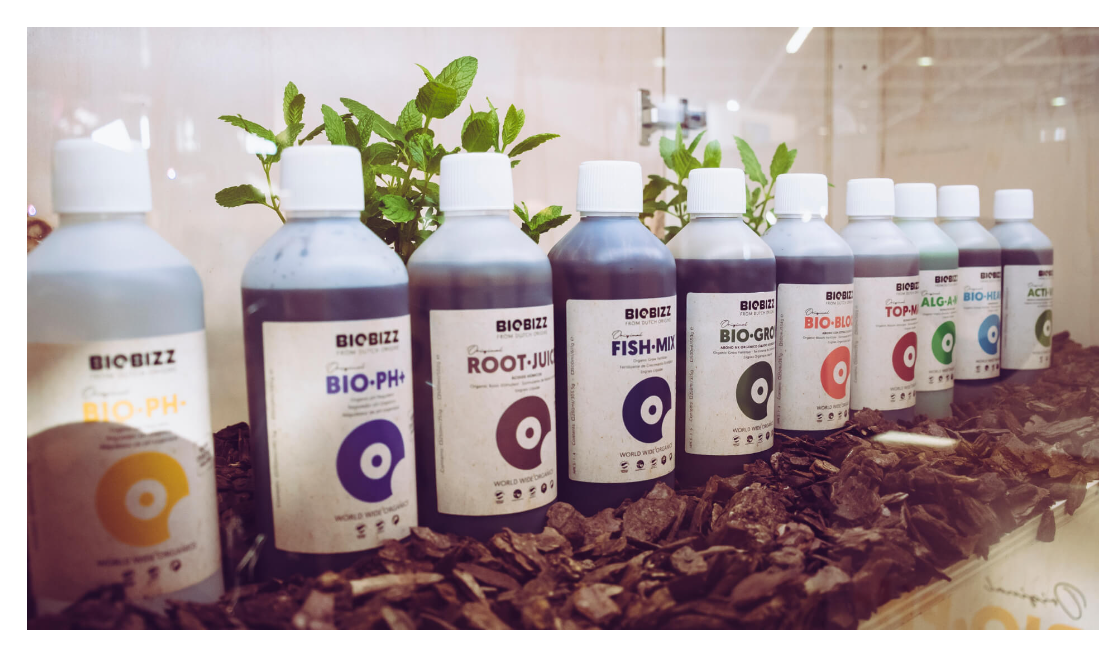 For beginning gardeners and cultivators it can be difficult to choose the right fertilizer line from the seemingly confusing selection on store shelves. Incorrect plant nutrition can often jeopardize all growing efforts. We will explain how NPK fertilizers work, what information you can find on the label and how to choose the right product for your grow room, greenhouse or garden.
When cultivating, most gardeners use fertilizers to supply nutrients to their plants. This is because in most growing methods, from indoor cultivation under artificial lighting to outdoor gardens, the substrate becomes depleted over time and then does not contain enough nutrients for healthy plant development.
What NPK nutrients are
All plants need a total of 17 nutrient elements to live, and apart from three of them (oxygen, carbon and hydrogen), they all take them from the soil, growing medium or nutrient solution. Roots absorb a total of 14 elements, which we further divide according to their importance for plant nutrition.
- Primary (macronutrient) elements (nitrogen, phosphorus, potassium, sulfur, calcium, magnesium) are consumed by plants in the largest amounts and their deficiency causes serious growth disorders or death.
- Micronutrients (chlorine, iron, boron, manganese, zinc, copper, molybdenum, cobalt) are required only in minimal amounts, but a deficiency of micronutrients can still cause significant damage to plants.
In practice, we most often find that plants need regular additions of the three primary nutrient elements – nitrogen (N), phosphorus (P) and potassium (K).
The importance of NPK for plant development and health
NPK consumption by plants varies according to their age, species, climatic conditions and cultivation method. You should consider all the above factors before you start fertilizing. It is important to use fertilizers that contain NPK nutrients in appropriate amounts and ratios. If you do not, your plants may either suffer nutrient deficiencies or you may overfertilize them and literally burn them with an excess of mineral salts in the substrate.
- Nitrogen (N): Plants need nitrogen especially for the production of chlorophyll, the green pigment essential for photosynthesis, and it is also part of plant amino acids and proteins. Nitrogen deficiency appears as yellowing of leaves and slowed growth. Plants absorb nitrogen best in the form of nitrates dissolved in water. Recommended fertilizers to supply nitrogen are organic fish emulsion or fertilizers for vegetative growth.
- Phosphorus (P): Phosphorus is important for the reproductive phases of plants and the formation of cellular structures. Phosphorus deficiency shows as darkening of leaves and smaller flowers. Plants absorb it best in the form of inorganic phosphates dissolved in water. Recommended fertilizers to supply phosphorus are bat guano and fertilizers intended to support flowering.
- Potassium (K): Potassium is key for flower formation and increases plant resistance to diseases. Potassium deficiency appears as burning at the leaf edges and slowed growth. Plants absorb it best in the form of potassium salts dissolved in water. Recommended fertilizers are bloom boosters, PK boosters and palm tree ash.
Choosing an NPK fertilizer
On the packaging of every fertilizer you will find several basic pieces of information that will help you determine exactly what the formulation is suitable for and what it contains.
- The trio of numbers separated by dashes (e.g. 2-1-2) indicates the content of the primary nutrients nitrogen (N), phosphorus (P) and potassium (K). The order of elements is fixed (N-P-K) and the numbers represent the percentage share of the given element in the total volume of the fertilizer.
- A detailed chemical analysis usually specifies the product composition in more detail, lists other nutrient elements in the fertilizer and states their minimum content in the product.
- The list of salts from which the nutrients in the fertilizer were obtained. This contains useful information for those who want to combine fertilizers from different manufacturers. Some forms of mineral salts cannot be simply mixed without precipitating. That is also the reason why some fertilizers have multiple components in separate bottles.
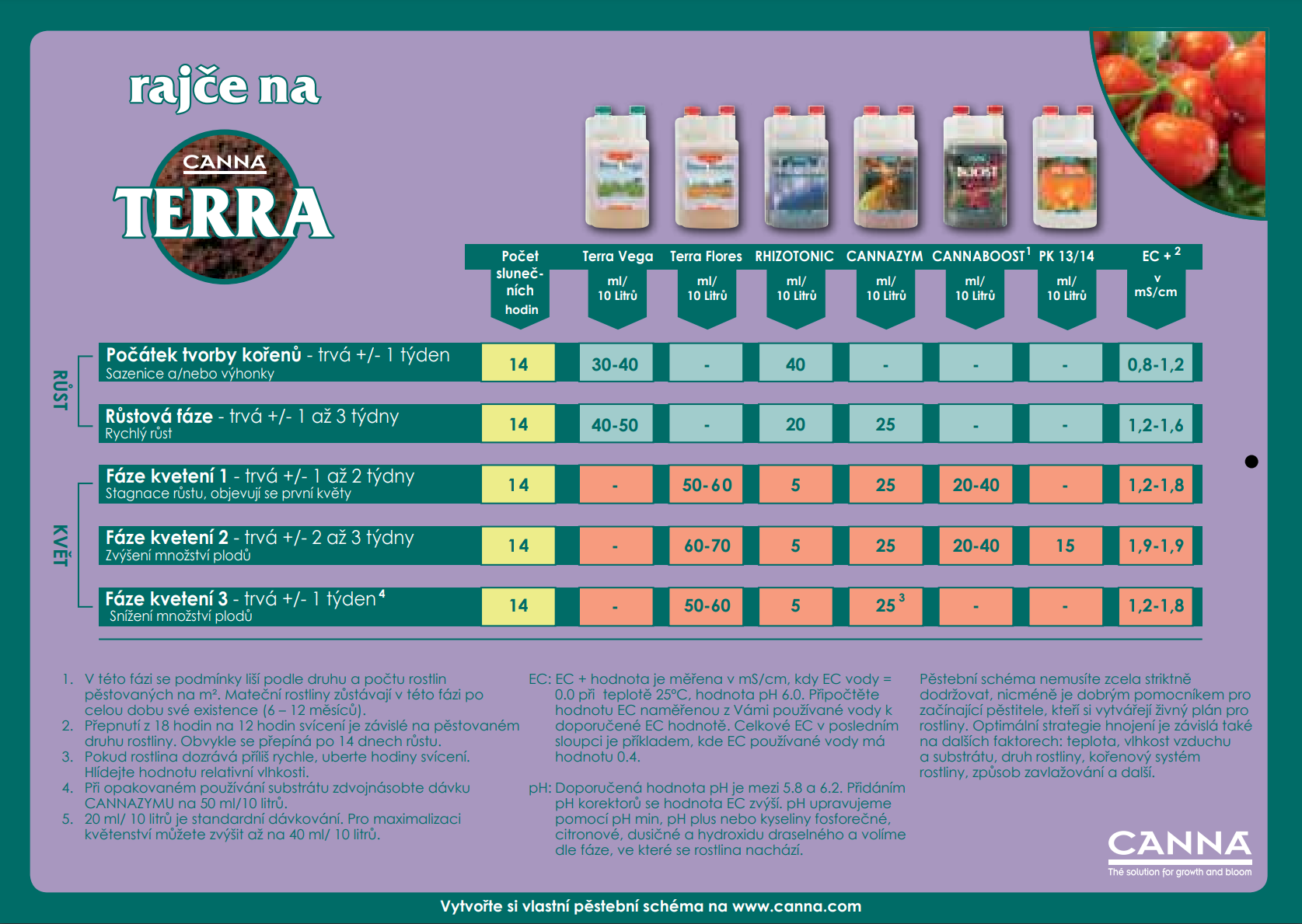
- Dosage tables will tell you how often and in what amounts to apply the fertilizer. If you are starting out in cultivation, it is best to follow the manufacturer's instructions as closely as possible and not mix different brands.
Read also: Dry or liquid fertilizers — which are better for indoor cultivation?
 How to choose the right NPK fertilizer by growth phase
Annual plants go through two main phases during the growing season: vegetative (growth) and generative (flowering). As they gradually transition from one to the other, their nutritional needs change. Generally speaking, in the first part of life during vegetative growth, when plants form new roots, leaves and stems, they require the most nitrogen. During flowering their phosphorus demand increases. Potassium is usually taken up from the soil throughout the growth cycle in a balanced amount.
Fertilizer manufacturers include dosage tables with their products that precisely tell you when and in what amounts to fertilize. However, these are only recommendations and an experienced grower should know other factors affecting nutrient consumption, such as the growing medium used, temperature and other climatic conditions, the method and frequency of watering or cultivar specifics.
- Fertilizers for vegetative growth
- Fertilizers for the flowering phase
- Fertilizers for both growth and flowering
Read also: Growth fertilizers: What they are for and how to use them