
Spring Planting: Site Selection and Soil Preparation
It's hard to deny that the right location and fertile soil are the basic prerequisites for successful growing. There's no point in trying to grow tomatoes, for example, in a forest where the soil is acidic and shaded by trees. But how do you find the perfect spot for your plants? We'll advise you, whether you live in the city and have only a little space for growing or, on the contrary, can't decide where to plant in your expansive garden.
Choosing the right spot for growing is not a matter of opinion, but mainly about balancing your priorities and the plants' needs. The most important factors you should consider before selecting a growing site are the amount of light, proximity to a water source and soil quality.
Sunlight
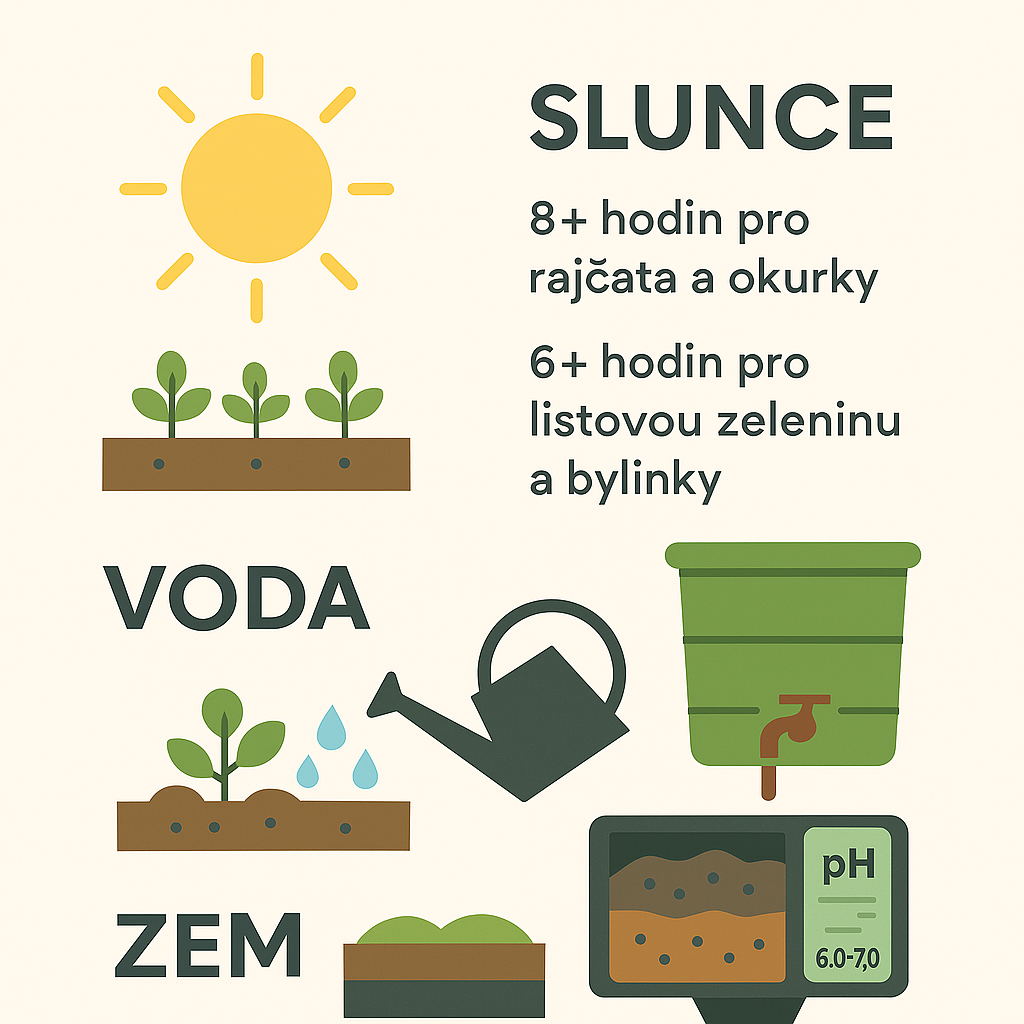 When growing, the rule is: the more light reaches the plants, the better. Sounds simple, right? However, few are lucky enough to live in a place without tall buildings, trees or fences. When planning, follow the rule that, if possible, the growing site should not be shaded from the south. Even a low fence on the south side of a bed will block a lot of sunlight.
Most flowers and crops, such as tomatoes, cucumbers or medicinal plants, need 8 or more hours of direct sunlight per day. The same applies to perennial berries or citrus. These plants will survive in lower light, but they will produce far fewer flowers and fruits. There are also species that will do well in shadier sites. If your garden receives at least 6 hours of light per day, you can grow peas, beans, lettuces and herbs.
You might be interested in: Light spectrum and its effect on plant growth: Outdoor vs. greenhouse vs. indoor
Proximity to a water source
Rain is indeed the cheapest and best source of water for outdoor growing, however nature is unpredictable and most plants do best with a regular watering regime. When choosing a growing site, don't forget that you'll need to water. You can do this by hand or use an automatic irrigation system.
Place a barrel or a water tank near the growing site so you can collect rainwater in it or place it where it can be easily filled from a tap. It's not just about convenience, but also about the fact that watering water should not contain chlorine. Therefore, if you draw watering water from the mains, it's good to let it stand in the tank for at least a day before use.
You might be interested in: What you need to know about the water you use for watering
Soil quality
Whether you plan to grow in an open bed in the ground, in a greenhouse, or on a balcony or terrace in pots, fertile and high-quality growing substrate is a prerequisite for success. Most plants do best in neutral to slightly acidic, well-draining soil (pH 6.0 – 7.0) rich in organic matter. Growing substrates for container growing usually contain a mix of soil, compost and perlite for aeration. If you grow in open beds in the ground, expect a bit of dirty work.
You might be interested in: How to choose a garden substrate
How to prepare garden beds for growing
- Thorough cleanup: Remove weeds, fallen leaves, plant residues and last season's mulch from the bed. The goal is to reveal bare soil.
- Loosening and adjusting soil pH: Loosen the exposed soil by forking the top layer to a depth of about 10 to 15 centimeters. If the soil in your garden is heavy or clayey, enrich it with compost or humus. If you find the existing substrate particularly infertile or rocky, the simplest option is to build a raised bed on that spot. While loosening you can also lime the soil to help neutralize acidity. To measure soil pH, use analog or digital pH meters.
- Spring fertilization: In spring months plants mainly need enough nitrogen, which you can add to the soil for example in the form of compost, vermicompost (humus), guano or fertilizers high in nitrogen. In spring you can also add wood ash to the soil, which contains phosphorus that supports root growth in young plants.
You might be interested in: Prepare your garden for spring!
Find more tips about growing and gardening for indoor and outdoor on the Higarden blog for growers.