
Mycorrhiza: High Yields Without Chemicals
Do you already know what mycorrhiza is? Symbiosis — the mutually beneficial relationship between mycorrhizal fungi and plant roots. This remarkable symbiotic relationship is known from the wild. If you apply this knowledge when growing plants in soil, your plants will benefit all the way to harvest, and you’ll end up with a big smile. Is growing herbs, fruit or vegetables still a challenge for you? Do you feel in the beginning that even though you follow proven advice and fertilize according to dosing charts, your plants are struggling rather than thriving? Mycorrhiza can quickly change that for the better!
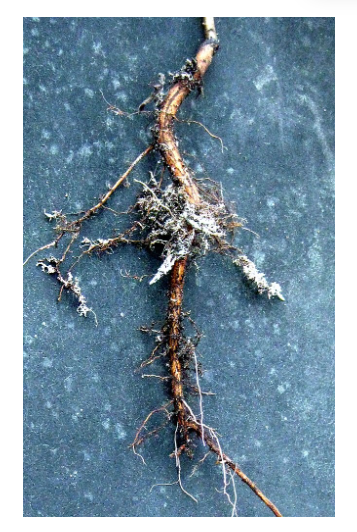
Cooperation with soil microorganisms is absolutely indispensable for plants. Statistics show that up to 90% of the roughly 400,000 known plant species allow symbiotic fungi to form colonies in their root systems. When did this phenomenon start to be applied to plant cultivation? Surprisingly, only relatively recently. Although in the late 19th century the German scientist A. B. Frank observed in his experiments that pines growing in natural soil with forest fungi did better than pines planted in sterile environments, it took more than a century for scientists worldwide to give his discovery the attention it deserved. Fortunately, in recent years the opposite has happened, and growers now have access to products that use this botanical phenomenon to improve plant growth and crop yields.
Why fungi?
Because in the plant kingdom they have no equal when it comes to survival strategies and acquiring nutrients in a wide range of environments, including extremes from seawater to polar regions. Going to the extreme, scientists have even discovered species capable of surviving cosmic radiation! Fungi are heterotrophic organisms, which means they must obtain nutrients from other organisms (unlike plants capable of photosynthesis). From this perspective we distinguish the following types of fungi:
- Parasitic fungi: these obtain nutrients from living organisms. Some parasitic species can even kill their hosts.
- Saprophytes: these obtain nutrients from dead animals or plants.
- Some fungi are able to switch between the two modes above depending on current needs.
- Symbiotic fungi: this group includes mycorrhizal fungi, the most well-known to growers being Trichoderma harzianum. Many mycorrhizal species have been studied, but only about 270 species live in mutual symbiosis with roughly 70% of all plant species on the planet, including commercial crops like tomatoes.
How does mycorrhiza work?
For cultivation purposes we will limit the explanation of mycorrhiza to so-called endomycorrhizal fungi. These are important because they can form mutually beneficial relationships with the roots of plants we want to grow (e.g., various fruits and vegetables, annual plants, grasses, ornamentals, shrubs). The other group is the ectomycorrhizal fungi, which do not penetrate plant root cells and are typically found near trees.
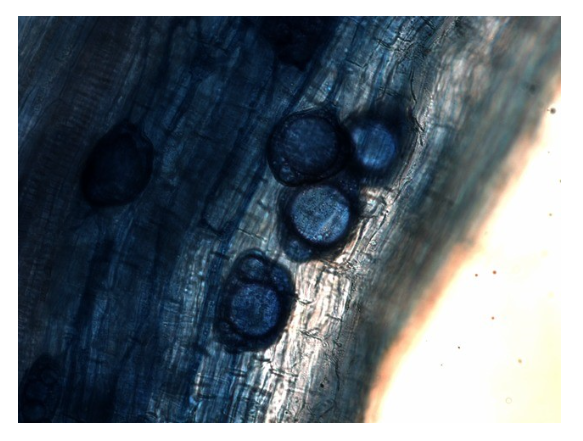
At the beginning of the mycorrhizal process are hyphae — the individual cells that form the fungal network, technically known as mycelium. These fungal cells vary in appearance but share a pointed tip typically 2–10 micrometers in diameter. The hyphal tip is specialized for pushing through soil. Hyphae grow toward plant roots in response to specialized hormones that plants naturally release into the soil (so-called strigolactones). This happens when the plant is running low on soil nutrients, typically phosphorus. Hyphae can grow up to 40 micrometers per minute and exert remarkable force as they extend. When the mycelium reaches the root zone of its future host plant, the hyphal tip helps fungal cells penetrate to the root surface and colonize the space between the plant cell wall and membrane. We call the mutually beneficial process occurring around roots that have formed this connection with an endomycorrhizal fungus mycorrhiza. Once the fungus has sufficiently established itself on the roots, an exchange of vital resources begins that benefits both partners. Under a microscope you can observe a kind of natural barter. We keep saying it — nature is brilliant!
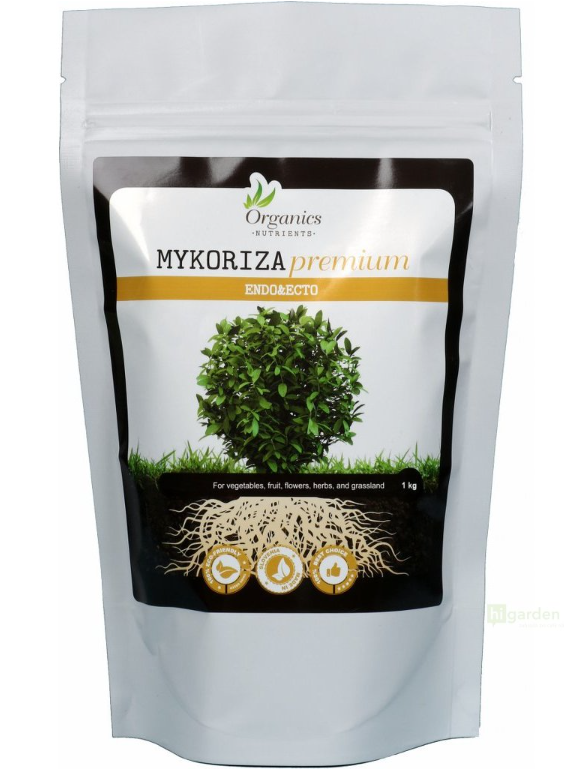
OUR TIP: We highly recommend the product MYKORIZA premium - a 100% organic concentrated powder with a high content of mycorrhizal fungi (Endo & Ecto), beneficial bacteria, microorganisms and Trichoderma. Growing organic? Read the separate article about all the interesting products from the Organics Nutrients brand!
Positive impact of mycorrhiza on plant development
Fungi, which rely on nutrients obtained from other organisms (see above), are naturally attracted to plant roots. Plants can allocate up to one fifth of their produced carbon to fungi, which the fungi consume as sugars for energy. In return, plants receive several benefits from the fungi, including:
- Uptake of important nutrients that plant roots could not otherwise reach in the soil. (For growers this means reduced use of various fertilizers.)
- Up to 4x more naturally acquired phosphorus (P), whose sources are increasingly limited from an ecological agriculture perspective, as well as other nutrients including nitrogen (N).
- Protection against pests and pathogens. Significantly lower risk of fungal diseases (Fusarium, Pythium etc.) Mycorrhizal fungi actively deplete nutrients in the soil around the host that might otherwise attract unwanted microbes. They can even produce antibiotic or biocidal chemicals specifically to fight parasites attacking the host.
- Much greater drought resistance. Mycorrhiza goes hand in hand with better-nourished plants that are overall more resistant to abiotic stressors (see separate article: Stress also harms plants — Abiotic stresses on plants)
- Increased production of phytohormones. Since these hormones can control nearly every aspect of plant growth, the agricultural potential is significant and increasingly studied by scientists.
- Flowers and fruits of plants living in symbiosis with mycorrhizal fungi contain more aromatic and health-promoting compounds.
It is important to realize that a plant’s root system cannot expand indefinitely, and over time it depletes available nutrients in the surrounding soil. If you read our articles regularly, you know that the more branched and larger a plant’s root system, the better it will perform. The fungal mycelium can fantastically extend the root zone. Interested in numbers? 100,000 times more soil from which the plant can draw nutrients thanks to the expanded root zone! This is because, as mentioned, hyphae grow extraordinarily fast and can reach practically everywhere in the soil. The fungal network (mycelium) thus occupies a huge area in the soil — a network that the plant is literally connected to via mycorrhiza. The hyphal tip can efficiently break down nutrients for its host using various enzymes and acids and “pump” them via cytoplasm from different places back to the roots.
OUR TIP: You can also try the long-awaited new product in our range aptly named Plant Success. It is an all-in-one preparation that directly inoculates plant roots with 4 strains of endomycorrhizal fungi and additionally 11 strains of beneficial bacteria.

Using mycorrhiza when growing in coco
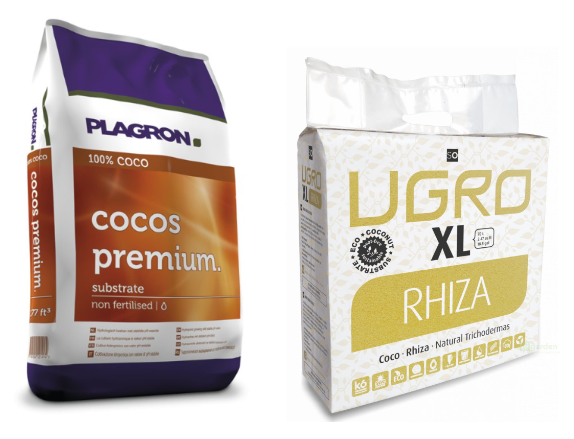
Did you know you can use mycorrhiza not only when growing plants in soil and soil mixes, but also in coco? Many quality coco substrates contain mycorrhizal fungi, whether sold ready to use in a 50 liter bag or dehydrated as compressed coco bricks.
Mycorrhizal products (see also below) and their application should be seen not so much as fertilization but as returning beneficial microorganisms to the soil — their natural environment, which is often depleted due to frequent tilling or use of chemical sprays (pesticides). It’s hard to find a grower who, despite knowing the many advantages that mycorrhiza brings, did not use any quality mycorrhizal product. Beginners will also appreciate that mycorrhizal products pose no risk of over-fertilization while offering many benefits towards achieving abundant, high-quality yields.
If you want to ask us anything, we are here for you at the familiar email address info@higarden.cz. We look forward to your questions!
We also recommend these products:
- Xtreme Gardening Mykos Root Paks 500g
- Florganics FLO
- Biotabs Guerilla Box
Further reading:
- Root stimulator — what is it for?
- How to grow leafy vegetables and salads?
- How to choose a propagator and what to equip it with?
Photo sources: Wikimedia commons.com